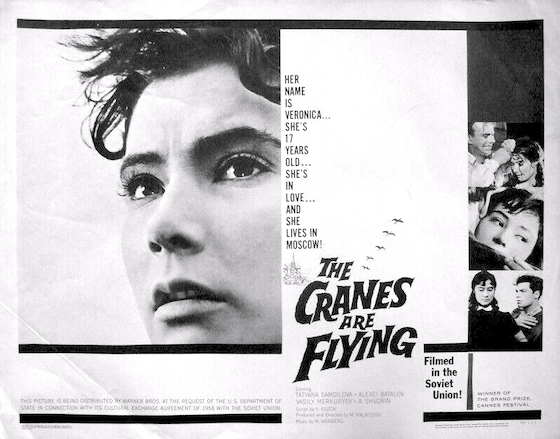
The Cranes Are Flying (1957)

aka Letyat zhuravli

Mikhail Kalatozov | 97 mins | Blu-ray | 1.37:1 | Soviet Union / Russian | 12

The Cranes Are Flying

The Russians seem to excel at making a certain kind of war movie; one that befits our stereotype of their national temperament. It might be most succinctly described as “grim as fuck”. The Cranes Are Flying is no Come and See in that regard, but it’s also a million miles away from the gung-ho, celebratory kind of World War II pictures being produced by the US and UK during the same era. No exciting commemorations of the heroic deeds of our brave boys here. Instead, this is a clear-eyed condemnation of the futility of sending the young off to war, and the devastation wreaked on those back at home.

Yet, for all of that, the film is underpinned by what feels like a broadly standard “wartime romance” storyline. Veronika (Tatiana Samoilova) and Boris (Aleksey Batalov) are young and in love, in that all-consuming do-or-die way only young people can be, when war is declared. He does some kind of important job so should be safe from the draft, but — spoiler alert! — he volunteers anyway. Will they survive the war so and be reunited? What other calamities will fate throw at them to prevent happiness? Yes, as if war weren’t enough, other Bad Shit goes down too. I suppose that’s part of what helps the film overcome what could have been a boilerplate plot: that it’s not just about Veronika pining away at home while Boris tries not to get killed on the front line. Indeed, the film is more focused on Veronika’s struggles than on Boris fighting the actual war, and it benefits immensely from a strong performance by Samoilova as Veronika navigates her own personal battles.

The war at home

Nonetheless, what really elevates and defines the film is the truly remarkable camerawork by cinematographer Sergey Urusevskiy. Appropriately, his then-groundbreaking use of handheld cameras was a filming technique he had learned as a military cameraman during the war. But its effectiveness goes far beyond the mere fact the camera isn’t mounted. ‘Handheld’ tends to conjure an idea of rough, on-the-fly, documentary-esque filmmaking, but that’s not the impression you get here. The shots are still carefully composed, it’s just that they’re also often extraordinarily and innovatively designed, in a way that remains striking seven decades later. The very way the camera moves is sometimes part of the storytelling itself; at others, it cleverly imparts new information mid-shot, or reveals the scale of events. As an inherently visual success, there’s little point in trying to describe it — “just watch it” has rarely been more apt. (That said, Chris Fujiwara’s essay for the Criterion Collection neatly describes several of the film’s most memorable shots.)

The Cranes Are Flying was a huge success on its release, both at home in the Soviet Union — where it was a breath of fresh air for a nation used to positive propaganda pictures — and abroad, becoming the first (and last) Soviet film to win the Palme d’Or. (For our part, it was nominated for two BAFTAs, although it won neither: it was one of several still-acclaimed movies that lost Best Film from Any Source to a British film (Room at the Top) that also won Best British Film (do I smell bias?), and Samoilova lost Best Foreign Actress to the lead from that same film (hmm…) Next time someone tries to claim awards have become meaningless, maybe suggest they always have been.) They also don’t really matter, this many years later, when we can easily appreciate this film’s successes — both for the impact it had at the time, and the one it continues to have today.

5 out of 5

The Cranes Are Flying is the 91st film in my 100 Films in a Year Challenge 2024. It was viewed as part of Blindspot 2024. It was my Favourite Film of the Month in November 2024.

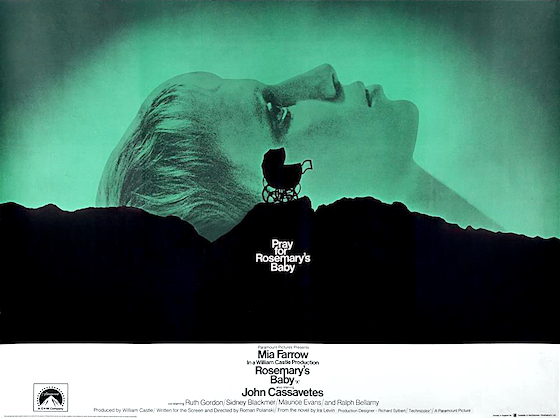
Rosemary’s Baby (1968)

Roman Polanski | 138 mins | UHD Blu-ray | 1.85:1 | USA / English | 18 / R

Rosemary's Baby

If you came to Rosemary’s Baby without any kind of context about its place in film history, you might well conclude it had been made in the last few years. Well, if you learnt about it on paper — visually, it’s obviously a film of the’60s thanks to its cinematography and production design (not a criticism; indeed, if anything, that’s praise). But in terms of its plot, its themes, its characters and their relationships, and what they might be signifying, that all feels quite ‘of the moment’. Maybe it did in the ’60s too. Maybe it has in every time period since — maybe that’s why the film has endured so well for over 50 years. (Plenty of other films have endured just as long — and longer — without feeling pressingly relevant to the present day, so I don’t want to overemphasise that point too much.) If it had been made more recently, the usual blowhards would be decrying it as “woke” and that it debases the traditional family unit, or something. The fact you can apply such ‘arguments’ as readily to something made over half a century ago as you can to something produced today is just one reason they’re absolute bollocks. But I digress.

To dig deeper into what the film is saying about such things, and how and why, necessitates some spoilers. I know some people think it’s ridiculous to consider spoilers in the context of a film as old as this, but there are always new generations and more people coming afresh to any film decades later — heck, I’ve only just watched it; that’s the whole point of this. That said, Rosemary’s Baby is sort of a self-spoiling film. We all know it’s a horror movie, so when it starts out like a pleasant slice-of-life domestic drama about a young couple moving into a new apartment building, making friends with their quirky neighbours, and deciding to start a family… well, we already know that’s not all it’s going to be, and the hints at more sinister goings-on are easy to spot.

Rosemary's scream

This is another way one might argue it feels modern, as it’s close to the “elevated horror” sub-genre that’s sprung up in the past few years. Again, the fact works like this have existed since at least the ’60s — and I’m sure there are other horror movies that could be similarly classified — shows that so many “new” things have actually been around before, we’ve just forgotten them, or not bothered to label them. Basically, rather than being an outright schlocky genre movie, it’s restrained and dramatic and realistic (in tone, at least). There’s not even an early fake-out jump scare to reassure you you’re watching a genre piece, a trick employed by so many films where the real frights only come in later. There’s a conceivable version of this film where the big reveal is that everyone’s normal, Rosemary was paranoid, and you’ve been watching a mental health drama, and literally all you’d have to change for that to work is the events of the final few minutes.

Indeed, it’s interesting to sort of take a step back and almost-objectively consider this as “a horror movie”. There are very few (if any) scares, and it doesn’t create the same kind of uneasy irrepressible mood as something like The Shining; although I would wager it can have a different effect on women, especially women of childbearing age, than it does on me, because the horrors are that much closer to home. I don’t think it’s failing in those respects — it’s not setting out to terrify you and then failing to achieve it — I just think it’s going for a different kind of horror. It’s the slow realisation that something is not just ‘not right’ but definitely very wrong; and by the time you grasp the scale of it, it’s too late to do anything; and too insidious to convince anyone else that it’s real. In that sense, it really is a good analogy for things like toxic relationships that look fine to the outside world.

And that’s the way in which the film is most modern, as I was saying at the start. Its central concerns seem to be issues of women’s bodily autonomy, controlling relationships, the way they isolate their victims and lead to abuse. If you want to close your senses to such unmissable subtext, I guess you could still see the film as no more than a genre piece about (spoilers!) a cult trying to birth the Antichrist, but I think you’d be burying your head in the sand to do so. Sure, the film doesn’t expressly call those elements out — doesn’t underscore them, or bluntly explain that’s what’s going on in modern terminology — but they’re inescapably in the mix. I do think that’s a difference between the film having been made in the late ’60s vs today: now, it would be hard to resist thoroughly leaning into those themes and making them more overt, because they’re things we’re much more aware of as a society, and much more concerned with combating. Again, it’s not that they’re exactly subtle here, but you get the sense some of the psychology involved was still not widely understood; that there perhaps wasn’t yet the agreed-upon terminology to explicitly call it out, other than to present it and show how negative it was.

Controlling relationships

All of which said, the timeliness or otherwise of the film’s concerns is irrelevant to its overall quality. As much as it would be a key point of interest to some, I’m sure it’s of no matter to others. Either way, though, Rosemary’s Baby remains a compelling story because of how it grounds its supernatural goings-on in day-to-day life. Without playing the “is it or isn’t it” angle, it nonetheless renders them almost mundane — these devil-worshippers aren’t wearing robes, enacting elaborate arcane rituals in ancient stone circles in the British countryside: they’re modern-day Americans, living pretty typical lives in a New York apartment block. Horror can exist everywhere and anywhere; it is everyday. Oops, maybe we’ve come back round to making a sociological point again…

5 out of 5

Rosemary’s Baby is the 82nd film in my 100 Films in a Year Challenge 2024. It was viewed as part of Blindspot 2024. It was my Favourite Film of the Month in October 2024.

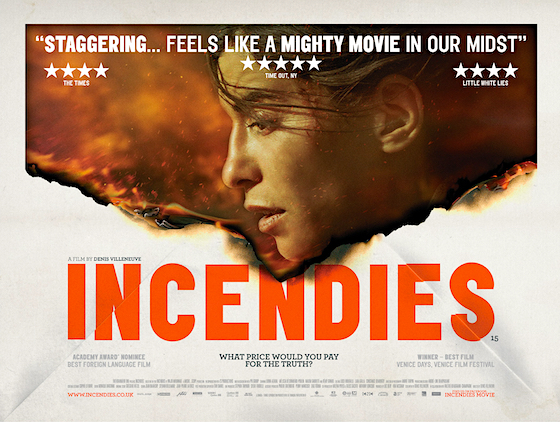
Incendies (2010)

Denis Villeneuve | 131 mins | UHD Blu-ray | 1.85:1 | Canada & France / French & Arabic | 15 / R

Incendies

The Best Foreign Language Film category at the 2011 Oscars is, in retrospect, a pretty impressive year. Alejandro González Iñárritu was already well established before his nominated film, Biutiful, but his fellow nominees included Yorgos Lanthimos for only his third feature, Dogtooth, and Denis Villeneuve for this, his second after his career re-start. And yet the winner was In a Better World. Remember that? Me neither. (I don’t even recall it ever being mentioned in the last near-decade-and-a-half; although its director was Susanne Bier, who’s gone on to the likes of The Night Manager and Bird Box, so that’s something). It seems like an odd choice for victor with the power of hindsight, but that’s hindsight for you. On the other hand, watching Incendies, it’s hard to see how anyone could ever have missed its incredible power. (Or maybe In a Better World is even better. I struggle to believe that possibility, but you never know… and probably never will, because who’s still watching it nowadays? It’s certainly not getting a Collector’s Edition-style 4K UHD release from a boutique label — unlike, say, Incendies.)

Incendies is, on the surface, one of those films that can sound off-puttingly heavy: it’s about generational trauma caused by a long-running war in the Middle East. Sure, that kind of thing can be Worthy and Great filmmaking, but egads, hard going. But while Incendies is all those things, it’s also a compelling mystery, which leads to twists worthy of a great thriller. The first of those comes in the film’s setup: Nawal, the mother of a pair of grownup twins has died, and it’s only from her will they learn, first, that their thought-dead father is still alive and, second, that they have an older brother they didn’t know existed. They are tasked with finding both men, and only then will they receive the final letter she has left for them. To do this, they must travel to their mother’s homeland, an unnamed Middle Eastern country (heavily inspired by Lebanon) where the aforementioned war is over, but the scars still linger. As they investigate their mother’s previous life, we see it play out in flashbacks.

While the film at first seems to be about the twins, it’s really most about Nawal. That’s in part thanks to the incredible performance by Lubna Azabal. She has to portray this woman across decades, from a relative innocent to someone changed and hardened by all she’s been through, and charting every step of that journey, too. Plus, she’s left to convey almost all of that silently. Not that she’s mute, but she’s rarely allowed the shortcut of dialogue that discusses or exposes her emotions and motivations. That we still gain so much understanding of the how and why of Nawal is remarkable, really; a performance that, under different circumstances (let’s be honest: if it were in English) would surely have contended for every major award going.

You and whose army?

The film is not about a specific conflict — that’s part of the reason playwright Wajdi Mouawad didn’t explicitly set his original work in Lebanon, and why Villeneuve ultimately didn’t change that when adapting it. Rather, as Villeneuve says, it’s “about the cycle of anger, the heritage of anger in a family, where in a conscious and subconscious way anger is traveling among family members, and among a society”. The point is not “what happened in Lebanon”, but what happens when families are torn apart, emotionally just as much as physically; what the fallout from that is, and how healing can be found — if, indeed, it can.

Oh dear, it’s all sounding a bit heavy again, isn’t it? And yes, there is an element of Incendies that is like that. It’s the kind of film that uses Radiohead on its soundtrack multiple times. (That said, this is how I feel that band’s dirge-like ambient-noise style of music functions best: as background mood-creating film score, rather than as, y’know, songs.) But, as I said before, this is also a film that plays as an effective mystery. What, exactly, happened to Nawal? Who and where is their father? Who and where is their older brother? Why was this a secret Nawal took to her grave? Why did she feel the need to reveal it posthumously? Any and all of these are questions your stereotypical “art house” movie would leave unanswered, providing vague prompts for you to consider after the film ends — or, inevitably, provoke you to Google “Incendies ending explained”. But Incendies isn’t actually like that — all of those questions are answered, because they’re essential to what the film is about. That they can also be gasp-inducing all-timer reveals is another bonus.

Within that, Villeneuve also shows off the expert filmmaking that has since elevated him to Christopher Nolan-adjacent levels of big-budget auteurist blockbuster-making. There’s a sequence on a bus in the middle of the film that is as tense as any suspense movie, as scary as any horror movie, and as emotionally devastating as any hard-hitting drama. There’s a reason it’s the inspiration for almost every poster and key art piece related to the film. (The exception is the original American theatrical poster, which shows… a woman standing by some sand. Great marketing, folks. Maybe that’s why it didn’t win the Oscar.) It’s an event of such horror that — especially when combined with the shocking revelations later in the film (which, obviously, I’m not going to spoil) — I imagine this is the kind of movie some people swear off ever watching again, like Requiem for a Dream; a big comparison, maybe, but one Incendies is up to.

5 out of 5

Incendies is the 68th film in my 100 Films in a Year Challenge 2024. It was viewed as part of “What Do You Mean You Haven’t Seen All of the IMDb Top 250?”. At time of posting, it was ranked 101st on that list. It was my Favourite Film of the Month in September 2024. It placed 4th on my list of The Best Films I Saw in 2024.

Cecil M. Hepworth shorts

I know I’m generally quite poor about posting reviews nowadays (“nowadays” being “for the past five years”, considering that’s roughly how long ago my backlog stretches), but I do have the Archive 5 to dig into that, and sometimes post reviews of newer watches too. What really suffers, however, are short films. I have no consistent plan to correct that, but here at least are reviews of three shorts I’ve watched this year with a simple connection: they were all directed by early British filmmaker Cecil M. Hepworth.

  • Alice in Wonderland (1903)
  • Explosion of a Motor Car (1900)
  • The Indian Chief and the Seidlitz Powder (1901)


    Alice in Wonderland

    (1903)

    Cecil M. Hepworth & Percy Stow | 9 mins | digital HD | 4:3 | UK / silent

    The first screen adaptation of Lewis Carroll’s beloved novel is a whistle-stop tour of some of its best-known moments. What it loses in not being able to retain any of Carroll’s memorable prose or dialogue, it makes up for by being a neat showcase for some early-cinema special effects — Alice shrinks and grows; a baby turns into a pig; and so on. There’s little doubt that this isn’t the best filmed version of the tale (unless you have a fondness for early cinema over anything made later), but it’s a valuable glimpse into the ambition and skill of the form’s pioneers.

    The only surviving print is in terrible shape and missing several minutes of footage (it was originally 12 minutes long), but at least we have some way of seeing this important bit of film history. Talking of which, you can watch it on the BFI’s official YouTube channel, although they only provide it in standard definition. Fortunately, there’s a full HD version here.

    3 out of 5


    Explosion of a Motor Car

    (1900)

    Cecil M. Hepworth | 2 mins | digital SD | 4:3 | UK / silent

    Cars randomly exploding for almost no reason is a hallmark of action cinema, but it begins even earlier than the codification of that genre, as this short from 1900 shows.

    We watch as a car full of people merrily trundles along a suburban street… then, suddenly, there’s a puff of smoke and the vehicle is reduced to a pile of parts. A policeman comes over to inspect, at which point body parts rain from the sky. It would be gruesome if it weren’t so obviously comical… especially when the policeman begins to casually pile them up. And that’s the end.

    Basically, it’s a comedy sketch à la 1900. I guess it was probably inspired by fears of this modern new invention, the motor car, but at least it plays those for laughs. There are worse ways to spend 90-or-so seconds (depending on the playback speed of the version you watch — the BFI version is here).

    3 out of 5


    The Indian Chief and
    the Seidlitz Powder

    (1901)

    Cecil M. Hepworth | 2 mins | digital SD | 4:3 | UK / silent

    So, I bought the 88 Films Blu-ray of ’70s British-produced Western Hannie Caulder (mentioned in my May failures), had a little look at the booklet and, for whatever reason, the opening paragraph of the essay by Lee Broughton caught my eye. To quote: “The British have been making Westerns since the early days of silent cinema (see The Indian Chief and the Seidlitz Powder [Cecil M. Hepworth, 1901]) and they continue to make Westerns today (see The English [Hugo Blick, 2022]).” This, first off, reminded me that I’d meant to watch The English (I find Blick’s work to be both fascinating and somehow off-putting, so I always feel I should watch them but, when there’s such a plethora of choice nowadays, it’s easier to go for something, well, easier). More relevantly, it sent me off to Google this short, having recognised the director’s name (partly from watching the above-reviewed shorts a couple of months earlier) and, more importantly, being interested in the early days of cinema — especially as shorts such as these can usually be found online, if they survive. You often end up with low-quality DVD rips on YouTube, but, thankfully, this one is available on the BFI for free.

    All of that said, it’s… not all that. It’s a Western in technicality only: the sole character is a Native American chief; though you’d only infer that from the title, because his costume is terrible. There are no other signifiers that this is a Western — the basic set could be a store or storeroom anywhere, and presumably Seidlitz Powder was a product sold in British shops. I presume that because the short is a one-gag comedy based around the effects of that product, and so British audiences must’ve known about it. As far as I’m aware, it’s not a product still in existence today, so thank goodness for the BFI’s explanatory notes (also at the link above) to illuminate the context of the joke.

    Other than that, the film is noteworthy for containing a sequence in slow motion. It’s an inherently cinematic effect, so it’s always interesting to see it deployed so early in the form’s history. Indeed, it stands at odds with how the other ‘effects’ in the film are achieved: the chief’s belly swells by the performer (Hepworth himself, possibly? I don’t know, but I believe he often appeared in his own films; equally, someone is operating the camera) fiddling around inside his costume and shaking it about until it inflates. Then he “bounce[s] around like a balloon”, says the BFI — rather overselling it, as he just kind of leaps about a bit. There is one more cinematic technique: a jump cut to allow for a puff of smoke when his stomach bursts… followed by the performer awkwardly folding up his now over-large costume before darting out the door.

    So, two minutes filled with casual racism, 120-year-old topical humour, and some weak theatrical ‘special’ effects. But hey, at least we can experience British cinema’s early forays into uniquely cinematic technique and a key genre.

    2 out of 5


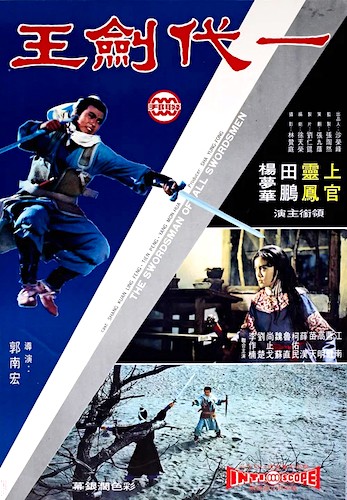
  • The Swordsman of All Swordsmen (1968)

    aka Yi dai jian wang

    Joseph Kuo | 86 mins | Blu-ray | 2.35:1 | Taiwan / Mandarin | 12

    The Swordsman of All Swordsmen

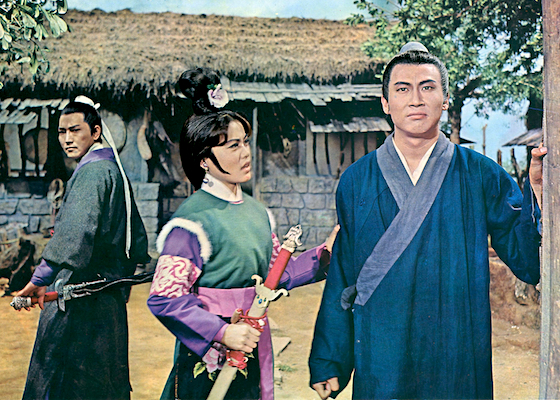
    Revenge is a dish best served cold, according to the Klingons, and Tsai Ying-jie (Tien Peng) is the embodiment of that mantra. As a young child, he witnessed his whole family murdered by group of assassins who wanted his father’s legendary sword. As an adult, he’s a fully-trained expert swordsman, and the time has come for vengeance. As word of his victories spreads, he’s intercepted by Flying Swallow (Polly Shang-Kuan Ling-Feng), who tries to persuade him off his murderous path, and Black Dragon (Chiang Nan), who seeks to cement his reputation as the foremost swordsman by defeating Tsai in combat.

    It’s pretty standard fare as wuxia plots go — I suspect that was as much the case in 1968 as it is today — but the art, as is so often the case, lies in the execution. Director (and co-writer) Joseph Kuo hits the ground running: we meet Tsai as he arrives in the town of his first target, and just minutes later they’re duelling. His motivations are only then revealed via flashback. The film runs a tight 85 minutes, and in that time manages to pack in seven sword fights and still find room for some honour-based moral conflict. The action comes thick and fast (that’s an average of a fresh duel starting every 12 minutes, maths fans) but remains thrilling throughout. That said, I do love a good sword fight, so I’m somewhat biased. While some of the direction almost borders on perfunctory (it’s fine, but nothing remarkable), other parts are glorious — the fights, in particular; and the finale, especially, is quite gorgeous.

    Swordsmen, swordswoman, swordspeople

    In between the action, the film pauses to consider the morals. It’s hardly a think-piece, but it does make a reasonable thematic argument against generational conflict… although Flying Swallow only tries to convince our hero to alter his course after he’s already taken revenge on four out of five targets, so it does come across as too little too late. Still, it matters because honour and rightness are major concerns in films like this, and those considerations have a key role in how the final two bouts play out. Kuo’s background was in romances and melodramas (before the success of King Hu’s Dragon Inn caused the Taiwanese film industry to shift focus), so perhaps he brought a greater understanding — certainly, a greater interest — in human emotion to the film than you’d get from your run-of-the-mill combat junkie. That the film doesn’t have excessive time to spend navel gazing means these quandaries add to the texture, rather than overwhelming it or making us feel too guilty for enjoying the spectacle of clashing blades.

    Eureka’s blurb notes this is the first part of a trilogy about Tsai Ying-jie, followed by The Bravest Revenge and The Ghost Hill. They sound pretty cool and borderline insane (the third apparently involves Tsai and Swallow going to Hell), though Kuo wasn’t involved in them (contrary to what Eureka’s blurb claims). Still, I’d welcome Eureka bringing them to disc too.

    4 out of 5

    The Swordsman of All Swordsmen is the 66th film in my 100 Films in a Year Challenge 2024. It was my Favourite Film of the Month in August 2024. It placed 13th on my list of The Best Films I Saw in 2024.

    Archive 5, Vol.11

    I have a backlog of 515 unreviewed feature films from my 2018 to 2023 viewing. This is where I give those films their day, five at a time, selected by a random number generator.

    Today, the main emergent theme is “films that weren’t so great” — although there are a couple of bright spots to be found, still.

    This week’s Archive 5 are…

  • Dumb and Dumber (1994)
  • Bill & Ted Face the Music (2020)
  • Mangrove (2020)
  • Out of Africa (1985)
  • Rambo: Last Blood (2019)


    Dumb and Dumber

    (1994)

    Peter Farrelly | 107 mins | digital HD | 16:9 | USA / English | 12 / PG-13

    Dumb and Dumber

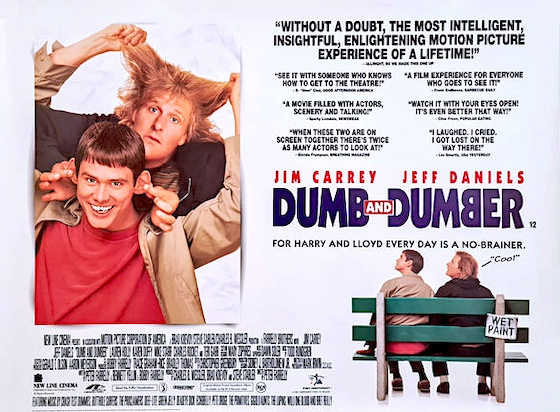
    The nicest thing I can say about Dumb and Dumber is that it does at least live up to its title: it starts dumb and gets dumber.

    Despite the film’s later reputation in some circles as a modern comedy… if not “classic”, then certainly “success” — enough to eventually earn it both a prequel and sequel, at any rate — I’m clearly not alone in this view: apparently the original draft of the screenplay was so poor that it gained an enduringly negative reputation among investors; to the extent that, even once it had been rewritten, it had to be pitched under a fake title in order to get people to even read it. I feel like the final result only goes some way towards fixing that, with an oddly episodic structure and some bizarrely amateurish bits of filmmaking for a studio movie (the audio quality is relatively poor; there’s too much reliance on samey master shots).

    There are a few genuinely funny bits between all the gurning, guffawing, and scatology. It’s a shame they’re not in an overall-better film.

    2 out of 5

    Dumb and Dumber was #119 in my 100 Films in a Year Challenge 2021. It featured on my list of The Worst Films I Saw in 2021.


    Bill & Ted Face the Music

    (2020)

    Dean Parisot | 88 mins | digital HD | 2.39:1 | USA & Bahamas / English | PG / PG-13

    Bill & Ted Face the Music

    I wasn’t that big a fan of the original Bill & Ted films, so I didn’t have high hopes for this — after all, most decades-later revival/reunion movies are primarily about trying to please existing fans, not win round new ones; and it feels like a good number of them fail even in that regard. Face the Music is definitely full of the requisite nods and references, both explicit and subtle, major and minor; but they’re all in the right spirit and it kinda works (albeit a bit scrappily at times), bound together by a deceptively simple, pervasive niceness.

    Alex Winter is particularly great as Bill. Given all the stories we hear about how awesome Keanu Reeves is in real life, it’s no surprise that — despite being the much (much) bigger movie star — he’s generous enough to be a co-lead and let Winter shine. Brigette Lundy-Paine is absolutely bang on as Ted’s daughter, aping Reeves’ performance in all sorts of ways. As the younger Bill, Samara Weaving is clearly game, but doesn’t carry it quite as naturally (apparently she was cast after Reeves discovered she was the niece of Hugo Weaving, who he’d of course worked with on the Matrix trilogy, so that might explain that).

    “Be excellent to each other” is a message the world needs now more than ever, and that’s as true four years on as it was back in 2020. For me, that makes this third outing Bill and Ted’s most excellent adventure.

    4 out of 5

    Bill & Ted Face the Music was #136 in my 100 Films in a Year Challenge 2021.


    Mangrove

    (2020)

    aka Small Axe: Mangrove

    Steve McQueen | 127 mins | TV HD | 2.39:1 | UK / English | 15

    Small Axe: Mangrove

    The line between film and TV continues to blur with Mangrove: a 127-minute episode of an anthology TV series, Small Axe, conceived and directed by Oscar winner Steve McQueen, that premiered as the opening night film of the London Film Festival. It was made for television, but in form and pedigree it’s a movie. Just another example in a “does it really matter?” debate that continues to rage — and is only likely to intensify with the increasing jeopardy faced by theatrical exhibition. (I wrote this intro almost four years ago, and while theatrical is fortunately still hanging in there post-pandemic, I do think the line remains malleable.)

    I only ended up watching two episodes/films from Small Axe in the end. I did intend to go back and finish them, especially as they were heaped with critical praise, but the second (Lovers Rock) bored me to tears, which didn’t help. This first was better, but still not wholly to my taste. It tells an important true story about racially-motivated miscarriages of justice, but I found it overlong and with too much speechifying dialogue. That kind of thing works better in a courtroom setting, I find, so perhaps that’s why I felt the film was at its best once it (finally) got to the courtroom. When it’s good, it really is very good.

    4 out of 5

    Mangrove was #246 in my 100 Films in a Year Challenge 2020.


    Out of Africa

    (1985)

    Sydney Pollack | 161 mins | digital HD | 16:9 | USA & UK / English | PG / PG

    Out of Africa

    This is very much the kind of thing that was once considered a Great Movie, in an “Oscar winner” sense, but nowadays is sort of dated and attracts plenty of less favourable reviews. It’s long, historical, and white — not how we like our movies about Africa nowadays, for understandable reasons.

    Certainly, there are inherent problems with its attitude to colonialism, but to a degree that’s tied to how much tolerance you have for “things were different in the past” as an argument for understanding. In this case, just because these white Europeans shouldn’t have taken African land and divvied it up among themselves and treated the inhabitants as little better than cattle, that doesn’t mean the individuals involved weren’t devoid of feeling or humanity. People like Karen, the film’s heroine, were trying to do what they thought was right within the limited scope of what society at the time allowed them to think. With the benefit of a more enlightened modern perspective, we can see that was still wrong and that they didn’t go far enough, but (whether you like it or not) there is an element of “things were different then”.

    Morals aside, the story is a bit slow going, bordering on dull at times, but it’s mostly effective as a ‘prestige’ historical romance, which I think is what it primarily wants to be. It’s quite handsomely shot, although not as visually incredible as others make out, and John Barry’s score is nice — you can definitely hear it’s him: on several occasions it reminded me of the “love theme”-type pieces for his Bond work.

    3 out of 5

    Out of Africa was #212 in my 100 Films in a Year Challenge 2020.


    Rambo: Last Blood

    (2019)

    Adrian Grünberg | 89 mins | digital HD | 2.39:1 | USA, Hong Kong, France, Bulgaria, Spain & Sweden / English & Spanish | 18 / R

    Rambo: Last Blood

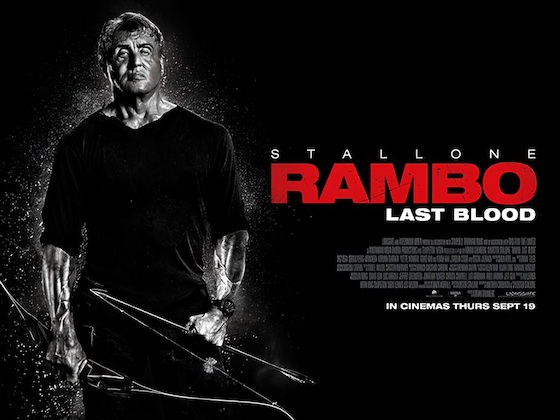
    Sylvester Stallone’s belated returns to the roles that made his name have worked out pretty well so far, I think, with Rocky Balboa and Rambo (i.e. Rambo 4) being among my favourites for both those franchises; not to mention Creed and its sequel. Unfortunately, here is where that streak runs out.

    Running a brisk 89 minutes (in the US/Canada/UK cut — a longer version was released in other territories), the film is almost admirably to-the-point. We all know where it’s going, and more or less what plot beats it will hit along the way, so it doesn’t belabour anything, it just gets on with it. However, you eventually realise why other films ‘indulge’ in the kind of scenes this one has done away with: movies are about more than just plot, they’re about character and emotion and why things happen. Last Blood is so desperate to get to the action that it strips those things back to their bare minimum, thus undermining our investment. And then, weirdly, it hurries through the action scenes too. The climax packs in as many gruesome deaths in as short a time span as possible, meaning none but the most stomach-churning have any impact; and even those disgusting ones are mercifully fleeting. More, it feels rushed and of little consequence. Far from a grand send-off to the Rambo saga (which a slapped-on voiceover-and-montage finale attempts to evoke), it feels like a short-story interlude.

    Did Rambo deserve better? Well, I wouldn’t necessarily go that far. But, on the evidence of this, it might be best if they don’t try again.

    2 out of 5

    Rambo: Last Blood was #74 in my 100 Films in a Year Challenge 2020.


  • Archive 5, Vol.10

    I have a backlog of 520 unreviewed feature films from my 2018 to 2023 viewing. This is where I give those films their day, five at a time, selected by a random number generator.

    Today, we’ve got quite the variety, from Oscar nominees to straightforward action entertainment; from super-timely recent documentaries to pioneering animation from almost a century ago. But they’re all connected by… the fact I wrote some notes after I watched them. Thank goodness, otherwise reviewing some of them years later would be bloomin’ impossible. (That’s not much of a connection, I know, but it was on my mind after In the Mood for Love last time.)

    This week’s Archive 5 are…

  • A Star Is Born (2018)
  • Boss Level (2021)
  • Coded Bias (2020)
  • Shadow of a Doubt (1943)
  • The Adventures of Prince Achmed (1926)


    A Star Is Born

    (2018)

    Bradley Cooper | 130 mins | digital HD | 2.39:1 | USA / English | 15 / R

    A Star Is Born

    This is the fourth version of A Star is Born, for whatever reason, but I’ve not seen any of the others so I won’t be making comparisons. I’m sure the story has been modernised (the last version was made in the ’70s, with the previous two in the ’50s and ’30s) without losing its fundamental essence: successful musician (here, Bradley Cooper) uncovers a new talent (Lady Gaga) who comes to outshine him. I guess it’s a timeless tale in the age of celebrity.

    Singers-turned-actors have a mixed history, though casting one in a story such as this is fitting, given how you need to believe they’re a top-drawer musical artist. Fortunately, Gaga actually can act as well as sing, so she’s an unqualified success here. The headline song, Shallow — a duet between the two leads, which attracted even more attention for how they performed it at the Oscars — is… perfectly fine. People went a little too crazy for it at the time, I feel. But it’s given weight by how well it’s used in the film, so I guess that could sway you.

    Also pulling double duty (well, triple if you count the singing) is Cooper, directing for the first time. (With all the talk this past awards season about how desperate Cooper is for an Oscar, it’s easy to forget that Maestro was only his second time behind the camera.) I seem to remember there being some complaints when he wasn’t nominated for direction for this one, but I think that was a fair omission. It’s not bad, but his directorial choices are a little too wavering. Like, in the early scenes, when the camerawork is all a bit documentary-ish, is effective — it undercuts the “glamorous story”, the almost-inherent fakeness of Musical as a genre, by making it feel Real. But later he gives in to glossy stylings too often; and too many of the song performances are captured with a lazily floating camera, lacking focus or decisiveness. It’s how they often shoot musical performances on TV: just kind of nothingy, moving the camera back and forth and side to side for the sake of making it ‘dynamic’. But, when you remember this is his first film, that’s fine — there’s a lot more good than bad about his work behind the camera.

    4 out of 5

    A Star Is Born was #18 in my 100 Films in a Year Challenge 2020.


    Boss Level

    (2021)

    Joe Carnahan | 101 mins | digital HD | 2.39:1 | USA / English | 15

    Boss Level

    For a long time, there was Groundhog Day. And then someone had the bright idea, “what if Groundhog Day but mixed with another genre?” So now we’ve had the sci-fi version (Edge of Tomorrow), and the horror version (Happy Death Day), and the YA version (The Map of Tiny Perfect Things), and the “what if there were two people” version (Palm Springs), and the TV series version (Russian Doll)… Here, we get the action movie version. And it’s pretty much exactly what you’d expect and hope “Groundhog Day as an action movie” would be. That’s praise, not criticism.

    Interestingly, considering the context I’ve chosen to place this in, the film itself acknowledges — you might even say relies on — the fact we’ve all seen time loop movies before. Rather than begin at the obvious beginning (i.e. the hero’s first loop), the story starts dozens of loops in, then fills in the backstory with flashbacks later on. It’s somewhere between a sensible choice (who hasn’t seen Groundhog Day?) and a bold move (what about people who haven’t seen Groundhog Day?) That said, I imagine people in the latter group can still follow it, it just might be what’s going on is mysterious for longer (most of us will instantly get “he’s in a day-long time loop”, they’ll just have to wait for that information to become clear).

    In fact, it’s a pretty economical movie across the board, hitting the ground running and rarely letting up. There’s very little repetition of “the same stuff every day”, instead taking our hero off in different directions. It does lean on voiceover quite a lot to get through some of the exposition, which won’t be to everyone’s taste, but it means it can hurry through the technicalities and get to what we came for — action and gags — so I can let it slide. On the basis of the kind of entertainment it’s designed to deliver, Boss Level succeeds admirably.

    4 out of 5

    Boss Level was #160 in my 100 Films in a Year Challenge 2021.


    Coded Bias

    (2020)

    Shalini Kantayya | 86 mins | digital HD | 16:9 | USA, China & UK / English & Chinese | 12

    Coded Bias

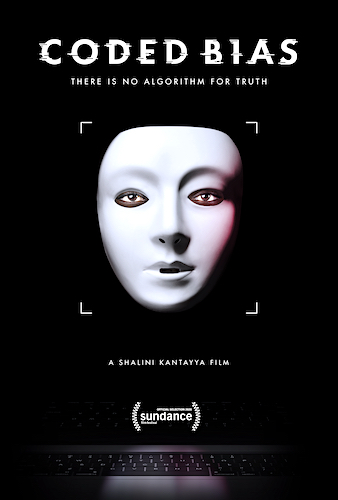
    Given the precipitous rise of AI in the past couple of years, I don’t know how relevant this documentary from 2020 still is. Back then, it was ultra-timely, but tech evolves so fast, I have to wonder if it’s already dated. Well, if you want to find out for yourself, it’s on Netflix.

    Not that it’s just about AI. It touches on a lot of interesting tech-related topics, like how facial recognition struggles with non-white people, or how algorithms were increasingly being allowed to control… pretty much everything. It makes a lot of broadly scary declarations about these things, but often lacks the detail to back them up. Not that it’s necessarily wrong, but it doesn’t prove its point; doesn’t clarify what’s scary beyond the gut reaction that this all sounds scary. This is partly because there’s so much to cover — it keeps jumping around between topics in short vignettes — which at least makes clear what a big field this is. There are also signs of hope, with the film offering some solutions (primarily: regulation in law) and highlighting fantastic people (almost all women, incidentally) doing great work to combat these things.

    Ultimately, the areas the film explores are interesting and it’s sometimes informative about them, but it’s also unfocused and disorganised in its structure, which is a shame.

    3 out of 5

    Coded Bias was #243 in my 100 Films in a Year Challenge 2020.


    Shadow of a Doubt

    (1943)

    Alfred Hitchcock | 108 mins | UHD Blu-ray | 1.33:1 | USA / English | PG

    Shadow of a Doubt

    I feel like Shadow of a Doubt sits in a certain tier of Hitchcock film; one where it’s not one of his very best known (Psycho, Vertigo, The Birds, etc), but regarded well enough that it definitely has its fans, for some of whom it probably is Hitchcock’s best film. Hitch himself repeatedly said it was his favourite of his own work, chiefly because he enjoyed how it brought menace into the surface-level perfection of small-town America. One critic has even described it as Hitchcock’s “first indisputable masterpiece”, which I would certainly dispute considering its predated by the likes of The 39 Steps, The Lady Vanishes, and Rebecca. Well, taste is relative.

    Personally, while Shadow of a Doubt definitely has a neat premise and strong moments, overall I felt it lacked any of the truly exceptional elements that mark out Hitch’s real classics. Sure, if most other filmmakers had made it, it’d probably be one of their best; but you’re competing with an incredibly strong body of work if you’re a Hitchcock film and, for me, this one is definitely second-tier. Of course, as I just intimated, being a second-tier Hitchcock film is still some achievement. It’s a shame the relative hype for this one is leading me to focus on the negative. Heck, maybe I’ll like it even more when I rewatch it someday. Until then, I feel it missed the mark of my expectations in places. I even thought it was the kind of movie someone could remake and possibly get something really great out of. (Blasphemy!)

    4 out of 5

    Shadow of a Doubt was #90 in my 100 Films in a Year Challenge 2023. It was viewed as part of “What Do You Mean You Haven’t Seen…?” 2023.


    The Adventures of Prince Achmed

    (1926)

    aka Die Abenteuer des Prinzen Achmed

    Lotte Reiniger | 66 mins | Blu-ray | 1.33:1 | Germany / silent | PG

    The Adventures of Prince Achmed

    The earliest (surviving) animated feature film is an ‘Arabian Nights’ fairytale about… well, the short version is in the title.

    But story schmory, because the real star here is the medium itself: Lotte Reiniger’s animation. There are so many wonderful little bits of work, it’s impossible to list. Consistent throughout, it’s remarkable how much character and personality Reiniger manages to convey through her ‘simple’ cutout silhouette puppets. Then there’s little naturalistic details, like boats bobbing on the water. Some of it even feels surprisingly modern. Not massively so, perhaps, but it doesn’t have that staid, stilted formality you might expect from a hundred-year-old rendition of a fairytale. And that’s not to mention the homosexual subplot. Plus, there’s so much more to the style than just silhouettes on plain backgrounds. There are shades and effects, to add depth or style: the wavy lines of a river; a mountain range fading into the distance; and subtler and clever things, too. It’s a visual feast.

    The restoration could be better, mind. There are a lot of dirt and scratches, which I can live with (there are so many of these, it would have to be manually patched up frame by frame, which would cost a fortune), but more egregious are stability and alignment issues. For example, during one scene, the top part of the next frame keeps appearing at the bottom. Surely that could’ve been fixed?

    Better is the soundtrack. The BFI Blu-ray offers a choice: the original 1926 score by Wolfgang Zeller (recorded in 1999) or an English narration (with effects), based on Reiniger’s own translation of her German text (recorded in 2013). Having watched the film with both, I’d say the narration adds nothing of value to the experience, especially as it sounds like narration from a preschool storybook. Just stick to the original music.

    But however you watch it, minor technical issues can’t distract from the artistry on display. This is truly the work of a master of her craft. Magnificent.

    5 out of 5

    The Adventures of Prince Achmed was #35 in my 100 Films in a Year Challenge 2021.

  • Archive 5, Vol.9

    I have a backlog of 525 unreviewed feature films from my 2018 to 2023 viewing. This is where I give those films their day, five at a time, selected by a random number generator.

    Today, a couple of Agatha Christie adaptations from very different eras; plus a heist, a horror, and a Hong Kong love story for the ages.

    This week’s Archive 5 are…

  • Evil Under the Sun (1982)
  • Sneakers (1992)
  • Us (2019)
  • Crooked House (2017)
  • In the Mood for Love (2000)


    Evil Under the Sun

    (1982)

    Guy Hamilton | 112 mins | digital HD | 16:9 | UK / English | PG / PG

    Evil Under the Sun

    The third in the run of Poirot adaptations that began with Murder on the Orient Express and continued with Death on the Nile — no, not the recent Branagh ones: this is the first time they did exactly that. But, funnily enough, both third films in their respective series (i.e. this and Branagh’s A Haunting in Venice) take a UK-set Christie and relocate it somewhere more exotic, to fit with the style of the rest of the series. So, rather than a small island off the north Devon coast (which likely stretches the definition of “under the sun”, based on my experience of Devon), here the action is located to the Adriatic Sea, although actually filmed on Mallorca.

    All of which is incidental when the rest of the movie is, at best, fine. It doesn’t help that the storyline is ultimately very similar to Death on the Nile, making the whole affair feel like more of a rehash than it needs to. Guy Hamilton’s direction underwhelms, giving a TV movie-ish feel, which is only exacerbated by the less-starry cast — there are recognisable names and faces here (James Mason, Diana Rigg, Maggie Smith), but, in totality, it’s not in the same league as the previous two films. It rather prefigures where Ustinov’s Poirot would appear next: literally, TV movies.

    3 out of 5

    Evil Under the Sun was #2 in my 100 Films in a Year Challenge 2020.


    Sneakers

    (1992)

    Phil Alden Robinson | 126 mins | Blu-ray | 1.85:1 | USA / English | 15 / PG-13

    Sneakers

    I never paid Sneakers any attention (not that it came up often) — I think, because it’s an American movie called Sneakers, I assumed it was about shoes — until indie magazine Film Stories announced a Blu-ray release (long since sold out, I’m afraid). I’m always keen to support small/new labels doing interesting things. And thank goodness for that, because, turns out, it’s actually very much my kind of film and good fun.

    So, turns out, in this context, “sneakers” are not an Americanism for trainers, but good-guy hackers who test security systems. When the team are hired to steal a code breaking device, they get suspicious about the setup and, of course, it turns out they’re right to be. Thus unfurls a tech-based heist thriller with a strong vein of humour, but without tipping over into being an outright comedy. Stylistically and tonally, that’s right up my street — I love a heist movie, and that kind of tone (funny without being silly; what I think of as a ‘real world’ awareness of humour) often works for me. It’s the kind of film that’s just a lot of fun to watch. I can imagine it being highly rewatchable; a go-to favourite for people who do that kind of thing.

    4 out of 5

    Sneakers was #132 in my 100 Films in a Year Challenge 2021.

    Us

    (2019)

    Jordan Peele | 112 mins | digital HD | 2.39:1 | USA, China & Japan / English | 15 / R

    Us

    Part of what made Jordan Peele’s debut feature, Get Out, such a success was the way it chimed perfectly with the cultural zeitgeist of 2017; indeed, of the whole decade (time may yet add “of the whole century”). This immediate followup doesn’t benefit from a similar boost, but it’s a strong work of horror cinema in its own right.

    Us follows a family who are attacked by a group of doppelgängers. That’s the most basic version, anyway — Peele seems to have a lot of ideas he wants to mix in here; almost too many. It seems to operate on the level of a home invasion/slasher kind of movie much of the time, but having more on its mind means it’s a bit too slow to satisfy as something so viscerally straightforward. Thus, all the Meaningful stuff ends up crammed into the third act, which perhaps leaves it feeling back-heavy. There’s also a big twist, naturally. On one hand, it seems really obvious, pretty much from the beginning; but on the other, it does cast the rest of the movie in a different light, which is quite interesting.

    If all that sounds rather negative… I blame my notes (I’m writing this review over four years later based solely on what little I wrote down at the time). Us is imperfect, but it’s also great in places, and is at least passably interesting to reflect on in light of the final reveal.

    4 out of 5

    Us was #23 in my 100 Films in a Year Challenge 2020.


    Crooked House

    (2017)

    Gilles Paquet-Brenner | 115 mins | digital HD | 2.35:1 | UK & USA / English | 12 / PG-13

    Crooked House

    Despite a moderately starry cast (Glenn Close, Terence Stamp, Gillian Anderson, Christina Hendricks fresh from Mad Men; plus Brits of varying degrees of recognisableness) and a screenplay by Julian “Downton Abbey” Fellowes, this Agatha Christie adaptation was virtually dumped straight to TV here in the UK (apparently it did have a theatrical release, but the TV premiere was less than a month later — and on lowly Channel 5 at that). Of course, some of the best Christie adaptations have been made for TV; but when something’s designed for theatrical and ends up skipping it, it’s never a good sign.

    Fortunately, Crooked House isn’t a disaster, though it’s far from a resounding success. Quite what attracted the big names I don’t know — it’s a reasonable setup (big dysfunctional family), but the screenplay isn’t exactly sparkling, aside from one or two moments or scenes. There is, at least, one helluva resolution. It also feels disjointed thanks to poor editing and/or direction. If the aim was to keep the pace up, it failed, because it begins to drag after a while. All of this is only partially masked by decent cinematography from Sebastian Winterø, which is the only thing that saves it from looking very TV-ish. Maybe it found its rightful home after all.

    3 out of 5

    Crooked House was #1 in my 100 Films in a Year Challenge 2020.


    In the Mood for Love

    (2000)

    aka Fa yeung nin wah

    Wong Kar-wai | 99 mins | digital HD | 1.66:1 | Hong Kong & China / Cantonese & Shanghainese | PG / PG

    In the Mood for Love

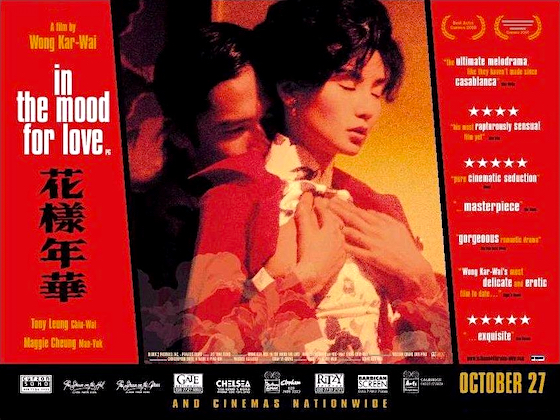
    If my four-years-late review of Us was hampered by largely-negative notes, my four-years-late review of In the Mood for Love is in even worse shape: no notes at all. Some trivia? I can do that! An interesting quote from the director? Got it saved! But anything on my own thoughts beyond settling on a five-star rating? Nope. I would try to repurpose my Letterboxd review, but all I wrote was: “I mean nothing but respect when I pithily describe this as Brief Encounter in Hong Kong.” Accurate but, indeed, pithy.

    On the bright side, this is a widely-acclaimed film, so if you’re after in-depth writing I’m certain you’ll find some somewhere else. Indeed, even if I did have more fulsome notes, I doubt I’d contribute anything more insightful. This is a subtle, almost delicate work, and that’s the kind of thing I feel I often struggle to properly get to grips with in my short, usually spoiler-averse reviews. Suffice to say, I concur that this is a very good film indeed; although, as with any understated work, some might prefer if the feelings and emotions were more overt. Each to their own.

    5 out of 5

    In the Mood for Love was #200 in my 100 Films in a Year Challenge 2020. It was viewed as part of Blindspot 2020.


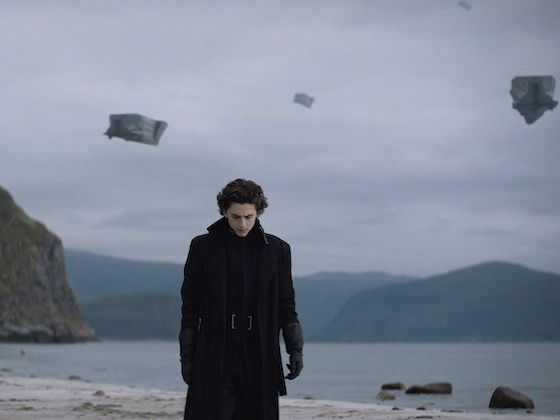
  • Dune: Part One (2021)

    aka Dune

    Denis Villeneuve | 155 mins | cinema | 2.39:1 | USA & Canada / English | 12A / PG-13

    Dune: Part One

    Trying to write about a film like Dune in a critical context over two years after it was released feels a bit… pointless. I mean, the film was a hit (albeit by mid-pandemic standards); and if you did miss it first time round, the hype around the sequel has surely already piqued your interest and/or left you cold, in which case what I say isn’t likely to be a deciding factor. Of course, yay/nay recommendations are not the only reason for critical writing — far from it — but, if you’re looking to do more than that, you better have something to say. So I confess here and now, for the sake of any readers looking for that kind of article, that I don’t think I have a unique or revelatory or even particularly insightful take on Dune — or Dune: Part One, as I’ve insisted on calling it ever since the wonderful surprise of seeing its opening title card (and sites like IMDb have finally got on board with too). All I can offer is how the film struck me personally, from my particular perspective; which is not nothing, but is what it is.

    So what is my perspective? Well, I’m far from a newbie to the world of Arrakis, though I can’t now remember in what order I first encountered the various texts related to it that I’ve experienced. So, going chronologically, I have read Frank Herbert’s original novel. Famously, it’s a doorstop of a tome, so I must have been relatively young because, for whatever reason, I’ve struggled to get through long books for the past couple of decades (I’ve tried Lord of the Rings two or three times and never got much further than Tom Bombadil; I started Shogun over four years ago and my bookmark still sits about halfway through it — and I did enjoy both of those! I just don’t have the staying power to get to the end). But I can’t have been that young, given the book’s subject matter and style, and the fact I enjoyed it. Indeed, I’d go so far as to say it’s one of my favourite novels. I’ve never read the sequels. I’ve long intended to (see: previous comments about lack of staying power when reading).

    I’ve also seen the 1984 David Lynch film, naturally — an interesting but fundamentally flawed endeavour — and the 2000 miniseries (and its 2003 sequel), which I remember being widely acclaimed — and I would have agreed with that sentiment — but it does look rather dated now, and so I’m somewhat wary of rewatching it (though I recently bought an expensive Blu-ray edition imported from Australia, so I certainly intend to at some point). The point of listing all that is this: I do not approach Dune free of expectation. Quite the opposite. And yet, I also didn’t have a specific vision in mind. And when you’ve got a director like Denis Villeneuve in charge — a director with a very definite and particular style — you know you’re going to get his interpretation of the material, so the more open-minded and receptive you are to that, the better. I mean, unless you’re on his exact wavelength, your imaginings are not likely to be the same as his, especially if you’ve allowed them to be shaped by one of the previous films, or even the concepts from unmade versions, like the one so interestingly documented in Jodorowsky’s Dune.

    Moody Messiah

    All of this a very long-winded and self-centred way of arriving at my point that, on first viewing, Villeneuve’s Dune took some adjusting to, because it wasn’t quite… right. Having said I went in with no expectations, clearly I had some, buried somewhere in my mind. And yet, the film also felt like exactly what one should have expected from Villeneuve if you’d seen his previous work, not least the sci-fi film he made immediately before this, Blade Runner 2049. The worlds of Blade Runner and Dune are very different, but, as filtered through the mind of Denis Villeneuve, there are distinct aesthetic similarities, most apparent in the brutalist influence in much of the world design. That starkness is quite at odds with the fanciful, sometimes even downright weird, takes on the material that came from the minds of creatives like David Lynch and Alejandro Jodorowsky; or even the miniseries, which, while I little more staid and constrained by a TV budget, is seemingly as influenced by fantasy TV of the period as by its science-fiction stablemates. With most previous visualisations of Dune leaning into such fantastical choices, Villeneuve’s (for want of a better word) realist take was, initially, a shock to the system.

    That’s a slightly disorientating feeling to be dealing with when watching a film for the first time. Thanks to the story and characters and scenes being so familiar, the mind is freed up to focus more on the surrounding decisions. Even when trying to be open-minded about them, there’s then some kind of disjunct between things that are very recognisable being presented in a very unrecognisable way. There’s also a kind of tug-of-war going on between the feeling that Villeneuve has been allowed to interpret the text exactly as he sees fit, and that’s a good thing because we’re getting his vision across the project, and the sense that it’s something of a shame to miss out on the craziness present in previous interpretations. After all, Dune is set 20,000 years in the future (you may recall it’s set in the year 10,191, but that’s not AD, it’s numbered from an in-universe event — look, let’s not get into the backstory here; but when you see articles mindlessly parrot “Dune is set 20,000 years in the future in the year 10,191”, know that the article writer is mindless because they haven’t bothered to query the maths, not because they’ve done the maths dramatically wrong) — think how different technology has made our world from three or four thousand years ago, so how much wilder and weirder could things get if you multiply that by a factor of five or six? None of which is to say Villeneuve’s choices are wrong, or even that I don’t like them, but they took some getting used to. On my recent second viewing, with the benefit of awareness of what I was about to see, I was able to enjoy the overall experience much more; it settled the qualms I had from my initial viewing and made it easier for me to appreciate the magnificence of the achievement.

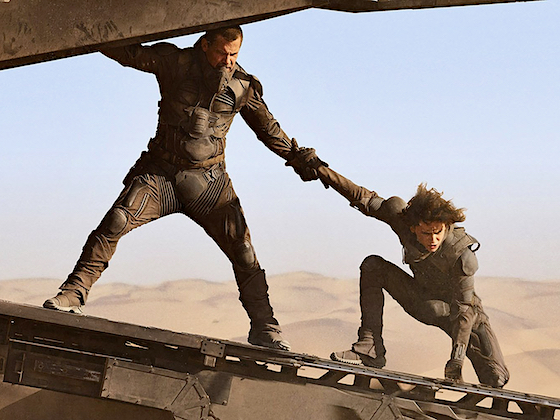
    Desert power

    Another point of contention (if we can go as far as calling it that) was where the film broke off. I’ve read some retrospective reviews recently that expressed their disappointment when the film suddenly ended mid-story, which I guess goes to show how not all marketing and information reaches all people — I thought it was well-known that this was to be Part One, and that a followup conclusion was dependent on its box office success (hence my pleasant surprise when the film so brazenly declared it was just Part One on its opening title card, not even saving that fact for a ‘surprise’ reveal on a closing title card, a la It), but there were definitely people who went in not knowing that and found it frustrating. Should it have been made even clearer? Should the film have formally been titled Part One in its marketing? Well, the reaction to various “Part Ones” released this year (like Mission: Impossible – Dead Reckoning, Fast X, and Across the Spider-Verse) suggests that audiences don’t really like only getting “Part One” ever; but, conversely, their acceptance of it depends on how it’s handled — how satisfying the movie leading up to the break is, and how the moment it stops is handled. But this is a whole side debate that I’ve stumbled into without adequate preparation (I’ve not even seen two of the three films I just mentioned), so I’m going to swiftly redirect us to Dune.

    Where Dune: Part One ends is, frankly, where I always thought it would. Other fans were more surprised by its choice, so perhaps it’s just too long since I’ve read the novel or watched another version and I just couldn’t remember a better break-point at approximately the halfway mark. The screenwriters could, though, because apparently the film originally carried on a little further in the story, before the endpoint was moved in the edit. It’s not the most dramatic place to pause the story or end a film — it doesn’t come after some big action sequence or major plot twist, nor on a cliffhanger of any kind — but I think it largely works. It reminded me of The Fellowship of the Ring, possibly the greatest “Part One” film of all time, in that in no way whatsoever does it feel like the end of the story — we’re definitely only in the middle somewhere, and there’s clearly a whole lot more to come — but it feels like a solid place to pause; like we’ve experienced the whole of a part, if that makes sense.

    There was some minor brouhaha the other day during the press for Part Two when someone asked Villeneuve about telling the story over two films — I didn’t pay it too much heed and it didn’t really blow up, so I forget the precise question and answer — but, as many pointed out, adapting Dune in a single film has been attempted before and famously didn’t work out, so doing it in two on this re-attempt shouldn’t really come as a surprise. Certainly, as a fan, I’d rather a two-part adaptation that gives the story the necessary screen time, even if that means a somewhat limp end to Part One, rather than have the whole book in a rushed three-hour single shot. And if early reviews of Part Two are to be believed, it’s paid off overall.

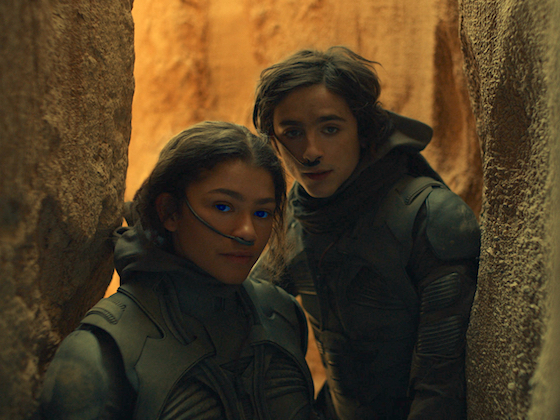
    Visions of the future

    But more on that ‘next time’, when I see Part Two myself and offer my verdict — hopefully in a more timely fashion than this, rather than waiting several years until the hoped-for Dune: Part Three, aka Dune Messiah (I’m not sure which title I’d rather they go with if/when it happens…)

    5 out of 5

    Dune: Part One was #176 in my 100 Films in a Year Challenge 2021. It placed 5th on my list of The Best Films I Saw in 2021.

    Dune: Part Two is in cinemas worldwide from tomorrow and will be reviewed in due course.

    2024 | Week 3

    I’ve already covered Barbie, so here are the other films I watched during Week 3…

  • Chicken Run: Dawn of the Nugget (2023)
  • The Best of the Martial Arts Films (1990)


    Chicken Run:
    Dawn of the Nugget

    (2023)

    Sam Fell | 98 mins | digital (HD) | 2.00:1 | UK, USA & France / English | PG / PG

    Chicken Run: Dawn of the Nugget

    I wasn’t a massive fan of the original Chicken Run (it’s not bad, but it pales in comparison to some of Aardman’s other works, not least any of the main Wallace & Gromit films), so I approached this belated sequel more with trepidation than excitement. You could interpret a near-quarter-century wait as indicative of holding off until someone had a genuinely good idea; or you could see it as a shameless effort to generate a hit by tickling childhood nostalgia through a return to a cult-ish favourite. Behind-the-scenes stories of unnecessary cast changes (the primary offender: apparently 55-year-old Julia Sawalha is now too aged (for a voice role as a hen?) so they recast her with 51-year-old Thandiwe Newton) did nothing to bring confidence.

    Anyway, setting all that aside, the end result is… adequate. I’d probably have said the same of the first one, so maybe that’s no surprise. But even that felt like it had some moments that stood out, whereas this is just unrelentingly fine. The plot concerns the chickens having to break in to a farm — yes, it’s taken 25 years to have the genius idea of “what if we just reversed the story?” The immediate point of reference for break-in-type movies nowadays is the Mission: Impossible franchise, which features a noteworthy heist a least once per film. And so Dawn of the Nugget references M:I, and the gag goes thus: “It’s an impossible mission.” “Uh, shouldn’t it be the other way around?” That level of underscored bluntness is about the level all the humour operates at: unsubtle, unsophisticated, unvaried, and uninspired.

    The arguable exception in terms of quality is the animation itself. That it’s done well almost goes without saying — Aardman remain one of the masters of stop-motion (Laika having challenged them in recent years) — but, on the other hand, there’s nothing to wow you. It’s more than competent, slick and expressive and so on, but there’s no imagery you’ll take away; no shot or sequence that would make you reach for adjectives like “beautiful” or “stunning”.

    Aardman’s next major effort (it’s a bit unclear if it’s a feature or a short, as it’s going direct to the BBC in the UK) is a return to Wallace & Gromit, planned for later this year (no doubt a Christmastime treat, as usual). As I said, I prefer that duo, so I’m always excited to see them back on the screen. I just hope that belated sequel (almost 20 years since their feature film and 16 since their last short) doesn’t feel this… unnecessary.

    3 out of 5

    Chicken Run: Dawn of the Nugget is the 5th film in my 100 Films in a Year Challenge 2024.


    The Best of the Martial Arts Films

    (1990)

    aka The Deadliest Art

    Sandra Weintraub | 91 mins | Blu-ray | 16:9 | USA & Hong Kong / English | 18

    The Best of Martial Arts UK VHS cover

    Originally released on VHS (back when martial arts films weren’t necessarily easy to come by for consumers, so I’m told), this hour-and-a-half selection of fight scenes is now available remastered / reconstructed in HD, with all the film clips also in their original aspect ratios, included on Eureka’s When Taekwondo Strikes Blu-ray. Hurrah!

    It is, primarily, a showcase for fight scenes. Whole uninterrupted sequences are shared, which is at least the right way to do it if that’s what you’re doing; unlike modern TV clip-show compilations, which seem to feel the need to cut the scenes to shreds and intersperse them with inane talking heads. There are a few interviews included here too, but rather than early-career comedians who’ll discuss anything for a paycheque, the interviewees include stars Sammo Hung, Jackie Chan, Cynthia Rothrock, and, er, Keith Cooke; plus Robert Clouse, director of Enter the Dragon.

    “Best Of” is more a titling convention than a fact, considering the film was co-funded by Golden Harvest and so only has access to their back catalogue, thus skipping entirely the output of the legendary Shaw Brothers studio. But then, what else would you expect them to call it — Some Pretty Good Bits of the Martial Arts Films We Had the Rights to Include? Of course, however you look it, 90 minutes of fight scenes is a pretty hollow experience — there’s no narrative; even the interviews offer mostly behind-the-scenes anecdotes rather than, say, a “history of the genre” approach. But if that’s all you expect, you get your money’s worth, because there are some stunners in here.

    Mind you, as well as being mostly limited to one studio, it’s also limited by time: having been made in 1990, there’s no Jet Li, no Donnie Yen; Van Damme is mentioned as a “rising star”… You could do the whole film over again — several times — if you were able to encompass a wider spread of studios and stars. But nowadays there’s no need: we can just head to YouTube for our out-of-context fight scene fulfilment… so long as you know what you’re looking for, anyway. That will always be the value of a curated experience.

    3 out of 5

    The Best of the Martial Arts Films is the 6th film in my 100 Films in a Year Challenge 2024.