
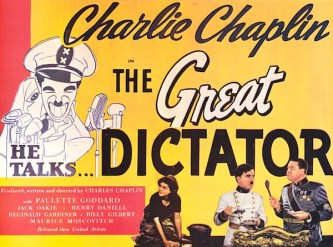
 One of the great things about doing 100 Films in a Year has been the number of firsts it’s either led me to or just been there to document: my first time watching films on Blu-ray and via legal download; my first time seeing films from directors as diverse as Woody Allen, Akira Kurosawa, F.W. Murnau and Krzysztof Kieslowski; my first time viewing such notable works as Breathless, Brief Encounter, Chinatown, Taxi Driver, This is Spinal Tap, The Wizard of Oz, and many more — including my first time seeing Citizen Kane. And here’s another for the list: my first ever Charlie Chaplin film.
The Great Dictator is one of Chaplin’s most widely-known films thanks to setting its sights on the Nazi regime and Adolf Hitler in particular. The general perception of silent comedians like Chaplin immediately suggests slapstick, but the real-world targets here make his work (on this film at least) satirical as well. I’m sure this made for great propaganda when it was released just a year into the war, but Chaplin’s skill and accuracy mean it works beyond that: like all good impersonations or spoofs it doesn’t make its objects silly for no reason, but instead takes what’s inherently laughable about them and exploits it. This would age some satirical humour, reliant as it can be on topicality, but the wide awareness even a modern audience has of Hitler means there are no comprehension problems today.
The style of humour can date nonetheless, but The Great Dictator remains funny — arguably the real test of a good comedy. It might not be to everyone’s taste, but that’s a problem comedy faces whenever it’s made. Chaplin loads the film with inventive and timeless routines, like the upside-down-plane, the coin-in-the-pudding, or the classic dance with an inflatable globe. Sometimes with comedy from decades previous, there’s the feeling you’re watching something that was funny at the time but no longer actually makes you laugh, thanks to changed conventions and expectations. For me, at least, there was no such problem here.
Surprisingly, there are some serious scenes too. While it doesn’t outweigh the comedy, there’s a degree of semi-factual drama in the plot that’s been well judged to help the humour cut deeper. The closing speech could come across as overly propagandistic but, again, it’s well pitched and therefore more galvanizing than inappropriately laughable. There are some bits, like this, that are sadly just as applicable to the modern world.
Chaplin allegedly said he wouldn’t have made The Great Dictator if he knew how bad things really were under Hitler, though some dispute this, arguing he knew and made it regardless. Some bits are slightly uncomfortable when one knows the reality, but whether Chaplin knew the truth or not these moments are fleeting. And, either way, Hitler and the Nazis were a worthwhile target: laughing at those who attempt to terrorise and dominate us is one of the most powerful weapons we have against them. That, certainly, is still true today.

* For reasons known only unto the BBFC, The Great Dictator was classified U until 2003, when film and video reclassifications both made it a PG. ^
 Let’s not pretend here: although the series have become intrinsically linked, Predator is Alien’s poorer cousin. Not that it’s a bad film — it’s an entertaining war flick that turns into a sci-fi/action/horror skirmish thingy — but it doesn’t have the same finesse that imbues
 Anne Frank’s is arguably the best-known individual story of the Holocaust, perhaps because the diary of a 13-year-old girl in hiding from the Nazis — and, sadly, eventually captured by them — makes a perfect gateway for young people into learning about those atrocities.
 “Iron Man, Iron Man, does whatever an iron can. Flattens clothes, nice and smooth; burns a hole if he doesn’t move. Look out! Here comes the Iron Man!”
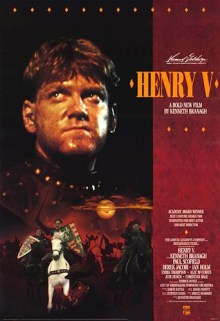 Once more unto the breach, dear friends, as I delve into a second version of Henry V in as many (viewing) days. (I dread to think how many reviews of this film began with a similar quote-based pun.) Inevitably, having watched them so close together, this is as much a comment on the relative merits of Branagh’s and
  Or The Chronicle History of King Henry the Fift with His Battell Fought at Agincourt in France, as the title card (and therefore
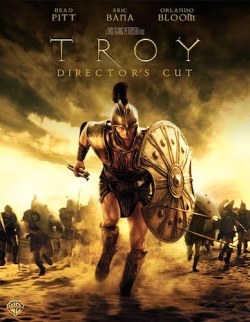 A lot of people didn’t like Wolfgang Petersen’s big budget version of The Iliad. I can’t remember the specific criticisms any more, other than that some friends who’d read the poem found this to be simply laughable. Personally, I quite enjoyed it — it may not be classic art like its source, but the theatrical cut of Troy was a more than passable example of swords-and-sandals entertainment. If not an epic, despite its running time, it was quite fun.
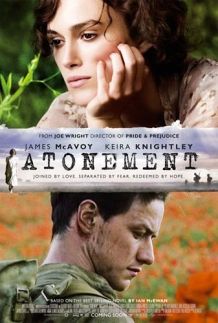 “The Most Nominated Film of the Year” proudly proclaims a sticker on the cover of Atonement’s newly released DVD. Well, not quite: according to
  What if the Americans made a movie of Winston Churchill’s life, prone as they are to re-write World War 2 history to show they won it all by themselves?
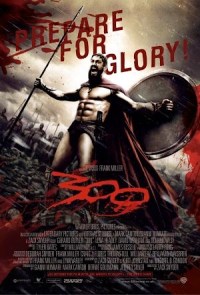 Highly stylised (and praised) adaptation of Frank Miller’s graphic novel about the battle of Thermopylae.
 100Films.co.uk