
Gareth Edwards | 123 mins | Blu-ray | 2.40:1 | USA & Japan / English | 12 / PG-13
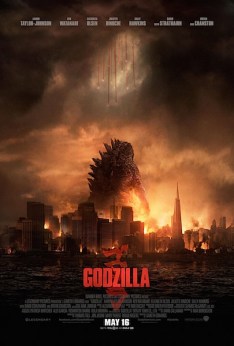 The second attempt at a US re-imagining of Godzilla received mixed reviews last summer, though there can be little doubt that it’s much more successful than the first, Roland Emmerich’s 1998 attempt. Where that movie basically starred a generic dinosaur-esque creature, here British director Gareth Edwards (director of the exceptional, five-star low-budgeter Monsters) has endeavoured to stay faithful to the style and structure of the original Japanese movies starring the titular beast, albeit brought in to the Hollywood fold with slick storytelling and a modern CG sheen.
In many respects, Edwards’ work is the real star of the film. Other elements are successful, but sometimes fitfully so, and it’s his choices and vision at the helm that hold the whole together. This is none more obvious than in the way the movie treats the titular beast — essentially, it’s a giant tease. It’s a slight spoiler to say when he first turns up on screen (the unknowing, like myself, will expect him in one specific bit considerably earlier), but we’re made to wait for it… and then Edwards abruptly cuts away. Godzilla disappears off under the water, heading for the next plot location, and he’s off screen for yonks. When he does (literally) resurface, we’re again teased with glimpses, and any full-on shot is a quick few frames before jumping to something else.
Some viewers and/or critics have questioned this as a bizarre attempt not to show the monster, but they’re entirely missing the point, and Edwards’ genuine filmmaking technique. It all becomes obvious in the finale (or should, anyway, but clearly some people don’t get it): after over an hour and a half of teasing us, there’s an almighty brawl, and Godzilla is shown off in all his glory. Edwards isn’t trying to hide the monster, he’s saving it.  He’s denying us shots of it not to punish the viewer or to trick us, but literally to tease us, to build excitement and suspense and desire for the final battle. Too many people aren’t used to this — modern blockbusters have trained them for non-stop show-us-all-you’ve-got action from start to finish — and that’s a shame, and their loss, because Edwards’ method is superior to, and ultimately more entertaining than, 95% of other similar blockbusters.
It’s fair to say that around the monster action is a fairly rote plot. The human characters get some drama early on, but then are largely swept away by events. I can’t say I minded this too much — I don’t come to a Godzilla movie for the emotional relationships of the characters. At any rate, I’ve seen an equal number of reviews that criticise the film for not making more of the Aaron Taylor-Johnson/Elizabeth Olsen storyline, to those that think there’s too much of it and it should have been dropped. I guess it depends what you want from the movie — for me, Edwards almost hits the Goldilocks point of getting it just right, though I think Olsen is ill-served by how little she has to do.
The cast is full of actors who you might say are better than this — Bryan Cranston, David Strathairn, Sally Hawkins, Ken Watanabe, Juliette Binoche — which, again, is a bone of contention for some. Why are such quality actors in this? Why are they given so little to do? Again, this is a decision I think worked. For one, they’re actors you’re not used to seeing in this type of movie, which immediately brings a freshness. For another, no, the script doesn’t give them all it could. But because they’re such good actors, they bring it anyway — Hawkins and Watanabe, in particular, bring all kinds of layers to their characters 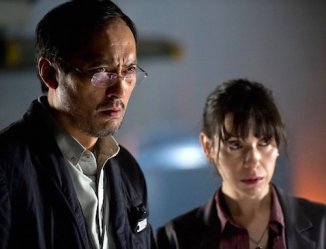 that simply aren’t present in the functional dialogue they have to work with, simply in the way they stand, the way they look at things… It’s not the focus of the film, it’ll pass many people by (indeed, it has), but I think there are some fine performances here. Not awards-winning ones, obviously, but in the hands of lesser actors, they would’ve been so much poorer.
If the human drama isn’t always up to scratch… actually, I’m going to stop myself there, because this is a blockbuster about giant monsters — how many of those have human drama that’s “up to scratch”? Very few, if any. I’m not saying that to excuse the film, but rather to point out that the fact it manages any at all (and it does) is a greater success than most of its ilk achieve. Nonetheless, the stars of the show are the action sequences. Rather than assault us with them, Edwards keeps them nicely spaced out. Each one feels different from the last — not an insignificant feat for a movie about a giant monster that stomps on things, which is more or less what these movies usually do ad infinitum. They’re clearly constructed, cleanly shot… I don’t always mind ShakyCam, but it’s too easy to do, and as such is most often used unintelligently. This is proof that a well-executed classical style is the way to go.
Perhaps the best thing of all is the sense of scale. I believed in the monsters’ size and the effect it had. That was something I never got from Pacific Rim (as I noted in my review). Some have claimed the monsters’ relative size shifts around, or that their effects on the environment are inconsistent (at one point Godzilla’s arrival causes a veritable tsunami; 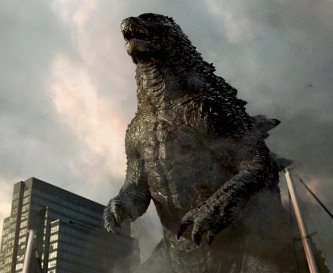 later, he slips quietly into the bay). Maybe, maybe not, but they always look big — more importantly, they feel big. There are various reasons for this, including Edwards’ shot choices: we often see them from a human perspective on the ground; when we do see wider shots, they’re from suitably far away, or high up, like a helicopter shot (if it were real…) Too many directors shoot their giant monsters with angles and perspectives as if they’re human-sized, which makes them come across as human-sized even when there’s a building next to them, never mind when they’re in places without reference points (coughatsea,PacifcRimcough). Edwards never does this, and it pays off. More than once I regretted that I can never be bothered to go to the cinema any more, because I bet this looked stunning on the big screen (I know I’m certainly not alone in this feeling).
Another point worthy of praise is Bob Ducsay’s editing. It’s hard to convey in text exactly why, but the size of the monsters is used to wondrous effect when it comes to scene changes. For instance: we might be in part of the story following Olsen’s character. The monsters appear fighting in the background, so we follow the action. In the last shot of that particular sequence, the camera pans down to find Taylor-Johnson and pick up his thread of the story. The film does this multiple times throughout; it’s a distinct style, even. Written down like this it sounds kind of cheesy and forced, but it isn’t in the slightest: it’s subtle, seamless; I’d wager it goes unnoticed by most, even, but I was impressed.
Godzilla clearly isn’t a perfect film, but Edwards has done a great job of taking the essence of Toho’s long-running character (celebrating its 60th anniversary in the year of this film’s release) and rendering it in a Hollywood blockbuster style, one that’s pleasingly more classical (as it were) than the crash-bang-wallop instant-‘gratification’ style of  most present big-budget summer tentpoles. That it got a little lost and under-appreciated in a summer of mega-hits is a real shame — it may not quite match summer 2014’s high points of X-Men: Days of Future Past or Dawn of the Planet of the Apes, but, for this viewer at least, it edged closer to them than to Marvel’s two widely over-beloved offerings.
And it wraps itself up as a completely self-contained film to boot — bonus! A sequel is forthcoming, however, just as soon as Edwards is finished with his Star Wars rumoured-prequel. I think both films are something to really look forward to.

Godzilla debuts on Sky Movies Premiere today at 4pm and 8pm.
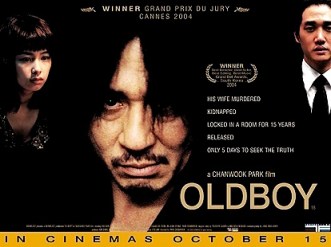 Perpetual drunkard, but also loving husband and father, Oh Dae-su (Min-sik Choi) is snatched off the street and imprisoned in a shabby bedsit without explanation. He learns that his wife has been murdered and he’s being blamed. His daughter lives, but he doesn’t know where. Then, 15 years later, and equally inexplicably, he’s released. He befriends a sushi chef, Mi-do (Hye-jung Gang), before being contacted by Woo-jin (Ji-tae Yoo) who claims to have been his captor. Dae-su is given just five days to discover why he was locked up. If he succeeds, Woo-jin will kill himself; if he fails, he will kill Mi-do. Dae-su’s investigations lead him to dark secrets, shocking revelations, and violent retribution.
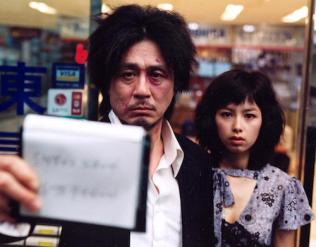 Choi is excellent in the lead role, deserving of all the praise he’s garnered. It’s a highly unusual role with a lot of different and sometimes conflicting facets, but he pulls it all off with aplomb. He maintains a sense of mystery and unknowableness throughout, whilst also being a plausible human being in an implausible situation. As his adversary, Yoo makes for an excellent villain: calm, businesslike, always with the upper hand. The final confrontation is a scene to be savoured, calling to mind everything from James Bond to David Fincher (for me, at least) in terms of the villain’s slick lair and the twisted events that unfold in it.
 In Oldboy’s case, however, so much of what makes it special, unique and exceptional lies in the direction. So do you copy that wholesale? If you do, what’s the point — just watch the original. But if you don’t, what’s the point — you’re losing a large chunk of what’s special. I guess this is why the US version didn’t go down so well — whichever path it took, it was on a hiding to nothing. I look forward to seeing it to judge for myself.
 2013 Academy Awards
 Argo is probably the most traditionally entertaining from 2012’s crop of Best Picture nominees. I know a lot of people awarded that honour to
 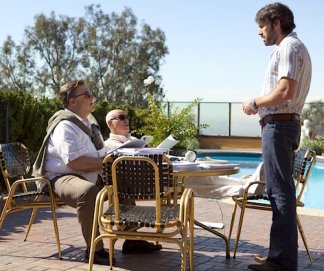 This is where we get the humour, mainly directed at the movie industry. Some say this is why it won the big awards: Hollywood loves a look at itself, and here it’s both satirical (“So you want to come to Hollywood, act like a big shot, without actually doing anything? You’ll fit right in!”) and congratulatory — after all, the plan goes ahead and so (spoilers) Hollywood saves the day. The film creates just the right balance between taking the mick out of Hollywood and bigging-up its role in saving some lives, while also not spending too long on this section that we forget the perilous situation on the other side of the world. After all, once all the fun and games in Tinseltown are over, it’s back to the serious business in Iran.
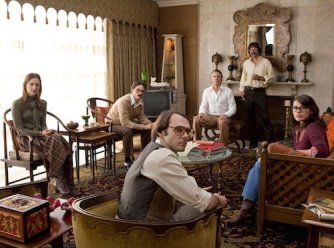 That’s just artistic licence, really — it’s not as if these people were safe, they just had a damn good plan; and, as I said, you need a dramatic ending for a thriller. However, all the “chasing them down the runaway” stuff is a bit full-on and action-movie-ish. It’s not even accurate to how it would go in real life, if it had happened, because the militia’s cars would need to be travelling phenomenally fast to keep up with the plane, and they aren’t seen to be affected by its jets either. For me, the rest of the climax — the guards checking the ‘crew’ out, phoning the LA office, later running up to the control tower, etc — all works; assuming you accept the film is still a Hollywood thriller, not a fact-bound documentary, and so needs a suitably dramatic climax. It’s a shame they didn’t leave it at that, but not a deal breaker either.
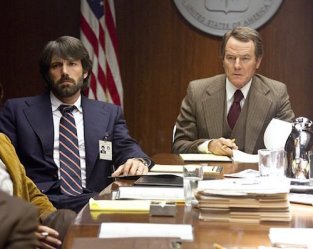 That was in the ’70s — adjusted for inflation, it comes to over $350 million. For a drama about a couple divorcing and arguing over custody of their kid! Today, it’d be lucky to earn a tenth of that, even if it was up for Oscars. But I digress.) It’s a surprising Oscar pick these days because it’s a genuinely enjoyable watch, rather than a gruelling look at something-or-other serious.
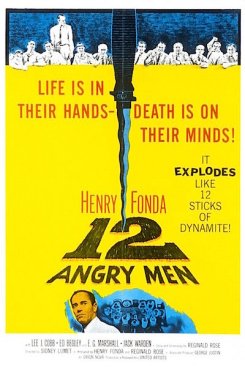 Twelve people sit around in two rooms and talk for an hour and a half in more or less real time — sounds like a recipe for dull pretension, and yet 12 Angry Men is anything but. In fact, it’s probably one of the most gripping thrillers ever made.
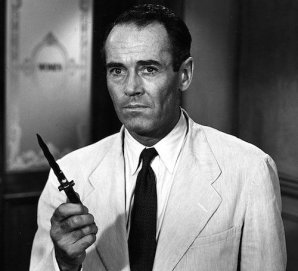 Slowly, steadily, surely, Fonda’s juror leads a recap of the evidence, analysing it, picking it apart, challenging presumptions and suppositions. Gradually, other jury members begin to be won over. This could be trite — of course our hero has to start convincing the others — but this is where the writing and cast shine again, because even men who seemed unswayable have their minds changed in a plausible fashion. Even then, the outcome rarely seems certain, each victory hard won, so that the film holds you rapt, desperate for sense and reason to prevail. There are moments of tension which may literally push you to the edge of your seat; moments of exultant success which may elicit an exclamation of approval similar to a point scored in a sports match.
 For all that 12 Angry Men seems to show justice being served in the face of adversity, what it actually shows is justice being served thanks to blind luck: if Juror Eight had been a weaker-willed man, or another who was just as prejudiced as his eleven compatriots, then the debate would never have occurred, the teenager condemned to death in the blink of an eye. What are the odds on every jury room containing a Henry Fonda? I don’t fancy them myself.
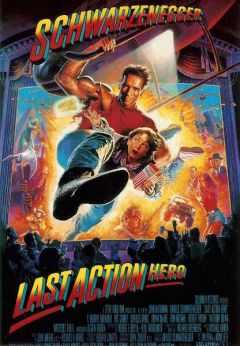 The first film to be advertised in space (
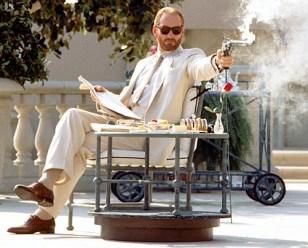 That said, it’s probably a good thing this isn’t a whole movie of “fictional characters in the real world” — you can imagine how that would play out; all the predictable “fish out of water” hijinks. However, at just over two hours, this isn’t a short film, and cutting out some of the middle wouldn’t have hurt.
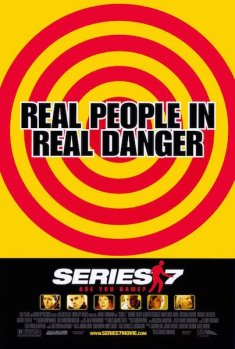 The debut of director Daniel Minahan — who’s since helmed episodes of over a dozen TV shows, including HBO hits
 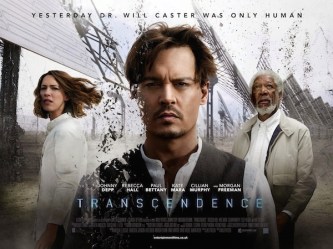 Christopher Nolan’s regular director of photography (he’s lensed seven Nolan films, from
 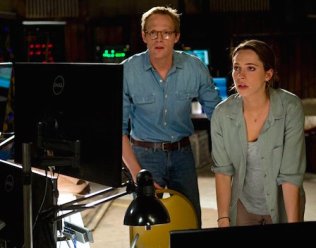 Another element that’s probably too challenging for some is where our allegiances are meant to lie. (Some spoilers follow in this paragraph.) At the start, it’s clear Depp & friends are the heroes and the murderous anti-tech terrorists are the villains. As events unfurl, however, artificial-Will perhaps goes too far, Bettany teams up with the terrorists, and eventually so do the government and Will’s other friends. There is no comeuppance for some characters who are initially begging for it; a good one self-sacrifices somewhat heroically. This doesn’t fit the usual Hollywood mould at all (well, the last bit does, sometimes), no doubt to some’s annoyance. The number of people who clamour for any sliver of originality or texture to their blockbusters, but then are unhappy when they actually get it…
 robbing the entire film of tension and nullifying any sense of surprise, and the movie doesn’t compensate with, say, a feeling of crushing inevitability. The climax in particular becomes a drawn-out exercise in connect the dots: we’ve been shown how this all ends up, now we’re just seeing the minutiae of how it got there. There’s no twist or reveal to speak of, just a wait for it to marry up with what we already know.
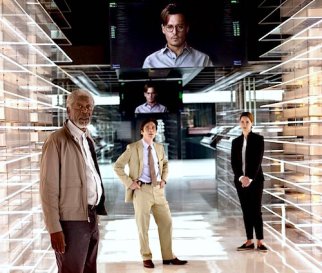 I guess that’s probably the explanation for Transcendence’s poor reception, in the end: it’s too blockbuster-y for viewers who’d like a dramatic exploration of its central moral and scientific issues, but too lacking in action sequences for those who misguidedly expected an SF-action-thriller. I maintain it’s not slow-paced, especially if you think it’s going to be, but nor does it generate doses of adrenaline on a committee-approved schedule. It’s not all it could have been, but if all you’ve heard is the mainstream drubbing, it’s probably better than you expect.
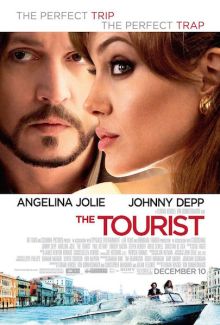 Much maligned on its release, I thought The Tourist was actually a decently entertaining light thriller.
 25 years before Jennifer Lawrence had to
  Liam Neeson shoots wolves for an arctic drilling company, but when his flight home crashes, he must attempt to lead the small band of survivors across an icy wilderness to the mere hope of safety — pursued all the way by murderous wolves…
 100Films.co.uk