2014 #119
Alfred Hitchcock | 112 mins | Blu-ray | 1.66:1 | USA / English | PG / PG
 Adrenaline-addicted photographer L.B. “Jeff” Jefferies (James Stewart) finds himself house- and wheelchair-bound during a New York heat wave. Whiling away time spying on his neighbours around their shared courtyard, he begins to suspect the man opposite, travelling salesman Lars Thorwald (Raymond Burr), has committed a murder and is trying to cover it up. Jeff persuades his high-society girlfriend Lisa (Grace Kelly), visiting nurse Stella (Thelma Ritter) and police detective friend Doyle (Wendell Corey) to help investigate, but no hard evidence is forthcoming. Is Jefferies just bored and paranoid?
The end result of this, as a film, is a heady mix of suspicion, tension, voyeurism, and a light romantic subplot — Hitchcock through and through. It’s one of his best-regarded films, too: Vertigo may gain the Sight & Sound plaudits, but Rear Window is second only to Psycho on the IMDb Top 250; and, as I write, they sit precisely side by side, which on a list that long is tantamount to equality. (Not that S&S ignored Rear Window: it’s at #54 on their last list.)
At its most basic level, Rear Window is an incredibly effective thriller. The setup is intriguing, followed by a drip feed of facts and clues that invite us to play detective too, joining in with the characters’ speculation. Jeff believes Thorwald’s guilt almost unequivocally, but not all his friends and associates agree, which gives us permission to doubt the movie’s ostensible hero. Maybe this isn’t the story of a well-executed murder uncovered by a right-place-right-time layman, but instead the narrative of an adrenaline junkie driven half-mad by being cooped up at home? The final reveal might turn out to not be the truth of the crime, but the truth of Jeff’s paranoia. The romantic subplot, which pivots around the vastly differing lifestyle desires of the pair (Lisa loves being a fashionable New Yorker, Jeff desires to explore the dangerous parts of the world), only emphasises the notion that Jeff may just be unhappy being ‘settled’.
 Hitchcock certainly didn’t consider Jeff to be an out-and-out hero, even aside from the very real possibility that he may be wrong — as he put it in one interview, “he’s really kind of a bastard.” After all, what right does he have to be poking his nose so thoroughly into other people’s business? Not only to spend his time spying on all and sundry, which in many respects is bad enough, but to then investigate their lives, their personal business, even break in to their homes. If he’s right, they’ve caught a murderer, and the methodology would be somewhat overlooked; if he’s wrong… well, who’s the criminal then?
So Jeff is a voyeur, a position that one can interpret the film as implicitly both condoning and condemning; perhaps not in equal measure, but there are pros and cons. Through his directorial choices, Hitchcock makes us into one as well. In a genius move, we’re limited to Jeff’s perspective: we only see inside his apartment and the view from his window, pretty much as he sees it. If he falls asleep, we most often fade to black. We don’t have the advantage of knowing much that he doesn’t (as is sometimes the case in this kind of movie), but we do know exactly what he does, no less. The only difference is we can consider the possibility that he’s fooling himself — we have slightly more objectivity. Nonetheless, placing us in his shoes so thoroughly makes us consider the feeling of being a voyeur too. For some it’s uncomfortable; for others, probably a thrill; for many, I suspect, it’s a bit of both.
All of this is made possible, in part, by the movie’s incredible set, which has to be one of the greatest ever constructed. To quote from IMDb’s trivia section:
The entire picture was shot on one set, which required months of planning and construction. The apartment-courtyard set… consisted of 31 apartments, eight of which were completely furnished… some of the buildings were the equivalent of five or six stories high. All the apartments in Thorwald’s building had electricity and running water, and could be lived in.
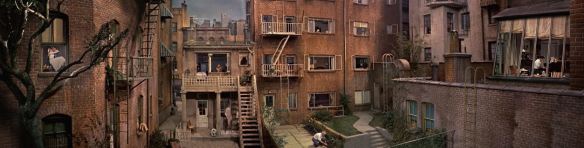 Click to enlarge.
It’s an incredible toy box for Hitchcock to play in, and every technical element rallies to use it to its full effect. Virtually the entire movie is shot from within Jeff’s apartment, the camera panning from apartment window to apartment window as we follow Jeff’s voyeuristic gaze. (This choice has, decades later, led to at least one striking re-working.) In every film the camera’s lens is our window on the world, of course, but you rarely feel it so much as you do here. We share in Jeff’s frustration about not being able to get a closer, better look; at only being able to watch as his friends imperil themselves, so close — only the other side of the courtyard! — yet so far away. Nonetheless, he’s afforded something of the same perspective we get as film viewers: late in the film, as Lisa searches the suspect’s apartment, Jeff can see Thorwald returning home, but he has no way to warn his girlfriend — just like us in so many moments of movie suspense. (These days he’d just send her a text, of course. Though I suppose you could still milk that: He can’t handle predictive texting! Autocorrect’s got it all wrong! He’s dropped the phone! How did he load a Chinese keyboard?!)
There’s the sound design, too. The heat wave means windows are open, letting the sounds of parties and whatnot drift to all ears. It’s not as meaningful a commentary on the viewer’s experience, I don’t suppose, but it lends a veracity and sense of immersiveness to the situation,  further enhanced by the almost total lack of a score (only present in the opening few shots).
In crafting both a suspenseful thriller and a commentary on the audience’s perspective, Hitchcock created the kind of movie that can be appreciated by both the casual movie fan and the analytical cineaste alike. Whatever one’s reasons for appreciating Rear Window, it’s certainly a masterpiece.
Rear Window was viewed as part of my What Do You Mean You Haven’t Seen…? 2014 project, which you can read more about here.

 As presidential nominee Barack Obama talks about the American Dream, in a run-down corner of the nation a trio of small-timers plot a robbery, landing them in hot water with some nasty people.
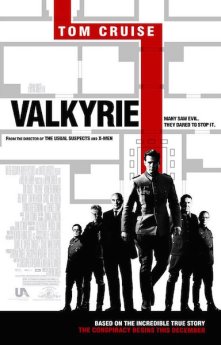 After abandoning the X-Men franchise for a
 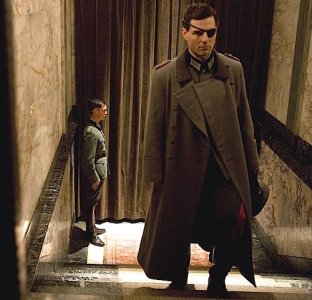 One of the stated aims of the conspiracy is to show the rest of the world that not everyone in Germany believed in what Hitler and his inner circle were doing. It may have taken us a long time to realise that, for fairly understandable reasons, but quality films like this help get the message out. Singer has crafted a proper thriller here, replete with scenes of edge-of-your-seat tension. Many a filmmaker can’t manage that with a fictional storyline, never mind one where we know exactly how it turns out.
 but nor is he in simplistic action hero mode.
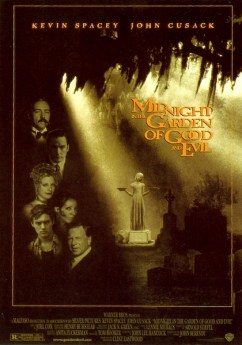 Sent to write “500 words on a Christmas party” in Savannah, Georgia, journalist John Kelso (John Cusack) instead finds himself covering a murder trial where he’s become friendly with the accused (Kevin Spacey).
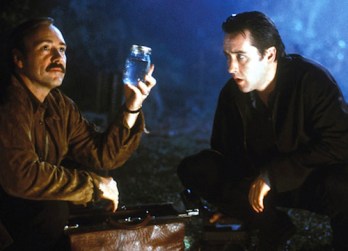 Like many an “adapted from a bestseller!” movies, I guess Midnight in the Garden was a big deal in its day that’s faded to semi-obscurity since (see:
  Sometimes, films are so maligned that you feel you just have to see for yourself. Or I do, anyway. Crime thriller Runner Runner, with its
  Brian Koppelman and David Levien’s screenplay is packed full of dreadful dialogue, which isn’t helped by phoned-in performances from all the principle cast, in particular Affleck. I guess he needed a payday between his Oscar-winning directorial efforts. I’ve seen some assert that the dialogue and delivery are meant to be mannered and stylised, but I just don’t buy it. Unless the style was meant to be “cable TV cheapie”, anyway. The Puerto Rican filming locations are quite prettily shot by DP Mauro Fiore, at least, but that’s scant consolation when everything else is so woeful.

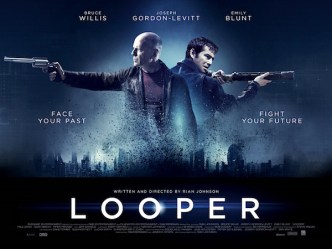 Writer-director Rian Johnson re-teams with the star of
  Firstly, the less you know the better. I pretty much knew the above before I went in, and that meant the film had surprises from the get-go. For instance, the near-future world most of the action takes place in has been well-realised by Johnson and his design and effects teams, and time travel is not the only SF concept or imagery employed here, which I wasn’t aware of. Their vision is
  Heading up the cast, Gordon-Levitt does a good Bruce Willis impersonation — believable, but not a slavish impression. That was probably quite necessary, because I don’t imagine Willis has the thespian chops to emulate an older Gordon-Levitt. Notoriously, the younger actor does the whole thing under prosthetics designed to make it more plausible he’d age into Willis. They’re a bit weird: not badly done — far from it, in fact — but you’re always kind of aware they’re there. A highly able supporting cast flesh out the rest of the characters, though most memorable is young Pierce Gagnon as an imperilled child you wouldn’t necessarily mind getting killed. And I mean that in a nice way; about the film and his performance, if not the character.
 Even if there are some logic issues, it doesn’t fatally undermine the movie. Looper comes with the joys of a well-imagined future, a captivating storyline, engaging characters, and enough twists and turns along the way to keep you guessing at the outcome. The best genre movie of 2012? That was a year of stiff competition among SF/F pictures, but Looper may have the edge.
 Adapted from one of Agatha Christie’s best-regarded novels (now commonly known by its US title, And Then There Were None), Ten Little Indians sees a group of ten people invited to a remote location (in the book, an island; here, an alpine hotel) by a mysterious host, who doesn’t appear but does accuse them all of murder via a recorded message. Then, stranded, they begin to die one by one.
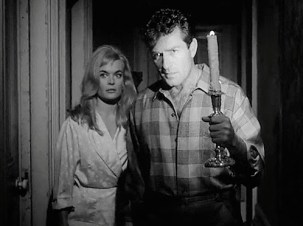 voiceover informs us this is our chance to have a guess. Ah, the ’60s.
 The
The  Your enjoyment of the film will hinge on your tolerance for this level of filmmaking. War Zone isn’t a Marvel-derived adaptation to sit alongside their big-budget in-house productions, but one to rival other hard-R violence-focused flicks. It may be kind of nasty in places, but no more so than other movies of its ilk; and really, if you look at it from outside the confines of sometimes-simplistic comic book morality, the Punisher is quite a nasty character.
 When it comes to hitman movies, I’d’ve said there’s
  If you’ve ever found a late-night train commute dull, this single-location thriller may make you rethink any complaints. Half-a-dozen people travelling from London to Tunbridge Wells find their train speeding out of control. It’s up to them to discover what’s happening and how to stop it.
 100Films.co.uk