
Michael Reeves | 83 mins | TV | 18
 Notorious for having numerous cuts forced upon it by censors, over 40 years after its initial release Witchfinder General — now uncut — seems almost tame. But gore and sadistic violence certainly aren’t the main attractions — there’s a lot more to the film than that.
Though I’m sure it was quite horrific in its day, there’s nothing here to rival the gore or gruesomeness of today’s horror movies; or, indeed, of horror movies being produced in other countries around the same period. Not that I’m advocating censorship, but one advantage to the previous cutting of the film is that it’s been restored from vastly inferior sources (it looks about VHS quality to me), making it possible to note what the censors felt needed removing. It’s interesting that, with only one brief exception, all the cuts are of violence to women, while similar violence towards men remains intact. Very moral.
(There are two ‘complete’ versions available now, often labelled the Director’s Cut and the Export Cut. As usual, Movie-Censorship.com has more details, but there seems to be no difference in violence (despite what IMDb may claim) — the latter merely uses some alternate takes, 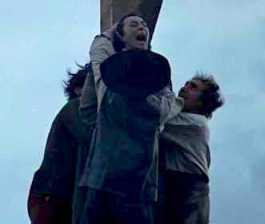 shot against Reeves’ wishes, featuring needlessly topless wenches. This is the cut shown by the BBC.)
If the violence isn’t disgustingly gory, what’s truly horrific is how real it is. I have no idea if the torture and execution methods are historically accurate (the lead characters were real people but the plot is far from historically accurate), but the opening hanging is nasty due to the woman’s distress, the later burning tortuous because we know that, at some point in history, for whatever reason, this kind of death penalty was dolled out… If it’s horrific or scary it’s down to the threat of violence, or the cynical sadism with which people are tortured, rather than gory special effects (indeed, the blood on display is marvellously fake) or supernatural goings-on (of which there are resolutely none).
In fact, if we’re discussing genre, it’s more like an historical action-adventure, with soldiers dashing around the countryside, horseback chases, bar brawls, ambushes, and the occasional sword fight. If you changed the villain from a witchhunter who tortures and murders in Very Nasty Ways for money, to a dastardly chap who just stabbed people for money, the film would still function and the controversy would instantly evaporate. I’m not saying they should have, because that’s not the point; just that, in structure and (in many places) tone,  Witchfinder General is more action-adventure than horror.
Tom Baker (not that one) and director Reeves’ screenplay (adapted from Ronald Bassett’s novel and nothing to do with the inspiration for its US title, Edgar Allan Poe’s poem The Conqueror Worm) adds a surprising amount of depth for either genre. It largely eschews the politics of the era — both the good and bad characters are on the side of Cromwell, the civil war only cropping up to provide period detail or motivation for characters’ movements — instead developing character and thematic interest.
Take hero Richard Marshall’s relationship with his beloved Sara’s guardian uncle, John Lowes. Lowes dislikes both Richard’s cause and his prospects, but is prepared to condone their marriage so Sara can escape the witchfinder’s path. Or the myriad minor characters who are well prepared to do as they’re told, or report people as witches just to get rid of them, often in silent agreement with the witchfinder and/or magistrate that everyone knows these people aren’t guilty of any real crime, but are still prepared to say or do whatever because someone wants rid of them. Thematically, one can read points about the corruption power can bring, in particular abuse of political situations.
 Best of all is the witchfinder himself, excellently portrayed by horror stalwart Vincent Price. Indeed, all the credit may lay with him, because it’s his line deliveries and uncertain looks that make the character conflicted early on, a man who may believe he is genuinely doing good for Christian values, but is seduced down darker paths by money, power, lust, and the prospect of revenge. When he allows himself to be lured to Sara’s bedroom as payment for leniency on her uncle, we’re uncertain if he’ll take what’s intended or use her loose ways as proof of witchery. That it’s the former quickly indicates how seriously he takes his espoused Christianity.
In the rest of the cast, Ian Ogilvy makes for a suitably dashing, morally centred hero as Richard, while Robert Russell is equally suited to the part of brutish, loutish, but insightful torturer Stearne.
The picture is nicely shot, with a suitable realism to the locations. Though one of the most horrific things about the whole movie is some of the most dire day-for-night footage I’ve ever seen — it seems to consist of leaving the sky rather bright while everything else is darkened  to near-silhouette levels of blackness. It’s even less convincing than that fake blood. I enjoyed the score too. A completely new one was written for the US release, but I presume this was the original because it was slightly calmer and more haunting than one might expect from an action-adventure-horror movie (which I presume was the reasoning for the replacement).
Despite the controversy, Witchfinder General will no longer please the gore-seeking brigade of certain horror fans — no bad thing. While it’s undeniably sadistic in places, it’s appropriate for the dark, realistic theme of the story. It may not be factually accurate, but it conveys well the sense of a dangerous, violent, morally bankrupt era. Its place as a British horror classic is well earnt.

Witchfinder General is on BBC Four tonight at 10:10pm.
Witchfinder General is on BBC Two tonight, Friday 31st October 2014, at 12:05am.
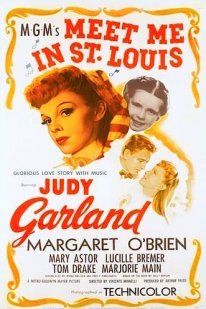 Someone (who exactly is long lost to the depths of my memory) once observed that, though a lot of people claim to not like musicals, they’re quite happy to acknowledge their love for
 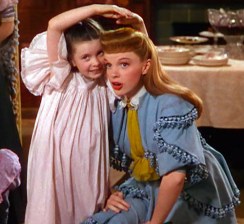 Judy Garland is fine in the lead role — still playing a teen, despite being 21, but suitably distant from Dorothy. Margaret O’Brien receives prominent second billing in the role of ‘Tootie’, despite being just seven years old. She was, I learn, something of a star at the time, in spite of her young age, which perhaps explains the (arguably) undue prominence in both the credits and the film itself. That said, she’s a rather good actress, and picked up an Oscar for her performance here (and other roles she played in 1944).
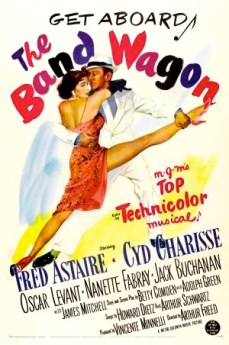 In this behind-the-scenes musical, Fred Astaire plays Tony Hunter, a slightly washed-up star of stage and screen. One can’t help but wonder if his performance has an autobiographical edge. It’s of no concern to the viewer though, because he’s as wonderful as ever.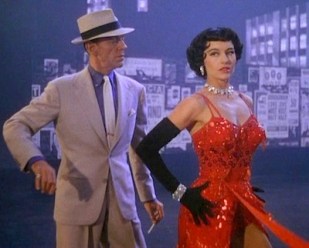
 Gigi is a film about largely horrid people doing morally dubious things. But of course it’s a musical from the ’50s, so it all has a veneer of loveliness and respectability.
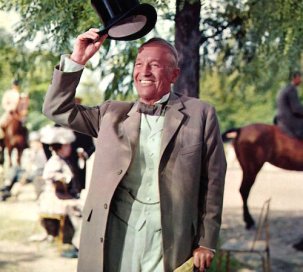 eventually Gaston realises he loves Gigi and her training is stepped up so she can become his latest conquest. I won’t go into the details of the ending, but their part of the story ends well.
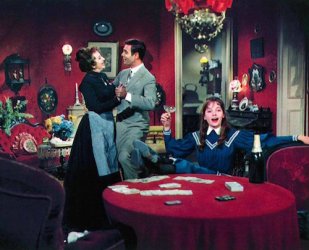 I’m Glad I’m Not Young Anymore is also a nice change of pace, celebrating old age for a change.
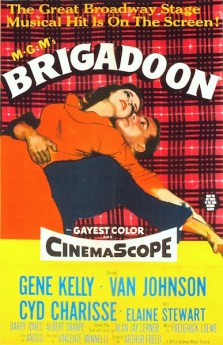 “Oh dear,” is surely the initial reaction to Brigadoon. The Scottish accents are appalling, the costumes and setting gratingly twee, the Highlands recreated entirely on a soundstage. I wonder if many Americans visited Scotland in the wake of this film expecting to find such things? If they did, I imagine they were sorely disappointed.
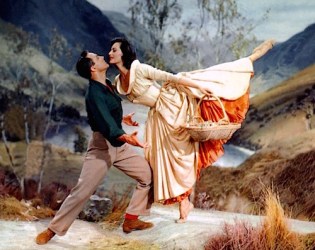 I think it’s fair to say this isn’t the greatest of musicals (though I know some might disagree). The poor realisation of Scotland takes some getting used to — and remains either irritating or amusing, depending on your mileage for such things — and generally there’s a dearth of particularly memorable songs or dances. But it’s not bad either, once things get underway.
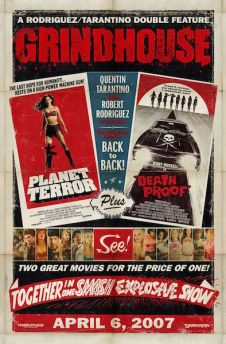 Infamously, on its release in America the much-hyped Rodriguez/Tarantino double bill was an almighty flop, so much so that it wasn’t properly released in its full form outside the US. Which is a bit ironic, if you think about it, because the US is the market least likely to respond to something a little bit experimental.
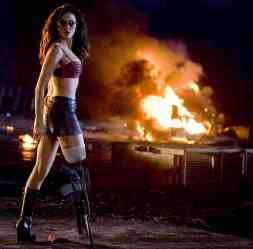 Chances are, if you don’t find this opening salvo entertaining in some way the rest of the film is going to prove a struggle.
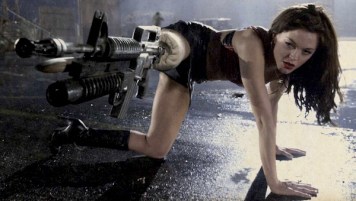 It probably works better in context than described on the page, but Rodriguez has marshalled every disparate element to create a cohesive whole that’s exciting and funny. At this point, Grindhouse is firmly headed for a full five-star conceptual success.
 though Roth can’t resist adding his own especially twisted brand of humour (I shan’t describe the final shot here).
 But it’s not just the increasing lack of dilapidated print quality that prevents Death Proof from selling its concept. The screenplay is clearly a QT work, much more so than most of
 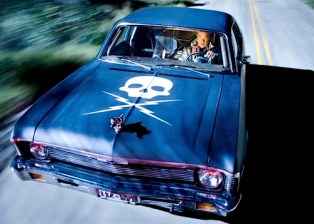 and if he chooses to create some more action-centric pictures in the future it would be no bad thing.
 In fact, it might’ve played better if the films were the other way round, as it means Death Proof must be set before Planet Terror. I’d approve of this switch not only for chronological reasons, but because seeing one-scene bit-parters turn up in the-same-but-larger roles in the second film seems like it would be more satisfying as a viewer, rather than re-encountering these (in any case, minor) characters the way we do.
 But Tarantino’s entry lets the side down by seeming to fail in its execution of the film’s conceit. I’m not convinced it would be any better viewed as a standalone Quentin Tarantino Film, but in context it certainly disappoints.
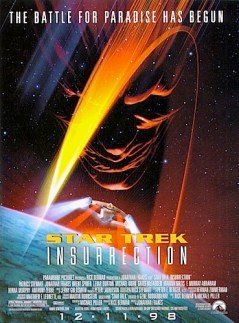 Many years ago, back when both the shows I’m about to mention were still on the air, someone drew a comparison that I felt summed up the whole of ’90s/’00s
 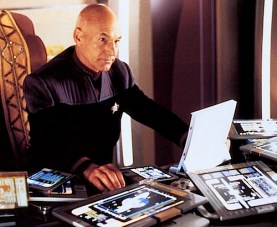 Actually, this is when Insurrection is at its best. Action-adventure undoubtedly has a place in science-fiction, but so do wordier stories — when they’re done right, and when they’re where you expect them to be. You shouldn’t expect them from Star Wars; you should from Star Trek. (That doesn’t make Voyager’s attitude better than Farscape’s, incidentally; not if it was boring or implausibly honourable considering their situation. But that isn’t the matter at hand.) And so the first 45 minutes or so are mostly enjoyable. Critics say even this isn’t as deep as
  There’s a greater array of fan-pleasing nods and winks this time out. As with First Contact, they have to find an excuse to get Worf back on board (at the time, in universe continuity, he was on Deep Space 9 in
 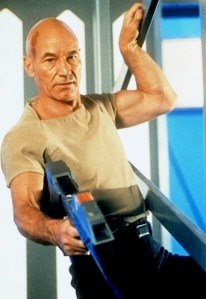 Most negative reviews — so, most reviews — accused the film of being essentially a TV episode (or two, of course), not earning itself a spot on the big screen. They may have a point. The subject matter isn’t at fault — a planet with the ability to make everyone live forever has suitably large potential — but the execution of it is frequently low-key. This isn’t too bad in the first half, which maintains the interest as it unfurls the story, but when it degenerates into action in the second half it falls apart. It’s no longer interesting and, ironically, looks made-for-TV, lacking inspired direction or suitable scope. Perhaps it would’ve been better served as a TV episode; or, as a film, better served by a writer and/or director and/or producer with greater vision.
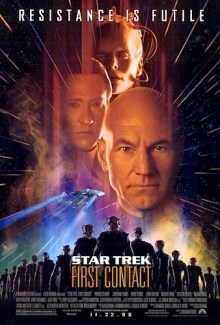 “Even ones good, odd ones bad.” So went
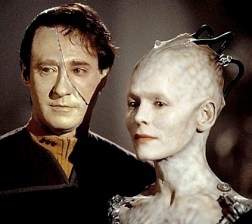
  For all that, I still got the sense of it being a bit like two or three episodes of TV stuck together, albeit two particularly epic stories with a slightly bigger budget. The story on Earth is a bit of a sideline, for example, the kind of thing that’s added to give half the cast something to do. Perhaps that’s unfair — it’s a decent enough tale, with significant relevance to the Trek universe, but it’s also low-key and, aside from being kicked off by a Borg attack, entirely unrelated to the goings-on on the Enterprise. Visually it’s even more of a mixed bag. Borg costumes and effects are at times impressive — the Queen being lowered into her body, robotic spine dangling, still looks good today, and her makeup is exemplary — but other drones seem to be clad in cheap bodysuits… which the actors surely are, but it looks it.
 For a newbie, or a viewer light on Trek knowledge, it all works fine. There’s an awareness one’s missing out on something — Picard’s previous encounter with the Borg is alluded to often but not explained in full; even for me, as someone well aware that it’s one of sci-fi’s Big Stories, but who has never actually seen it, there’s a certain lack of explanation. Featuring a couple of new characters from hundreds of years before TNG’s regular timeline helps, because the crew occasionally have to tell them things everyone else would know; the downside is they’re not meant to be telling them everything, so some stuff still passes us by. But, importantly, none of this ever swamps the story; they’re just touches and moments that I know I’m not getting.
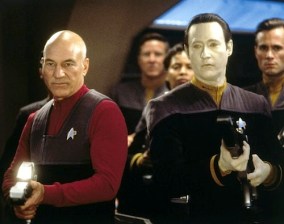
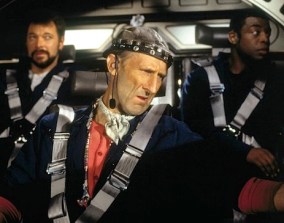 early on Picard explains that they won’t be noticed until they seem a threat… but they’re all carrying whopping great guns. And surely the very fact the humans have turned up deems them a threat? Also, why don’t the Borg recognise Picard? And later, during the largely fantastic sequence on the Enterprise’s hull, Picard, Worf and Hawk are clearly up to something nefarious and yet the Borg let them carry on. One or two Borg stop to intervene; Picard & co dispatch them; the rest of the Borg just keep working. Surely the fact these humans have just done away with several of your compatriots qualifies them as a threat that needs to be dealt with? It’s all a bit too convenient.
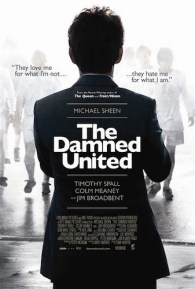 I have no love for football. Quite the opposite, in fact. I’d certainly never heard of Brian Clough before this film came along. I didn’t even bother to put it on my list of
  an impressionist who can act a little, due to his penchant for playing real people with unerring accuracy — Kenneth Williams in
 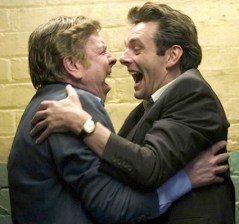 Though this is Sheen’s show, the rest of the cast give able support. Most notable is Timothy Spall as Clough’s right-hand man, Peter Taylor, the quiet force behind Clough’s showy, mouthy public face. Their relationship is — in nasty modern parlance — a “bromance” (I apologise), a fact only underlined by the final scene. It may not be apparent until late on, but if the film is Clough then his relationship with Taylor is its heart. It’s a subtler role that Spall still manages to pull everything out of. Colm Meaney and Jim Broadbent are also noteworthy, as Clough’s unknowing rival and his increasingly exasperated chairman respectively.
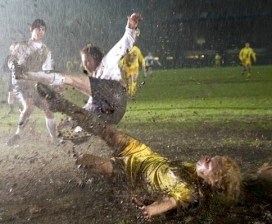 and I seem to remember it in
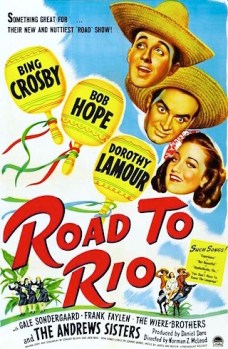 Bing Crosby, Bob Hope and Dorothy Lamour return for the fifth film in the Road to… series.
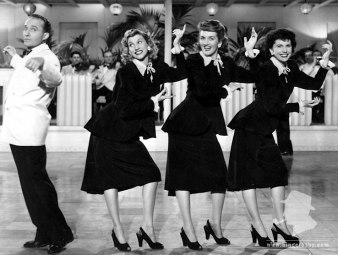 I’ve awarded to each belies how much I enjoyed them, with Morocco in particular worth a fourth. But I think it’s also fair to say these films are a rather dated style of entertainment. That’s not necessarily a bad thing — as noted, I still think they’re fun, and I’m sure many others do and would too — but plenty of modern viewers would find them (to be polite) too quaint.
