
Walter Hill | 88 mins | TV | 1.85:1 | USA / English | 15 / R
 I had absolutely zero intention of ever watching this Sylvester Stallone vehicle (which is not to be confused with John Woo’s Bullet in the Head, of course), but then I saw a trailer on a Blu-ray and it looked like it might be funny and passable dumb-action fun. My respect to whoever edited that trailer, because neither of those elements are significant features of the full film.
Adapted from a French graphic novel (no, really — it’s called Du plomb dans la tête), the story casts Stallone as a hitman whose partner is killed by order of their employer, which is what brings him into contact with cop Kwon (the Fast & Furiouses’s Sung Kang), whose former partner was also killed by the same chap. (Actually, he was killed by Stallone; and they weren’t partners any more because the guy went corrupt, or something. My point is, the partners parallel is an angle that gets pithily highlighted in marketing and reviews, but is barely touched in the film itself.) Reluctantly teaming up, they set out to find out who’s behind it all.
At times, you get the impression that director Walter Hill (who also performed uncredited re-writes) wants this to be a noir tale: there’s a hardboiled voiceover, a story mired in corrupt officials, twists about who to trust, and so on. But these elements are only fleeting (including that voiceover), never building a consistency where you could plausibly claim it as any kind of neo-noir. Instead, it’s more of a buddy movie in the ’80s mould. There are multiple scenes of Stallone and his new chum just driving around chatting, often in a gently racist way, all of which is clearly striving for that amusing, loveable, buddy movie vibe. It doesn’t reach it — it’s not funny, or likeable, and it just feels like a shoehorned aside from the plot.
 Said plot all comes down to a final fight, Stallone vs Jason Momoa (of Game of Thrones and the Conan reboot), who’s technically the henchman but serves as the primary antagonist. In the film’s closest move to originality, they duel with fire axes. It’s a fairly worthwhile dose of combat, if you enjoy that kind of thing, but even then isn’t worth watching the whole film for.
It comes to something when your production logos gimmick is the most interesting thing about your movie, but Hill has even bluntly stated in an interview that “we’re not breaking new ground. We’re trying to be entertaining within a format that’s familiar.” Talk about setting your sights low! And, indeed, low is all they achieved.

Bullet to the Head is on Film4 tomorrow at 9pm.
 This year’s Best Animated Short Oscar winner is a charming little tale of a dog and his owner. I absolutely adored it, though there’s little doubt that it was helped to victory by being produced by Disney and released theatrically alongside Best Animated Film winner
  but nonetheless packs an emotional punch. Viewers have been known to shed a little tear (though fear not, dear reader: it doesn’t come via a
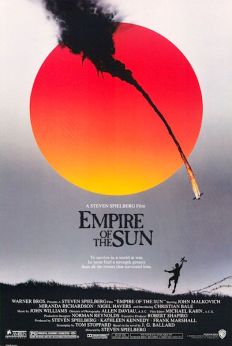 Steven Spielberg’s adaptation of J.G. Ballard’s semi-autobiographical novel stars a 13-year-old Christian Bale as Jim, the son of British ex-pats in China when the Japanese invade during World War II. Separated from his family as they try to flee, Jim encounters born survivor Basie (John Malkovich) and, when they wind up in an internment camp for the rest of the war, a cross-section of the rest of the left-behind. To Jim, a somewhat naïve but capable, confident and determined endurer, the whole thing is a big adventure; we can see the truth, though: that it’s a grim slog of life and death, and most succumb to the latter. The reality of the situation gets to Jim in the end, too… but maybe I’m getting ahead of myself.
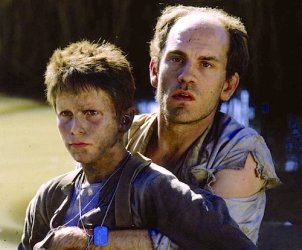 As it stands, the film is a fascinating insight into a less-often-covered aspect of the war. Even in small roles, the quality cast keep it watchable and relatable. Bale’s performance comes in just the right side of annoying — quite an achievement for a character who seems inherently brattish and prone to irritate.
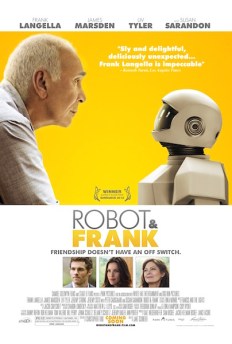 In “the near future”, Frank (Frank Langella) is an ageing jewel thief in denial about his dementia, contenting himself with visits to the local library, which is being taken over by a bunch of yuppies to turn into “the library experience”, and shoplifting from the beauty store that used to be his favourite restaurant. Concerned for his wellbeing, his son (James Marsden) gets him some home help in the form of a humanoid robot (voiced by Peter Sarsgaard). Initially reluctant to accept its presence, when the robot attempts to help by also shoplifting from the beauty store, Frank senses an opportunity…
 (part of a half-realised almost-subplot about robot rights, or something), we not only feel Frank’s (temporary) loss of his friend, but also urge the film to turn the robot back on and get back to what’s really making the movie work. The event serves a purpose (it’s the point Frank realises he’s stopped just putting up with the damn robot and actually come to appreciate its presence), but still.
 Equally, this is of a branch of science-fiction we see all too rarely on the big screen, but which is fertile ground for those wishing to explore it: using fantastical concepts to explore and enlighten our own world. Even if you learn nothing revelatory about old age and the rigours of dementia, the friendship between the robot and Frank is reason enough to enjoy.
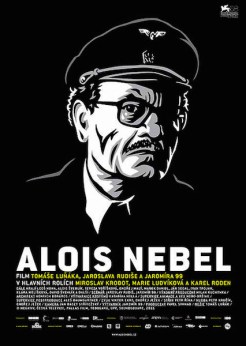 A Czech noir animation, set around Christmas 1989 to the backdrop of the country’s Velvet Revolution. Eponymous character Alois Nebel is a train station guard whose flashbacks to an event at the end of World War 2 see him sectioned, though possibly for other nefarious purposes. Having lost his job, he travels to head office in Prague to try to reclaim it, where he meets a ragtag gang of social misfits. Finally returning home, the mystery of what happened 44 years earlier may be resolved…
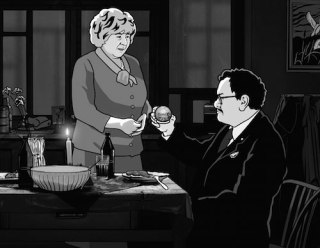 Perhaps the whole film is Deeply Thematic, then? It may be to do with the country moving on and making peace with its past, seen in a microcosm in the actions of Nebel (moving past the flashbacks, having new experiences, finding love, etc) and the people around him (finally getting revenge for something that happened nearly half a century ago). Maybe that’s all more clear if you know the Czech mindset, or the history of the Velvet Revolution. The second post in
 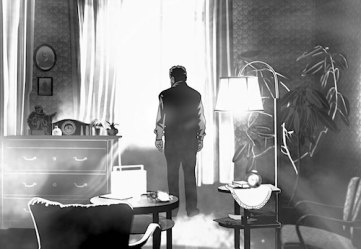 With some attractive black-and-white animation and a sporadically engaging mystery plot, Alois Nebel is far from meritless. However, its firm grounding in a wide spread of Czech history and attitudes suggests it may be best suited to those already well-versed in that country’s history and culture.
 Disney’s ’80s/’90s renaissance more-or-less came to an end with this adaptation of Edgar Rice Burrough’s jungle hero.
 The very low-key nature of Time Lapse will put some people off. If you like your sci-fi full of action or scientists or world-saving/changing endeavours, it’s not for you. If you like sci-fi where an impossible concept throws ordinary people into dilemmas about themselves and each other, this is a well-conceived drama. Add in an engrossing mystery element that keeps you questioning and guessing until the end, and you have a minor gem.
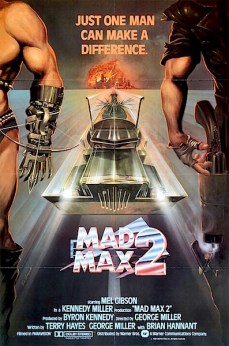 Roaming the outback of a gasoline-desperate post-apocalyptic Australia, “Mad” Max Rockatansky (Mel Gibson) comes across a commune-like oil refinery, whose inhabitants are under siege by a brutally violent gang. Max strikes a bargain: he’ll help them escape with their oil, in exchange for a tank full for himself.
 The most memorable part, however, is the climax. They escape the oil refinery, Max driving the tanker — fitted out with weaponry and defences — and the gang give chase. An almighty action sequence follows, a speeding battle through the outback. It feels wrong to just call it “an action sequence”, like that’s selling it short. You get the sense that this is why the movie exists; that co-writer/director George Miller’s goal with the entire rest of the film has been to get us to this point. It’s not just “the climax”, it’s “the third act”, and it’s stunning — the choreography of it, the editing, the stunts, as dozens of vehicles chase each other, people run around on top of them, jump between them… I don’t think it’s hyperbolic to say it must be one of the greatest action sequences ever committed to film. One of the reasons
 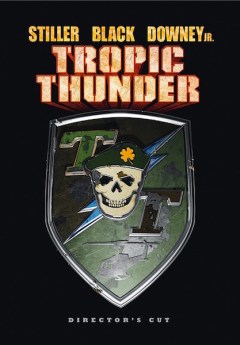 A bunch of obstreperous actors are too much to handle for the director of a Vietnam war movie, so he dumps them in the jungle to shoot it with hidden cameras. Things go awry; hilarity ensues.
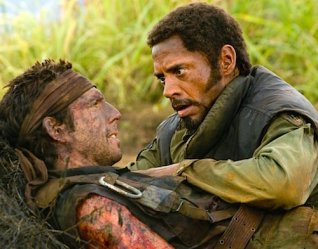 The film may run a little long in the middle, though I don’t think that’s the fault of this extended cut. It adds just over 17 minutes across many little changes and extensions
  As presidential nominee Barack Obama talks about the American Dream, in a run-down corner of the nation a trio of small-timers plot a robbery, landing them in hot water with some nasty people.
