
Patrick Hughes | 131 mins | Blu-ray | 2.40:1 | USA & France / English | 15
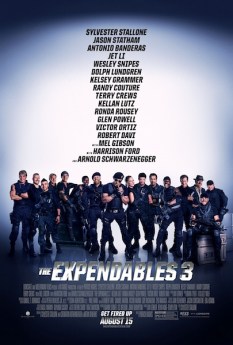 Oscar-nominated screenwriter Sylvester Stallone continues his examination of masculinity and machismo amongst older men in this trilogy-forming instalment of his Expendables franchise.
You think I’m joking… because I am. But there is actually an element of that in this latest action-fest, as the leader of the titular band of mercenaries, Barney Ross (Stallone), chooses to retire his team of ageing soldiers (Jason Statham, Dolph Lundgren, Randy Couture, Terry Crews, and new re-recruit Wesley Snipes) after one of their number is put in critical condition, and replace them with younger models (Kellan Lutz, Victor Ortiz, Glen Powell, and Ronda Rousey). It’s all in aid of capturing the team’s latest target, international arms dealer Conrad Stonebanks (Mel Gibson), who Ross thought he’d killed years ago…
That said, if you’re looking for any commentary on… well, anything… you’re going to have to read it in there yourself, because co-writers Stallone, Katrin Benedikt and Creighton Rothenberger, and director Patrick Hughes (now attached to The Raid remake, incidentally) are more focused on providing the simple ’80s-throwback action thrills and bad one-liners that genre fans expect from The Expendables. There’s certainly an abundance of both, to varying degrees of success: there are plenty of lines delivered in a knowing way that don’t seem to contain even a trace of humour, while the plot is naturally built to string together the combat scenes.
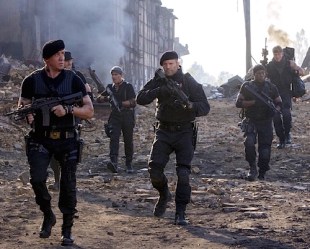
Fears about the PG-13 rating — lower than the R of the first two, in a misguided attempt to improve the box office — are largely misplaced. Well, unless you really like CGI blood spatters (there are none, not even added in for the ‘unrated’ longer cut) or other such special effects. The action choreography is fairly slick, 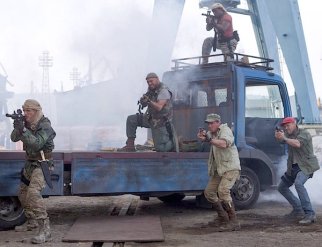 though occasionally obscured by camerawork and editing that turns it into a cacophony of violence. The Blu-ray release helps expose this: the special features include an extended version of Statham’s main battle from the climax, and in that focused form you can see how it’s been carefully constructed and designed. In the film itself, it’s chopped up into ten-second chunks and intercut with everyone else’s duels. It becomes like an impressionistic painting of shooting, punching, kicking, stabbing, running, jumping… It’s a war, as the now-double-sized team of heroes takes on a literal army, and some will revel in the over-the-top-ness of it all. The sheer excess does have a certain charm.
The best bits come a little earlier on, though. A car/van/truck chase around the Port of Mogadishu is the action highlight, in my opinion; later, the young team attempt to infiltrate an artsy modern building in a sequence that seems to emulate a Tom Cruise Mission: Impossible film, which is at least a different style for this series. Elsewise, the supporting cast of cameos provide good value — in Harrison Ford’s case, literally, as he replaced Bruce Willis after the latter demanded $4 million for four days’ work. Ford just has to turn up on screen to be cool, though he has his moments beyond that. There’s also Kelsey Grammer as a merc talent scout who seems to have a habit of kicking off whole non sequitur conversations; a bigger role for Arnie, though still on the sidelines; and a pointless appearance by martial arts expert Jet Li, performing no martial arts whatsoever. The new kids are adequate but nothing to write home about.
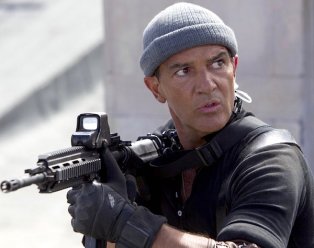 The best addition, unquestionably, is Antonio Banderas. He’s a parkour-performing blabbermouth who keeps pestering Grammer for a job, but no one wants him because he won’t stop talking. And he’s hilarious. Of the 93 changes in the five-minutes-longer extended version (yes, ninety-three), most are split-second action beats, the vast majority during that big final battle, but a handful are more of Banderas just chatting away, and those are welcome. He takes a while to turn up, but when he does it lifts the whole film. His performance is the best thing to come out of the entire franchise. I mean, it’s not a reason to watch the films if you weren’t going to, but if you are anyway…
The Expendables 3 is, for my money, much for muchness with the previous two films. They all have different pros and cons, sliding different elements up and down on the series’ mixing board with various degrees of success, and this third entry is no different. It seems Stallone intends to keep producing Expendables flicks, with talk of who might appear in a fourth outing taking place even before the third was released (Pierce Brosnan, maybe? More recently, ex-wrestlers the Rock and Hulk Hogan), though the box office of this instalment throws that into question: off a $90 million budget, it only made $39 million in the US… but then it did take almost $167 million from everywhere else — surely enough to consider a sequel? Especially if next time they can stop it leaking on the internet several weeks early…
 I kind of hope they do make more. The Expendables movies aren’t great films — heck, they aren’t even really great action films — and they’re a bit too cheesy and in-joke-y for the own good — and yet, somehow, I can’t resist them, and I’ll be happy to keep watching them for as long as Stallone and co can keep making them. After all, there are an awful lot of ageing action actors who’ve not appeared yet…

The Expendables 3 is available on Netflix UK as of yesterday.
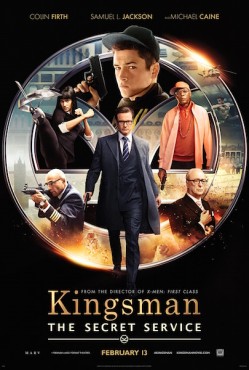 The team behind
 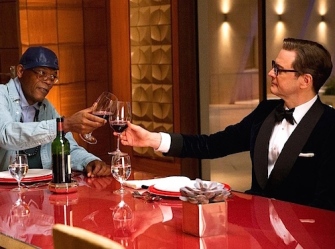 An even bigger part of the film’s triumph, and what likely led it to over $400 million worldwide in spite of its higher-than-PG-13 classifications (it’s Vaughn’s highest-grossing film to date, incidentally; even more so than
 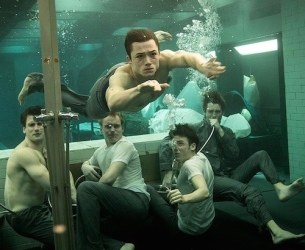 rather than the supposed real-world universe of spy movies. What the worldwide success of Kingsman proves is that audiences don’t need the set-dressing of superpowers to accept an action movie that’s less than deadly serious. It’s a place I don’t think the Bond movies could go anymore — not without accusations of returning to the disliked Moore or late-Brosnan films — but it’s one many people clearly like, and Kingsman fulfils it.
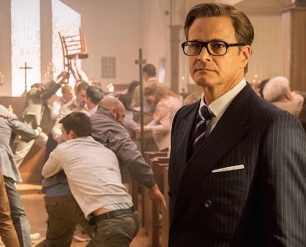 Criticisms of the film tend to pan out to nought, in my opinion. Is there too much violence? There’s a lot, certainly, but part of the point of that church sequence (for instance) is just how long it goes on. Other excellent action sequences (the pub fight you might’ve seen in clips; the car chase in reverse gear; the skydiving) aren’t predicated on killing. Similarly, Samuel L. Jackson’s baseball-capped lisping billionaire is a perfect modern riff on the traditional Bond villain, not some kind of attack on Americans or people with speech impediments. Some have even attempted a political reading of the film, arguing it’s fundamentally conservative and right-wing because the villain is an environmentalist. Again, I don’t think the film really supports such an interpretation. In fact, I think it’s completely apolitical — just like its titular organisation, in fact — and such perspectives are being entirely read into it by the kind of people who read too much of this kind of thing into everything.
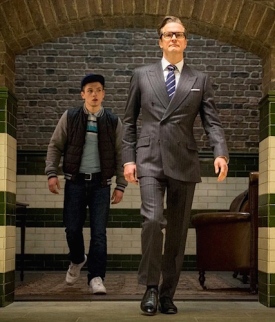 Not everything hinges on being wall-to-wall groundbreaking, though, and Kingsman has so much to recommend it. It ticks all the requisite boxes of being exciting and funny, and some of its sequences are executed breathtakingly. The plot may move along familiar tracks — deliberately so — but it pulls out a few mysteries and surprises along the way. There’s an array of likeable performances, particularly from Firth, Egerton (sure to get a lot of work off the back of this), Jackson and Strong, and Sofia Boutella’s blade-legged henchwoman is yet another why-has-no-one-done-that great idea.
 The first of Summer 2013’s “
 In fact, it takes itself very seriously indeed — Fuqua even puts characters’ names and jobs up on screen, as well as timecodes and locations, as if it’s a dramatisation of a real event. Obviously we all know it isn’t, making it feel incredibly odd. The CGI is just as bad as White House Down’s, though the exterior White House stuff looks more real than the obviously-greenscreen locales of the other film. Strikingly, this cost less than half as much ($70m vs. $150m).
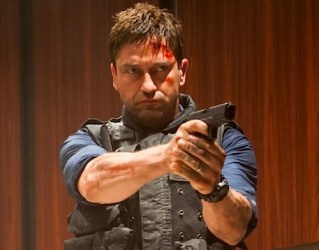 however, Olympus Has Fallen looks like a far lesser movie. It’s a shame it made it out of the gate first, and that some viewers are not blessed with enough of a sense of humour, because their comparative success has left some quarters with the impression this is the better movie and White House Down is just a clone. Hopefully that’s a wrong we can eventually right.
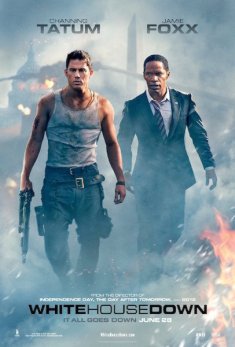 US Capitol policeman Channing Tatum is visiting the White House, trying and failing both to impress his estranged daughter and get a job in the Secret Service, when terrorists attack and try to take President Jamie Foxx hostage. Tatum rescues him from some of them, but with the rest occupying the building the stage is set for “
 If there’s a downside, it’s that this $150 million movie looks like it was made for closer to $15. There’s an overabundance of digital sets, ‘exteriors’ obviously shot on incorrectly-lit soundstages, and terrible CGI. Goodness only knows where all that money went — the actors’ salaries? Tatum and Foxx are good, but I’m not sure they’re worth that much. And here’s a good a time as any to say that this year I’ve become a bit of a Channing Tatum convert. I’d written him off because, to be honest, he looks a bit of a lug and I still think he’s woefully miscast as Gambit in
 Will Smith is the eponymous drunken vagrant, who also has the powers of Superman, in this under-appreciated superhero comedy-drama. Hated by the public for the destruction he causes while ‘helping’, and wanted by the authorities for the same — though they can’t catch him because, you know, superpowers — he gets an image makeover when he saves wannabe entrepreneur Jason Bateman. Bateman’s wife, Charlize Theron, is less sure of Hancock’s merits.
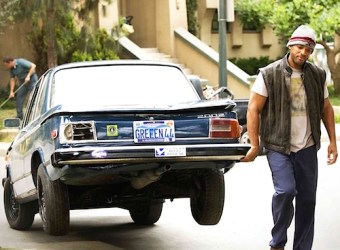 but it rubs against comedy stuff that feels like it’s from a Comedy. The extended cut includes an early sex/ejaculation joke/sequence that wasn’t in the theatrical cut because Berg thought it wasn’t funny and test audiences agreed. Goodness knows why it got put back, other than because of length — it accounts for over half of the extensions (more details
 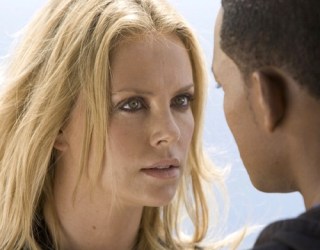 Why indeed, because a) she’s not a supervillain, and b) even if she were, why get changed?! It’s a kind of bait-and-switch: she’s made to look like a villain because we think that’s what she’s about to be revealed as, and a big hero-vs-villain fight follows too… but she isn’t. It’s not quite up there with the magically-changing Batsuits of
  The film would work a lot better on the whole if the tone had been settled on as definitively as Smith’s performance, rather than trying to have its cake and eat it by mining both the “what if this were real?” and “haha, an unlikeable drunk superhero!” versions concurrently. For my money, however, if you treat Hancock as a fairly seriously-intended movie that was forced to contain more (half-arsed) action and (misjudged) comedy for the sake of box office, it’s not a bad experience at all.
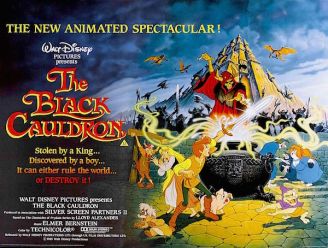 The Black Cauldron is best remembered as an intriguing footnote in the history of Disney animation. Their 25th ‘official’ film, it was the first with no songs, the first to earn a PG (after being cut — twice — to avoid a PG-13), and flopped so badly they disowned it for over a decade. Fully-animated sequences were cut after disastrous test screenings for parents, and famed exec Jeffrey Katzenberg, who came into Disney management during the film’s production, reportedly ordered 12 minutes cut, muddling the film’s story. What a mess.
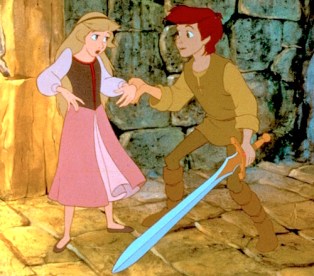 It’s always interesting when a company like Disney break outside of the norm, and it’s certainly brought them some degree of success in recent years with the likes of
  Possibly-crazy people offer definitely-crazy theories on the subtextual meaning of
  After winning the Best Adapted Screenplay Oscar for
 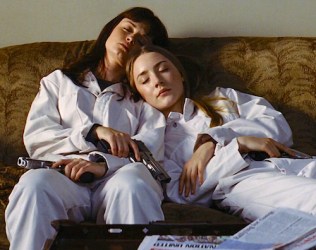 Here, Fletcher either needs to settle on one or the other, or clearly signal his intentions earlier.
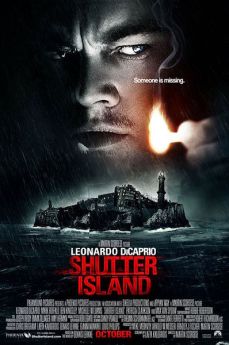 Adapted from a novel by Dennis Lehane (whose work also inspired
 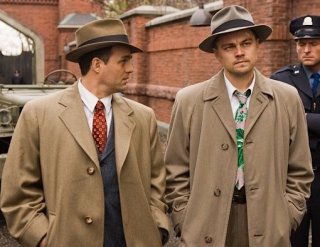 Besides, the film has other delights beyond being an elaborate guessing game. One of the things Lehane set out to do in his novel was write “a gothic”, and Scorsese and co have taken that ball and run with it. It’s overflowing with a fantastic atmosphere: unsettling, creepy, chilling, horror-movie scary when needed (some sequences are properly hair-raising); truly gothic-feeling. Every aspect of filmmaking — the direction, the photography, the editing, the sets and locations, the music — work in harmony to create a coherent mood.
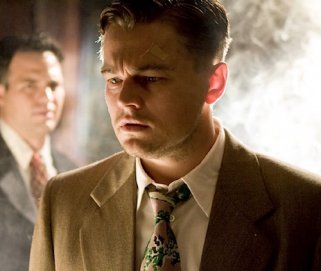 And then, after Scorsese and co have done their best to shred your nerves, in the final half-hour the pathos is immense. Quite without realising it had brought me to that point, I had a tear in my eye. This is in part thanks to some great performances, though you do need to reach the twist to fully appreciate them. Everyone reveals more levels once you know it, and indeed it’s clear a great amount of effort went into ensuring re-watchability — that if you view it again knowing the answers, you can spot things; not clues, per se, but elements in the performance, the design, the staging, that tie in to the reveal.
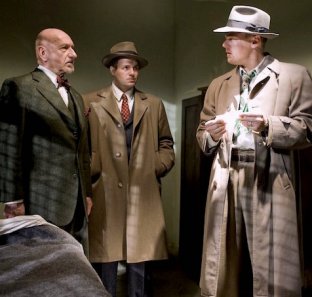 I think the more you let Shutter Island percolate after it’s over, the better it becomes. Solving the mystery and guessing at the twists occupies so much of your time on a first viewing that you almost miss the details in the characters and the world, but they build up nonetheless. There’s layers and depth here, and a plausibly realistic depiction (even according to an expert) of something that’s incredibly hard to depict in fiction. You can view Shutter Island as just an atmospheric gothic mystery chiller, and as that it’s a quality piece of work, but it’s the extra depth that mark it out as, actually, a great movie.
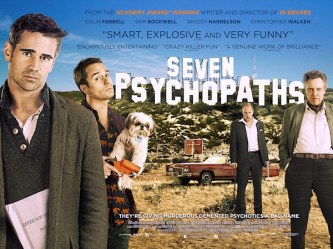 The writer-director and star of
  mainly via references to Farrell’s endeavours to pen a movie called, you guessed it, Seven Psychopaths. One wonders if there’s a hefty dose of autobiography in the writer’s struggle…
