
Martin Ritt | 92 mins | TV | 12
 If you’ve ever seen Akira Kurosawa’s classic Rashomon, the opening minutes of The Outrage will leave you in no doubt that you’re watching a Hollywood remake. From the dilapidated-location-in-heavy-rain opening scene on, Michael Kanin’s screenplay sticks closely to Kurosawa’s, and Martin Ritt’s direction doesn’t stray too far either. But don’t mistake this effort for a thoroughly pointless rehash a la Gus Van Sant’s Psycho — though it can’t better the original, The Outrage has much going for it.
Naturally the story is as fascinating as ever, not just for the fact it offers different versions of what happened, but for what the protagonists feel the need to modify in their accounts — after all, they’re happy to confess to several crimes, so why obscure the facts in other ways. Was Rashomon so conclusive, though? I don’t remember it being so. Yes, The Outrage’s final retelling is still just one person’s perspective, but it’s set up as an objective and definitive one. Plus I didn’t get what was going on with the crying baby, which I seem to remember being in Rashomon but I don’t recall being baffled by. Maybe that’s just me.
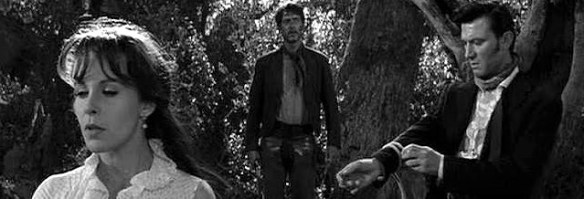
Kanin’s reconfiguration of the story as a Western is seamless thanks to numerous intelligent tweaks and changes — if you didn’t know this wasn’t the tale’s original location, you’d have no reason to suspect otherwise. Ritt backs it up with some striking cinematography. It might not be as innovative as Kurosawa’s camera-into-the-sun antics, but he still produces a good-looking and meticulously composed picture.
Paul Newman is excellent, unrecognisable under thorough makeup and consistent characterisation as Mexican outlaw Carrasco. The rest of the fairly starry cast are also very good, the majority treated to interestingly conflicted or gradually revealed characters, not least Claire Bloom as the rape victim and possible murderess — and possibly many other things, depending which version you choose to believe; and possibly all of them, too.
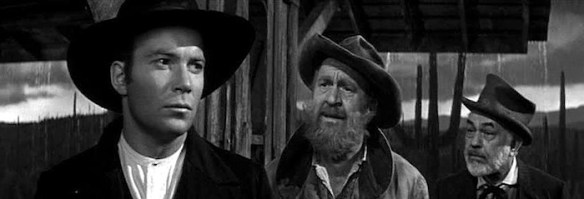
The Outrage doesn’t seem to be very well remembered, rarely seeming to qualify even as a footnote in discussion of Rashomon (unlike, say, The Magnificent Seven for Seven Samurai), which I think is unfair. There wasn’t much chance Ritt’s film could outdo the original at its own game, but what it does manage is the almost-as-impressive achievement of retelling the story differently, and well.

The Outrage is showing on More4 tomorrow, Wednesday 15th December, at 11:20am.
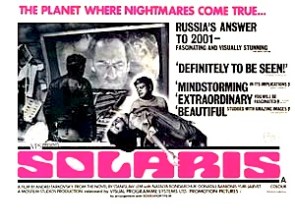 I don’t know if you’re aware of a website, dear reader, called
 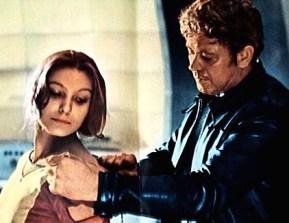 The fact that it’s the better part of three hours long, in Russian, and notoriously slow-paced, adds a different kind of weight. It’s quite easy to see how Soderbergh felt able to
 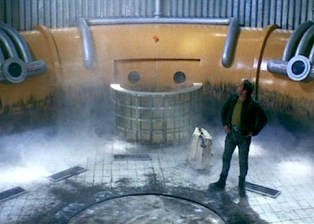 how it might work, or any other scientifically-bent notions that other films or filmmakers might choose to focus on. It also doesn’t centre on the romantic side of events, the route Soderbergh chose to pursue; or, if it does, it does so coldly and clinically and doesn’t feel romantic in the slightest. Alternatively, that could be the point.
 Robin Williams surprised everyone when he started appearing in films as a serious actor in the early ’00s. Previously — and, if you’ve seen him on chat show in recent years, still — an outrageous funnyman, Williams turned in excellent straight performances in the likes of
  Still, Robin Williams is excellent, once again displaying his recently-found gift for serious acting. His character’s homosexuality is nicely handled too. It seems to have overshadowed the rest of the film for some viewers, but I’m confused as to why. Perhaps precisely because it doesn’t come out screaming “look, look, he’s gay! Isn’t that edgy!”, leaving it as just a fact of his character — and one that’s only important because his personal life is part of the story — means some viewers are so shocked by their own realisation of his sexual orientation that it gets in the way for them.
 this “but it happened!” logic seems to allow the filmmakers to get away with not offering adequate explanation. Then again (not sure how many “other hand”s I’m on now), it’s just like real-life: sometimes things can’t be explained in a rational way. Some people will have a problem with that from their films; sometimes I’m among them, but in this instance I think there are enough explanations and ambiguities. My problem was more that getting to them seemed to provide nothing, particularly as, being twist-free, they only confirmed one of the options that had been supposed an hour earlier.
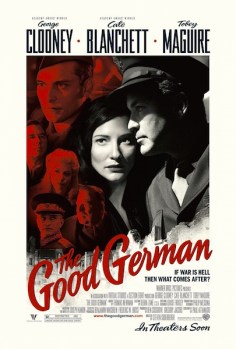
 the visual, audio, acting and plot styles of the era, why not ensure the dialogue and action follow suit? There’s no need for the violence, sex and swearing in this particular tale; at least, no need for it in a way that couldn’t be conveyed as effectively using Production Code-friendly methods. I’m uncertain if I like the film less for failing on this measure, but it does add to its inherent oddness.
 But how much do we get to know them, really? It’s easy to see why critics said “not very well”, because they’re too busy uncovering the conspiracies and revealing their part to actually show us much about themselves. But then why should that be a problem? It’s a noir thriller, not a character drama. Surely it’s about the mysteries and, if you like, the themes, rather than letting us understand the people caught up in them?
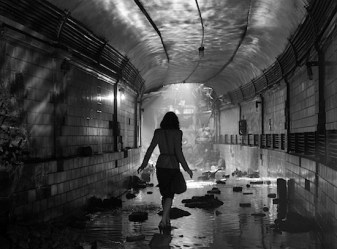 production intentions rather than being invented to slot into them — provides meat on the stylistic bones.
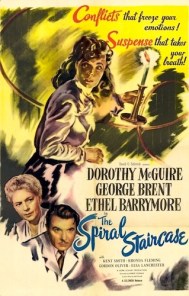 A serial murderer is on the loose in 1900s New England, or 1910s Massachusetts (pick which website you want to believe). His victims are all disabled women, so at the wealthy Warren residence, both family and staff worry for mute maid Helen — particularly as it seems the murderer may be among them…
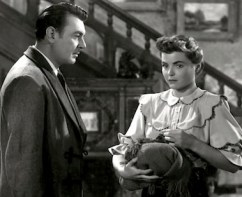 Some viewers allege that it’s at this point the story falls apart; that there’s only one possible suspect. I disagree. Though I can’t say the film entirely had me fooled, there are several suspicious characters, particularly if you’re prepared to consider extraordinary leaps of probability — and in genres like gothic horror, film noir and whodunnit, you should be. Indeed, while some see the killer as obvious others may consider them unlikely; but, for the attentive, the groundwork for the motivation is laid throughout.
 A mention for the sound design, too. Even during simple dialogue scenes, where one might expect silence but for the words in a film of this era, rain lashes against the window in the background, the heavy weather a ceaseless reminder of the threat lurking close at hand. It is, to use a cliché, a character in itself. Thanks to the enclosed setting, we spend a fair amount of time with these characters, and there are good performances too, but that’s for another reviewer to discuss — try
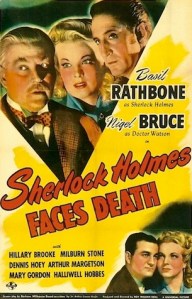 He’s put down the
 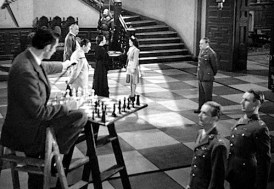 Relocated in the war years, the Musgrave manor is currently a home for convalescent soldiers, providing no end of potential suspects. Some may guess the culprit from the off, others will land upon them at other places throughout proceedings, but it seems to me there’s still enough going on to keep us guessing.
 Back in this blog’s early days, I established the rule that where a different cut of a film was not significantly different to the original version it wouldn’t be counted towards my total (assuming I’d seen the original, that is — if it’s the first time I’ve seen any version of the film, it still counts). There’s no hard criteria for what counts as “significantly different” though. A couple of additional minutes? No. A lot of additional minutes? Yes. Where’s the line between “a couple” and “a lot”? No idea. Thus far, I’ve left it up to “a feeling”, perhaps not always correctly (the
  but other than that if you’d told me this was the cut I watched in cinemas I’d believe you. This longer cut doesn’t make the film better or worse, just less suitable for younger viewers.
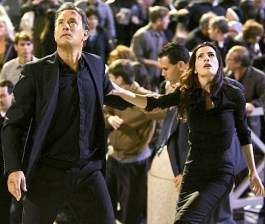 It’s still riddled with flaws, mind. Some of the dialogue is fairly atrocious (but at least it’s only some); exposition is often blatant and repetitive (we’re told what the preferiti are three or four times in as many minutes); some of the deductive leaps are a bit much; and the whole antimatter bomb still seems scientifically suspect. It all depends how much you’re willing to forgive, really. In a similar vein, one of the most contentious issues of Dan Brown’s novels is his use of “truth”. He mixes well-researched fact with his own creation at will, often leaving you to wonder if what you’re hearing is pure truth, truth bent to the plot, or a total fabrication. But then this isn’t a history or art lesson, it’s a mystery thriller, and if one wants to know more I’m sure there are books to read and documentaries to watch.
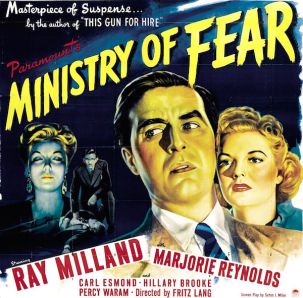 I like cake. It’s all soft and sweet and tasty. But I don’t like cake as much as Stephen Neale, the protagonist of Ministry of Fear.
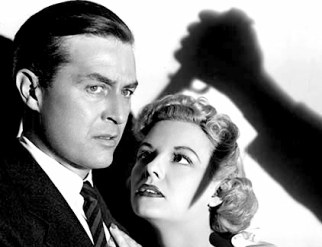 Ministry of Fear isn’t really about cake, but the opening 20 minutes or so plays out more or less as above and it is rather amusing. Less amusing — and, in fact, part of the film’s biggest problem — is a ‘humorous’ epilogue that returns to the cake theme. I found it hilariously funny, but unfortunately for all the wrong reasons. The other part of the problem is the abrupt ending that immediately precedes this brief coda. On the bright side, everything is resolved and you can imagine the post-climax resolution scene for yourself, but it still leaves the tale’s telling cut short.
 The train cake theft and chase, for instance, could be thoroughly laughable thanks to the cake element and what’s clearly a studio-built wood/wasteland, but it’s atmospherically shot and, in its main burst of genius, scored only by the drone of a Nazi air raid taking place overhead. It makes for a more tense and effective soundtrack than most musical scores manage.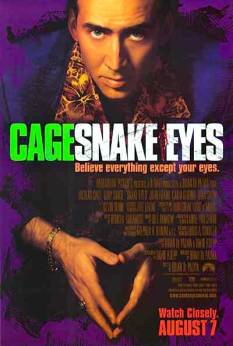
 later seasons didn’t and, in my opinion, suffered. Johnny Depp-starer
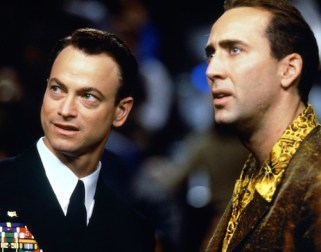
 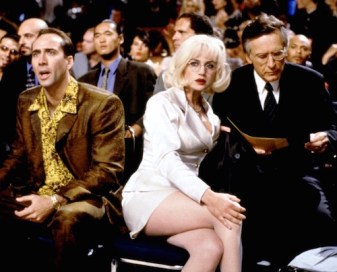 If there’s one significant flaw, it’s that the ending is too much based on convenience and coincidence; and someone in the editing room should’ve paid more attention to removing all references to the original, deleted ending in which the casino got flooded. I have no idea why that was removed — maybe someone thought it was a bit ludicrous. But it sounds more satisfying than what was included, which, as noted, relies on a handy spot of coincidence and at least one action that seems out of character. I can forgive it though, because I liked everything else. And the post-climax montage is a suitably downbeat ending to our hero’s story — another noir trait there.
 “Oh my God, what have they done to Sherlock Holmes?!” Etc etc. By this point you’re likely to have heard the arguments that Guy Ritchie’s blockbuster re-imagining of the Great Detective is actually based on all sorts of references and allusions in Sir Arthur Conan Doyle’s original works, so I won’t go over them again here. Indeed, I’m not even convinced they’re relevant in the first place.
 The way to this climax offers a good mix of detecting, action and humour. It’s not pure Holmes then, but it’s not pure blockbuster either. Downey Jr brings some of his Tony Stark magic, but his take on Holmes is still distinct, not just because of his faultless English accent. His madness, obsession and genius are all well portrayed, and Ritchie’s direction matches it beautifully.
 Mark Strong’s villain is suitably chilling, aided by the film’s irreverence: if they can make Holmes into a quip-dealing action man, maybe there really is something supernatural at work? To reveal the truth would spoil that proper climax. The closest to a weak link is Rachel McAdams’ Irene Adler. I like McAdams well enough generally, and here too, but she may still be a little out of her depth — they’ve gone for a Pretty Young Thing when someone a little older may’ve suited better.
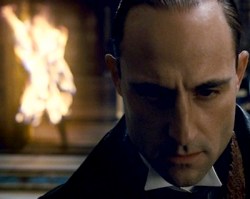 Ritchie brings something special to the director’s chair too, believe it or not — you may think he’s sold out into blockbusterdom to revive his flagging and repetitive career, but the touches he brings suggest the mind of someone who has control of his material, his camera and his edit, and wants to use them all to try something a bit different, not just another hack-for-hire who could churn out any old template-hewn action/adventure flick.
 100Films.co.uk