
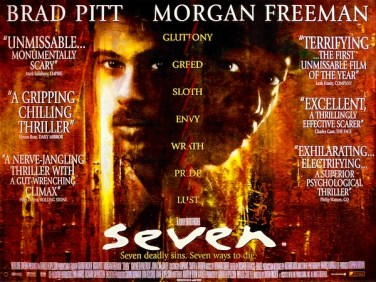
Also Known As: Seven

Country: USA
Language: English
Runtime: 127 minutes
BBFC: 18
MPAA: R
Original Release: 22nd September 1995 (USA)
UK Release: 5th January 1996
First Seen: TV, 12th June 2001 (probably)
Stars
Morgan Freeman (The Shawshank Redemption, Million Dollar Baby)
Brad Pitt (Legends of the Fall, The Curious Case of Benjamin Button)
Kevin Spacey (The Usual Suspects, American Beauty)
Gwyneth Paltrow (Sliding Doors, Shakespeare in Love)
Director
David Fincher (Fight Club, Zodiac)
Screenwriter
Andrew Kevin Walker (8MM, Sleepy Hollow)
The Story
In an unnamed city, two homicide detectives investigate a series of grim murders inspired by the seven deadly sins.
Our Heroes
William Somerset is a detective who works calmly and methodically, and cares more than most. Serving out the last few days before his retirement, he lands a helluva final case. His new partner is David Mills, a hotheaded but idealistic new transfer who’s keen to prove himself. Despite their chalk-and-cheese temperaments, or perhaps because of them, the pair may be ideally suited to catch the elusive killer.
Our Villain
John Doe, a proper psychopath, and on a mission too. I say the detectives are ideally suited to catch him, but, well (major, major spoilers…) they technically don’t and he essentially wins.
Best Supporting Character
R. Lee Ermey’s police captain, purely for the moment when he answers a phone. I love that bit of humour far more than it probably warrants.
Memorable Quote
“What was in the box? What’s in the box? What’s in the fucking box?!” — Mills
Memorable Scene
The climax — just Somerset, Mills, and John Doe, alone in the middle of nowhere… and then a deliveryman shows up. “John Doe has the upper hand!”
Technical Wizardry
The film’s visual style really helps to sell the tone — dark, foreboding, grim. This is in part because it’s always raining, a decision made to increase the sense of dread, and because of Darius Khondji’s cinematography, which employed bleach bypass (see also: Minority Report), a process that serves to deepen shadows. Additionally, for the film’s Platinum Series DVD release it was rescanned from the original negative, meaning the whole film had to have its colour grading re-done. Some of the changes were quite extensive (as detailed in the DVD/Blu-ray’s special features, if you’re interested).
Truly Special Effect
A serial killer thriller might not sound like a special effect showcase, but John Doe’s extreme methods lead to some pretty unusual and gruesome corpses — rendered with suitably sickening prosthetics, of course. ‘Sloth’ is particularly harrowing, though ‘lust’ is so bad it’s left almost entirely to our imagination — though, again, someone had to design and build the… instrument.
Making of
John Doe’s shelves of handwritten notebooks were real and created especially for the film. They took two months to create at a cost of $15,000.
Next time…
Screenwriter Andrew Kevin Walker originally thought of 8MM as a sequel, and David Fincher was interested, but it didn’t happen and we wound up with the only-half-decent Nicolas Cage-starring Joel Schumacher-directed version instead.
Awards
1 Oscar nomination (Editing)
1 BAFTA nomination (Original Screenplay)
2 Saturn Awards (Writing, Make-Up)
5 Saturn nominations (Action/Adventure Film, Actor (Morgan Freeman), Supporting Actress (Gwyneth Paltrow), Director, Music)
Places with more taste (i.e. where it won Best Film): Empire Awards, Fantasporto International Fantasy Film Awards, MTV Movie Awards; plus Best Foreign Language Film at Blue Ribbon Awards, Hochi Film Awards, Sant Jordi Awards (Audience Award)
What the Critics Said
“designer unpleasantness is a hallmark of our era, and this movie may be more concerned with wallowing in it than with illuminating what it means politically. Yet the filmmakers stick to their vision with such dedication and persistence that something indelible comes across — something ethically and artistically superior to The Silence of the Lambs that refuses to exploit suffering for fun or entertainment and leaves you wondering about the world we’re living in.” — Jonathan Rosenbaum, Chicago Reader
 Score:
 80%
80%What the Public Say
“The rain never ends. There is seldom any sunlight, or any warmth. The city feels like a city of the damned, as if its denizens are souls trapped in some circle of hell from which there is no escape. A feeling of dread pervades everything; there is never any inclination that anything remotely like justice or hope or salvation is even possible here. […] it’s all style and atmosphere but… to criticise the film for that, almost feels like missing the point — it’s so integral to the piece, the atmosphere is actually one of the film’s characters” — the ghost of 82

Elsewhere on 100 Films…
I reviewed Se7en quite thoroughly (and, if I do say so myself, quite well) as part of a retrospective on Fincher’s films back in 2011, concluding that “some would claim that Se7en is no more than a standard murder thriller with a stock mismatched pair of detectives. In some respects they’re right, but in enough respects they’re wrong. There’s a killer high concept behind the crimes, but it’s really the execution of the film that makes it so much more. It’s in the performances, the way those stock characters are written, their subplots, the story’s pace, the cinematography, the music, individual sequences like Somerset in the library or the climax that rise not only to the top of the genre but to the top of the very medium of film itself.”
When asked, I normally say Se7en is my favourite movie. That’s partly pre-picked just to prevent any such conversations turning into a dreary slog where I um and ah through hundreds of options, but naturally there’s some truth in it. On the surface it’s merely a police procedural, but it’s the way it handles that material that elevates it. It’s a dark film about terrible deeds, which both suits its subject matter (murder isn’t really just a fun little mystery to solve, is it?) and presents a worldview that makes us consider who’s really right and who’s really mad — John Doe is clearly an evil psychopath, but does he have a point? It’s also made with supreme artistry by director David Fincher and his team — I’ve already mentioned DP Darius Khondji, but it’s also superbly edited by Richard Francis-Bruce. And I’d argue it has one of the greatest climaxes ever filmed. There are more easily enjoyable movies in my 100 Favourites, but there are none that are any better made, nor any that better expose the dark heart of humanity.

#82 will be… a big damn movie.



 If you hadn’t heard of Veronica Mars before 13th March 2013, you almost certainly did soon after. That’s the date Rob Thomas, creator of the six-years-dead
  There’s no denying that this is primarily a film for fans of the TV series — well, they did fund it, after all. The best way to get the most out of the film is to have watched all 64 episodes of the show first; preferably soon before, in fact, so you can remember who all the minor characters are. However, creator-cowriter-director Rob Thomas is no fool: you don’t produce a successful movie that continues a little-watched TV show by making it a requirement that you’ve watched 64 hours of TV first. (I mean, Joss Whedon knew that with
  school who weren’t actually in the TV series, which might give you a flavour of how it works both for fans and newcomers. The case itself isn’t a bad mystery, but at the same time it’s a little subservient to the other goings-on. I suppose you could argue this is really a comedy-drama about a woman reconnecting with her past life and past friends, and she just happens to have a murder to investigate at the same time.
 To bring up Firefly/Serenity again, I think there’s a reasonable parallel between how those relate to each other, and how they can work for newbies, and how Veronica Mars the TV series and Veronica Mars the movie relate. To wit: in an ideal world, you’d watch all of the series and then the film; but TV series can be long commitments, and for a spot of ‘dipping your toe in the water’, you can also start with the movie and go back to the series for the full picture. Sure, some things are going to be spoiled doing it that way round — but hey, not everyone who’s in the series but not the film ends up dead, I promise.
 More than just a nostalgia trip for people who were there first time round, the movie is a strong addition to the Veronica Mars canon — as someone who didn’t discover the series until the Kickstarter campaign, I thought the film was a heck of a lot of fun, and a wonderful capstone to a mostly-great series. That said, there’s plenty of room for further cases… someday… hopefully…

 This neo-noir revenge drama with a twist has received such acclaim from critics and bloggers alike that it’s practically set up to fail.
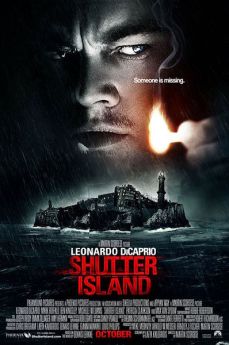 Adapted from a novel by Dennis Lehane (whose work also inspired
 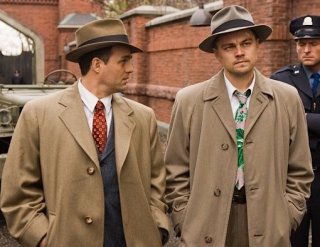 Besides, the film has other delights beyond being an elaborate guessing game. One of the things Lehane set out to do in his novel was write “a gothic”, and Scorsese and co have taken that ball and run with it. It’s overflowing with a fantastic atmosphere: unsettling, creepy, chilling, horror-movie scary when needed (some sequences are properly hair-raising); truly gothic-feeling. Every aspect of filmmaking — the direction, the photography, the editing, the sets and locations, the music — work in harmony to create a coherent mood.
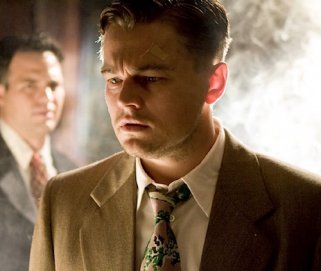 And then, after Scorsese and co have done their best to shred your nerves, in the final half-hour the pathos is immense. Quite without realising it had brought me to that point, I had a tear in my eye. This is in part thanks to some great performances, though you do need to reach the twist to fully appreciate them. Everyone reveals more levels once you know it, and indeed it’s clear a great amount of effort went into ensuring re-watchability — that if you view it again knowing the answers, you can spot things; not clues, per se, but elements in the performance, the design, the staging, that tie in to the reveal.
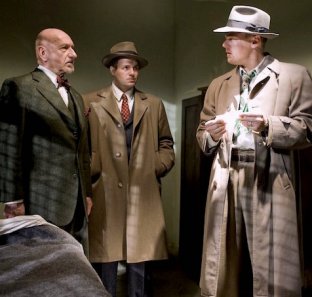 I think the more you let Shutter Island percolate after it’s over, the better it becomes. Solving the mystery and guessing at the twists occupies so much of your time on a first viewing that you almost miss the details in the characters and the world, but they build up nonetheless. There’s layers and depth here, and a plausibly realistic depiction (even according to an expert) of something that’s incredibly hard to depict in fiction. You can view Shutter Island as just an atmospheric gothic mystery chiller, and as that it’s a quality piece of work, but it’s the extra depth that mark it out as, actually, a great movie.
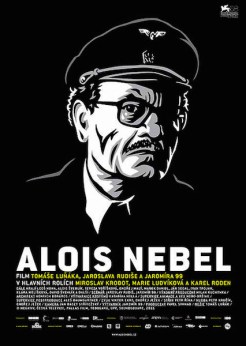 A Czech noir animation, set around Christmas 1989 to the backdrop of the country’s Velvet Revolution. Eponymous character Alois Nebel is a train station guard whose flashbacks to an event at the end of World War 2 see him sectioned, though possibly for other nefarious purposes. Having lost his job, he travels to head office in Prague to try to reclaim it, where he meets a ragtag gang of social misfits. Finally returning home, the mystery of what happened 44 years earlier may be resolved…
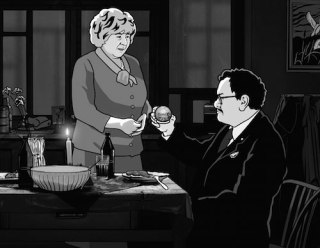 Perhaps the whole film is Deeply Thematic, then? It may be to do with the country moving on and making peace with its past, seen in a microcosm in the actions of Nebel (moving past the flashbacks, having new experiences, finding love, etc) and the people around him (finally getting revenge for something that happened nearly half a century ago). Maybe that’s all more clear if you know the Czech mindset, or the history of the Velvet Revolution. The second post in
 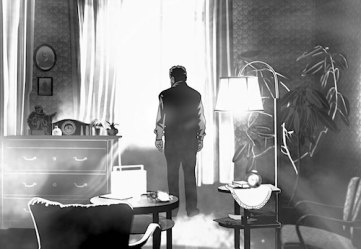 With some attractive black-and-white animation and a sporadically engaging mystery plot, Alois Nebel is far from meritless. However, its firm grounding in a wide spread of Czech history and attitudes suggests it may be best suited to those already well-versed in that country’s history and culture.
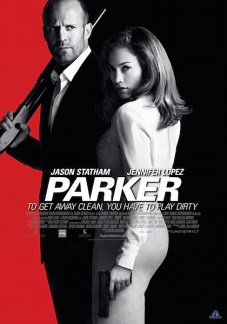 Parker trailed well — funny lines, promising action, solid setup — but doesn’t deliver.
 Belated sequels can be a
 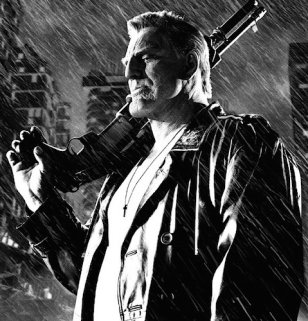 But the comic-book-ness of the first film — moments of almost metaphorical visual representation rather than literal reality, including physically-impossible action beats — has been ramped up. The value of the first film was never in its action, so the sequel’s lengthy punch-ups, crossbow-based guard-slaying, and all the rest, get boring fast. When it slips into this needless excess, A Dame to Kill For loses its way. When it sticks to what it does best — hard-boiled fatalistic crime tales with striking comic book-inspired cinematography — it does as well as the concept ever did.
 The intervening decade has lessened the impact of the first film’s sick ultra-violence, but there’s nothing even that extreme here, aside perhaps from one eyeball-related moment. On the other hand, nearly a decade of tech development means it looks better than the last one, both in terms of the CGI’s quality and the camerawork more generally — it’s less flatly shot; more filmic than the first one’s sometimes-webseries-y composition.
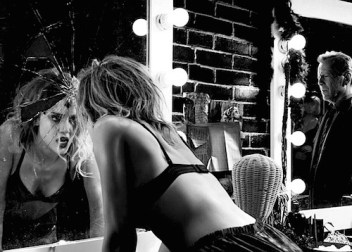 its predecessor, and that’s exactly what it delivers. I suspect the first benefits from nostalgia because, watching them virtually back to back, I found I liked Sin City less than I remembered, but enjoyed A Dame to Kill For just as much. It’s flawed in several aspects, but for honest-to-themselves fans of the first movie, I think it’s a “more of what you liked”-style success.
 100Films.co.uk