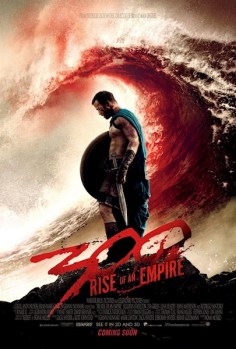
300: Rise of an Empire (2014)

2016 #78
Noam Murro | 98 mins | streaming (HD) | 2.35:1 | USA / English | 15 / R

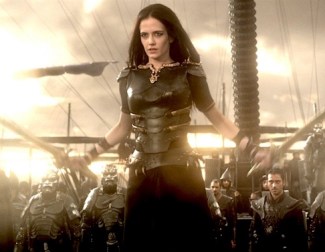
Taking place before, during, and after the events of Zack Snyder’s surprise-hit graphic novel adaptation 300, belated follow-up Rise of an Empire tells the wider story of what was going on in the war between Greece and Persia. In particular, it follows Themistokles (Sullivan Stapleton) as he commands a series of sea battles against the Persian navy, led by Artemisia (Eva Green).

300 was known from the off as a case of style over substance, both in terms of its visuals (the ultra-heightened colour palette at a time when extreme digital grading still felt new; the slow-mo/fast-mo/etc editing) and its storytelling (taking an historical event and ramping it up to the level of legend; dialogue more concerned with being readily quotable than sounding plausible). But it committed so thoroughly to that methodology that it kind of worked, in its own ridiculous way. It helped that, as I said, it was all quite new — 300 was a visual revelation back in 2007, and that was enough. Now, plenty of films look like that, leaving 300 2 in search of a hook. It doesn’t find one.

It doesn’t help that the CGI this time is terrible, making the whole thing look like a computer game with real people occasionally dropped in. It’s not just the low quality of the graphics (calling them “effects” or “visuals” seems generous), but the way the camera moves and frames things. And the gore is gorno-level outrageous. In one shot early in the film, we see a horse rise up in fright, slow motion emphasising how its whole body is lifting into the air on its hind legs, its front hoof flailing, its eyes wild… before it comes crashing down, its hoof smashing into a grounded man’s head, the not-even-vaguely-plausible CGI blood exploding everywhere — in slow motion, of course.

It’s also terribly obvious that it was shot for 3D. I’m not normally one to criticise a film for that — I think when some critics know a film is being released in 3D they see that in its shot choices, even if they’re perfectly valid choices for 2D. But Rise of an Empire screams that it was made for 3D from the start, with all manner of things thrust towards the camera, usually in slow motion, and the constant explosions of blood (to call them squirts or sprays implies a more liquid-like quality than they actually possess) which go nowhere else but camerawards. Presumably the only reason it’s not an 18 for violence is because it’s all so bloody silly.

There is no point discussing or analysing any other aspects of the film. In every respect — from the clunky structure, to the leaden dialogue, to the poor performances, to the cheap visuals, to the fake CGI — this doesn’t feel like the $110 million blockbuster it is, but like a direct-to-Syfy TV movie.

1 out of 5

300: Rise of an Empire is available on Amazon Prime Instant Video UK as of yesterday.

It featured on my list of The Five Worst Films I Saw in 2016, which can be read in full here.

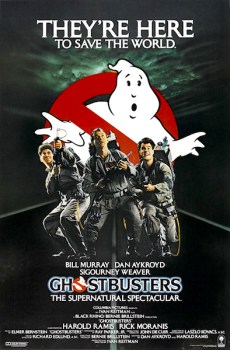
Ghostbusters (1984)

100 Films’ 100 Favourites #37

They’re here to save the world.

Also Known As: Ghost Busters, technically.

Country: USA
Language: English
Runtime: 105 minutes
BBFC: PG (1984) | 12A (2011)
MPAA: PG

Original Release: 8th June 1984
UK Release: 7th December 1984
First Seen: VHS, c.1990

Stars
Bill Murray (Groundhog Day, Lost in Translation)
Dan Aykroyd (The Blues Brothers, Trading Places)
Harold Ramis (Stripes, The Last Kiss)
Ernie Hudson (The Crow, Congo)
Sigourney Weaver (The Year of Living Dangerously, Gorillas in the Mist)
Rick Moranis (Little Shop of Horrors, Honey, I Shrunk the Kids)

Director
Ivan Reitman (Stripes, Kindergarten Cop)

Screenwriters
Dan Aykroyd (The Blues Brothers, Dragnet)
Harold Ramis (Animal House, Groundhog Day)

The Story
After losing their university jobs, a trio of paranormal researchers set up a ghost extermination business. They’re soon hired by Dana Barrett, who believes her apartment is haunted. Turns out it is, by an evil demigod who posses Dana and sets about bringing the world to an end…

Our Heroes
They ain’t afraid of no ghosts! Discredited parapsychologists Peter Venkman, Ray Stantz and Egon Spengler set up the Ghostbusters to combat the increasing problem of paranormal activity in New York City, and later recruit Winston Zeddemore to cope with demand.

Our Villain
Gozer the Gozerian, a Sumerian god of destruction. Likes to turn his servants into supernatural hounds and allow the good guys to choose the form of their ‘destructor’ — which is how you end up having to fight a 112½-foot marshmallow man.

Best Supporting Character
Among a strong cast of memorable characters, one has to feel for William Atherton as antagonistic EPA agent Walter Peck. Peck is so unlikeable that, according to director Ivan Reitman, it “ruined” Atherton’s life: people confronted him as if he were the character, including starting fights in bars. He’s just too good at being a slimy little so-and-so, I guess.

Memorable Quote
“Don’t cross the streams.” — Dr. Egon Spengler

Quote Most Likely To Be Used in Everyday Conversation
“Dogs and cats, living together!” — Dr. Peter Venkman (well, we used it a lot…)

Memorable Scene
The Ghostbusters fail to stop the coming of Gozer, who shortly declares that the destructor will follow, in a physical form chosen by the team. Although three of them manage to clear their minds, something pops into Ray’s head — “the most harmless thing. Something I loved from my childhood. Something that could never, ever possibly destroy us.” Unless it was eleven storeys tall and motivated by evil, of course.

Sing the Theme Tune…
“If there’s something strange in you neighbourhood, who you gonna call?” Ray Parker Jr.’s theme song is as iconic as the movie itself. It lost the Oscar to Stevie Wonder’s I Just Called to Say I Love You. Won the BAFTA, though.

Truly Special Effect
The film is full of excellent effects work — all done practically, of course, in those pre-CGI days. That also means an abundance of techniques were used, from simple stuff like hanging things on wires or using wind blowers to make library cards fly around, to miniatures with a Godzilla-style man in a suit, to full animation for things like the proton packs’ streams. And it was all produced on such a tight schedule that, according to the film’s effects mastermind, 70-80% of the work was achieved in the first take.

Making of
Dan Aykroyd wrote the part of Winston with Eddie Murphy in mind, having just worked with him on Trading Places. When Murphy was unavailable due to working on Beverly Hills Cop, Ernie Hudson was cast. He was so excited by the part that he agreed to do it for half his usual salary, only to then receive a revised script in which Winston had a greatly reduced role. In 2015, Hudson commented, “I love the character and he’s got some great lines, but I felt the guy was just kind of there. I love the movie, I love the guys. I’m very thankful to Ivan for casting me. I’m very thankful that fans appreciate the Winston character. But it’s always been very frustrating — kind of a love/hate thing, I guess.”

Next time…
First came The Real Ghostbusters, an animated series that ran from 1986 to 1991 and produced 140 episodes (the addition of The Real to the title being due to another series from the ’70s). Due to its success, the cast and crew were cajoled into making a film sequel, Ghostbusters II, which scared the life out of me when I was about 4. In 2009, Ghostbusters: The Video Game used the likenesses and voices of many of the original cast, and Dan Aykroyd described it as “essentially the third movie.” Rumours and/or plans for a genuine second sequel persisted for a very, very long time (there’s a mass of details here, if you’re interested), though finally seem to have been abandoned in favour of this summer’s all-female reboot.

Awards
2 Oscar nominations (Visual Effects, Original Song)
1 BAFTA (Original Song)
1 BAFTA nomination (Visual Effects)
1 Saturn Award (Fantasy Film)
Nominated for the Hugo for Best Dramatic Presentation.

What the Critics Said
“The cast could not be better. Although his role is too small, Aykroyd is endearingly serious as a diehard, but easily scared, ghost-hunter. Harold Ramis, the co-writer of the script, is extremely funny as a hopeless egghead […] But Ghostbusters is primarily a showcase for Murray, who slinks through the movie muttering his lines in his usual cheeky fashion and getting off an occasionally hilarious crack that proves he’s thoroughly enjoying himself.” — Kathleen Carroll, New York Daily News

Score: 97%

What the Public Say
“the use of special effects, specifically practical effect, shines as well. The ghosts may not be perfectly rendered, but they are so interesting in design and they have so much energy onscreen that you don’t mind it. The practical effects, like having the ground open up or drawers being opened by unseen ghosts are done very well. In a time where many effects-heavy films rely solely on CGI, it’s nice to look back to a time when practical effects were still commonplace in movies and done well in movies.” — Joey Sack, Reel Reactions

Verdict

Along with Teenage Mutant Ninja Turtles and ThunderCats, I loved Ghostbusters when I was a kid — I had a dressing up set, with a jumpsuit and a proton pack with a yellow foam whatsit for the stream, and one of the traps, and an Ecto-1, and the firehouse playset, and one time I got my fingers caught in the grill on the roof (which was there to pour goo through, because toys) and I’m sure I panicked until liberal application of butter freed me… Good times. I guess back then my love for it was more to do with the animated series than the movie, but the film itself is a work of blockbuster comedy art. The characters are a joy to be around, the dialogue is hilarious and quotable, multiple sequences lodge themselves indelibly in the memory, the special effects are exemplary, and the dramatic stakes can be surprisingly effective for what’s primarily a comedy.

All together now: “bustin’ makes me feel good!

#38 will have its revenge… in this post or the next.

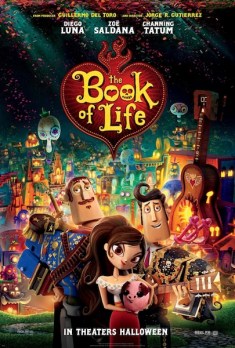
The Book of Life (2014)

2016 #50
Jorge R. Gutierrez | 92 mins | streaming (HD) | 2.35:1 | USA / English | U / PG

A myth-like animated musical adventure based around Mexico’s Day of the Dead, most notable for its unique art style that presents gorgeous visuals throughout.

Otherwise, it has the right ingredients but in disappointing proportions. The story is good, but too long in the telling. The humour isn’t consistently amusing. The songs are mostly re-appropriated pop tracks, plus two new compositions. The latter are more effective, though shoehorning a rendition of Radiohead’s Creep into a kids’ movie is memorable for the wrong reasons.

Some viewers may lose patience with it, but I thought enough was likeable to keep it ticking over.

3 out of 5

For more quick reviews like this, look here.

Maleficent (2014)

2016 #84
Robert Stromberg | 93 mins | streaming (HD) | 2.35:1 | USA & UK / English | PG / PG

Disney seem to be embarking on a project to remake all of their most beloved animated movies in live action,* with Cinderella being one of the highest grossing movies of last year, The Jungle Book currently doing gangbusters at the box office worldwide, an all-star Beauty and the Beast hotly anticipated for next year, and others in the pipeline that include Mulan, Pinocchio, The Sword in the Stone, both Peter Pan and Tinkerbell, another 101 Dalmatians, an Aladdin prequel, Winnie the Pooh, and Tim Burton’s Dumbo. (No, I did not make those last two up.)

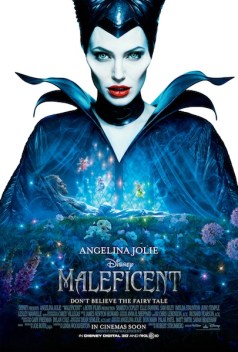
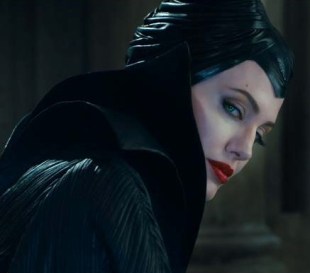
But it all started… back in 2010, when Tim Burton’s Alice in Wonderland was an unexpectedly ginormous hit. But then there were a couple of years off, so you could argue the current wave started here: a revisionist re-telling of Sleeping Beauty from the point of view of its villainess. In this version, we meet Maleficent as a child, protector of some fairy kingdom that borders the human kingdom. One day she meets a trespassing human boy, Stefan; they fall in love; eventually, he stops visiting, set on making his fortune in the king’s castle. After Maleficent has grown up to be Angelina Jolie doing an English accent and Stefan has grown up to be Sharlto Copley doing a Scottish accent (goodness knows why), the human king decides to invade the fairy land. Maleficent repels his forces, and the dying king vows whoever can defeat her will be named heir. So power-hungry Stefan does something terrible, and we’re on the road to the story we know… more or less.

It’s an interesting idea to take an archetypal villain who’s evil for evil’s sake and try to give her motivation, to understand why she did terrible things. Maleficent makes a fair fist of this, beginning long before the familiar tale to establish a run of events that tip the titular character to the dark side. What Stefan does to her to win power is pretty dark, and a clear analogy to a real-world crime that you wouldn’t expect from a PG-rated Disney movie. Our sympathies, at this point, lie with Maleficent. Of course, then she goes and condemns an innocent child to eternal slumber, so that’s less nice.

However, this is a Disney movie — you don’t get to turn a villain into the central character and have her be evil throughout. This is where the film gets really revisionist, because Maleficent keeps an eye on cursed Princess Aurora (Elle Fanning) as she grows, doing more to keep her alive than the trio of fairies she’s supposedly in the care of, and her heart is gradually warmed to the girl. Unfortunately, Maleficent was too good at the cursing malarkey: unable to lift her own spell, it plays out regardless, and the film serves us new renditions of the impassable thorns, giant dragon, and true love’s first kiss. It’s in the last where Maleficent is thematically revisionist rather than just a massive rewrite. Your mileage may vary on whether this version is obvious and cheesy, or actually more meaningful and (for the primary audience of little kiddies) more thought-provoking than the original’s — I’d go with the latter.

So in some respects, Maleficent is a success. In others, it’s a bit of a mess. For all the additional character development given to Maleficent herself, the rest of the characters are two-dimensional at best. It’s ironic that, in a movie all about fleshing out and understanding the villain, the new villain (i.e. Stefan) is so flat. Other elements are just pointless or nonsensical, like the corridor of iron spikes Maleficent & co briefly have to squeeze along. It’s not a bad idea per se — it’s been established that iron hurts fairies (goodness knows why, but there you go), so it’s a reasonable concept for a physical obstacle — but it’s really poorly integrated into the story, and it’s bested by… walking through it carefully. Thrilling.

Parts of the film test-screened poorly — mainly the first act, with audiences wondering why it took so long for Jolie to turn up. Consequently, the whole thing was thrown out and reshot; in the process, Peter Capaldi and Miranda Richardson were deleted (and after they’d had to endure hours of transformative prosthetics for their roles, too), and Maleficent was given a new backstory. How far this extended into the rest of the movie, I’m not sure, but at times it feels like stuff has been cut or rearranged. Certainly the story flies past — if it wasn’t trimmed down in the edit, it needed expanding back at the screenplay stage.

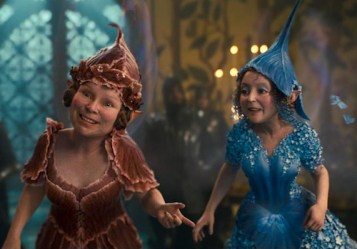
Then there’s the uncanny-valley-tastic rendition of the three fairies, with mini plasticky-CGI versions of Imelda Staunton, Juno Temple and Lesley Manville floating around until they jarringly turn into live action; the unintentional hilarity of the Prince Charming-type apparently being from the kingdom of Ofsted (it’s actually Ulfstead, but still); and the original film’s famous song, Once Upon a Dream, being slowly murdered by Lana Del Rey. Perhaps surprisingly, the work of production-designer-turned-director Robert Stromberg is pretty decent, though over-fond of crash zooms during action sequences, and an overall visual style that’s reminiscent of the likes of Burton’s Alice in Wonderland and Sam Raimi’s Oz the Great and Powerful — both of which Stromberg designed, funnily enough.

For all its faults, Maleficent was still the fourth highest grossing movie of 2014 — though the top grosser was Transformers: Age of Extinction and second was The Hobbit: The Battle of the Five Armies, so that shows what quality matters to the box office. Nonetheless, it’s no wonder Disney have kicked into gear with the live-action remakes, and even a Maleficent sequel is in development. (No idea how that’ll work — Sleepier Beauty?) On the bright side, there is something more interesting going on here than just an animated film being re-done with real people (and copious CGI). Certainly, anyone interested in fairytales being deconstructed and/or reconstructed should be sure to check it out.

3 out of 5

Maleficent is available on Netflix UK as of this week.

* At least they’re not trying to tie them together as another shared universe! ^

The Witches of Eastwick (1987)

2016 #47
George Miller | 113 mins | streaming (HD) | 2.35:1 | USA / English | 18 / R

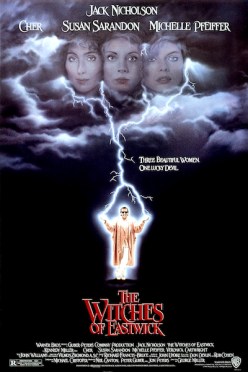
The first US feature from the director of Mad Max is an unusual affair. Three now-single women (Cher, Susan Sarandon, Michelle Pfeiffer) accidentally summon a man (Jack Nicholson) who lures them into a life of debauchery, while helping hone their latent magic powers.

Undoubtedly a comedy, Eastwick is less laugh-out-loud, more wryly amused by small-town tittle-tattle. Nicholson was made for devilish characters like this, but the rest of the film isn’t as focused. A presumed point about female empowerment gets lost in the mix, and it doesn’t know how to end, resorting to an effects-driven climax.

Still, it’s largely fun.

3 out of 5

For more quick reviews like this, look here.

The Empire Strikes Back (1980)

100 Films’ 100 Favourites #27
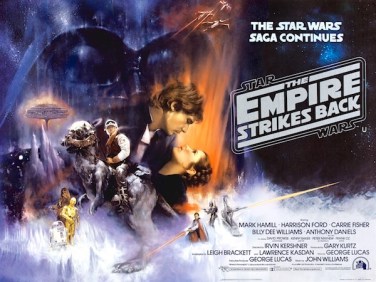
The Star Wars Saga Continues

Also Known As: Star Wars: Episode V – The Empire Strikes Back

(I may be a young whippersnapper, but I’m old enough that, when I was a kid, we still called it just The Empire Strikes Back. I thought that would be a nicer place for it among my 100 Favourites, therefore.)

Country: USA
Language: English
Runtime: 124 minutes | 127 minutes (special edition)
BBFC: U
MPAA: PG

Original Release: 21st May 1980 (UK)
US Release: 20th June 1980
First Seen: VHS, c.1990

Stars
Mark Hamill (Star Wars, The Big Red One)
Harrison Ford (Raiders of the Lost Ark, Air Force One)
Carrie Fisher (Star Wars, Hannah and Her Sisters)
Billy Dee Williams (Mahogany, Batman)
Frank Oz (The Muppet Movie, Monsters, Inc.)

Director
Irvin Kershner (Never Say Never Again, RoboCop 2)

Screenwriters
Leigh Brackett (The Big Sleep, The Long Goodbye)
Lawrence Kasdan (Raiders of the Lost Ark, Wyatt Earp)

Story by
George Lucas (Raiders of the Lost Ark, Willow)

The Story
After the evil Galactic Empire uncovers the Rebel Alliance base on Hoth, our heroes flee for the stars. Guided by a message from beyond the grave, Luke heads to meet an old Jedi master. Meanwhile, Han, Leia, Chewie, and the droids hide for a bit, then go to meet the only black man in the galaxy…

Our Heroes
Luke Skywalker: ace pilot; Jedi in training.
Han Solo: reformed criminal.
Princess Leia: wait, hold on, her planet was destroyed — surely now she’s either Queen Leia or, y’know, nothing?

Our Villain
Darth Vader: daddy issues personified.

Best Supporting Character
R2-D2 is the best supporting character in every Star Wars film, but in this one we are introduced to Yoda. Looks like a Muppet, as cheeky as a Muppet, much wiser than a Muppet. Probably. It’s hard to be certain.

Memorable Quote
“Try not. Do, or do not. There is no try.” — Yoda

Quote Most Likely To Be Used in Everyday Conversation
Leia: “I love you.”
Han: “I know.”

Memorable Scene
After a dramatic lightsaber duel, Darth Vader lops off Luke’s hand, his weapon disappearing with it. As Luke dangles over an endless fall to Certain Death, Vader decides this is the perfect moment to impart a big secret…

Memorable Music
The Star Wars Main Theme is all well and good, but here regular composer John Williams introduces us to arguably an even more iconic tune — it certainly gets played outside of the films more often, as a universal signifier of evil. That’s right, it’s the Imperial March! All together now: dum dum dum dum-duhdum dum-duhdum…

Truly Special Effect
To animate the tauntauns, Phil Tippett and ILM pioneered the use of go motion, a version of stop-motion animation that moves the puppet while the frame is being exposed so as to create motion blur, thereby making the effects more realistic. (It purposefully wasn’t used for the AT-AT walkers, to emphasise their mechanical movement by keeping it slightly jerky.) Go motion would go on to be used on films including Dragonslayer, E.T., RoboCop, and Willow. It was going to be used for the dinosaurs in Jurassic Park, but then someone had another idea…

Letting the Side Down
Lucas’ Special Edition fiddling isn’t as prevalent in Empire as in its original trilogy compatriots. If anything, the big windows in Cloud City are a nice touch.

Making of
The crew took crates of simulated snow from the Hoth set to the shoot in Norway, in case there wasn’t enough real snow on location. Somewhat ironic, then, that the location was hit by a snowstorm, coating the region so thoroughly that some of the scenes set in Hoth’s wilderness were filmed right outside the crew’s hotel.

Previously on…
The story begins, of course, in Star Wars. There’s tonnes of other material set before Empire, not least the infamous prequel trilogy.

Next time…
The Star Wars universe is immense, so don’t expect me to even attempt a summation of it. At the most essential, Return of the Jedi picks up the dangling threads of Empire and completes the trilogy, while last year’s The Force Awakens continues the narrative decades later, with more instalments to come in 2017 and 2019.

Awards
2 Oscars (Sound, Special Achievement in Visual Effects)
2 Oscar nominations (Score, Art Direction-Set Decoration)
1 BAFTA (Music)
2 BAFTA nominations (Production Design, Sound)
4 Saturn Awards (Science Fiction Film, Actor (Mark Hamill), Director, Special Effects)
4 Saturn nominations (Supporting Actor (Billy Dee Williams), Writing, Music, Costumes)
Won the Hugo for Best Dramatic Presentation
1 WGA Award nomination (Best Comedy Adapted from Another Medium — yes, really)

What the Critics Said
“It’s almost too much to expect that a sequel can ever top the success of the original, and I suspect that this will prove the case with The Empire Strikes Back […] While Empire doesn’t quite measure up to Star Wars in the freshness and originality of its script, and the plethora of space operas that has been jamming the screens ever since Star Wars has somewhat lessened the novelty of city-sized ships sailing the stratosphere, nevertheless this 20th Century-Fox release remains a rattling good entertainment, a worthy successor to the original — and far and away the best of its kind since Star Wars itself.” — Arthur Knight, The Hollywood Reporter (This original 1980 review also mixes up Yoda and Boba Fett. Fun.)

Score: 94%

What the Public Say
“the movie suffers from as uneven a vibe as its forebear, with, especially, the midsection lacking in elements designed to wholeheartedly sustain one’s interest. This proves to be especially true of Luke Skywalker’s ongoing (and less-than-captivating) training at the hands of Frank Oz’s Yoda, as such interludes suffer from a lack of momentum that bring the proceedings to a dead stop at each and every turn. […] an erratically-paced yet consistently entertaining installment in a not-quite-great sci-fi series.” — David Nusair, Reel Film Reviews (This site gives Episodes III, IV, V and VI a rating of 3/4, but Force Awakens a full 4/4. Just so you know.)

Elsewhere on 100 Films
I’ve written about the original Star Wars trilogy twice before, both times back in 2007. Of The Empire Strikes Back’s modified DVD version, I said that “the big change comes in dubbing both Boba Fett and the Emperor with appropriate actors from the prequel trilogy […] Other than shunning the poor original actors in such a way, Empire is much the same as ever.” Then, treating the film as the fifth part of the saga, I wrote that “a variety of elements […] have a very different impact in light of what we’ve experienced in the first trilogy. The most obvious is the revelation that Vader is Luke’s father: it’s no longer a twist, of course, but the emotional impact on Luke still makes it an important moment. Yoda […] seems to have gone a little loopy after several decades alone on Dagobah”.

Verdict

What more is there to say about The Empire Strikes Back, really? According to some polls, it’s the greatest movie of all time; even if you don’t go that far, it’s a masterpiece of blockbuster science-fantasy adventure. Every moment is tuned to tickle the thrill-glands; every special effect a labour of love that, with their inventiveness and genuine physicality, remains largely impressive today. And it’s so well paced that most people completely overlook that the storyline is chronologically challenged (Luke travels to Dagobah, meets Yoda, learns a bunch of tricky Jedi skills, and heads off to Cloud City, all while the rest of the characters hide in an asteroid field and are locked up for about five minutes). Plus it has the audacity to end on an almighty cliffhanger/revelation double-header! And in that spirit: it’s not even my favourite Star Wars movie. But I’ll tell you about that another time.

#28 will star… Travolta/Cage.

The Last Temptation of Christ (1988)

2016 #17
Martin Scorsese | 156 mins | TV (HD) | 16:9 | USA & Canada / English | 15 / R

Scorsese tells the story of Jesus in this controversial epic adapted from Nikos Kazantzakis’ novel. I have no idea how much is actually rooted in scripture — a disclaimer is keen to establish the film isn’t based on the Gospels, but obviously that’s just to appease the devout.

However, the contentious parts are its strengths: it humanises Jesus, as he shows uncertainty about his God-given role and the earthly concerns that tempt him. Willem Dafoe makes Christ a plausible human, but Harvey Keitel’s Brooklyn-accented Judas feels like a spoof.

It’s a little overlong, but an interesting interpretation of the Messiah nonetheless.

4 out of 5

For more quick reviews like this, look here.

The Five Venoms (1978)

aka Five Deadly Venoms / Wu du / Mm Dook

2016 #9
Chang Cheh | 97 mins | streaming (HD) | 2.35:1 | Hong Kong / Mandarin | 18 / R

Some say The Five Venoms is one of the very best martial arts films ever made. Some say it’s the best. I’m afraid I have to disagree. Strongly.

It begins with a daft premise: a student is instructed to find five former pupils and a teacher, but he doesn’t know their names or where they went. All he knows is their fighting styles, which they will use in an emergency, and that the ex-teacher is rich. Presumably he therefore had to scour the entire country watching everyone fight until he stumbled on the right guys. Oh, and there’s a time limit because the pupils may go after the teacher’s money… though how the chap who’s setting this mission is supposed to know they haven’t already, I don’t know.

So the plot is a non-starter, but we don’t watch kung fu movies for the plot. Unfortunately, The Five Venoms seems to think we do, because action is actually in short supply. When a decent slab of it does arrive, in the form of a five-way fight for the climax, it’s somehow boring. Before then there’s bouts of torture and plain violence, and while the blood is as fake as ever, the style is cold and gruesome. The only really good bits come from the characters’ imagination: there’s the opening scene, with flashback demonstrations of everyone’s powers, in comic-book-gaudy colours; and later, the student teams up with one of the ex-pupils to plan and prepare, and as they practice we see the villains appear through their imagination.

I’m not sure what people see here to call it one of the greatest martial arts movies ever. The establishment of the Five Venoms and their styles, all of that mythology, seems to be a big thing for some people. I keep reading things like “the concept of the five Venom styles is simply amazing”, or that “the mythology alone is exquisite”, but I just don’t buy it. There’s nothing wrong with it — it’s a decent setup — but to call it a “mythology” is bordering on grandiose. And whether it’s a full-blown mythology or just a high-concept setup, either way it’s not that incredibly mind-blowing a concept.
The hype means that The Five Venoms is a disappointment — cheesy, convoluted, sometimes nonsensical, lacking in action, and, worst of all, often dull.

2 out of 5

The Five Venoms is on Film4 tonight at 11:10pm as part of their Revenge of Martial Arts Gold season.

Dogma (1999)

100 Films’ 100 Favourites #24

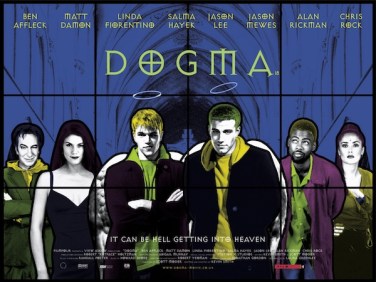
It can be Hell getting into Heaven.

Country: USA
Language: English
Runtime: 128 minutes
BBFC: 15
MPAA: R

Original Release: 12th November 1999 (USA)
UK Release: 26th December 1999
First Seen: DVD, c.2004

Stars
Ben Affleck (Armageddon, Daredevil)
Matt Damon (The Rainmaker, The Bourne Identity)
Linda Fiorentino (The Last Seduction, Men in Black)
Salma Hayek (Desperado, Frida)
Alan Rickman (Die Hard, Galaxy Quest)

Director
Kevin Smith (Clerks, Red State)

Screenwriter
Kevin Smith (Chasing Amy, Zack and Miri Make a Porno)

The Story
When two fallen angels discover a loophole that might allow them back into Heaven, a normal woman is charged with stopping them before they bring about the apocalypse. Hilarity ensues.

Our Heroes
Abortion clinic worker Bethany has greatness heaped upon her when the voice of God gives her a mission (“I don’t want this, it’s too big.” “That’s what Jesus said.”). She ends up collecting a motley crew of followers and helpers, including 13th apostle Rufus, Serendipity herself, and idiot-prophets Jay and Silent Bob.

Our Villains
Banished angels Loki and Bartleby are fed up with living on Earth, but that’s okay because they’ve found a loophole that will get them back into Heaven. It might destroy the world or something, but, y’know, collateral damage ‘n’ all that.

Best Supporting Character
Alan Rickman again (see also: last time), this time as Metatron — not an anime hero or Power Rangers villain, but the dry-witted, genital-less Voice of God.

Memorable Quote
“Any moron with a pack of matches can set a fire. Raining down sulphur is like an endurance trial, man. Mass genocide is the most exhausting activity one can engage in, next to soccer.” — Loki

Memorable Scene
Whiling away time until they can execute their plan, Bartleby and Loki invade a company’s board meeting and expose the members’ secrets. (Any scene that features Bartleby + Loki + dialogue is among the film’s best bits.)

Truly Special Effect
I suppose it’s a relatively simple one really, but I’ve always thought the various characters’ wings look magnificently ‘real’. That’s the beauty of practical effects for you.

Letting the Side Down
This isn’t about the film itself, but they made a behind-the-scenes documentary, called Judge Not: In Defense of Dogma, which wasn’t actually ready for the film’s DVD release. Instead, it was included on the later DVD of Vulgar (not heard of it? Me either.) Eight years later, when Dogma made its way to Blu-ray, the making-of… still wasn’t included. I mean, how hard is it to pay attention when creating a new release and do more than just “copy and paste” the DVD’s contents?!

Making of
Even before the film opened it was picketed by Christian protestors. Unbeknownst to that mob, the film’s writer-director Kevin Smith joined them… and, unrecognised, got interviewed on TV. Sounds kinda implausible, but it happened.

Awards
1 Razzie nomination (Worst Supporting Actress (Salma Hayek, also for Wild Wild West))

What the Critics Said
“those who would call it sacrilegious (and there will be many) should look beyond the foul language and crude humor, to see more deeply into Smith’s intentions to give the dusty doctrines of the ancient faith a fresh new perspective. Foul language aside, the film has some interesting things to say about human nature, and about the nature of those non-humans we have come to know and love, and hate, and pray to, and obsess about, over the last few millennia.” — John R. McEwen, Film Quips

Score: 67%

What the Public Say
“The beginning of the movie has a few disclaimers pleading with a sensitive audience to not hate this movie because of its seemingly antireligious rhetoric. To be honest, I thought the message of ultimate religious tolerance was fairly clear. […] I don’t think Dogma will make you examine your faith any more than before you watched it. Instead it will let you turn a more satirical eye to the absurdities of the modern church bureaucracy and hopefully make you laugh a little bit about how ridiculous some of this shit is. It’s okay to have faith in a higher power, but getting too extreme with your ideals can make you an asshole.” — ThomFiles

Verdict

Not nearly as disrespectful to Christianity as the Bible-bashing protestors would like you to think, Kevin Smith’s religious comedy can be a bit of a mixed bag — the story is occasionally a tad baggy and the toilet humour sometimes goes too far for my taste, but there are plenty of amusing scenes, lines and performances. Irreverent and crude, to be sure, but sometimes surprisingly clever, and consistently funny.

#25 will be… setless.

47 Ronin (2013)

2016 #18
Carl Rinsch | 119 mins | streaming (HD) | 2.35:1 | USA / English | 12 / PG-13

Blighted by behind-the-scenes difficulties, 47 Ronin wound up among the biggest box office bombs of all time — a fate not entirely undeserved.

It concerns a gang of samurai who set out to avenge their master, a true story that’s legendary in Japan. This telling is enhanced with fantasy elements — which, despite some critics’ views, is just fine, as the film’s historical advisor explains in this excellent defence.

Sadly, what falters is everything else: clumsy storytelling, poorly edited action, Japanese actors struggling with English dialogue, Keanu Reeves’ acting. Magnificent imagery and design stop it being a total disaster, but only just.

2 out of 5

For more quick reviews like this, look here.