
Curtis Hanson | 132 mins | DVD | 18 / R
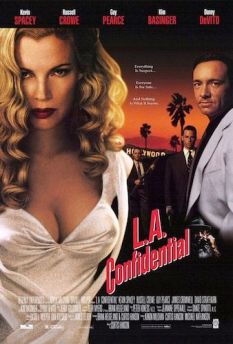 Once again I’m watching an adaptation shortly after plowing through the source novel, a situation that has so far proved awkward for giving films a fair assessment. L.A. Confidential is an especially tricky one: how does a 480-page, densely written, intricately plotted crime novel, spanning seven years and “no fewer than four and perhaps as many as a dozen major crimes”, translate into a two-and-a-quarter-hour film? With more than a few surprises, as it turns out, because the apparently minor changes near the film’s start turn out to be the proverbial pebble in a pond: their ripples spread so far that, by the second half, not even a reader who can remember the many details of the novel’s complex plot will know for sure what’s coming.
This isn’t necessarily a bad thing. If screenwriters Hanson and Brian Helgeland had tried to squeeze in everything the movie would have been rushed even at three hours. Instead they’ve excised several unnecessary subplots and trimmed others to the bare minimum. Most impressively, they’ve picked apart several of the multitudinous plot threads and completely restructured them. It’s an incredible feat of adaptation. The downside is that some great strands are lost. Ed Exley’s father plays a huge role in the novel but is completely absent here; Inez Soto, the victim of a brutal gang rape, is reduced from a key supporting character to a couple of lines. Another connected loss is some characterisation. Jack Vincennes and Exley lose the most, though Bud White’s development is tied too closely to the main storyline. That said, the characters are still mostly there, painted quickly and precisely; they may lack some of the depth and complexity the novel can offer, but that’s an almost unavoidable difference between a film and a long, well-written novel. To make a good film such sacrifices are necessary — even though it’s been simplified, the novel’s complex plot is still a long way from becoming straightforward.
What impressed me most about L.A. Confidential is that, despite spending huge chunks of the film pondering what they’d cut and changed, I still enjoyed it immensely. Even while distracted with thoughts of the novel, its differences and its relative merits, I could still enjoy the fantastic filmmaking. The casting is perfect, especially Spacey, Pearce and Crowe (perhaps the last most of all, considering his penchant for real life violence). For once it really is as if the roles were written for them, making it easy to forget that Pearce and Crowe were virtually unknown at the time. They’re supported by a cracking screenplay (which I think I’ve praised plenty already) and beautiful direction, which manages to evoke the period without being shot like a period film — Hanson has stated that he aimed to make it period-accurate but shoot it like a modern thriller, and he’s succeeded. There may be one or two imperfections (the music felt a little repetitive to me, for example), but they’re slight and it seems churlish to pick on them in any depth.
I look forward to watching L.A. Confidential again without the novel hanging over my head. I’ve made my comparisons now, and my memory’s weak enough that, by the time I get round to watching it again (perhaps when the long-rumoured special edition re-release turns up), I’ll have forgotten enough of the novel’s specifics to not be bothered by them. I expect I’ll enjoy it even more then. It’s an excellent achievement, both as an adaptation and a film in its own right. You can’t say fairer than that.

 One has to wonder if
 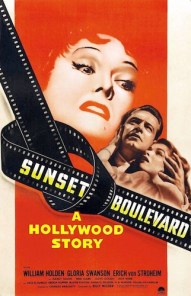 Sunset Blvd. may not be the first movie about the movies, but for the amount of controversy it caused and the impact it’s had it may as well have been. It’s certainly a well respected film — I’m sure I could cite any number of
 I can’t help but wonder if, back in 1985, there was any audience confusion between A Room with a View and
 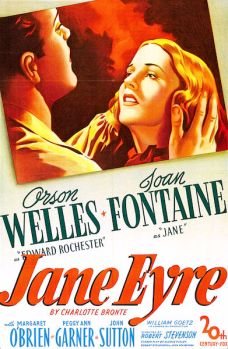 I was meant to read Jane Eyre in the first year of my degree, but, given a week to attempt what seemed a positively enormous tome (I partly blame the edition) and a coinciding essay deadline, I didn’t even attempt it. Instead I settled for a friend summarising it for me — I tuned out halfway through the very long retelling due to boredom, though whether that was the fault of the novel or its summariser I still don’t know. I finally got through Jane Eyre the year before last — not the novel, though, but the BBC’s apparently-definitive adaptation (has it been that long already!), following numerous extremely positive reviews at the time. That was good — because or in spite of the novel, I do not know.
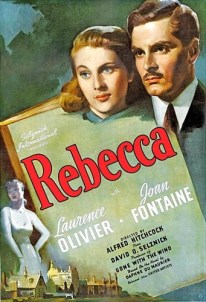 I must confess that I don’t think I’ve come to Rebecca under the best circumstances for judging it as a film in its own right. As with last week’s
 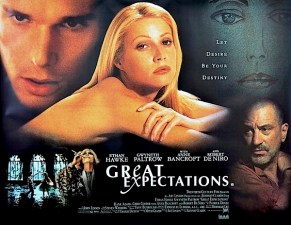 After re-enjoying the classic David Lean version of Great Expectations (which I
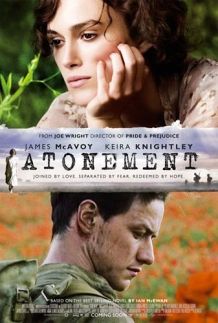 “The Most Nominated Film of the Year” proudly proclaims a sticker on the cover of Atonement’s newly released DVD. Well, not quite: according to
 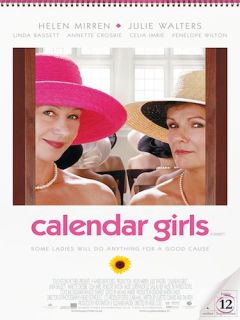 Helen Mirren and Julie Walters lead a cast of recognisable British actresses in this popular comedy drama about the true story of a group of Women’s Institute members who posed nude for a charity calendar. The film could so easily have been quite a lowly, cheap TV movie effort, what with its apparently farcical premise, worthy cause and older characters. But instead the filmmakers have crafted a movie that is both utterly hilarious and deeply moving — even for this younger male viewer.
