M (1931)

2010 #20
Fritz Lang | 111 mins | Blu-ray | PG

M is a film of immense significance, not least because of its place on numerous Best Ever lists (even if it is a nightmare to find quickly on any list or website thanks to its single-letter title), and not to mention it being director Fritz Lang’s favourite among his own work (consequently he definitively moved away from his fantastical work on the likes of Die Nibelungen, Frau im Mond and (of course) Metropolis, choosing to largely direct crime pictures, including a significant contribution to film noir). As with any film of such acclaim, where near-endless essays and articles and whole books have been penned discussing every notable aspect, it’s unlikely I’m going to have much either new or significant to say after one viewing (never mind “ever”). Just so you know.

But I can sing some of its praises. Like Peter Lorre’s extraordinary performance as child killer Hans Beckert. He could have survived on his naturally unusual looks, which fit the role perfectly, but he also skillfully conveys the realistic complexities of such a character. Beckert’s psychology feels completely accurate, something you might not expect from an 80-year-old film. To show such care in making a conceivable human being out of a villain who has committed some of the most horrendous crimes imaginable, and not just going for the easy approach of showing an incomprehensible monster, is a vital step in creating a realistic crime movie — a step that’s often been ignored, and still can be today.

And Lang did set out with the express aim of making a realistic factual film, albeit still a fictional one — it’s ‘inspired by’ real cases, not specifically ‘based on’ them as some have claimed. Along with his writer (and wife) Thea von Harbou, Lang drew on innumerable press reports about murders and their investigations, spoke to police officers and psychoanalysts about their jobs and what they had learnt about such criminals, and generally researched every area he aimed to cover on screen. His intention was for the film to constantly shift its focus, examining every aspect of a high-profile serial killer case, and so it does: we see the victims and their families (before and during the crime, though not after it to any significant degree); the public reaction and hysteria; the police’s flailing investigations and increasing exasperation; the criminal underworld, who begin their own manhunt because police inquiries are “bad for business” (despite sounding like a filmic conceit, this element was directly inspired by a newspaper article); and the criminal himself — trying to lay low, but constantly having to fight his urges… and ultimately giving in to them again.

Such a diffuse set of perspectives could lead to a messy structure that revealed each facet in only half-hearted broad strokes, but Lang never allows this to happen. The opening sequence, depicting the latest in a long line of kidnap/murders, is exemplary: every shot and edit contributes to a growing sense that Something Horrible Is About To Happen… and when it does, not a glimpse is shown on screen. An empty place setting, a balloon caught in overhead wires, a ball bouncing to a stop… They, along with each viewer’s imagination of the worst possible fate for little Elsie Beckmann, convey all the terror — and a palpable and heartbreaking sense of absence — that’s required.

And then Lang shifts focus: public fury, paranoia. A series of scenes that each typify broader social reactions. People are accused for nothing more than following a girl up some stairs, attacked because they’ve been arrested, the crowd simply assuming they’re the killer. Such scenes remain disturbingly relevant and plausible — the bit where a surly bloke confronts a man who was merely giving a girl the time feels like something one might see occur on our streets today.

And then it’s the police: a distinctly procedural style as a long sequence describes the police’s investigative efforts — how they follow up leads and how they lead nowhere; how they search crime scenes with a fine-tooth comb; another sequence shows their methodology for staging a raid; and so on. Such precise and clinical methods ultimately pay off: it’s a pair of tiny clues, carefully reasoned and sought out, that reveal the killer’s identity — and if it weren’t for the criminals getting there first, they’d’ve surely caught him too. Indeed, were it not for this breakthrough then the film might hold a Life On Mars-esque observation that only the criminals and their, shall we say, alternative methods can finally catch Beckert when the police have failed.
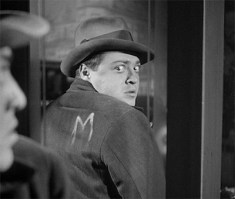
One of Lang’s aims in being factual — or, responsibilities he felt by being factual — was to present a debate on the morality of capital punishment. So Beckert murders children because that was the worst crime imaginable to Lang and von Harbou, and still when he’s dragged before a court (albeit an impromptu one made up of the criminal underworld) a debate is had on the merits of the death penalty — disguised, of course, in the decision of Beckert’s fate. The baying mob of criminals want him killed; his sole defence representative cites the law to show why such a punishment is wrong. Lang’s point — the one he wanted to make, even if he tried to present it as a debate — is that even in this instance the death penalty is wrong. Somewhat distressingly, the moral and legal points raised throughout the film remain highly relevant today.

Even leaving these aside, M is packed with beautiful moments of pure cinema: the shadow on the wanted poster; the intercutting of the police and criminals’ meetings; Inspector Lohmann dropping his cigar at the news the criminals were looking for the child killer (on his audio commentary, Peter Bogdanovich wonders how this would play to a modern audience, implying it wouldn’t really work — well, it did for me); the roving camera in the beggars’ market — a decade before Citizen Kane, Lang employs his camera in ways Welles seems to get all the credit for (I’m sure Welles pushed boundaries too, but some of his ‘innovative’ ideas — like tracking from outside to inside through a window within a single shot — are present here). M’s individual moments of brilliance go on — perhaps my favourite is when the police arrive just after the criminals have apprehended Beckert. We don’t even see an officer on screen, but the burglar’s reactions let us know who’s there. Its a funny moment (even if we’ve seen it dozens of times since) and a lovely shot too.

M was Lang’s first sound film, made at a time when the technology was still very new. So he uses — indeed, establishes — a variety of techniques: voiceover; selective hearing (e.g. the audio cutting out when a beggar covers his ears); silence (or only selected sound), used to represent how a space appears to sound rather than the genuine noise one would/could hear; conversations continuing across scenes (such as when a criminal begins a sentence and a police officer finishes it, in completely different rooms at different times); not to mention that the killer’s whistling is a vital clue, both in terms of the plot (it’s how the criminals first identify him) and for the viewer (indicating when he’s about his sorry business).

This is the longest existing version of M, restored from multiple negatives and prints held in several countries, which stands about seven minutes shorter than Lang’s original cut. IMDb’s alternate versions section claims the film originally showed the full trial at the end, implying this is among the lost minutes. In Masters of Cinema’s booklet, Anton Kaes instead details a scene early in the film pertaining to false confessors. Kaes has evidence that his scene existed, IMDb doesn’t present any; and in one of the audio commentaries Lang and others discuss the ending as-is — even if there was another ending at some point, it certainly wasn’t Lang’s intended one.

This definitive one, then, is suitably downbeat: Frau Beckmann — the mother from the opening sequence, her first appearance on screen for over an hour and a half bringing the tale full circle — bemoans that dispensing justice to the murderer won’t bring the children back, and warns viewers to watch out for their own. It’s not the triumphant “we got him!” that concludes most serial killer films, but a blunt warning that, though Beckert has been caught, there are always more out there, waiting to strike. History has sadly proven her right; but while the world has produced many men and women like M’s villain, it hasn’t produced many films quite like M.
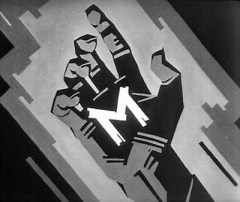
5 out of 5

Masters of Cinema’s new edition of M is released on DVD and Blu-ray on Monday. One of the special features is Zum Beispiel: Fritz Lang, which I’ve briefly reviewed here.
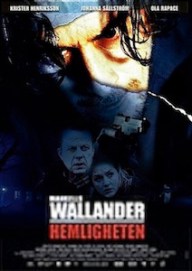
Wallander: The Secret (2006)

aka Mankell’s Wallander: Hemligheten

2010 #12
Stephan Apelgren | 90 mins | TV | 15

The third theatrical release to star Krister Henriksson as Henning Mankell’s detective is the thirteenth and final episode in the first series. It has a suitably Season Finale feel to it — “this time it’s personal” and all that — but also subtly constructs itself to work as the standalone piece necessary for a theatrical release schedule that skipped six whole episodes.

As with Mastermind (the sixth episode / second film), there’s no need to have seen any of the series to follow things. Though the characters aren’t introduced from scratch, there’s no explicit reference to any on-going plots — any that are relevant are re-established in a way that isn’t intrusive. A knowledge of what happened in the ten films not chosen for cinematic release is inessential, then, but it does deepen the viewer’s understanding of events to some degree: Linda and Stefan’s relationship was played out more fully across the whole series, for example, while Stefan’s suspension has been a gradual slide rather than an almost sudden revelation.

Indeed, while the emotional pay-offs are sufficiently handled within the film itself — for one, it centres on an issue that it’s hard to not find affecting (which, if I spell out, is sure to give away a revelation or two) — getting to know the characters over the 18 preceding hours surely adds a dimension to the effect the story, its revelations and its twists can have on the viewer. Think, for example, of Serenity: I know people who saw that film cold who found the deaths emotional, but not to the same degree as those who experienced the film on the back of 10 hours (and more, with repeated viewings) getting to know and love those characters. I’m not saying Wallander at any point achieves the giddy heights of Firefly and Serenity, mind you, but the theory is the same.

The Secret‘s own plot is suitably high-stakes, if not quite as filmic as the one in Mastermind. Making it personal for one of the team is always a good way to make A Bigger Story, and there are some particularly large revelations and twists involved here. Ola Rapace is finally given something significant to do besides be a bit grumpy, and he excels in an understated fashion — even his moodiness now has good meaning. None of the reasons for this shall I spoil for those yet to discover the series, but events here will undoubtedly have a lasting impact — though how much this will be felt in the forthcoming second series (which, I understand, only includes one theatrical release) remains to be seen. In particular, the tragic suicide of Johanna Sällström, who plays Linda Wallander, must surely hang over the new episodes to some degree.

It’s arguable how fully the issue behind the story is explored, as the film gets rather caught up in explaining its own conceits — flashbacks disguised as asides to the current action, for example — and complex plotting — when past relations between characters come out, there are some hoops to be jumped through so that it all makes sense. I wouldn’t go so far as to say any of this is poorly handled, but one wonders if screenwriter Stefan Ahnhem has ultimately bitten off more than he can comfortably chew. The later twists and complexities occasionally overshadow the depressingly grounded earlier events.

Unfortunately, the cinematography — though a small step up from the ‘regular’ episodes — also isn’t quite as filmic as in Mastermind. This one feels more like a TV episode granted an upgrade, whereas Mastermind was closer to ‘the real thing’ of a film — as much as that can be defined and/or justified these days, anyway. One might suppose this leaves more room for the actors — in particular Rapace, as already mentioned, but also Sällström — though I’m not convinced it makes a huge difference.

Some of these are minor points, perhaps, but a number of factors add up to mean The Secret doesn’t feel quite as distinctive as Mastermind. Perhaps I’m holding it to ill-conceived criteria — as the culmination of the series, it has several things going for it — but I remain unconvinced that it tackled the subject as well as it could have.

3 out of 5

Anna Boleyn (1920)

aka Deception

2010 #8
Ernst Lubitsch | 118 mins | DVD | PG

Anna BoleynIn an age where Henry VIII is young, slim and sometimes irritatingly called “Henry 8”, not to mention more interested in shagging every young girl he can find than in, well, anything else, it’s somewhat refreshing to return to a time when he was always older, fatter and more interested in polishing off a huge slab of meat than seeing his wife. OK, so they call him “Heinrich VIII”, but at least that’s because this production team spoke a different language.

The Tudors may be more interested in political intrigue and sex than slavish historical accuracy, but, in fairness, Anna Boleyn isn’t actually much different. The sex isn’t even explicit in dialogue, never mind explicitly shown, but it’s still the cause of Anne’s downfall; and the political intrigue may handle in 10 seconds what The Tudors spent 10 hours (or more) dragging its way through; but it’s this speediness, not to mention Henry’s girth, that are the very things that also leave historical accuracy by the wayside. But, again like The Tudors, that’s not really the point. Some things never change.

Anna Boleyn is, once again for Lubitsch, a romance; though rather than a “happily ever after” ending it has more of a message. Sweet little Anne Boleyn believes King Henry’s eyes are wandering from his wife because he genuinely loves Anne, so she (eventually) goes along with it. He gets a divorce — if proof were needed that historical accuracy is immaterial, it takes about as long as it would today, skipping over a hugely significant part of British history in a heartbeat — and they get married. Anne fails to provide him with a son, and suddenly his lustful eye is roaming again. All it takes is the (false) accusation of a dalliance in the woods with her ex love and it’s off with her head. Poor Anne.

It’s odd to see Anne Boleyn depicted as such an innocent; a tragic figure caught up in the machinations of Henry — and, indeed, History — rather than the plotting, ultimately deserving temptress we’re used to from British (co-)productions. She’s every inch the victim, falling foul of Henry’s appetites — both when he captures her and when he goes after other women in exactly the same we he went for her — and, at the climax, there’s no question she’s being framed. The historical veracity of such a portrayal is, again, suspect. Whether Anne was truly as scheming as she’s commonly depicted, or whether this is the legacy of the nation’s love for Catherine and acceptance of the charges later levelled (or fabricated) against her, I don’t know — my historiography isn’t quite good enough for that I’m afraid — but one suspects she can’t have been as entrapped as suggested here.

On the other hand, Emil Jannings’ Henry is every inch the stereotype, a fat old man gorging himself on food and women, liable to explode with anger at any second. Just because it’s a stereotype doesn’t mean it’s wrong, of course, and Jannings’ performance is a strong one. Henry rages from joyous to furious in a heartbeat, swings from entertained to bored, loving to lustful, and every which way in between. Some of this is conveyed with grand theatrical gestures, but Jannings also pulls much of it off with just his eyes.

Among the rest of the cast, Aud Egede Nissen’s Jane Seymour takes on the typical Anne role as a seductive power-hungry mistress, which is an especially striking comparison to the near-saint recently seen in The Tudors. Ferdinand von Alten’s duplicitous Smeaton, meanwhile, looks and behaves like his surname should be Blackadder.

It’s been asserted that silent films should aspire to use as few intertitles as possible, with none therefore being the ultimate goal. This is clearly a theory Lubitsch never subscribed too. Normally that’s perfectly fine — his intertitles are mostly witty, loaded and never omnipresent. Here, however, there’s an abundance of wordy messages, and while I’m sure they could be worse, they rarely convey anything but plot. Indeed, bar the very occasional instance, the film is devoid of humour.

Lubitsch seems to feel the need to keep himself entertained in other ways, constantly playing with aspect ratio and framing, using dozens of shapes to encircle characters in close up, or isolate a group within a crowd, or just vary his composition with widescreen, tilted widescreen, or a kind of vertical widescreen. And he still knows how to stage a big sequence — the wedding and accompanying riots, packed with hundreds of extras, are quite spectacular. The following dinner scene recalls Die Austernprinzessin with its plethora of guests, waiters and dishes, although it makes for an unfortunate comparison as nothing in Anna Boleyn feels even half as inspired.

Sumurun took a more serious approach than any film thus far in this set, but still had plenty of touches that let you know Lubitsch was behind the camera (not least that he was also in front of it). Aside from some of the choice visual framing devices, or one or two familiar set-ups (the large banquet, four servants helping Henry get dressed), there’s no significant evidence here of Lubitsch’s touch. It’s not a bad film, it’s just not a particularly distinctive one.

3 out of 5

Read more reviews from Lubitsch in Berlin here.

Sumurun (1920)

aka One Arabian Night

2010 #7
Ernst Lubitsch | 104 mins | DVD | PG

SumurunSumurun seems completely different to any film yet seen in the Berlin box set, yet this is more in line with the style of film that would ultimately lead Lubitsch to Hollywood.

As the alternate title would suggest, this is primarily an Arabian Nights-style drama… but, while on the surface this looks entirely at odds with Lubitsch’s previous comedy work, it actually concerns itself with the same topic: romance, and the various entanglements and complications that lead to it. What’s different here is that instead of being wholly comic it’s often deadly serious (literally, as it turns out), and instead of one simple girl-meets-boy trajectory (as in the preceding three films) there’s two girls and four boys between them, in various combinations. It’s a many-stranded, relatively complex narrative: there’s a group of travelling minstrels, an old sheikh, a young sheikh, a cloth merchant, a bevy of harem girls — all of whom are connected and interact in varying ways with varying objectives, though most are related to love — or lust.

The change in style is no bad thing. Lubitsch was clearly versatile, turning his hand well to this type of storytelling. His comedies are all based around romance, one way or another, and so treating the subject with a little more seriousness seems no great leap. He keeps control of the plot, despite the numerous strands and complexities, and his comedy background allows the tropes of farce to be employed in furthering the story. His previous use of fantastical realms, like the dolls’ world of Die Puppe, aids a succinct establishment of Lubitsch’s version of Arabia and its specific rules. Indeed, with its fantastical setting and shortage of character names (only Sumurun, Nur al Din and his two slaves — Muffti and Puffti — are known by more than their title, job description or physical impairment), Sumurun may be as much of a parable as some of the comedies.

And still, comedy creeps in round the edges. Lubitsch is arguably showing restraint by not letting every sequence descend into it, but there is a fair amount of wit and humour lurking throughout. It’s mostly applied wisely though, furthering character, story or both: the ugly hunchback who smiles at a child only to make him cry; the harem girls giving their eunuch guardians the runaround (multiple times); the two wannabe-thieves accidentally stealing a pretend-dead body and desperately trying to hide or dispose of it — the last a subplot which ultimately plays a key part in the climax.

What’s a little unclear is why it should be called Sumurun. Perhaps it’s no more than a vestige from the source, because while the titular harem girl is quite significant, she’s no more so than several other characters. Pola Negri’s namless dancer in particular seems more central to the narrative — indeed, she connects most of the disparate groups and plot strands; certainly more of them (and more significantly) than anyone else. But then, Sumurun survives to the end, and — along with her man, Nur al Din the cloth merchant — is the purest, most righteous, most deserving of all the main characters. Conversely, all the ‘bad’ (and, as noted, nameless) characters meet their end: the sheikhs are both fickle, and the old sheikh clearly a nasty piece of work; the dancer is flirty and adulterous; the hunchback, however, is devoted to her, and his tragedy effectively balances the “and they all lived happily ever after” of the freed harem girls and Sumurun and Nur al Din finally getting each other. If this is a parable, there’s quite a clear message about fidelity.

Sumurun may lack the straightforward fun of Lubitsch’s comedies, but by creating a complex and engrossing Arabian epic he entertainingly demonstrates that there was more to him than just the talented comedian.

4 out of 5

Read more reviews from Lubitsch in Berlin here.

Slumdog Millionaire (2008)

2010 #1
Danny Boyle | 120 mins | Blu-ray | 15 / R

Slumdog MillionaireAs we head in to this year’s awards season, I’ve finally got round to seeing last year’s big winner. It’s the Little British Film That Could, and I do feel like I’m the last person in the country to see it.
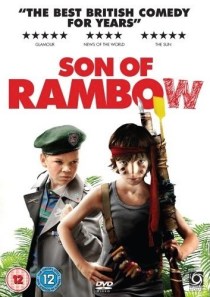
With its brightly coloured posters and home ent covers, cute child actors wheeled out at awards dos, and widespread popularity, it’s not hard to believe the pullquote someone at Fox’s marketing chose for the DVD cover: “the feel-good film of the decade”. An uplifting tale of a young no-hoper appearing on the world’s biggest game show and winning millions of rupees thanks to a generous helping of luck that means his multifarious life experiences have provided him with the exact answers to all 15 of Who Wants to Be a Millionaire’s genius-stumping questions, surely?

No.

Everything that claims it’s a “feel-good film” is being slightly disingenuous. It has a happy ending (I don’t think that counts as a spoiler for something that’s billed as “feel-good”), but until those closing moments it’s unrelentingly grim. Realistic, I’m certain, and depressingly so, but it seems designed for anything but making you feel good. The author of that chosen quotation, News of the World’s Robbie Collin, claims that he means the film is cathartic (not that I got that from his review, to be honest) — the happy and justice-bringing endings unleash goodness in the wake of the dire events that lead to them. It’s a sound theory, one that has often worked elsewhere, but not for me with Slumdog.

The problem is the ending. Director Danny Boyle’s recent films have all made a relatively poor show of their conclusion and Slumdog is no exception. True, it’s not close to the mess of Sunshine, but it doesn’t hold up in the way it ought to either. I don’t have a problem with it being reliant on guesswork — coincidence and luck form the backbone of the plot, making it permissible that our hero should win by chance rather than knowledge — but that some of its resolutions are too little too late to make one feel good about what’s already occurred, and the way it seems to bend the concept of Millionaire to fit its story somehow grates for me. I mean, is the name of the third Musketeer really a £1 million question?

But I don’t want to berate it too much because, in spite of the unconvincing finale, Slumdog Millionaire is a rather brilliant film. It’s peppered with convenience and flaws that go beyond the extent allowed in a plot based on coincidence (how come the questions come in the order the answers happened in his life? What about answers to all the questions we don’t see asked?), but these can be allowed to slide as a structural gimmick that facilitates something of an exposé of life for slum kids in India. Whether it has a documentary level of realism or not, and whether it under-sells or over-states the influence of gangsters and ease of mutilation and murder, the film’s unabashed grimness is surely closer to reality than most would dare. No wonder it nearly went straight to DVD.

The real revelation — once you get over the shock of it being, well, shocking — are the child actors. Here is where Boyle earns his Best Director awards, coaxing flawless lead performances out of a very young cast. Dev Patel may have been the focus point for plaudits, and while this isn’t undeserved, it’s the younger kids who play the same characters that arguably give the most memorable turns. They’re put through the ringer in almost every way imaginable and are never less than convincing, a feat for such young actors — so young that, as mentioned, the skill of Boyle (and, one imagines, “Indian co-director” Loveleen Tandan) is what’s really on display.

If there’s one good thing about Slumdog being billed as feel-good it’s that more people will have seen it, whereas promotion based on it being a gritty account of poverty, misery and abuse would surely have turned audiences away. And perhaps for most viewers the catharsis of a happy ending works, though the only person I’ve spoken to who felt that way is the aforementioned Mr Collin (and by “spoken to” in this instance I mean “tweeted”). The journey there certainly works though, and if by the end Slumdog is trying to both have its cake and eat it… well, I like cake.

Now there’s a quote for the DVD cover.

5 out of 5

Channel 4 and 4HD kick off their Indian Winter season with the TV premiere of Slumdog Millionaire tonight at 9pm.

Son of Rambow (2007)

2009 #35
Garth Jennings | 92 mins | DVD | 12 / PG-13

Of late I’ve posted several reviews resorting to taking my notes and turning them into sentences — this is why I probably should’ve stuck to my old post-them-all-in-order method. It’s now about nine months since I watched Son of Rambow, and the chances of being able to construct a worthwhile assessment from a combination of notes and memory has long since passed. So, for hopefully the last time, I offer up a paragraphified version of my brief initial notes.

Son of Rambow is beautifully written and directed, both roles fulfilled by Garth Jennings, who was previously responsible for directing the surprisingly-good (to my eyes) Hitchhiker’s Guide to the Galaxy movie. In contrast to that effects-ridden intergalactic comedy, Son of Rambow initially seems like a relatively straightforward, perfectly pleasant little movie about two boys and their video camera. It’s partly this, but it also brings in subplots of what it means to be a family — on various levels — and the evils of over-zealous religious orders (always a favourite topic for me).

Every significant character is given at least one twist that adds an extra level to them, even those who seem to just serve a specific plot function, and most of the minor ones — right down to Will’s silent grandmother — are given their small moment to shine. Nice little touches in Jenning’s work abound, from the comic asides with Didier to Will’s fertile imagination realised through animation, or the post-credits snippet of dialogue.

The two pre-pubescent boys have to carry the film, but thankfully are up to the task (even if their names being Bill nd Will and one of the characters being called Will (the one that’s played by Bill) make remembering them outside of the film a bit of a minefield). They are never less than utterly believable in both writing and performance. Will Poulter (as Lee Carter, the more rebellious of the two) is exceptional, talented in a way that’s reminiscent of River Phoenix in Stand By Me. It’s no surprise that both have gone on to greater things. And by “greater” I really mean “other”. There are wonderful performances all round in fact — aside from the lads, Jessica Hynes is especially worthy of note, creating a powerful character in just a handful of scenes.

The shape of the story may be familiar (unlikely pair start off wary of each other but become best friends, eventually fall out when one exceeds himself, but realise the error of their ways to come back together in the nick of time) and the lessons learnt are hardly new (true friendship can conquer all), but it’s all put together with immense joy and skill, built around a charming concept, that it becomes far more than the sum of its parts.
Hilarious and touching in equal measure, you’d need a heart of stone to remain unmoved. A triumph.

5 out of 5

Son of Rambow placed 4th on my list of The Ten Best Films I Saw For the First Time in 2009, which can be read in full here.

Originally posted on 14th March 2010.

No Country for Old Men (2007)

2009 #5
Joel & Ethan Coen | 117 mins | DVD | 15 / R

This review contains major spoilers.

When I saw No Country for Old Men, a new round of films were vying for the Best Picture Oscar. Now, as I finally post my review, a whole new load have been nominated, voted on, and await the final result. Sometimes I feel decidedly behind the times.
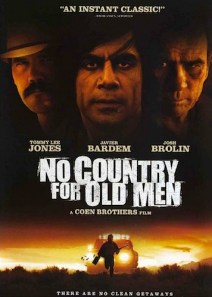
The first time I watched No Country for Old Men was in a screenwriting seminar. On R2 DVD (the format for said seminar) it runs one hour 57 minutes, but in the two-hour seminar we got through the whole film with plenty of pauses for discussion (of its narrative structure, with particular emphasis on the application of fate/chance/coincidence, if you’re interested). Obviously this entailed skipping chunks of the film to get to the end within the time. I was rather annoyed that our tutor hadn’t bothered to forewarn us this would be the subject of the seminar in such a way, because it meant I had no chance to see the film properly beforehand. Now, watching the film in full, I can clearly see the odd bit we skipped over, yet I don’t feel I missed anything terribly significant.

Cut short or no, it has an excellent use of no music — the Coens still create massive amounts of tension, numerous shocks, etc. It’s highly skilled direction and editing. There are a number of very good scenes along the way (even if the best remains somewhat dulled from constant repetition in the run up to the 2008 Oscars). And it all looks mighty pretty too, especially on Blu-ray (my re-watch format of choice here). The cinematography was probably my favourite part of the film.

As noted, it’s really about Fate, randomness, chance. Some clearly think this brilliant; I remain unconvinced. It lacks satisfaction. Maybe that’s real life — no, that is real life: random and lacking closure and satisfaction. But this isn’t real life, it’s a movie; and a movie with a near-fantasy (or, more accurately, horror) aspect too, in its unstoppable villain; so I think I want my proper tied-together plot, thank you very much, not a de facto hero who’s shot almost at random by a gang who have little to do with the story and a frequently irritating villain who exits the film fundamentally unscathed.

I’ve read one critic assert No Country for Old Men is the only worthy Best Picture winner of the past decade. I’ve seen another argue There Will Be Blood is the only genuine classic produced in the noughties. Any number of them have no doubt espoused similar such views. Critics, eh — always contradictory.

Anyway, No Country for Old Men: thoroughly unsatisfying,

4 out of 5

Originally posted on 5th March 2010.

There Will Be Blood (2007)

2009 #7
Paul Thomas Anderson | 152 mins | DVD | 15 / R

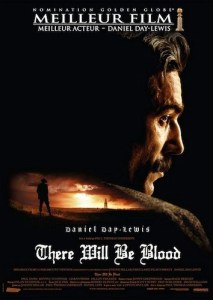
There Will Be BloodI used to consider myself a fan of Paul Thomas Anderson; however, I’ve come to the conclusion that I’m merely a fan of the film Magnolia. As I explained when I covered Boogie Nights, I love Magnolia, thoroughly dislike Punch-Drunk Love, and was ultimately uncertain about Boogie Nights. There Will Be Blood’s significant Oscar nominations and wins seem to have cemented it as Anderson’s most acclaimed work, but I wouldn’t consider myself a fan of this either.
That’s not to say it’s a bad film, but it is at times a baffling one. It makes minimal concessions to its audience from the very start, beginning with an extended montage that covers relatively vast tracts of time with virtually no dialogue, before segueing into a story that introduces and discards characters and events with little hint of their relevance, and eventually makes a huge leap forward for an equally impenetrable ending, all the while under- (or perhaps over-) scored with Jonny Greenwood’s disquieting music, sounding like the THX logo writ large. I can’t help but wonder if I missed something crucial along the way because, even after two and a half hours, I had no real idea what the film was about.

Leaving that aside, the film is technically excellent in just about every field. Daniel Day-Lewis easily deserved his Best Actor wins for his role as oil magnate Daniel Plainview, a performance so subtle that there initially seems little to it but which slowly peels away the layers to uncover much more. Anderson’s screenplay helps him along with an array of scenes written to textbook levels of perfection (almost literally: in a screenwriting class we studied in depth the scene where Plainview negotiates a land purchase from the Sunday family). Little Miss Sunshine’s Paul Dano delivers a superb supporting turn too, even if his casting as brothers Paul and Eli Sunday adds a level of confusion where there isn’t meant to be one (considering there was originally a different actor cast as Eli). Dillon Freasier also offers good, understated work as H.W., Plainview’s 11-year-old son.

Individual scenes are certainly well handled. The opening may offer little in the way of explanation, but with minimal dialogue, well-chosen images and events it expertly conveys Plainview’s rise to prominence and establishes his position without ever doing more than is necessary. The sequence with the burning oil derrick is visually stunning and, for me, the first point at which the discomforting score really worked (though it must be worth noting that Greenwood actually composed that cue for a different film). As already mentioned, many of the dialogue scenes are also exemplary, among them the much-quoted bowling alley finale. Anderson is capable of crafting moments of immense power, even if their cumulative effect is perhaps unclear.

It’s difficult to judge a film I have such conflicted feelings about, especially when its high critical consensus leaves me with a nagging feeling that, somewhere along the way, I missed something of vital importance. I’m not really a fan, and I’ll no longer call myself a fan of Paul Thomas Anderson, but his work is certainly interesting and definitely merits revisiting.

4 out of 5

Originally posted on 5th March 2010.

Michael Clayton (2007)

2009 #87
Tony Gilroy | 115 mins | DVD | 15 / R

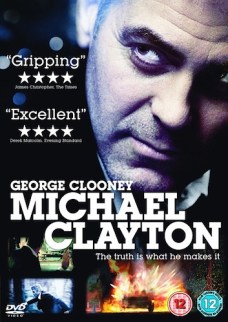
Michael ClaytonWhen Michael Clayton turned up among the contenders for 2008’s Best Picture Oscar I was a little surprised, because as far as I could recall I’d never heard of it. Then as I read about it a memory came floating back… a memory of a half-page (at best) review in Empire, of a George Clooney film that sounded like it should be good but was, they asserted, only worthy of three stars. As you’ve surely guessed, when I dug out this review it was indeed of Michael Clayton.

It is, I suppose, technically speaking, a thriller. That it’s not particularly thrilling doesn’t have to be a problem — this is the world of class action lawsuits, after all, which take years (decades sometimes, I imagine) of meetings and paperwork and ‘polite’ lawyer-arguing, and often writer-director Tony Gilroy seems to want to depict a moderately realistic version of this world. Clooney’s titular lead, for example, is effectively a middle-management dogsbody, albeit a highly talented one (so we’re told, anyway — the scenes of him doing his job don’t particularly convey this); but he’s certainly not some crusading young hotshot who is just gonna do what’s right, goddammit.

He does have the requisite seriously flawed personal life however, though Gilroy manages to make this feel fairly fresh. The latter is a big part of the film but feels unconnected to the main story… until the end, of course, when it all dovetails. Thankfully not in a cheesy “the bad guys kidnapped the kid” or “I have to do what’s right to get the girl” way, but rather as a means of motivating Clayton into doing… well, what’s right, more or less.

If this sounds more legal drama than legal thriller, it is. Where this comes unstuck is that Gilroy does seem to want it to be a legal thriller, and so uncomfortably squidged into the mix are a pair of surveillance experts/assassins and one of the least-tense car chases in movie history — 15 minutes in we see Clayton’s car blown up, with him safely on a hillside; the rest of the film takes place over the preceding days, eventually reaching that first night, where we see the bomb planted in Clayton’s car, and the assassins following him around trying to get signal to detonate it… and we might care, if we didn’t already know they don’t succeed until he’s wandered off up a hillside to cry over some horses.

The obvious point of comparison is Damages, the excellent TV series that also concerns such high-profile big-business lawsuits, but which pulls off every one of Michael Clayton’s facets with a higher degree of skill, interest and excitement. Company-sponsored murder sits believably in that world, but so does the characters’ personal life dilemmas and the court room (or, rather, pre-court room) battles between attorneys. And Damages sustains it for over 9 hours to boot, replete with cliffhangers and plot twists so far beyond what Clayton’s surprisingly straightforward (once you get down to it) story has to offer that Gilroy isn’t even dreaming of being that good.

Michael Clayton does have good bits, like the supporting parts played by Tilda Swinton and Tom Wilkinson, or any number of scenes or plot elements scattered around. What it falls short of doing is connecting it all up into a coherent whole: part realist legal/personal drama, part heightened Grisham-esque legal thriller, if it had settled on just one it might’ve been better.

3 out of 5

Michael Clayton is on BBC Two tonight, Friday 4th April 2014, at 11:05pm.

(Originally posted on 5th March 2010.)

Paths of Glory (1957)

2009 #85
Stanley Kubrick | 87 mins | TV (HD) | PG

Paths of Glory“The paths of glory lead but to the grave,” wrote Thomas Gray, and Stanley Kubrick — adapting from the novel by Humphrey Cobb — sets about proving him right.

Kubrick’s depiction of war is excellent, from long tracking shots through the trenches, to the nighttime wilderness of No Man’s Land, lit only by flares that reveal it’s strewn with bodies, to an epic and perfectly-staged battle that is a visual and aural assault. Indeed, Winston Churchill claimed that the film was a highly accurate depiction of trench warfare and the sometimes misguided workings of the military mind, and it’s so effective that it was banned in France for its negative depiction of the military. I’m sure the story could have been equally well applied to any military in the habit of killing its own men, but hey, it’s always fun to pick on the cheese-eating surrender monkeys.

Even beyond the battle scenes the film remains bleakly realistic: the depressing Old Boys’ Club-style hierarchy of the military (still all too much in effect, as series like Generation Kill reveal); the unjust unrecorded trial (an excellent courtroom sequence that can stand up to any other); through to the inescapable finale. George Macready’s villain is as chillingly evil as they come, because he’s so believable. Lying, manipulating, selfish and dishonourable, yet he produces all this from an opening scene where he appears to be a perfectly honourable General (though one has one’s suspicions). Even at the very end, when some small measure of genuine justice has been wrung from the whole sorry mess, one of the few remaining almost-likeable characters is fully unmasked as just as bad as the rest. Kubrick tries to instil some hope with his final scene, but by then he’s done too fine a job of wiping it out.

There’s a debate, it seems, about whether this can accurately be described as an anti-war film. It’s patently not pro-war, with its ineffective officers, self-serving high command, corrupt legal system and senseless slaughter for absolutely no military gain; but the argument that it is less a commentary on war and more on human nature — how people, not just soldiers, respond to the opportunity for glory, and how they attempt to cover their own tracks when it goes wrong — certainly holds some weight. The final scene, which is in almost every other respect entirely unrelated to the main narrative, supports such a theory, as does the source of the title. But just because that’s true doesn’t mean it’s not anti-war as well; or, at the very least, anti-military (if that’s not the same thing).

Perhaps reaction to the film depends on your ideological stance. I’m all too prepared to believe the military is corrupt and unjust because, well, that’s how they always seem. As such, Paths of Glory does an outstanding job of fulfilling and reinforcing these preconceptions, particularly in its refusal to end justly. If you have some measure of faith in the forces, however, you may think it’s an unjustified attack on your beloved institution. Each to their own.

5 out of 5

Paths of Glory is on ITV4 tomorrow, Sunday 31st August 2014, at 11:20am.

(Originally posted on 24th February 2010.)