Archive 5, Vol.5

I have a backlog of 427 unreviewed feature films from my 2018 to 2021 viewing. This is where I give those films their day, five at a time, selected by a random number generator.

Today, melancholic Frenchmen, screwball Americans, and royal Africans are followed by a superhero team-up and a lesson on the evils of social media.

This week’s Archive 5 are…

  • La Belle Époque (2019)
  • The Awful Truth (1937)
  • Coming to America (1988)
  • Scooby-Doo! & Batman: The Brave and the Bold (2018)
  • The Social Dilemma (2020)


    La Belle Époque

    (2019)

    Nicolas Bedos | 115 mins | cinema | 2.35:1 | France / French | 15 / R
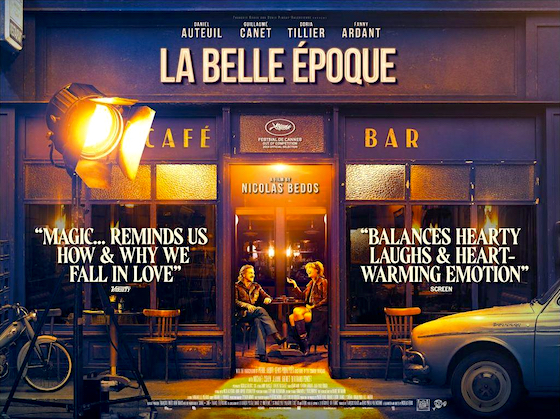
    La Belle Époque

    Sixtysomething Victor (Daniel Auteuil) is officially a grumpy old man, and his marriage is on the rocks because of it. To cheer him up, his son buys him an experience with his friend’s company, who stage bespoke historical reenactments as a form of time travel. When Victor’s wife finally has enough and throws him out, he uses his experience to revisit 1974, when they first met and fell in love.

    To oversimplify things, it’s kind of like Groundhog Day by way of Charlie Kaufman: the immersive theatrical experience recalls Synechdoche, New York (in a superficial way, I guess), and Victor’s desire to live it over and over again is, well, obvious. Except he’s not stuck there, but choosing it. It’s a mix of nostalgia and melancholy, because, of course, he’s not actually reliving that day, however much he comes to believe in it.

    Advance reviews led me to believe La Belle Époque would be little more than a pleasant diversion, but there’s a lot more to it than that. It clearly has something to say as regards the power of nostalgia and the need to live in the present. But, deep thoughts aside, it’s also a charmingly romantic film — sharply witty, unexpectedly beautiful in places, and genuinely emotional by the end. It’s a shame that it seems to have had half-hearted distribution outside of France (perhaps the fault of it being acquired by Disney, I suspect with an English-language remake in mind, rather than a ‘proper’ distributor of foreign fare who would’ve shown it more love) because I think it deserves, and would reward, a wide audience.

    5 out of 5

    La Belle Époque was #140 in my 100 Films in a Year Challenge 2019. It placed 7th on my list of The 15 Best Films of 2019.


    The Awful Truth

    (1937)

    Leo McCarey | 91 mins | Blu-ray | 1.37:1 | USA / English | U
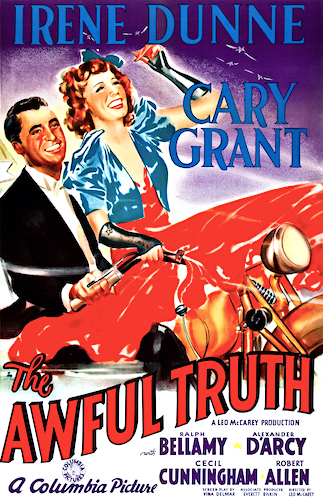
    The Awful Truth

    When Leo McCarey received his Best Director Oscar for this film, he said that he got it for the wrong film — a clear reference to his fondness for Make Way for Tomorrow, which he made the same year. I’m not wholly sure I agree with him, although Tomorrow’s is clearly the ‘worthier’ picture — but that doesn’t always mean better.

    The Awful Truth was the first of three screen pairings of Irene Dunne and Cary Grant, and the film that refined the latter’s famous screen persona. Here, the duo play a married couple who begin to divorce, only to then interfere with each other’s further romances. When it’s on form, the film is up there with the best of its subgenre: a sparkling screwball comedy with glorious dialogue, a pair of splendid lead performances, and a magnificent dog. Unfortunately, it goes on a mite too long and begins to lose steam in the final act. While that might hold the film back from perfection (and so open the door to the idea that Make Way for Tomorrow is somehow superior), the magnificence of what comes before means it’s still a must-see for fans of this style of comedy.

    4 out of 5

    The Awful Truth was #95 in my 100 Films in a Year Challenge 2021.


    Coming to America

    (1988)

    John Landis | 117 mins | digital (HD) | 16:9 | USA / English | 15 / R
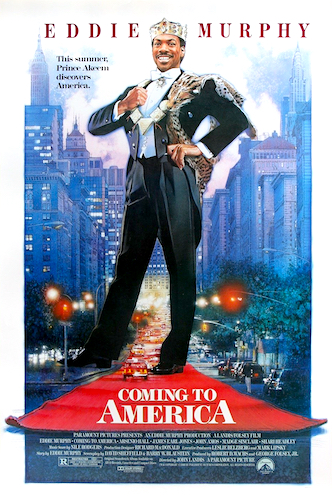
    Coming to America

    Eddie Murphy plays a pampered but bored African prince, who dodges an arranged marriage to travel to America and find a bride. With that plot and the fact it was made a few decades ago, I was half expecting Coming to America to have aged badly. If nothing else, it seemed primed to base its humour around cringe-inducing culture-clash awkwardness — not necessarily an invalid kind of comedy, but not one I personally enjoy.

    As it turns out, it’s nothing of the sort. In fact, it’s actually rather sweet and kind-hearted, with just enough lewdness to give it a kick rather than make it eye-rollingly vulgar (I’m sure it would only take a couple of minor trims to get that 15/R rating down to a 12/PG-13). Some have criticised it for being too slow — including director John Landis, who asked Paramount if he could re-edit it for the Blu-ray release (they refused) — but I thought it was quite well paced. It doesn’t move at whipcrack speed, but it doesn’t need to. All in all, it holds up well enough that I can see why they decided to produce a belated sequel (which is still on my watchlist).

    4 out of 5

    Coming to America was #28 in my 100 Films in a Year Challenge 2021.


    Scooby-Doo! & Batman:
    The Brave and the Bold

    (2018)

    Jake Castorena | 75 mins | digital (HD) | 1.78:1 | USA / English | PG
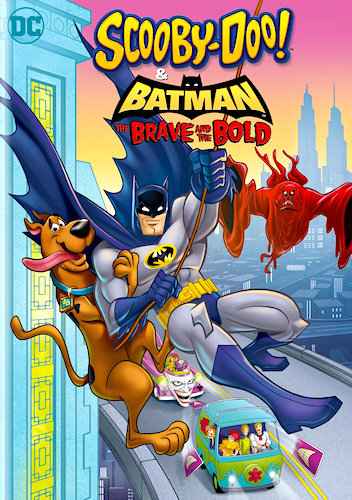
    Scooby-Doo! & Batman: The Brave and the Bold

    There are an awful lot of Batman movies nowadays (58 and counting, according to my Letterboxd list), but I thought I was at least aware of them all. Turns out not, because I hadn’t even heard of this one until I happened to see someone log it on Letterboxd several years after its release. (It’s a direct-to-video production that they didn’t bother to release on Blu-ray, so that’ll be a big part of why it slipped under my radar.)

    A plot description is pretty unnecessary here: the title tells you all you need to know. The reason it’s a particularly unwieldy one is because Scooby-Doo and friends team-up with, specifically, the Batman from animated series Batman: The Brave and the Bold. I watched a selection of episodes from that show a few years ago and, frankly, didn’t enjoy most of them (although a couple are excellent: Mayhem of the Music Meister is so good I watched it twice in as many days, which regular readers will know is very unlike me), so I didn’t have high hopes for this movie either.

    At least it’s an appropriate iteration of Batman to crossover with Scooby-Doo, because (a) the whole point of the show was team-ups, with every episode seeing Batman join forces with a different DC hero (the subtitle is derived from a classic DC team-up comic), and (b) the overall tone of the show was camp and comical, which chimes well with Scooby-Doo. In fact, despite Scooby-Doo getting top billing, the film is really a feature-length episode of Batman: The Brave and the Bold guest starring Mystery Inc, rather than the other way round. I mean, it’s set in Gotham City, stuffed with appearances and cameos by other DC characters, and (most of all) it uses The Brave and the Bold’s animation style, even featuring a version of the series’ title sequence and theme music — with a Scooby makeover, of course. Nonetheless, it also adopts plenty of the tropes of a Scooby-Doo story, like the unmasking at the end.

    Thanks to all that, it’s everything you’d expect from “Scooby-Doo meets Batman” — they leave nothing on the table, right down to having Scooby actually say, “Holy Scooby-Dooby-Doo, Batman!” And would you have it any other way? It’s a daft concept, mashing these two cheesy franchises together — there’s no point trying to be above it. By embracing what it is, it delivers what you’d expect as well as could be imagined. For that, I quite enjoyed it on the whole. And so I would say that, if the basic idea of it doesn’t interest you, give it a miss; but if you think it sounds potentially appealing, you should definitely watch it.

    3 out of 5

    Scooby-Doo! & Batman: The Brave and the Bold was #105 in my 100 Films in a Year Challenge 2020.


    The Social Dilemma

    (2020)

    Jeff Orlowski | 94 mins | digital (UHD) | 16:9 | USA / English | 12 / PG-13

    The Social Dilemma

    One of those Netflix documentaries that everyone seems to be talking about for a while but then forgets just as quickly, The Social Dilemma is essentially about how dangerous social media is, as told to us by the people who created it. Not the Mark Zuckerberg of the world, obviously — they’re still raking in far too much cash to want to dissuade us from using their products — but various other developers and whatnot who’ve been involved over the years.

    Naturally, the main reaction to all this information is: “OMG, I totally need to change all my social media habits!” And do people? Not as far as I’ve seen. As one contributor in the doc comments, “knowing what was going on behind the curtain, I still wasn’t able to control my usage. So that’s a little scary.” Eesh. We’re doomed.

    4 out of 5

    The Social Dilemma was #20 in my 100 Films in a Year Challenge 2021.

  • 2022 | Weeks 4–6

    It’s been a busy start to the year… at my day job, which has had the knock-on effect of lower film viewing than has been the case in recent years. (I say that, but as February passes its midpoint, I’ve actually watched slightly more films than I had at the same point in 2020; but the last time I was lower than that was right back in 2014, so…)

    As well as work, there’s the psychology of my new reviewing practices. These regular up-to-date roundups have taken me right back to the days when I used to review everything in order, and how not being caught-up on my reviews made me not want to watch anything more. I’m getting those same kinds of twinges now. I need to try to use them to my advantage — take the time to read more books or something.

    Anyway, enough about me — let’s have some film reviews…

  • Voyage of Time: An IMAX Documentary (2016)
  • L’avventura (1960)
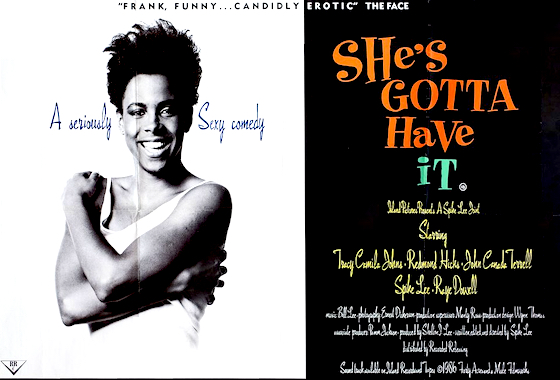
  • She’s Gotta Have It (1986)
  • Don’t Look Up (2021)
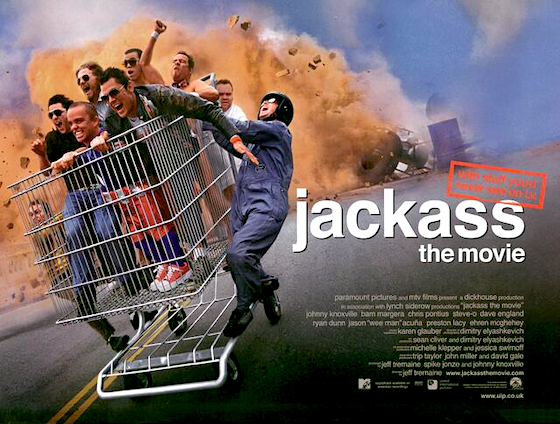
  • Jackass: The Movie (2002)
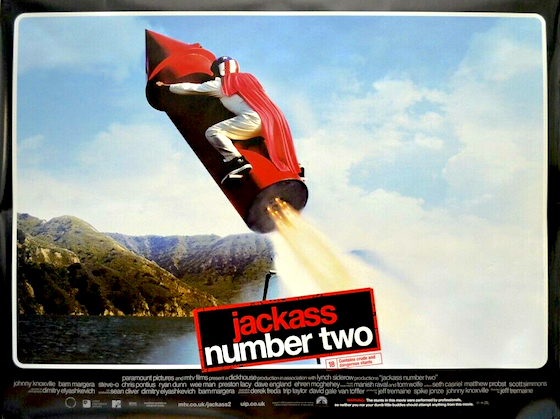
  • Jackass Number Two (2006)


    Voyage of Time

    (2016)

    aka Voyage of Time: An IMAX Documentary / Voyage of Time: The IMAX Experience

    Terrence Malick | 46 mins | digital (UHD) | 1.90:1 | USA / English | NR / G

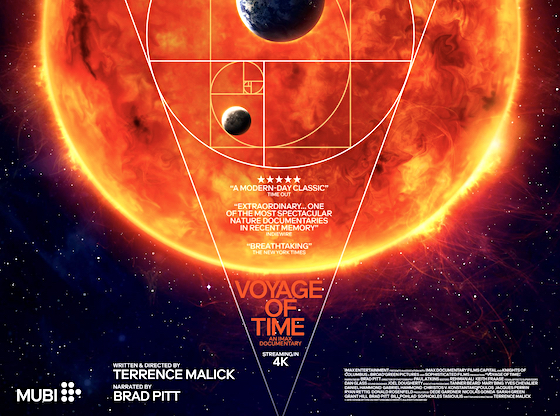
    Voyage of Time: An IMAX Documentary

    Calling a film “a visual poem” sounds either clichéd or pretentious, or both, but how else to accurately describe this work by Terrence Malick? It’s labelled “a documentary”, because only because it’s not strictly fiction — if you come looking for the kind of education you’d get from something narrated by David Attenborough or Brian Cox, say, then I think you’d leave disappointed.

    No, film-as-poetry is the most appropriate way to attempt to engage with Voyage of Time; and, as with so much written poetry, your personal tolerance for and interest in it will vary. That’s how I found it, anyway: like most poetry, I felt I should appreciate it, but really was glad it was quite short. (The non-IMAX version of the film, subtitled Life’s Journey, runs about twice as long.) There’s some stunning photography, of everything from the birth of the universe to prehistoric vistas (presumably shot in remote modern-day locales rather than computer-generated), and Brad Pitt occasionally whispers some abstrusely meaningful ponderings over the top. As much as the pretty pictures are a draw, you can also find gorgeous nature photography in a BBC Attenborough documentary, and you’ll learn something at the same time.

    The IMAX version of the film has been streaming on MUBI since the end of last year, and they definitely sold it on the visual experience, boasting about offering it in 4K. I found the quality to be variable, with the stream unable to keep its end up for the whole running time, sometimes sinking to sub-1080p levels, becoming blocky and compressed. This is why physical media remains the best, when possible.

    3 out of 5

    Voyage of Time: An IMAX Documentary is the 11th film in my 100 Films in a Year Challenge 2022.


    L’avventura

    (1960)

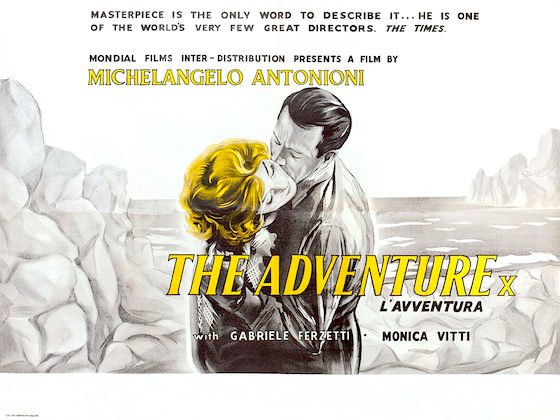
    aka The Adventure

    Michelangelo Antonioni | 143 mins | digital (HD) | 1.85:1 | Italy & France / Italian, English & Greek | PG

    L'avventura

    I don’t have a great track record for enjoying acclaimed classic Italian cinema (neither Bicycle Thieves nor were to my taste, for example), so I’ve put off watching L’avventura for years, expecting I wouldn’t get on with it. But, inevitably, I had to face it someday… and, as it turned out, I really liked it… for a while…

    The film begins with Claudia (Monica Vitti) and her wealthy friend Anna (Lea Massari) meeting up with the latter’s wealthy boyfriend, Sandro (Gabriele Ferzetti), to go for a cruise on the yacht of some other wealthy friends. When they dock on a small island, Anna goes missing. The party scour the island, but there’s no sign of her. Police and divers arrive, but no luck. Reports suggest maybe she boarded another boat; possibly she was kidnapped. The wealthy friends quickly drift back to their lives, but Claudia and Sandro keep searching, following scant clues. Soon they too begin to get distracted — by each other.

    I don’t think it’s a spoiler to say that L’avventura starts out looking like a missing-person mystery only to get sidetracked into being a kind of romantic drama. I certainly knew that going in; and it’s probably beneficial to know it, spoiler or not, so as to manage your expectations of the film appropriately. Anyone expecting a Christie-style hunt through clues and suspects until the truth is unearthed will come away severely disappointed. No, this is the Mystery genre reimagined through an arthouse lens: it’s inconclusive, more interested in the characters than the hunt they’re on, and notoriously slow paced.

    With that in mind, I was surprised by how effective I found the mystery part of the movie. It’s not a whistle-stop action-adventure, but it’s not significantly slower than your average murder mystery, and accusations of it being uneventful seem misplaced — if I were expecting it to unfold like a regular mystery, there’d be plenty of places to look out for clues. It’s as the film shifts more towards Claudia and Sandro’s burgeoning romance that it begins to drag. The pair start just hanging around places as tourists, at which it does begin to seem like nothing’s happening and so what’s the point? The conceit of them falling for each other when they’re meant to be searching for someone they mutually care about is a good storyline, but I wasn’t convinced by how it played out. There doesn’t seem to be any time when they’re actually falling in love, they just suddenly are. Maybe I’m missing some point there. Or maybe it’s beside the point. Until I can work that one out, I’m going to have to chalk this up as half great, half A Shame.

    4 out of 5

    L’avventura is the 12th film in my 100 Films in a Year Challenge 2022. It was viewed as part of Blindspot 2022.


    She’s Gotta Have It

    (1986)

    Spike Lee | 84 mins | digital (UHD) | 1.66:1 | USA / English | 18 / R

    She's Gotta Have It

    Spike Lee’s post-student debut concerns twentysomething Brooklynite Nora Darling (Tracy Camilla Johns), who’s openly dating three men: upright ‘nice guy’ Jamie (Tommy Redmond Hicks), preening model Greer (John Canada Terrell), and streetwise Mars (Lee himself). And let’s not be coy (because the film certainly isn’t): she’s not just dating them, she’s sleeping with them all. The story of this love ‘square’ is partially narrated to camera by its four participants, as well as some of Nora’s other friends and acquaintances.

    It’s kinda crazy to think that the American indies were making sexually frank films like this and sex, lies and videotape in the late ’80s (a precursor, no doubt, to the wave of ‘real sex’ movies in the early ’00s), while nowadays we regularly get young people on Twitter arguing that no movie ever needs to have a sex scene, ever. So while I’m tempted to describe the film’s views on promiscuity as “then-modern”, perhaps just “modern” will still suffice — it’s certainly taken most (arguably all) of the intervening decades to get rid of the double standard for men and women as regards having multiple partners. That said, what has perhaps changed is our idea of what counts as “sexually explicit”. The film was obviously quite shocking back in its day, with the MPAA insisting on cuts before they’d give it an R (the unrated “director’s cut” had a Criterion LaserDisc release, but hasn’t surfaced anywhere else since), but you’ll see more nudity, more thrusting and moaning, on certain TV shows nowadays.

    Sexual stereotypes are not the only ones Lee sought to subvert here, as he also attempts to combat stereotypical depictions of African-Americans on screen — note the prominent message in the end credits that “this film contains are no jerri curls!!! and no drugs!!!” (punctuation as seen on screen). It extends beyond those basic signifiers; for example, how Nora’s three lovers are such different personalities. Partly that makes sense for the plot — that different sides of Nora’s personality like different types of guy — but also it shows different ideas of male Blackness; that The Black Guy is not just one thing. The jazzy score is another definite contrast to what you’d expect from a Hip Young Black Movie in the ’80s. Maybe that’s just Lee’s personal preference, but maybe it’s another conscious subversion of expectations.

    Lee’s politics are clear and forthright, but his filmmaking still needed some work. A lot of the film looks great, mostly shot in high-contrast black-and-white (plus one striking, ultra-saturated colour sequence), but some of the editing and performances could use refinement. Rough round the edges though it may be, She’s Gotta Have It is so clearly the calling card of a talented and individual voice with something brand-new to say that those rough edges are almost more of a feature than a bug.

    4 out of 5

    She’s Gotta Have It is the 13th film in my 100 Films in a Year Challenge 2022. It was viewed as part of “What Do You Mean You Haven’t Seen…?” 2022.


    Don’t Look Up

    (2021)

    Adam McKay | 138 mins | digital (UHD) | 2.39:1 | USA / English | 15 / R

    Don't Look Up

    Oscar statue2022 Academy Awards
    4 nominations

    Nominated: Best Picture, Best Original Screenplay, Best Editing, Best Original Score.

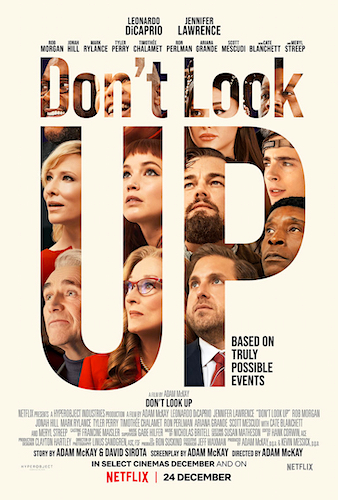
    Having targeted those responsible for the 2008 financial crash in The Big Short, and Dick Cheney and his responsibility for everything bad that’s happened in the last few decades in Vice, writer-director Adam McKay now turns his satirical attention to a fictional scenario, basically so he can have a go at anyone and everyone he feels like. The plot concerns a giant asteroid headed for Earth; an extinction-level event just 6½ months away. But, despite a handful of scientists trying to warn everyone, nobody seems in a great rush to do anything about it. It’s all an allegory for America’s carefree attitude to climate change, see.

    Really, this is a film I should be fully onboard with. It’s setting its sights on vacuous mainstream culture and Trumpian politics, after all. The problem is, these targets are low-hanging fruit, and — somewhat ironically, given its title — Don’t Look Up is satisfied with only plucking those lowest branches. Repeatedly. Unhurriedly. When they said the comet was 6½ months away, I didn’t expect the rest of the film to feel like it was covering that in real-time. It needed a better editor, or perhaps a studio who exerted a bit more quality control than Netflix’s famed “do what you want, we’ll just release it” approach. There are funny moments, certainly, but they’re literally few and far between when the pace is languid and the satire so broad, simplistic, and repetitious. Indeed, the most laugh-inducing stuff has nothing to do with the satire at all, just funny bits of business along the way (the best is a running gag about a general and snacks, which keeps cropping up unexpectedly).

    And for a film that’s entire thesis is being critical of American attitudes, it’s (again) ironic that it depicts this global crisis as so America-centric. Sure, there are cutaways to people watching events in other parts of the world, and a couple of belated nods to the idea that other countries might have their own thoughts on this impending disaster, but that’s all they are — sops and nods. “If America’s not going to fix this, no one can,” says the film. Ah, fuck off.

    2 out of 5


    Jackass: The Movie

    (2002)

    Jeff Tremaine | 85 mins | digital (SD) | 16:9 | USA / English | 18 / R

    Jackass: The Movie

    Jackass never appealed to me. I was a 14-year-old boy when it started, surely the franchise’s target audience; but I was an intelligent 14-year-old boy, so I was above it. Sorry, not sorry. But with everyone going on about the new movie, and reevaluating the whole franchise as some kind of essential classic of Cinema, I thought it was finally time to see for myself.

    For those not au fait with the series, it’s about a bunch of men who clearly aren’t old enough to know better performing stunts and pranks that no one in their right mind should ever want to do anyway. They’re frequently designed to induce pain. They’re often trying to be as crude or gross as possible. Some may make you feel ill just by watching them. And yet others are almost on the level of wholesome fun… albeit “wholesome fun” where you know participants will come away with bruises, at the very least.

    Almost everything the guys get up to is “dumb” — that’s kinda the point — and yet… It borders on “educational” when, for example, lead troublemaker Johnny Knoxville submits to being shot by “less lethal” riot control ammunition. The plan was for him to be shot in the chest, but the guys who make the stuff say if it hits his heart it could kill him, so they revise it to him being shot in the abdomen. Whereas most of the other stunts are followed by cutaways to the rest of the crew in hysterics, here the shocked silence of their reaction is telling. Or how about the kinda-feminism of a segment called “Ass Kicked by a Girl”, in which one of the gang enters the ring against a world champion female kickboxer. There’s no “haha, I can take her easily ’cause she’s a girl” posturing: the guy knows he’s about to get his ass handed to him. There’s some kind of respect for women in that, anyway, which you might not expect given the rest of the laddish antics.

    Taken as ‘a movie’, it’s rather formless — I suspect the TV show was exactly the same, just shorter — but the rapid-fire, standalone-stunt style does mean that no sketch hangs around too long. Some are literally seconds. But there’s not even a sense of escalation, say — it’s not like they save the largest or most outlandish stunt for the end (although there’s a post-credit scene that seems like it was probably the film’s most expensive single sequence). In some respects it doesn’t matter (who cares about the structure of a Jackass movie?), but in others, it’s what keeps it at the level of “feature-length special” rather than true Movie.

    But, ultimately, the important thing is this: some of it is funny. Reader, I laughed.

    3 out of 5


    Jackass Number Two

    (2006)

    Jeff Tremaine | 88 mins | digital (HD) | 16:9 | USA / English | 18 / R

    Jackass Number Two

    Even Jackass isn’t immune from the law of diminishing returns: after three seasons on TV plus a movie, this second big-screen outing feels kinda uninspired, like they’ve used up all their truly great ideas and are mostly running on fumes. That said, there are some good sequences — a variety of rodeo-based stunts with real live bulls are among the highlights — but other pranks feel reheated, or are just underwhelming; things you suspect would have been rejected in favour of better material before.

    In that sense it almost feels like it was rushed out to capitalise on success, but there’s a gap of four years, the TV show had ended, and they hadn’t necessarily intended to do any more — surely the only reason to return, then, was fresh ideas? Or, perhaps, being given the budget to do things they couldn’t before. That might be the case, because some of the material does feel like it’s got too much money and/or time behind it. I say “too much” because I think Jackass works best when it has a rough, cheap, “made at home” vibe. The finale here — a big “old Hollywood”-style musical number, with stunts mixed in — feels particularly out of place. Obviously it’s all a big joke, but the glossy, clearly-expensive visuals don’t feel of the right style.

    Plus, at various points you can feel some of the cast are getting genuinely fed up with this shit. Maybe they’d been doing it for too long by this point (I say there was a years-long gap, but some had been involved in spinoff projects). Whatever the reason, it serves to undermine the fun somewhat. One of the reasons you can enjoy these fools doing life-threatening stunts is because they’re volunteering for it and they seem to be having fun, however much they’re getting hurt or disgusted. But if they’re not enjoying it, aren’t we just watching people be tortured for our entertainment? It almost tips it from being stupid-but-funny into exploitative bullying. And we shouldn’t be having to think about anything that deep during a Jackass movie.

    As I’ve given both films 3 stars, let’s be clear: I’d definitely rate the sequel lower than the first movie, just not a whole star lower — it doesn’t merit being pulled down to a 2, while the first doesn’t merit a retrospective bump up to 4. If this kind of tomfoolery tickles you, there’s still plenty of entertainment to be had in Number Two, it’s just (mostly) not their finest output — which I guess is kinda apt, given the title.

    3 out of 5

    Jackass Number Two is the 15th film in my 100 Films in a Year Challenge 2022.


  • Archive 5, Vol.4

    I have a backlog of 432 unreviewed feature films from my 2018 to 2021 viewing. This is where I give those films their day, five at a time, selected by a random number generator.

    Today: singing vicars, grumpy gamers, very nice Kazakhs, and deleted actors.

    This week’s Archive 5 are…

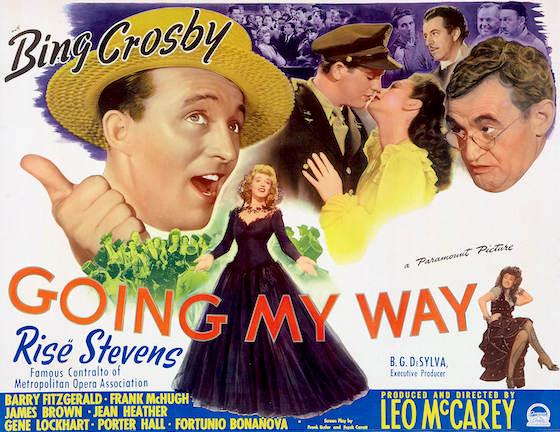
  • Going My Way (1944)
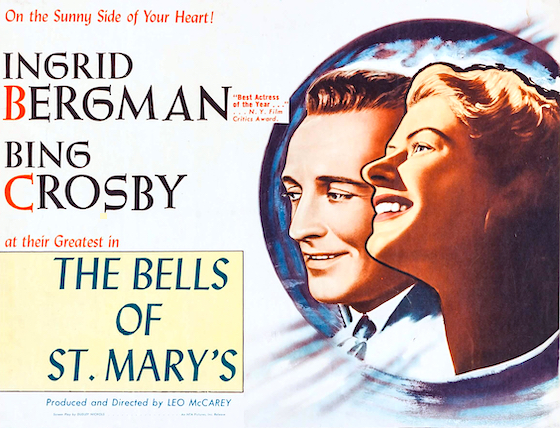
  • The Bells of St. Mary’s (1945)
  • Zero Charisma (2013)
  • Borat (2006)
  • The Thin Red Line (1998)


    Going My Way

    (1944)

    Leo McCarey | 126 mins | digital (HD) | 1.33:1 | USA / English | U

    Going My Way

    The Oscars, eh? Every year film fans pay them a load of attention, and every year we seem to be disappointed with the outcome. But this isn’t some new phenomenon: Going My Way hails from the 1940s, but is perhaps the definitive example of a film that managed to sweep the Oscars (it won seven awards from ten nominations) against a bunch of films that have endured to much greater acclaim (films it competed against included Double Indemnity, Laura, Lifeboat, Gaslight, and Meet Me in St. Louis. I think we can agree those are all better-remembered on the whole).

    None of which is to say it’s a bad film. It’s a gently-paced series of vignettes, almost like a collection of short stories, springing from young priest Father O’Malley (Bing Crosby) arriving to take charge of a struggling New York City parish. His modern ways clash with the old-fashioned values of the incumbent Father Fitzgibbon (Barry Fitzgerald), but his worldly knowledge allows him to connect with some of the parish’s disaffected inhabitants. Despite the religious setting, it doesn’t lean too heavily on the wonders of Christianity (you know I’d be the first to rip into it if it did). Overall, it’s perfectly pleasant; an easy afternoon’s viewing.

    Incidentally (and here’s a good bit of trivia that might come in handy for a quiz someday), it was the first Oscar Best Picture winner to have a sequel: The Bells of St. Mary’s, released the very next year… and also the very next review in this roundup…

    3 out of 5

    Going My Way was #93 in my 100 Films in a Year Challenge 2021.

    The Bells of St. Mary’s

    (1945)

    Leo McCary | 126 mins | TV (SD) | 4:3 | USA / English | U

    The Bells of St. Mary's

    This followup to Going My Way was not only the first sequel to an Oscar Best Picture winner, but was also the first sequel to be nominated for the Best Picture Oscar.

    Bing Crosby returns as Father O’Malley, sent to a new locale, ready to solve another series of subplots at a struggling religious institution, this time butting heads (sort of — it’s never as dramatic as that makes it sound) with Ingrid Bergman’s head nun. Like the first one, it’s really a bundle of subplots for Bing to ‘solve’. The low-stakes problems and amiable tone between the two leads, even when they’re disagreeing, makes for a gentle and relaxing kind of film. I’d give it the edge over its Oscar-winning predecessor, thanks primarily to Bergman’s performance, but neither film is likely to set anyone’s world alight.

    As well as their Oscar success, the films were the highest grossing at the US box office for 1945 and ’46, respectively, another first for a film ‘series’. And yet, with six decades distance, they’re little more than also-rans; nicely obscure trivia answers to “films that won/were nominated for Best Picture”. Maybe there’s a lesson in that for anyone obsessed with the current cultural zeitgeist.

    3 out of 5

    The Bells of St. Mary’s was #187 in my 100 Films in a Year Challenge 2021.

    Zero Charisma

    (2013)

    Katie Graham & Andrew Matthews | 88 mins | digital (HD) | 16:9 | USA / English

    Zero Charisma

    I’d nickname this Portrait of a Manbaby on Fire. The manbaby in question is Scott (Sam Eidson), a stereotypical alpha-nerd: he has a neckbeard; he wears black T-shirts that feature elaborate depictions of grim reapers and the like; he lives with his grandma; he paints miniature fantasy figurines; he’s the Game Master of a role-playing group, which he rules with an iron fist. But when into-geeky-stuff hipster Miles (Garrett Graham) joins the group and everyone really likes him, Scott finds his position threatened, and he’s not happy about it.

    As much as geek/nerd culture has transitioned into the mainstream over the past couple of decades, there’s still stuff that remains the preserve of the hardcore; the truly nerdy. That culture clash is part of what Zero Charisma is about, of course, with Scott’s true old-fashioned kind of nerdishness clashing with Miles’s new-school cool. But it’s also a character study of the former. Scott may seem a stereotype — like The Simpsons’ Comic Book Guy rendered in live-action — but I’d wager anyone who’s moved in nerdish circles has known someone at least a bit like him. Stereotypes are stereotypes for a reason. The film exposes and examines those to often amusing effect. Some have said it exaggerates these things, but I don’t think it’s particularly guilty of that. Maybe it generalises them, and lumps all the worst characteristics of the extremely nerdy together into one character, but that doesn’t make it inaccurate, just broad.

    My only real problem was the ending. There’s a scene where everything comes to a head — a climax, if you will — but, in the wake of that, I felt it lacked adequate resolution. Has Scott learnt anything from this experience? Is he a changed man? Maybe a little, but not completely. To be fair, that’s a realistic character arc, because whose personality changes overnight after a single revelation? And yet it also doesn’t feel like the filmmakers quite know how they want to leave things. If they’d been going for a “change takes time and is incremental, but Scott’s started on that road” kinda message, I would have approved. Instead, the film tries to have its cake and eat it by showing Scott as better on the surface, but then secretly GMing a game where he still behaves like an asshole. Maybe it’s trying to say we can never truly change, however much our flaws are highlighted to us, which would be a pretty glum way to end an otherwise likeable comedy.

    3 out of 5

    Zero Charisma was #109 in my 100 Films in a Year Challenge 2020.


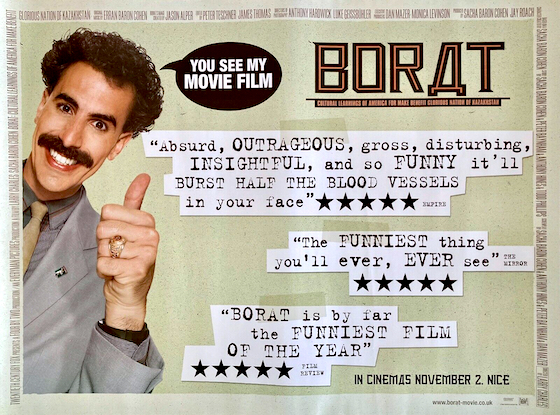
    Borat

    (2006)

    aka Borat: Cultural Learnings of America for Make Benefit Glorious Nation of Kazakhstan

    Larry Charles | 84 mins | digital (HD) | 16:9 | USA & UK / English | 15 / R

    Borat

    Ali G’s Sacha Baron Cohen adopts the persona of a Kazakh journalist to ostensibly interview Americans about their culture, but, unbeknownst to them, he’s of course really looking to expose their ludicrous views (you just know that, ten years later, a lot of these people voted for Trump) and take the piss out of them for our entertainment.

    As with most sketch-based comedy, the end result is a mixed bag. Sometimes it’s very funny; other times, it’s just being gross for the sake of it, like in a naked fight between Borat and his portly producer. A few bits don’t quite land — sometimes you can feel Baron Cohen’s not getting the response he wanted out of his target — and, even though he’s taking the piss out of people who deserve it, it sometimes gets a bit uncomfortable (though that might just be my English reserve/politeness kicking in and making me cringe). Most of the sketches are quite short, which is nice — they generally don’t outstay their welcome, and, if one isn’t working, you can be assured another will be along shortly.

    3 out of 5

    Borat was #220 in my 100 Films in a Year Challenge 2020.


    The Thin Red Line

    (1998)

    Terrence Malick | 171 mins | Blu-ray | 2.35:1 | USA / English | 15 / R

    The Thin Red Line

    An extensive cast of famous actors and recognisable faces star as a battalion of soldiers who spend 2 hours and 51 minutes taking one (1) hill in Terrence Malick’s very Terrence-Malick-y World War 2 movie. I mean, this is a movie about a battle in which the first shots aren’t fired until past the 45 minute mark, but there are plenty of shots showing the minutiae of nature. And there’s a lot of discussion about how there isn’t enough water.

    None of which is necessarily a problem — indeed, there are plenty of people who think this is a great movie, and I’m glad for them. But for everyone who loves it, there’s someone who’d call it “pretentious and self-indulgent, despite gun battles and lush cinematography.” I find myself somewhat stuck in the middle. I mean, if you were expecting a normal combat movie from Terrence Malick, more fool you. And it’s unquestionably beautifully shot — so many gorgeous visuals, but also effective camerawork and editing to convey, say, the chaos of battle. But I also found it to be bitty and episodic. Well, calling them “episodes” might be kind — they’re scenes; sometimes less than scenes; just moments, or even shots. It’s like a really long deleted scenes package pretending to be a movie.

    Of course, the behind-the-scenes stories sort of support that reading. The first cut clocked in at five hours. It took two editors and thirteen months of post-production to get it to a manageable size. Hans Zimmer composed over four hours of music, but only for a few bits of his work made it into the final cut. Billy Bob Thornton recorded narration for the entire film; the released cut has eight different narrators, but none of Thornton’s work is in there. Many actors thought they had significant roles, but found their performances reduced to little more than cameos. Most famously, Adrien Brody thought he was playing the lead role, only to discover at the premiere that he’s in just a couple of shots, and doesn’t even speak until over halfway through (and then it’s just a brief voiceover). And then there are the actors whose work was left on the cutting room floor: Bill Pullman, Gary Oldman, Lukas Haas, Viggo Mortensen, Martin Sheen, Jason Patric, Mickey Rourke… This movie has more great actors whose performances were deleted entirely than most movies have in their entire cast!

    All of which suggests a movie that should be universally recognised as a disaster. That it isn’t — quite the opposite — is testament to something. Maybe someday I’ll rewatch it and find out what.

    3 out of 5

    The Thin Red Line was #77 in my 100 Films in a Year Challenge 2020. It was viewed as an additional film for Blindspot 2020 after I failed to watch it for WDYMYHS 2019.


  • Mass (2021)

    Fran Kranz | 107 mins | digital (HD) | 2.00:1 + 2.66:1 | USA / English | 12 / PG-13

    Mass

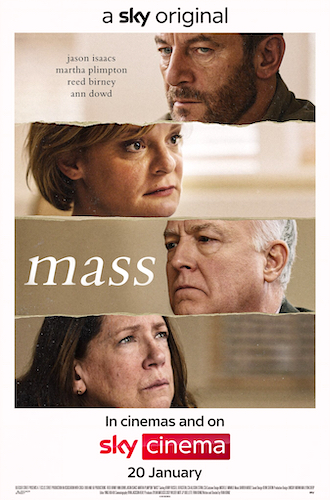
    The fact Mass been relegated to the status of a “Sky Original” in the UK might mislead you (not all their “original” acquisitions are bad, but the first few were dregs that distributors clearly didn’t want to send to cinemas and neither Netflix nor Amazon had any interest in, and they’ve not done much to turn that reputation around). This, however, is a blisteringly emotional gut-punch that definitely merits your time.

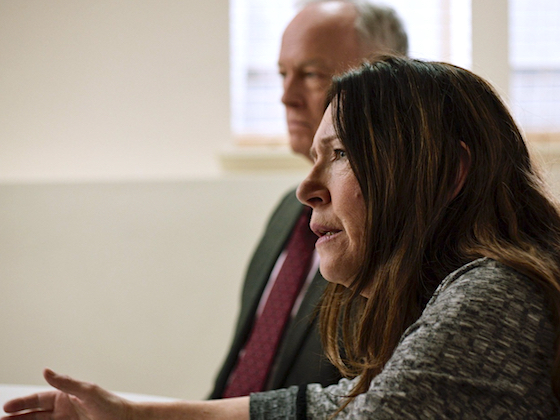
    The more one says of the plot, the more it spoils the film’s revelations — it’s a compelling watch however much you know, but the less the better, to allow some of the shocking moments to land at their most impactful. Suffice to say, it’s about two couples (Jason Isaacs and Martha Plimpton on one side, Ann Dowd and Reed Birney on the other) sitting down to talk. Yes, it’s mostly a four-hander, taking place in one room in real time, in which people talk to one another. That setup has led to accusations of staginess, because some people think that “a few characters sat in one room talking” automatically equals “like a play”. It’s more complicated than that, and Mass is a good example as to why. On screen, we have access to greater intimacy and subtly — the cast don’t need to project so the back row of the gods can hear; there are closeups to really see what the characters are feeling when they’re not speaking; and so on. In a literal sense, you could stage this script, but it wouldn’t have the same effect.

    Powerful performances

    It’s written and directed by actor Fran Kranz in his directorial debut, and it’s a real achievement. For a film that is literally about sitting down and expressing emotions, it’s remarkably subtle, especially coming from a first-timer. He also doesn’t seek to explain every little detail. So much of what has gone on prior to this meeting is only hinted at, which is partly realistic (no character explains things they all know just for our sake), but it also keeps the film focused on the true human emotions. And in that respect, it would’ve been so easy to give in to histrionics, especially when the subject matter is so explosive, but Kranz and his cast keep it reined in. All four of the leads are phenomenal, each in different ways, and it’s a shame that the film didn’t have the support of a bigger, savvier distributor to give it an awards season push — they should all four be in the conversation for every gong going, but there’s not an Oscar nomination between them, and only Dowd was recognised by BAFTA. A pity.

    Kranz’s one real flourish is a pronounced change in aspect ratio about halfway through. It comes at a key moment in the narrative, so clearly it’s meant to be significant, but I can’t quite work out how. Regular readers will know I normally love a film that plays with aspect ratios, but here it just seems like a distraction. It’s a minor misstep in a film full of bold moves that pay off. For example, it’s brave to risk undercutting the drama with the almost-comedic ordinariness of bookend scenes in which, at the start, the meeting room is prepared and, at the end, everyone leaves. It would’ve been easy to fade to black after the last big emotional moment in the room, but the return to everyday mundanity is, I think, part of the point.

    BAFTA nominee Ann Dowd

    Mass has flown under the radar somewhat, especially without the bonus of a clear presence in awards season. That’s a shame, because it’s a fine work that merits exposure. It’s not an easy watch — it’s liable to wring out your emotions — but, with that, it’s ultimately cathartic. A potent experience.

    5 out of 5

    Mass is the 9th film in my 100 Films in a Year Challenge 2022. It placed 5th on my list of The Best Films I Saw in 2022.

    2022 | Weeks 1–3

    Here we go — finally, and somewhat later than anticipated (it’s been a slow start to the year, viewing-wise) — the new review format for 2022!

    …which you’ll have already seen in Archive 5, of course; and is fundamentally similar to what I was doing before in roundups and what-have-you; and which I’ve already ‘broken’, because my review of Flight of the Navigator came out so long that I posted it alone.

    But still, the intention is this is now my regular review format, popping up every week or two (or three) to review everything in a more timely fashion than I have for many, many years. We’ll see how it goes — I feel like I need to relearn how to write short pieces, because longer reviews feel like they should get their own posts, and that’s happened to pieces intended for every one of these roundups so far this year.


    Anyway — to kick things off for 2022, a film with a broadly appropriate title. Because, despite (deliberately misleading) hints to the contrary, I’m carrying on. Get it? Carrying on watching. And “spying” is a synonym of “watching”, right? (Look, there aren’t any Carry On films with more apposite titles, okay?)

    These weeks’ films are…

  • Carry On Spying (1964)
  • Penny Serenade (1941)
  • The Navigator (1924)
  • In the Line of Fire (1993)
  • Barbie as The Princess and the Pauper (2004)
  • Free Guy (2021)


    Carry On Spying

    (1964)

    Gerald Thomas | 84 mins | digital (SD) | 16:9 | UK / English | U

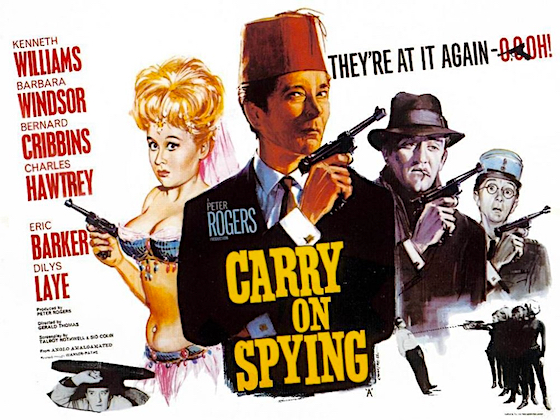
    Carry On Spying

    Believe it or not, I’ve never actually seen a Carry On film before. Maybe that’s not so surprising these days. They were once such a part of British culture that they produced 30 of the things, but I think they were seen as “a bit old fashioned” even before I was born, and by 2022’s standards… oof. But, lest you get the wrong end of the stick (oo-er, etc), this isn’t me intending to finally dive into all of them. Rather, as well as its timely title, I chose to watch Carry On Spying primarily because it’s a James Bond spoof — the first, I believe, seeing as it was released in July 1964, when the Bond series only encompassed Dr. No and From Russia with Love (Goldfinger would follow a couple of months later).

    With Bond not yet even properly into its initial phenomenon phase (the first two films were hits, but it was the next two that skyrocketed its popularity), you might think Spying came too soon, and would be disadvantaged by being produced before the famous Bond formula was fully in place. Instead, it sets its spoofing sights a little wider, including an extended riff on The Third Man. I couldn’t tell you everything it’s drawing on, but its third-act villain’s lair — all sleek metal corridors and little road-train thingies and jump-suited identikit henchpeople — appears to be a take-off of You Only Live Twice, some three years before that film even came out. So I can only presume Spying’s point of reference there is something else, which I can’t quite remember; some other spy fiction that was already doing stuff the Bond franchise would still be pulling off years later. That doesn’t reflect too positively on YOLT, when you think of it, although Bond’s cultural dominance and longevity has come to ensure it’s the one that’s remembered for pioneering all this stuff.

    I don’t know how many Carry On films were genre spoofs, but the series’ reputation is more for smut and innuendo. There’s pleasantly little of that here — some, for sure, mostly based around Barbara Windsor (of course) as a trainee agent; but while it’s all fundamentally juvenile, it’s not as ceaselessly ribald as I was expecting. Satisfyingly, it remains primarily focused on its chosen genre. In that respect, I’ve definitely seen worse spoofs.

    3 out of 5

    Carry On Spying is the 1st film in my 100 Films in a Year Challenge 2022.


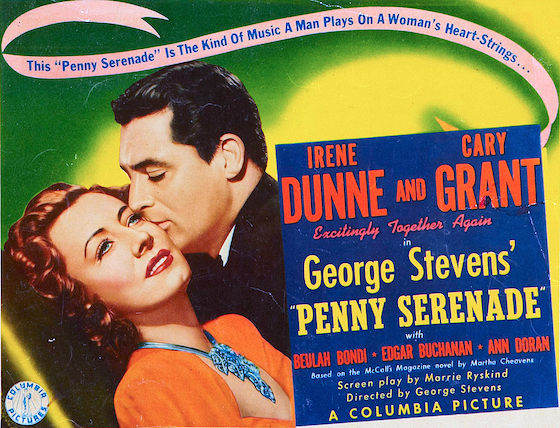
    Penny Serenade

    (1941)

    George Stevens | 120 mins | digital (HD) | 4:3 | USA / English | U

    Penny Serenade

    This is the third and final film to pair up stars Irene Dunne and Cary Grant as a married couple (I’ve watched all their collaborations within the past couple of years, but not posted reviews of the first two yet. I thought it was within the last year, but turns out I watched my first in May 2020. These strange days have really messed with my sense of the passage of time!) But where their first two films were screwball romcoms, this is undoubtedly a melodrama, following a couple as they meet, marry, and attempt to start a family.

    Dunne and Grant both make a fair fist of the serious stuff — Grant, in particular, gives an uncommonly sensitive performance at times — although they can’t resist slipping back into a spot of almost-slapstick given half a chance, with various individual sequences playing more like one of their comedies. Those scenes stand at odds with the film’s overall narrative and tone, which goes for full-on weepy. Indeed, if anything, I thought it was overdone, in particular an ending that throws in sudden tragedy followed so quickly by a pat happy ending that it feels almost distasteful.

    The film’s hook is that it begins with Dunne planning to leave, before she discovers a book of records that, as she plays them, take her back through their relationship. Different songs provoking specific memories is a neat narrative device on paper, but doesn’t really come across on screen. Aside from the first track, and maybe a later burst of Happy Birthday (although that could be almost any birthday, surely), the songs don’t seem to have any special relevance to the memories they supposedly call forth. It doesn’t help that, to modern ears, they all sound kinda samey. Plus, that the songs lead everything to unfurl in chronological order, with every major beat of their life story accounted for, is certainly convenient.

    If you can look past such artifice, and just want to revel in an old-fashioned bit of heart-tugging, Penny Serenade is fit to make you shed a tear. Personally, I’d rather the headline duo had given us another bout of screwball tomfoolery.

    3 out of 5

    Penny Serenade is the 3rd film in my 100 Films in a Year Challenge 2022.


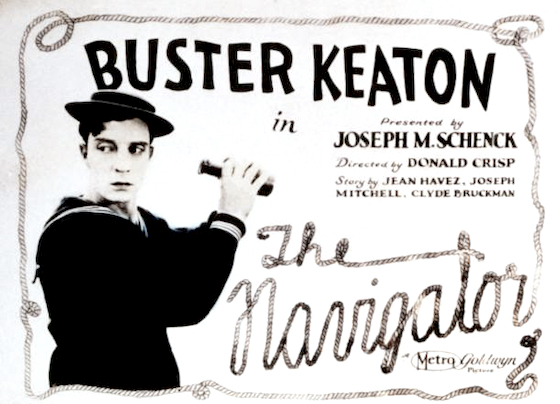
    The Navigator

    (1924)

    Donald Crisp & Buster Keaton | 66 mins | Blu-ray | 1.33:1 | USA / silent | U

    The Navigator

    This is my fourth Buster Keaton feature now (I’ve only previously reviewed The General, but Sherlock Jr made it into my 2019 top 3), and he’s established himself as my favourite of the major silent comedians (I rarely enjoy Chaplin’s films as much as I feel I should; and, in fairness to Harold Lloyd, I’ve only seen one of his so far, which I liked a lot). The Navigator was the biggest hit of his career, though is probably my least favourite of his I’ve seen so far — though I don’t want to damn it with false criticism, because it’s still a brisk and entertaining comedy.

    Keaton stars as a spoiled rich kid whose marriage proposal is rejected. He’d already booked the honeymoon tickets, so sets off by himself; but, due to several points of confusion, he ends up adrift at sea on a decommissioned ship, empty but for one other passenger: his would-be fiancée (Kathryn McGuire). It’s up to this pair of brats to get along and survive while they hope for rescue. (Rescue does not come quickly. Considering McGuire’s father is a successful shipping magnate who’s aware of what’s happened, you’d think he’d send a vessel after them; but then, he might have his own problems, owing to a bunch of foreign spies who… look, it’s best not to overthink the logistics and plausibility of the plot.)

    Although Keaton gets the lion’s share of the gags, as well he might, for a stretch in the middle he and McGuire form an effective double act. The two rich kids being hilariously useless at household basics, like making coffee or opening a tin of food, is well observed; a flash-forward to their automated solutions is also fun. While Keaton still gets to show off by himself — particularly in an elaborate underwater diving sequence, naturally saved for the final act — McGuire makes the most of the material she’s given.

    The only outright demerit to the film is that the finale hasn’t aged particularly well: the ship finally drifts near land, but it’s an island with a village-full of black natives, at which McGuire immediately exclaims “cannibals!” That she’s sort of proven right when they start attacking the ship is… well, maybe not even worse, but at least just as bad. Still, by 1920s standards, maybe we can take comfort in the fact that it’s only casual racism…

    More than that, the reason I say it’s my least favourite Keaton so far is simply that it doesn’t have as many comedic highs as his very best work. Nonetheless, his genius regularly shines through in moments and even whole sequences, and there are a couple of individual gags that are all-timers.

    4 out of 5

    The Navigator is the 4th film in my 100 Films in a Year Challenge 2022.


    In the Line of Fire

    (1993)

    Wolfgang Petersen | 129 mins | digital (HD) | 2.39:1 | USA / English | 15 / R

    In the Line of Fire

    Clint Eastwood is a Secret Service agent who failed to stop the JFK assassination, now taunted by John Malkovich’s mysterious wannabe-assassin and his threats to kill the current President. It’s a fundamentally strong idea for a thriller, and works especially well by having the villain constantly phoning the hero for little chats. Malkovich’s always makes for a first-rate antagonist, and his slightly loony personality clashes well with Eastwood’s stoic, dry-witted, old-fashioned tough guy. There are a couple of chase scenes and shoot-outs here and there, but, rather than any elaborate physical action, it’s the verbal sparring that represents the film’s highlights.

    On the downside, the pace is a little on the slow side (perhaps matched to the “too old for this shit” age of Eastwood’s hero — in real life, he’d be a whole decade past the mandatory retirement age) and there are one too many clichés as important plot points (don’t get too attached to the partner who’s always talking about his wife and kids). Plus, there’s a wholly unnecessary romance between 62-year-old Clint and 39-year-old Rene Russo — the film doesn’t need it, even if there wasn’t that age gap. It leads to an (almost) sex scene that’s worthy of the Naked Gun films, which is amusing but tonally misplaced.

    They used to make this kind of political thriller on the regular back in the ’90s, one of those bread-and-butter genres for grownups that have fallen by the wayside in favour of hyper-budgeted kids’-movie spectacle that men of allegedly adult age flock to nowadays. In the Line of Fire may not truly stand out among its brethren of the era, but I do wish they still made ’em like this.

    4 out of 5

    In the Line of Fire is the 6th film in my 100 Films in a Year Challenge 2022.


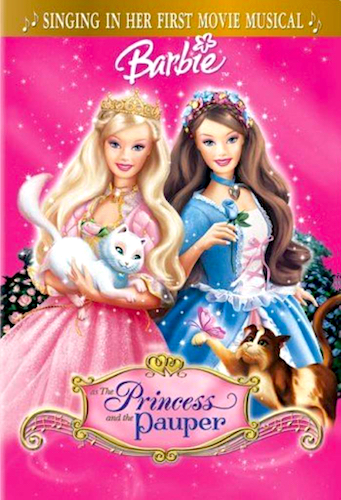
    Barbie as
    The Princess and the Pauper

    (2004)

    William Lau | 85 mins | digital (SD) | 16:9 | USA & Canada / English | U

    Barbie as The Princess and the Pauper

    One of the many film lists I have my eye on completing is Letterboxd 100: Animation, which lists the highest-rated animated feature films on the site (with a few caveats). There are over 40 titles left that I’ve not seen, and I could’ve chosen to watch almost any of them… but I chose the Barbie one. Well, not the Barbie one, because there are actually two Barbie titles on the list. And that’s not some temporary fluke: they’ve been on there for quite a while now. This merited investigation.

    As you’ve no doubt gathered from the title, this particular Barbie film is a reimagining of Mark Twain’s The Prince and the Pauper. A fairytale-esque story, about a princess, done as a musical? Yep, this is very much a wannabe Disney, but without the production values of that major studio: the computer animation here looks more like a PS2 cutscene. But hiding beneath the cheap animation is a halfway decent musical fairytale. Take the second musical number, How Can I Refuse, for example: it’s every inch in the mould of a “Disney villain’s song”, but is better than some genuine examples, and comes complete with a dance routine by the antagonist and his two henchman. This film has ambition, I’ll give it that.

    Other songs vary in quality. When the eponymous duo first meet, there’s an unintentionally hilarious number in which they sing about how similar they are, the indentured servant and the pampered royal. If you say so, girls. A later track is a typical “you be you” song, but sung to a pet cat who behaves like a dog. That’s a level of barminess I can get on board with.

    I would never have dreamed of watching this if it weren’t on the Letterboxd animation list. Now, I wouldn’t exactly say I’m glad I watched it, but I enjoyed it more than I thought I would — even if sometimes that was due to laughing at it rather than with it.

    3 out of 5

    Barbie as The Princess and the Pauper is the 7th film in my 100 Films Challenge 2022.


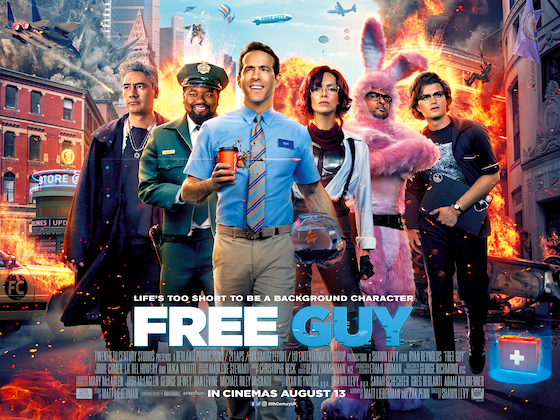
    Free Guy

    (2021)

    Shawn Levy | 115 mins | digital (HD) | 2.39:1 | USA / English | 12 / PG-13

    Free Guy

    Ryan Reynolds plays his role again as Guy, a bank worker in city riddled with crime and superheroics. But, it turns out, Guy isn’t real — he’s an NPC in a computer game, programmed to do the same thing over and over and basically be ignored by the real-world players. Until, that is, he spots the woman of his dreams (Jodie Comer) and his programming breaks as Guy becomes self-aware.

    The basic concept sounds like a fun, fresh, and timely idea, right? Video games have never been more popular, AI is ever-improving, and there’s room for both gags and action in the core idea — that’s the winning Marvel formula, right there. Unfortunately, the execution is as if someone found a way to make a new movie by collaging others. Free Guy is just The LEGO Movie + The Truman Show + Wreck-It Ralph + Ready Player One + the PG-13 version of Deadpool 2 — not put in a blender, but cut up and stuck back together side-by-side, with snippets of Groundhog Day, Fortnite, and multiple Disney-owned properties scattered in for good measure.

    That last aspect, the Disney references, has been singled out for particular derision on social media. The film was initially produced by 20th Century Fox, but ended up a Disney title after the buyout, which allows a bunch of stuff they own to pop up in the movie. I know we’re supposed to find this infinitely depressing — a sad reminder that Disney are on course to own all culture, and that’s a bad thing — and it is bad, of course… but the bit with Captain America’s shield still made me laugh. Sorry, not sorry. Yeah, you can be miserable about this stuff, because obviously the total homogenisation of all American media under The Walt Disney Company is not worth that a couple of meta gags; but the homogenisation of all American media under The Walt Disney Company is happening anyway, so we may as well enjoy the gags we get along the way.

    Whether you have that kind of attitude or not will probably dictate how much you enjoy Free Guy. Its originality is surface deep, at best, and at every second it will call to mind some other film that already did the same thing. But, allowing for that, it’s still a fairly entertaining couple of hours of action-comedy.

    3 out of 5

    Free Guy is the 8th film in my 100 Films in a Year Challenge 2022.


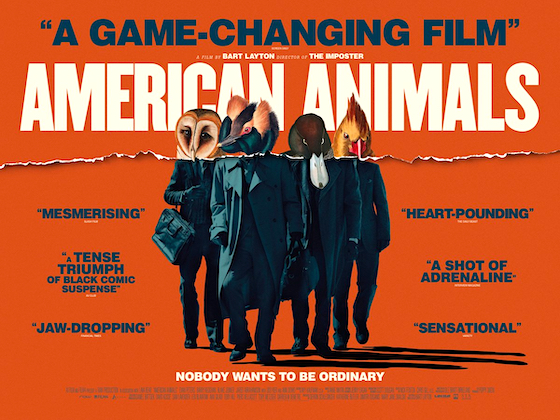
  • American Animals (2018)

    Bart Layton | 117 mins | digital (HD) | 2.39:1 | UK & USA / English | 15 / R

    American Animals

    I don’t want this to turn into a rant about IMDb — there’s a time and a place for those, certainly, but what’s meant to be a short review of one film is not one of them — but the way they’ve devalued the documentary in recent years is not also depressing but also inaccurate. Because anything that has the genre Documentary is now marked as “(documentary)” on someone’s filmography, and therefore IMDb, and/or its contributors, are reluctant to use it about anything that isn’t 100% a documentary. Something like, say, American Animals.

    To be clear: American Animals is unquestionably a documentary. It tells a true story, about some students who plan to rob a library of its rare books. It features interviews with the real people involved, both the students and others. But it’s mostly told via reenactments starring actors, several of them fairly recognisable faces. The real people appear as talking heads scattered throughout, particularly at key moments. So, it’s also unquestionably a hybrid of documentary and fiction. On the surface, it can look a lot like any fictionalised adaptation of a true story; but it’s hidebound to be more accurate than those often are, because it’s also got all these interviews. IMDb isn’t built for nuance such as this.

    Prior planning prevents piss-poor performance... possibly

    The film’s director, Bart Layton, previously made widely-praised definitely-a-documentary The Imposter. In my review of that, I described his style as “flashy” and “over-eager”, wondering if “perhaps he better belongs in fiction filmmaking? Perhaps that’s where he wants to go in future”. Here, I guess he’s moving to bridge that divide; but the blurred line means that, when the film says “here’s the real [person X]”, you kind of question it. Especially as, if a crime was committed, how come they’re interviewing the criminals?

    That latter thought contributes to a genuine tension and suspense throughout the film. How far will this plot go? Do they even actually attempt it? One of the guys keeps saying, “I expected there to be something to stop us”, and you think maybe something will stop them… but the fact this film exists, and there’s all the chat about how the boys let their parents down and whatever, shows something happened. (No spoilers!) Yet it’s also surprisingly funny, like a bit where we’re shown the “Ocean’s Eleven version” of the robbery, complete with Elvis song on the soundtrack.

    Some have criticised these kinds of flights of fancy, or the whole hybrid form, for inviting us to sympathise with these guys rather than condemn their actions. I think there’s room for both. The film seeks to explore what led these pretty normal guys to do such a thing, and (to an extent) how it has affected them since. I think you can both disapprove of what they did and seek to sympathise with them — to understand how it happened is not to condone it.

    4 out of 5

    American Animals was #107 in my 100 Films in a Year Challenge 2020.
    It is streaming on All 4 until 10th February.

    Archive 5, Vol.1

    Part of the impetus behind this new era of 100 Films was to solve ‘problems’ like my repeated failure to post reviews. Hopefully my plan for regular groups of capsule-sized reviews will solve that going forward. But this has been an issue for a while, and that’s led to a huge backlog of unreviewed films from 2019 to 2021 — it totals a ridiculous 449 feature films (counting shorts too, it goes over 500). Rather than abandon those to the mists of time, I present a new weekly (more or less — let’s not overcommit myself) series: Archive 5.

    Essentially, it’s the same format as new viewing: each post is a collection of short reviews; but here they’re five titles plucked at random from my archive of unreviewed films (and I’ve used a random number generator, so it’s genuinely unmethodical). If I can keep this up weekly, it will take me just under two years to clear the backlog — which means I could still be reviewing stuff from 2019 in 2023. Hahaha… haha… ha… ugh.

    With that in mind, there’s no need for further ado. This week’s Archive 5 are…

  • Never Too Young to Die (1986)
  • Bachelor Knight (1947)
  • Little Women (2019)
  • Aniara (2018)
  • Who’s Afraid of Virginia Woolf? (1966)

    (I Care a Lot was originally intended to be part of this post, but then the review turned out a little long, so I spun it off by itself. That’s the kind of thing I’ll probably keep doing, too.)


    Never Too Young to Die

    (1986)

    Gil Bettman | 97 mins | digital (HD) | 1.85:1 | USA / English | 18 / R

    Never Too Young to Die

    If you dropped A View to a Kill, Rocky Horror, WarGames, and Mad Max 2 into a blender, the end result might be Never Too Young to Die. And if that sounds like a ludicrous, unpalatable mash-up… yep, that’s Never Too Young to Die.

    This direct-to-video action-adventure stars a pre-Full House John Stamos as Lance Stargrove, a teenage gymnast whose dad is a secret agent (played by George Lazenby — aged 47 at the time, but looking at least 20 years older). When daddy is killed, Lance teams up with his partner (singer turned actress Vanity) to go after the culprit: gang leader and wannabe terrorist Velvet Von Ragnar (Gene Simmons (yes, from Kiss), chewing scenery as if he’s not been fed for months).

    If you’ve never heard of this film… well, neither had I, until a Cracked article suggesting comical substitutes for Covid-delayed blockbusters. But what really convinced me to watch it is that it has The Greatest Trailer Ever Made. If you set out to make a spoof ’80s trailer, I’m not convinced you’d be able to beat that. Unfortunately, neither can the film as a whole. It’s fun at times (the boob-biting final fight, or a scene where Stamos tries to distract himself from Vanity’s sexuality by… eating multiple apples), but it’s not quite camp or daft enough to really earn a place as a cult classic.

    I’ll say this for it, though: rewatching that trailer has made me really want to watch the film again…

    3 out of 5

    Never Too Young to Die was #70 in my 100 Films in a Year Challenge 2020.


    Bachelor Knight

    (1947)

    aka The Bachelor and the Bobby-Soxer

    Irving Reis | 91 mins | digital (SD) | 4:3 | USA / English | U

    Bachelor Knight

    If you ever need to name an obscure Oscar winner for some reason, you could do worse than Bachelor Knight — or, to give it its even-dumber-sounding original title, The Bachelor and the Bobby-Soxer. Yes, this won the Oscar for Best Original Screenplay (the other nominees aren’t the greatest field you’ve ever seen, but altogether they’re either better-remembered or were considered good enough to nominate for other gongs that evening, so quite how this took the prize, I don’t know).

    The plot also stretches credibility: after high schooler Susan (Shirley Temple) becomes infatuated with artist Richard Nugent (Cary Grant), she sneaks into his place to model for him, much to the disapproval of her older sister Margaret (Myrna Loy), who also happens to be a judge; and when Nugent ends up in her court room, she sentences him to date Susan until her infatuation inevitably wears itself out. I know things are different in the US, and also in the past, but did/do judges there really have the power to hand out any crazy made-up sentences they like?

    On the bright side, the film moves sprightly through its plot. Perhaps that’s because it takes a whole 40 minutes to get through the basic setup, even while running at a pace, means there’s less screen time left to dwell on all that follows. Not that some individual bits don’t go on a tad, like a picnic sequence; but others work very well, like a scene in a nightclub that is a nicely-written bit of escalating farce.

    It’s not the best work of anyone involved, but Bachelor Knight belies its iffy title (both of them) to be a likeable-enough 90 minutes of screwball comedy.

    3 out of 5

    Bachelor Knight was #70 in my 100 Films in a Year Challenge 2021.

    Little Women

    (2019)

    Greta Gerwig | 135 mins | cinema | 1.85:1 | USA / English | U / PG

    Little Women

    Writer-director Greta Gerwig’s adaptation of Louisa May Alcott’s beloved novel was greeted in some quarters by questions of if it was necessary: it’s the sixth big-screen version of Alcott’s book, and came just two years after a major new BBC adaptation. Well, I don’t know if it was ‘necessary’ or not, but Gerwig’s version is definitely a very good film.

    A key point that marks it out from other adaptations is that Gerwig has restructured the story: instead of playing out in a straightforward chronological fashion, it flashes back and forth in the sisters’ lives, starting with them as young women in 1868, with Jo in New York and Amy in Paris, before mixing in events from their childhood, seven years earlier, when the four sisters lived together in Massachusetts. This might seem like a rejig for the sake of differentiation, but Gerwig uses it to create interesting juxtapositions or to reframe plot points. For one example (spoilers follow, if you’re not familiar with the story), I felt it made Laurie and Amy’s relationship less creepy. Told chronologically, they first meet when he’s a young man and she’s a child, and he only moves his affection to her after Jo’s rejected him and Amy’s grown up. In Gerwig’s version, we first meet them together in Paris, and they seem more destined for each other, with a genuine spark between them as individuals, rather than a nagging sense of “if I can’t have one sister, this other will do”. It’s only later we learn the full backstory of Laurie and Jo — and, for that matter, of Jo and Amy — which, yeah, is obviously still a bit creepy, when you think about it.

    Whichever way you cut it, Gerwig seems to really get to the heart of the meaning in the story and characters, as well as giving it a lightly feminist polish (misogynists would probably consider it Terribly Feminist and Evilly Revisionist, if they watched it, which I don’t imagine they would). A star-studded cast ensure the whole thing is well acted, and it’s beautifully shot by cinematographer Yorick Le Saux. Questions about ‘necessariness’ are particularly irrelevant when the work is this good.

    5 out of 5

    Little Women was #4 in my 100 Films in a Year Challenge 2020.


    Aniara

    (2018)

    Pella Kågerman & Hugo Lilja | 106 mins | digital (HD) | 2.35:1 | Sweden & Denmark / Swedish & English | 18 / R

    Aniara

    A sci-fi movie based on, somewhat oddly, a 1950s Swedish poem, Aniara is about a spaceship transporting migrators from Earth to Mars that accidentally veers off course and heads irretrievably into deep space. Rather than the kind of action-adventure this might provoke if it were a Hollywood production, Aniara follows how the passengers and crew attempt to cope with their new lives.

    It’s a premise interesting enough that you feel it could fuel a TV series — how this mass of people, forced together by accident and terrible circumstance, comes to function (or not) as a society. Or maybe the remake of Battlestar Galactica already nailed that kinda thing. Either way, here it’s condensed into about 100 minutes; and because it has such a long-term view of what it wants to pack in, there are some surprisingly large time jumps (by the half-hour mark we’ve already reached Year 3). It takes some odd detours when it does that (society completely breaks down into weirdo cults… then a probe that might allow them to return home is discovered, at which point everything goes back to normal), but overall it has a pretty clear thesis about humanity and how we cope with things — “not well”, fundamentally.

    The final act kind of rushes a similar point, skipping ahead (several times) to how things are even worse without really tracking the descent. Maybe that’s why I liked the idea of a series version so much: to fill in all those blanks. But I don’t want to take this criticism too much to heart. If anything, the fact I wanted more detail is a compliment. It’s not the film bungling developments and me searching for justification, but rather that I’d be interested in seeing the themes and characters explored in even more detail. As it stands, Aniara is an epic-scale story told well in a somewhat condensed fashion.

    5 out of 5

    Aniara was #65 in my 100 Films in a Year Challenge 2020. It placed 21st on my list of The Best Films I Saw in 2020.


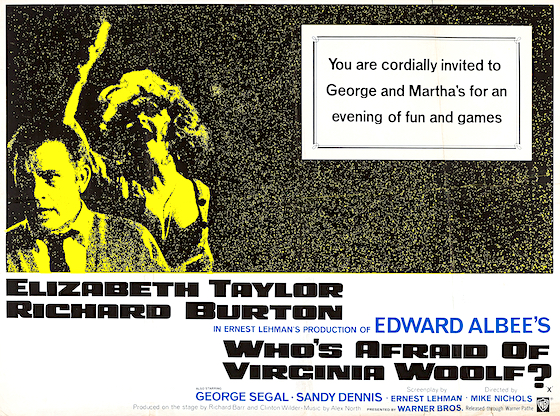
    Who’s Afraid of Virginia Woolf?

    (1966)

    Mike Nichols | 131 mins | Blu-ray | 1.85:1 | USA / English | 12

    Who's Afraid of Virginia Woolf?

    When a middle-aged college professor (Richard Burton) and his wife (Elizabeth Taylor) have his new young colleague (George Segal) and wife (Sandy Dennis) around for drinks one evening, the occasion soon degenerates into a verbal slanging match between the elder couple, the younger inescapably caught in the middle.

    And as the film takes place in almost-real-time, in just a couple of locations, it feels like we’re trapped with them. With a running time north of two hours, the film’s drunken sardonicism almost becomes an endurance test, particularly when it goes on a bit too long in the middle. But it’s carried through by some magnificent performances. Everyone talks about Taylor — just 33 at the time, she wasn’t sure she could play the part of a bitter 52-year-old, but she’s excellent — or they talk about Taylor and Burton — similarly, he wasn’t sure he could play a beaten-down failure of a man, having been used to taking dashing heroic roles — but Sandy Dennis is great too, and deserved her Oscar. Of the four actors, its George Segal who draws the short straw, not really getting the material to truly stand toe-to-toe with the other three (he still got an Oscar nom, though).

    Director Mike Nichols insisted the film be shot in black & white, which helps it to pull off Taylor’s ageing makeup, but was also intended to stop it seeming too ‘literal’ and instead give an abstract quality. That fits the material, because the characters, events, and revelations are all pretty odd; the way it plays out pretty strange. Plus, the pitch-black darkness of the night fits the film’s themes. Cinematographer Haskell Wexler does a superb (indeed, Oscar-winning) job, the photography looking more striking than you might expect, or even need, for such an actor-focused character piece.

    A whole featurette on the film’s disc release discusses how it was “too shocking for its time”, mainly because of the language used (the fact the film was made relatively unedited set a ball rolling that, just a couple of years later, saw the Production Code replaced by the modern MPAA classification system). While such concerns are no longer really relevant (once-controversial terms like “screw” and “goddamn” are hardly “fuck”, are they?), that the film is still powerful shows it was never truly about what was said, but who said it and how they said it. I don’t mean to say that it would still be offensive today, but rather that it still packs an emotive punch.

    5 out of 5

    Who’s Afraid of Virginia Woolf? was #22 in my 100 Films in a Year Challenge 2021.


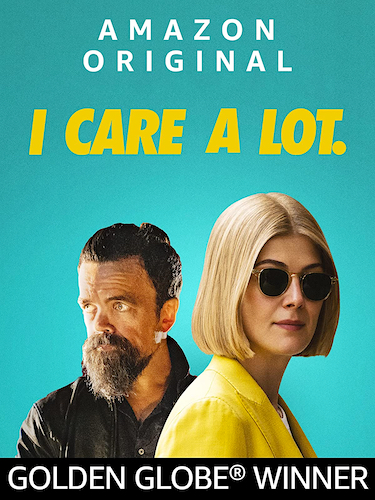
  • I Care a Lot (2020)

    J Blakeson | 119 mins | digital (UHD) | 2.39:1 | USA & UK / English | 15 / R

    I Care a Lot

    Marla (Rosamund Pike) is a professional legal guardian, someone appointed by the courts to arrange care and legal affairs for elderly people no longer capable of doing it themselves. But her real trade lies in pinpointing wealthy people with no family who she can trick the court into placing in her care, at which point she can drain their savings and assets for her own profit. Yes, she is a thoroughly unlikeable, evil bitch. But when she pulls this con on Jennifer Peterson (Dianne Wiest), it inadvertently brings Marla to the attention of Roman Lunyov (Peter Dinklage), a powerful man who is not used to being messed with.

    Already I’m edging into spoiler territory there, and there’ll be more to come, because it’s hard to discuss what’s so fundamentally wrong with I Care a Lot without digging into what occurs past some of its twists — it starts as one thing (which works), quickly becomes something else (which also works), but after about the halfway mark, it ends up diving off the deep end into a mess of implausibility. It may be stylishly made and performed, but all of that is in service of a philosophically jumbled attitude to character.

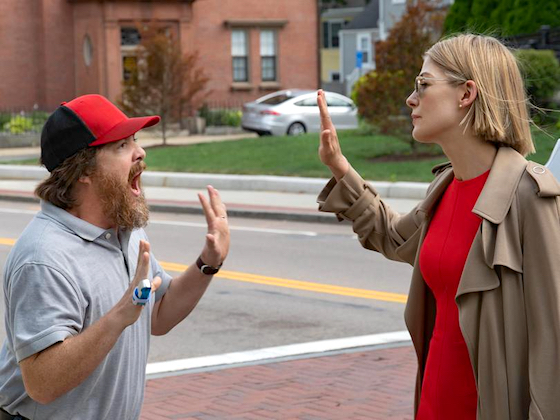
    What makes the film fall apart is where it wants our loyalties to lie. I’ve often written that I’m fine with films that star unlikeable or unsupportable characters (the idea we need someone we can like/support at the centre of a work of fiction was recently described by someone as a childish impulse, and I agree to an extent), but that doesn’t give them carte blanche. As a commenter put it on iCheckMovies, “you can make a film about horrible, unredeemable characters, but you can’t also expect an audience to root for them when you put them in peril, especially when that peril is one of their own making.” This is the ‘trick’ I Care a Lot attempts to pull. It seems to think we’ll be aligned with Marla by a certain point, but we really aren’t — she absolutely deserves what’s coming to her.

    Talk to the hand because I don't care a lot

    Similarly, when she accuses the villains of “not playing by the rules”, it feels like the film is, again, assuming that will get us on her side; like, “yeah, she’s bad, but at least she plays by the rules, whereas the crooks are just crooks”. But I did not think that, at all. If anything, it makes her even more disingenuous. Yes, technically she’s working within the system — but she’s cheating it and bending it (breaking it, even) to make it work for her. At least the criminals are unquestionably criminals — they’re not pretending to be legit. So while intellectually we know that Roman and his chums are Bad Guys (they’re drug smugglers who don’t care if their human mules die!), in this particular storyline we are much more likely to be on their side: they’ve been wronged by Marla, they deserve their recompense. Heck, they even attempt to do it legally first — that’s more than we can say about other wronged heroes, like, say, John Wick.

    Even while I Care a Lot is watchable thanks to its strong direction and highly talented cast, it’s an awkward viewing experience because it feels like we’re constantly at odds with the movie itself. That it eventually gives us what we need (via a small part for Macron Blair, which merits a metatextual “huh” in relation to the themes of his role in Blue Ruin) is scant compensation for the difficulties up to that point.

    3 out of 5

    I Care a Lot was the 101st film in my 100 Films in a Year Challenge 2021.

    The 100-Week Roundup XXXII

    The 100-Week Roundup covers films I still haven’t reviewed 100 weeks after watching them. Sometimes these are short ‘proper’ reviews; sometimes they’re only quick thoughts, or even just the notes I made while viewing.

    This week’s pair are the final films from May 2019

  • The Saint (2017)
  • Hairspray (1988)


    The Saint
    (2017)

    2019 #92
    Ernie Barbarash | 91 mins | digital (HD) | 16:9 | USA / English | 12

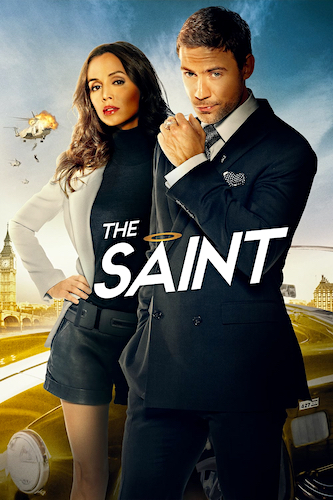
    The Saint

    Leslie Charteris’s “modern-day Robin Hood” Simon Templar, aka the Saint, was adapted into a successful film series in the ’30s and ’40s, and an enduringly popular TV series in the ’60s, so it makes sense that, every now and then, someone tries to revive the property. This latest effort began life as a TV pilot in 2013, which was rejected. Reshoots to extend it into a feature were shot in 2015, but it was only released in 2017, as a ‘tribute’ to Roger Moore (star of the ’60s series, of course, and who makes a cameo here) shortly after his death. I guess that was the only way it could find distribution. You might think the fact it failed on its own merits, twice over, before having to rely on a beloved star’s death to get any kind of release, augurs badly for the film’s quality… and you’d be right.

    Adam Rayner plays the newest incarnation of the eponymous antihero, here tasked with recovering both stolen Nigerian aid money and the thief’s teenage daughter, who was kidnapped as leverage by a mysterious crime organisation. Cue lots of tech-based heist hijinks (gotta make sure we know this is a modern adaptation) and made-on-a-budget action sequences. The overall impression is of something that would’ve been a minor success as a syndicated TV series in about 1995, which obviously means it seem badly dated by today’s standards. The content of the reshoots is a little too obvious: a tacked-on prologue and epilogue, which come in the form of long scenes in limited locations with a small cast. That said, the whole production is so cheap that these additions don’t stick out too much. That’s not a compliment.

    It’s been a very long time now since we’ve had a decent version of The Saint (I rewatched the ’90s Val Kilmer film recently and it’s not some forgotten gem). As such a storied franchise, I’m sure someone will try again — indeed, we might not have to wait long at all, as it’s been reported that Dexter Fletcher is working on a new film that will star Chris Pine. I live in hope.

    2 out of 5

    The Saint featured on my list of The Five Worst Films I Saw For the First Time in 2019.

    Hairspray
    (1988)

    2019 #94
    John Waters | 88 mins | DVD | 1.85:1 | USA / English | PG / PG

    Hairspray

    John Waters is not the kind of filmmaker whose movies you’d expect to see being adapted as a big Broadway musical. But then, Hairspray is not your typical John Waters movie, leaving behind the transgressive, gross-out elements that make films such as Pink Flamingos infamous and unpalatable to this day, replacing them with the sweet story of an overweight high-schooler who wants to be a dancer on her local TV dance show, with a self helping of racial equality — it’s set in 1962 and the show’s black dancers are still segregated.

    Although the end result is resolutely PG material, the film still feels a world away from the slick big-budget studio production values of the stage-musical-based remake — a bit of the grungy, independent, low-budget roots of Waters’s other films has survived into the vibe of this film. In a way, the nice thing about that is that the two screen versions cater to different demographics. So many remakes are aimed at fundamentally the same audience, but in shiny new packaging to attract the imbeciles who refuse to watch any films made before whatever year they’ve arbitrarily selected. Conversely, the two Hairsprays are distinctly different interpretations of the same base material, with a shared socially-conscious vision, but different aesthetic and artistic goals. Both are valid; both are good. My personal preference errs towards the remake, but I appreciate the qualities of the original, too.

    4 out of 5

  • The 100-Week Roundup XXXI

    The 100-Week Roundup covers films I still haven’t reviewed 100 weeks after watching them. Sometimes these are short ‘proper’ reviews; sometimes they’re only quick thoughts, or even just the notes I made while viewing.

    This week’s selection includes a trio of films I watched back in May 2019

  • Widows (2018)
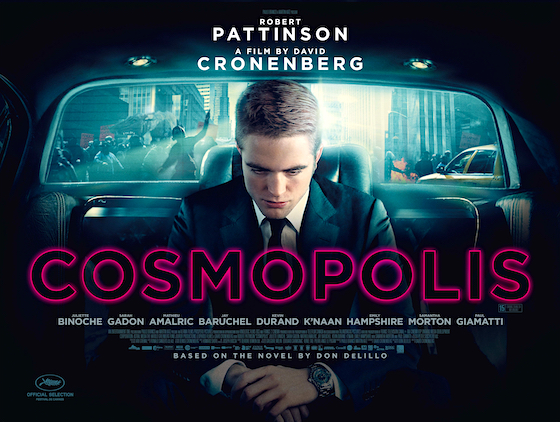
  • Cosmopolis (2012)
  • The Kennel Murder Case (1933)


    Widows
    (2018)

    2019 #88
    Steve McQueen | 130 mins | digital (HD) | 2.39:1 | UK & USA / English & Spanish | 15 / R

    Widows

    The story of four women with nothing in common, except a debt left behind by their dead husbands’ criminal activities. Set in contemporary Chicago, amid a time of turmoil, tensions build when Veronica (Viola Davis), Alice (Elizabeth Debicki), Linda (Michelle Rodriguez) and Belle (Cynthia Erivo) take their fate into their own hands and conspire to forge a future on their own terms.IMDb

    Best known for powerful socially/politically-conscious work like Hunger, 12 Years a Slave, and the Small Axe series, director Steve McQueen here delivers something closer to a genre movie — although, with its storyline of gangsters’ women empowering themselves, and a racially diverse cast, it still feels at least somewhat radical. As a thriller, it’s not exactly taught with tension, but it’s not too slack either — the pace is considered but not slow, allowing enough room for everything (and there’s a lot) without feeling rushed.

    4 out of 5

    Cosmopolis
    (2012)

    2019 #89
    David Cronenberg | 101 mins | digital (HD) | 16:9 | Canada & France / English | 15 / R

    Cosmopolis

    Riding across Manhattan in a stretch limo in order to get a haircut, a 28-year-old billionaire asset manager’s day devolves into an odyssey with a cast of characters that start to tear his world apart.IMDb

    David Cronenberg may be most famous as a horror director, but the only thing horrific about Cosmopolis is having to sit through it. It has the visual, aural, writing, and performance quality of an overambitious semi-pro early-’00s webseries, from the distractingly ugly green-screened limo windows to the “undergrad philosopher”-sounding screenplay and stiff performances. I presume this literally monotonous lack of realism must have been intentional, but doing something deliberately doesn’t inherently make it good. Cronenberg reportedly wrote the screenplay in just six days, apparently by copy-pasting the book into screenplay format and separating the dialogue from narration. That would go some way to explaining why it’s all so unnatural and impenetrable.

    1 out of 5

    Cosmopolis featured on my list of The Five Worst Films I Saw in 2019.

    The Kennel Murder Case
    (1933)

    2019 #91
    Michael Curtiz | 73 mins | digital (SD) | 4:3 | USA / English

    The Kennel Murder Case

    Before he starred in The Thin Man, one of the definitive detective movies, William Powell played private eye Philo Vance in a series of movies — three at Paramount across 1929 and 1930, later returning for this one at Warners. Here, Vance investigates a locked-room mystery: wealthy collector Archer Coe is dead and all signs point to suicide, but Vance had run into him the day before at the Kennel Club, where Coe was looking forward to his dog winning the next day’s competition.

    While the ensuing story unfolds a solid mystery, it lacks the charm and wit of the Thin Man films. Powell’s character is a facilitator of the plot rather than an entertaining main character; a blank slate who wanders around solving things. That lack of verve or individuality (which you do find in, say, the Falcon and Saint films, which this is on a par with in most other respects) is what really holds it back. Mind you, it has its moments: for example, much of Michael Curtiz’s direction is perfunctory studio-programmer stuff, but there’s the occasional striking shot (the discovery of a body though a keyhole) or sequence (the recap of how the murders went down, with a roving first-person view to hide the killer’s identity).

    3 out of 5