Jin-Roh: The Wolf Brigade (1999)

aka Jin-Rô

2018 #212
Hiroyuki Okiura | 102 mins | DVD | 1.85:1 | Japan / Japanese | 15 / R

Jin-Roh: The Wolf Brigade

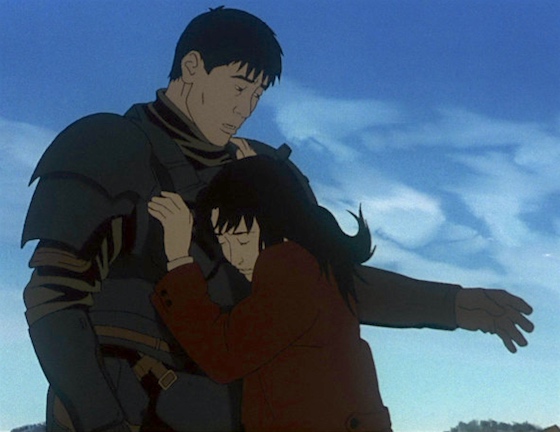
Jin-Roh has enough cool costumes and bursts of ultra-violence to cut together a trailer that looks like a kinda-typical anime action-fest, but that’s really hiding a thoughtful, complicated (oh so complicated) drama about an unlikely romance and military conspiracies.

If that sounds like a bizarre mix… well, it is. Jin-Roh is a film that likes to pull tricks on its audience (maybe those action-packed trailers were deliberate rather than marketers just doing their best to sell the thing!), and one of the tricks it plays is to constantly wrongfoot you about what kind of movie it’s meant to be. First it’s a kind of action thriller about terrorists vs. police; then it’s a subtle romance between two damaged individuals; then it’s a conspiracy thriller, and also an espionage drama; and finally it’s some kind of allegorical tragedy. As it moves through those various phases, the characters — and, by extension, us — are subjected to crosses, double crosses, and triple crosses. Good luck keeping up…

Set in an alternate history where Germany occupied Japan after World War 2 (I’m not sure that’s made clear enough in the film, but hey-ho — maybe it’s obvious to Japanese viewers), the film picks things up a couple of decades later, with Japan free from occupation but having to fight antagonistic forces from within. With many guerrilla cells having combined to form terrorist group The Sect, the security services consequently created Kerberos, a controversial police paramilitary unit, to combat them. When Kerberos corporal Kazuki Fuse fails to shoot a bomb-carrying girl and she blows herself up, he’s punished by being sent back to basic training. At the same, he meets the girl’s sister and begins to form a bond with her. Meanwhile, his failure has thrown the future of Kerberos into doubt, setting political machinations whirring every which way.

Little Red Riding Hood... and the Big Bad Wolf?

I’ll admit, I got pretty lost with all the various factions, who was plotting what and when and why, and which side everyone was supposed to be on. Perhaps I was lulled into not paying enough attention because, as I noted above, the film appears to be a tender, understated examination of the relationship between two scarred individuals struggling to cope with the same recent tragedy from different sides, before it abruptly takes a hard turn into an intricate conspiracy thriller. Reading a plot description afterwards, I managed to get my head around it, though it didn’t resolve one quandary I felt at the end of the film itself: that it’s hard to know who we’re meant to be rooting for. Did the good guys win? Did the bad guys win? Were there actually any good guys — was anyone right? Personally, I’m fine with a film where there are no heroes, where everyone’s a bad guy and one of those bad guys wins; my problem is that I was left feeling unclear about whether that was the case or not.

Mixed feelings, then. It’s a well-made film (even watching on a crummy window-boxed DVD), but all those whiplash-inducing turns and confusion-producing twists left me somewhat reeling and bewildered.

3 out of 5

The Korean live-action remake, Illang: The Wolf Brigade, is available on Netflix from today.

(As is Daredevil season 3, Making a Murderer season 2, a brand-new Derren Brown special, and over half-a-dozen other series and films I’ve not heard of — why dump so much on one day, Netflix?!)

Rocky V (1990)

2018 #206
John G. Avildsen | 104 mins | Blu-ray | 1.85:1 | USA / English | PG / PG-13

Rocky V

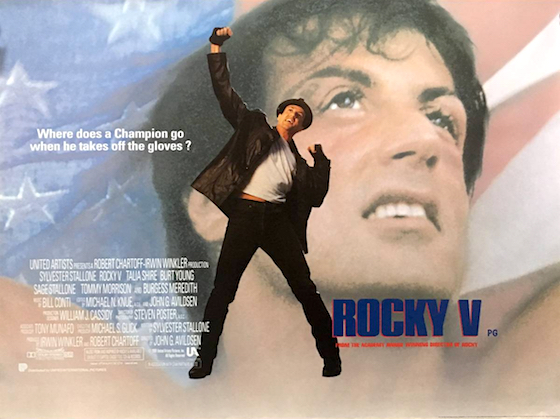
With his career apparently on the wane, the promise of a payday tempted writer and star Sylvester Stallone to reignite the Rocky franchise for one final round (as it’s turned out, this was far from the end, but more on that another time). After the cartoonish excess of Rocky IV, Stallone tried to shepherd this film back towards the series’ roots as a gritty drama, going so far as to rehire the Oscar-winning director of the first film, John G. Avildsen. It didn’t work: Rocky V was met with poor reviews and poor box office. Stallone himself has admitted its failure in the decades since: when he was asked to rate each of the Rocky films out of ten, he gave this one zero. In spite of all that, I thought it was… fine.

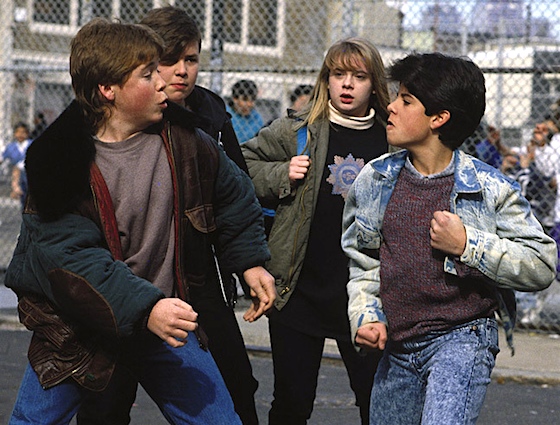
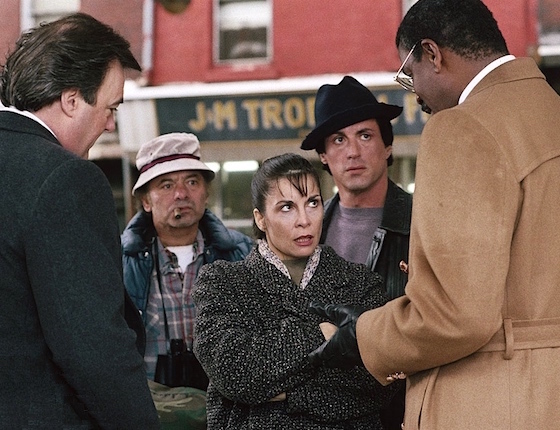
The plot picks up immediately after the end of Rocky IV, with the eponymous pugilist learning that the beating he took from Drago has left him with serious brain damage — one more fight could kill him. At the same time, a bad financial decision by Rocky’s brother-in-law Paulie (Burt Young) leaves the Balboa family in ruins, forced to move back to their old neighbourhood. Despite lucrative fight offers, Adrian (Talia Shire) insists Rocky remained retired, which leads to him encountering Tommy Gunn (Tommy Morrison), a wannabe boxer keen to be trained by the great Rocky. As Rocky begins to live vicariously through the increasingly successful Tommy, his son, Rocky Jr (played by Stallone’s own kid, Sage Stallone) is feeling neglected, especially as he’s struggling with bullies at his rough new school.

Rocky Jr

So, you can see how the film is trying to be more grounded — gone are the flag-waving ultra-patriotic theatrics of the last film, replaced with a grim story of financial ruin, inner city hardship, and what life is like after your dreams are over. It’s all a bit much. Indeed, it’s probably too much, because Stallone’s attempt to course-correct the franchise overshoots, sailing past gritty realism and into melodrama territory. There’s a lot of shouting and emotional theatrics, and the subplots are all a bit pat. I mean, Rocky neglecting his son because he’s training a fighter who he treats like a son is a solid enough plot, but it’s kinda obvious and we’ve seen its ilk before, and the way it plays doesn’t offer an original perspective on the material. So while it does work as a story, it’s part of what I mean about it being a melodrama — it’s not realism, it’s a heightened Movie story.

The rest of the film is similarly afflicted — there are plenty of cheesy parts, but it wouldn’t be a Rocky movie if there weren’t — though some behind-the-scenes choices don’t help. For example, Tommy Morrison was a real-life boxer, which probably seemed like a clever casting decision, but, given his limited acting ability, was possibly a mistake. That said, while he’s hardly a spectacular actor, I didn’t think he’s as bad as some people say. One thing that definitely doesn’t work is the soundtrack. The film is often scored with rap songs, which don’t fit the character at all. I don’t know whose decision it was, but presumably not Avildsen’s: in 2002 he snuck a workprint version of the film out online, dubbing it the “director’s cut”, and apparently it includes a lot more of Bill Conti’s original score. There were various other changes as well (you can read a review here). I don’t know how easy that version is to find nowadays, or what kind of quality it’s available in — in the 16 years since, it’s not been granted an official release.

Balboa family values

The originally planned ending for the film had Rocky dying after the final fight, but Stallone and/or the studio thought that didn’t really fit the tone and themes of the series. Quite right, too. It also left the door open for the series to eventually continue and redeem itself: there’s the revival movie, Rocky Balboa; the spin-off with Rocky as a trainer, Creed; and the spin-off where Rocky got turned into a squirrel or a moose or something, The Adventures of Rocky and Bullwinkle. I can’t wait to see how that came about. (I jest — I know he’s the squirrel.*)

Altogether, I don’t quite see why Rocky V gets so reviled. It’s certainly not the best movie in the series — indeed, it’s probably the lowest point, lacking the realism of the early films, the entertaining ridiculousness of its immediate predecessors, and the feel-good zero-to-hero arc seen in all of those — but it’s a passable-enough drama in its own right.

3 out of 5

* I did not know this — I had to Google it. Never let it be said I don’t commit to a joke. ^

What Ever Happened to Baby Jane? (1962)

2018 #153
Robert Aldrich | 128 mins | TV (HD) | 16:9 | USA / English | 12

What Ever Happened to Baby Jane?

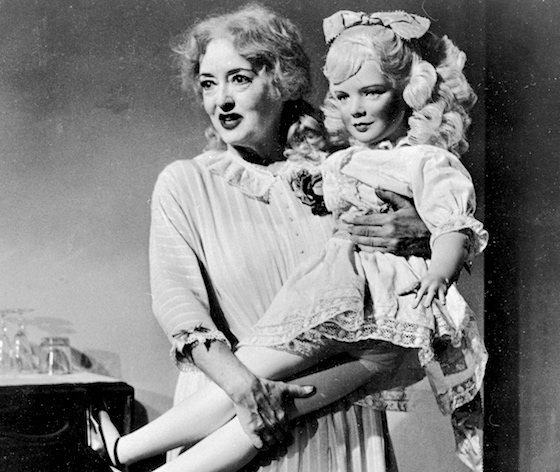
Real-life rivals Bette Davis and Joan Crawford star as squabbling sisters forced together by circumstance in this slice of Hollywood Gothic. Both were once famous in their own way: as a child, bratty Jane Hudson (Davis) was a huge vaudeville star as the eponymous ‘Baby Jane’; later, her level-headed sister Blanche (Crawford) became a huge star of the silver screen, where Jane struggled to make a mark, employed only as a clause of her sister’s studio contract. A tragic incident ended both their careers, leaving Blanche paralysed and Jane her carer. Decades later, resentment has made Jane casually abusive of her invalided sister — and when she discovers that Blanche has been secretly plotting a major change to their situation, things only get worse…

What Ever Happened to Baby Jane plays out as a mix of overwrought melodrama, plausible real-life horror, and mature psychological thriller. It’s really driven by the acting of the two leads. Crawford gets a less showy role, having to play it straight as the reasonable, sensible older sister, struggling to do what’s right for her sibling even as she’s mistreated. Davis, on the other hand, is allowed to cut loose. Jane starts the film batty and only gets less mentally stable from there. It’s quite an extraordinary performance from Davis, which threatens to tip over into scenery-chewing at any moment but remains compelling.

Bette Davis and her preferred co-star

The film itself is less assured. Director Robert Aldrich manages a good line in generating tension from people almost finding out what’s going on in the Hudson household, and there’s a solid final-reel twist (even if the final act in general is a bit bizarre — no spoilers, but those beach users are seriously inattentive), but the film is allowed to run longer than the material really merits. A slow burn can be used to create atmosphere, of course, but that’s not really the case here. It could do with a little more drive early on.

But maybe it’s this looseness that has allowed so many different ways of viewing the film. As well as those I’ve already mentioned — sibling melodrama, psychological thriller, unnerving horror — people have taken it as a black comedy, or a cult camp classic. Whichever way you look at it, it’s certainly an experience.

4 out of 5

The TV series Feud: Bette and Joan, which dramatises the making of this film, begins a repeat run on BBC Four tonight at 10pm.

Zatoichi and the Chess Expert (1965)

aka Zatôichi jigoku-tabi

2018 #181
Kenji Misumi | 87 mins | Blu-ray | 2.35:1 | Japan / Japanese

Zatoichi and the Chess Expert

A more literal translation of the 12th Zatoichi movie’s title would be something like Zatoichi’s Trip to Hell. I can see why they changed it, though, because that seems a bit melodramatic: this is far from Ichi’s darkest, or most personally-threatening, adventure. Choosing to focus on the chess expert in the English-language title in some ways feels a little misleading — there’s a lot of other stuff going on in the story here — but, when it comes down to it, he is the film’s defining character.

Said chess master is Jumonji (Mikio Narita), a samurai Ichi bumps into on a sea voyage. Although they have mutual respect for each others’ skills and end up travelling together, it’s clear they have some differences in their moral codes. Meanwhile, Ichi is being pursued by a group of men — well, when isn’t he? A fight results in the injury of a little girl, and Ichi insists on helping her and her aunt, Otane (Kaneko Iwasaki). The four travel to a spa, where they encounter a young lord hunting for the man who killed his father.

After a lot of time spent moving pieces into place (appropriate for a chess-themed story, I suppose), the film almost takes a swerve into murder mystery territory — except it’s less of a whodunnit (we know that pretty quickly), more of a whydunnit, as both victim and perpetrator are people Ichi is on good terms with. And that’s only the half of it, because there’s more to Otane than meets the eye, too.

Board game expert Jumanji... sorry, Jumonji

The way all this plays out is a change of pace for the series. There’s still a peppering of the usual elements (Ichi-vs-hordes fight scenes; comical gambling bits where Ichi one-ups those who underestimate him), but around that it’s kind of slower, more emotional (there’s a very effective scene where Ichi recalls another Otane, his love interest from several of the early movies), and all gets a bit melancholic — it seems jovial enough at first, but that undercurrent of sadness is waiting to pounce. It also shows Ichi as more fallible than usual, with some of his usual tricks failing (he actually loses a dice game; later, he drops something important during a fight and has to fumble around on the ground), and the finale pits him against an adversary and dilemma the likes of which he hasn’t faced since perhaps even the first movie.

It also reminds a little of the fourth film, Zatoichi the Fugitive — which is appropriate, as a key sequence here contains a callback to the events of that movie. But the actual similarity comes in its effectiveness: when it’s working, it’s among the finest material in the whole series. Specific great sequences include the discovery of a murder in the rain, which is intensely atmospheric, while another where violence almost erupts between two friends plays out in complete silence and is all the more tense because of it. However, the consistency isn’t quite there across the whole film for me to count it among the series’ very best. There are a few too many major elements introduced late in the game, and, in balance to that, too much early stuff that doesn’t quite go where it needs to in order to feel justified. Perhaps this is a side effect of them churning out so many of these movies every year: with a couple more rounds of polishing to the screenplay, to streamline and coalesce all the plots appropriately, it might’ve been top drawer.

Sore loser

But I don’t want to be too harsh. Even if Chess Expert doesn’t thrill as much as some of the other movies, nor differ from the formula as thoroughly as some others, it does have its own charms for those prepared to indulge a somewhat more contemplative and chewy Ichi tale. Director Kenji Misumi previously helmed the original Tale of Zatoichi and Fight, Zatoichi, Fight, which are (best as I can ascertain) commonly regarded as being among the top two Zatoichi films. Many a fan would rank Chess Expert in close proximity to them. For me, it doesn’t crack the very top tier of Ichi flicks, but is still an above-average adventure for everyone’s favourite blind masseur swordmaster.

4 out of 5

Announced late last month, Criterion are bringing their fabulous Blu-ray box set of the Zatoichi series to the UK in November.

The Post (2017)

2018 #125
Steven Spielberg | 116 mins | Blu-ray | 1.85:1 | USA & UK / English | 12 / PG-13

The Post

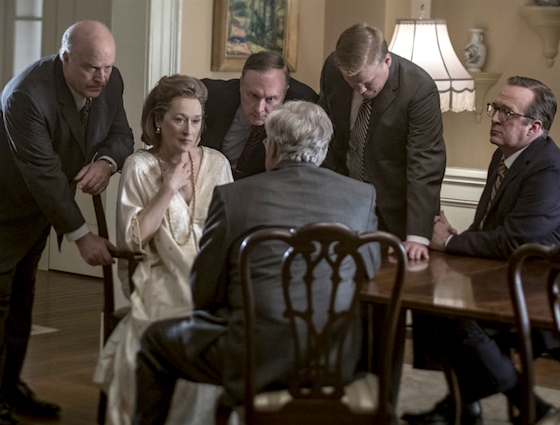
Perhaps the timeliest historical movie ever made, The Post is, in its plot, about the publication of the ‘Pentagon Papers’, a leaked report that examined decades of US government decisions about the Vietnam war; but, thematically, it’s about press oversight of a government lying to its people to cover up their own wrongdoing, including trying to forcibly stop the press from performing that role — sounds familiar, doesn’t it? Not to mention that it also concerns itself with matters like whether sources who leak classified information are whistleblowers or traitors, and attitudes towards women in positions of power in the workplace.

For various reasons related to these elements, it’s attracted a lot of comparisons and accusations. For example, some have criticised it for being about a case in the ’70s rather than one in the present day. I guess allegory is tricky for some people to understand… Or, alternatively, that any such parallels were accidental, as if experienced director Steven Spielberg wasn’t aware of them. I think the film went from script to screen in just nine months for a reason…

Then there’s the inevitable comparison to Spotlight, another recent newspaper journalism-themed true-story movie, and a Best Picture winner to boot. Those who thought Spotlight was exceptional tend to think The Post doesn’t measure up. Personally, I thought Spotlight was good, but I didn’t love it as much as some others. I would hesitate to say The Post is better than it, but I would be equally as hesitant to say it isn’t as good. Arguably Spotlight is a better movie about journalism, focusing as it does on the everyday legwork and procedure that go into putting together a major story, whereas The Post has more on its mind than just the facts of how reporting works. There are also many comparisons to All the President’s Men, but I’ve still not seen that so can’t comment fairly (there is this rather excellent trivia/connection, though).

Reading the papers

Relatedly, some people think this film should’ve been about the New York Times, as they were the paper that first broke the Pentagon Papers story and initiated the legal case it all led to (and, later, they were the only paper awarded a Pulitzer Prize for the publication). There’s certainly an argument for that being the real story, but, conversely, that would be to assume the focus of this movie is solely the publication of the Pentagon Papers. In fact, The Post is the story of Katharine Graham and the Washington Post, and how the Pentagon Papers changed them both. It’s the story of an underdog-like local paper making an (inter)national mark by doing something at odds with a legal ruling — the fact they chose to back-up the Times by publishing too (even if the action was instigated as much by friendly rivalry/jealousy as it was by “freedom of the press” ethics) is an important point in itself.

It’s also the story of a woman — a business owner at a time when women didn’t hold such roles; and not a woman who confidently elbowed her way in either, but one who found this position thrust upon her — going from meek and overpowered to confident in her own mind and running the show. I’ve read reviews that think this latter element is somehow forced on the film, as if the makers didn’t notice it until halfway through and only decided to draw it out when they reached a shot near the end where Streep walks past a crowd of other women with admiring expressions. That’s not the case, obviously — that’s simply not how movies are made — and that arc is clearly in mind from the very first scene where we meet Graham. Meryl Streep is excellent in the role, which is easily the film’s most fully-realised character. Everyone else is certain of themselves and what they believe is the right thing to do, but over the course of the film she goes from quiet, uncertain, and reliant on her trusted advisor, to believing in her own instincts and standing up for them. It’s a clearly-charted but believable journey.

A man's world

Nonetheless, it’s somewhat hard to divorce The Post from the context of when it was made — the way it reflects the current climate in American politics and the news coverage thereof. But then, is that a problem? Are works of art not as much about the time in which they were made as the time in which they’re set? I guess that’s a whole other debate. That said, it carries a message that would be important in any era, about the need for reasoned, responsible, independent oversight of those who govern us.

4 out of 5

The Post is available on Amazon Prime Video UK from today.

All the Money in the World (2017)

2018 #121
Ridley Scott | 133 mins | streaming (HD) | 2.39:1 | USA, Italy & UK / English, Italian & Arabic | 15 / R

All the Money in the World

All the Money in the World does not star Kevin Spacey. But I expect you knew that. Indeed, if you only know one thing about the film, I expect that is what you know. Spacey’s firing, and his speedy replacement by Christopher Plummer, was such a big news story that it instantly became what the movie was most famous for — and, I suspect, is what it will always be most famous for, because the film itself isn’t good enough to transcend its own reputation.

Before I get into that, let’s do the film the courtesy of describing what it’s actually about. Based on true events, it tells the story of the kidnapping of teenager John Paul Getty III (Charlie Plummer, no relation) in 1973 thanks to his family ties: his grandfather, J. Paul Getty (Christopher Plummer), was the richest man in the world. He was also a miserly old codger who refused to pay his grandson’s ransom, and the film follows his daughter-in-law Gail (Michelle Williams) as she desperately tries to arrange to get her son back, aided by the employee Getty assigns to investigate the case, former CIA operative Fletcher Chase (Mark Wahlberg).

Even before the point of contention that drives the plot, various examples are given of what a piece of work Getty was. Whether these are based on true stories or not, I don’t know, but the film seems almost heavy-handed in creating this impression. For instance, although he’s the world’s first billionaire, he’ll do his own laundry in his hotel bath rather than pay the hotel $10 to do it for him; or he’ll spend an hour haggling a poor beggar down from $19 to $11 for an item that’s actually worth $1.2 million — although it later turns out there’s another side to that story… not that the it paints Getty in any better a light. Anyway, it’s to Plummer’s credit that he can take this kind of material and make it work, especially considering it was captured in just nine days of shooting with very little prep time.

Can you put a value on a child's life? J. Paul Getty can.

When those reshoots were first reported, it was said to be possible because Getty wasn’t actually in the film much, so it wouldn’t take long to remount just his scenes. Then the film started screening, and critics said he was in a lot of the movie and the amount they must’ve reshot was phenomenal in such a short space of time. Personally, I think the truth is somewhere in between: Getty pops up throughout the film, and his presence is huge, but I’d wager his actual screen time is smaller than you’d think — similar to Anthony Hopkins in Silence of the Lambs, who notoriously won Best Actor from less than 25 minutes on screen, it feels like Plummer’s in it more than he actually is. That’s partly the film’s structure, but also the quality of his performance.

In discussing the reshoots, director Ridley Scott has commented on the differences between the two actors’ takes on the character (Plummer wasn’t shown any of Spacey’s performance before he filmed). According to IMDb, Scott felt Spacey portrayed Getty as “a more explicitly cold and unfeeling character”, while Plummer found “a warmer side to the billionaire, but the same unflinching refusal to simply pay off his son’s kidnappers.” I can’t help reading between the lines to infer that Scott felt Plummer’s performance was more nuanced, and therefore better. It beggars belief that Spacey was cast at all, really: Scott wanted Plummer, who was 88, to play the 80-year-old Getty, but the studio insisted on 58-year-old Spacey, who then had to be caked in prosthetics. Supposedly it’s because Spacey was a bigger name, but that much bigger? Really?

Anyway, it turned out for the best, because Plummer is probably the strongest element of the finished product. Although Michelle Williams is top-notch as ever, too. Mark Wahlberg has been worse than this, but he still seems slightly miscast. Ridley Scott, also, is not on top form, his direction merely unremarkable. Oh, it looks nice enough — it’s well done — but there’s little beyond glossy competence.

Negotiations

Arguably its biggest sin is that, for a movie about a high-stakes kidnapping, it’s remarkably free of tension. The closest is the climactic manhunt around a village at nighttime (an event which is an entirely fictional invention, incidentally), but even that doesn’t seem to ring all that’s possible out of proceedings. The blurb sells the film as a “race against time”, but it’s almost the opposite of that: the kidnappers hold the kid for literally months while the Gettys bicker. But maybe Scott wasn’t going for thrills? There’s definitely a thematic thing in there about wealth and power and what it does to people, and what that represents versus the importance of family or morals. But I’m not sure those issues are really brought out or explored either.

It leaves the film feeling not tense and on-edge enough to be a thriller, nor thoughtful and considered enough to be a message-driven drama. The real-life story behind the film is a compelling hook and definitely sounds like it’d make a great movie, but the conversion process has perhaps not done it justice. Maybe someone else should have a crack at it…

3 out of 5

Trust, a miniseries from Danny Boyle and Simon Beaufoy retelling the same events, begins its UK airing on BBC Two tonight at 10pm.

The Tree of Life (2011)

2018 #192
Terrence Malick | 139 mins | Blu-ray | 1.85:1 | USA / English | 12 / PG-13

The Tree of Life

Writer-director Terrence Malick made just five films in the first 38 years of his directorial career, this being the fifth. In the seven years since it came out, he’s made five more. Why the long gaps before, or the sudden increase now? Who knows — Malick is notoriously interview-shy. But the answer may indeed lie with this film, sitting as it does at the fulcrum of his career. It was a project Malick had on his mind for decades (he shot material for it as far back as the ’70s), which for various reasons — primarily funding and technology, I think — it took him until this decade to achieve. Many think it was worth the wait: lots of people love it, including the Cannes jury, who awarded it the Palme d’Or. Many others… don’t: plenty of people regard it as pretentious, or at least too abstruse to care about. It’s a film that, I think, can only elicit an entirely personal reaction. So here’s mine.

The Tree of Life is about… um… oh dear, we’ve hit a snag already. Well, once it settles down (which takes the best part of an hour), what it’s literally about is a family living in Waco, Texas, in the 1950s — dad (Brad Pitt), mom (Jessica Chastain), and their three sons, Jack (Hunter McCracken), R.L. (Laramie Eppler), and Steve (Tye Sheridan). The kids play around doing the kind of thing young lads did in the ’50s — running around in the woods, swimming in rivers, throwing stones through windows, murdering frogs — while being torn between the influences of their parents: their kind, gentle, caring mother, and their strict, authoritative, borderline abusive (or just straight abusive?) father.

But the film also occasionally shows us Sean Penn as grown-up Jack, working some high-level job in a present-day city. And it also shows us an extended sequence about the birth of the universe and the evolution of life on Earth. And that’s to say nothing of the epilogue… Or, indeed, the prologue, which introduces a massive event in the family’s life that is then, arguably, unreferenced by the rest of the movie.

So… yeah.

Pondering or ponderous?

Much of The Tree of Life is more like visual poetry than a traditional narrative film. Beautiful images glide before our eyes, some with obvious meaning, others less so. Some of the images resonate or rhyme with each other, urging us to infer our own interpretation of what we’re seeing, and why, and what it signifies. This is mostly true of the opening chunk — which lasts a good 45 to 60 minutes — and the ending. In between, more of a narrative is discernible — the stuff about the young family — although it’s constructed in a poetic fashion, with minimal dialogue, lots of vignettes, fragments of day-to-day life that don’t necessarily have an immediate significance.

To me, it felt like we were watching someone’s dreams or memories, presented as we really remember things: random fragments from our lives. If you think about your memories of childhood, they don’t take the form of a neat narrative in concise scenes with all the important landmarks accounted for. We do remember big events, of course, but also many small things; and some things we remember extensively, but others only fragmentarily. If you could view a person’s memories, they’d create, not a biopic, but an impressionistic collage or our lives — and this film is that, I think.

But that can still leave the viewer to question what it’s all about, especially given the extended sequence of space gases, forming planets, burgeoning microscopic lifeforms, and dinosaurs. Yes, in arguably the film’s most baffling sequence (there are many contenders), we see an event in the life of some dinosaurs. Actually, I say it’s the most baffling, but only if you stick to the film itself: of all the confusing things herein, that’s the one with the most concrete explanation, thanks to visual effects supervisor Michael L. Fink having a little chat with critic Jim Emerson about Malick’s intentions for the scene. Not everyone likes firm answers to this kind of stuff, so I’ll just link to where you can read it if you want to.

Motherly love

That said, some of the stuff I’ve already mentioned in passing I only know definitively thanks to extra-textual sources. Well, if you count the film’s end credits as extra-textual, which I suppose they’re not. But it’s only thanks to those that I know for certain which of the boys Penn was supposed to be, or that the creation-of-the-universe stuff is indeed meant to be that (based on genuine science, donchaknow), and that these scenes show us the “astrophysical realm”, because there are effects credits for that. And more still can be learnt from, of all places, the Blu-ray’s chapter menu: the long creation sequence is indeed called “creation”, in case you weren’t sure. The ending is “eternity”, followed by “was it a dream?” Others include “grief”, “innocence”, “mother”, “father”, “I do what I hate” — all showing us the way towards important themes… maybe. Or perhaps they’re just convenient chapter points…

Praise for the film’s imagery is due not only to Malick, but also cinematographer Emmanuel “Chivo” Lubezki. And it’s not even the guy’s best work — I’d argue for consistent beauty he’s surpassed it with some of the stunning, Oscar-winning stuff he’s done since — but you can see how he got from here to there: the very best shots in The Tree of Life are kind of what he does all the time in films like The Revenant. As for constructing those images into a meaningful flow, I’m never sure how much is down to an editor’s own creativity and how much is them operating machinery under the director’s instruction — I guess, like most things in the movies, it’s a collaborative mix of both. Anyway, the film has five credited editors — Hank Corwin, Jay Rabinowitz, Daniel Rezende, Billy Weber, and Mark Yoshikawa — who I’m sure must’ve been vital to the process. (Relatedly, here’s a fun anecdote from IMDb: “an Italian cinema showed the film for a week with the first two reels switched. Even though the film starts with production logos, no one in the theater noticed and thought it was all part of Terrence Malick’s ‘crazy editing style’.”)

Creation

There’s a lot of really great music and sound design as well — something Malick clearly considered important to a Lynchian degree, given that before the film plays the Blu-ray flashes up a notice advising you to “play it loud”. Alexandre Desplat is credited for the music, but a very, very long list of sourced tracks too hints at what actually happened: most of his music went unused in the final cut, with only a few minutes making it in. I imagine that feels quite unedifying, to have your work sidelined; but maybe it’s better than being ditched entirely in favour of a new score, as has happened to plenty of other composers in the past.

It’s easy to get hung up on all this filmmaking when thinking about The Tree of Life, because that’s where its own focus seems to be, as opposed to the usual things a reviewer might think to discuss first, like the screenplay or performances. But there are still actors here, and good ones at that. The movie is really centred around Hunter McCracken, and he’s very good. The casting directors saw thousands of Texan school kids while trying to cast the boys, and the effort paid off; though McCracken hasn’t done anything else since, so maybe not for him personally. The other two brothers don’t have so much to do; in fact, I kept almost forgetting one of the trio existed, so little is he on screen or relevant to events. Ironically, he’s the only one of the three who’s gone on to have a career: it’s Tye Sheridan, most recently seen as the lead in Ready Player One.

As for the adults, Sean Penn is one of the many lead actors in a Malick film whose performances have wound up on the cutting room floor. According to Lubezki, there’s enough deleted footage to make a whole movie focused on Penn’s character. Yep, sounds like Malick! Obviously such a movie would be completely different to this one, but I’d be curious to see it. More screen time is devoted to Jessica Chastain and Brad Pitt, who both achieve a lot with comparatively little. Chastain is the focus early on, but it later becomes apparent that Pitt has a showier role, in a way, because of his character’s arc. There’s a pullquote on the back of the UK Blu-ray that calls it “the strongest performance of his career”, but considering his performances in the likes of Se7en and The Assassination of Jesse James, or that he’s been Oscar-nominated for his turns in Twelve Monkeys, Benjamin Button, and Moneyball, I thought that was a bit of an outlandish claim to make. To each their own, though.

Affection or headlock?

Anyhow, all this is “technical” stuff quite apart from what The Tree of Life is really about. Not that I’m totally clear on what that is, still. I guess maybe it’s there for us to infer what we like from it, be that religious, scientific, humanistic, or, for many a viewer, just boredom. Whether you love it or hate it — and there are certainly plenty of perfectly reasonable people at both extremes — it’s definitely an Experience; one every person who considers themselves serious about film appreciation needs to have.

4 out of 5

A new edition of The Tree of Life, which includes a different cut that’s 50 minutes longer (but, intriguingly, is not an extended cut), is released by Criterion in the US tomorrow and in the UK on November 19th.

The Disaster Artist (2017)

2018 #82
James Franco | 99 mins | streaming (HD) | 2.39:1 | USA / English | 15 / R

The Disaster Artist

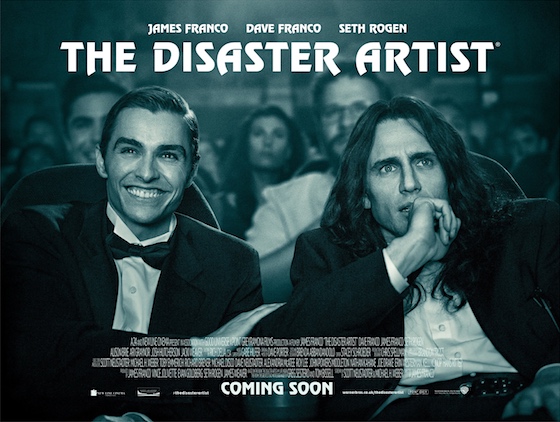
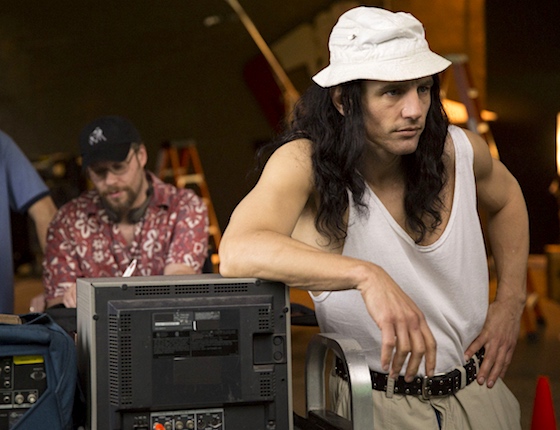
James Franco’s 18th feature as director* is the story of the making of The Room, the cult favourite “Citizen Kane of bad movies”. Franco also stars as the bizarre Tommy Wiseau, a figure of mysterious background who one day decides to make a movie, funded out of his own inexplicably wealthy pocket. Along for the ride is Greg (Dave Franco), a wannabe actor who befriends Tommy at acting class before inspiring Wiseau’s divergence into auteurism. So unfurls a crazy tale of ultra-independent moviemaking by someone who doesn’t seem to know how to be human properly, never mind produce a movie. By which I mean Wiseau, not Franco.

Franco and friends (the lead cast includes his brother, his brother’s wife, and his best mate) seem to be having a jolly old time recreating their favourite bad movie, and they’re certainly not above patting themselves on the back for how well they’ve done it (there’s a self-congratulatory “look what a good job we did recreating the film!” montage at the end that lowered my opinion of the film somewhat. By all means put that as a Blu-ray special feature, but putting it in the film itself feels boastful). Of course, for aficionados of The Room such dedication pays off: there are lots of fun references — not just the obvious stuff (the recreation of actual scenes), but scattered lines and nods throughout the movie.

For those of us uninitiated, The Disaster Artist provides mixed results. For example, the sequence about the shooting of the famous “Oh hi Mark” line, which played so well as the teaser trailer, is more long-winded in the final film (unsurprisingly), but consequently it doesn’t work as well — it’s lacking the conciseness of the trailer, which emphasised the ludicrousness of the process and therefore made it funny. But, hey, if you haven’t seen the trailer…

Artists at work

Where the film manages to surprise is that it kind of has something serious to say. Obviously it’s funny — the premise, the very fact of Wiseau’s existence, inherently calls for that — but around the laughs it wants to comment on the worthiness of dedication to artistic endeavour. Wiseau may be a weird guy who made a terrible movie, but he still made that movie — when Hollywood rejected him, he had the dedication to write and produce his own film, following his own vision. His weird, terrible vision. It’s little surprise that Franco — the guy who’s somehow made 20 feature films (including another two since this came out less than a year ago, with three more beyond that completed or in post) — should be on board with that as a worthwhile achievement.

The trailers mismanaged my expectations for The Disaster Artist. They promised more hilarity than the film delivers — it’s played a little straighter than you might assume, especially given the people involved. But while it’s not consistently funny enough to land as a pure comedy, it’s also not quite heartfelt and meaningful enough to sing as a drama. It’s good, but I felt like it could’ve been better.

3 out of 5

The Disaster Artist is available on Sky Cinema from today.

* That’s not a typo — James Franco has directed 17 other movies that you’ve probably never heard about. And now you’re probably wondering, “how can someone as famous as James Franco have directed 17 movies without me ever hearing about it?” I know, because I’ve been there. ^

The Room (2003)

2018 #81
Tommy Wiseau | 99 mins | download (HD) | 16:9 | USA / English | NR / R

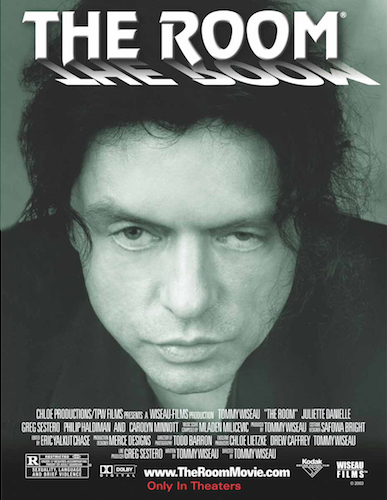
The Room

I did not enjoy it, it’s not true, it’s bullshit, I did not enjoy it, I did naht!

Oh hi reader.

You’ve heard of The Room, right? Well, if you hadn’t before last year’s awards season, you probably have now, thanks to James Franco’s fictionalised account of its making, The Disaster Artist. I can’t remember when I first heard of The Room, but it was certainly after it had already gained a reputation among some people for being (as someone once put it) “the Citizen Kane of bad movies”; the kind of movie where its fans attend midnight screenings in costume, shout out phrases, throw items in the air, and all that palaver.

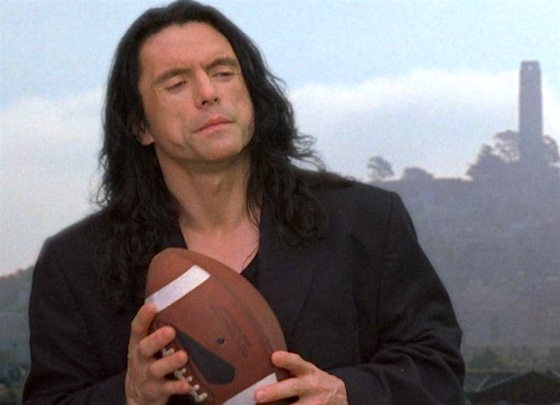
Ostensibly the story of the relationship woes of twentysomethings in San Francisco, there is nothing wrong with The Room… for the first two minutes. Then Tommy Wiseau enters a room and opens his mouth. There are no words to accurately describe Wiseau — he has to be witnessed to be believed. From there out, the film is so distractingly ridiculous that it’s easy to forget what any of it is supposed to be about. For the first half-hour it feels like they’re making a soft-core porno: the plot seems designed purely to facilitate sexual encounters (at one point a couple walk into a room and start getting it on before we’ve learnt anything else about them), most of which last several minutes to the sound of cheesy pop music (though they’ve cut out any explicit bits, so don’t go watching it just to get your jollies).

Room for a threesome?

From there, stuff just… happens. Characters come and go at random (three actors quit the project midway through shooting, so Wiseau sometimes just invented a new character rather than reshoot existing scenes); subplots about nothing pop up now and then; and people generally behave like no human being has ever behaved. Production values are all over the place, like the sets: many are amateur-theatre-level under-designed, yet some scenes take place on a rooftop where the view has been green-screened in fairly well. It’s also awfully misogynistic… but when it’s so awful generally, does that even matter? And yet some parts almost transcend the horror: the scene on the rooftop after they save Denny from being shot is like fucking poetry, with all its repetition and… stuff. I mean, it’s really bad poetry… but really funny poetry.

I guess some people would say you have to watch The Room at one of those cinema screenings packed with die-hard fans to get the most out of it, but they also say that about Rocky Horror and I’ve never found that to be true. Of course, Rocky Horror is actually a good film, whereas The Room is only entertaining because of how bad it is. The full 99-minute experience is a bit of a drag at times, waiting for the really funny bits to roll round, but the level of incompetence is so consistent that it remains fascinating throughout.

A real human being?

However, that does make it almost impossible to rate accurately. As what it sets out to be — a serious drama about the love lives of a group of friends — it’s irredeemably awful. But that’s not why we watch it. As a so-bad-it’s-good film to laugh at… yeah, it’s pretty funny. And as that’s why I watched it, that’s how I’ll mark it: for the level of enjoyment I got out of it, irrespective of what was intended.

4 out of 5

James Franco’s dramatisation of the making of The Room, The Disaster Artist, is on Sky Cinema from today. My review is here.

My Life as a Courgette (2016)

aka Ma vie de Courgette / My Life as a Zucchini

2018 #3
Claude Barras | 66 mins | streaming (HD) | 1.85:1 | France & Switzerland / English | PG / PG-13

My Life as a Courgette

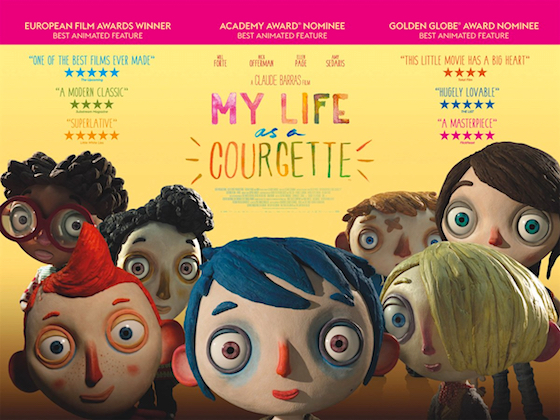
My Life as a Courgette (or, to use the American name for the vegetable, Zucchini) is the story of young lad Icare — who prefers to be called “Courgette”, his mother’s nickname for him — and his life after he is taken into an orphanage. If you’ve heard of it, it’s most likely because it was nominated for Best Animated Feature at the 2017 Oscars.

It’s adapted from the novel Autobiographie d’une Courgette by Gilles Paris, which was apparently a realistic portrayal of the lives of orphans in France. As you can see, the film takes a more cartoonish style, at least on the surface. In fact, the whimsical production design belies the very serious nature of the story — it’s not as monumentally grim as it could be, given the subject matter, but it doesn’t shy away from some very dark areas. It handles these with an understated, calm maturity that is both befitting and refreshing. The animation itself is equally sophisticated, with innumerable little touches that add finesse and richness to the work.

Orphaned

I watched the English dubbed version, because Amazon Prime gave me no choice (the original French version is available on Amazon Video, but for some reason not also included with Prime). Fortunately, despite having a US voice cast, they stuck with “Courgette”, meaning there’s no constant annoyance of the main character being called the wrong thing. (I do wonder, though: did they have to record it all twice, or did the American release rename the film My Life as a Zucchini but then call the kid Courgette anyway?) Fortunately, the dubbing wasn’t at all bad. Of particular note is Nick Offerman, giving a remarkable restrained performance as the gentle and kindly cop Raymond. As for Courgette and his fellow orphans, I don’t know if they cast actual kids or used adult soundalikes, but they also provided uniformly strong voice work.

My Life as a Courgette is one of those “weird foreign animations” that often manages an Oscar nod but doesn’t stand a snowball’s chance in Hell of winning thanks to the conservativeness of Oscar voters — there’s no way a mature, restrained animation with a quirky visual style is going to beat the latest shiny-CGI fun-time from Pixar or Disney. For those with broader tastes, however, it’s definitely worth a look.

4 out of 5