
Stanley Kubrick | 87 mins | TV (HD) | PG
 “The paths of glory lead but to the grave,” wrote Thomas Gray, and Stanley Kubrick — adapting from the novel by Humphrey Cobb — sets about proving him right.
Kubrick’s depiction of war is excellent, from long tracking shots through the trenches, to the nighttime wilderness of No Man’s Land, lit only by flares that reveal it’s strewn with bodies, to an epic and perfectly-staged battle that is a visual and aural assault. Indeed, Winston Churchill claimed that the film was a highly accurate depiction of trench warfare and the sometimes misguided workings of the military mind, and it’s so effective that it was banned in France for its negative depiction of the military. I’m sure the story could have been equally well applied to any military in the habit of killing its own men, but hey, it’s always fun to pick on the cheese-eating surrender monkeys.
Even beyond the battle scenes the film remains bleakly realistic: the depressing Old Boys’ Club-style hierarchy of the military (still all too much in effect, as series like Generation Kill reveal); the unjust unrecorded trial (an excellent courtroom sequence that can stand up to any other); through to the inescapable finale. George Macready’s villain is as chillingly evil as they come, because he’s so believable. Lying, manipulating, selfish and dishonourable, yet he produces all this from an opening scene where he appears to be a perfectly honourable General (though one has one’s suspicions). Even at the very end, when some small measure of genuine justice has been wrung from the whole sorry mess, one of the few remaining almost-likeable characters is fully unmasked as just as bad as the rest. Kubrick tries to instil some hope with his final scene, but by then he’s done too fine a job of wiping it out.
There’s a debate, it seems, about whether this can accurately be described as an anti-war film. It’s patently not pro-war, with its ineffective officers, self-serving high command, corrupt legal system and senseless slaughter for absolutely no military gain; but the argument that it is less a commentary on war and more on human nature — how people, not just soldiers, respond to the opportunity for glory, and how they attempt to cover their own tracks when it goes wrong — certainly holds some weight. The final scene, which is in almost every other respect entirely unrelated to the main narrative, supports such a theory, as does the source of the title. But just because that’s true doesn’t mean it’s not anti-war as well; or, at the very least, anti-military (if that’s not the same thing).
Perhaps reaction to the film depends on your ideological stance. I’m all too prepared to believe the military is corrupt and unjust because, well, that’s how they always seem. As such, Paths of Glory does an outstanding job of fulfilling and reinforcing these preconceptions, particularly in its refusal to end justly. If you have some measure of faith in the forces, however, you may think it’s an unjustified attack on your beloved institution. Each to their own.

Paths of Glory is on ITV4 tomorrow, Sunday 31st August 2014, at 11:20am.
(Originally posted on 24th February 2010.)
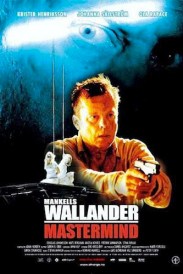 Sixth in the series of Wallander films starring Krister Henriksson as the titular Swedish detective, though only the second to be released theatrically.
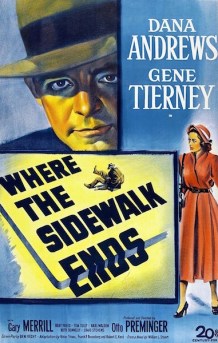 Otto Preminger’s film noir — scripted by Ben Hecht, adapted from William L. Stuart’s novel by Robert E. Kent, Frank P. Rosenberg and Victor Trivas, and quite what the difference between “adapting” and “writing” are I’m not sure — offers complex characters in a multi-layered plot. The ending particularly underlines this: the filmmakers could’ve killed anti-hero Dixon, could’ve had him choose to not open the letter, etc; but the decision he takes and the reactions of others are all relatively complex. Earlier, the sequences following Paine’s death are well constructed to produce the maximum amount of tension; their plotting clever, allowing for multiple (albeit similar) interpretations of events. Things happen which seem irrelevant, but are of course none-more-relevant later. Few films today are so brave as to not explain such things immediately.
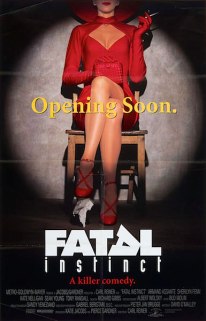 Having just recently laid into
 Despite being an early-60s British domestic drama, Seance on a Wet Afternoon has a plot that one might describe as high-concept: a medium kidnaps a little girl so she can prove her abilities by revealing where the girl is. But, unsurprisingly, the execution is more in line with its roots: more drama than overblown thriller, not so much about the kidnap plot as the psychological state of Kim Stanley’s medium, Myra Savage, and her downtrodden husband, played by Richard Attenborough.
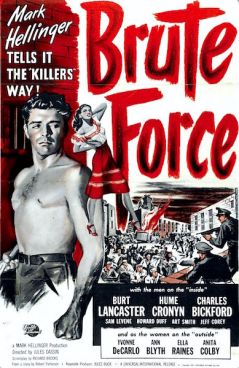 Jules Dassin’s prison-set noir concerns a group of inmates trying to escape from the cruel regime of a vicious warden, allowed free reign by an ineffectual governor and target-driven bureaucrats (nothing changes, eh?)
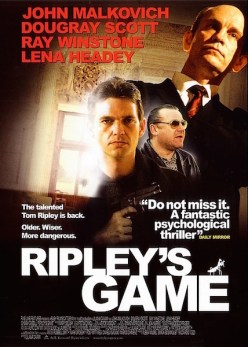 Matt Damon is back as… Oh, wait, no he isn’t — he’s turned into John Malkovich.
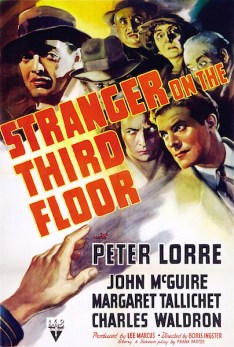 Despite being “released the same month as Raoul Walsh’s
 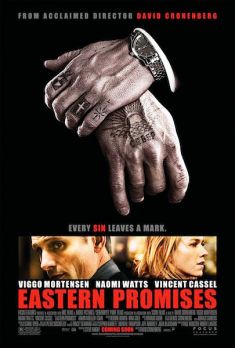 Arguably most famous for his horror films of the ’80s (though a couple of his ’90s efforts could stake a claim), director David Cronenberg widened his appeal somewhat with the excellent crime thriller
 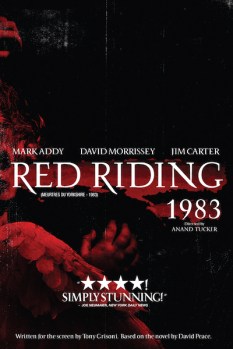 The
The  100Films.co.uk