2010 #39
Matthew Vaughn | 117 mins | cinema | 15 / R
This review contains spoilers.
 If you happen to remember my (first) Watchmen review, you may recall that I asserted the following:
Zack Snyder’s Watchmen Film is not “the big screen equivalent of Alan Moore’s Watchmen” — that would be a movie, likely very different to the graphic novel, that examined and deconstructed representations of superheroes in cinema and television.
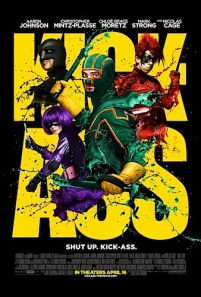
To cut to the chase, Kick-Ass is that film. Yes, it’s still adapted from a pre-existing comic book text, and it doesn’t “examine and deconstruct” quite as methodically — or, if you prefer, “as coldy” — as both Moore and Snyder did; but it still takes its cues as much, if not more, from fellow superhero films and TV series than directly from comics. Much as Watchmen offered variations of specific characters and situations in comics, so too does Kick-Ass from their film counterparts: Kick-Ass himself has the whole “awkward teenage experience” thing of Spider-Man, but fully updated to the era of internet social networking (even if it’s a behind-the-times use of MySpace over Facebook or Twitter); while Big Daddy is a clear Batman analogy, with elements of The Punisher thrown in for good measure.
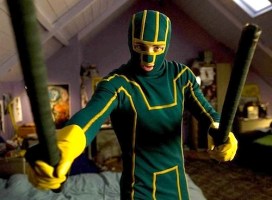 Elements and moments in this vein permeate the film: Nic Cage employing an Adam West Batman voice for Big Daddy; the black eyeliner required to complete his mask; the Spider-Man plot structure (particularly early on) and numerous references (the opening voiceover, or when Kick-Ass considers jumping rooftops); the “chicks dig the car”-esque scenes with Red Mist — the list goes on, other sequences spoofing whole genre clichés (the “first night on the job”, for example) as well as such specific films.
The score is similarly perfect, mixing serious action queues with appropriately-placed fun songs (mainly during Hit Girl’s action sprees) and more knowing nods to other films — listen out for almost-note-perfect riffs on the famous Superman theme and Danny Elfman’s Batman work.
And, again like Watchmen, Kick-Ass takes all these familiar elements and clichés and attempts to place them in ‘the real world’ (though its real world is far closer to, um, the real real world than Watchmen’s alternate history). What this means, practically, is that Kick-Ass gets his ass kicked. Badly. And that his enemies aren’t cackling megalomaniacs who leave handy riddles around or plot to pollute the water supply, but everyday muggers and, at worst, crime kingpins.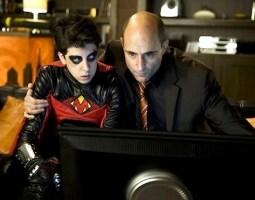 This, I suppose, could be seen as where it takes on Batman Begins; signs seem to suggest Kick-Ass 2 may follow The Dark Knight’s theory of supervillains following the superhero into existence.
But, to go back on myself, the most striking point here is the ass-kicking. Violence is bloody, brutal and realistic. Well, the actions themselves are all action movie choreography, but the results are realistic — bloody and brutally so. Kick-Ass gets broken his first time out… which, fortunately, and fully in-keeping with the superhero-origins story, leaves him with a half-metal skeleton and the ability to feel no pain. “Cool,” as he probably says.
This example characterises the film’s attempts to have its cake and eat it. While it does the whole “being a superhero would be a nightmare” thing early on, we then meet Big Daddy and Hit-Girl, who are unfeasible pros, and Kick-Ass himself improves too. It gets to criticise the unlikelihood of the premise and the extremity of the violence, before later revelling in it itself. On the other hand, it’s so much fun that maybe this doesn’t matter — director Matthew Vaughn certainly knows his way round an action sequence, 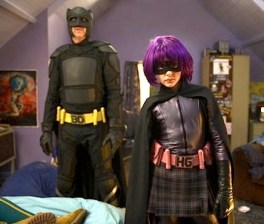 and the humour keeps rolling too — so the (arguably) topsy-turvy themes of the tale ultimately serve as a “downbeat good-for-nothing makes good” story arc.
Not that the mass of negative reviews seem to notice this anyway — they’re too busy being outraged at the swearing uttered by and violence enacted on a young girl. I speak, of course, of the likes of Christopher Tookey (don’t worry if you haven’t heard of him — he writes in the Daily Mail) and Roger Ebert, both of whom lambasted the film for its moral vacuity. They’re not the only ones, just some of the most high-profile (on the other side of the fence, plenty of reviews didn’t miss the point, but they’re less interesting at the moment). Is it low to suggest Ebert & co are too old to ‘get’ Kick-Ass? Probably; especially as some of the other critics who hated it are suitably young. But I don’t think it’s wrong to suggest that not all their arguments hold weight; that some of their reactions were too simplistic.
Reviews like the Daily Mail’s would have us believe the film is all about the glorification of extreme violence and sexualisation of 11-year-old girls. Some have read this as Tookey being a paedophile — how else would he spot something others didn’t, unless he were aroused by it himself? Tookey, naturally, denies such things (he’s posted a long whiney “I’m being internet bullied!” article online,  trying to lump himself in with those unfortunate souls who’ve suffered the emotional consequences of genuine internet bullying). I fall between the two camps on this one — that is to say, Tookey’s probably not a paedophile, but nor does the film set out to entice them. Vaughn said he cast Hit-Girl young to avoid sexualising her; if he’d cast a more physically developed 15-year-old, she would’ve been more suspect.
If anything, the film works to confront its audience with notions like this. Is Hit-Girl sexy? She’s 11, you perv! Is getting into fights fun? Not when you get the crap kicked out of you! Is being captured by the enemy, ready to be unmasked on the internet, just a chance for a cool escape? Not when you get burnt alive. Slowly. Is this highly-trained uber-assassin the Coolest Killer Ever? Not when a grown man is beating up a little girl. Vaughn & co (by which I mean original author Mark Miller and co-screenwriter Jane Goldman) start from a place of “this doesn’t work” (having their cake), then they do make it cool (eating it), but then they tear it back down again (I can’t think of a pleasant analogy now).
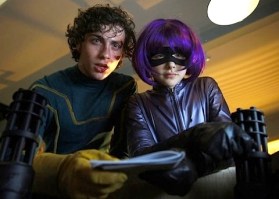 But, unlike their characters, they don’t tear it down with a baseball bat around the audiences’ head; by which I mean, they don’t spell it out in big idiot-friendly letters — “do you see why this is wrong? Do you see? Let me tell you again…” Instead, they let what occurs speak for itself. OK, the good guys do win in the end, and in a rather cool way — but would it be a more complete moral message if the grown man killed the little girl; if the hero got blown up by the bazooka? Perhaps it would; I don’t know; personally, I like it the way it is.
Am I saying experienced, respected critics like Ebert and Tookey (well, he’s experienced) are too thick to see subtext that I’ve noticed? For once, I suppose I am (though I certainly don’t claim to be alone in noticing it). Am I treating the filmmakers with more intelligence than they deserve? I don’t think so; I think Ebert, Tookey & co have assumed they’re dumber than they are, and in the process made themselves look a bit dimmer. I think they’ve been blinded by the comic-booky roots (their defence, “but I’ve liked some comic book films!”, is beside the point), the extreme situations the film presents — and there’s no doubt that the violence and swearing from such young characters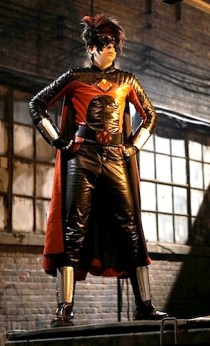 are deliberately extreme and provocative (but for a reason) — and the potential for audiences to misread the whole thing as “just cool”, and so have misread it themselves, as “just perverse”. I think that does the film a disservice.
My initial reaction — besides “wow this is a fun watch!” — was that Kick-Ass walks a tightrope between its initial “what if someone really tried to be a superhero?” premise and the visceral pleasures of taking it to the level of “what if someone succeeded at being a superhero?” But the more I consider it, the more I think this is part of the point — it never, really, goes fully ‘right’. As I’ve said, the good guys win and the bad guys lose, but there are casualties and hard-fought battles along the way. Yes, it thoroughly abandons its “this is the real world” premise by the final act, but the film as a whole leads you there step by step. Is this a flaw, or sneaky filmmaking pulling (or attempting to pull) the wool over our eyes? Does it matter?
It’s an ideological minefield, that’s for sure, and perhaps some would rather it more blatantly faced up to this than it does. Others would clearly rather it didn’t ever raise such issues. Has it dodged them, or has it left them for the audience to consider? I think it’s clear I believe the latter; that most of the negative reviews are too busy being angry to notice they were made to think (or were meant to); sadly, some viewers will be too busy thinking “woah, cool” to have thought at all, which just vindicates those naysayers in their own mind. This latter group are clearly the ones the critics are worried about, but why should every film cater to the lowest common denominator of intellectual ability,  or be wary that every viewer might be a paedophile or violent psycho?
And even leaving all that aside, even treating it as “just a comic book movie”, Kick-Ass has something significant to offer. By using various other superhero movies and TV series as its starting point, but grounding them in (a version of) the real world — with attendant debates about violence etc — Kick-Ass fills a void in need of filling. By which I mean: as Watchmen was to superhero comics, so Kick-Ass is to superhero films.
Kick-Ass is released on DVD & Blu-ray in the US today, and in the UK on 6th September.
It came 1st on my list of The Ten Best Films I Saw For the First Time in 2010, which can be read in full here.

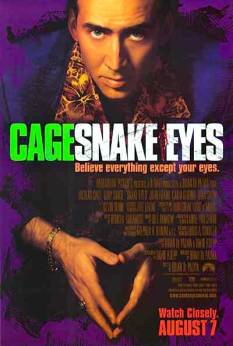 Kick-Ass, Knowing, National Treasure 2, Matchstick Men, now Snake Eyes — I feel like I’m seeing a lot of Nicolas Cage of late. (To be precise, it’s five films in as many months.) It’s not a conspiracy, I assure you, just an almighty coincidence.
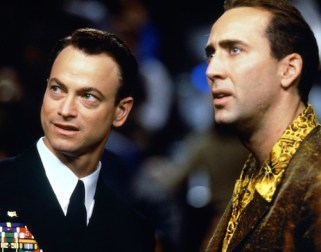 later seasons didn’t and, in my opinion, suffered. Johnny Depp-starer Nick of Time also used it, though I can’t remember much about that except it was total rubbish. Snake Eyes doesn’t stick to its real-time as rigidly as 24, but it was good enough to satiate me. By the time it begins to deviate significantly from the concept, the story’s got so involving that it no longer matters.
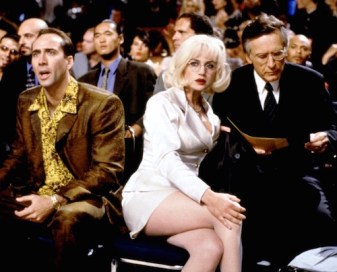 If there’s one significant flaw, it’s that the ending is too much based on convenience and coincidence; and someone in the editing room should’ve paid more attention to removing all references to the original, deleted ending in which the casino got flooded. I have no idea why that was removed — maybe someone thought it was a bit ludicrous. But it sounds more satisfying than what was included, which, as noted, relies on a handy spot of coincidence and at least one action that seems out of character. I can forgive it though, because I liked everything else. And the post-climax montage is a suitably downbeat ending to our hero’s story — another noir trait there.
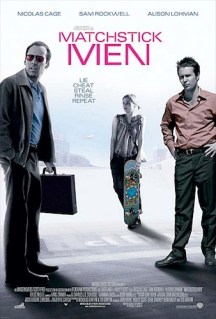 Matchstick Men ends with a twist. One of those great big changes-everything-you’ve-just-seen numbers that have a habit of making a film notorious. Yet I’m almost loath to mention it, because I’ve never read a review, preview, summary or what-have-you of the film that mentions there’s a twist. Maybe I’ve just been reading the wrong pieces; maybe no one cares; maybe they’re all just playing along trying to keep it secret. But not me, because I bloody hated it.
 Twists are fine. Twists can be great. As I said, you can guess a twist is coming and it can still work. A really good twist works even when you know for certain it’s coming; its existence raises what you’ve seen, makes it all work even on repeated viewings when the element of surprise is obviously gone. Matchstick Men doesn’t have that kind of twist. It has the kind of twist that undermines everything you’ve just seen. Not because it’s illogical — it isn’t in the slightest — but because it tramples over the film’s emotional resonance, in my opinion.
 Alison Lohman is also exceptionally good as a 14-year-old girl. It took a scene or two to convince me, but after that I was plenty on board with it. It occasionally takes some effort to remind yourself she was 24. As the third lead, Sam Rockwell plays a typical Sam Rockwell part. He does it very well, naturally, and there’s nothing to fault him on, but he’s been better elsewhere. The rest of the cast are absolutely fine but not exactly called on much — this is Cage’s film, and to a lesser extent Lohman’s. They have the emotional journey, the film’s heart-and-soul around its long(-ish) con ‘plot’ (which could just be lifted from any episode of Hustle… except it’s not even that complex).
 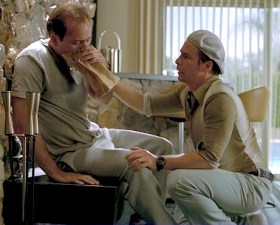 Matchstick Men was a lot better than I’d expected, because most of the coverage I remember shoved it aside as a middle-of-the-road side project for Scott. It’s definitely better than that, if still not the “sweep the Oscars” success
 “Oh my God, what have they done to Sherlock Holmes?!” Etc etc. By this point you’re likely to have heard the arguments that Guy Ritchie’s blockbuster re-imagining of the Great Detective is actually based on all sorts of references and allusions in Sir Arthur Conan Doyle’s original works, so I won’t go over them again here. Indeed, I’m not even convinced they’re relevant in the first place.
 The way to this climax offers a good mix of detecting, action and humour. It’s not pure Holmes then, but it’s not pure blockbuster either. Downey Jr brings some of his Tony Stark magic, but his take on Holmes is still distinct, not just because of his faultless English accent. His madness, obsession and genius are all well portrayed, and Ritchie’s direction matches it beautifully.
 Mark Strong’s villain is suitably chilling, aided by the film’s irreverence: if they can make Holmes into a quip-dealing action man, maybe there really is something supernatural at work? To reveal the truth would spoil that proper climax. The closest to a weak link is Rachel McAdams’ Irene Adler. I like McAdams well enough generally, and here too, but she may still be a little out of her depth — they’ve gone for a Pretty Young Thing when someone a little older may’ve suited better.
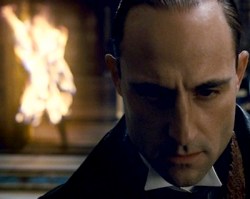 Ritchie brings something special to the director’s chair too, believe it or not — you may think he’s sold out into blockbusterdom to revive his flagging and repetitive career, but the touches he brings suggest the mind of someone who has control of his material, his camera and his edit, and wants to use them all to try something a bit different, not just another hack-for-hire who could churn out any old template-hewn action/adventure flick.
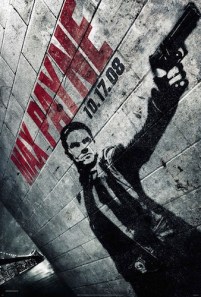 I was a bit of a gamer once. Not an especially hardcore one, but certainly a gamer. And I remember Max Payne, and I remember enjoying it, and I remember thinking it would make quite a good film, and I remember one of the biggest problems being that what made it so unique as a game was the bullet-time feature and what would make it so derivative as a film would be to use bullet-time. But it also had lots of other things going for it: the snow-bound nighttime New York setting, the dark revenge plot, the hard-boiled gravel-toned voiceover.
 Unfortunately, he seems to be under the illusion that a couple of barely-moving slow-mo moments also stand in for a full action sequence. When an action movie can’t deliver any action, there’s a problem.
 The ‘harder’ bit merely comes from a couple of frames (literally) of violence and the odd bit of CG blood. Presumably the extra walking around is to artificially lengthen the running time and persuade the more gullible that they’re getting a tougher experience.
 At least some of it looks quite nice. The drifting snow-laden exterior shots are among the few bits of the film that might genuinely be considered good. But when you can get pretty images elsewhere, why suffer through this?
 It’s generally taken as a rule that an original film is better than the remake, particularly so if that original is in a language other than English and the remake is American. But there’ll always be something to buck the trend, and in my view that’s Insomnia.
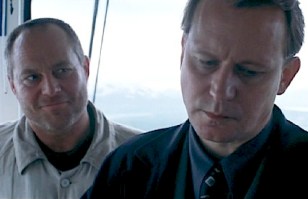 surprised how little his lack of sleep had to do with anything. Here, there are several scenes of Skarsgard struggling to sleep, he’s visibly rougher as the film progresses, and it seems to impact his judgement and sense of what’s going on more than in Nolan’s film. If the other character elements are apparently less developed, this is something the original does better.
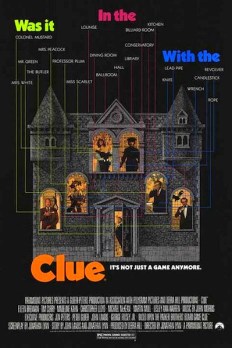 Although Disney have recently treated (I use the word loosely) us to a glut of films based on theme park attractions, movies adapted from good old board games seem a lot rarer. This is probably for good reason — even more so than Disney rides, the majority have no kind of useable narrative. Cluedo (aka Clue in the US) is one of the few that does, and consequently is one of the few (only?) board games that has reached the silver screen. So far, anyway.
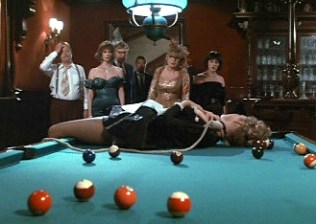 Other than the board game connection, Clue is best known for its three different endings, all of which were released, with each screening having just one attached. On TV the film shows with all three consecutively, and they perhaps work best this way — there’s a rising scale of ridiculousness, and the varied repetition of a couple of gags underlines rather than steals their amusement value. My personal favourite variant was the first, incidentally.
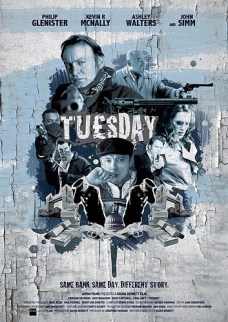 Tu£sday is a low-budget crime thriller, in which several groups of people all try to rob the same bank on the same day — hence the clever title. Unfortunately, the concept is much more interesting than the film writer/director Sacha Bennett has forced it into.
 As the film barely scrapes up to a theatrical running time, there’s a suspicion that the final re-run genuinely was left untouched to keep the length up.
 Unfortunately, it doesn’t go as all-out for the decade as
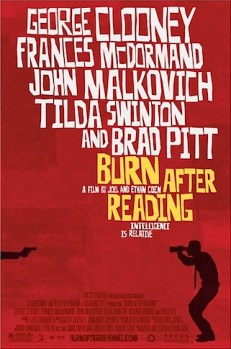 Ah, the Coen Brothers! Those indie-mainstream praise-magnets that I’ve never particularly got on with. But then, perhaps I was just too young and under-read (or, rather, under-viewed) to get
 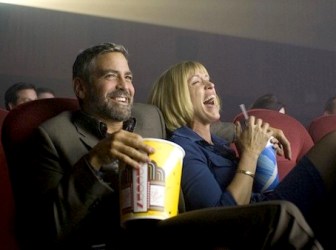 For the characters in the film, it’s a confusing mess of a situation they find themselves embroiled in — no one has the full picture, and most don’t properly comprehend the bit they do see. For the viewer, it’s a fun bit of nothing. Things have changed by the end, certainly — most notably, several people are dead — but the events that got us there are pretty quickly forgotten.
 Public Enemies came out nearly a year ago now, and I remember two things about its release: firstly, that the first review I saw was Empire’s, which
  What it brings here is an unusual quality. It’s clearly fiction, of course, albeit fiction based on fact, and there are still plenty of extravagant angles and editing so that you’re never in danger of thinking Mann is trying to pass this off as a documentary. But couple the raw cinematography with a meticulous attention to period detail, with a sound mix that is consciously rough and real, and you get a sense that this is how it was — it’s not a glossified movie version, it’s a How It Was one. Public Enemies is to the old gangster film as
 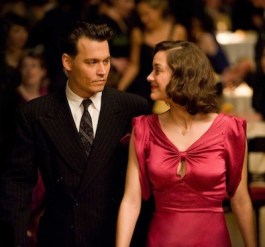 The characters do and don’t lack depth. The relationship between Dillinger and Billie is a significant part of the film, receiving roughly equal attention to Dillinger’s criminal deeds — it’s his final words to her that close the film, not his death. Christian Bales’ G-man, Melvin Purvis, on the other hand, is less developed, but to say he lacks any character is to do Bale’s performance a disservice. Behind Purvis’ blunt dialogue and stolid manner, and in slight gaps and lapses around it, one gets a sense of the true man and his real thoughts. The postscript — that he resigned from the FBI a year later and ultimately took his own life — reinforces and confirms the subtleties Bale injects into the performance.
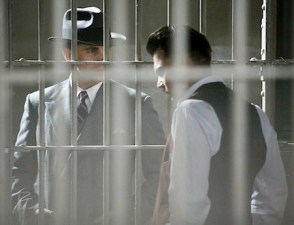 Mann does his best, cutting around Dillinger in the movie theatre, the bizarrely-apt film he’s watching (this isn’t dramatic licence — Dillinger really saw
  is largely well converted to a dramatic piece, if occasionally a little episodic (as is the way with all biopics) and overlong towards the end.
 100Films.co.uk