
Niels Arden Oplev | 153 mins | Blu-ray | 18 / R
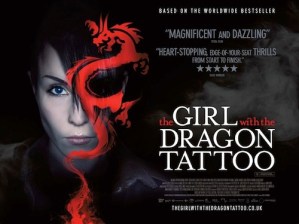 From the same production company that brought us the popular Swedish Wallander series comes an adaptation of the other apparent cornerstone of modern Scandinavian crime, The Girl with the Dragon Tattoo, the first entry in Stieg Larsson’s best-selling Millennium Trilogy.
Investigative journalist Mikael Blomkvist is hired by the head of the sprawling, filthy rich Vanger family to look into the disappearance of his favourite niece from an isolated and, at the time, inaccessible island. A (possible) murder in an isolated country mansion full of rich suspects? So far so Christie… except this crime happened over 40 years ago. Almost ironically, it’s this last fact that helps make the tale ever so modern: Blomkvist uses the Internet to death, enlarging and animating old photos, researching family members and connected cases, and accidentally roping in hacker Lisbeth Salander, the titular girl.
 The original title translates as Men Who Hate Women, which is certainly very apt. The subject matter is grim and dark; horribly plausible, in fact. It’s unwaveringly depicted with some brutal, hard-to-watch scenes. They’re not exploitative though, as a lesser film merrily would be, and that makes them appropriate to the tale being told. Subplots about the two leads support the themes underpinning the main investigation — both about abuses of power, in different ways — justifying their apparent tangentiality, and consequently the film’s length.
I believe the title was changed by the US publisher, who felt such a name wouldn’t sell the book as a thriller to English-speaking readers. They were probably right, but it has an important side effect: it shifts the emphasis away from the story and its themes and onto Salander, arguably more so than is fair. I’m not entirely sure I see what all the fuss is about when it comes to Salander. She’s a good character and very well played by Noomi Rapace, who always looks so sweet and innocent in her normal persona, but I guess I’ve missed what makes the character so exceptional. Perhaps she’s just the victim of hype, too many other reviews telling me how incontrovertibly brilliant she is.
 Despite the modern stylings, dark themes and attention-grabbing characters, much of the film unfolds as a procedural whodunnit like, for instance, the Wallanders, complete with piles of red herrings and last-minute twists. This is probably why the book has sold so well and the film has taken over $100 million worldwide: it tickles the same nerves as all those ever-popular TV police dramas. Indeed, this adaptation is rooted in a television miniseries (an extended version exists as two 90-minute TV episodes) but it doesn’t look like it: it’s quite beautifully shot; not showy or stylised, but there are some lovely shots of scenery in particular.
Naturally that popularity means an English-language version is on the way — “American version” is the standard designation, but despite Oscar-robbed American David Fincher directing and Oscar-winning American Steven Zaillian adapting, it’s being produced by BBC Films with an international cast: Brit Daniel Craig as Blomkvist, American Rooney Mara as an even more extreme-looking Salander, Canadian Christopher Plummer as the Vanger patriarch, and even a genuine Swede, Stellan Skarsgård, in a key role; not to mention the rest. I’ve long felt (though, it seems, forgot to mention it during my David Fincher Week) that Fincher’s films have thus far alternated between “good” and “great”, in that order, and that the merely “good” ones are (arguably) on a steady upward curve.  With Dragon Tattoo featuring material that seems ideally suited to the director who gave us Se7en, Zodiac and The Social Network, his remake may prove to be the point where the “good” curve reaches the “great” line. Or he might balls it up — apparently they’re changing the ending, and unless they’ve come up with something very good that could be a bad misstep. Only time will tell.
For Dragon Tattoo’s legions of fans, this version will be tough to beat — though I’d wager if anyone can top it, Fincher can. For now, though, there’s this, a well-made dark thriller, which serves primarily as a mystery but also supplies themes and characters that may offer further contemplation.

This time next week, The Girl Who Played With Fire. Hopefully.
The Girl with the Dragon Tattoo merited an honourable mention on my list of The Best Films I Saw For the First Time in 2011, which can be read in full here.
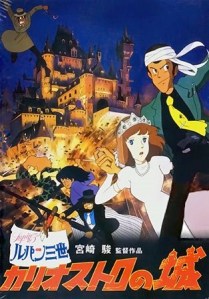 The Castle of Cagliostro, the second animated big-screen spin-off from manga-inspired anime TV series
 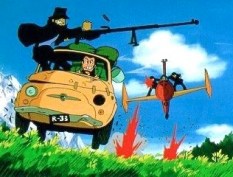 As I mentioned, this is the second spin-off film from a TV series, and at times it does feel like it: characters turn up under the impression the audience already knows who they are and what their connection is to the others. It’s not a major problem — most are introduced well enough within the context of the film that it can still be easily followed — but it’s there.
 Um, where was I? Oh yes: Indiana Jones; Roger Moore-era James Bond — it’s that kind of tone, more or less, and if you enjoy that kind of film then I don’t see why you wouldn’t enjoy this. Unless you think cartoons are for kiddies only (in which case, see the long sentence at the end of the last paragraph).
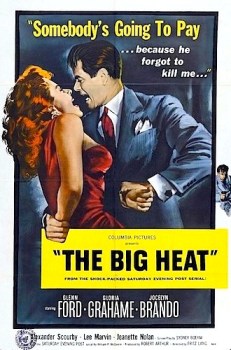 Fritz Lang is probably best remembered for the films he made in Germany; medium-defining classics like
 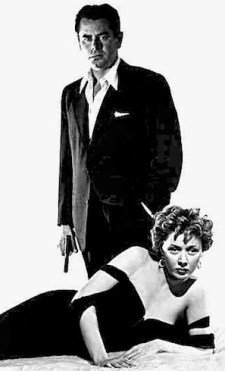 but it does manage what might be described as twists in how far it’s willing to go — mainly, who gets killed and how.
 How time flies — I’ve been meaning to re-watch Zodiac ever since I
 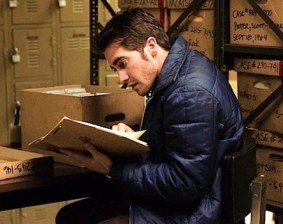 As the changes have little impact on the film’s fundamental quality, the points in
 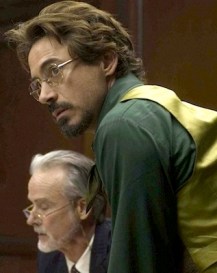 but the sheer weight of evidence the other way seems to leave little room for doubt. More so, then, is that the murders are done with before the halfway mark. That’s because it’s still following the story of the investigation, true, but a lesser filmmaker could have weighted it differently, rushing through Graysmith’s later enquiries in a speedy third act. Instead, Fincher’s focus throughout is on the people looking into the crime, and it’s as much the tale of their obsession — and what it takes to break their obsession, be it weariness or pushing through ’til the final answer — as it is the tale of a serial killer.
 and place-and-time subtitles too, but hey, sometimes you need specificity.
 I usually say that Se7en is my favourite film.
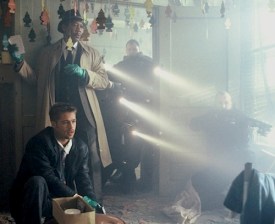 Black seems to be its default position — everything else is cut out of the darkness with as little light as possible. Often backgrounds and locations are better lit than foregrounds or actors, making the viewer focus on silhouettes with minimal light offering splashes of detail. Even the scenes that occur at daytime (most, anyway) do so in the middle of ferocious, ceaseless rain that ensures it never gets too bright.
 all but one of
 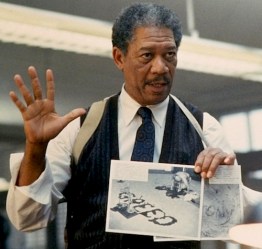 Mills delivers his riposte with greater hyperbole — of course, because that’s the character — perhaps bedded in a form of naivety and idealism, ending with a repetitious “I do not agree. I do not.” Then we see Freeman’s face, completely static, but you can read in it everything you need to — his anger at Mills for making him realise that it’s all a lie he’s been telling himself, and anger at himself for believing the lie. That’s one scene; Freeman is incredible throughout.
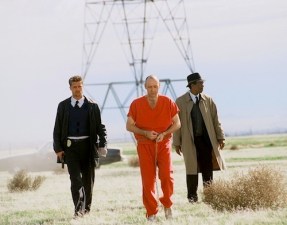 This is where liking the characters pays too, because we are on Somerset’s side and we’re on Mills’ side and we agree with both and disagree with both and don’t necessarily know who’s right or what to do or what we would do. I can spend the whole film anticipating this scene, knowing exactly what will happen in it, how great a piece of filmmaking it will be, yet it still makes my hair stand on end.
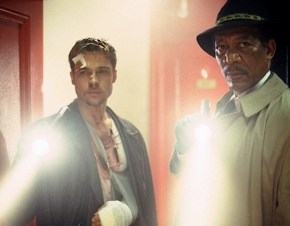 The quality of a crime thriller is often so tied to its mystery that the film can only sustain so many viewings — sometimes, only one — before you know it too well. I have seen Se7en at least seven times now, which for me is a lot — a helluva lot, even — and yet I still get something from it every time. That’s a rarity, that’s a reason to love it, and that is why it may well be my favourite film.
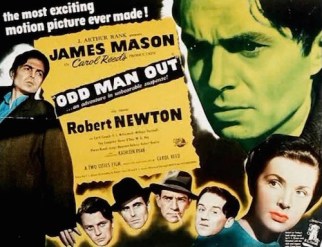 It may be a bit of a cop out to begin a review by pointing you to another, but I must recommend
  Robert Newton’s Lukey. (You’ll also note Newton’s performance is criticised in Colin’s piece so, in aid of not sounding like I’m too easily influenced, I’d like to point out I didn’t make the connection between his comments and my own notes on Newton until afterwards.) Shell and Lukey have a bit of a point in the end, but I didn’t enjoy getting through them in comparison to the rest of the film.
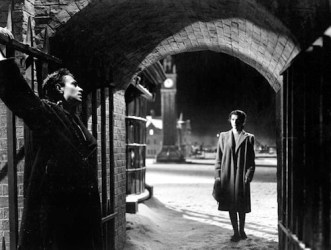
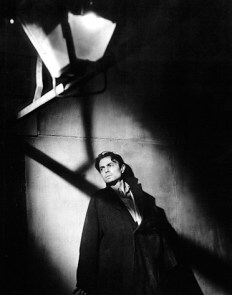 The score, by William Alwyn, is really nice, particularly in certain places — for example when it begins to snow and Johnny wanders the streets, or at its most effective during the haunting climax, as Kathleen hauls a near-dead Johnny through the falling snow towards the safety of the shipyard as the police finally close in.
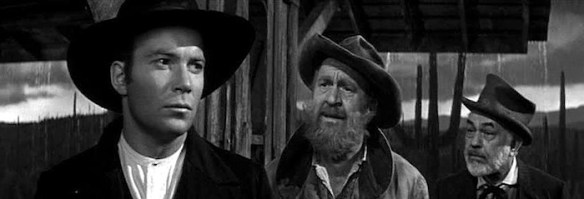
 If you’ve ever seen Akira Kurosawa’s classic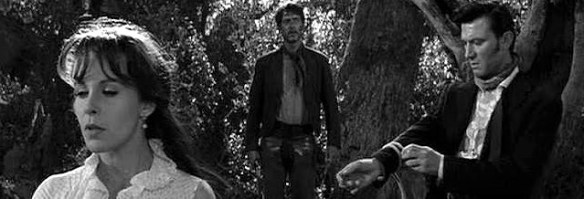
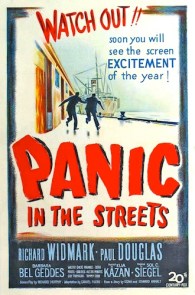 Film noir is a pretty unspecific genre, or unconscious movement, only really defined (however loosely) once it was already over. So to say a film noir isn’t particularly film noir-y might seem a tad daft, but, Panic in the Streets isn’t a particularly film noir-y film noir.
 has a beautifully bad-guy-friendly skull-like face, with his jutting cheek bones and flat-ended nose. (I imagine I’m far from the first to make this observation, but hush.)
 Force of Evil comes well recommended, with places on several 1,000 Best Movies lists and inclusion both on
  Duncan’s analysis (Force of Evil is one of seven noirs treated to an extended segment in his book) suggests a more complex reading of the film than I took from it, explaining much as symbolic or metaphorical. Considering I didn’t engage with the film, I’m tempted to see Duncan’s reading as a way of rationalising things that either aren’t there or were flawed, but the film’s wider critical acceptance suggests he may well be right.
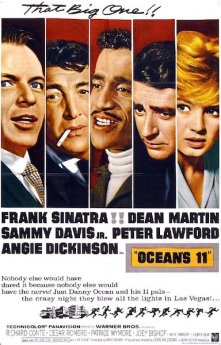 “Remakes are not as good as the original” is one of the rules of filmmaking. Of course there are plenty of exceptions, and everyone has their own opinion, and most modern remakes are expressly about making a quick buck from a US audience who can’t watch a film and read at the same time rather than making a better quality film — but, more or less, the rule persists. It may have won him an Oscar, but the consensus seems to be that
  It does have its moments: a couple of songs are shoehorned in (even if there’s only two or three and each gets two or three airings) and the cast do succeed in making some of their indulgences entertaining. Nonetheless, this would definitely be for Rat Pack fans only had it not been for the remake… and, really, there’s no reason the remake should change that.
 100Films.co.uk