
Jim Mallon | 74 mins | DVD | PG / PG-13
I’m not that well versed in the cult fandom of Mystery Science Theater 3000 but, as I understand it, Turkey Day (i.e. Thanksgiving) is the MSTie (as fans call themselves) High Holy Day (I’m presuming not literally, but who knows?) Something to do with Thanksgiving marathons on whichever network MST3K was on at the time, I think.
Anyway, with that in mind, what better day to finally post my review of MST3K’s big screen endeavour than on that beloved American holiday.
 The world, so they say (and by “they” I mean “absolutely no one” — I’m making this up), is divided into three sorts of people: those who love MST3K, those who’ve never heard of MST3K, and those who have a vague notion of what it is but have, for whatever reason, never seen any of it. (Of course, there will be that fourth group who don’t like it, but my saying’s already stretched at three. This is why I said “they say”, y’see, to absolve me of responsibility for the glaring oversight. But anyway…) I fall into the latter category. Having bought sci-fi mags for the past decade or so (thereby overlapping with the time MST3K was actually in production) I naturally have an idea what it is, but had never actually seen any of it… (you know what’s coming…) (wait for it…) …until now.
For those who’ve never heard of MST3K, it’s a bit like a DVD commentary… except instead of people involved with the film recounting anecdotes or academics offering analysis, we have people taking the piss out of it. I say “people” — one person and two robots. Who are obviously voiced by people. Look, that’s not the point. The movies they watch are all cheaply-made rubbish ones, well deserving of having the mickey taken (not to mention the all important fact that such efforts are generally copyright-free). The bloke and two robots appear on screen at the bottom as silhouettes, because… well, there’s no real need for it, other than to remind you they’re there and remove the issue of disembodied voices. The series started before DVD, remember, so the notion of an “audio commentary” wasn’t yet widely known. Besides which, I quite like seeing them there. OK, they don’t do much besides wiggle their heads or arms occasionally, but it feels more congenial than the disembodied chatter of an audio commentary.
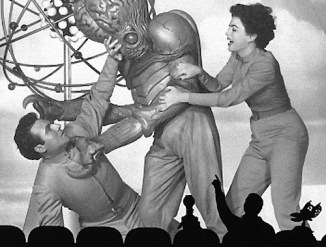 Anyway, the gang set their sights on one film per episode — or, in this feature film, one film per film. They’re being forced to watch these movies, for various unimportant reasons, and every once in a while we get comedic ‘host segments’, where they get up to hijinks on their space station (I forgot to mention, they live on a space station). These bits are well-meaning and quite funny — and in this big screen outing have been shot with a suitably filmic gloss that the video-shot TV episodes lack, which adds a surprising magnitude to the still-small-and-cheap sets and props — but the real meat of the humour is in the riffing over the film.
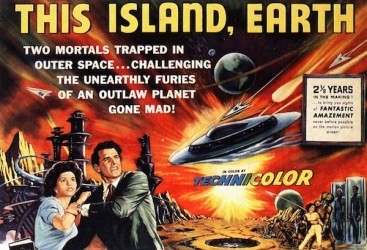
In this film, the film is This Island Earth, Joseph M. Newman’s 1955 sci-fi… film (“2½ years in the making!”). “Classic” wouldn’t be the word, though MST3K: The Movie provoked some controversy among some film critics because they considered This Island Earth to be an SF classic, one that didn’t merit the derogation that MST3K usually lavishes on B- (or lower letters) movies. On the evidence of what we see here (not, it should be noted, the full film, which runs a quarter-hour longer than MST3K: The Movie; including those host segments, quite a lot must be lost), This Island Earth is perhaps of higher quality than some of the films tackled by MST3K, but is clearly a cheap effort and no classic.
Talking of things being shortened (I was, in the brackets), MST3K: The Movie is, unusually, a good fifteen minutes shorter than a regular episode of the series. There are reasons — partly to do with helping mainstream appeal, more necessary on the big screen than a minor cable network, and not wanting to outstay their welcome. Similarly, the jokes feature fewer obscure references than on TV and they’re more spaced out, to make sure people catch them (when laughing as part of a large audience, you see). This latter fact means that when the film is watched by yourself the gags can be more spread out than might be desirable, which is a shame. This improves as it goes on though — clearly most of what got lopped out of This Island Earth was cut from later on, and as the film they’re watching becomes harder to follow so we’re compensated with more laughs.
The quality of the humour varies, as is the case with so many comedies. For me, there were enough laugh-out-loud moments and significant chuckles to make it a good experience; equally, there were also a couple of fart-related gags, something I’ve never found funny personally. There are some current affairs-related references that not so much date the film as lose their currency as time wears on (this is 14 years old now after all), as well as culturally specific jokes that don’t carry across the pond. Such occurrences are an inevitably of this kind of humour, I think, and they’re not too prevalent to destroy the experience. That experience is very much like watching a movie with some mates when you’re in the mindset to take the piss out of the film. That is, if you get on with the characters (as it were) and sync with their sense of humour; if you dislike them or their humour, or like whatever they’re watching too much, then it’s probably more like some irritating yobs nattering away over something you’d quite like to watch thank you very much. (Equally, if you embark on this intending to watch This Island Earth, more fool you.)
MST3K: The Movie was disliked by the production team — too much studio interference during production left it an unpleasant experience. Tales of this pepper the web, if you want to go looking, but they include the studio forcing a story arc on the film, before conducting test screenings (to completely the wrong audience) which concluded they should cut out the resolution to said enforced story arc. Or the stupid release pattern, which failed so badly it’s never been repeated. MSTies have a more mixed response, as far as I can tell, but a significant number like it, particularly those for who it was their first experience of MST3K.
And that’s me, as you may remember. I can see that not everyone will like MST3K — the concept won’t appeal, or the style of humour won’t tickle some funnybones. But if the concept does appeal, the only way to tell is to try. Personally, I can’t wait to get stuck into more of the series. I believe there’s almost 200 episodes…

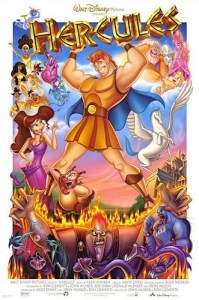 Hercules is the first post-me Disney; the point where, for whatever reason, I stopped watching their output. But, of course, Disneys — good Disneys, at any rate — are suited to every age group.
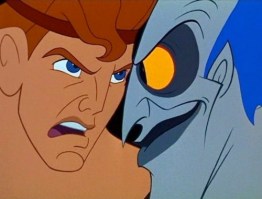 animal-sidekicks-with-no-dialogue-who-can-still-convey-their-thoughts-and-feelings-perfectly (I feel this tradition needs a snappier name.) Love interest Meg, meanwhile, starts out intensely irritating but is gradually redeemed. Good work, I say to the film’s
 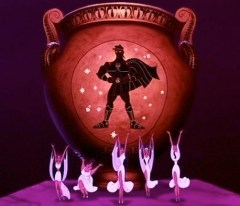 (though even mentioning it in the same sentence as that number makes it sound better than it is). Only love interest Meg gets a passable song, not that I could remember it within hours of watching the film. Maybe it’s not all that bad really, but when early-’90s Disneys could produce several unforgettable tunes per film, it feels like a weak album from a band you usually enjoy.
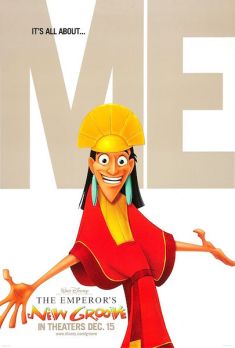 Disney’s 40th (canonical) animated film had a very troubled production, which, from what I can tell, turned it from a derivative riff on The Prince and the Pauper into this load of tosh.
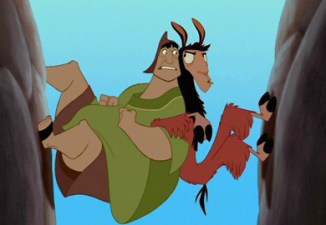 In reality it doesn’t suffer from that too much, and again looked nice and crisp in HD. I usually ignore image quality when it comes to reviews — not that I don’t care, but in these reviews I’m aiming to look at the content of the film rather than the particular copy I watched — but HD has such noticeable benefits for animation (when done well).
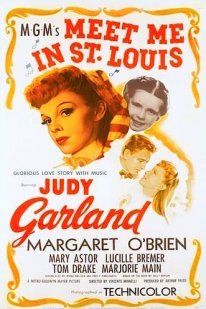 Someone (who exactly is long lost to the depths of my memory) once observed that, though a lot of people claim to not like musicals, they’re quite happy to acknowledge their love for
 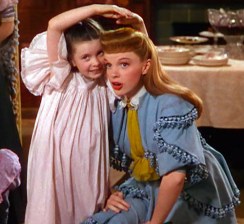 Judy Garland is fine in the lead role — still playing a teen, despite being 21, but suitably distant from Dorothy. Margaret O’Brien receives prominent second billing in the role of ‘Tootie’, despite being just seven years old. She was, I learn, something of a star at the time, in spite of her young age, which perhaps explains the (arguably) undue prominence in both the credits and the film itself. That said, she’s a rather good actress, and picked up an Oscar for her performance here (and other roles she played in 1944).
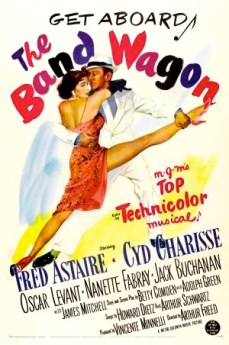 In this behind-the-scenes musical, Fred Astaire plays Tony Hunter, a slightly washed-up star of stage and screen. One can’t help but wonder if his performance has an autobiographical edge. It’s of no concern to the viewer though, because he’s as wonderful as ever.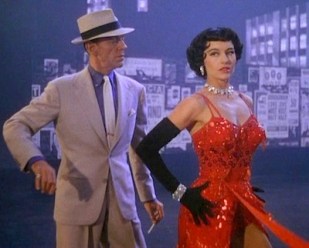
 Gigi is a film about largely horrid people doing morally dubious things. But of course it’s a musical from the ’50s, so it all has a veneer of loveliness and respectability.
 eventually Gaston realises he loves Gigi and her training is stepped up so she can become his latest conquest. I won’t go into the details of the ending, but their part of the story ends well.
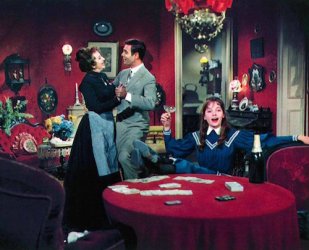 I’m Glad I’m Not Young Anymore is also a nice change of pace, celebrating old age for a change.
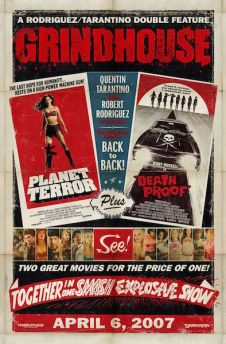 Infamously, on its release in America the much-hyped Rodriguez/Tarantino double bill was an almighty flop, so much so that it wasn’t properly released in its full form outside the US. Which is a bit ironic, if you think about it, because the US is the market least likely to respond to something a little bit experimental.
 Chances are, if you don’t find this opening salvo entertaining in some way the rest of the film is going to prove a struggle.
 It probably works better in context than described on the page, but Rodriguez has marshalled every disparate element to create a cohesive whole that’s exciting and funny. At this point, Grindhouse is firmly headed for a full five-star conceptual success.
 though Roth can’t resist adding his own especially twisted brand of humour (I shan’t describe the final shot here).
 But it’s not just the increasing lack of dilapidated print quality that prevents Death Proof from selling its concept. The screenplay is clearly a QT work, much more so than most of
  and if he chooses to create some more action-centric pictures in the future it would be no bad thing.
 In fact, it might’ve played better if the films were the other way round, as it means Death Proof must be set before Planet Terror. I’d approve of this switch not only for chronological reasons, but because seeing one-scene bit-parters turn up in the-same-but-larger roles in the second film seems like it would be more satisfying as a viewer, rather than re-encountering these (in any case, minor) characters the way we do.
 But Tarantino’s entry lets the side down by seeming to fail in its execution of the film’s conceit. I’m not convinced it would be any better viewed as a standalone Quentin Tarantino Film, but in context it certainly disappoints.
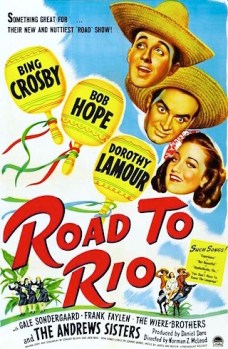 Bing Crosby, Bob Hope and Dorothy Lamour return for the fifth film in the Road to… series.
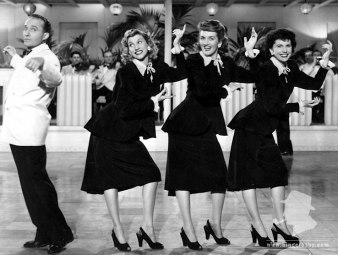 I’ve awarded to each belies how much I enjoyed them, with Morocco in particular worth a fourth. But I think it’s also fair to say these films are a rather dated style of entertainment. That’s not necessarily a bad thing — as noted, I still think they’re fun, and I’m sure many others do and would too — but plenty of modern viewers would find them (to be polite) too quaint.
 Night at the Museum is fine. And by “fine” I mean less “of high quality… worthy of or eliciting admiration” and more “good; satisfactory”.
 Perhaps it makes it a little disjointed — “here is our character-centric opening; here is the bit we actually wanted to make; here is an exciting climax” — but the tale still rattles by.
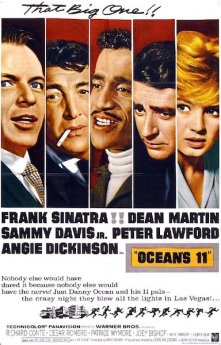 “Remakes are not as good as the original” is one of the rules of filmmaking. Of course there are plenty of exceptions, and everyone has their own opinion, and most modern remakes are expressly about making a quick buck from a US audience who can’t watch a film and read at the same time rather than making a better quality film — but, more or less, the rule persists. It may have won him an Oscar, but the consensus seems to be that
  It does have its moments: a couple of songs are shoehorned in (even if there’s only two or three and each gets two or three airings) and the cast do succeed in making some of their indulgences entertaining. Nonetheless, this would definitely be for Rat Pack fans only had it not been for the remake… and, really, there’s no reason the remake should change that.
