aka Le Crabe aux Pinces d’Or
2015 #1
Claude Misonne | 58 mins | download | 1.37:1 | Belgium / French
 By 1947, Hergé’s boy reporter/adventurer Tintin had already been around and increasingly popular for nearly two decades; had survived World War 2 and the controversy of being published in a Nazi-controlled newspaper; and the release of his adventures had recently been transferred to a dedicated magazine, Le Journal de Tintin. What better time to bring the character to the big screen?
Adapted from the ninth Tintin adventure, which is the one that introduces popular supporting character/co-lead Captain Haddock, the plot sees Tintin following clues left by a dead seaman to uncover an opium smuggling operation being run on Haddock’s boat without his knowledge. Animated via stop motion using doll-like puppets, the film was only ever screened twice before being seized when its producer declared bankruptcy and fled to Argentina. A print is stored at the Cinémathèque Royale in Belgium, where it seems it used to only be available to paying Tintin club members, but in 2008 it was released on DVD in France. English-friendly versions are available online, not least via YouTube. The picture quality is poor, but, having gone to the trouble of acquiring a higher-res copy, I can say it doesn’t get much better. It is in the wrong aspect ratio, though — approximately 1.69:1. It doesn’t look too distorted, but if you see a 4:3 version it suddenly looks right. (I presume the DVD was incorrect because I had to adjust the copy I downloaded.)
As for the film itself, it’s incredibly faithful to Hergé’s original tale — it may not be adapted frame-for-frame, but it’s incredibly close. A couple of action sequences have gone astray, presumably because that’s harder to achieve with puppets, but it also streamlines the story slightly. I can’t speak for the French dialogue, but the fan-made English subtitles are word-for-word with the book. Of course, that may be where they’re sourced from.
 In my review of the Spielberg film, I remarked I hadn’t read the albums it was adapted from so couldn’t vouch for its fidelity. Watching this, it’s clear that a sizeable chunk of the storyline was actually adapted from The Crab with the Golden Claws, to the point where I was starting to wonder if Moffat & co had taken the entire plot from Crab but subbed in the MacGuffins from Secret of the Unicorn. In the end, about half of this made its way into the 2011 film, including everything aboard the Karaboudjan, the lifeboat and plane sequences, and some of the desert material, too.
In this version, there’s quite a good bit where Tintin and Haddock escape from the Karaboudjan but we don’t see any of it, instead following the traitorous Mr Mate as he discovers all the crewmembers our heroes have tricked and tied up. As with everything else, this is book-faithful, but works even better on screen. Plus, Captain Haddock has a musical number, about his love for “the bottle and the sea”; and later he has another with Tintin, too. The main lyric is, “tra la la la lai doo”.
Technically, it’s not the most sophisticated stop motion you’ll see, but it’s not bad considering its age. The models are of their era too, but pretty good on the whole. The two exceptions are, firstly, the black characters — a weakness of Hergé’s book, they were replaced with white characters in later years, but this is faithful to the original version. The dolls aren’t any better than Hergé’s drawings. Secondly, the facial design of Tintin’s doll 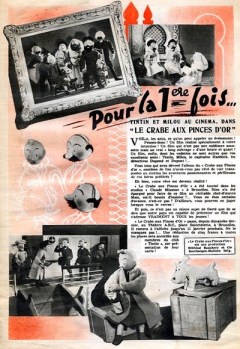 makes it look as if he’s permanently shocked by everything.
The Crab with the Golden Claws must be the most adapted Tintin adventure now (it was also animated in both the ’50s and ’90s series), which isn’t necessarily warranted: it was a tale compromised by the circumstances surrounding its publication, and apparently is largely a rehash of an earlier story. It’s not without merit, though — all of the good stuff was filched for the Spielberg film, funnily enough. This version isn’t bad, but is really no more than a funny little curio. One for the hardcore fan, be that of Tintin or the history of stop motion animation, or the insatiably curious.
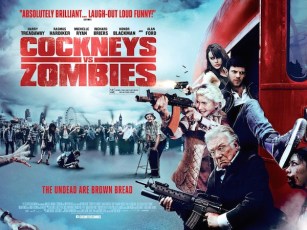 Screenwriter James Moran doesn’t like it when people compare Cockneys vs Zombies to Shaun of the Dead, which is unfortunate because the “British zombie comedy” subgenre doesn’t offer many alternatives. Despite following in eight-year-old footsteps, however, Cockneys vs Zombies does enough right to commend itself as much more than a belated wannabe.
 And why is their imagination so stunted that they can’t accept them anyway?
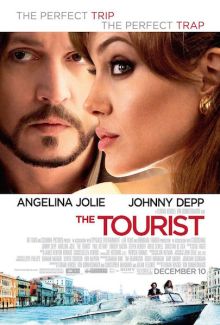 Much maligned on its release, I thought The Tourist was actually a decently entertaining light thriller.
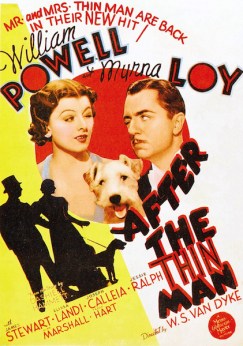 Immediately after their New York Christmastime adventure in
  There’s also an increased role for the couple’s dog, Asta, granted his own subplot as he has to fend off a philandering Scottie with intentions toward Mrs Asta. I make no apologies for preferring this over the previous film in part because there’s more amusing doggy action.
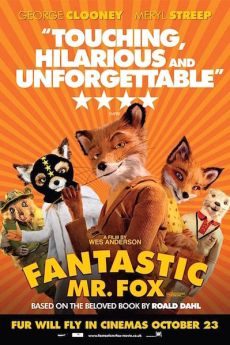 Quirky cult-y director Wes Anderson tries his hand at stop motion animation with this Roald Dahl adaptation, in which an all-star cast voice the tribulations of a gaggle of talking animals — led by the eponymous vulpine — who come into conflict with three vicious farmers.
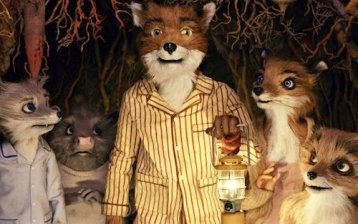 Compositionally, I thought I’d get sick of the squared-off 2D style, but Anderson’s cleverer than that. It might look flat and lacking in dimension at first, but that’s the starting point for variation, including some great bits of depth (farmer Bean trashing a caravan is a particular highlight of this), and when it breaks form (like a rabid dog chase) it’s all the more effective. There’s also a fantastic score by Alexandre Desplat. Not your usual plinky-plonky Quirky Kids’ Movie music (though there are instances of that), but something more raucous. Nice spaghetti Western riffs, too.
 Fantastic Mr. Fox is the kind of film I feel I may enjoy more on a re-watch. Indeed, some comments on film social networking sites (e.g.
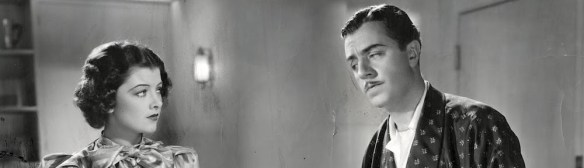
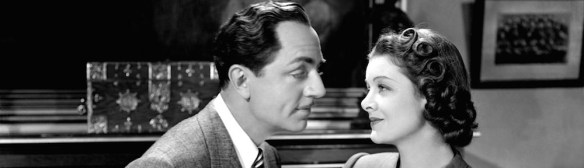



 Produced as a B-movie, but eventually nominated for four of the biggest Oscars (Picture, Actor, Director, Screenplay
 like a Christmas party which is regularly interrupted by victims and suspects. Even the final scene, a rambling and none-more-Christie-like “gather all the suspects and reveal the answers” dinner party, seems natural because of the characterisation throughout the rest of the film. Loy’s part may not be quite as showy — as demonstrated by its failure to gain an Oscar nomination — but she’s an invaluable half of the double act.
 Released the same year as
  Even with the undercurrents of grief and the difficulties of moving on, this is fundamentally a light, amiable romance.
 A behind-the-scenes making-of with a difference, American Movie: The Making of Northwestern (to give its full title) is a documentary about wannabe-filmmaker Mark Borchardt attempting to produce a horror feature film with little more than some mates and good intentions, battling against a lack of money, interest, and dedication. It descends, quickly, into the kind of farcicality that leads some to assume it’s a
  Whatever you take away from it, American Movie feels like a must-see for certain sections of film fandom, particularly anyone who wants to make a movie themselves. Its appeal is broader than that though, an everyday story of adversity that isn’t so much overcome as temporarily averted. It’s not bleak or sad, but it is melancholic. And, whatever the morals of it, often laugh-out-loud funny.
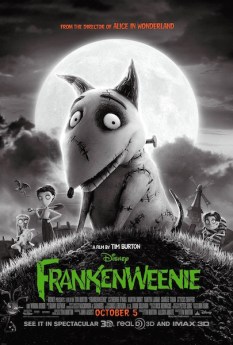 Inspired by two of Burton’s early-’80s shorts (which are most commonly found on
  Some say it doesn’t have enough of an edge. Well, maybe; but I thought it was surprisingly dark in places. Not so considering it’s a Tim Burton film based on resurrecting the dead, but for a Disney-branded animation, yes. Those edgier bits are here and there rather than consistent, but still, I’m not sure what those critics were expecting from a PG-rated Disney animation. I guess there’s an argument that Burton should have pushed it further and aimed for an adult audience, but can you imagine an American studio agreeing to finance an animation primarily targeted at anyone who’s entered their teens? Because I can’t.
 100Films.co.uk