2016 #25
Ridley Scott | 142 mins | Blu-ray | 2.40:1 | USA & UK / English | 12 / PG-13
 2016 Academy Awards
7 nominations
Nominated: Best Picture, Best Actor (Matt Damon), Best Adapted Screenplay, Best Sound Mixing, Best Sound Editing, Best Visual Effects, Best Production Design.
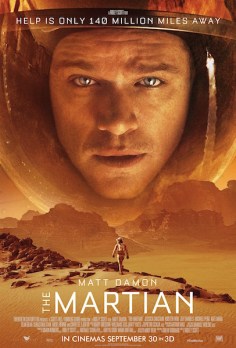 Ridley Scott’s latest arrives on Blu-ray in the UK today, with a disappointing dearth of special features (disliked Exodus gets a 2½-hour making-of, four hours of additional features, plus a commentary; award-winning The Martian gets 24 minutes plus a few in-universe documentaries — what?!) Never mind that, though: how good is the film deemed the best comedy or musical of 2015? (If you somehow missed that news, you’ll appreciate the addition of a “seriously” here.)
In the relatively near future, mankind is on its third manned mission to Mars. When a colossal storm rolls in, the decision to made to evacuate the Mars base. During the escape, biologist Mark Watney (Matt Damon) is struck by debris and apparently killed, and his crew mates are forced to leave him for dead. He isn’t dead, though, but he is injured and alone on a planet 140 million miles from home, with no way to communicate with Earth, and not enough energy, oxygen, or food to see him through the four years until the next Mars mission is scheduled to arrive. Refusing to give in to inevitable death, Watney only has one choice: science the shit out of this.
That sounds like a laugh-a-minute premise, right? And there’s a major subplot about disco music, so it’s practically a musical too!
No, the HFPA are just idiots — The Martian is neither a comedy nor a musical. It is the latest in a growing subgenre of serious-minded near-future sci-fi adventures, though, following in the footsteps of 2013 Oscar winner Gravity and 2014 Oscar washout Interstellar. Where The Martian differs is in the element that tricked Golden Globes voters into thinking they could get away with giving it a comedy nomination (and win): rather than being stuffed to bursting with po-faced peril, it has a lightness of touch and regular doses of humour, making it probably the most feel-good serious sci-fi movie since ever.
 Whether that’s appropriate or not is another matter. A well-argued review by the ghost of 82 assesses that the film has none of the darkness or loneliness you should expect of a man stranded alone on an alien world with a slim chance of survival or rescue. I don’t disagree that the film doesn’t contain much of that feeling, nor would I argue that such a tone isn’t a viable way to frame this narrative, but I don’t think that’s what Scott was aiming to convey. This telling of the story (I haven’t read the original novel, so can’t say how it compares tonally) is an adventure; a feel-good tale of hope and survival against the odds. The film doesn’t offer us despair because Watney doesn’t despair — he just gets on with trying to fix it. On the couple of occasions when his fixes go wrong, his chirpiness breaks down, his frustration comes out, and in some respects it’s all the more effective for being limited to those handful of occasions — we’re suddenly reminded that, in spite of his optimism and his success and all the fun we’re having watching it, he’s stranded 140 million miles away and even the slightest mistake can spell total disaster.
Matt Damon is a talented enough actor to lead us through all of this. Best remembered in recent years for serious fare like the Bourne films (“serious” in the sense of “not comedic” as opposed to “realistic”), Damon has done his fair share of comedies before now, and skits for TV shows and the like too. This is perhaps his first film to bring those two sides together as equally necessary parts of the whole — serious when he’s struggling with science problems or facing the reality of his situation, funny when he’s taking it all as light-heartedly as he can. Sometimes, such as in emotional conversations with friends or colleagues stuck millions of miles away, he even has to do both at once.
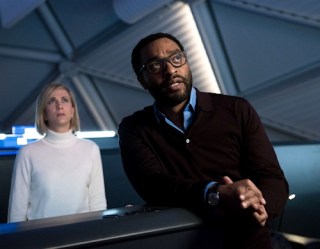 While Damon is stuck on Mars by himself, a starry supporting cast actually get to interact with each other. This is a quality ensemble and, short of writing an epic essay of a review where I just praise them all one by one, there’s little to do but list their names. That said, Jessica Chastain gets the most brazenly emotional beats as the commander who chose to leave Watney behind and has to face the consequences of her decision; Jeff Daniels treads a line between being an evil bureaucrat and just a regular bureaucrat (apparently consideration was given to turning him into a full-blown villain; thank goodness they swerved that bullet); Chiwetel Ejiofor brings easy gravitas to NASA’s director of Mars missions; Michael Peña provides some additional comic relief, if not as strikingly as he did in Ant-Man then at least as effectively; and Sean Bean doesn’t die. No offence to Sean Bean, but let’s be honest, at this point in his career that is the most notable facet of his appearance here. That and the Lord of the Rings reference.
It would be too damning to describe Ridley Scott’s direction as unremarkable, but at the same time it feels lacking in distinctiveness. Apparently there was some interview where he commented on how easy he found directing The Martian, I think with intended reference to the use of digital photography, but I think you get a sense of that from the film as a whole. That stops it from being over-directed, at least, and it’s certainly not poorly made, but if you didn’t know then you wouldn’t be nodding along going, “oh yes, this is definitely a Ridley Scott movie.” I’m not sure that’s a bad thing. Considering his fiddling is what scuppered the promising screenplays that initiated both Robin Hood and Prometheus, and his other works this decade (The Counsellor and Exodus: Gods and Kings) haven’t exactly met with great acclaim, maybe his dropping in almost as a director-for-hire (screenwriter Drew Goddard was attached to direct, but got sidetracked into the now-cancelled Sinister Six Amazing Spider-Man spin-off), and helming the film in a kind of directorial autopilot, is part of what saved it from a similar fate.
 I’ve read at least one review that described The Martian as “an instant sci-fi classic”, and at least one other that described it as “no sci-fi classic”. I’m going to sit on the fence of that debate for the time being. What I will say is that it is undoubtedly an accomplished piece of entertainment. For a film that primarily concerns itself with a man applying scientific principles to tasks like “growing potatoes”, that’s surely some kind of achievement. In our current climate (both in society in general and in the “more explosions less talking, please” state of blockbuster cinema), to make space travel — and science in general — seem fun and appealing to the masses is no bad thing whatsoever.
As mentioned, The Martian is released on DVD and Blu-ray in the UK today.
It placed 17th on my list of The 20 Best Films I Saw For the First Time in 2016, which can be read in full here.

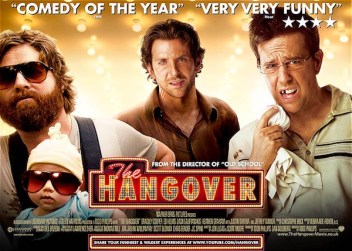 I confess, I only watched The Hangover to see what the fuss was about, and to get the tick on iCM’s Most Checked.
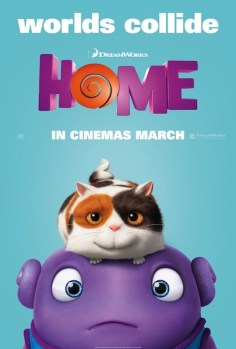 Oh (Jim Parsons) is a Boov, a race of friendly aliens looking for a new home planet to escape their enemies. When they arrive on Earth, Oh tries to invite everyone to a party, but accidentally alerts their enemies to their new home. Outcast, he bumps into Tip (Rihanna), a girl accidentally left behind when the rest of mankind was relocated by the Boov. Desperate for friendship, Oh agrees to help her find her mother.
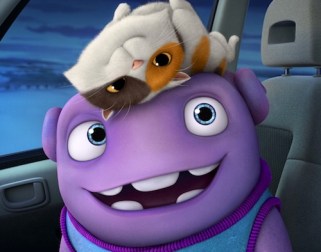 but the entire universe, including our enemies”? Why is there no option to cancel such a transmission that is going to take 40 hours to reach said enemies? I mean, that last one’s a stupid question, because why is there even a way to message the enemies?
 Con man Gordon Liu poses as San Te (Liu’s character from
 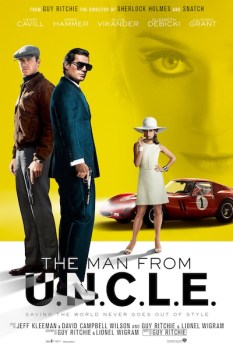 Guy Ritchie is a self-confessed non-fan of the classic ’60s spy-fi series
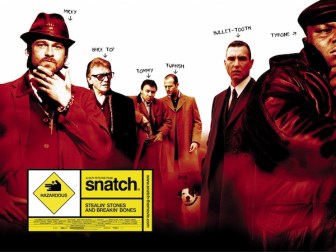 Guy Ritchie’s second feature met with relative indifference 16 years ago, consensus deeming it
 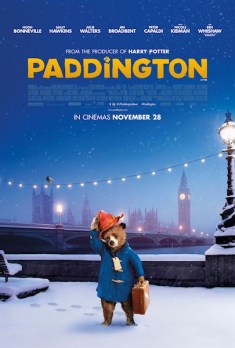 The signs weren’t good for Paddington as it geared up for release: its star voice actor, Colin Firth, pulled out late in production; on posters, the CGI lead character looked like the personification of the uncanny valley; and the BBFC rating that cited “sex references” made it sound like it had entirely the wrong tone for an adaptation of a beloved classic children’s book. But these portents were quickly consigned to history when the film received an adulatory response from critics and audiences alike.
 The rest of the cast are all very safe pairs of hands, meaning viewers can rest easy that, if there is a weak link, it won’t come from the performances. This is further cemented by supporting turns from the likes of (in order of appearance) Geoffrey Palmer, Imelda Staunton, Michael Gambon, Matt Lucas, Peter Capaldi, and Jim Broadbent, plus a host of faces viewers may recognise from British TV comedy.
 My first experience of Lubitsch’s US output concerns a man who arrives on Hell’s doorstep and reflects on his life to explain why he’s there.
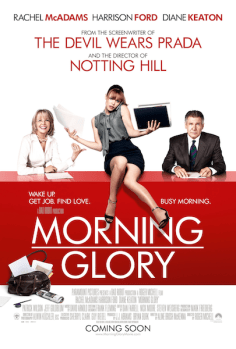 Rachel McAdams takes a break from
 Mumble and his penguin pals return for another adventure, in a series the Australian film industry are reportedly inordinately proud of.
 100Films.co.uk