Kung Fu Panda 3 (2016)

2016 #176
Jennifer Yuh Nelson & Alessandro Carloni | 95 mins | Blu-ray | 2.35:1 | USA & China / English | PG / PG

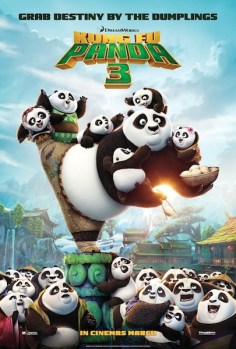
Kung Fu Panda 3Po and co are back in a movie that bucks the sequel trend by being perhaps the best Kung Fu Panda yet.

The two-pronged plot sees Po (Jack Black) finally meet his birth father (Bryan Cranston), while evil warrior Kai (J.K. Simmons) breaks out of the afterlife to hunt down the Dragon Warrior, putting Po’s new-found community in harm’s way.

After the occasionally muddled second film (which I felt improved a little with repeated viewings, at least), KFP3 sets the legendary adventures of awesomeness back on track with an appealing mix of humour, action, and moral lessons for kiddies and adult viewers alike. It keeps things focused and pacey, running just 83 minutes before credits, as well as maintaining the series’ typically stunning animation, which is just as polished whether creating epic scenery or up-close physical combat.

It’s also particularly satisfying when watched alongside its forerunners: it feels like Po’s story has come full circle, with the film linking in and wrapping up plot points from the first movie (as well as resolving things from the second). Reportedly DreamWorks have three more Kung Fu Panda films planned, but at this point it feels like a completed trilogy.

A downside for UK viewers, though: our localised soundtrack replaces the voices of two palace geese with members of the Vamps, who are a popular music combo, apparently. Wow. Aside from the underwhelmingness of the ‘famous’ guest voices, they’re appalling actors. They only have about three lines between them and they’re still terrible. To rub salt in the wound, some ‘clever’ disc coding means that if you have a Region B Blu-ray player this soundtrack is completely unavoidable, even if you import. Poor region-locked people. Family resemblanceI hope for humanity’s sake the version on Sky Cinema retains the original voices.

There are very few threequels that can lay claim to being a series’ best entry. Whether KFP3 actually tops the original or not is debatable, but it at least feels like a course correction after the somewhat disappointing first sequel.

4 out of 5

Kung Fu Panda 3 is available on Sky Cinema from today, screening on Premiere at 1:40pm and 7:15pm.

Come Together (2016)

2016 #185a
Wes Anderson | 4 mins | streaming (HD) | 16:9 | USA / English

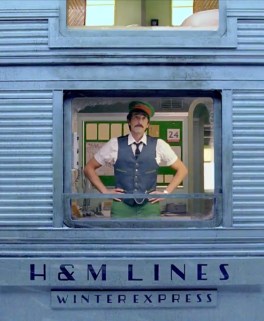
Come TogetherChristmas adverts are all the rage these days, thanks to the likes of John Lewis and their beautifully affecting tributes to the holiday season / twee pieces of emotionally manipulative crap (delete as appropriate). This year clothes retailer H&M got in on the act by hiring everyone’s favourite go-to example of an idiosyncratically quirky director, Wes Anderson, to helm a short film-cum-advertisement — the first part of that equation being why I’m reviewing it here.

For me, Anderson pitches the tone just right. Rather than making a four-minute festival of sappiness that rots your brain with its generic sugary sentiment, or a music video for a slow breathy cover of a once-famous song, or a long build-up to a cheap punchline, Anderson instead brings his own familiar style to a brief narrative that comes to a surprisingly heartwarming conclusion. In the process, he’s made an advert that doesn’t feel like an advert — another reason to factor it in here.

I suppose for that same reason it almost fails — I’m no more or less likely to shop at H&M than I was before (in truth, I had to even double check they were a clothes retailer) — but as brand awareness goes, well, it doesn’t make me want to kick their teeth in until they go away and never bother me with one of their stupid adverts every again. Suck on that, John Lewis.

4 out of 5

Come Together can be watched on YouTube here.

Who Framed Roger Rabbit (1988)

100 Films’ 100 Favourites #97
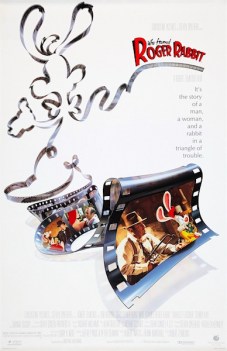
It’s the story of a man, a woman,
and a rabbit in a triangle of trouble.

Country: USA
Language: English
Runtime: 104 minutes
BBFC: PG
MPAA: PG

Original Release: 22nd June 1988 (USA)
UK Release: 2nd December 1988
First Seen: VHS, c.1991

Stars
Bob Hoskins (The Long Good Friday, Super Mario Bros.)
Christopher Lloyd (Back to the Future, Addams Family Values)
Charles Fleischer (A Nightmare on Elm Street, Gridlock’d)
Kathleen Turner (Romancing the Stone, The Virgin Suicides)

Director
Robert Zemeckis (Back to the Future, Beowulf)

Screenwriters
Jeffrey Price (Doc Hollywood, Dr. Seuss’ How the Grinch Stole Christmas)
Peter S. Seaman (Wild Wild West, Shrek the Third)

Based on
Who Censored Roger Rabbit?, a novel by Gary K. Wolf.

Animation Director
Richard Williams (Raggedy Ann & Andy: A Musical Adventure, The Thief and the Cobbler)

The Story
When cartoon movie superstar Roger Rabbit is accused of murder, rundown private detective Eddie Valiant overcomes his dislike of toons to take the case — which masks a much bigger conspiracy…

Our Heroes
Eddie Valiant is an alcoholic Hollywood PI who used to work high-profile cases involving toons, but now dislikes them because one killed his brother. Nonetheless, an innate sense of justice (and a pair of handcuffs) brings him to the aid of Roger Rabbit, the manic major cartoon star who’s accused of murder and on the run for his life.

Our Villain
The cheerily named Judge Doom, the sinister and literally-black-hatted judge responsible for Toontown who has developed a special substance especially for killing toons, called “Dip”. Very keen to introduce Roger to it.

Best Supporting Character
Jessica Rabbit, Roger’s human (well, cartoon human) wife. A slinky, sexy, 2D femme fatale, she’s the cartoon character even people who aren’t attracted to cartoon characters are attracted to.

Memorable Quote
“I’m not bad, I’m just drawn that way.” — Jessica Rabbit

Memorable Scene
When Judge Doom and his henchmen discover Roger in hiding, he and Eddie escape in a cab — an anthropomorphic toon cab called Benny. Cue a chase involving a real human in a cartoon vehicle, which exemplifies the film’s technical chutzpah.

Technical Wizardry
The whole film is a technical marvel, what with many of the lead characters being created in 2D animation integrated into live-action footage. What’s even more impressive is that they’re 2D characters who exist convincingly within a 3D space. Production went to a lot of effort to pull this off, including using life-size models on set. (And if you need proof of how hard it is to do right, watch Cool World.) In total, 326 animators worked full-time on the film, drawing and painting 82,080 frames of animation. Animation director Richard Williams estimates that, after including storyboards and concept art, well over a million drawings were completed for the film.

Making of
With a production budget estimated at $70 million, Roger Rabbit was the most expensive film produced in the ’80s. Animation is expensive, of course, and the team were dedicated: when Eddie takes Roger Rabbit into the backroom of the bar to cut the handcuffs, the ceiling lamp is bumped and swings around, meaning lots of work for the animators to match the shadows between the live-action footage and the animation — something most viewers aren’t even going to notice, at least not consciously. Apparently “bump the lamp” has since become a term used by Disney employees to mean going the extra mile to make something special even when most viewers won’t notice.

Next time…
Three short animations starring Roger Rabbit were made to promote the film and screened with other movies (they’re all available on the DVD/Blu-ray release). Although the original book is very different (and therefore any sequels to it are presumably unlikely to provide suitable movie material), Gary K. Wolf has nonetheless penned two follow-ups: 1991’s Who P-P-P-Plugged Roger Rabbit? and 2014’s Who Wacked Roger Rabbit? Talk of a movie sequel has occurred ever since the original film was a hit — J.J. Abrams met with Spielberg in 1989 to work on an outline and storyboards, for example. Nat Mauldin wrote a prequel titled Roger Rabbit: The Toon Platoon, about Roger and his animated friends having to rescue Jessica from the Nazis in 1941, but Spielberg decided he couldn’t satirise the Nazis after directing Schindler’s List. Retitled Who Discovered Roger Rabbit, the screenplay was reworked to cover Roger’s rise to fame on Broadway. That version got quite far: Alan Menken wrote five songs and test footage was shot that mixed live-action, traditional animation and CGI, but it was abandoned when the budget spiralled over $100 million. Nonetheless, various people involved have expressed their interest ever since, with numerous scripts supposedly in the works. Even Bob Hoskins’ death hasn’t stopped such talk, though it seems to have led to a definite focus on any follow-up being a prequel.

Awards
4 Oscars (Editing, Sound Effects Editing, Visual Effects, Special Achievement Award to Richard Williams for “animation direction and creation of the cartoon characters”)
3 Oscar nomination (Cinematography, Art Direction-Set Decoration, Sound)
1 BAFTA (Special Effects)
4 BAFTA nominations (Adapted Screenplay, Cinematography, Editing, Production Design)
1 Annie Award (Technical Achievement)
3 Saturn Awards (Fantasy Film, Director, Special Effects)
5 Saturn nominations (Actor (Bob Hoskins), Supporting Actor (Christopher Lloyd), Supporting Actress (Joanna Cassidy), Writing, Music)
Won the Hugo for Best Dramatic Presentation

What the Critics Said
“This splendidly entertaining film, which craftily combines live action with cartoon animation, […] is an absolutely new and novel motion-picture concept. Illusion on the big screen has never been better executed or more uproarious in effect. Assuming you can withstand the laughs during the first 10 minutes of the film — with its dazzling, breakneck animated sequence and introduction of the goofy star, Roger — then brace yourself; you`re in for the ride of your life, disbelieving all you will see and hear.” — Roger Hurlburt, Sun Sentinel

Score: 97%

What the Public Say
Who Framed Roger Rabbit is not a children’s film; it’s too noir for that; there’s scenes of drinking, smoking, sexual intrigue and murder. The strong animated aspect, however, draws children into the film and these dark overtones engage them in a completely different way. That’s one of the things that’s so special about Roger Rabbit; you feel as if you’re watching a film made for an adult audience using elements that appeal to one’s more childish side. The USA and UK ratings of the film are a PG, so younger audiences can still watch. However, the twisting noir-esque plot focusing on Judge Doom’s attempt to destroy The Red Car trolley service and ToonTown in order to build a freeway can be hard enough for adults to follow. […] This is why the film works so well; everyone is committed and the characters show no awareness that they’re in a PG rated noir with elements of comedy; they commit as if they are in a 1940s, life-or-death, grown-up movie.” — queenieem, the6fingeredblog

Verdict

“Effects movies” used to mean lots of model work and now of course means non-stop wall-to-wall CGI, but you could also apply it to Roger Rabbit, considering the monumental effort involved in animating half the cast, not to mention props and locations. But that would undersell it, because while the technical achievement remains impressive today (bearing in mind the limitations of the time) it’s all in service of the characters and the story. Even as you marvel at the visuals, you’re engrossed by the mystery and kept amused by the gags, including clever and witty references to cartoons and film noir.

I’ve always liked Roger Rabbit, but I re-watched it recently for this project and discovered I really love it. I think it’s underrated, even — it’s a masterpiece.

#98 will be… the beginnings of another stage of human evolution.

The Past Fortnight on TV #11

As discussed yesterday, I’m out of the country for a fair chunk of December, including when my regular monthly TV review is due. So to placate the ravenous need for my opinions about television that you will surely feel if such thirst goes unquenched for six-to-eight-weeks, here’s what I watched in the fortnight since my last TV post.

Crisis in Six Scenes
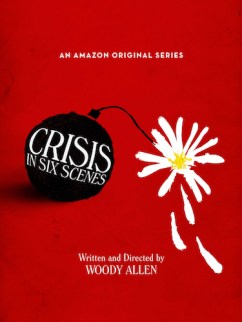
Crisis in Six ScenesWhen Amazon started making a serious effort to challenge Netflix in the field of streaming original series, one of their early moves was the headline-grabbing signing of Woody Allen to create his first TV series. As has since become clear, Allen didn’t know what he was letting himself in for. To summarise his comments from various interviews (and read between the lines a little), it seems he had a view of TV that’s about 20 years out of date, and thought he’d be able to dash off something suitable between two of his annual movies. At some point he obviously realised how much more sophisticated TV has become, and coopted a movie idea he’d had on the back-burner to expand into a short TV season. Allen’s been vocal about how miserable he found this process, but I’m not sure if he’s aware that he made a rod for his own back: he essentially made three movies in two years instead of his usual two. It probably would’ve been wise to swap out one of the films for the TV series, but you get the sense that, despite having been shown TV’s burgeoned respectability, Allen’s still something of a film snob. Rather than the potential of TV coming as a revelation to him, he’s declared he won’t be making any more.

On the evidence of the single six-episode season we did get out of him, that’s neither here nor there: Crisis in Six Scenes is just a slightly-longer-than-average Woody Allen film split into instalments. The first episode is the worst offender in this regard — it doesn’t reach a climax of any description, it just stops. The rest of the episodes aren’t as blatant (episode five’s ending even feels like it’s genuinely meant to be the end of an episode!), but none of them are particularly satisfying as a discrete segment. I’m not really one for binge-watching — I get fidgety and want a change; or if a show’s too good, I want to savour it rather than race on — but I watched all of Crisis in one sitting, because at heart it’s just a chopped-up movie. Some characters or events are confined to a single episode, but you get the impression that’s almost incidental rather than a deliberate attempt to make six finite units. The main storylines flow between episodes like the boundaries are artificially imposed — which, in a medium without the constraints of broadcast time slots and where all the episodes are released at the same time, they are.

A scene of CrisisBut enough of the form — what of the content? This is not prime Allen, that’s for sure. At times it makes for uncomfortable viewing, when it’s hard to tell if it’s half improvised or if half the cast are just a bit doddery (and I suspect it’s the latter). Other bits do work, though, and while it isn’t massively rewarding it is amusing at times. Even less assured are some broadly political points that it seems like Allen is trying to tap into, or maybe it’s just incidental. He appears to be using the series’ 1960s setting as a mirror of the present: the plot concerns a twenty-something anti-government protestor, and there’s lots of talk about unnecessary wars, campus demonstrations, young people staging protests, rights for women and black people, etc, etc. At first blush these parallels are all well and good, but I’m not sure they develop into much more than wry observations. The best I can take from it is a result of the particularly farcical last episode, where it may be that he’s trying to say people in general should be more aware and active, like the young are — to walk the walk of political change rather than just talking the talk.
If he was trying to spread such a message, it’s a bit buried. Maybe he was just picking on some low hanging fruit. Considering Allen’s half-arsed attitude to the whole endeavour, I guess that’s more likely. Oh well.

The Grand Tour (Season 1 Episodes 1-2)
The Grand TourAnother big gun in Amazon’s streaming mission, their £160 million “Not Top Gear, Honest” original series kicked off last month to widespread positive reviews and, apparently, big ratings (relatively speaking). I’m not really a ‘car person’, but like millions of others I wound up watching Top Gear during the height of the Clarkson / Hammond / May era for all the other hijinks. I thought it was going off the boil a bit even before their semi-enforced departure — I didn’t even get round to watching their last series. They come to Amazon after a short break (a long break for us, but it takes time to film these things, so, short break), and I think reinvigorated — possibly by the rest, possibly by the change of management, possibly by the huge budget.

There’s no denying that this is their Top Gear with just a few tweaks… unless you’re an Amazon lawyer, in which case it’s a completely different show. But the freedom from being a motoring programme on a public service broadcaster means they’re not quite so constrained by that remit. Episode 2, for instance, is half given over to them attacking a military training course in Jordan, a riff on Edge of Tomorrow in which they get to play at being action movie stars, and which features cars because action movies feature car chases, not because they’re actually reviewing how the motor performs while in a high-speed chase. There are still genuine car reviews, and they’re as dull / interesting (delete as applicable) as they always were. At least they’re excitingly shot and scored (still using cues from film music, as they always have).

Some bits are improved: the famous Star in a Reasonably Priced Car segment was always one of the weakest parts of the show (the track times were fun, but Clarkson is no interviewer), but here the need for celebrity guests is neatly pilloried. Conversely, a couple of things are weaker: their blatant attempt at a Stig replacement, The American, doesn’t really work. It’s also one of the bits that most feels “changed just enough to avoid a legal challenge”. I imagine there are only so many different ways to do a car show, so of course there are going to be similarities, but you could imagine them having done this as their next run of Genuine Top Gear (well, aside from the expense) without people thinking, “wow, they’ve completely changed the show!”

Still, it is what it is, and if you liked it before I can’t imagine you wouldn’t like it now, maybe even a little more.

Class (Series 1 Episodes 6-7)
ClassThe Doctor Who spin-off that no one’s watching continues with two of its strongest episodes. A two-parter that isn’t, the first is a “bottle episode”, with most of the cast stuck in detention and forced to confess their secret feelings by an alien rock. Cue arguments. Not Class’ strongest instalment — it’s a good idea, but the characters haven’t amassed quite enough secrets over just five episodes to make it feel as cathartic as it should — but it’s considerably better than the weaker ones. Even better is the next episode, which shows what Quill was up to while the kids were bickering. A world-hopping quest (presumably paid for by saving so much money on episode 6), it has several good ideas that it burns through like they’re going out of fashion. It feels most like Doctor Who, too, which provokes no complaints from me.

Next time: the Shadow Kin are back, again. Ah well.

Also watched…
  • Castle Season 7 Episodes 16-21 — by sheer bloody coincidence, the night before flying from London to the US I watched the episode where Castle flies from the US to London and has to deal with a murderer and possible terrorist on his flight. Super timing.
  • The Flash Season 3 Episodes 3-5 / Arrow Season 5 Episodes 3-5 — the much-anticipated four-way crossover between The CW’s superhero shows finished last night in the US, which means it’s at least a few weeks away over here. I’ll say something about it next time, then. Or the time after.
  • Junior Bake Off Series 4 — the main thing I take from this is that all kids are incredibly clumsy and slapdash.
  • The Moonstone — the recent BBC adaptation of Wilkie Collins’ novel, which is generally regarded as the first full-length English-language detective novel. This decent miniseries version was produced for daytime, and was the kind of series certain viewers proclaimed was good enough for prime time. It wasn’t.

    Gilmore GirlsThings to Catch Up On
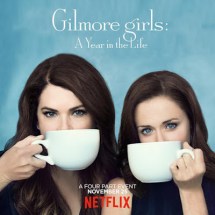
    This fortnight, I have mostly been missing Netflix’s Gilmore Girls revival, subtitled A Year in the Life. Rather than race through the four feature-length instalments between their release last Friday and our departure yesterday, we decided to save them for when we’re back, like a Christmas treat. Maybe we’ll just watch them in four days then instead, but at least we’ll feel like we have a choice.

    Next time… a festive special, looking at what seasonal delights the tellybox has provided us with this year. As far as December 29th or so, anyway.

  • Toy Story 2 (1999)

    100 Films’ 100 Favourites #93

    The toys are back!

    Country: USA
    Language: English
    Runtime: 92 minutes
    BBFC: U
    MPAA: G

    Original Release: 24th November 1999 (USA)
    UK Release: 11th February 2000
    First Seen: cinema, 2000

    Stars
    Tom Hanks (Apollo 13, The Da Vinci Code)
    Tim Allen (Jungle 2 Jungle, Wild Hogs)
    Joan Cusack (Addams Family Values, School of Rock)
    Kelsey Grammer (Anastasia, X-Men: The Last Stand)

    Director
    John Lasseter (Toy Story, Cars 2)

    Co-directors
    Ash Brannon (Surf’s Up, Rock Dog)
    Lee Unkrich (Finding Nemo, Toy Story 3)

    Screenwriters
    Andrew Stanton (Monsters, Inc., WALL·E)
    Rita Hsiao (Mulan, My Little Pony: The Movie)
    Doug Chamberlin (Bruno the Kid: The Animated Movie)
    Chris Webb (Bruno the Kid: The Animated Movie)

    Story by
    John Lasseter (A Bug’s Life, Tinker Bell and the Pirate Fairy)
    Pete Docter (Toy Story, Inside Out)
    Ash Brannon (Surf’s Up, Rock Dog)
    Andrew Stanton (Toy Story, Finding Dory)

    The Story
    After Woody is stolen by a nefarious toy collector, the rest of the toys set out to rescue him — but, tempted by the idea of spending eternity in a museum with friends from his TV show, does Woody want to be saved?

    Our Heroes
    Buzz and Woody are back, and now the best of friends. This time, Woody is confronted with his past when he meets a gang of other toys from the TV series he starred in, but will he stay with them or return to Andy? Meanwhile, Buzz sets out to rescue Woody, but has issues of his own to tackle when he comes face to face with his nemesis, Emperor Zurg.

    Our Villain
    Al McWhiggin, the owner of Al’s Toy Barn and serious toy collector, who steals Woody when he’s accidentally put in a yard sale box.

    Best Supporting Character
    Jessie, a cowgirl from Woody’s TV show. Fundamentally an excitable and chipper character, she was left distraught after being abandoned by her owner, and is now scared of being put back in storage — which will happen if Woody isn’t part of Al’s collection.

    Memorable Quote
    “You never forget kids like Emily, or Andy, but they forget you.” — Jessie

    Memorable Scene
    On their hunt for Woody, the other toys explore a giant toy emporium, in which Buzz comes across an aisle filled with fellow Buzzes. Spotting one with a new utility belt, he tries to acquire the accessory, only to awaken his double…

    Making of
    Toy Story 2 was originally commissioned by Disney as a direct-to-video sequel, because they did that a lot back then, and went into production without Pixar’s primary staff, who were already busy creating A Bug’s Life. When early work looked promising, Disney bumped the project’s status up to a full theatrical release. Conversely, Pixar were unhappy with the quality of what they were seeing. The main team took charge, redeveloping the film’s entire story in a single weekend, but still had to meet the release date Disney had already set. Although most Pixar films take years to produce, the production of Toy Story 2 was compressed into just nine months. The pressure got to people: at one point someone accidentally deleted 90% of the film’s files, representing two years work. Fortunately, another crew member working at home had back-ups of all but the last few days’ work.

    Previously on…
    The original Toy Story was the first computer-animated feature film.

    Next time…
    Toy Story 3 followed 11 years later, with Toy Story 4 set to come 9 years after that. Also shorts, TV specials, and the Buzz Lightyear spin-off (see last time).

    Awards
    1 Oscar nomination (Song)
    7 Annie Awards (Animated Feature, Directing, Writing, Female Voice Acting (Joan Cusack), Male Voice Acting (Tim Allen), Music, Storyboarding)
    2 Annie Awards nominations (Character Animation, Production Design)
    2 Saturn nominations (Fantasy Film, Music)
    1 Teen Choice Awards nomination (Choice Hissy Fit)

    What the Critics Said
    Toy Story 2 is a brilliant example of that rarest of Hollywood phenomena — a sequel to a major hit film that’s as good, if not better, than the original. This is mainly the result of a perfect mixture of two essential elements. First, there’s an excellent script by Andrew Stanton and his team of writers […] Second, there’s the remarkable technology developed by Pixar for the film A Bug’s Life. It’s this approach they’ve now taken to even greater heights […] These filmmakers have taken the 1995 characters and given them more depth, creating a new story that lets the toys interact in a larger world. It all comes down to amazing visuals and basic storytelling — and this is one heck of a good tale.” — Paul Clinton, CNN

    Score: 100%

    What the Public Say
    Toy Story 2 is considered, by most, to be a perfect film. The characters are amazing. The stakes are higher than the first film. And the emotional beats hit harder than before. With two successes under their belt, it’s hard to believe that Pixar could not only be consistent with that quality, but somehow also manage to pull off something even more amazing than we thought possible. Expanding the mythology of this world and really making us feel for the toys that we forgot as children, Toy Story 2 is, in the words of Mary Poppins, practically perfect in every way.” — Jaysen Headley, Jaysen Headley Writes

    Verdict

    Sequels are notorious for not being as good as their progenitor. I feel like this is a trend that is increasingly being bucked — with everything Hollywood makes designed to be a franchise, Film 1 is often about setup and Film 2 is where the makers are allowed to do what they really wanted to do in the first place. But when you strike gold first time out, it’s still hard to do it justice second time round. Pixar do that and more here, with a sequel that is slicker, funnier, more exciting, and more emotional than its forebear. Even if it’s happening more often now, good sequels are still hard to do — trust Pixar to have got there ahead of the pack.

    #94 will be… transportive.

    The Good Dinosaur (2015)

    2016 #130
    Peter Sohn | 90 mins | streaming (HD) | 2.35:1 | USA / English | PG / PG

    The Good DinosaurOnce upon a time, Pixar could do no wrong. Then Cars happened; and worse, its sequel. Now, their movies remain an event, and some people still swear by everything they do, but I think there’s a greater awareness that they’re fallible. When it came out at the tail end of 2015, The Good Dinosaur was received as further evidence of that. Especially coming in the same year that gave us the universally praised (*coughoverratedcough*) Inside Out, it was instantaneously dubbed a “lesser Pixar”. But here is where completism has its merits, because I really enjoyed it.

    Set in an alternate world where the dinosaurs were never wiped out and so have evolved to the point where they talk, farm, etc, the film tells the story of little Arlo, an Apatosaurus who’s regularly overshadowed by his siblings. When an accident leaves him stranded many miles from his family he must make the long trek home, finding his inner courage on the way ‘n’ that kind of thing.

    There’s no denying that The Good Dinosaur contains an abundance of re-heated elements: there are multiple plot beats shared with The Land Before Time, not to mention the general “talking child dinosaurs” thing; a major inciting incident is taken from The Lion King; the episodic structure is reminiscent of The Jungle Book; animated dinosaurs on photo-real backgrounds recalls Dinosaur; and the moral message and main character arc are lifted from any number of children’s animations. While I did find this bothersome at first — especially as the worst offenders are concentrated in the saccharine first act — by the time the film had settled into its meandering middle I came to quite like it.

    MalickianPixar have on several occasions produced films with an innovative opening act that descends into derivative kids’ animation runaround territory. WALL-E and Up are the worst offenders for this; Inside Out does it too, though there’s more of a mix of the two throughout the film. For many critics and viewers, the quality of those openings seem to be enough to earn the films heaps of praise. The Good Dinosaur inverts the formula: the easy, overfamiliar material is at the start, while the more meditative, mature content comes later. Clearly this didn’t work for many viewers, so I guess the lesson for Pixar is to put the clever stuff up front if they want universal praise.
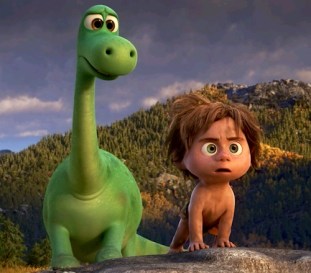
    Instead, The Good Dinosaur was often dismissed as only being for very young children. Some bits do come over that way, but it has quite a harsh edge at times, and the scene where the heroes get high on rotten fermented fruit is freaky even for adults (or this adult, at any rate). It’s a bit of a tonal oddity in this respect, especially when you also factor in some of the leisurely, silent moments spent admiring nature that evoke a filmmaker like Terrence Malick. No, seriously. That’s helped by the animation being mind-blowingly good. Not so much the character animation (which is still strong — the character models are more detailed than you first suspect), but the scenery those characters are placed in… wow. If you didn’t know better I’m sure much of it could pass for photography. And the way they’ve achieved water, a notoriously hard thing to capture in CGI, is absolutely incredible.

    You've got a friend in mePerhaps most powerful of all is the relationship it creates between Arlo and a young human child he befriends, Spot. With humanity in a much earlier state of evolution, Spot is basically characterised as a dog — the way he moves, comes to his name, follows scents, shakes, scratches and enjoys being scratched, and so on — so of course I warmed to him. Nonetheless, though the building blocks used to create their friendship are very familiar, the way the film sells its emotional arc is ultimately immensely effective. Its resolution may even bring a tear to the eye.

    While it may take a while to warm up, The Good Dinosaur is ultimately a very affecting entry in Pixar’s canon. It’s by no means a perfect movie, but I do think it’s an underrated one. And, in all honesty, I enjoyed it more than Inside Out.

    4 out of 5

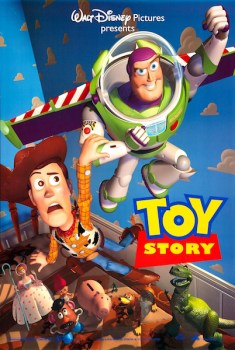
    Toy Story (1995)

    100 Films’ 100 Favourites #92

    The toys are back in town.

    Country: USA
    Language: English
    Runtime: 81 minutes
    BBFC: PG
    MPAA: G

    Original Release: 22nd November 1995 (USA)
    UK Release: 22nd March 1996
    First Seen: cinema, 1996

    Stars
    Tom Hanks (Sleepless in Seattle, Catch Me If You Can)
    Tim Allen (Galaxy Quest, The Shaggy Dog)

    Director
    John Lasseter (A Bug’s Life, Cars)

    Screenwriters
    Joss Whedon (Alien Resurrection, Avengers: Age of Ultron)
    Andrew Stanton (A Bug’s Life, John Carter)
    Joel Cohen (Cheaper by the Dozen, Garfield)
    Alec Sokolow (Cheaper by the Dozen, Garfield: A Tale of Two Kitties)

    Story by
    John Lasseter (Toy Story 2, Planes)
    Pete Docter (Monsters, Inc., Up)
    Andrew Stanton (Finding Nemo, Toy Story 3)
    Joe Ranft (Beauty and the Beast, Cars)

    The Story
    In a world where toys come to life when humans aren’t around, Woody is six-year-old Andy’s favourite doll… until he gets Buzz Lightyear, a space ranger action figure, for his birthday. An upset Woody clashes with Buzz, but when the bickering pair are left behind during a house move they must work together to get back to their kid.

    Our Heroes
    Woody is a cowboy doll, the favourite of his kid, Andy, and consequently the leader of all Andy’s toys. That is until Andy gets a shiny new Buzz Lightyear action figure, whose newness ingratiates him with all the other toys. Plus, to Woody’s continued annoyance, Buzz believes he really is a space ranger and has no idea he’s just a toy.

    Our Villain
    Sid, Andy’s nasty neighbour kid who does terrible, terrible things to toys…

    Best Supporting Character
    Mr Potato Head, whose various body parts are slotted on and therefore removable and interchangeable. Hilarity ensues. Also has a nice line in snarky comments.

    Memorable Quote
    “To infinity, and beyond!” — Buzz Lightyear

    Quote Most Likely To Be Used in Everyday Conversation
    “You are a sad, strange little man, and you have my pity.” — Buzz Lightyear

    Memorable Scene
    One of Buzz’s claims as a real space ranger is that he can fly, so Woody challenges him to prove it. Buzz closes his eyes, dives off the bed… and, through a series of flukes, bounces and coasts his way around the room, landing back on the bed. “That wasn’t flying,” cries Woody, “that was falling with style!”

    Memorable Song
    The film’s themes are perfectly reflected in Randy Newman’s Oscar-nominated and endlessly catchy song, You’ve Got a Friend in Me. Both Toy Story sequels have tried to emulate it, with… less success.

    Technical Wizardry
    Only the whole movie — it was the first feature-length wholly-computer-generated animated film. As such, we have it to thank/blame for the current entire state of popular Western animation.

    Making of
    The animators perfected the movement of the toy soldiers by nailing a pair of shoes to a wooden plank and trying to walk around in them.

    Previously on…
    Toy Story was the first feature-length computer-animated film — there is, in that sense, literally nothing before it.

    Next time…
    Two feature film sequels, both of which are at least as artistically successful as this first, with a fourth set to follow in 2018. Also, three short films and two TV specials to date, plus direct-to-video spin-off movie Buzz Lightyear of Star Command: The Adventure Begins and the TV series that follows it. You could also argue the entirety of Pixar’s highly-praised output is a follow-up to the success of Toy Story, as well as American feature animation’s almost entire conversion from traditional cel animation to 3D CGI.

    Awards
    1 Special Achievement Oscar to John Lasseter for “the development and inspired application of techniques that have made possible the first feature-length computer-animated film.”
    3 Oscar nominations (Original Screenplay, Song, Musical or Comedy Score)
    1 BAFTA nomination (Visual Effects)
    8 Annie Awards (Animated Feature, Directing, Writing, Producing, Music, Production Design, Animation, Technical Achievement)
    1 Annie Awards nomination (Voice Acting (Tom Hanks))
    2 Saturn nominations (Fantasy Film, Writing)
    Nominated for the Hugo for Best Dramatic Presentation

    What the Critics Said
    “Far from just a technological breakthrough, this hellzapoppin fairy tale […] is a magically witty and humane entertainment. It has the purity, the ecstatic freedom of imagination, that’s the hallmark of the greatest children’s films. It also has the kind of spring-loaded allusive prankishness that, at times, will tickle adults even more than it does kids. The moment Mr. Potato Head arranges his snap-on features into a Cubist mash and says, ”I’m Picasso,” it’s clear that director John Lasseter and his team of writer-technicians have taken their most anarchic impulses and run with them. […] In its techno-cool photo-realist way, though, this movie, too, invites you to gaze upon the textures of the physical world with new eyes. What Bambi and Snow White did for nature, Toy Story, amazingly, does for plastic — for the synthetic gizmo culture of the modern mall brat. The film’s wit (and resonance) is that it brings toys to life exactly the way children do in their heads. It molds plastic into pure imagination.” — Owen Gleiberman, Entertainment Weekly

    Score: 100%

    What the Public Say
    “The Animation is superb. Given that this was one of the first ever feature length computer animated movies, those guys at Pixar really hit the nail on the head. The colours are vibrant and the characters are dynamic. An excellent use of Blues, Yellows and Reds really accentuate the ‘children’ and ‘toys’ feel. There are also beautiful realistic elements such as a scene where Woody and Buzz find themselves under a lorry in a petrol station. With this, I was simply amazed at the attention to detail with the stones, tarmac and oil stains on the textures. It really looks like you are close-up to the ground and I love it!” — Alexander Potter, Pottercraft’s Pictures

    Verdict

    Just because something’s the first to do something doesn’t necessarily mean it’s any good, but Pixar didn’t strike gold with Toy Story just because computer animation was New. It’s the likeable characters, how they develop and learn, the amusing situations they’re put in, plus some heartwarming messages about friendship. There’s more emotion and character development in these wooden-and-plastic toys generated with pixels in a computer than many a film can achieve with real human beings, and that’s why Pixar came to revolutionise and dominate the Western animation genre.

    Some would say “the original is still the best”, and it is up there, but on Sunday I will beg to differ…

    #93 will be… a superior sequel.

    The Sting (1973)

    2016 #127
    George Roy Hill | 129 mins | Blu-ray | 1.85:1 | USA / English | PG / PG

    The StingSet in Chicago during the Great Depression, The Sting follows a young street-level con artist (Robert Redford) as he seeks revenge for his murdered partner by teaming up with a seasoned big-con pro (Paul Newman) to scam the mob boss responsible (Robert Shaw).


    If that sounds like a somewhat violent crime movie… well, it kinda is. Although The Sting is often billed as a caper, sometimes even as a comedy (look at those grinning mugs on the poster!), it actually has more of an edge. I mean, it’s not The Godfather, but it’s not Ocean’s Eleven either. The star power and chemistry of Redford and Newman are what give the movie a buoyancy to overcome the storyline’s inherent darkness, though I wouldn’t say that reaches far enough to regard the film as a romp, which is the impression I’d obtained over the years.

    Indeed, I wonder if it suffers from its age more broadly. Not because the filmmaking quality has dated (they may not make ’em like this anymore, but great filmmaking is timeless), but because it was so influential that it’s been copied to death. It still has a lot of points to commend it, but the heist — the driving force of the plot — lacks freshness to modern eyes. Newness is not the be-all-and-end-all, of course, but the con only really comes to life in a flurry of last-minute twists… most of which have also been copied ad nauseam, of course.

    The Sting is certainly not a bad movie — and, for all my talk of it being mercilessly copied, it did manage to con me in a couple of places — but it wasn’t exactly what I’d anticipated. Perhaps I’ll like it more on some future re-watch.

    4 out of 5

    The Sting was viewed as part of my What Do You Mean You Haven’t Seen…? 2016 project, which you can read more about here.

    Three Kings (1999)

    100 Films’ 100 Favourites #90

    They’re deserters, rebels and thieves.
    But in the nicest possible way.

    Country: USA
    Language: English & Arabic
    Runtime: 115 minutes
    BBFC: 15
    MPAA: R

    Original Release: 1st October 1999 (USA)
    UK Release: 3rd March 2000
    First Seen: DVD, c.2001

    Stars
    George Clooney (Batman & Robin, Ocean’s Eleven)
    Mark Wahlberg (Boogie Nights, The Fighter)
    Ice Cube (Boyz n the Hood, Ride Along)
    Spike Jonze (Being John Malkovich, Where the Wild Things Are)

    Director
    David O. Russell (Flirting with Disaster, Silver Linings Playbook)

    Screenwriter
    David O. Russell (Spanking the Monkey, American Hustle)

    Story by
    John Ridley (U Turn, 12 Years a Slave)

    The Story
    After ceasefire is called in the Gulf War, a group of American soldiers discover a map to a stash of gold stolen by Saddam Hussein’s forces. Setting out to steal it for themselves, the soldiers encounter a group of rebels who need their help and find their priorities changing.

    Our Heroes
    Army reservist Sergeant Troy Barlow and his friend, the comically naïve Private Conrad Vig, are the first to discover the map, which they take to Staff Sergeant Chief Elgin to translate. Then self-serving, disillusioned Special Forces Major Archie Gates turns up and convinces them to follow it to the gold. (Yes, despite the title, there are four of them.)

    Our Villains
    The war may officially be over, but the Iraqi Republican Guard are still the enemy.

    Best Supporting Character
    I know I mentioned him in the heroes bit, but Conrad is the de facto “fourth king”, so… He gets the lion’s share of either the best lines or the lines that set up the best lines.

    Memorable Quote
    Chief: “I don’t want to hear ‘dune coon’ or ‘sand nigger’ from him or anybody else.”
    Conrad: “Captain uses those terms.”
    Troy: “That’s not the point, Conrad. The point is that ‘towelhead’ and ‘camel jockey’ are perfectly good substitutes.”

    Memorable Scene
    Archie explains what actually happens when you get shot in the gut, complete with an explanatory cross-section of the human body, and bile.

    Making of
    The stories of behind-the-scenes conflict between director David O. Russell — still a relative newcomer, making his biggest movie so far — and George Clooney — dividing his time between E.R. three days a week and the film on the other four — are legendary. If you want a lengthy-ish full account, check out this trivia entry on IMDb.

    Awards
    1 Blockbuster Entertainment Award (Favourite Action Team — it beat Will Smith and Kevin Kline from Wild Wild West, and those were all the nominees)
    1 Political Film Society Award (Peace)
    2 Political Film Society Award nominations (Democracy, Exposé)

    What the Critics Said
    “[an] emotionally and politically responsible movie set in Iraq during the immediate aftermath of the gulf war — a damning yet idealistic satire about the motives behind U.S. foreign policy. The visuals are wild, the sound track has the audacity to underscore the subtext instead of just echoing the obvious, the comedy is irreverent and occasionally slapstick, and the metaphorical details are consistently strong. The movie even examines the conventions of star-studded actioners without stripping the leads of the charisma and apparent immortality of full-blown action heroes.” — Lisa Alspector, Chicago Reader

    Score: 94%

    What the Public Say
    Three Kings, at its core, deals with serious themes and serious subject matter surrounding the end of the first Gulf War, and is therefore a war narrative before anything else. That being said, it’s refreshing how Three Kings doesn’t drown in its cynicism, isn’t exploitative in terms of gore or shocking violence, and isn’t hitting its audience over the head with either jingoistic propaganda or hamfisted pacifist social commentary. Moreover, Three Kings is funny enough often enough to be qualified as a comedy in its own right. It’s the humanist, dare I say, heartfelt combination of the two, that makes it a bonafide winner.” — The Celtic Predator, Express Elevator to Hell

    Verdict

    Writer-director David O. Russell may have become increasingly acclaimed this decade with Oscar-nominated movies like The Fighter, Silver Linings Playbook, and American Hustle, but for me this is still his best work. It mixes laugh-out-loud comedy with serious points about war and an ultimately emotional storyline, created with a filmmaking verve that is frequently exciting and inventive — something I’d argue is less present in Russell’s more widely-acknowledged work.

    #91 never… lies dies.

    A Knight’s Tale (2001)

    2016 #160
    Brian Helgeland | 132 mins | streaming (HD) | 2.35:1 | USA / English | PG / PG-13

    A Knight's TaleA squire fakes being a knight to win a jousting contest, and a lady’s affection, in this medieval comedy-adventure.

    Renowned for its anachronistic use of rock music, there’s actually not much of that, but there’s plenty of comedy and adventure — too much: it’s a little long (that there’s an extended DVD beggars belief). An able cast keep it ticking: Heath Ledger hefts the derring-do and romance, with comic support from Mark Addy, Alan Tudyk, and Paul Bettany; but love interest Shannyn Sossamon is clearly miscast.

    Though a favourite to some, I wouldn’t say it’s under-appreciated, but it’s a fun romp.

    3 out of 5