
François Simard, Anouk Whissell & Yoann-Karl Whissell | 93 mins | Blu-ray | 2.35:1 | Canada & New Zealand / English | 15
 I’ve observed before that the ’80s seem to be everywhere in film these days, and here’s another example: Turbo Kid is in every respect an homage to low-budget ’80s genre fare.
Set in the future year 1997, after an unspecified apocalypse has devastated the world and made water a rare commodity, orphaned teen The Kid (Munro Chambers) survives by scavenging junk and enjoying the comic book adventures of BMX-riding superhero Turbo Rider. The Kid encounters and accidentally befriends the quirkily obsessive Apple (Laurence Leboeuf), who is promptly kidnapped by agents of water-controlling maniac Zeus (Michael Ironside). While escaping the kidnappers, the Kid stumbles across the remains of the real Turbo Rider, including his energy gauntlet weapon — perfect for rescuing his new friend and living his dreams.
All of which is semi-incidental, because the point of Turbo Kid is not this storyline, but the genre and era elements that have been used to build it, and the stylistic elements that have been cribbed to execute it. I can’t cite many specific points of reference, because I’m not au fait enough with the kind of cheapo, grindhouse-y, watched-on-video-by-’80s-kids genre films that the film’s trio of writer-directors are riffing off (beyond the obvious “Mad Max on BMXs”, one reviewer’s observance of which is regularly featured on the film’s posters and DVD/Blu-ray covers), but the general feel of those kind of films is certainly evoked. It’s there in the bonkers plot; the bizarre characters, like a kick-ass arm-wrestling-champion cowboy (Aaron Jeffery); the post-apocalyptic world that’s just a quarry somewhere; and the very gory practical special effects. Very, very gory. Gleefully, perversely gory. It’s so over-the-top that it’s not genuinely disgusting, of course, but it’s certainly over the top. Way over the top. At times, inventively, hilariously over the top.
 Then there’s the score, which is of course all ’80s synths, in a similar style to the score of The Guest. Unfortunately, the score is often indiscriminately applied, like someone composed a generic ’80s score and then slapped it on with minimal regard to what was occurring on screen, meaning some moments fly past without the requisite emphasis. But perhaps this was deliberate — I can well believe that’s what cheapo efforts of the era did, and doing it here is a deliberate reference. This is a bit of a problem with the whole film: points where you can’t be sure if it’s being deliberately wonky or poorly-done as part of the homage, or if there’s some tweaking required. The pace could certainly do with some attention, especially early on. It’s only 93 minutes long, but it would be even better if it was only 85.
However, when it’s on form, there’s a lot of fun to be had with Turbo Kid. I imagine its greatest admirers will be those who lived through and enjoyed the era it’s acting as tribute to, but it’s also entertaining for those who have a broad-strokes familiarity with that period. Although some tightening and polishing would make it even more effective, viewers happy to indulge in its self-consciously retro mindset should find enough to like, and may also consider this score a little harsh:

Turbo Kid is available on Netflix UK from today.
 After the success of
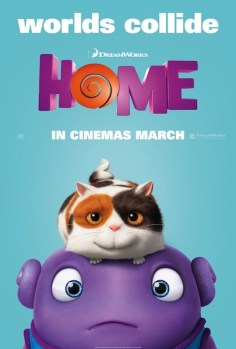 Oh (Jim Parsons) is a Boov, a race of friendly aliens looking for a new home planet to escape their enemies. When they arrive on Earth, Oh tries to invite everyone to a party, but accidentally alerts their enemies to their new home. Outcast, he bumps into Tip (Rihanna), a girl accidentally left behind when the rest of mankind was relocated by the Boov. Desperate for friendship, Oh agrees to help her find her mother.
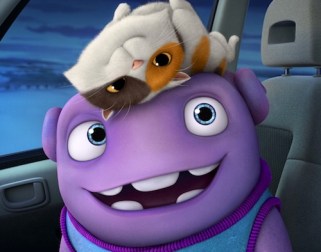 but the entire universe, including our enemies”? Why is there no option to cancel such a transmission that is going to take 40 hours to reach said enemies? I mean, that last one’s a stupid question, because why is there even a way to message the enemies?
 Blighted by behind-the-scenes difficulties, 47 Ronin wound up among
  Guy Ritchie is a self-confessed non-fan of the classic ’60s spy-fi series
 2016 Academy Awards
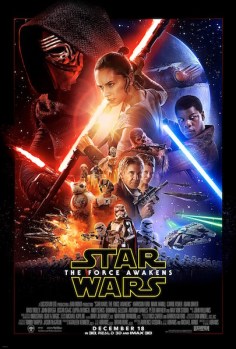 Star Wars: The Force Awakens is not the best film of 2015. Not according to the Academy of Motion Picture Arts and Sciences, anyway, who didn’t see fit to nominate it for Best Picture at tomorrow’s Oscars. Many fans disagree, some vociferously, but was it really a surprise? The Force Awakens is a blockbuster entertainment of the kind the Academy rarely recognise. Okay, sci-fi actioner
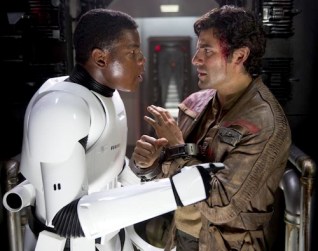
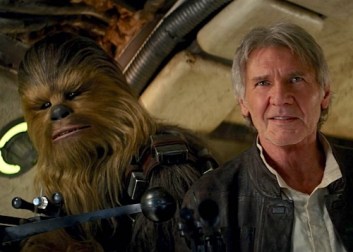
  I too could talk about the likeable new heroes; the triumphant return of old favourites; the underuse of other old favourites; Daisy Ridley’s performance; John Boyega’s performance; the relationship between Rey and Finn; the relationship between Finn and Poe; the success of Kylo Ren and General Hux as villains (well, I thought they were good); the terrible CGI of Supreme Leader Snoke; the ridiculous overreaction to the alleged underuse of Captain Phasma; that awesome fight between the stormtrooper with that lightning stick thing and Finn with the lightsaber; the mystery of Rey’s parentage; the mystery of who Max von Sydow was meant to be (and if we’ll ever find out); some elaborate theory about why Ben wasn’t called Jacen (there must be one — elaborate theories that will never be canon are what fandoms are good for); the way it accurately emulates the classic trilogy’s tone; the way it’s basically a remake of
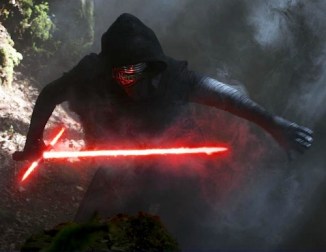 J.J. Abrams seems to have tricked some people into thinking he’s a great director with The Force Awakens (rather than just a helmer of workmanlike adequacy (when he’s not indulging his lens flare obsession, at which point he’s not workmanlike but is inadequate)), and I think that’s partly because it’s quite classically made. Yeah, it’s in 3D, but the style of shots used and — of most relevance right now — the pace of the editing help it feel in line with the previous Star Wars movies. Some of the more outrageous shots (often during action sequences) stand out precisely because they’re outside this norm. Perhaps we take for granted that Abrams delivered a movie in keeping with the rest of the series, because that’s The Right Thing To Do, but that doesn’t mean he had to do it. And the transitional wipes are there too, of course.
 No one knows what the difference is between these two categories. I’m not even sure that people who work in the industry know. As a layperson, it’s also the kind of thing you tend to only notice when it’s been done badly. The Force Awakens’ sound was not bad. It all sounded suitably Star Wars-y, as far as I could tell. That’s about all I could say for it. It feels like these are categories that get won either, a) on a sweep, or b) on a whim, so who knows who’ll take them on the night?
 “restraint […] applying the basic filmmaking lessons of the first trilogy,” according to
  those elements aren’t gone about in an awards-grabbing fashion anyway. In the name of blockbuster entertainment, however, they’re all highly accomplished.
 So says Peter Jackson in the special features accompanying this extended cut of his trilogy-closing saga-ending sixth Middle-earth movie, as
  Most obvious, and most discussed, is the dwarves’ war chariot action scene, whose bloody decapitations saw the film earn an R in the US and 15 over here. A seven-minute action sequence in the middle of the battle, it’s by far the largest single addition, and is mainly notable for all that blood and its use of the word “jambags”. Somewhat ironically, the sequence was a last-minute addition (the physical chariot was the last thing built for the films), which even as they’re shooting it Jackson acknowledges is an indulgence, and then of course it got bumped to the extended edition for being just that.
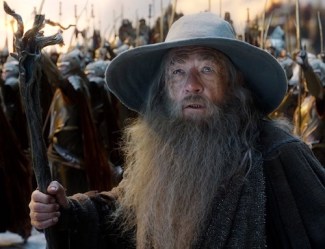 Not a sausage, unless I missed something. It didn’t bother me too much because, quite frankly, I can’t quite remember what it was all about; but when I inevitably watch the extended trilogy back to back one day, it may do then. That said, I can’t imagine it’s a major fault, but again highlights the built-on-the-fly, ill-thought-through state of expanding The Hobbit 2 into The Hobbit 2 and 3.
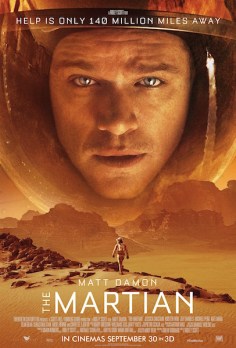 Ridley Scott’s latest arrives on Blu-ray in the UK today, with a disappointing dearth of special features (disliked
  Whether that’s appropriate or not is another matter. A well-argued
 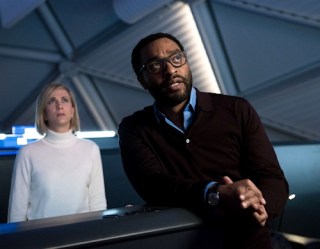 While Damon is stuck on Mars by himself, a starry supporting cast actually get to interact with each other. This is a quality ensemble and, short of writing an epic essay of a review where I just praise them all one by one, there’s little to do but list their names. That said, Jessica Chastain gets the most brazenly emotional beats as the commander who chose to leave Watney behind and has to face the consequences of her decision; Jeff Daniels treads a line between being an evil bureaucrat and just a regular bureaucrat (apparently consideration was given to turning him into a full-blown villain; thank goodness they swerved that bullet); Chiwetel Ejiofor brings easy gravitas to NASA’s director of Mars missions; Michael Peña provides some additional comic relief, if not as strikingly as he did in
  I’ve read at least one review that described The Martian as “an instant sci-fi classic”, and at least one other that described it as “no sci-fi classic”. I’m going to sit on the fence of that debate for the time being. What I will say is that it is undoubtedly an accomplished piece of entertainment. For a film that primarily concerns itself with a man applying scientific principles to tasks like “growing potatoes”, that’s surely some kind of achievement. In our current climate (both in society in general and in the “more explosions less talking, please” state of blockbuster cinema), to make space travel — and science in general — seem fun and appealing to the masses is no bad thing whatsoever.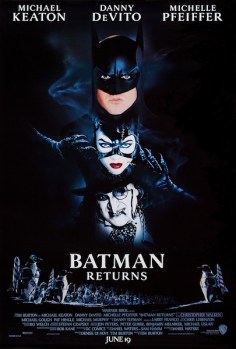
 Score:





 100Films.co.uk