Swiss Army Man (2016)

2016 #177
Daniel Scheinert & Daniel Kwan
(aka Daniels) | 97 mins | Blu-ray | 2.40:1 | USA / English | 15 / R
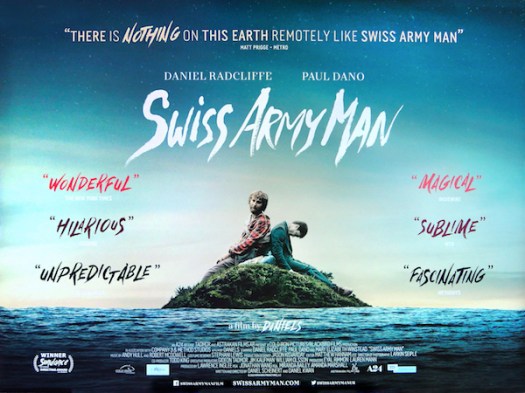
Swiss Army Man

If you’ve heard of Swiss Army Man, it’s likely for one thing and one thing only: this is the movie where Daniel “Harry Potter” Radcliffe plays a farting corpse with an erection. But rather than the childish super-gross-out comedy that short pitch would seem to suggest, Swiss Army Man is actually quite a sweet indie comedy-drama. With some super-gross-out comedy thrown in, natch.

The plot that leads us to the farting boner corpse begins with Hank (Paul Dano) stranded on an island and, in his lonely despair, attempting suicide. Then he spots a body washed up on the nearby beach. It turns out this isn’t a new friend, because he’s dead. Hank dubs him ‘Manny’. One thing leads to another and Hank uses Manny’s gastric expulsions to create a kind of jet ski that propels them off the island. Hank soon discovers the corpse has myriad potential uses (hence the title), especially when he starts to talk…

Swiss Army Man is kind of like Cast Away if Wilson the volleyball was a farting corpse. Hank despairs at his situation, chats to the technically-inanimate Manny about it, and together they begin to work through the human condition. In between using Manny’s rigor mortis-powered limbs to chop wood, or his boner as a magic compass to guide them home, that is. I was going to say “it’s that kind of movie”, but I’m not sure there’s ever been another movie quite like Swiss Army Man.
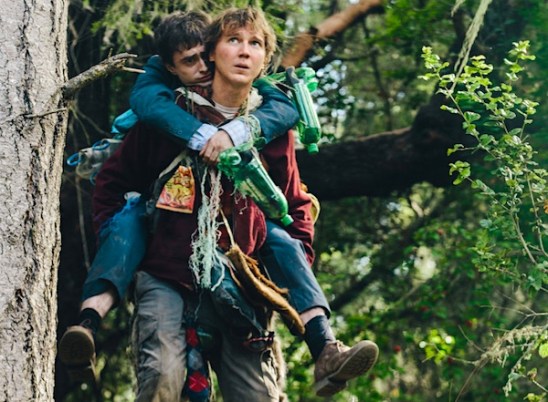
He ain't heavy, he's my farting boner corpse

As well as the indie ruminations on the purpose and meaning of life, there are some mystery plots in play, just to keep things engaging. Who is the woman Hank keeps seeing in flashbacks? How many of Manny’s abilities are real and how much is just in Hank’s head? I mean, Manny can’t really talk… can he? What if Manny’s not the only one who’s dead? Maybe these shouldn’t be given so much focus — I don’t think the film wants to be about such plot mysteries — but they were the kind of things running through my head while watching, because you know there’s bound to be some kind of twist or reveal for what’s actually happening. Naturally, I won’t spoil that here; but perhaps the film plays even better on repeat viewings, when you can set aside such wonderings and focus even more fully on the friendship between man and corpse.

That’s naturally powered by the two lead performances. Dano is very good as a man who’s feeling suicidal for, as it turns out, more reasons than “I’m alone on an island”; though enacting such patheticness (as a human trait rather than a criticism of his mental condition) seems very much within Dano’s wheelhouse. Radcliffe, however, is simply brilliant. Manny comes back to ‘life’ as a kind of innocent, unsure of how the world works and driven by his basest feelings; a reflection of all our inner psyches, in a way. Physically constrained by being, y’know, dead, Radcliffe manages to convey so much despite — or perhaps even partly because of — the limitations imposed upon him.

Corpsehood

Made for a relative pittance, technical merits are also strong, with neat special effects to convey Manny’s abilities, and a very indie-ish but fitting vocal-driven score by Andy Hull and Robert McDowell. Interestingly, the Blu-ray contains an option to watch the film without the score, which (based on the few bits I sampled) creates a remarkably different experience. That’s true of most films, of course, but here it dramatically changes the mood of some scenes. It’s less magical, in a way, and sadder, and maybe creepier, which is not the point or message of the film.

“The farting boner corpse movie” is the kind of pithy description that will put many viewers off, but hiding behind the gross-out facade is a sweet comedy-drama about human interaction that, in its own way, is an incredibly moving, perhaps even heartwarming experience.

4 out of 5

Swiss Army Man is released on DVD and Blu-ray in the UK today.
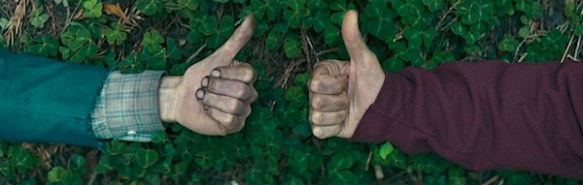
Thumbs up

The BFG (2016)

2017 #51
Steven Spielberg | 117 mins | Blu-ray | 2.39:1 | USA & India / English | PG / PG

The BFG

The writer/director team behind E.T. reunite for another tale of a young kid befriending a strangely-proportioned otherworldly creature who can’t quite speak English properly and has an acronym for a name. This one, of course, is adapted from Roald Dahl’s beloved children’s book, here rendered into live-action — or, for a large part, realistic computer animation — by director Steven Spielberg.

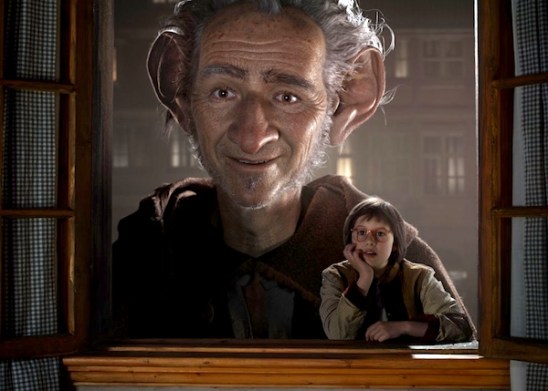
If you don’t know the story, it concerns insomniac orphan Sophie (Ruby Barnhill), who one night spots a 24ft giant outside her window. Wary of her informing the rest of the world of his existence, he snatches her up and carries her off to giant land. Despite Sophie’s fears, he doesn’t eat her, because he’s actually the Big Friendly Giant (Mark Rylance, motion captured) — but his fellow giants are a different story. Led by Fleshlumpeater (Jemaine Clement, also motion captured), they bully the comparatively tiny BFG and are a constant threat to Sophie’s life, so she concocts a plan, which involves a trip to see the Queen (Penelope Wilton).

For all its CGI — and, in creating a fantastical other-world adjacent to our own, there is a lot — much about The BFG feels pleasantly traditional, almost like a throwback to kids’ movies of a couple of decades past. This is partly the re-teaming of Spielberg and screenwriter Melissa Mathison, I suppose, but perhaps also the decision to retain the novel’s original 1982 setting. Not that you’d know it for most of the running time, until the Queen makes some telephone calls to “Nancy and Ronnie” (Reagan) and “Boris” (presumably Yeltsin, though that means someone’s got their eras mixed up); references that, coming quite near the end of the film, made me pause in the realisation that it wasn’t just set today (the reference to Boris made me assume the Queen was phoning our foreign secretary).

Window dressing

More than dated references, though, the throwback feel is thanks to the pace. I’d hesitate to call The BFG slow, but it’s certainly gentle for a good long while. I don’t think it needs to be a fast-paced thrill-ride, but a little extra speed early on, bringing the luxuriant two-hour running time down closer to the 90-minute mark, might’ve been beneficial. There’s certainly magic and wonder to be found throughout, which are very important aspects of a story like this, but I do wonder if kids might get a bit fidgety nonetheless, which would destroy the effect.

There is a lot to admire, however. The production design is superb, the giants’ environment full of stuff pilfered from the human world and re-appropriated into useful things — a ship for a (water)bed, for example, or a road sign for a tray; in one sequence, cars and trucks become roller skates. It’s all realised with startling detailed CGI. Okay, you’re not going to mistake the giants for upsized real humans (which kinda makes me long for a Hook-era version of the film, when they would’ve done it all for real with optical effects), but look at the small details — the texture of the giants’ skin, for example — and it looks phenomenal.

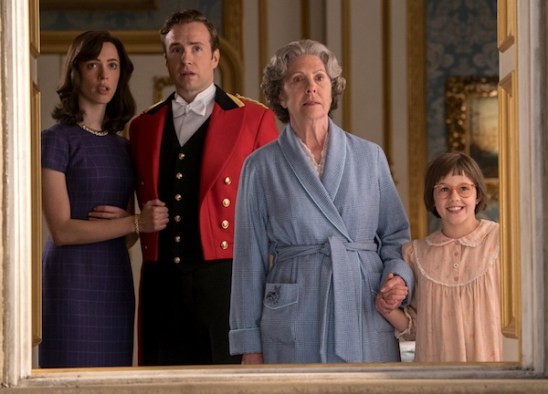
More importantly, the acting is pitched perfectly. Clement and his cohorts manage to be both menacing and comical by turns, Wilton brings easy class to the Queen, and Rafe Spall has an amusing little supporting role as a palace footman. However, Rebecca Hall is utterly wasted in a strangely nothing-y part as the Queen’s assistant — I can only presume this was either one of those “I love the book so will take any role” situations or one of those “my part was mostly cut” situations.

Big star, little star

But the real stars are the two leads. Ruby Barnhill was the result of a months-long search for the perfect Sophie and it was worth the effort. Called upon to be confident, scared, awed, and ingenious, Barnhill’s performance is precisely calibrated — “subtle” would perhaps be overselling it, but she lacks the histrionics you get from weak child actors. She’s overall charming, which is important in engaging us in the relationship between her and the BFG. In the giant role, Mark Rylance is, of course, sublime. He may have been recreated in the computer, but all of his personality shines through, his expressions and mannerisms both believable and familiar if you’ve seen him in his corporeal form. It’s one of the best-yet advocacies of so-called “performance capture” (where the actor’s whole performance is captured by those grey jumpsuits with little dots on, as opposed to just “motion capture” where it’s only their physical moves being digitised and supplemented by animators — both are the same process really, it’s just someone coined a different term to indicate when more of the actor’s own work is retained).

Considering the level of challenge The BFG clearly presented to Spielberg (in the special features he talks about how at times he was unsure how to make the movie, with all the tough requirements of different scales, etc; he and his team actually spent a whole summer making the movie in previsualisation before they did it for real the year after), it’s something of a shame that it’s destined to be regarded as a minor work in his canon. I’m not going to argue it deserves a greater status among his venerable output, but it would be a shame for it to go ignored because of that.

4 out of 5

The BFG is available on Amazon Prime Video UK as of this week.

Robin Hood: Men in Tights (1993)

2017 #31
Mel Brooks | 100 mins | streaming (HD) | 1.85:1 | USA & France / English | PG / PG-13

Robin Hood: Men in Tights

Master movie spoofer Mel Brooks’ penultimate work as director was this riff on the Robin Hood legend, in particular the version seen in Prince of Thieves.

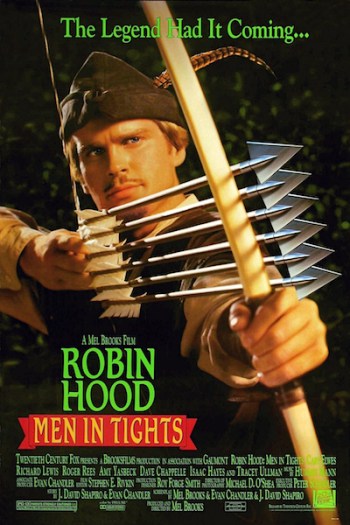
Although generally regarded as one of Brooks’ lesser movies, its deeply silly style tickles, and also means you don’t have to have seen Prince of Thieves (or remember it) to get most of the jokes. Cary Elwes is on point as the dashing hero, while Roger Rees successfully spoofs the unspoofable with a version of Alan Rickman’s villain. Instead of Nottingham he’s the Sheriff of Rottingham, a pun that indicates the film’s humour level.

3 out of 5

San Andreas (2015)

2017 #24
Brad Peyton | 110 mins | streaming (HD) | 2.35:1 | USA / English | 12 / PG-13

San Andreas

San Andreas is a most amusing movie. It’s not a comedy, just a generic effects-driven disaster movie in exactly the same style Hollywood has been producing for about 20 years.

In its favour it has the surprising likeability of Mr The Rock, Paul Giamatti hamming it up for a paycheque, and the mammarially blessed Alexandra Daddario running around, lazing in a bikini, getting wet, etc. There’s some solid spectacle, including a couple of nice long takes, which is what these movies are all about.

Conversely, it couldn’t be any cheesier if it had been entirely made out of dairy products.

3 out of 5

Mad Max: Fury Road – Black & Chrome Edition (2015/2016)

2017 #19a
George Miller | 120 mins | Blu-ray | 2.40:1 | Australia & USA / English | 15 / R

Mad Max: Fury Road - Black & Chrome Edition

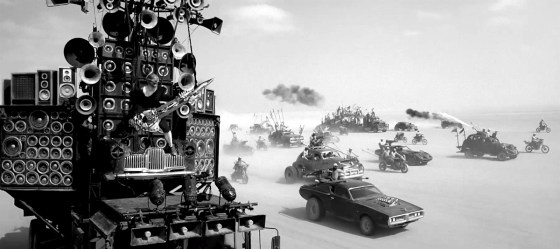
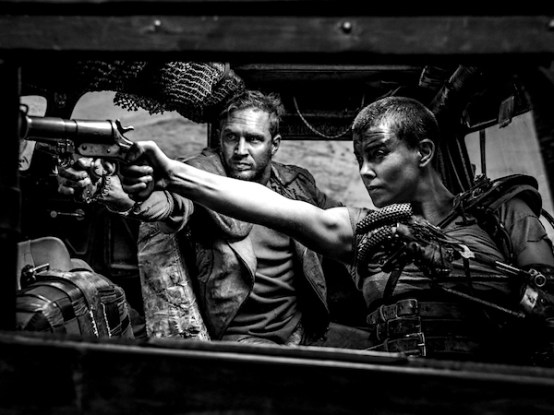
During post-production on Mad Max 2, aka The Road Warrior, director George Miller had a chance to watch composer Brian May (not that one) at work. As was standard practice, May was working with a ‘slash dupe’ copy of the film — a cheaply-produced duplicate print, which has the defining characteristic of being in black and white. Miller was instantly smitten, believing this was the best-looking version of his film. 30-something years later, during post-production on the fourth Max movie, Fury Road, Miller had the film’s colourist convert some scenes into black and white, and he once again discovered his preferred version. Only this time he mentioned it publicly and promised it would be released, which is more or less how, about 18 months after the film’s theatrical release, we ended up getting the so-called Black & Chrome Edition on Blu-ray. It finally makes its way to UK shores today… though only in a Zavvi-exclusive Steelbook edition, which has both already sold out and was dispatched to purchasers (like me!) last week. So, uh, so much for that.

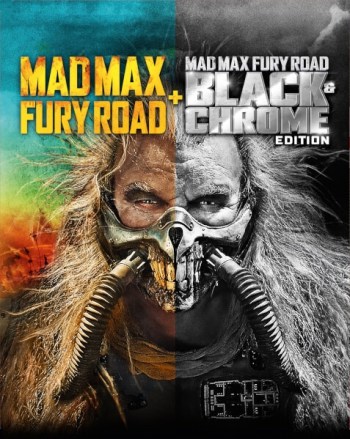
Let’s start by getting some people’s obvious complaint out of the way: “Why do you need to buy it again? Why not just turn down the colour on your TV?” Well, you could, and you’d get an approximation of the effect; but if you have an appreciation for the fine details of film photography and colouring, that doesn’t cut it. The Black & Chrome version isn’t just the existing colour turned off — other things have been tweaked to heighten the experience, most obviously the contrast. Here’s a video that handily compares a selection of shots from the colour version, the Black & Chrome version, and the colour version simply desaturated:

If you’re thinking “but the two black & white ones look the same!” then maybe this isn’t for you. And that’s OK — it’s an alternate version, after all.

In his introduction (the only new special feature on the Blu-ray), Miller admits that at times you lose some information by not having the colour; however, at other times it looks even better, and he reiterates that he thinks this is the best version of the movie overall. Somewhat famously, the theatrical version of Fury Road has hyper-saturated colours as a reaction against the usual post-apocalypse movie look of heavy desaturation. It’s somewhat ironic, then, that Miller’s preferred version is the opposite extreme — but can you imagine any studio exec agreeing to release a $150 million black & white movie?

Also in that introduction, Miller expands on the appeal of the desaturated version: “Something about black and white, the way it distills it, makes it a little bit more abstract, something about losing some of the information of colour, makes it somehow more iconic.” He’s got a point. The starkness of the imagery really heightens the effectiveness of some shots and sequences. Indeed, taking a look at some parts of the colour version afterwards, it all felt so ‘busy’ thanks to the additional visual information. You may remember that, a few years ago, Steven Soderbergh shared a black and white version of Raiders of the Lost Ark, the point being to highlight the shot composition and editing, easier to focus on with the distraction of colour removed. And he’s right. Not in the sense that this feels like watching an assignment for film school, but in the sense that the point of the framing and focus is emphasised further without colour.

Black and Doof

And it does look beautiful. Cinematographer John Seale is clearly a master of lighting, something that’s only more apparent without colour. Indeed, Soderbergh said the same thing of Douglas Slocombe’s work on Raiders: “his stark, high-contrast lighting style was eye-popping regardless of medium.” Most of the movie looks like it’s been etched from silver — or, of course, chrome. The greys and whites are metallic, the blacks deep points of contrast. It looks gorgeous. It’s let down slightly by the nighttime scenes, however. They weren’t so hot in the colour version either, having been clearly shot in daytime and aggressively graded blue. Presumably that finished version was used for this, because rather than the stark imagery of the rest of the film, the nighttime stuff is kind of murky, the blacks kind of blue-ish, and it’s far less pleasing. (If you want to see for yourself, compare this screenshot to the others here.) Fortunately, that doesn’t make up much of the film.

Separate to the colour issue, Miller has expressed the influence of silent movies over Fury Road, including cutting the film without its soundtrack to make sure that it worked on a purely visual level. When he first promised the black and white edition would be released, he also said there’d be an isolated score option, to give the viewer the option of seeing the most stripped-back version possible. Sadly, that hasn’t happened. (He also promised a commentary and additional special features, which aren’t there either.) At times I tried to imagine how it would work in relative silence, and aside from a couple of places where you might want an intertitle or two, and the pre-climax scene where Max explains the new plan to Furiosa, it’d get by fine. So thoroughly committed is Fury Road to visual storytelling that even many of the dialogue scenes don’t actually need their dialogue — think about the early bit where Hux and Slit argue about who’s going to drive, for example. Sure, the dialogue makes explicit that Hux is normally the driver and Slit is taking his steering wheel because Hux is semi-incapacitated, but their body language conveys the gist of their disagreement clearly. It’s a shame Warners didn’t go the whole hog and let us have the option to experience the film with just the score, or score and effects, because I think it would’ve been equally interesting.

Furiouser and Furiosa

Obviously Fury Road: Black & Chrome is always going to be a curiosity for the dedicated fan rather than the primary way of viewing the film. Next time I watch it I imagine I’ll go back to the full colour version… but that’s mainly because I’ve only seen that version once anyway, so I want to re-experience the full impact of its wild colourfulness. However, for appreciating the quality of the photography, and for emphasising the legendary iconicity of Max and Furiosa’s story, I think Black & Chrome may well be the way to go.

5 out of 5

Mad Max: Fury Road – Black & Chrome Edition is theoretically released on UK Blu-ray today. It’s also available to own digitally from Amazon, iTunes (as an extra on the regular edition), and presumably other retailers (if they still exist) too.

Steven Soderbergh’s variation of Raiders of the Lost Ark will probably be reviewed at a later date, because I really want to watch that now.

Miss Peregrine’s Home for Peculiar Children (2016)

2017 #16
Tim Burton | 127 mins | Blu-ray | 1.85:1 | UK, Belgium & USA / English | 12 / PG-13

Miss Peregrine's Home for Peculiar Children

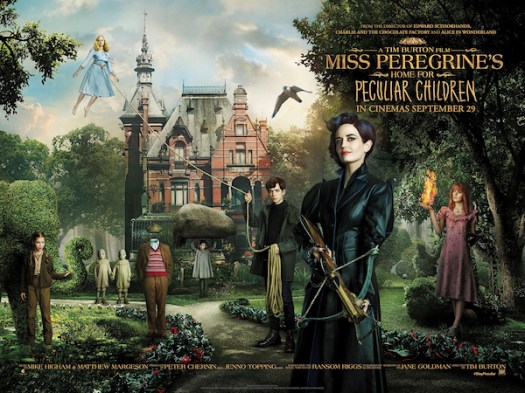
After his beloved grandpa Abe (Terence Stamp) dies in mysterious circumstances, Floridian teen Jake (Asa Butterfield) seeks closure by visiting the children’s home in Wales where his grandpa was raised. As a child, Abe regaled his grandson with tales of the home’s other residents and their fantastical abilities — tales which were completely true, as Jake discovers when he meets Miss Peregrine (Eva Green) and her peculiar wards.

The quickest route to defining the experience of watching Miss Peregrine is by referencing other films, if only in a broad sense. For starters, it’s adapted from a young adult fantasy-adventure novel, and there’s a definite shape to things which reflects other entries in that genre — the whole “ordinary kid discovers a fantasy world of incredible powers and approaching danger” type thing.

It’s also directed by Tim Burton, and does feel like a Tim Burton movie. However, what’s incredibly pleasant about that is it doesn’t feel aggressively Burtoneseque. As if in reaction to the blandness of his Planet of the Apes remake, much of Burton’s output since then has slipped towards self-parody, and suffered for it. Miss Peregrine has recognisable flourishes, undoubtedly, but is a little more restrained with how it deploys them. Some have criticised it for this, citing it as another example of Burton removing his unique stamp from the picture, much as he did with Apes, but I disagree.

Her special ability is being a badass

The final other work I would reference is the X-Men; in any incarnation, but the most relevant filmic one is probably First Class. Or not, because that was all about the establishing of Xavier’s school and the equivalent establishment here is already established. Nonetheless, it’s about a country house owned by a British matriarch-figure who cares for a gaggle of misfit kids with special powers. Rather than the X-Men’s potentially-violent array of action-ready skills, however, the ones on display here are a little more whimsical — like Emma (Ella Purnell), who’s lighter than air, or Horace (Hayden Keeler-Stone), who can project his dreams through his eyes.

Also like X-Men, the threat comes from within this secretive world. The starter X-baddie is, of course, Magneto, a mutant seeking to use scientific methods to turn the whole world into mutants. Here, the baddie is Barron (Samuel L. Jackson), a peculiar seeking to use scientific methods to grant immortality to himself and his cronies. Part of their thing is eating people’s eyeballs, which has benefits for them — again, that’s quite Burtonesque… though a mite less whimsical.

The eyes have it

Being on board with this whole milieu is important to enjoying Miss Peregrine, because the film does spend a lot of time establishing it. For those not interested in world-building, the action-packed third act must be a long time coming. There is a lot to marvel at along the way though, and Burton keeps things pleasingly real in his filmmaking techniques: there’s a fight between two creatures that was created with stop-motion, while another sequence involved constructing underwater rigs, and the vast majority of Emma’s floating was achieved by dangling Purnell on wires. That’s not to say there’s no CGI — ironically, the foremost example is a sequence that could otherwise be considered a tribute to Ray Harryhausen — but Burton’s filmmaking encapsulates varied techniques to lend a satisfying physicality to much of the film.

On the whole Miss Peregrine seems to have received a rather muted response, but I thoroughly enjoyed it. It might be best to qualify that by reiterating that it’s playing with a lot of things I enjoy — “X-Men by way of Tim Burton” sounds fantastic to me, and that’s not a bad definition of this movie. I’d even go as far as saying it’s his best work this millennium (though, in fairness, I still haven’t seen Big Fish. Well, it’s only 14 years old.) The shape of the story is no great shakes, but it’s built from magical elements and fantastical imagery, and a game cast of quality thesps hamming it up magnificently and eager youngsters with a slightly earnest likeability.

Let's go fly a kite

Actually, in many ways it reminds me of another heightened, stylised young-adult adaptation that suffered from a mixed reception. See you in 2029 for the Netflix re-adaptation, then?

4 out of 5

Miss Peregrine’s Home for Peculiar Children is released on DVD & Blu-ray in the UK tomorrow.

The Tale of Zatoichi Continues (1962)

aka Zoku Zatôichi monogatari

2016 #194
Kazuo Mori | 73 mins | Blu-ray | 2.35:1 | Japan / Japanese

The Tale of Zatoichi Continues

Back in 2014, when I reviewed the debut Zatoichi movie a year after first watching it, I promised that reviews of the series’ future instalments would follow in 2015. Well, it’s 2017, and here’s Film #2. Yeah, this is going to be the new Rathbone Holmes, isn’t it?

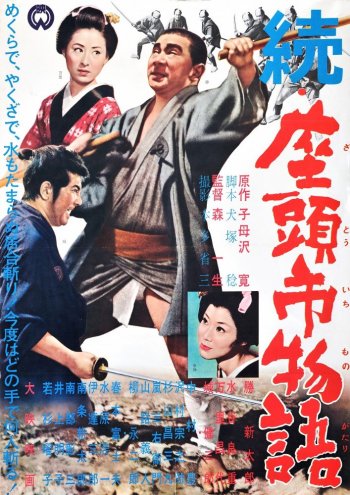
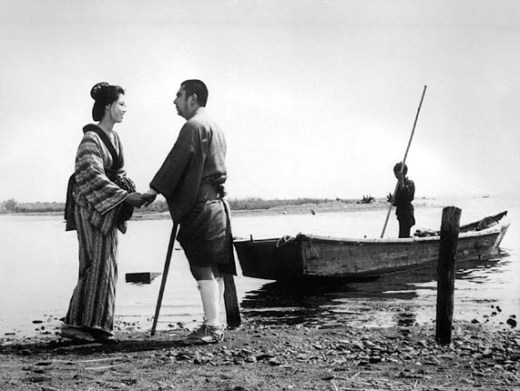
Anyway, this second movie is — as its title might suggest — a direct sequel (a rarity for the series, so I gather), which sees our hero, the blind masseuse and skilled swordsman Ichi (Shintarô Katsu), back in conflict with one of the gangs from the first film. Despite that, it doesn’t start like a direct sequel at all. Reference is made to the previous film, the events of which have given Ichi a reputation, but that could be a reference to something that occurred off-screen for all its significance to the story. Later, however, we learn that Ichi is travelling to pay homage to the grave of the samurai he killed before, and we end up in the same town with some returning characters. It’s quite a nice structure for a sequel: to seem like a new adventure before revealing and exploring connections to the previous movie. Unfortunately, to say this film “explores” anything would be doing it a kindness.

All the ladies love a blind man

The consensus seems to be that The Tale of Zatoichi Continues is a faster-paced and more action-packed movie than its predecessor, which is obviously to some viewers’ taste. The fight scenes are certainly on a more epic scale: where the first movie ended with a one-on-one between Ichi and an opposing samurai, here he takes on a small army of men. It’s less than an hour-and-a-quarter long, too, at which length it’s hard to avoid running at a brisk speed. However, I thought it lacked the artistry of the first film. It’s very focused on plot rather than digging into character, which is especially problematic when it comes to a subplot about a rogue who turns out to be Ichi’s brother. It’s structured to make for good reveals, but they aren’t always well executed, and what should carry a weight of emotion ends up rushed.

The movie as a whole is oddly paced and very oddly ended. What turns out to be the de facto climax starts earlier than you’d expect, but then the film moves on from it… before suddenly stopping. Is this meant to be a cliffhanger? It doesn’t quite play like one, but it’s also unresolved. Film 1 felt like a complete story, but this ends with the need for a Part 3 — or rather a Part 2.1, because it doesn’t feel like a whole movie. The fact the next one is called New Tale of Zatoichi isn’t promising…

Brotherly love

Technical merits are similarly mixed. It’s not poorly shot, but it’s not as striking as its predecessor. The music is occasionally horrendous. There is indeed more sword fighting, and with it more involved choreography, but it doesn’t feel like an earned trade-off with the lightweight story.

The Tale of Zatoichi Continues comes with lots of great ideas and potential themes, but the rushed production seems to have led to a weak execution. It’s almost like you want to say to the filmmakers, “good effort, you’re almost there. Now try again and do it properly.” Of course, there are 23 more films where they may do exactly that…

3 out of 5

Howl’s Moving Castle (2004)

aka Hauru no ugoku shiro

2016 #193
Hayao Miyazaki | 114 mins | DVD | 1.85:1 | Japan / English | U / PG

Howl's Moving Castle

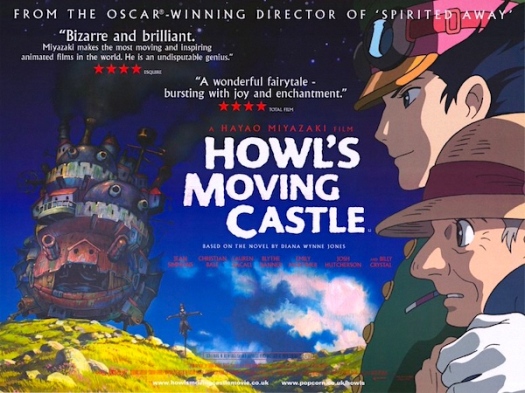
Director Hayao Miyazaki’s first film after he won the Oscar for Spirited Away, Howl’s Moving Castle is another fantasy adventure about a young girl encountering a magical world. Well, I’m bending that similarity a bit — the heroine is considerably older than the one in Spirited Away (a young woman rather than a girl) and she already lives in a world where magic exists (but she doesn’t seem to have encountered much of it).

Adapted from a novel by British author Diana Wynne Jones, Howl’s Moving Castle concerns Sophie Hatter (voiced in the English version by Emily Mortimer), who works in her family’s hat shop in a fictional Mitteleuropean country in a steampunk-y past (anime really gets away with launching you into these subgenre-mash-up worlds in a way no Western work ever dares, doesn’t it?) After a brief chance encounter with famed wizard Howl (Christian Bale), Sophie is attacked by the wicked Witch of the Waste (Lauren Bacall) and transformed into an old woman (now voiced by Jean Simmons). She goes hunting for Howl’s titular abode/transportation, wherein she meets sentient fire Calcifer (Billy Crystal), Howl’s young assistant Markl (Josh Hutcherson), and alongside them gets swept into a brewing war with a neighbouring country.

Frankly, the plot is a bit messy, flitting from one situation to another in a way that feels in need of some streamlining. The climax is particularly hurried, underpowered, and under-explained. For example, there’s a missing prince who suddenly turns up to resolve the whole war storyline — a prince who was only mentioned in passing in some background dialogue nearly two hours earlier.

Running up that hill, no problem

However, much of the film is enjoyable in a moment-to-moment sense. The affable characters are quite delightful to get to know even as they’re getting to know each other, and there are some magical sequences. Plus it’s all beautifully designed and animated, as you’d expect from Studio Ghibli, though we should never take such achievements for granted. The English dub is pretty good too, benefitting from Disney picking it up and getting a starry cast, and no doubt the direction of Pete “Monsters Inc / Up / Inside Out” Docter and Rick Dempsey. No disrespect to the professional voice actors who work in anime day-in day-out, but they often perform with a certain stylisation that isn’t always naturalistic.

Apparently Howl’s Moving Castle is Miyazaki’s favourite from his own work, probably because some of its themes (anti-war sentiment, a positive depiction of old age, the value of compassion) are close to his heart. While those are worthwhile topics, they sit alongside the aspects mentioned above as good parts that aren’t wrapped up into a whole that equals their sum. But even if it’s not Ghibli’s finest work, it’s still a likeable fantasy adventure.

4 out of 5

Howl’s Moving Castle was viewed as part of my What Do You Mean You Haven’t Seen…? 2016 project, which you can read more about here.

Studio Ghibli’s first TV series, Ronja, The Robber’s Daughter, is available on Amazon Prime in the UK and USA (and presumably elsewhere too) from today.

Into the Wild (2007)

2017 #7
Sean Penn | 148 mins | streaming (HD) | 2.35:1 | USA / English & Danish | 15 / R

Into the WildThe true story of Christopher McCandless, who abandoned regular life after college to go hitchhiking and become one with nature or something, then accidentally killed himself by being a pretentious wanker.

The filmmaking is driven by this same youthful pomposity, which when you consider it was “screenplay and directed by” (to quote the awkward credits) a 47-year-old Sean Penn makes it feel both inauthentic and also, frankly, a little pathetic.

At least there’s some stunning scenery; and Hal Holbrook’s performance as a lonely old man, whose outward cheerfulness masks inner sorrow and a need reengage with life, is suitably affecting.

2 out of 5

Into the Wild was viewed as part of my What Do You Mean You Haven’t Seen…? 2017 project, which you can read more about here.

It featured on my list of The Five Worst Films I Saw For the First Time in 2017, which can be read in full here.

Kubo and the Two Strings (2016)

2017 #5
Travis Knight | 102 mins | Blu-ray | 2.40:1 | USA / English | PG / PG

Kubo and the Two Strings

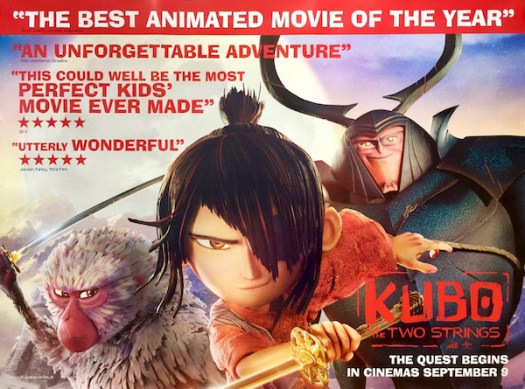
The latest film from animation studio Laika (Coraline, ParaNorman, The Boxtrolls), Kubo and the Two Strings is a samurai-action fantasy-adventure inspired by Japanese culture and folklore — but animated in stop-motion and rated PG! Not that either factor in any way undermines what may be the greatest animated movie of last year.

It is, unsurprisingly, the story of Kubo (voiced by Art “Rickon Stark” Parkinson), a young boy in olden-times Japan who regales the folk of his local town with fantastical adventure stories, which he brings to life with origami that he animates using magic from playing his shamisen (basically, Japan’s answer to the banjo). These stories actually come from Kubo’s mother and relate to his own life: Kubo’s grandfather is the evil Moon King (Ralph Fiennes), who they fled from when Kubo was a baby, while his father stayed behind to aid their escape, presumably to the death. Kubo mustn’t go out at night lest the Moon King see him and send his minions, Kubo’s creepy aunts (both Rooney Mara), to capture them. So Kubo never goes out at night and they all live happily ever after.

Not really! When the aunts come for them, Kubo’s mother uses the last of her magic to whisk Kubo away on a quest to find some mythical armour that he’ll need to defend himself against the Moon King. To help him, she brings his wooden monkey charm to life (voiced by Charlize Theron); and along the way they stumble across a man-sized beetle who used to be a samurai (voiced by Matthew McConaughey). Scrapes ensue as the trio hunt for the three pieces of the armour, with the vicious aunts in pursuit.

Monkey, Beetle and Boy

At its most basic, Kubo sounds like an archetypal “fantasy quest” narrative, with a gang of heroes in search of a MacGuffin to defeat a Big Bad. But the devil is in the details — something the folks at Laika know only too well. The Japanese myths they’ve tapped into here make for some fantastic detail; if anything, the familiarity of the broad story arc allows the unique aspects of the mythology to be all the more prominent, including some possibly surprising developments later on. I say “possibly” because I’ve read at least one complaint about the twists being guessable to adult viewers. Well, this is a fable and also, technically, a kids’ movie — just two reasons why plot guessability doesn’t really matter. I mean, if all you want from a movie is to be surprised, why not just watch 90 minutes of things popping out of boxes?

The other aspect massively in Kubo’s favour is the animation. It’s genuinely stunning — beautiful to look at, as well as being technically audacious and consequently impressive. Some of it is so grand that several times I forgot that most of what we’re seeing on screen was built for real and animated by hand over several years. I say “most” because it is augmented with CGI, just as any action-fantasy live-action movie would be these days. The fact there was green screen and compositing and some wholly CG elements doesn’t detract from the technical workmanship on display. That included the largest stop-motion puppet ever built. I won’t spoil what or where it is in the film, but there’s a behind-the-scenes glimpse during the end credits that is breathtaking.

Relatively dangerous

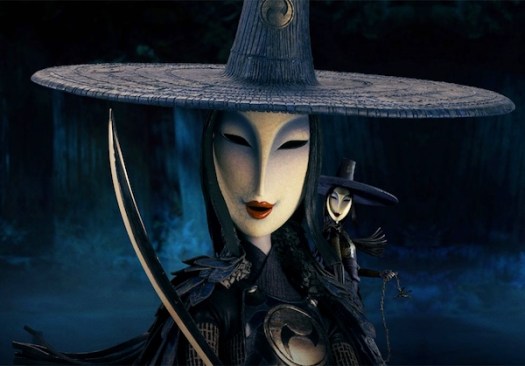
Another area the animation excels is in the action scenes. That’s a field which is rarely animation’s forte, especially stop-motion animation, but Laika took on the challenge and nailed it. Everything from the antics of Kubo’s animated origami to a centrepiece duel aboard a ship at sea are the equal to anything you’d find in a live-action samurai actioner. The character work is excellent too, especially the villains. The aunts are fabulously creepy, mainly thanks to their blank mask faces and the way they float everywhere, seemingly indestructible. There are a couple of other monstrous creatures too, but their wonders deserve to be discovered in situ.

It’s not just scale that Kubo does well: the attention to detail was immense, with Japanese cultural experts called in to inform the tiniest detail, like period-accurate stitching on the clothing. This is background detail on 10-inch puppets, remember, but they went to that much trouble. It’s indicative of the attention paid to every facet of the movie, and while using the correct stitching, or developing appropriate techniques for animating water, or applying genuine principles from Japanese beliefs, do not in themselves make for a great movie, they indicate the level of care taken over this project — which does help to produce a great movie.

Then there’s the music, composed by Dario Marianelli, which integrates the shamisen as well as other appropriate instruments into a consistently lyrical score. And the photography, by Frank Passingham — it’s not just the design work and high-quality builds that make the film so gorgeous to look at, but the quality of the light that’s captured. And I’ve been so busy singing the film’s production praises that I haven’t even mentioned how funny it is, or how emotional, with Mar Haimes and Chris Butler’s screenplay tucking some very positive lessons away in the final act. Indeed, the alternative perspective offered by embracing a different culture means that, for once, they might not just be lessons for kiddie viewers. By the time the credits roll — to a glorious cover version of a perfectly chosen song — the whole experience is completely enchanting.

The quest goes ever on

I think Laika as a name went a bit unnoticed with their first feature, Coraline, because it had the already-headlining names of writer Neil Gaiman and director Henry “Nightmare Before Christmas” Selick. Their two subsequent features seem to have been well-liked but not set the world on fire (I’ve still not seen either). But here, they’re firmly stamping their name as a mark of quality. Come in Pixar, your time may be up. I’m sure Kubo won’t be picking up many gongs in the current awards season, what with three big-name Disney-backed pictures arrayed against it, but I find it hard to believe any of those outdid the artistry on display here, both in its spectacular animation technique and its majestic storytelling. To say it’s 2016’s best animated film is underselling it — it’s one of my favourite films released last year, fullstop.

5 out of 5

Kubo and the Two Strings is released on DVD and Blu-ray in the UK today.

It placed 3rd on my list of The 17 Best Films I Saw For the First Time in 2017, which can be read in full here.