Shrek Forever After (2010)

2018 #132
Mike Mitchell | 93 mins | Blu-ray | 2.35:1 | USA / English | U / PG

Shrek Forever After

Shrek the Third suggested that DreamWorks’ golden-goose animated franchise was running out of fairytales to subvert, so this fourth — and final (for the time being) — movie turns its attention on the series itself.

Shrek is becoming disgruntled with life as a family man, so signs a deal with Rumpelstiltskin to have just one day as a “real ogre” again — but Rumpelstiltskin is a tricksy so-and-so, using the small print to land Shrek in an alternate timeline where he was never born. If Shrek can’t sort it out by midnight, he’ll be erased forever and the new timeline will stick. The filmmakers take this storyline as an opportunity to give us a look at how characters might’ve turned out in a Shrek-less world: Fiona is a warrior leading an ogre resistance, disillusioned by life after no prince came to rescue her; Puss in Boots is a fat, pampered kitty; and Donkey is working as a cart-donkey… but is otherwise pretty much the same. I guess some personalities never change.

Sundry of the series’ many supporting characters get the same treatment, and it’s in this upending of familiarity that Forever After finds its greatest entertainment value. The result therefore favours dedicated viewers, while newcomers would be advised to seek out the franchise’s first two instalments. While this conclusion might not be quite as good, or iconic, as that pair, it does have a lot going for it, making it a more fitting finale than its mediocre predecessor.

4 out of 5

Shrek Forever After is on BBC One today at 3:10pm, and will be available on iPlayer afterwards.

Spider-Man: Into the Spider-Verse (2018)

2018 #254
Bob Persichetti, Peter Ramsey & Rodney Rothman | 117 mins | cinema | 2.35:1 | USA / English | PG / PG

Spider-Man: Into the Spider-Verse

When it was announced a couple of years ago that Sony were developing an animated Spider-Man movie, there was, I think, some confusion about what they were playing at. The live-action movies were continuing, so this wasn’t a replacement. Was it connected? If so, why was it animated? If not, why did it exist? What was the point? Besides the obvious, anyway (popular brand + movie = money). Maybe Sony were just ahead of the game: where previously only one actor or series took on the mantle of a character at any one time, we’re increasingly in a world where multiple screen versions can exist simultaneously. Not that this film focuses on the same Spider-Man as the other ones…

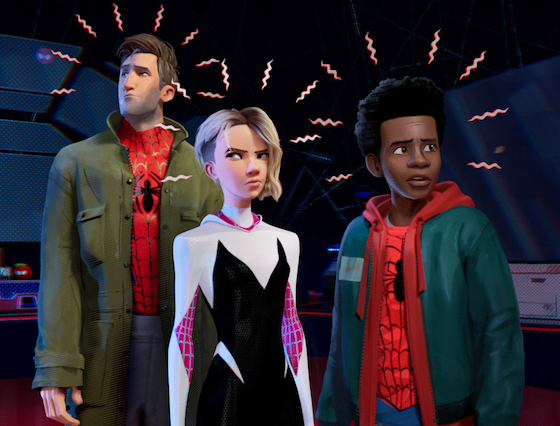
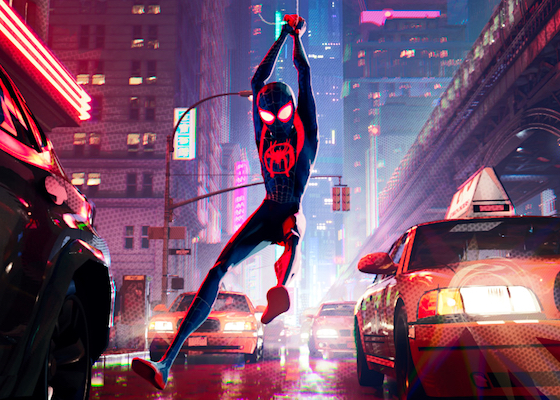
Into the Spider-Verse begins by introducing us to… Peter Parker. Well, of course it does — he’s Spider-Man, right? But after a witty do-over of his backstory (second only to Batman’s in terms of the number of times we’ve seen it adapted, I should think), focus shifts to one Miles Morales (Shameik Moore), a Brooklyn teenager struggling to fit in at his new private boarding school and deal with the pressure put on him by his police officer father. Escaping school one night to hang out with his Uncle Aaron (Mahershala Ali), Miles gets bitten by a genetically-modified spider and… well, you know the rest, more or less. But Miles has more than just new powers to contend with: evil scientists have created a machine to open a doorway to other dimensions (who they are and why they’re doing it, I’ll leave for the movie to reveal). But the malfunctioning machine is likely to rip the universe apart, and it falls to Miles to stop it. Fortunately, the dimensional instability means a whole host of alternate-universe Spider-People show up to help him.

Spider-People

It’s bold to do a team-up movie with a whole host of characters we’ve never met before — it’s something DC were criticised for with Justice League as soon as it was announced, and we were actually introduced to half of that team before the team-up happened. Well, Spider-Verse isn’t really a team-up movie in the Avengers Assemble sense. This is Miles’ movie; the other heroes are a supporting cast. This is the kind of thing that goes on all the time in comic books — heroes popping up for cameos or supporting roles in other heroes’ books — and, of course, something Marvel have increasingly brought to the screen in the MCU. Spider-Verse handles its big cast smartly, both in terms of how much screen time they get, but also how they’re introduced. Comic books will often have a cameo occur assuming you know who that character is and why they’re significant, and if you’re not an avid fan this can be confusing. Spider-Verse is a bit smarter. Brand-new characters get a solid introduction, but there are others certain others who pop in with the assumption you’ll know who they are — and, considering we’ve had over 15 years of immensely-popular Spider-Man movies, you probably do. This isn’t really a film aimed at total newcomers to Spider-Man’s world, though you’d probably get by if you are.

That’s just one way in which Spider-Verse is perhaps the most comic-book-y comic book movie ever made. Another is the animation style, which works overtime to evoke comic books of old, while still being suitably modern and detailed. To describe the minutiae of all the little visual tricks and treats going on would take paragraphs and, frankly, get a bit dull — they’re interesting to watch, but not so much to read about spelled out in prose. Suffice to say the cumulative effect is certainly unique. Whether it always works… well, there were times I worried I’d actually wandered into a 3D screening and not brought any glasses, let’s put it that way. (I hadn’t.) But while it might take some getting used to, ultimately I really liked it.

King of the swingers

Indeed, that could be said of the film as a whole. Having heard a lot of advance hype from critics and preview screenings, Spider-Verse comes laden with expectation. Some earlier parts of the film play out a broadly standard superhero origin story, and, while it’s by no means bad, it doesn’t necessarily feel exceptional. But as more characters and concepts are introduced, and the film begins to pay off what it’s been setting up, it really comes together. It culminates in a powerful message — underlined by a closing quote from the great Stan Lee himself — that’s especially pertinent in the current climate of media criticism, which seems to see most people pushing for greater diversity of representation and artistic voices, while a vocal minority push back with thin “I’m not a racist but” arguments. Spider-Verse has an inclusivity at its core that is well balanced: if you want to shut out any messages and just enjoy a bunch of super-powered people engaging in hyper-kinetic action sequences, it can scratch that itch; but it demonstrates its core values, only stating them in summation at the end, rather than preaching them.

So it turns out that, yeah, Into the Spider-Verse lives up to the hype, if you give it the time to get there. It’s a movie that will satisfy comic book fans in particular, I think, but also anyone who enjoys animation as an artform. This isn’t your standard Disney/Pixar/Illumination/etc fare, but a thrillingly-realised vision of what animation can do.

5 out of 5

Spider-Man: Into the Spider-Verse is officially released in the UK today and the US on Friday.

It placed 9th on my list of The 26 Best Films I Saw For the First Time in 2018.

Mowgli: Legend of the Jungle (2018)

aka just Mowgli

2018 #252
Andy Serkis | 104 mins | streaming (HD) | 2.39:1 | UK & USA / English & Hindi | 12 / PG-13

Mowgli: Legend of the Jungle

Hollywood has a long history of different people coming up with the same idea resulting in competing films — asteroid-themed Armageddon and Deep Impact is perhaps the best-known example. But often when the ideas are too similar, one of the projects gets scrapped — Baz Luhrmann ditched plans for an Alexander the Great biopic once Oliver Stone’s got underway, for instance. When Disney and Warner Bros both announced CGI-driven live-action adaptations of Rudyard Kipling’s The Jungle Book, I don’t know about anyone else, but I figured one studio would blink and we’d end up with just one film. That didn’t happen, and both movies entered production around the same time, and were even originally scheduled to come out the same year. In this respect it was Warner who blinked first, putting their version back to allow more time to finesse the motion-capture-driven animation, while Disney got theirs out on schedule. Unfortunately for Warner, it was a huge hit with critics and audiences alike, putting their version in a rather precarious position.

So when the news broke that Mowgli (as the film had been retitled to help distance it from Disney’s) was to be released direct to Netflix, well, I don’t think anyone was surprised: the streaming service has become a regular dumping ground for movies that studios have lost confidence in, seemingly happy to pay for any castoff a major studio throws their way. Apparently that’s not what went down this time, though: Mowgli had a theatrical release date set and the promotional campaign had begun, when Netflix approached Warner saying they loved the film and wanted to buy it. I guess the certainty of a large Netflix payday vs. the gamble of box office success on a film that could be seen by the general public as a Johnny-come-lately cash-in rip-off was an easy choice for Warner to make. And so here we are.

A legend in the jungle

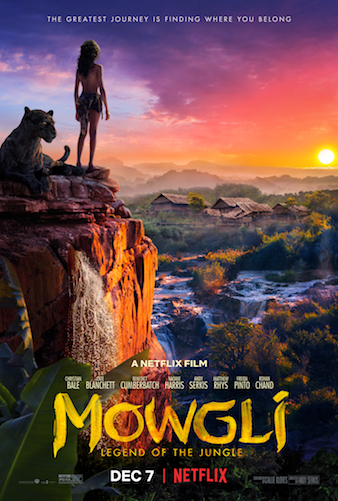
Mowgli (as it’s always called in the film itself, the subtitle presumably being a Netflix marketing addition) has a story that will be broadly familiar to anyone who’s seen any other version of The Jungle Book, most especially that recent Disney one: the eponymous boy is orphaned when his parents are murdered by man-eating tiger Shere Khan, but he’s rescued by black panther Bagheera, who takes him to be raised by a pack of wolves. Shere Khan wants to kill the man-cub, however, and looks for an opportunity to separate him from the wolves’ protection. The difference, then, lies in the details: where Disney’s version was PG-rated and family-friendly, director Andy Serkis has given this a darker, PG-13 spin. It’s not an Adult movie by any means, but it’s definitely suited to slightly older children. That said, there’s a revelation at the 80-minute mark which is horrendously misjudged, and is liable to upset children of all ages (i.e. including some adults too).

That moment aside, the film’s more realistic tone manifests in multiple ways. One is characterisation, most notably of the bear Baloo. As we know him from Disney’s takes, he’s decidedly laid-back and chummy, casually teaching Mowgli some ways of the jungle. Here, he’s more of a drill sergeant for the wolf pack, explicitly training Mowgli (and his wolf brothers) in the skills required to fully join the pack. He has a softer side — he definitely cares for the man-cub — but this never manifests in the Disney-ish way. Elsewhere, there’s a drive at some kind of psychological realism for our hero. With Mowgli driven out for his own safety (again, an example of the animal characters being somewhat harsher than in Disney), he ends up in a human village. There, he comes to realise he doesn’t truly belong in the world of animals… but nor does he truly belong in the world of men. This internal conflict about his place in the world comes to underpin the climax, and arguably makes it superior to the over-elaborate forest-fire spectacle of Disney’s film.

Not burning bright, but he is in a forest of the night

The realism extends to the overall visual style, too. Where Disney’s live-action version was all shot on L.A. sound stages, with the young actor playing Mowgli frequently the only real thing on screen, Serkis and co travelled overseas and actually built sets on location to shoot a significant portion of the film. Accompanied by cinematography that often goes for a muted colour palette, it seems clear the aim was to make a film that is perhaps not “darker” in the now-somewhat-clichéd sense, but more grounded and less cartoonish than certain other adaptations.

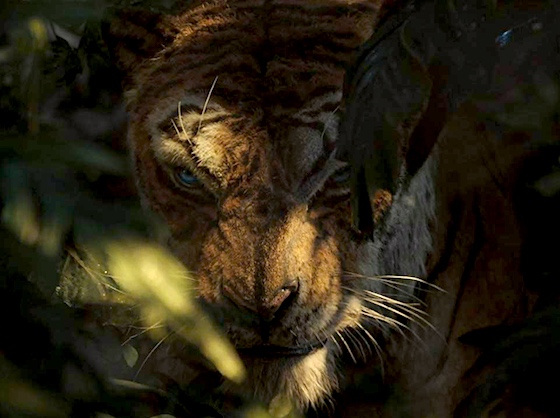
Unfortunately, Serkis made one design decision that threatens to scupper the entire endeavour: having motion-captured famous actors for most of the animal roles (including the likes of Christian Bale, Benedict Cumberbatch, Cate Blanchett, Tom Hollander, Peter Mullan, Eddie Marsan, Naomie Harris, and, of course, Serkis himself), someone thought it would be a good idea to try to integrate the actors’ features into the animal faces. The result is… disturbing. There’s so much realism in the overall design, but then they have these faces that are part realistic, part cartoon, part like some kind of grotesque prosthetic. It is so bad that it genuinely undermines the entire movie, for two reasons: one, it’s a distraction, making you constantly try to parse what you’re watching and how you feel about it; and two, a more serious take on the material asks for us to make a more serious connection to the characters, and that’s hard when they look so horrid. The section in the human village — which, by rights, should be “the boring bit” because it doesn’t involve fun animal action — is probably the film’s strongest thanks to its location photography and real actors making it so much more tangible. It suggests how much more likeable the entire film would be if they’d gone for real-world-ish animal designs — like, ironically, the Disney film did. (Now, that might’ve got away with cartoonish semi-human animals thanks to its lighter tone. Or it might not, because these are monstrous.)

Monstrosity!

It sounds petty to pick one highly specific element and say it ruins the film, but I really felt like it did. It’s a barrier to enjoying the bits that work (Rohan Chand is often superb as Mowgli; the always-brilliant Matthew Rhys is brilliant as always; there’s some welcome complexity and nuance to several characters and situations), and therefore it does nothing to help gloss over any other nits you want to pick (Serkis is miscast; Frieda Pinto is completely wasted; Cumberbatch is a little bit Smaug Mk.II; that revelation I mentioned back in paragraph three is brutal and I can’t believe it was okayed by the studio). Also, on a somewhat personal note, I felt there were times you could tell Serkis had made the film in 3D, but Netflix haven’t bothered to release it in that format (outside of some very limited theatrical screenings) — as someone who owns a 3D TV because, you know, I enjoy it, that miffed me.

On the whole, Mowgli: Legend of the Jungle is a frustratingly imperfect experience. I believe it’s fundamentally a unique-enough variation on the material that it could’ve escaped the shadow of Disney’s film, but a few misguided creative decisions have dragged it down almost irreparably.

3 out of 5

Mowgli is available on Netflix worldwide now.

February Review Roundup

As 2018 races towards its finish line, I’m sat on a pile of nearly 130 unwritten reviews. Oof. And to think, I started that page when I first got 10 behind.

Anyway, as my (likely in vain) attempts to reduce that number continue, today’s roundup includes three reviews of films I watched all the way back in February:

  • WarGames (1983)
  • Being John Malkovich (1999)
  • I Origins (2014)


    WarGames
    (1983)

    2018 #22
    John Badham | 113 mins | streaming (HD) | 1.85:1 | USA / English | 12 / PG

    WarGames

    It’s Ferris Bueller’s Third World War as Matthew Broderick plays a precociously talented high schooler who unwittingly hacks into a government war planning supercomputer and instigates a countdown to nuclear annihilation.

    It’s a funny old mashup of genres that I’m not sure you’d get away with today. It starts out as a Cold War thriller, feeling almost like a Tom Clancy adaptation; then suddenly it’s a John Hughes high school comedy; then the two have to awkwardly mesh, before it turns fully into a young adult techno-thriller. Young Adult fiction is almost synonymous with dystopian future adventures nowadays, but WarGames reminded me nonspecifically of the kind of thing YA books used to be about when I was the right age for them — and, considering that would’ve been in the mid ’90s, those books were quite possibly inspired by this film.

    So, it’s inescapably of its era, but no worse off for that… though how The Youth Of Today would take to it, God only knows. If you stop to think too much (or at all) about the ins and outs of the plot then it becomes thoroughly implausible in so many different ways, but if you let those things slide and go along with the film on its own terms then it’s a cracking adventure yarn.

    4 out of 5

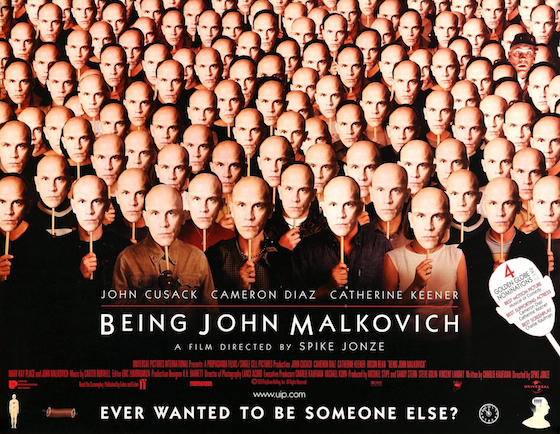
    Being John Malkovich
    (1999)

    2018 #28
    Spike Jonze | 113 mins | streaming (HD) | 1.85:1 | USA / English | 15 / R

    Being John Malkovich

    The film that introduced the world to the kooky imagination of screenwriter Charlie Kaufman (almost 20 years ago now!), Being John Malkovich is about a failing puppeteer (John Cusack) who starts a new job in a bizarre office, where he develops an unreciprocated infatuation with a coworker (Catherine Keener) and discovers a hidden portal into the mind of actor John Malkovich (John Malkovich).

    Even with that mad premise, Being John Malkovich wasn’t the film I thought it was going to be. Well, I don’t know what I was expecting exactly, especially as it’s a Kaufman film so I knew to expect “weird”. But I guess I anticipated that it would focus on people inhabiting Malkovich and doing kerazy things as him, or something, rather than it being a four-way love triangle (in an Escher-esque way rather than an “uh, I think you mean love quadrilateral” sense) in which the whole “inhabiting Malkovich’s body” thing is more a means to an end rather than the film’s raison d’être.

    Said end is an exploration of identity and relationships — indeed, the screenplay reportedly started life as “a story about a man who falls in love with someone who is not his wife” and the kooky body-swap antics came later. I’ve read reviews that frame it in the context of films like Mulholland Drive and Persona as a “comedic meditation on identity”; though what it actually says about identity, I’m not sure (but then, I wasn’t really sure what Mulholland Drive and Persona were saying either, so maybe this is just me). But I wonder: does it just tip its hat in that direction while playing around with the situation to see what happens? Are the filmmakers “yeah, whatever”ing the broader psychological implications (as one of the characters does) while playing out the full bizarreness of the premise to its logical extreme? I’m not sure “logical” is quite the right word for what goes on in this movie, but what I mean is it works through the fullness of the idea, extrapolating it through various events and to a conclusion. Can you even consider the true psychological implications with something so out-there and not-real?

    Well, maybe. Indeed, the film kinda does, through its relationships. One character falls in love with another, but only when the latter is in Malkovich’s body; but then they’re tricked into falling for someone else in Malkovich’s body; but that doesn’t work out in the long run, and the first pair end up together in real life — so the physical body is the initial attraction, but it’s ultimately irrelevant to the actual person inside. Basically, is this just a kooky, crazy, bizarre film whose message is the age-old “beauty isn’t just skin deep”?

    4 out of 5

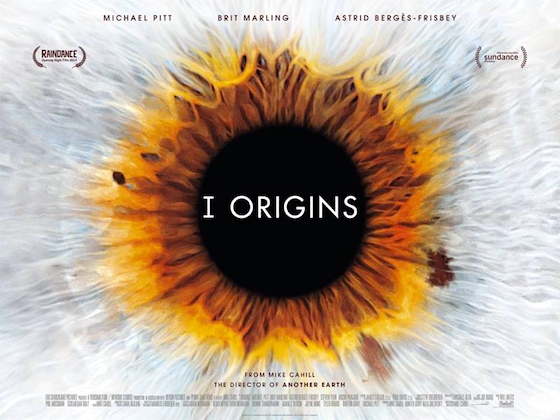
    I Origins
    (2014)

    2018 #36
    Mike Cahill | 103 mins | TV (HD) | 2.39:1 | USA / English | 15 / R

    I Origins

    The second film from Another Earth writer-director Mike Cahill, I Origins is another science-fiction drama with the emphasis on “drama” more than “sci-fi”. It’s about a scientist, Ian (Michael Pitt), who’s mapping the evolution of the human eye with his lab partner (Brit Marling), hoping it will help discredit the superstitious religious ideas that he despises. At a party, Ian is drawn to a masked woman (Àstrid Bergès-Frisbey) by her eyes, and they end up dating — but developments in their relationship send his research in surprising directions…

    I Origins is a consistently engaging, intriguing film; the kind of story that continues to develop and evolve its premise throughout its whole running time, so that I’ve had to be a bit vague to avoid just giving away the entire plot. My only real query is that I don’t know what it all signified in the end. Something to do with there being room for spirituality even in dyed-in-the-wool scientists? Or maybe it’s just about the personal journey of its lead character? Or maybe, as it was developed as a prequel to an unmade script, the really significant stuff lies there, and this is just backstory? (Cahill sold the rights to that screenplay in 2011, but it’s still not been produced.)

    It feels a bit disingenuous to praise a film where I don’t really know for sure what the point was, but I liked it quite a lot all the same.

    4 out of 5

  • Ant-Man and the Wasp (2018)

    2018 #247
    Peyton Reed | 118 mins | Blu-ray (3D) | 2.39:1 + 1.90:1 | USA / English | 12 / PG-13

    Ant-Man and the Wasp

    After the huge (in every respect) Avengers: Infinity War, the comically-minded Ant-Man and the Wasp feels like a palate cleanser for the MCU; a bit of light entertainment to help smooth the long gap between the Avengers film’s devastating cliffhanger and 2019’s double whammy of Captain Marvel (trailer today!) and Avengers 4 (trailer Wednesday!) Some people didn’t take too kindly to the ‘abrupt’ tonal swing (they’re completely separate movies, so that’s a pretty daft complaint to have, frankly), but I thought this sequel was a ton of fun.

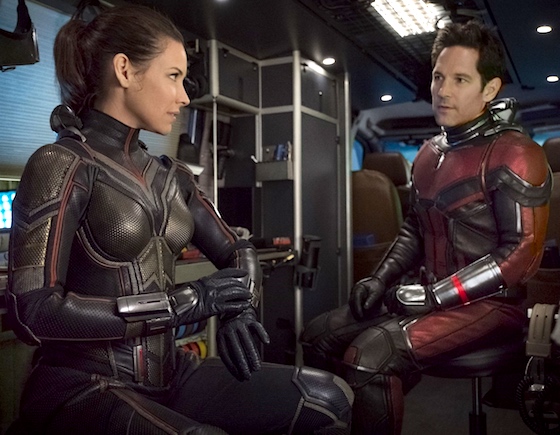
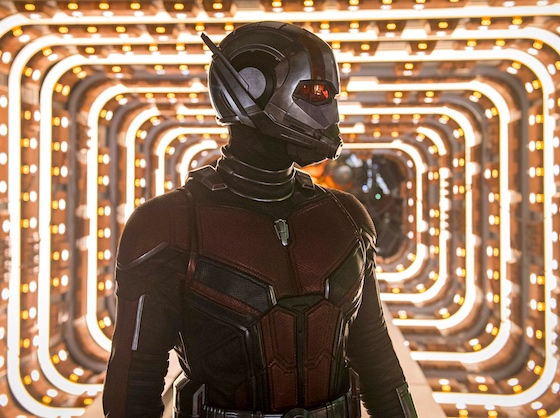
    It actually takes place before Infinity War anyhow: Scott Lang (Paul Rudd), aka Ant-Man, is finally coming to the end of two years of house arrest, his punishment for being involved in the events of Civil War. He’s also been forbidden from contacting the inventor of the Ant-Man suit, Dr Hank Pym (Michael Douglas), or his daughter, Hope Van Dyne (Evangeline Lilly), who are wanted fugitives; but when Scott has a vision of Hank’s wife and Hope’s mother, Janet (Michelle Pfeiffer), from his trip to the Quantum Realm (see the first Ant-Man), he becomes involved in Hope and Hank’s attempt to travel their and rescue Janet. Along the way they also have to deal with black market dealer Sonny Burch (Walton Goggins), who wants to monetise the tech he’s been helping them build, and a mysterious masked figure known as Ghost (Hannah John-Kamen), who can phase through solid objects and is trying to steal said new tech.

    The Wasp and Ant-Man

    Got all that? I haven’t even touched on some of the other subplots that get thrown in for good measure. For something that’s clearly been designed as a light romp, Ant-Man and the Wasp certainly has a lot of plot going on. That might be part of what keeps it romp-y, mind: with so much to get through, there’s always something happening, it’s always pushing forward. It arguably gets a bit bogged down having to line everything up in the middle, with some scenes that lean a little heavily on exposition, but it always finds time for a gag or two. Personally, I’ll let quite a lot slide if I’m having fun, and this keeps the fun quotient high throughout.

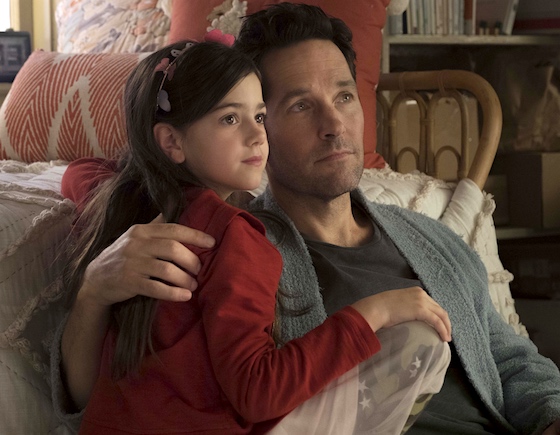
    Entertainment is definitely the name of the game here, and to that end director Peyton Reed and the five credited screenwriters (including star Paul Rudd) set out to tickle various emotional responses. The most obvious one is, as mentioned, the funny — there are laugh-out-loud moments here, as well as a never-ending barrage of one-liners and comedic business. But it also takes time to be emotive and heartfelt. Scott’s relationship with his daughter (a charming and likeable performance by young Abby Ryder Fortson) is a major character point, and a key touchstone for a definite parent/child theme across the movie. What we might actually ‘learn’ about parent/child relationships from all this, I don’t know, but it feeds some surprisingly heartwarming material at times.

    But which is the parent and which is the child?

    Thirdly, there are thrills in the shape of multiple fantastic action sequences. Hope dons the Wasp suit — all the powers of Ant-Man, plus wings and blasters — shrinking and growing at speed to kick plenty of ass, though Ghost’s ability to just phase through objects presents a unique challenge. There’s a heist sequence, too, recalling the overall theme of the first movie… though as it’s in a primary school and occurs while Scott’s suit is malfunctioning, it’s played more for laughs. Well, so’s almost everything in this movie, but it works. Best of them all is the extended car chase finale, with the good guys’ size-changing vehicles used for some highly inventive antics, plus all sorts of other goings-on in a race with multiple pursuers. I’ve seen some criticise this part for going on too long, but I thought it was just right, and is a strong contender to be remembered as an all-timer chase sequence.

    Often when I watch stuff in 3D nowadays I don’t actually mention it in my reviews — I still enjoy the experience more often than not (some stuff underwhelms, naturally), but I know most people don’t have the option and, frankly, it’s rarely essential. Well, the 3D probably isn’t essential here either, but it is superb, really adding to the scale and impact of the big scenes — when things are switching sizes all over the place, that’s no bad thing. Plus it’s clearly effective in just regular moments, too: the film’s opening shot is just of a house, but the dimensionality is still palpable. Top work by whoever did the post-conversion.

    Plus, the 3D Blu-ray comes with the benefit of the film’s shifting IMAX ratio, where the frame expands upwards from 2.39:1 to 1.90:1 for certain scenes. This is commonplace for Marvel films nowadays, which means sometimes it seems to occur just for the sake of it, but Reed has put the effort in to make great use of the larger image. Okay, it’s no surprise that it’s used for the action scenes (including opening up for a whole half-hour-or-so at the film’s climax), but he’s mindful of the transitions between ratios and the effect that can have — at least twice the actual moment the film moves from one ratio to another is as effective as the bigger image itself. Some people hate shifting aspect ratios on Blu-rays, I know, but I love ’em, and this is a great example of why.

    Ant-Man will return... but will anybody else?

    In the year of Black Panther and Infinity War, the relatively frothy Ant-Man and the Wasp was always destined to be “the other one”. But just because it’s not Big or Meaningful doesn’t mean it has no merit. Far from it. Whether you want to view it as a palate cleansing instalment of the MCU or as a standalone adventure, I think it’s pitched almost perfectly as a fun, entertaining ride of a movie.

    The first Ant-Man is, to date, the only MCU film to make it onto one of my year-end best-of lists. The way things have gone in 2018, I won’t be surprised if this sequel is the fourth.

    4 out of 5

    Ant-Man and the Wasp is out on DVD and Blu-ray (regular, 3D, and 4K UHD flavours) in the UK today.

    Zatoichi’s Pilgrimage (1966)

    aka Zatôichi umi o wataru

    2018 #214
    Kazuo Ikehiro | 83 mins | Blu-ray | 2.35:1 | Japan / Japanese

    Zatoichi's Pilgrimage

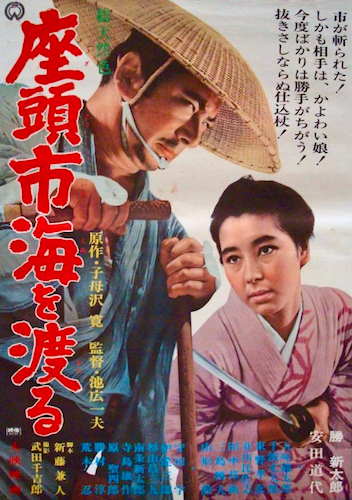
    Zatoichi’s Pilgrimage is the ‘lost’ Zatoichi movie: at some point the Weinsteins bought the rights to it because Quentin Tarantino was considering a remake, with the side effect of making it unavailable legally for years — while all the other Zatoichi films appeared on DVD in the US, Pilgrimage remained AWOL.* Its legal release finally came in 2013 as part of Criterion’s Blu-ray box set (which, coincidentally enough, is out in the UK this week). Clearly it was felt to be worth the wait, because it’s a highly-regarded instalment in the series. That might cause a newcomer to wonder if said wait led to some bias — that “hurrah, a new one!” feeling. Well, if it did it was entirely justified, because Pilgrimage is superb.

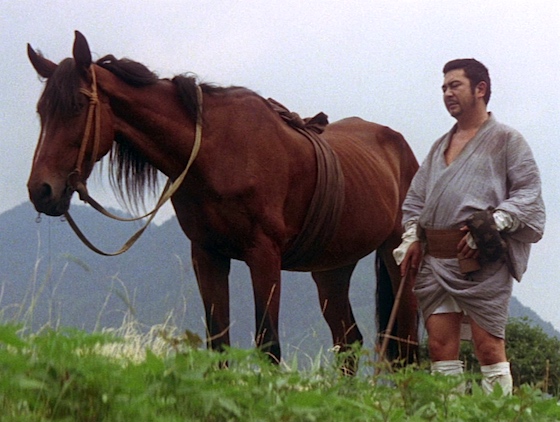
    I’ve often written in my Zatoichi reviews about the inaccuracies of the English-language title “translations”. Pilgrimage is another one… but, for once, the English title seems more apt. The original translates along the lines of Zatoichi’s Ocean Voyage, and while the film does begin with Ichi going on a voyage across the ocean, that’s the extent of its relevance — after that, he’s on his pilgrimage. Well, until he kills a guy and is followed by the chap’s horse, who then leads Ichi to the man’s home. Maybe Zatoichi and the Horse would be the most accurate title… but he’s sort of on a metaphorical pilgrimage even after he abandons his official one, so that’s okay. What develops could pithily be described as Seven Samurai meets High Noon: a group of humble farmers need protection from a violent gang, but, despite Ichi’s efforts to recruit them to defend themselves, they cowardly leave him as their sole protector.

    Zatoichi and the horse

    We’re up to the 14th film in the series now, and in a bid for something different star Shintaro Katsu and director Kazuo Ikehiro tapped Kaneto Shindo (director of Masters of Cinema/Criterion-friendly films Onibaba and Kuroneko) to write a screenplay focused on Ichi doing penance for all his killing, hence the titular pilgrimage. But by this point the Zatoichi series was a reliable money-spinner for studio Daiei, so the head of the studio ensured they didn’t let things stray too far from the formula. They got away with enough, I think. Ichi’s early attempts at atonement set the tone for the piece, and the final many-on-Ichi fight is more of a struggle for our hero than usual.

    Indeed, the way Ikehiro and Shindo build up to the finale — Ichi’s late-night heart-to-heart with latest love interest Okichi, then slowly walking out alone as the villagers hide away in their houses — actually creates a bit of tension and suspense before the battle, something rarely felt as we know Ichi’s always going to win. In the fight itself, Ichi actually seems overwhelmed by the onslaught of so many opponents. It’s a (slightly) more realistic take on the character: we’ve seen him take on this many with ease before now, but it wouldn’t really be easy; here we feel his struggle to come out on top, which makes the action more tense and exciting. The series’ other big final fights have marked themselves out with gimmicks or trickery (fire, drums, bird’s-eye camerawork, etc), but with this one it’s just how hard-won it is, how tough it is. Plus, as noted, it also recalls High Noon quite effectively: Ichi stands alone in the middle of the empty village, ready to face the attackers, while Okichi runs from house to house, begging the villagers to help, and we see them cowering inside.

    Oh, Okichi

    Ah, Okichi. Ichi has had many female admirers before (one per film, more or less), but most of the time their interest in him isn’t reciprocated; or, if it is in Ichi’s heart, he never lets his head get in the way and always leaves. Here, though, this feels genuinely like a romance. A lot of credit for this surely belongs to actress Michiyo Yasuda — as Walter Biggins lays out at Quiet Bubble, she “gives simmering intensity and density to a role that seems implausible on the page. It’s not that Katsu is unattractive, and he definitely has a bumbling charm, but this woman falls in love with the dude who killed her brother and who she savagely slashed with a knife during their first meeting. Yasuda makes Okichi’s turnabout seem natural and realistic […] rather than crazed.”

    There’s quality throughout Pilgrimage’s supporting cast. Isao Yamagata makes for a top-drawer villain as ‘smelly’ Tohachi, the local boss and horse trader (hence why he smells of horse manure). He gets a lot of good screen time alongside Ichi himself, trading veiled threats as much as physical assaults. His confidence makes for a nice change from the recent bad guys, who generally cower from Ichi’s reputation. Also, his weapon of choice is a bow and arrow, an unusual armament for this sword-focused series, but it leads to a couple of fun demonstrations of Ichi’s skill. Equally great is Masao Mishima as village headman Gonbei, jovially smiling and laughing while he’s threatened, or while discussing the conquering of their village, or while scheming and plotting to let Ichi fight on their behalf but without their backing. The villagers’ hiding is partly cowardice, but also a cunning scheme that, basically, gives them plausible deniability. Sneaky so-and-so.

    Tis but a scratch!

    The skilfulness extends behind the camera, too. I’ve already discussed screenwriter Shindo, but fans of the Zatoichi series will have good reason to recognise the name of director Kazuo Ikehiro: he previously helmed Chest of Gold and Flashing Sword, two of the best-directed Zatoichi films, and Pilgrimage can comfortably join their ranks. The whole film is nicely directed, with beautiful shot choices and framing, but particular standout sequences include an underwater sword fight (it’s only brief, but it’s effective), and a fantastic opening scene where Ichi punishes a brazen purse snatcher (credit to Shindo, again, for setting up some of the film’s themes and mirroring its finale as Ichi steps up from a crowd of do-nothings to bring justice). Some bad news, though: this is Ikehiro’s final contribution to the series, sadly.

    At least he goes out on a high. As Bill Hunt and Todd Doogan of The Digital Bits put it, Zatoichi’s Pilgrimage is “one of the crown jewels of the series.” It’s little wonder Tarantino was considering a remake.

    5 out of 5

    Zatoichi’s Pilgrimage placed 13th on my list of The 26 Best Films I Saw For the First Time in 2018.

    Criterion’s Blu-ray box set of the Zatoichi films is available in the UK as of this week.

    * If you purchased a UK DVD titled Zatoichi’s Pilgrimage back in the ’00s, it wasn’t this film. For reasons unknown, a company called Artsmagic released the 23rd film, Zatoichi at Large, under the wrong title. There’s more information about that here. ^

    Incredibles 2 (2018)

    2018 #233
    Brad Bird | 118 mins | Blu-ray (3D) | 2.39:1 | USA / English | PG / PG

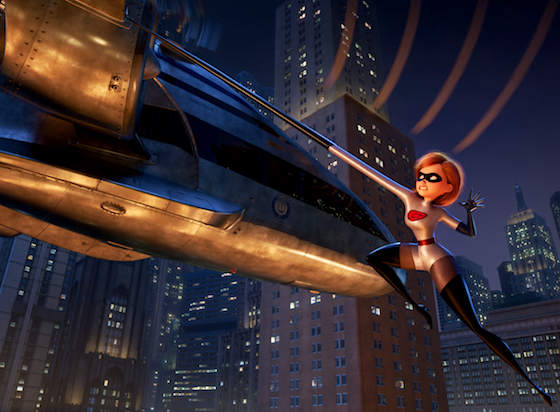
    Incredibles 2

    Brad Bird — the director behind The Iron Giant, Ratatouille, and not letting them release the IMAX version of Mission: Impossible – Ghost Protocol on Blu-ray (I will never be over that) — returns to the movie that made his name with what must be Pixar’s most-requested (probably “only requested”, actually) sequel, Incredibles 2.

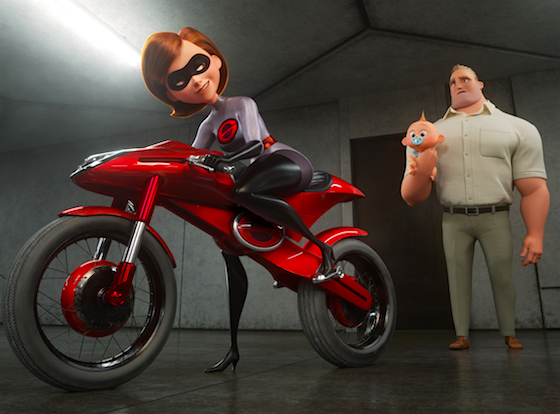
    It’s been 14 years for us viewers since the last Parr family adventure, but in-universe it’s been no time at all — literally, as Incredibles 2 picks up by recapping the closing moments of The Incredibles, which saw the eponymous family of superheroes about to face off against villain The Underminer. That confrontation goes disastrously awry, landing the family in a whole heap of trouble; but it also attracts the attention of media mogul Winston Deavor (Bob Odenkirk), who believes superheroes should be made legal again. Recruiting parents Bob and Helen Parr — aka Mr Incredible (Craig T. Nelson) and Elastigirl (Holly Hunter) — and their friend Frozone (Samuel L. Jackson) to his cause, the first step in Deavor’s public relations plan revolves around public crimefighting appearances by Elastigirl… alone. This leaves Bob holding the baby, literally, as he’s stuck at home with the kids while his wife gets to have all the fun.

    At its most basic, Incredibles 2 is a gender-reversed do-over of the first movie… to a fault, in fact. The closing moments of the first film suggest a “family of superheroes” future for the Parrs, with them battling crime together. The sequel immediately works to put everything back in its place: the kids aren’t allowed to use their powers (until they must for the climax, natch); one of the parents gets to go off and be a superhero, while the other has to stay at home. The difference is it’s the man staying at home, and where Helen was consummate at looking after the kids, Bob finds it a challenge — because Men, amirite?

    Left holding the baby... literally

    Part of what made The Incredibles so successful as a movie was it mixed a plausible family dynamic in with the superhero capers, but here that home life aspect is what holds the film back, because Bob’s struggles with the kids are 66.6% cliché. His son struggles with homework, and Bob doesn’t know how to do it either! His daughter has boyfriend problems! The 33.3% that works comes courtesy of baby Jack-Jack, who is beginning to develop powers — plural. As the middle of the film drags on, becoming a bit “we get the point!” with Bob’s familial woes, the bright spot is continually Jack-Jack’s humorous madcap antics.

    Mind you, the actual storyline in the superhero section isn’t much better. It revolves around the hunt for a mysterious villain, which naturally ends in a twist reveal… but as their true identity is pretty obvious as soon as they first appear earlier on, that reveal is a long time coming. Depending how critical you want to be, this part of the movie also has a lot of thematic points that seem to peter out or had nowhere to go in the first place. Is the film trying to say something about our addiction to screens and media? About the merits of vigilantism over bureaucracy? The dangers of being reliant on ‘higher powers’ to look after us? It touches on these things, and more, but they’re only given passing reference. Okay, yes, when you boil it down this is “just” a kids’ action-adventure movie and maybe we shouldn’t expect too much depth of thought… but Pixar are always hailed as being much more than that. Is it too much to expect that, if they’re going to introduce a topic or perspective, they’ll also at least close it out somehow?

    Yet for all these story woes, Incredibles 2 does indeed work as a colourful action-adventure movie; gloriously so. The action sequences are absolutely thrilling, beautifully choreographed and constructed. They’re even better in 3D, too — Elastigirl’s stretchy powers seem to have been made for the format. And while the middle of the film may refuse to pay off the “family of superheroes” thing, the opening sequence and climax let them all in on the action, and it’s all the better for it.

    Stretchy superheroics

    What made The Incredibles one of Pixar’s best films, and one of the best films in the whole superhero genre, was the way it combined the action and adventure with family dynamics and concerns, seamlessly marrying the two. The sequel lacks the clarity and connectedness that first movie boasted, working very well as a fun superhero action movie but struggling as a family comedy-drama. It’s still an entertaining time (the sometimes-slow mid-section aside), but it’s not the genre and studio standout that the first film was.

    4 out of 5

    Incredibles 2 was released on DVD and Blu-ray (2D & 3D, but no 4K) in the UK this week.

    Jurassic World: Fallen Kingdom (2018)

    2018 #225
    J.A. Bayona | 128 mins | Blu-ray (3D) | 2.39:1 | USA / English | 12 / PG-13

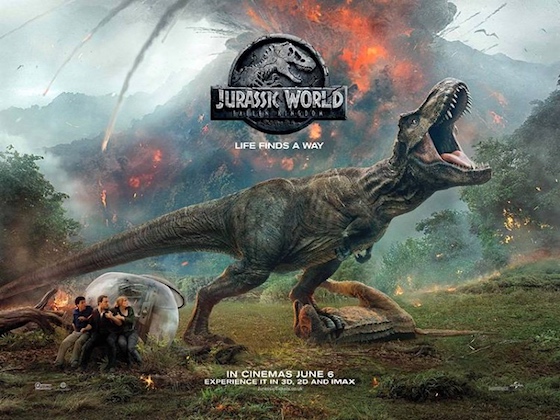
    Jurassic World: Fallen Kingdom

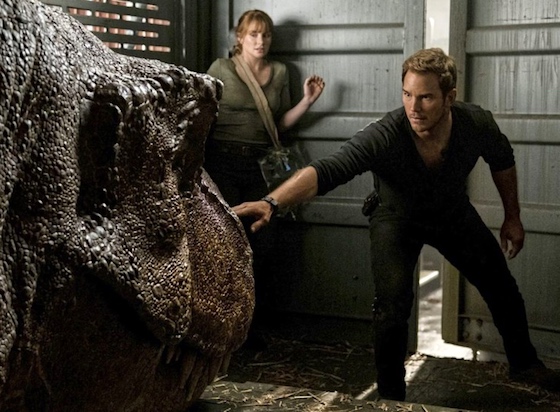
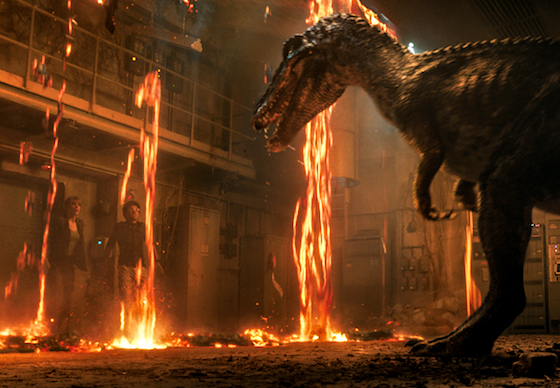
    It’s three years after the events of Jurassic World and the dinosaurs who overran Isla Nublar have basically been left alone while the rest of the world goes about its business. But now there’s a problem: the island’s previously inactive volcano is about to erupt, wiping out the dinosaurs… again. Former director of the park Claire (Bryce Dallas Howard) now works for a charity struggling to convince people to save the dinos, where she’s contacted by Mills (Rafe Spall), a representative of Benjamin Lockwood (James Cromwell), the one-time business partner of park founder Hammond who helped initiate the whole bringing-dinosaurs-back-from-the-dead palaver. They’re sending people to the island to rescue as many dinosaurs as they can, but they need Claire’s help. Naturally she agrees, and so along with ex-velociraptor-wrangler Owen (Chris Pratt) and a motley crew of supporting cast members, they head back to the island… but it soon turns out Mills & co may have a nasty ulterior motive for wanting to save the dinosaurs…

    Although there are shades of the first Jurassic Park sequel, The Lost World, in this setup, I think Fallen Kingdom does enough different that any similarities aren’t excessively problematic. Indeed, it’s got its own array of flaws for us to contend with first. It’s like someone assembled all the ingredients specified by a recipe, but instead of following the instructions they just bunged everything together haphazardly, and so the resulting dish seems like it should be right but is somehow just… wrong.

    Letting sleeping T-rexes lie

    To be less metaphorical, I think Fallen Kingdom is built on decent ideas and concepts, and it’s executed with some stylish direction by franchise newcomer J.A. Bayona (including a couple of particularly good sequences, like a tense oner in a sinking gyrosphere), but it’s all let down by a terrible screenplay from Jurassic World co-writers Derek Connolly and Colin Trevorrow. The story is poorly constructed — not in the sense that it’s unfollowable, but in that it’s wonkily put-together, frequently showcasing scenes that are nothing but exposition, with a pace and emphasis that feels unbalanced. Not unrelatedly, the quality of the dialogue is very weak, lacking in character or plausibility, or, failing the latter, memorableness. Sure, there’s the odd line the talented cast can make work (Howard gets a mini-monologue about the first time you saw a dinosaur that’s almost really good), but most of what comes out of their mouths is perfunctory. If they’d bothered to hire some solid writers, instead of just People Who Have Ideas, then maybe those ideas could’ve been turned into a cohesive whole that would be a worthy sequel. Heck, even getting someone in to polish up this draft could’ve helped a lot. Instead, Fallen Kingdom is a bunch of decent concepts for plots, subplots, themes, and visuals, haphazardly bunged together with half-arsed execution.

    In terms of particularly egregious examples, the standout for me is the subplot with Lockwood’s granddaughter, Maisie. No spoilers, but her storyline is no more than a (too clearly telegraphed) twist and a thematic resolution, which is in need of an actual story to give it meaning and work it up to being an actual theme of the movie in the way they clearly want it to be. What could be a meaningful finale for her character is rendered moot by the fact it has no genuine build-up, not to mention they had to throw another lead character’s moral development under a bus in order to get there (for a more spoilersome discussion of this point, check out Andrew Ellard’s Tweetnotes).

    Clawesome

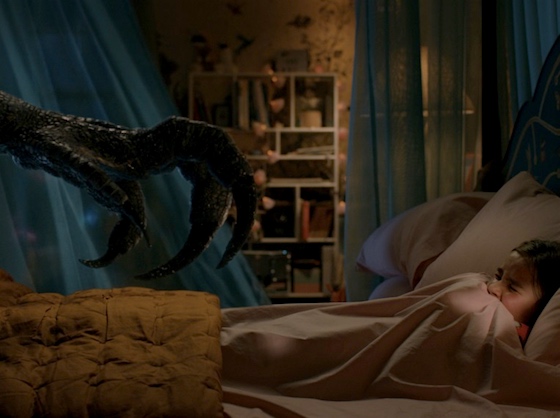
    It’s not just subplots that falter: the inciting incident (volcano is going to wipe out dinos; do we have a responsibility to save what we created, or is this nature course-correcting?) is a very rich premise with potential for debate; but other than stating those two positions, the film does nothing with it. It’s just there, an excuse to go back to the island and get the dinosaurs out, ready for the next part of the plot. This is probably why many viewers seem to find the first half perfunctory, but the second half — where the film takes a sharp turn into a Gothic-ish ‘haunted’ house movie — to be something fresh. Like so many of the film’s other ideas, I think it’s a good concept bungled in execution. It coasts by on imagery alone, Bayona achieving the look he’s after, but without Connolly and Trevorrow backing it up by making the situation work as a story, or for the characters. One example from this section: the scene of Maisie hiding in bed as the the dinosaur inches closer, which was featured so widely in the trailers. It’s a great visual, combining childhood fears and notions of protection (“if I’m under the covers nothing can get me”) with genuine threat and terror… but the film has to jump through hoops to make it happen — it’s only there because someone had an idea for the visual and they shoehorned it in, not because it makes any sense in context.

    On a similar level is Jeff Goldblum’s cameo as fan-favourite character Dr Ian Malcolm. He’s ostensibly contributing to that save-or-not debate I mentioned, but as that goes nowhere his appearance is equally pointless; no more than fan service — it feels like a tease; an excuse to put him in the trailer. A short featurette included on the Blu-ray gives some indication of what the filmmakers were actually trying for here (some of Malcolm’s dialogue is lifted from the writing of Michael Crichton, the goal being to link back to the franchise’s originator and reiterate his “science gone wrong” theme), but it doesn’t come off. Worst of all, I didn’t feel like Goldblum was actually playing Malcolm — it’s the same actor, obviously, but not the same character. Was he phoning it in? He was only on set for one day, after all. Or maybe it was just terribly written. I mean, on the evidence of the rest of the film…

    It's getting hot in there

    Fallen Kingdom is not the outright disaster some have painted it as, but it could’ve been much better. There are so many things it almost gets right — for another example, it’s very much planned as Part 2 of a trilogy, but it feels like real effort has been made to make it a film that works on its own; that isn’t merely a two-hour exercise in getting us from where Part 1 ends to how they want Part 3 to begin. That’s admirable (not everyone seems to bother), but undermined by how much the film feels in need of major structural work at a screenplay level. Ultimately, I think your tolerance for “good ideas but poor execution” will dictate exactly how you feel about the finished movie.

    3 out of 5

    Jurassic World: Fallen Kingdom is released on DVD and Blu-ray (regular, 3D, and 4K UHD flavours) in the UK today.

    Zatoichi’s Vengeance (1966)

    aka Zatôichi no uta ga kikoeru

    2018 #199
    Tokuzô Tanaka | 83 mins | Blu-ray | 2.35:1 | Japan / Japanese

    Zatoichi's Vengeance

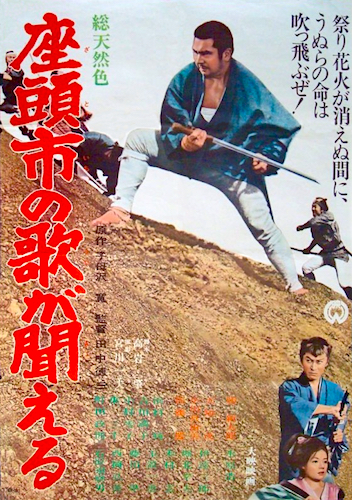
    Not to be confused with the series’ similarly-titled tenth film, Zatoichi’s Revenge (not a problem with the original Japanese titles, where the former translates as something like Zatoichi’s Two-Stage Sword and this is something along the lines of Zatoichi Hears the Song — I’m just using online translators to guess at these, so those translations may well be too literal), Zatoichi’s Vengeance marks the exact halfway point of the series — both chronologically and, according to Letterboxd users, for quality, too.

    After encountering a dying man whose last wish is for Ichi to deliver a moneybag to someone called Taichi, our blind hero bumps into an equally blind priest and accompanies him to the village of Ichinomiya for their “thunder drum” festival. Once a quiet, peaceful place (er, despite all that drumming), that very calm has led a nearby yakuza boss to move in and take advantage, setting up a brothel and demanding protection payments from local businesses. One of the last holdouts is, it turns out, the dying man’s mother, along with her young grandson — Taichi. Naturally, Ichi’s sense of justice compels him to stop the yakuza, but he’s mindful of being a negative influence on the boy’s impressionable young mind.

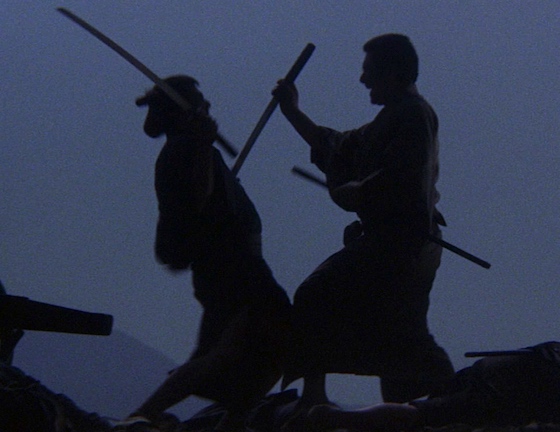
    Vengeance starts out as a quieter, more dramatic Zatoichi film than many, at times marked by Ichi’s deliberate refusal to engage in combat… until he starts cutting everyone down in a flurry of second-half action sequences, anyway. There’s a couple of the requisite scenes of Ichi killing hordes of enemies, the best being an encounter on a bridge where the yakuza employ those thunder drums to frustrate Ichi’s hearing. It’s a beautifully staged sequence, shot in an almost-silhouetted manner.

    Silhouette attack

    But the action is the lesser element here, with some of it feeling almost perfunctory alongside the interesting ideas presented by the plot. It engages on multiple fronts. Firstly, there’s Taichi and Ichi’s potential influence on him. There’s a good explanation of the effect of this plot thread by Walter Biggins at Quiet Bubble. Biggins writes that “Taichi gets hope from the blind swordsman. He sees freedom through violence. He doesn’t see how conflicted, lonely, and desperate Zatoichi’s life is — the boy sees only the glamor, the swagger, the escape. [Zatoichi] allows the gang to beat him, allows Taichi to see him humiliated, so that he doesn’t get the wrong idea about this lifestyle. [Taichi’s story] ends the film on an ambiguous note — we don’t quite know how the poor kid will turn out, or if he’s learned the right lessons from Zatoichi. In this sense, Zatoichi’s Vengeance is an indictment of its very genre, and the boy is central to this critique.” (I’ve chopped that up somewhat from the original because I didn’t want to rip it off by quoting too extensively, but the full piece is even more insightful on this aspect of the film.)

    Connected to this is the blind priest, a wise man who seems to see into Ichi’s very soul, and advises him on his interactions with the boy and, well, his lifestyle in general. This is one part of the film I wasn’t wholly convinced by, because I’m not sure how well the film pays it off. For one thing, he advises Ichi to be a good influence on Taichi, which leads Ichi to attempt to reason with the boss and get a beating for his trouble; but rather than pursue that diplomatic tack, it’s only a few minutes before he whips out his sword and gives them a good thrashing — once again setting a bad example. The priest reassures Ichi that sometimes violence is the only way. Um, you what? Well, the priest is presented as wise and insightful — almost too wise, because the film admits this advice seems contradictory, and Ichi can’t quite process that contradiction either. The priest also warns Ichi not to rely so much on his sword of he’ll die, which seems to pay off at the climax: when Ichi enters the yakuza’s lair, they’re all afraid of him, standing back to allow him to enter, take their money, and shut down their operation. But the reason they’re afraid of him is the awesome sword skills he demonstrated earlier, and when they attempt a last-minute stealth attack, he cuts them down.

    Uh-oh, Ocho

    While both of these characters and their associated views of Ichi’s methods provide food for thought, perhaps my favourite part of the film is the subplot about a prostitute, Ocho, who Ichi encounters at that recently-opened brothel. She’s a kindhearted woman — almost the stereotypical “whore with a heart of gold” — who’s revealed to have a tragic backstory when the samurai husband she ran away from arrives. He’s been searching for her for three years, but she doesn’t want him or his help, even as he’s desperate to win her back — so desperate that he agrees to take on Ichi for money, even though he’d had a good relationship with our hero. But the real success here is the beautiful portrayal of Ocho by Mayumi Ogawa, which makes her one of my favourite characters in the series: the way she’s so kind and generous at first, but then her personal tragedies are revealed, and her bleak ending… As the film goes on, Ogawa peels back the layers of who Ocho is and how she’s ended up this way, transcending any fears of a stereotypical character to instead reveal a sympathetic figure with a poignant ending.

    Indeed, the whole film comes to a kinda melancholic, kinda bleak conclusion (spoilers here, naturally). Ichi ostensibly wins, of course — the boss is defeated, the town freed from his influence, no one (currently) out to kill him — but there are no real happy endings: Taichi’s father is still dead, the young boy in limbo about where his life will go; Ocho’s life has been ruined beyond repair (we last see her sprawled drunk on the floor, no longer caring that she finally has enough money to free herself from prostitution); and her samurai husband, the man who killed Taichi’s father and was only after Ichi because he was desperate for the money to free his lover, even though she didn’t love him, lies dead by Ichi’s reluctant hand, a fate he both deserved and didn’t. As Paghat the Ratgirl describes it, this is an “important element of Ichi’s most compelling adventures: the tragedy of victoriousness. He has won. He lives. But he has killed someone who was by no means a villain. […] Discovering himself to be a menace even to those he loves, he realizes he is undeserving even of little Taichi’s affection, and avoids the boy in order to flee the village toward his next horrific adventure”.

    Ichi gets knocked down, but he'll get up again

    My original conclusion to this review described it as a film of mixed success. It has some really nice ideas and spins on the usual Zatoichi formula, but I also felt like it didn’t carry some of them all the way to fruition. I wanted to love it, because I so liked some of what it did, but felt it didn’t all come together well enough. On reflection, and after reading some other reviews, like the ones I’ve quoted, I’m no longer sure it comes up so short. These Zatoichi films may just look like brief action flicks about an almost-supernaturally-gifted swordsman and righter-of-wrongs, but sometimes they leave you with a surprising amount to chew on.

    4 out of 5

    Criterion’s Blu-ray box set of the Zatoichi films is released in the UK next month.

    Gods of Egypt (2016)

    2018 #198
    Alex Proyas | 127 mins | download (HD+3D) | 2.40:1 | USA & Australia / English | 12 / PG-13

    Gods of Egypt

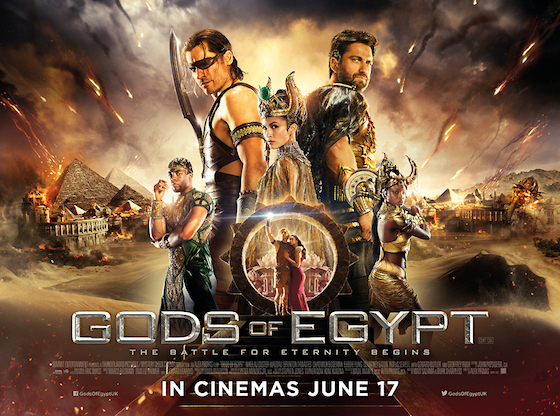
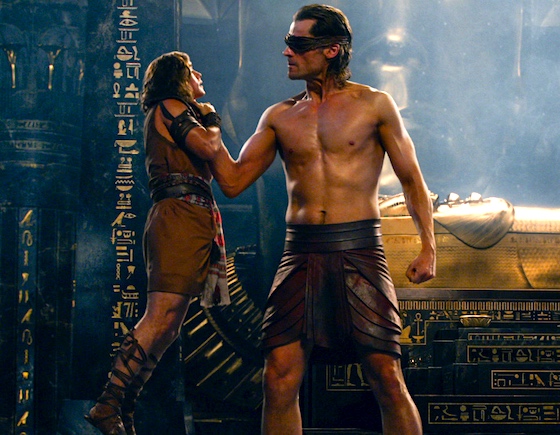
    If you remember Gods of Egypt, it’s likely because it was excoriated on its release back in 2016.* Many were predisposed to hate it before it even came out thanks to its whitewashed cast: as the title might indicate, it’s set in Ancient Egypt and many of the characters are Egyptian gods, but most of the lead cast are white; and of those that aren’t, none are Egyptian. Even if that didn’t bother you, it was slated for its poor dialogue, flat performances, bland direction, reliance on green screen, and cheap-looking CGI. Oh dear. But every film is for someone and there’s someone for every film, and it turns out I’m one of the few (the very, very few) who actually rather enjoyed Gods of Egypt.

    Based more on legend than any relation to history whatsoever (in one rather stunning sequence, we see that the world is, in fact, flat), it’s set in a time when super-powered gods walked the Earth among humans. Well, less “among”, more “ruling over”. A squabble between the gods sees nasty-piece-of-work Set (Gerard Butler) steal both the throne and eyes of heir-apparent Horus (Nikolaj Coster-Waldau), before going on to steal the abilities of other gods to make himself more powerful. Human thief Bek (Brenton Thwaites — between this and Pirates 5, dude must’ve thought he was gonna be a star… ’til they came out) doesn’t care for the gods, but he wants to free the love of his life (Courtney Eaton and her cleavage — I don’t want to be lecherous, but seriously, her costumes are all boobs, boobs, boobs), and the only way to do it involves stealing back one of Horus’ eyes and using it to persuade the god to take on Set.

    Gods and men

    And that’s the part of the plot that’s kinda reasonable. No, really: it gets a whole lot madder as it goes on. In fact, everything about it is so consistently batshit crazy — the concepts, the plot, the visuals — that it wins you over with its utter barminess. Or maybe it won’t win you over. Maybe you’ll think all those things make it utterly awful. As I said at the start, you certainly wouldn’t be alone. But the “you couldn’t make it up (except someone did)” mentalness of it will win over a certain kind of viewer. A viewer like me.

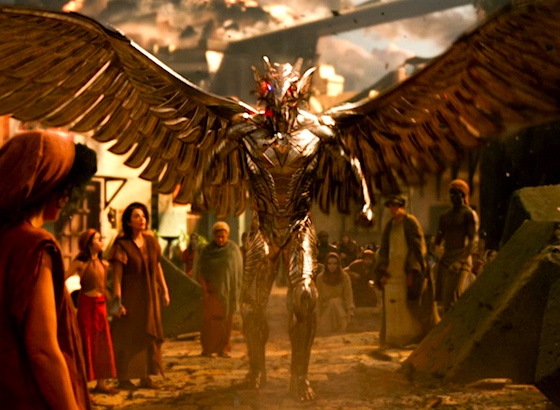
    I’m not really going to deny any of those criticisms I cited in the opening paragraph, because it is kind of a terrible film… but if you embrace it, it’s also campy fun. It’s a film where the men are burly, the women are breasty, and the CGI is blurry, but there’s a certain irreverence that stops it from being stodgy, and a light-hearted tone to the dialogue that occasionally hits home. For all the whizzy video game-ish visuals, it’s an old-fashioned adventure quest at heart, capable of pulling off the occasional thrilling sequence or amusing verbal exchange.

    All of that said, one does have to wonder how director Alex Proyas ended up here. If you don’t recognise the name, he was once known for visionary noir-ish filmmaking in the likes of The Crow and Dark City. At some point he wound up sidelined into less invigorating fare, like Will Smith vehicle I, Robot and Nic Cage vehicle Knowing, but while neither were groundbreaking they had a certain something (and, personally, I quite liked them both). Here, though, the direction is so… uninspired. Anyone competent could’ve made it. And people say filmmaking is collaborative and directors don’t deserve all the credit, but bear this in mind: Gods of Egypt and critically-beloved Oscar winner Mad Max: Fury Road share 295 cast & crew members.

    Robot god... on a budget

    I don’t know who deserves credit for the film’s 3D, but it’s consistently excellent and occasionally spectacular. That’s the benefit of almost all the film being created in a computer, I guess. But still, the colourful visuals and wide-open locales really help with the effect — what looked gaudy and ludicrous in 2D trailers… still pretty much is, let’s be honest. But it’s less bad when it’s doing so much to help create an epic-scaled dimensionality.

    I know I should hate this silly, cheap-looking, over-CGI’d, whitewashed hot mess… but I actually thought it was a lot of daft, campy fun. There are plenty of very good movies that I’ll likely never get round to watching again — probably some great ones, even — but I’d wager Gods of Egypt is going to end up in my Blu-ray collection someday. In 3D, of course.

    3 out of 5

    The UK network premiere of Gods of Egypt is on Channel 4 tonight at 9pm.

    * I was going to say “summer 2016”, but that wouldn’t be entirely correct: weirdly, although it was a February/March release in much of the world, it somehow got given summer status in the UK and Ireland (and, er, Spain…?) ^