Rogue One (2016)

aka Rogue One: A Star Wars Story

2016 #187
Gareth Edwards | 134 mins | cinema | 2.35:1 | USA / English | 12A / PG-13

This review contains major spoilers.

Rogue OneThe first live-action non-saga movie to take us to a long time ago in a galaxy far, far away, this initial entry in what is sure to be a never-ending series of so-called “Anthology” movies really puts the “War” into Star Wars.

It begins without the traditional opening crawl, which is somewhat ironic when you consider that, of all the Star Wars movies, this is the one that would most benefit from some scene-setting — fans are on a fairly sure footing, but casual viewers who still expect to see the further adventures of Rey, Finn, and BB-8 may be a little baffled. (And if you think the saturation media coverage will have prepared everyone, you’re underestimating Normal Folks’ capacity to be completely oblivious to movie news.) Anyway, where we actually are is 30-something years before The Force Awakens… but as this is a spoilery review you don’t need me to recap the plot, because you’ve not read this far if you haven’t seen the movie. Right? Good.

As I was saying, Rogue One is really a war movie, and is at its best when it’s consciously riffing off other (i.e. non-sci-fi) genres, like gritty World War 2 epics or daring heist thrillers. These are some new flavours for a franchise which has produced seven films in the action-adventure mould. Rogue One doesn’t deviate so far from that path — it’s a bit like Disney stablemate Marvel in that it mixes other-genre spice into the familiar recipe rather than striking out in a wholly different direction — but it’s enough to taste different.
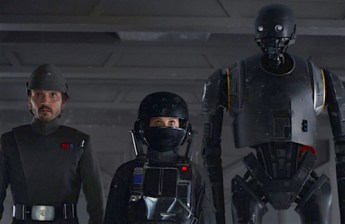
HeistUnfortunately, the plot starts off almost as jumbled as my mixed metaphors there. “Jumbled” may be unfair, but it’s a little scrappy, initially jumping around all over the place in a way that’s tricky to follow even if you’ve read up on the film and have an idea who you’re being introduced to and why. It must be a right pain for neophyte viewers. There can be a fine line between praising a film for requiring its viewers to pay attention and do some work, and criticising it for being disarrayed and not making things clear. Personally, I thought Rogue One was sat right on that line for much of its first act, until a few big expositional infodumps come along to explain the storyline.

A primary cause of this is the number of characters we need to be introduced to. Presumably aiming for a Dirty Dozen / Magnificent Seven / men-on-a-missionpeople-on-a-mission… beings-on-a-mission vibe, it leaves things occasionally a little scattered until the team comes together. The resultant volume of heroes means the movie is arguably a little short on the kind of memorable characters Star Wars is loved for, although that doesn’t mean there isn’t good work here. Felicity Jones makes Jyn a likeable, moderately complex heroine, at least when she’s not delivering cheesy speeches. Ben Mendelsohn produces a reliably snake-like villain as Imperial Director Krennic, while Riz Ahmed once again injects a lot of personality into a somewhat underwritten supporting role. Donnie Yen and Jiang Wen make a solid double act who it would’ve been lovely to see more of in a sequel, and Alan Tudyk gets all the best lines as snarky droid K-2SO. Most ill-served are Diego Luna as a conflicted Rebel captain whose internal struggles aren’t fully brought out, Forest Whitaker as an ageing extremist, and Mads Mikkelsen, who is lumped mainly with exposition. The latter two at least bring extra-textual gravitas to their smaller roles.
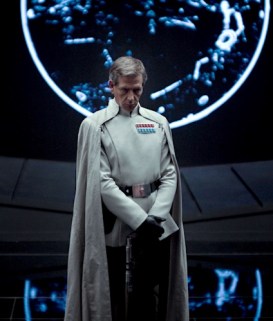
KrennicThen we come to perhaps the film’s most discussed character: Grand Moff Tarkin, played by Peter Cushing’s computer-generated face overlaid on the motion capture and voice of Holby City’s Guy Henry. Leaving aside the ethics of the enterprise, I found the character’s presence to be pretty distracting: you know it’s CGI and you can’t stop focusing on just Tarkin’s face, trying to judge how effective or not it is. For me, it proves that CGI isn’t yet quite up to creating a fully plausible human being. Your mileage will vary on whether it’s suitably competent nonetheless or an ill-conceived failure.

Elsewhere, there are tons of little nods to the wider Star Wars canon, including the animated series: Whitaker’s character actually comes from The Clone Wars, where he appeared in four episodes; and there are half-a-dozen background references to ongoing series Rebels, most prominently the ‘Hammerhead’ ship, which was introduced there. Lucasfilm do seem very keen to emphasise that all these different media really are one interconnected universe, unlike so many other cross-format franchises, which accept everything as canon until the main series decides they want to contradict it. For example, while I was on holiday recently I visited the Star Wars exhibition they currently have at Disney’s Hollywood Studios, which features various displays of, say, villain’s lightsabers or pilot’s helmets that put real-life recreations of ones from The Clone Wars and Rebels right alongside those from the original trilogy and the prequels as if that’s exactly where they belong. I must commend Lucasfilm for such an unusual commitment to institutionally tying these things together, rewarding the investment fans will inevitably make in doing the same. It does mean I feel I need to get on with watching the six seasons of Clone Wars and three (or more) seasons of Rebels, though.
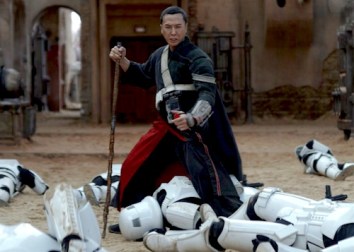
Donnie Yen: badassContinuing such comparison to the wider Star Wars galaxy, some have said Rogue One is the Empire Strikes Back of Disney-era Star Wars, because it’s the darker second (on the release schedule) film. Of course, the main reason it’s dark is that every major (new) character dies. You know what’s unique about Empire in the context of the entirety of live-action Star Wars movies? It’s the only one where no major character dies. Death isn’t the only signifier of darkness, of course, but my point is rather that I think people are grasping at straws if they think anyone inside Lucasfilm has consciously positioned Rogue One to serve an Empire-like role in their revived franchise. That doesn’t mean they’re not treating it seriously, mind: director Gareth Edwards has already revealed that the first draft had Jyn and Cassian survive the battle of Scarif, purely because the writers thought the execs would never agree to all the heroes being killed off, but those execs immediately suggested that everyone should die and that element was never questioned again. Yes, sometimes studio suits are actually on the side of narrative truthfulness.

Even if that got locked early on, other things certainly didn’t. The film’s reshoots made big news for no particularly good reason (it’s par for the course on blockbusters these days), but their results are easy to see thanks to the film’s trailers: there are a number of significant shots present there that didn’t make the final cut, suggesting some radically different events in the third act. You can watch a short compilation of those here. As far as I’m aware neither Edwards nor anyone else has said what was actually changed by the reshoots, but it would be interesting to find out. Considering the Scarif-set portion of the film is probably its most successful part, and that’s where the reshoots seem to have been focused, it might make a good defence of a process that is often seen as a sign of disaster (sometimes for good reason).

Star of deathMuch discussion of Rogue One seems to have revolved around whether it’s better than The Force Awakens. At the risk of sitting on the fence, I can see both sides. On the one hand, Edwards is a much more interesting filmmaker than J.J. Abrams. The latter is adept at aping the work of others, having now been in charge of multiple movies that are mostly derivative but nonetheless entertaining. Edwards’ career is still a little fresh and blockbuster-centric to risk describing him as an auteur, but his debut film was more indie than anything Abrams has even thought of creating, and his take on Godzilla attempted to be more interesting than the rote monster blockbuster it could’ve easily been. He brings similar qualities to Rogue One. On the other hand, that riskier take has resulted in a few fumbles, whereas The Force Awakens was a polished, crowd-pleasing entertainment. I’d hesitate to say I prefer one to the other because they provide slightly different thrills, but on a first viewing I did find Force Awakens more satisfying. Given time and distance, however, I wouldn’t be at all surprised to find Rogue One leapfrogging it in my estimations.

4 out of 5

X2 (2003)

100 Films’ 100 Favourites #99

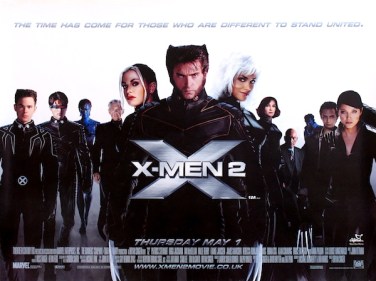
The time has come for those who are different to stand united.

Also Known As: X-Men 2 (promotional/DVD title), X2: X-Men United (US promotional title)

Country: USA & Canada
Language: English
Runtime: 134 minutes
BBFC: 12A
MPAA: PG-13

Original Release: 25th April 2003 (Lithuania)
UK Release: 1st May 2003
US Release: 2nd May 2003
First Seen: cinema, May 2003

Stars
Hugh Jackman (Van Helsing, The Prestige)
Patrick Stewart (Dune, Hamlet)
Ian McKellen (Gods and Monsters, Mr. Holmes)
Brian Cox (Braveheart, Troy)
Alan Cumming (Emma, Josie and the Pussycats)

Director
Bryan Singer (Apt Pupil, X-Men: Days of Future Past)

Screenwriters
Michael Dougherty (Superman Returns, Trick ‘r Treat)
Dan Harris (Superman Returns, Imaginary Heroes)
David Hayter (X-Men, Wolves)

Story by
David Hayter (The Scorpion King, Watchmen)
Zak Penn (Last Action Hero, The Incredible Hulk)
Bryan Singer (X-Men, The Triangle)

Based on
The X-Men, comic book superheroes created by Stan Lee and Jack Kirby. In part inspired by the graphic novel God Loves, Man Kills by Chris Claremont and Brent Anderson.

The Story
When a mutant attempts to assassinate the president, military scientist William Stryker uses it as a pretext to step up his persecution of mutants. With the X-Men occupied hunting for the would-be assassin, the school is attacked and the remaining students flee with Wolverine — whose still-mysterious past has some connection to Stryker.

Our Heroes
The X-Men, a team of mutants — humans who have evolved superpowers — organised by Professor Charles Xavier. As well as returning heroes Wolverine, Cyclops, Jean Grey, Storm, and Rogue (see X-Men), the roster this time includes Bobby Drake, aka Iceman, who can generate and manipulate ice, and John Allerdyce, aka Pyro, who can control fire. Plus Kurt Wagner, aka Nightcrawler, a demonic-looking blue-skinned German teleporter.

Our Villains
Col. William Stryker, a military scientist who wants to eradicate mutants, and plans to use Xavier’s mutant-finding Cerebro machine to do so. Has a role in Wolverine’s mysterious past…

Best Supporting Character
Imprisoned at the end of the last film, Magneto is tortured by Stryker for information on Cerebro… until he escapes and teams up with the X-Men to stop the new threat.

Memorable Quote
“Have you ever tried… not being a mutant?” — Bobby’s mom

Memorable Scene
When Stryker launches a military assault on the school, Wolverine goes full berserker to defend the students, before he comes face to face with Stryker — as it turns out, not for the first time.

Write the Theme Tune…
I’ve always loved John Ottman’s main theme for X2, so I’ve been very pleased that Bryan Singer has made it the recurrent theme for the X-Men series since he retook the directorial reins for Day of Future Past. Its appearance there is quite short, but Apocalypse has two fantastic renditions.

Making of
The set for Stryker’s underground base was the largest in North America at the time — so large that cast and crew used bicycles to get to the bathroom as quickly as possible. Some areas of the set weren’t even used in the film, such as a room that was to be the setting of a Nightcrawler vs. Toad fight. (Several other sets were built and not used, including the X-Men’s famous Danger Room training centre. After also dropping its inclusion from the first X-Men, it finally turns up in The Last Stand.)

Previously on…
The film that started the modern era of comic book movies, X-Men.

Next time…
The trilogy was rounded out by X-Men: The Last Stand, though answers about Wolverine’s past were saved for spin-off movie X-Men Origins: Wolverine. More history was revealed in prequel X-Men: First Class, before time travel adventure X-Men: Days of Future Past combined both casts. The prequels continued with this summer’s ’80s-set X-Men: Apocalypse, with a ’90s-set follow-up in the works. Spin-offs include The Wolverine and next year’s third Wolverine movie, Logan, as well as Deadpool, the perpetually delayed Gambit, and X-Men: The New Mutants. TV series Legion is based on the X-Men licence but may or may not be connected to the films, and other connected (or not) TV series are in development.

Awards
1 Saturn Award (Science Fiction Film)
6 Saturn nominations (Director, Writing, Music, Costumes, Make Up, Special Effects)
Nominated for the Hugo for Best Dramatic Presentation, Long Form
2 Kids’ Choice Awards nominations (including Favorite Female Butt Kicker (Halle Berry))
1 MTV Movie Awards Mexico nomination (Sexiest Female Villain (Rebecca Romijn) — she lost to Demi Moore in Charlie’s Angels: Full Throttle)

What the Critics Said
X2 is also possessed of an emotional complexity that won’t surprise comics fans, but will delight connoisseurs of the summer blockbuster. […] The plot, in which hatred of a minority group threatens to spark a global war, is frighteningly topical and Singer doesn’t flinch from showing that resolution often comes at a bitter price — albeit one which paves the way for a pleasingly inevitable X3. Yet it’s not all FX-augmented naval-gazing. Though it does get very dark, X2 is unashamedly entertaining, with crowd-pleasing moments for geeks (the appearance of metal-skinned muscle man Colossus in full armoured form should benefit upholsterers everywhere) and non-geeks (a Nightcrawler-led mid-air rescue is exhilarating) alike.” — William Thomas, Empire

Score: 86%

What the Public Say
“it was the perfect superhero film sequel, the one that truly set the bar for all future sequels (and many managed to match it, thankfully.) Singer understood what worked about the first film, he understood that the audience wanted ‘more of the same’ but not just the same story over again. The core elements were preserved. The team’s personalities, diversity, and relationships that formed the emotional core of the first film, and were the most faithful thing about Singer’s adaptation, were carried on, as was the emphasis on Magneto (Ian McKellen) and Charles’ (Patrick Stewart) relationship and contrasting philosophies. The driving elements of the plot, though different than the driving elements of X-Men‘s plot, didn’t feel like they ‘came out of nowhere.’ Everything felt familiar without necessarily being the same. The ‘new’ elements that were introduced really did broaden the world, but were based in elements X-Men had already established. […] Although I, unlike many fans, didn’t consider this an improvement over Singer’s first X-Men film, I also don’t think it needed to be. And despite my preference for the first film, X2 was to a certain extent really when the series hit its stride and showed that it had staying power.” — Kat, Love. Think. Speak.

Verdict

If there’s one trend in the modern superhero era that’s gone under-analysed (at least as far as I’m aware), it’s this: sequels that are better than their predecessor, upending the accepted order of things. It’s not a universal occurrence (Iron Man 2, anyone?), but it happens often enough that many reviews of first films now note they’re setup for a sequel. And as with so many things in the current superhero epoch, it started with the X-Men.

Personally I’ve always slightly preferred the first movie, but X2 does polish up the action sequences, engages with the series’ thematic subtexts in an effective manner, and adds significantly to the ongoing mystery of Wolverine’s past. Coupled with a shock ending that teased a big plot to come, everything looked so good for the third movie. Sadly, the whole “sequels are better” thing still doesn’t regularly extend to third movies. (Suffice to say, The Last Stand will not be next week’s #100.)

#100 is the moment when… Ewan McGregor drops his Jedi knickers and pulls out his real lightsaber.

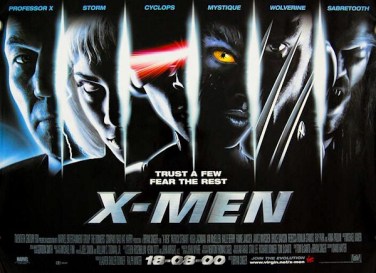
X-Men (2000)

100 Films’ 100 Favourites #98

Trust a few.
Fear the rest.

Country: USA
Language: English
Runtime: 104 minutes
BBFC: 12
MPAA: PG-13

Original Release: 13th July 2000 (Australia)
US Release: 14th July 2000
UK Release: 18th August 2000
First Seen: cinema, 2000

Stars
Hugh Jackman (Oklahoma!, Les Misérables)
Patrick Stewart (Star Trek: First Contact, Green Room)
Ian McKellen (Richard III, The Lord of the Rings)
Anna Paquin (The Piano, Margaret)
Famke Janssen (GoldenEye, Taken 2)
James Marsden (Gossip, The Box)
Halle Berry (B*A*P*S*, Catwoman)

Director
Bryan Singer (The Usual Suspects, Superman Returns)

Screenwriter
David Hayter (The Scorpion King, Watchmen)

Story by
Tom DeSanto (producer of Apt Pupil & Transformers)
Bryan Singer (Public Access, Superman Returns)

Based on
The X-Men, Marvel comic book superheroes created by Stan Lee and Jack Kirby; and in particular Wolverine, a comic book superhero created by Roy Thomas, Len Wein, and John Romita, Sr.

The Story
In a near future where some humans have mutated to have extraordinary powers, and consequently are hated and feared by the general population, a runaway teen comes under the protection of a mysterious stranger. As a radical leader hunts them for his world-changing scheme, they encounter a school for mutants — and the superpowered team who teach there.

Our Heroes
The X-Men, a team of mutants — humans who have evolved superpowers — organised by Professor Charles Xavier, a wheelchair-bound telepath. There’s team leader Scott Summers, aka Cyclops, who shoots force beams from his eyes; Dr. Jean Grey, potentially an even more powerful telepath than Professor X, who can also move things with her mind; Ororo Monroe, aka Storm, who can control the weather. We’re led into their world by teen runaway Marie, aka Rogue, who can absorb people’s energy, and her reluctant protector, Logan, aka Wolverine, who has metal claws in his hands, can heal really fast, and can’t remember most of his past.

Our Villain
Erik Lehnsherr, aka Magneto, who can manipulate metal. A one-time friend of Xavier’s, they parted ways over his beliefs that mutants and humans couldn’t coexist, which leads him to violently oppose mutant oppression.

Best Supporting Character
Mystique, one of Magneto’s gang, who runs around naked — but that’s because her skin’s blue and bumpy and stuff, so it’s OK. She can shape shift into the form of anyone she’s made contact with, which is very useful for her and very tricky for our heroes.

Memorable Quote
Magneto: “Does it ever wake you in the middle of the night, the feeling that one day they will pass that foolish law, or one just like it, and come for you and your children?”
Xavier: “It does indeed.”
Magneto: “What do you do, when you wake up to that?”
Xavier: “I feel a great swell of pity for the poor soul who comes to that school looking for trouble.”

Memorable Scene
As Magneto, Sabretooth and Toad exit a train station with a kidnapped Rogue, they’re greeted by a sea of policemen. With his powers, Magneto takes all their guns and turns them on their owners. Then Sabretooth grabs Magneto’s throat — he’s being mind-controlled by Xavier. Magneto fires all the weaponry in his control, but stops the bullets just short of their targets — unless Xavier lets him go…

Truly Special Effect
Superheroes really needed the modern era of CGI to make them possible — and, as with everything else, X-Men led the way. Probably the most memorable are Mystique’s skin-changing transformations, which involved 8,000 scales animated in different directions.

Making of
Stanley Kubrick is responsible for the casting of Wolverine. No, really. Well, sort of. Here’s how it goes: Kubrick’s famous perfectionism meant the filming of Eyes Wide Shut overran; that meant star Tom Cruise had to delay his next project, Mission: Impossible II; that sequel finishing later than scheduled meant Dougray Scott — who played the lead villain in M:I-2 and was originally cast as Wolverine — had to drop out of X-Men, which was already on an insanely tight schedule to make its release date. Hugh Jackman was cast on the recommendation of his friend Russell Crowe, who had been sought for the role, and only joined the production several weeks into filming. Apparently if you look closely you can see Jackman’s physique change in various scenes because he was working out extensively while filming continued.

Previously on…
Although this is the first X-movie, I’m sure the enduring popularity of the 1992-1997 animated series can’t’ve hurt the film’s success.

Next time…
In an immediate sense, X2. After that, multiple direct sequels, prequels, and spin-offs. Plus the entire current multitude of comic book movies owe their existence to this film being (a) good, and (b) a hit. Whether that’s a mark for or against X-Men is up to you.

Awards
6 Saturn Awards (Science Fiction Film, Actor (Hugh Jackman), Supporting Actress (Rebecca Romijn), Director, Writing, Costumes)
4 Saturn nominations (Supporting Actor (Patrick Stewart), Younger Actor (Anna Paquin), Make-Up, Special Effects)
Nominated for the Hugo for Best Dramatic Presentation
1 World Stunt Award nomination (Best Speciality Stunt for “Wolverine blown out of truck”)

What the Critics Said
“After trying for decades, Marvel Comics finally may gain the kind of pop-cultural cachet that only comes from a major leap into movies. That movie is X-Men, a fully realized translation of comics’ adolescent power fantasies to adult-level, big-screen entertainment. It’s a film X-Men fans can embrace and action fans in general can appreciate. It has emotion and a solid story to go with its mayhem, and the comics’ central themes aren’t betrayed. Director Bryan Singer gets bang for his buck. At $75 million, X-Men was a modest and rushed shoot for an action showcase, yet its computer generated imaging effects are handsome, and it gleams with polished production design.” — Bruce Westbrook, Houston Chronicle

Score: 81%

What the Public Say
“this is a superhero movie with ideas, fully aware of the potential social commentary inherent in its source material. It paints simplistically, in broad strokes, but elegantly. It feels small-scale but full-bodied, and it takes storytelling risks. I mean, the damn thing opens on a concentration camp. The main characters being mutants, discriminated against by ‘normal’ people, gives the screenplay the opportunity to use this as a catchall allegory. Any feared or shunned group of people can find familiar themes at work in the world of the film. […] reflecting on the first X-Men solidifies its status as not just a prelude of better things to come, but as quite a strong movie in its own right. After seeing the franchise move the Golden Gate Bridge, travel decades in time, and resurrect an Egyptian god, it’s refreshing to rewind to this one humble tale of ‘the not too distant future’. The 2000 film has a great lo-fi charm to it, while at the same time being lent gravitas by McKellen and Stewart’s war of wills. It holds up not just as a curiosity, but also as a well-told story of mutants and morals.” — Paul Stanis, A Voyage through Film

Verdict

I’ve written before (several times) of my near-lifelong fandom of the X-Men. This isn’t where it started (that’d be the classic ’90s animated series), but it certainly helped cement it. Its significance to the current movie landscape is hard to underestimate: it took the superhero subgenre, which hadn’t actually produced that many major movies and had nonetheless reached a comedic nadir with Batman & Robin, and made it respectable blockbuster fodder, which leads directly to where we are today. And the reason it sparked all that is because it’s a quality entertainment in its own right, mixing superpowered action with weighty themes and top-drawer performances from a cast who are almost all better than this, elevating the material rather than besmirching themselves with it. I mean, even without the witty lines and tightly choreographed fisticuffs, anything that has Patrick Stewart and Ian McKellen verbally sparring over a game of chess is bound to bring satisfaction.

#99 will be… X-Men united.

V for Vendetta (2005)

100 Films’ 100 Favourites #96

Freedom! Forever!

Country: UK, USA & Germany
Language: English
Runtime: 132 minutes
BBFC: 15
MPAA: R

Original Release: 23rd February 2006 (Finland)
UK Release: 17th March 2006
US Release: 17th March 2006
First Seen: cinema, 2006

Stars
Natalie Portman (Léon, Thor)
Hugo Weaving (The Matrix, Captain America: The First Avenger)
Stephen Rea (The Crying Game, Underworld Awakening)
Stephen Fry (Wilde, The Hobbit: The Desolation of Smaug)
John Hurt (Alien, Hellboy)

Director
James McTeigue (Ninja Assassin, The Raven)

Screenwriters
The Wachowski Brothers (The Matrix, Speed Racer)

Based on
V for Vendetta, a graphic novel by Alan Moore & David Lloyd.

The Story
In the near future, Britain is ruled by a tyrannical fascist government — considering the film was made in 2005, it’s probably set in about 2016 right? Anyway, masked freedom fighter V has his sights set on overthrowing the oppressive regime, partly in revenge for what they did to him…

Our Heroes
In lieu of the more commonplace sobriquet, permit me to suggest the character of this dramatis persona. Voilà! In view, a humble vaudevillian veteran, cast vicariously as both victim and villain by the vicissitudes of Fate. His visage, no mere veneer of vanity, is a vestige of the vox populi, now vacant, vanished. However, this valorous visitation of a by-gone vexation, stands vivified and has vowed to vanquish the venal and virulent vermin vanguarding vice and vouchsafing the violently vicious and voracious violation of volition. The only verdict is vengeance; a vendetta, held as a votive, not in vain, for the value and veracity of such shall one day vindicate the vigilant and the virtuous. Verily, this vichyssoise of verbiage veers most verbose, so let me simply add that you may call him V. Also Evey, a young woman V rescues and subsequently takes under his wing as a kind of protégée.

Our Villains
The fascist regime ruling near-future England, led by Supreme Chancellor Donald Trump Adam Sutler and enforced by numerous toadies.

Best Supporting Character
Gordon Deitrich is a TV host who delivers government-sanctioned comedy to the masses, despite his distaste for the regime. Could something inspire him to stand up for what’s right? But at what cost?

Memorable Quote
“People should not be afraid of their governments. Governments should be afraid of their people.” — V

Memorable Scene
Bit of a spoiler, this, but the film’s most memorable imagery comes at the end: after V successfully blows up the Houses of Parliament, there is a massive crowd of onlookers, all wearing V’s Guy Fawkes mask. Then they take the masks of, revealing hundreds of ordinary people — including deceased characters. It’s allegorical, see.

Technical Wizardry
The fight between V and a group of government agents in Victoria Station was shot at 60fps to play in slow motion, but the effect was emphasised further by having the stuntmen playing the agents actually move in slow motion, while stuntman David Leitch (later co-director of John Wick, fact fans) as V moved in real time, making it seem as if he was moving much faster than them.

Truly Special Effect
The scene where V is ‘born’ from fire isn’t CGI: stuntman Chad Stahelski (later co-director of John Wick, fact fans) actually walked through fire wearing nothing but fire-resistant gel and a g-string. His body temperature had to be lowered before the scene was shot. Fortunately, it was -3°C on the night of the shoot; then, 15 minutes before a take, Stahelski put on ice-cold flame-resistant clothing; when he took that off, he was covered with the fire-resistant gel, which had been on ice all day. Each to their own, eh?

Making of
James Purefoy was originally cast as V, but pulled out four weeks into filming and was replaced by Hugo Weaving. Because V wears his mask at all times, his dialogue is dubbed throughout (they tried attaching mics to the mask, but they didn’t work well), so the footage starring Purefoy was retained and Weaving’s voice was placed over it. Director James McTeigue later commented, “Can I tell the difference? Yeah. Can the audience tell? I doubt it.”

Awards
1 Saturn Award (Actress (Natalie Portman))
3 Saturn nominations (Science Fiction Film, Writing, Costume)
Nominated for the Hugo for Best Dramatic Presentation Long Form

What the Critics Said
“Just when we were ready to give up mainstream movies as braindead, along comes the controversial and gleefully subversive V for Vendetta, a piece of corporate-sponsored art that will have audiences rooting for a bomb-throwing anarchist. […] Much to the film ‘s credit, and to the exasperation of its critics, the audience is left to decide for itself whether V is a terrorist, freedom fighter, vengeance-seeking psychotic, or maybe all three simultaneously – and whether his extreme actions are a justifiable response to government repression. This pretty heady stuff for a big-budget comic-book movie” — Lou Lumenick, New York Post

Score: 73%

What the Public Say
“Halfway through it occurred to me that ten years had passed since the film’s release. TEN YEARS. And yet the film’s overriding themes: the dangers of fascism, how fear can affect our actions, privacy versus the oft used term ‘national security,’ freedom of speech, intolerance of members of the LGBT community, and the manipulation and dissemination of information, are still very relevant today. Maybe even moreso. What separates good movies from great movies, often comes down to social relevance throughout the decades. Can it stand the test of time? Does it mean something similar in today’s society as it did when the film was first released? This is why films like Metropolis and Citizen Kane and In the Heat of the Night are still studied in film classes. Their themes are universal, something that can apply to most decades. V for Vendetta fits that category to a T.” — Darth Gandalf, Funk’s House of Geekery

Verdict

Alan Moore and David Lloyd’s dystopic graphic novel was a reflection of the 1980s England in which it was originally published; then the film adaptation became a reflection of the mid-’00s world in which it was produced; and then it began to influence that world, with V’s Guy Fawkes mask becoming widely recognised as a symbol for certain protest groups. Although dressed up as part of an entertaining action movie, the story’s real topic is the rights and wrongs of government, and our attitudes and responsibilities towards it as citizens. That message feels as relevant as ever after the events of this year. Perhaps it always will — like George Orwell’s 1984, an enduring warning against things going too far. Let’s pray it’s heeded.

#97 will be… an animation investigation.

The Transporter (2002)

100 Films’ 100 Favourites #94

Rules are made to be broken.

Country: France & USA
Language: English, French & Mandarin
Runtime: 92 minutes
BBFC: 15
MPAA: PG-13

Original Release: 11th October 2002 (USA)
UK Release: 17th January 2003
First Seen: DVD, c.2003

Stars
Jason Statham (Snatch., Crank)
Shu Qi (The Storm Riders, The Assassin)
Matt Schulze (Blade II, Fast Five)
François Berléand (Au Revoir Les Enfants, The Chorus)

Directors
Louis Leterrier (The Incredible Hulk, Now You See Me)
Corey Yuen (The Legend of Fong Sai Yuk, DOA: Dead or Alive)

Screenwriters
Luc Besson (Léon, Lucy)
Robert Mark Kamen (The Karate Kid, Taken)

The Story
Frank Martin is “The Transporter”, a driver for hire who moves people and goods, no questions asked. He never looks inside the package… until, on one job, the package moves. Finding a young woman gagged inside, Frank winds up embroiled in her rescue from some very bad men.

Our Hero
Frank Martin, expert driver (he’s the titular transporter after all) and martial artist, as handy with his fists as he is with a steering wheel. Lives by a simple set of rules… which he breaks, because it’s a movie and it needs a plot.

Our Villain
Darren “Wall Street” Bettencourt, an American gangster who initially hires Frank, then tries to kill him — even though he did a good job! And you thought people who left unnecessarily low feedback on eBay were a pain.

Best Supporting Character
Inspector Tarconi, the local police detective who’s on to Frank but can’t prove anything. Comes through in the end, becoming Frank’s ally in the sequels.

Memorable Quote
“Rule #1: never change the deal.” — Frank

Memorable Scene
Oil everywhere + people wanting to fight = ingeniously slippery combat. Seriously, that one scene is the main reason the entire film is here.

Technical Wizardry
Jason Statham did most of his own stunts, fighting, and driving. That included learning martial arts to supplement his kickboxing abilities and, for one sequence, actually hanging off the bottom of a truck with just a wire up his leg for safety.

Letting the Side Down
The trailer showed Frank deflecting a missile with a tea tray. A missile. With a tea tray. It was removed from the final cut because Statham didn’t think audiences would believe it, but c’mon, this is an action movie, and that’s silly-awesome. I mean, deflecting a missile… with a tea tray!

Making of
The oil in the famous fight scene is actually molasses syrup. Apparently it was very sticky, which is kind of the opposite to its purpose in the film, but that’s movie magic for you.

Next time…
Two direct sequels of typically decreasing quality; a spin-off TV series that ran for two seasons; and a reboot movie last year, which went down badly but I quite enjoyed (for what it was). Plus: a mini-empire of similarly-styled Euro-produced English-language action movies masterminded by Luc Besson, the most famous of which is the Taken series.

What the Critics Said
“Post-Ghosts Of Mars, if anyone had suggested that big, bald, brusque Jase could hold his own as an action hero, they’d have been laughed out of town. And while he doesn’t exactly deliver an acting masterclass (his ‘American’ accent doesn’t quite stand up to the rigours of actually opening his mouth and talking), this is all about kicking ass and taking names. […] The spirit of Hong Kong action movies hangs heavily over The Transporter, most notably in the CG-free fight scenes which, thanks to former fight choreographer Yuen, have enough zing and originality to satisfy even Hong Kong aficionados. […] simultaneously the best (the fight scenes) and worst (everything else) action movie of the year. Destined for drunken Friday night rental heaven.” — William Thomas, Empire

Score: 54%

What the Public Say
The Transporter doesn’t hold up as well on a rewatch as I would have hoped. It’s a bit stop-start and the ending didn’t feel as BIG as it should have been. At the same time, it has a couple of outstanding scenes and no review of this film is complete without a reference to and expression of WTF?! about the now infamous oil-slick fight scene. Truly a marvel of film thinking, then perfectly executed. […] The Transporter is exactly the kind of daft film that Hollywood became ashamed of making — and it really shouldn’t have.” — Steve G @ Letterboxd

Verdict

The Transporter is neither big nor clever. In terms of the former, it’s a relatively small-scale, low-key action movie, not some Hollywood extravaganza; and in terms of the latter, it’s a relatively small-scale, low-key action movie, so of course it’s not been pumped full of brains. Instead it’s pumped full of adrenaline, with a brisk running time that serves up impressively choreographed action at a solid rate, with an amenably light tone in between the combat. It also made an action star of Jason “The Stath” Statham, which I’m sure some people would thank it for. It certainly brought down the average age of participants in The Expendables.

#95 is… indestructible.

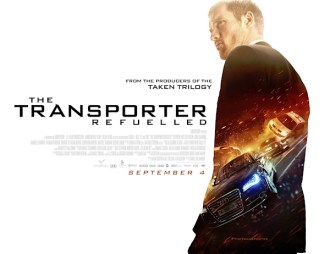
The Transporter Refuelled (2015)

aka The Transporter Refueled

2016 #166
Camille Delamarre | 96 mins | streaming (HD) | 2.35:1 | France, China & Belgium / English, Russian & French | 15 / PG-13

The Transporter RefuelledI kind of knew The Transporter Refuelled was going to be bad before I even began, but I watched it anyway because, well, I watched the first three Transporter movies and I really liked one of them, so… It’s just the completist in me, really; though why I was able to ditch Transformers when they semi-rebooted after three films and not this I don’t know. Possibly because the Transporter films have never been good, just entertaining trash, and even though Refuelled’s acting looked terrible and I can’t even remember if the trailer gave any indication of the plot, if it had half-decent action scenes then I’d be passingly happy for 90 minutes of entertainment (unlike Transformers 4, which runs the best part of 3 hours).
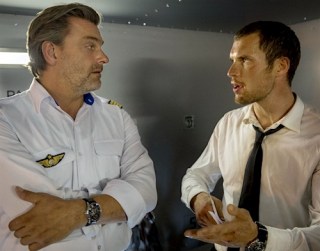
So imagine my surprise when, actually, I rather enjoyed it; way more than I probably should have, in fact. I mean, whenever it slows down for some plot or (especially) character stuff, it begins to go awry; but the action is pretty good, with some impressive car stunts and some neatly choreographed punch-ups. That’s all I expect or want from a movie like this, really, and even though it may not be an exceptional example of the form, the fisticuffs entertained me. I’ve certainly seen far worse. It helps that the over-reliance on CGI seen in the second two Statham instalments has been tempered. It’s still used to make us think the actors are in the actual car when they’re clearly on a soundstage, but all the flips and crashes look to have been done for real. Director Camille Delamarre previously edited several EuropaCorp movies, including Transporter 3, Colombiana, and Taken 2, and consequently he seems to know his way around an action sequence.

Like father like sonUnfortunately I wasn’t wrong about the acting, which is indeed pretty shit. Ed Skrein was truly dreadful in Game of Thrones (until he was thankfully recast) but was passable as the villain in Deadpool. As this film’s Statham-replacement hero he charts a course somewhere between those two stools. The supporting cast aren’t much better, with the notable exception of Ray Stevenson as Skrein’s dad, who brings much fun whenever he’s on screen. If anything makes Refuelled work as entertainment away from the violence, it’s the father-son dynamic. I want a sequel just to get another dose of that.

Sadly, poor critical reception may have scuppered this attempted reboot at the first hurdle. True, we don’t need more Transporter movies, but they provide a kind of simple but well-made action charm that sometimes hits the spot. I’d say Refuelled is more-or-less as good as any of its franchise brethren.

3 out of 5

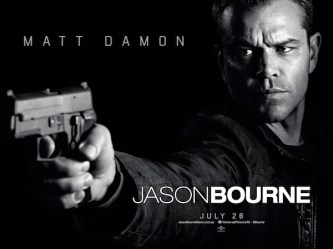
Jason Bourne (2016)

2016 #185
Paul Greengrass | 123 mins | Blu-ray | 2.40:1 | UK, USA & China / English & German | 12 / PG-13

Jason BourneMuch like the Bond films to which they’re so often compared, the Bourne movies have their devotees while only fitfully pleasing the critical establishment. This fifth movie — which is notable for marking the return of star Matt Damon and director Paul Greengrass after the semi-reboot of The Bourne Legacy — certainly met with mixed reviews when it came out at the end of this summer. Mixed erring towards negative, anyhow, though it does have its supporters. I’d love to say I’m among them, but my take was more… well, mixed.
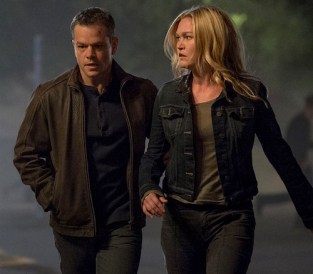
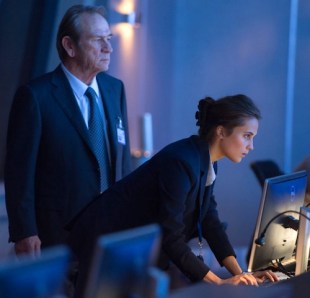
The story picks up a decade-ish since the last Damon movie, Ultimatum (I don’t recall if the time gap is specified on screen, but we’re led to believe it’s been roughly real-time). Bourne is still living off the grid, participating in underground bare-knuckle fights in Greece for money and/or something to do. When his former associate Nicky Parsons (Julia Stiles) hacks into the CIA to retrieve documents on the black ops missions she and Bourne used to be a part of, she discovers something about Bourne’s past that leads her to meet up with him. In Langley, hotshot young tech-head Heather Lee (Alicia Vikander) and her boss Director Dewey (Tommy Lee Jones) are on to Nicky and presume Bourne is involved in her plot, dispatching The Asset (Vincent Cassel) to rub them out — but he has his own history with Bourne.

Bourne againAction sequences ensue, shot with all the ShakyCam you’d expect from Greengrass. By now I imagine you have your own view on whether his style works or not. Personally, I think it’s considerably less bamboozling than when it made its debut in Supremacy 12 years ago — it’s been so copied that we’re more used to seeing it. I think Greengrass has a better handle on the purpose of the style than many of his imitators, however. I’d also argue that the cinematography in Jason Bourne is a smidgen more stable, with shots held a few frames longer, so that it’s even less seasickness-inducing than before. In fact, some shots — even in the quick-cut action montages — are downright pretty. The film was shot by Barry Ackroyd, who hasn’t lensed a Bourne before but has done most of Greengrass’ other movies, so maybe that has something to do with it.
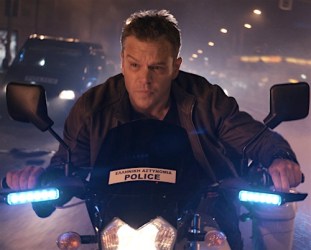
It’s in the big set pieces that Jason Bourne functions best. One in London in the middle of the film is just people walking around a lot looking over their shoulders, but Greengrass still invests it with some tension. Better is the climax, a kind of drag race down the Las Vegas strip… in the middle of traffic, of course. It’s largely implausible (I’ve been to Vegas — I remember the strip as being permanently gridlocked), but it’s certainly adrenaline-pumping. However, the highlight is probably the first: a chase through a smoky nighttime riot in Athens, with Bourne and Nicky on foot and then a motorbike as they’re pursued by the local police, an undercover CIA team, and the Asset, the latter two directed by Lee, Dewey, and their Langley lot via satellite imagery, CCTV, and… social media.

Government surveillanceFrankly, Jason Bourne is at pains to mix in hyper-current iconography; the reasoning for Damon and Greengrass’ return now being that the world has changed and how does Bourne fit into that? So as well as social media and Greek riots we’ve got references to and riffs on hacking, Edward Snowden, government surveillance of its own citizens, the prevalence of Facebook/Twitter-esque tech companies, and so on. Sadly, I’m not sure the film’s actually got anything to say about any of these things. Greengrass and his co-writer, editor Christopher Rouse, have appropriated all these zeitgeisty concepts to make the film feel very Now, but that surface sheen is more or less where it ends. I mean, there’s a whole subplot starring Riz Ahmed as the Zuckerberg-like CEO of a social media company that I didn’t even mention in my plot summary because it’s kind of an aside. It’s kind of ironic, really, that it always seemed as if Greengrass’ more natural stomping ground was his documentary-ish real-world-exposé type movies, with his contributions to the Bourne series an unusual sideline; yet when he finally marries the two halves of his filmmaking career, it’s the action rather than current-affairs commentary that takes precedence.
Even leaving that aside, the plot is no great shakes. It’s too slight, serving primarily to string together the three or four big set pieces; and it’s too simplistic — Greengrass’ Bourne movies used to be entertainingly baffling, a web of crosses and double-crosses and historical connections and hidden plans. Jason Bourne re-appropriates many of the series’ familiar beats — all of them, in fact — but it feels like Greengrass and Rouse just analysed the previous movies for repeated elements and copied them, rather than having anything fresh to do with the constituent parts. So while few of these building blocks are poorly handled, there’s little remarkable about them either. Some are at least elevated by quality performances: Vikander tries to inject complexity into her character, with some success thanks to final-act kinda-twists, while Tommy Lee Jones brings natural class.

Bourne bikerThe end result is that Jason Bourne does thrill as an action movie, which seems to have been the primary goal of its makers, at the end of the day. As an action-thriller, however, the rinsed-and-repeated plot is a slightly faded imitation of former successes; a through-the-motions way to provide those impressively staged chases and punch-ups. It’s not the definitive Bourne movie one might’ve expected from the returning star/director combo (why else come back if not to perfect, or at least add to, the formula?), but instead means the film ends on an odd note: even though it wasn’t a wholly satisfying experience, and even though it doesn’t end with questions still blatantly hanging (as every Bourne movie bar Ultimatum has done), I want Damon and Greengrass to come back and do it all again, please. Only do it properly next time, yeah guys?
3 out of 5

Jason Bourne is released on DVD and Blu-ray in the UK today and the US next week.

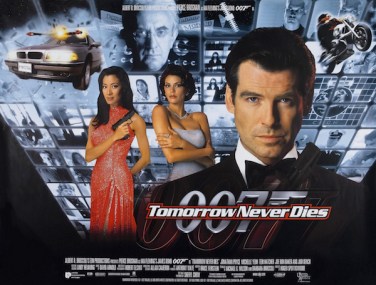
Tomorrow Never Dies (1997)

100 Films’ 100 Favourites #91

Yesterday is a memory. Today is history.
Tomorrow is in the hands of one man.
Bond. You know the rest.

Country: UK & USA
Language: English, German, Danish, Mandarin & Cantonese
Runtime: 119 minutes
BBFC: 12 (cut, 1997) | 12 (cut more, 1998) | 15 (uncut, 2006) | 12 (uncut, 2012)
MPAA: PG-13

Original Release: 12th December 1997 (UK)
US Release: 19th December 1997
First Seen: cinema, December 1997

Stars
Pierce Brosnan (Dante’s Peak, The Ghost)
Jonathan Pryce (Brazil, Pirates of the Caribbean: The Curse of the Black Pearl)
Michelle Yeoh (Supercop, Crouching Tiger, Hidden Dragon)
Teri Hatcher (Tango & Cash, Coraline)
Judi Dench (Mrs Brown, The Best Exotic Marigold Hotel)

Director
Roger Spottiswoode (Turner & Hooch, A Street Cat Named Bob)

Screenwriter
Bruce Feirstein (GoldenEye, The World Is Not Enough)

Based on
James Bond, a character created by Ian Fleming.

The Story
Secret agent James Bond is deployed to investigate a media baron who is plotting to ignite a war between the UK and China to further his business empire.

Our Hero
The name’s Bond, James Bond. In his second outing as agent 007, Pierce Brosnan has settled comfortably into his interpretation of the hero, a mix of Roger Moore’s eyebrow-raising levity with some of Sean Connery’s slightly harder, man-of-action edge.

Our Villain
Elliot Carver is a megalomaniac media mogul — the owner of the newspaper Tomorrow, who intends to secretly provoke a war in order to boost sales and ratings. James Bond does satire? Kinda.

Best Supporting Character
Wai Lin, a spy who’s investigating Carver for the Chinese. A skilled martial artist, she kicks all kinds of ass. Despite initial mistrust, she and Bond ultimately team up. Lin is arguably one of the first Bond girls who can genuinely claim to be a competent character in her own right. Still ends up sleeping with Bond, though.

Memorable Quote
Admiral Roebuck: “With all due respect, M, sometimes I don’t think you have the balls for this job.”
M: “Perhaps. But the advantage is I don’t have to think with them all the time.”

Memorable Scene
Remote control car, James Bond style: Bond lies in the backseat of his BMW, driving it around a multi-storey car park with his mobile phone, deploying its weapons against a gang of attackers. It was a fun concept back in ’97, but I imagine you could do it yourself with an app now. Apart from the weapons. And the legal implications. So maybe not.

Memorable Music
After the disastrous ‘modern’ score for GoldenEye, music duties were here handed to David Arnold. At the time he had composed the scores for Stargate and Independence Day, but, even more pertinently, he had produced Shaken and Stirred, an album of contemporary-styled covers of great Bond themes. The album was heard by iconic Bond composer John Barry, who then recommended Arnold to producer Barbara Broccoli. Arnold’s score is much more in-keeping with classic Bond music, but given a modern (well, ’90s) flavour. Backseat Driver, the soundtrack to my Memorable Scene pick, is a particularly great action cue. Arnold would become the series’ composer for the next four films, until Sam Mendes chose to use his regular collaborator Thomas Newman for Skyfall and Spectre. With Mendes moving on, perhaps Arnold will be back for Bond 25…

Write the Theme Tune…
Arnold wanted to have a hand in writing the title song and integrate it into his soundtrack, like the great Bond composers of old. To that end he wrote a theme sung by k.d. lang… which plays over the end credits and is titled Surrender, though has a tellingly prominent use of the phrase “tomorrow never dies” in its lyrics.

Sing the Theme Tune…
The producers went with a more marketable proposition for the final opening credits song, however, in the shape of Sheryl Crow, famous for her pop-rock-y hits like All I Wanna Do, A Change Would Do You Good, and Everyday is a Winding Road. In the pantheon of Bond title themes, her Tomorrow Never Dies sits firmly in the middle — it’s not a GoldenEye, but it’s not a Die Another Day either.

Making of
The film was originally called Tomorrow Never Lies, referencing Carver’s newspaper, Tomorrow. Some kind of production mix-up (a typo, a smudged fax — pick your story) led to it being misread as Tomorrow Never Dies, and the new, less meaningful title stuck.

This Category Sponsored By BMW
Apparently Tomorrow Never Dies was the first movie in history to have its entire budget covered by product placement endorsements — that’s over $100 million in advertising. Featured companies include BMW, L’Oréal, Heineken, Dunhill, Ericsson, Omega, Smirnoff, Brioni, Bollinger, and Avis, plus a tie-in game from Electronic Arts.

Previously on…
17 previous Bond films (which are all technically in the same continuity). The previous one, GoldenEye, was the first to star Pierce Brosnan and relaunched the series to mass popularity after a fallow period.

Next time…
Two more Brosnan Bonds, before he was unceremoniously dumped to reboot the series for the first time. With a 25th film now in the works, the series is set to continue indefinitely.

Awards
1 Saturn Award (Best Actor (Pierce Brosnan))
3 Saturn nominations (Action/Adventure/Thriller Film, Supporting Actress (Teri Hatcher), Music)
2 MTV Movie Awards nominations (Action Sequence for the motorcycle/helicopter chase (somehow it lost to Face/Off), Best Fight for “the fight between Michelle Yeoh and some ‘bad guys’.”)

What the Critics Said
“East meets West, yin meets yang and chop-socky meets kiss-kiss bang-bang in Tomorrow Never Dies, a zippy 007 romp that draws as heavily from the Asian action genre as from the formula that has served the series so well for 35 years. Goldeneye and Pierce Brosnan’s debonair Bond resuscitated the creaky franchise in 1995, but […] Tomorrow, jazzier, wittier and more costly than its predecessor, also comes closer to catching up with ’90s style and politics. […] Hong Kong kung-pow chick Michelle Yeoh, as the cool-headed Chinese agent Wai Lin, proves 007’s equal at kicking post-Cold War butt. The two take on craven communications baron Elliot Carver (Jonathan Pryce), a deliciously exaggerated — or is it? — composite of Ted Turner, Rupert Murdoch and the late Robert Maxwell. Carver’s not only the most plausible Bond nemesis ever but the perfect one for the current global villain shortage.” — Rita Kempley, The Washington Post

Score: 57%

What the Public Say
TND is somewhat underrated. Jonathan Pryce plays a villain who is essentially Rupert Murdoch smooshed together with Ted Turner. His plan isn’t to take over the world so much as it is getting rich by starting a war and then covering it on his news outlets. This just may be the most plausible Bond villain scheme of all times – which admittedly isn’t saying much. […] TND may not be among the best Bonds, but it’s got more going for it than I think it gets credit for.” — Lebeau, Lebeau’s Le Blog

Verdict

I know some of you will be thinking, “how can you leave out Goldfinger / Thunderball / The Spy Who Loved Me / For Your Eyes Only / The Living Daylights / Licence to Kill [delete according to personal preference] but include Tomorrow Never Dies?!” It’s true, TND is far from the most popular Bond film, but it was the first I saw on the big screen, and that gives me a certain soft spot for it. It’s not just that, though.

Here’s a thing: one of the criticisms levelled at the film is that it’s just an action movie, lacking the peculiarly Bondian thrills a Bond adventure should have. But if it is “just an action movie” then it’s the best action movie in the Bond series. The pre-titles gunfight at the arms meet, the ‘backseat driver’ sequence, and the motorbike-vs-helicopter chase are three of the finest action scenes in the entire franchise, and that’s without even touching on Michelle Yeoh kicking ass. Couple that with Brosnan still new and confident in the lead role, and Jonathan Pryce nibbling the scenery as a lightly satirical villain, and I think you have a Bond film that is pretty entertaining, even if it’s mainly on an adrenaline-pumping level.

#92 has… a friend in me.

Three Kings (1999)

100 Films’ 100 Favourites #90

They’re deserters, rebels and thieves.
But in the nicest possible way.

Country: USA
Language: English & Arabic
Runtime: 115 minutes
BBFC: 15
MPAA: R

Original Release: 1st October 1999 (USA)
UK Release: 3rd March 2000
First Seen: DVD, c.2001

Stars
George Clooney (Batman & Robin, Ocean’s Eleven)
Mark Wahlberg (Boogie Nights, The Fighter)
Ice Cube (Boyz n the Hood, Ride Along)
Spike Jonze (Being John Malkovich, Where the Wild Things Are)

Director
David O. Russell (Flirting with Disaster, Silver Linings Playbook)

Screenwriter
David O. Russell (Spanking the Monkey, American Hustle)

Story by
John Ridley (U Turn, 12 Years a Slave)

The Story
After ceasefire is called in the Gulf War, a group of American soldiers discover a map to a stash of gold stolen by Saddam Hussein’s forces. Setting out to steal it for themselves, the soldiers encounter a group of rebels who need their help and find their priorities changing.

Our Heroes
Army reservist Sergeant Troy Barlow and his friend, the comically naïve Private Conrad Vig, are the first to discover the map, which they take to Staff Sergeant Chief Elgin to translate. Then self-serving, disillusioned Special Forces Major Archie Gates turns up and convinces them to follow it to the gold. (Yes, despite the title, there are four of them.)

Our Villains
The war may officially be over, but the Iraqi Republican Guard are still the enemy.

Best Supporting Character
I know I mentioned him in the heroes bit, but Conrad is the de facto “fourth king”, so… He gets the lion’s share of either the best lines or the lines that set up the best lines.

Memorable Quote
Chief: “I don’t want to hear ‘dune coon’ or ‘sand nigger’ from him or anybody else.”
Conrad: “Captain uses those terms.”
Troy: “That’s not the point, Conrad. The point is that ‘towelhead’ and ‘camel jockey’ are perfectly good substitutes.”

Memorable Scene
Archie explains what actually happens when you get shot in the gut, complete with an explanatory cross-section of the human body, and bile.

Making of
The stories of behind-the-scenes conflict between director David O. Russell — still a relative newcomer, making his biggest movie so far — and George Clooney — dividing his time between E.R. three days a week and the film on the other four — are legendary. If you want a lengthy-ish full account, check out this trivia entry on IMDb.

Awards
1 Blockbuster Entertainment Award (Favourite Action Team — it beat Will Smith and Kevin Kline from Wild Wild West, and those were all the nominees)
1 Political Film Society Award (Peace)
2 Political Film Society Award nominations (Democracy, Exposé)

What the Critics Said
“[an] emotionally and politically responsible movie set in Iraq during the immediate aftermath of the gulf war — a damning yet idealistic satire about the motives behind U.S. foreign policy. The visuals are wild, the sound track has the audacity to underscore the subtext instead of just echoing the obvious, the comedy is irreverent and occasionally slapstick, and the metaphorical details are consistently strong. The movie even examines the conventions of star-studded actioners without stripping the leads of the charisma and apparent immortality of full-blown action heroes.” — Lisa Alspector, Chicago Reader

Score: 94%

What the Public Say
Three Kings, at its core, deals with serious themes and serious subject matter surrounding the end of the first Gulf War, and is therefore a war narrative before anything else. That being said, it’s refreshing how Three Kings doesn’t drown in its cynicism, isn’t exploitative in terms of gore or shocking violence, and isn’t hitting its audience over the head with either jingoistic propaganda or hamfisted pacifist social commentary. Moreover, Three Kings is funny enough often enough to be qualified as a comedy in its own right. It’s the humanist, dare I say, heartfelt combination of the two, that makes it a bonafide winner.” — The Celtic Predator, Express Elevator to Hell

Verdict

Writer-director David O. Russell may have become increasingly acclaimed this decade with Oscar-nominated movies like The Fighter, Silver Linings Playbook, and American Hustle, but for me this is still his best work. It mixes laugh-out-loud comedy with serious points about war and an ultimately emotional storyline, created with a filmmaking verve that is frequently exciting and inventive — something I’d argue is less present in Russell’s more widely-acknowledged work.

#91 never… lies dies.

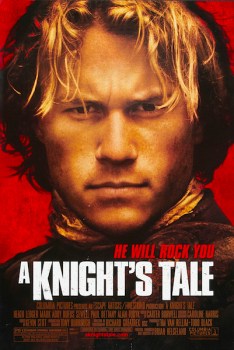
A Knight’s Tale (2001)

2016 #160
Brian Helgeland | 132 mins | streaming (HD) | 2.35:1 | USA / English | PG / PG-13

A Knight's TaleA squire fakes being a knight to win a jousting contest, and a lady’s affection, in this medieval comedy-adventure.

Renowned for its anachronistic use of rock music, there’s actually not much of that, but there’s plenty of comedy and adventure — too much: it’s a little long (that there’s an extended DVD beggars belief). An able cast keep it ticking: Heath Ledger hefts the derring-do and romance, with comic support from Mark Addy, Alan Tudyk, and Paul Bettany; but love interest Shannyn Sossamon is clearly miscast.

Though a favourite to some, I wouldn’t say it’s under-appreciated, but it’s a fun romp.

3 out of 5