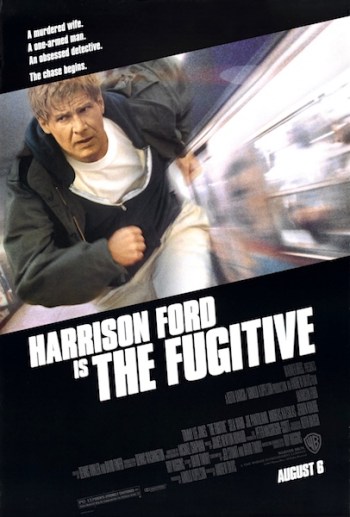
The Fugitive (1993)

The 100 Films Guide to…

A murdered wife.
A one-armed man.
An obsessed detective.
The chase begins.

Country: USA
Language: English
Runtime: 130 minutes
BBFC: 12 (cinema, 1993) | 15 (video, 1994)
MPAA: PG-13

Original Release: 6th August 1993 (USA)
UK Release: 24th September 1993
Budget: $44 million
Worldwide Gross: $368.9 million

Stars
Harrison Ford (Witness, Air Force One)
Tommy Lee Jones (JFK, No Country for Old Men)
Sela Ward (54, Independence Day: Resurgence)
Joe Pantoliano (Risky Business, The Matrix)

Director
Andrew Davis (Under Siege, Holes)

Screenwriters
Jeb Stuart (Die Hard, Fire Down Below)
David Twohy (Waterworld, Pitch Black)

Story by
David Twohy (G.I. Jane, Riddick)

Based on
The Fugitive, a TV series created by Roy Huggins.


The Story
After Dr. Richard Kimble’s wife is murdered, he is framed for the crime. Managing to escape custody, Kimble sets out to prove his innocence, while being pursued by a team of marshals intent on recapturing the fugitive.

Our Hero
Dr. Richard Kimble, respected surgeon, convicted of killing his wife, a crime he didn’t commit. When an accident on his way to prison allows me to break free, he goes on the run to clear his name.

Our Villain
The mysterious one-armed man who did kill Mrs Kimble. Why did he do it? Why can’t he be found?

Best Supporting Character
U.S. Marshal Samuel Gerard is the big dog on Kimble’s trail after he escapes custody. He just aims to bring the doctor back in, but maybe his sense of justice will ultimately prevail…

Memorable Quote
Kimble: “I didn’t kill my wife!”
Gerard: “I don’t care!”

Memorable Scene
Kimble runs through drainage tunnels, pursued by Gerard, when he suddenly reaches the outlet — a massive drop over a dam. Gerard approaches, gun raised, his man cornered, Kimble left with no escape route — except to jump…

Truly Special Effect
The famous bus/train crash was done for real with a real train and a real bus on a real track, because that was actually cheaper than doing it with miniatures! The scale of the setup meant it could only be done once, so it was shot with multiple cameras — several of which were destroyed and their footage rendered unusable. Conversely, a couple of others were caught up in the crash but continued rolling. Although it may’ve been driven by cost-saving, the fact it was done for real makes it all the more effective, one of cinema’s iconic stunts.

Letting the Side Down
Despite years in development that created literally dozens of drafts, filming began without a completed screenplay — and sometimes it shows. Just don’t try to think through the logic of the villains’ nefarious scheme, nor wonder why the supposedly super-smart marshals never twig that maybe Kimble is investigating his wife’s murder.

Making of
The sequence in the St Patrick’s Day parade was conceived by director Andrew Davis late in the day — so late that it wasn’t part of the shooting schedule and there wasn’t time to plan it. On the day, the cast and crew made an early start so they could complete all of the schedule material before heading over to the parade. Shooting with a Steadicam, the director, cast, and cameraman improvised the action and shot it more-or-less in real-time.

Next time…
Five years later, Tommy Lee Jones reprised his Oscar-winning supporting performance as the lead in U.S. Marshals. It wasn’t as successful. Personally, I didn’t realise it was a sequel for years and have never bothered to see it.

Awards
1 Oscar (Supporting Actor (Tommy Lee Jones))
6 Oscar nominations (Picture, Cinematography, Sound, Editing, Sound Effects Editing, Score)
1 BAFTA (Sound)
3 BAFTA nominations (Supporting Actor (Tommy Lee Jones), Editing, Special Effects)
2 MTV Movie Awards (On-Screen Duo (Harrison Ford & Tommy Lee Jones), Action Sequence (train wreck))
2 MTV Movie Award nominations (Movie, Male Performance (Harrison Ford))

Verdict

It must be at least 20 years since I last watched The Fugitive (it turns 25 next year), and it’s an interesting experience to revisit it today. Once upon a time this was a blockbuster; nowadays it’d be a mid-budget thriller… and probably wouldn’t get made because Hollywood doesn’t do those anymore. It’s a pleasingly ’90s manhunt movie — they can’t just track his mobile phone or zoom in with a satellite or what have you — but, aside from the nostalgia kick, the quality is a bit wobbly at times. It has strong performances, a breakneck pace (at least early on), and some stunning sequences, but the behind-the-scenes story of many, many drafts and a rushed schedule occasionally leave their mark on the screen, mainly in that the film’s whodunnit mystery isn’t all that engrossing or surprising. Maybe I’m just being nitpicky — it’s still a quality thriller. (The Blu-ray is a real dog, though. Could definitely do with a remaster.)

Suicide Squad (2016)

2016 #178
David Ayer | 123 mins | download (HD) | 2.39:1 | USA / English, Japanese & Spanish | 15 / PG-13

Suicide Squad

Oscar statue2017 Academy Awards
1 nomination — 1 win

Won: Best Makeup and Hairstyling.


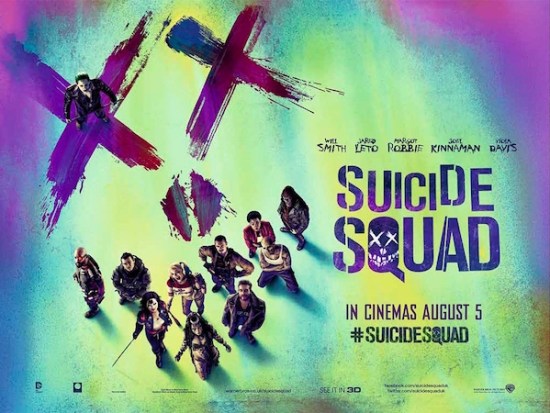
The third movie in DC’s attempt at a shared cinematic universe always seemed like an odd choice — why adapt a minor title starring second- or third- (or even fourth-) string villains when you’ve yet to bring several of your better-known heroes to the screen? Then the trailers came out and the apparent darkly comical tone seemed to click with viewers. But apparently that wasn’t what the movie was like at all, so then the studio ordered reshoots and hired the trailer editing people to re-cut the whole movie.

That did not end well.

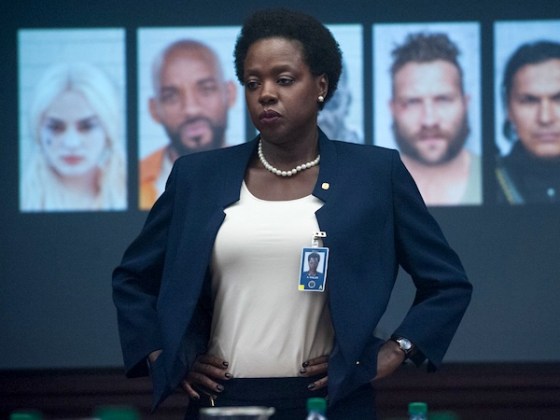
The final version of Suicide Squad definitely feels like a film that was messed around in post. I imagine the basic plot remains the same, however: sneaky government operative Amanda Waller (Viola Davis) comes up with a Cunning Plan to use locked-up super-villains — including the likes of Deadshot (Will Smith) and Harley Quinn (Margot Robbie) — to undertake dangerous and/or secret missions, on the basis that these prisoners are totally expendable. Why would the villains agree? They don’t have a choice: little bombs in their head will go off if they don’t comply. Almost immediately after getting approval for her initiative, a crisis breaks out in Generic Skyscraper City that requires the Squad’s expertise — how handy! Meanwhile, the Joker (Jared Leto) is concocting a plan to free his girlfriend…

Skwad!

That there were editing tussles over Suicide Squad’s final cut becomes evident almost immediately: the way it introduces Deadshot and Harley before cutting to Waller pitching her plan is a little clunky, surely a re-ordering to get the big-name characters on screen ASAP, which becomes obvious when they’re later introduced again alongside the other candidates. However, it really goes awry when Waller’s pitch and introduction of the Enchantress is immediately followed by another meeting where Waller makes her pitch and introduces the Enchantress. Maybe the screenplay was that clunkingly constructed to begin with, or maybe they just made a ham-fisted job of the restructuring.

On a shot-to-shot level the editing is fine, but various events aren’t allowed the necessary room to breathe, the endless character introductions are a jumble, the narrative is fitfully revealed, and the overall pace is a disaster. It’s easy to believe that it was cut by trailer editors because the pace and style with which it handles some sequences is reminiscent of the storytelling economy applied in trailers. Problem is, what works in a 120-second advertisement doesn’t in a 120-minute narrative. There are bits that are well put together — the occasional strong scene or impressive visual idea — but there’s a nagging awareness that someone felt the need to mess things around.

And nobody messes with Amanda Waller

Similarly, the use of songs on the soundtrack is scattershot. Some are eye-rollingly on the nose, while others seem chucked in at random, the apparent intent to be ‘quirky’ by throwing on discordant tracks. Parts of the film are the same, like Captain Boomerang’s pink unicorn: it’s a self-consciously Funny bit that’s deployed a couple of times early on and then completely disregarded. I mean, I’m not going to argue that the lack of reference to pink unicorns after the halfway point is Suicide Squad’s biggest flaw, but it’s indicative of its sloppy handling of material.

Examples of this disjointedness are almost endless. Like, during the climax the squad have a specific plan to deal with Enchantress’ brother, who they are aware of thanks to earlier seeing him on a ‘spy boomerang’ (don’t ask). But when the big fella comes out, their reactions are all “who the hell is this?!” and “we’re in trouble now!” It’s not a major flaw, it just doesn’t quite make sense — and when that keeps happening, I’d say the cumulative effect is a problem.

Suicide stars

On the bright side, Margot Robbie and Will Smith work overtime to both make their characters function and bring some entertainment value to the film, and they largely succeed. Viola Davis makes for a great love-to-hate character as the endlessly cunning Waller. I don’t even dislike Jared Leto’s loony take on the Joker. The rest of the cast… well, okay, the less said about them the better. For one thing, there’s a lot of them, and some don’t even need to be there. Slipknot and Katana barely serve any function, for instance, and the film only emphasises this by giving them clumsily offhand introductions.

There’s a definite sense that this version of Suicide Squad was created based on either audience feedback or the perception of what the audience wants, rather than what was actually designed to be the structure of the movie. It hasn’t worked. Scenes butt against each other in ways that surely weren’t intended, and the longer it goes on the more it feels like bits and pieces have been dropped in or taken out all over the place. It is possible to restructure a film in post, especially when you have reshoots to smooth the joins, but Suicide Squad absolutely feels like the hash job it was reported to be. Its legacy will be the lesson of what happens when you attempt a last-minute chop-and-change re-cut.

Theatrical Cut
2 out of 5


So, is the extended cut better?

2016 #195a
David Ayer | 135 mins | Blu-ray | 2.40:1 | USA / English, Japanese & Spanish | 15

Please sir, can I have some more?

Well, firstly, this isn’t a Batman v Superman-esque situation, where the extended cut puts the film back together how it was originally meant to be and suddenly makes it work. This is exactly what it says on the tin: extended. It’s the same movie, with 13 extra minutes.

I did enjoy it more on second viewing, but I’m not sure that was because of the new material. There’s extra stuff with Harley and the Joker, which feels like it’s been shoehorned in — but then, so did their scenes that were there before. The bar scene was one of the highlights of the theatrical cut and is improved by adding back some material that was only in the trailer. Otherwise, I suspect it’s just the rewatch factor, under which circumstances familiarity can allow the brain to make connections or invent explanations that the film may not contain, but through their existence (even if it’s just in your head) the film makes more sense. Even that doesn’t absolve all of Suicide Squad’s numerous faults, but it’s something.

It’s still not a good movie, really, but at least second time round I (overall) enjoyed watching it.

Extended Cut
3 out of 5

And finally, lest you ever forget…

Free Fire (2016)

2017 #105
Ben Wheatley | 91 mins | Blu-ray | 2.39:1 | UK & France / English | 15 / R

Free Fire

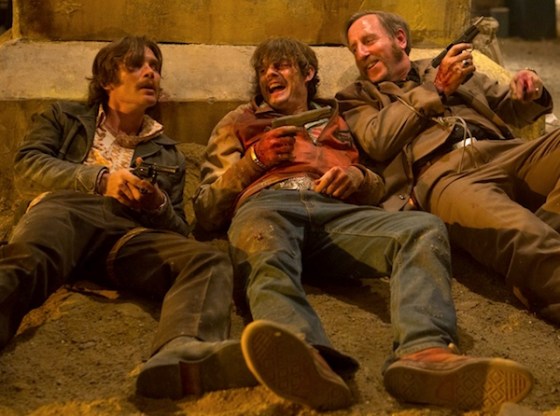
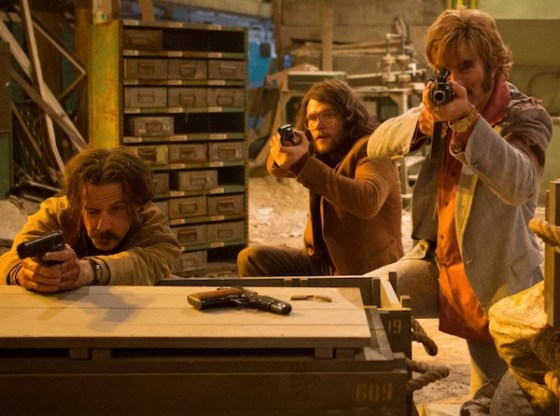
The latest film from director Ben Wheatley (he of Kill List, Sightseers, A Field in England, High-Rise, and the rest) is by far his most accessible movie yet. Set in Boston in the ’70s, it sees two IRA fellas (Cillian Murphy and Michael Smiley) arranging through a pair of black market brokers (Brie Larson and Armie Hammer) to purchase guns from some arms dealers (Sharlto Copley and Babou Ceesay), with each side bringing along a couple of chaps to carry boxes (Sam Riley, Jack Reynor, Noah Taylor, and Enzo Cilenti). But things go sideways when a couple of those minor participants have a falling out, leading to a protracted shoot-out. “Protracted” as in “two-thirds of the movie”.

If an hour-long gunfight doesn’t sound like your cup of tea, maybe Free Fire isn’t the movie for you. Conversely, this isn’t a Jason Statham flick: instead of an hour of highly-choreographed gunplay, most of the participants get injured early on and end up seeking cover around the rubble-strewn floor of an abandoned factory, occasionally taking potshots at each other. Most action movies are defined by their characters sprinting about — in this one, they crawl. The screenplay was partly inspired by FBI ballistics reports from real gunfights, so there’s actually some veracity to how things go down.

Guys with guns

So, on the one hand, it has a definite grit and reality. Bullet wounds actually hurt, leaving characters dragging themselves around in the dirt. Although there are occasional bullet-flying free-for-alls, just as often every shot counts. Similarly, their guns run out of bullets — frequently. Sometimes, permanently. On the other hand, however, it’s a bit like something Quentin Tarantino or Guy Ritchie might once have made, although thankfully without slavishly duplicating either of their overfamiliar styles. Without being an out-and-out comedy, it’s often pretty funny, thanks to the ludicrous situation and outrageous characters — all while remaining just this side of plausible, that is.

Unfortunately, the thin premise means it lags a bit in the middle. It feels in need of a clearer overall purpose and one or two more ideas. A better sense of space would help, too. We know who’s shooting at who, but for a long time we don’t really know where they all are in relation to each other. That’s not a deliberate choice to evoke the confusion of a gunfight or something — the characters all seem to know where they need to point their weapons. It’s a lack of filmmaking clarity, exposed in the Blu-ray’s behind-the-scenes featurette when it’s revealed how meticulously and thoroughly the whole thing was mapped out — it’s a real shame that doesn’t translate on screen.

More guys with guns

These are flaws that hold Free Fire back from perfection, mind. It’s still a fitfully funny, sporadically tense, gleefully violent hour-long shoot-out. And events occur in real-time, too, which I always have a soft spot for. When all is eventually said and done, I doubt critics and scholars are going to hold it up as a key film of Wheatley’s career, but I’d wager it’s the one most people will get the most enjoyment from.

4 out of 5

Free Fire is released on DVD and Blu-ray in the UK today.

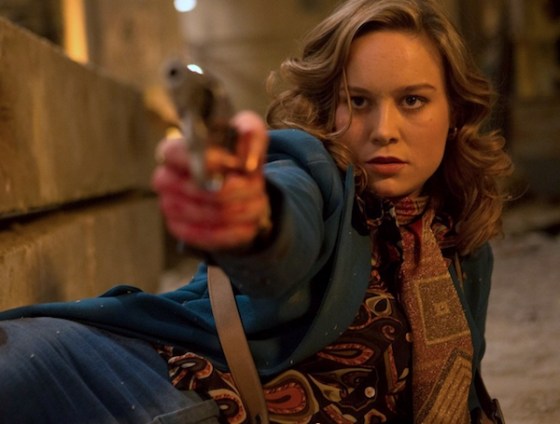
She isn’t pictured in the review, so here’s a bonus one of Brie Larson being badass:

Badass Brie

22 Jump Street (2014)

2017 #99
Phil Lord & Christopher Miller | 112 mins | Blu-ray | 2.40:1 | USA / English | 15 / R

22 Jump Street

After the genuinely surprising success (both critically and financially) of the 21 Jump Street movie, a sequel was inevitable. This is that sequel — and it won’t let you forget it.

In the first movie, best-buddy cops Jenko (Channing Tatum) and Schmidt (Jonah Hill) went undercover in a high school to unearth a drug ring. Now, they go undercover in a college to unearth a drug ring. Sequels, eh? But it’s okay because the film makes a running joke out of how it’s just rehashing what worked in the first movie. I say “it’s okay” — some people seem to fundamentally object to this, saying that acknowledging that it’s a copy doesn’t stop it being a copy. Personally, I give the film a bit more credit than that. It’s a copy because it’s funny when it’s a copy, not because it has absolutely no new ideas.

In part, it knows when to improve on itself: they’ve taken one of the most memorable and likeable bits of the first movie — the meta-jokes at the expense of the film itself — and ramped them up to 11. And it works. Or, at least, it did for me. Is this the most meta comedy ever? I dunno, but I can’t think of another that so relentlessly riffs off both the expected tropes of its genre and its own status as a sequel. It broadens the remits to movies in general, too — when it finally paid off, the meticulously over-constructed ‘meet cute’ gag elicited one of the biggest laughs I’ve had at a film in a long time. I’m almost loathe to mention it, because it works best when you have no idea that’s where it’s going, but oh well. Similarly, the widely-discussed end credits must’ve been a real hoot when they were a total surprise. Fortunately, they’re still a ton of fun even if you’ve had the joke ruined. (As I’ve already half-spoiled one moment, and the credits were pretty widely covered back when the film first came out, I shall say no more.)

Crash helmet

The one shame in all this is that it rehashes the last movie’s relationship arc for the leads. Gags about it being exactly the same movie are funny when they’re overt, like with the main drug investigation plot, but it’s like no one in production noticed that they’d reheated the character arcs. It does kind of go somewhere new with it, but only in the sense that it’s inverted which of the pair soars and which feels left out. Nonetheless, it stills leads to some funny scenes, like the “break up” and a counselling session, so at least it’s not a complete loss.

When a movie nobody expected anything good of becomes a hit and they rush to produce a sequel, you’d expect nothing more than a lazy rehash. 22 Jump Street takes that ball and runs with it, turning its lazy rehashery into meta-humour that makes the movie more-or-less the equal of its predecessor.

It’s a shame the threequel seems to have become lost down the dead-end of making it a Men in Black crossover because I wouldn’t mind seeing trilogies given the Jump Street treatment. But you never know, maybe that’ll become the silver lining to the Han Solo fiasco.

4 out of 5

Channing Tatum stars in another spoof cop series, Comrade Detective, available on Amazon Prime from today.

Moana (2016)

2017 #85
Ron Clements & John Musker | 103 mins | TV (HD+3D) | 2.35:1 | USA / English | PG / PG

Moana

The latest entry in Disney’s animated canon (the 56th), Moana is another princess-starring musical — that genre fully back in vogue for animated movies since the success of Frozen, I guess. The twist (if you can call it that, because the film thankfully doesn’t belabour the point) is that this isn’t another European-style princess fairytale, but rather one inspired by Polynesian culture, with songs co-written by That Guy From Hamilton.

Moana (voiced by newcomer Auli’i Cravalho) is the daughter of a chief whose tribe never venture far from their island’s waters, despite the sea calling to Moana — literally, as it turns out, because when the island’s crops begin to wither, the sea chooses Moana to undertake a quest to find the demigod Maui (Dwayne Johnson) to restore a MacGuffin and make everything a-okay again. Along the way, there are moral lessons about being adventurous and stuff.

Although the cultural setting is notably different to Disney’s usual stomping ground — and, don’t get me wrong, that diversity is something to be applauded, both for putting different kinds of heroes on screen and for giving us all something fresh — Moana is executed with Disney’s customary slickness. It looks fantastic, especially in 3D, where the ocean stretches forever into the screen, and there’s a musical sequence with 2D backgrounds that, ironically, is one of the best extra-dimensional bits because of what it does with said backgrounds. The songs are a toe-tapping treat too, with Moana’s big number, How Far I’ll Go, a more likeable earworm than certain other Disney songs about going; a David Bowie-inspired villain’s song, Shiny; and, my personal favourite, a comedy number sung by the Rock called You’re Welcome (this being the one with the 2D-that-looks-fab-in-3D animation).

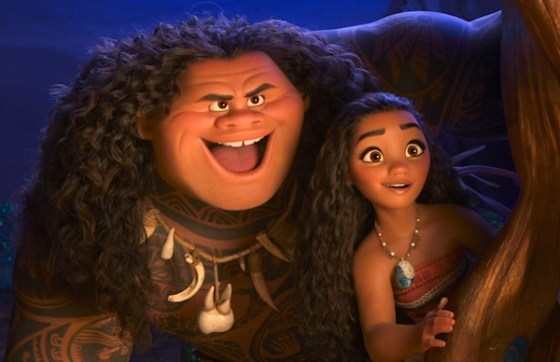
Maui and Moana

Surprisingly for a Disney princess film, there’s a superb action sequence in the middle, a rope-swinging sea battle against… miniature… pirate… coconut… things… er, I guess…? Anyway, it may actually be one of my favourite action scenes of the year, which is not what you generally find in a Disney musical. The big action scene at the end is perhaps slightly less effective as it strives hard to be an epic climax, but I think that’s nitpicking — it’s conceptually strong, with another positive underlying message. A bigger problem is the character of the sea: it chooses Moana for the quest, which arguably takes away some of her agency (the film fights to seem like it’s giving it back to her), and regularly turns up as a mini deus ex machina every time the characters need a hand.

That said, while I can observe those issues from an objective and critically-minded point of view, they didn’t actually bother me all that much. If you just (ahem) let it go, Moana is a ceaselessly likeable, consistently entertaining musical adventure. Along with Frozen and Zootropolis, it suggests Disney have hit a real stride right now that hopefully they can continue to build on.

4 out of 5

Moana is available on Sky Cinema from today.

It placed 16th on my list of The 17 Best Films I Saw For the First Time in 2017, which can be read in full here.

Kong: Skull Island (2017)

2017 #39
Jordan Vogt-Roberts | 118 mins | cinema | 2.35:1 | USA, China, Australia & Canada / English | 12A / PG-13

Kong: Skull Island

The king of the giant apes returned to the big screen this year as part of Legendary’s MonsterVerse, which will see him tussle with Godzilla in three years’ time. But we’re getting ahead of ourselves.

This new incarnation of Kong wisely dodges being a third remake of the original classic, opting for a new story of how mankind first comes across the eponymous island and its super-sized inhabitants. Set in the ’70s as the Vietnam war comes to an end, a mixed group of scientists and military men head for the uncharted island to see what lies within, and a monstrous battle for survival ensues.

Skull Island is a monster B-movie realised with a modern blockbuster budget and a dose of class from director Jordan Vogt-Roberts. Its major thrills come from the dust-ups between humans and giant beasties, or giant beasties and other giant beasties, but these are executed with a verve and enthusiasm that renders them a constant delight. Vogt-Roberts unleashes his skill with a palpable sense of excitement for the material, never seeming to hold back as he fills the entire movie with cool imagery and vibrant colours. The period setting is well evoked, bringing the sensation of witnessing a certain kind of non-specific throwback to adventure and monster movies past, even as lashings of expert CGI realise this new vision. (Also: two monkey movies this year and both with an Apocalypse Now vibe? Coincidencetastic.)

A skull, on the island

There’s a game cast, too, with Tom Hiddleston, Brie Larson, John Goodman, Samuel L. Jackson, and, in particular, John C. Reilly having a whale of a time as just some of our adventurers. Between them they help navigate a tone that could’ve been a jumble but instead feels just right, neither too pompous nor too comical. It’s never so grounded that the ridiculous stuff feels silly; never so silly that any of it stops mattering.

Kong: Skull Island might be the most fun I’ve had at the cinema so far this year. I can’t wait to watch it again on Blu-ray, and in 3D this time — I’m hoping that’ll really show off the scale of the big ol’ monsters. At the end of the day it’s a B-movie about giant monsters hitting things, which is what has held me back from giving it full marks, but don’t be surprised if this ends up on my year-end top ten: it’s superb blockbuster entertainment.

4 out of 5

Kong: Skull Island is released on DVD and Blu-ray in the UK today.

It placed 10th on my list of The 17 Best Films I Saw For the First Time in 2017, which can be read in full here.

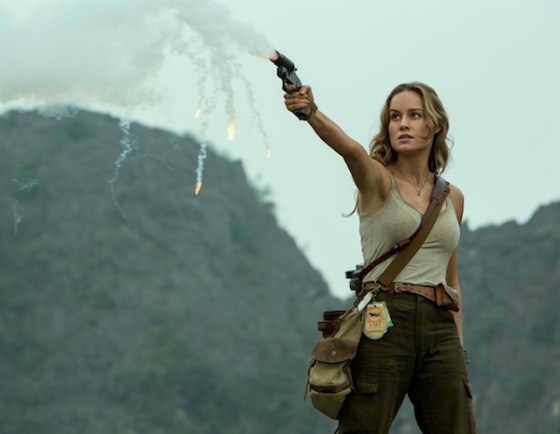
My review was a bit short to have more than one picture, but here’s a bonus one of Brie Larson being badass:

Badass Brie

Dunkirk (2017)

2017 #102
Christopher Nolan | 106 mins | cinema | 2.20:1 | UK, USA, France & Netherlands / English | 12A / PG-13

Dunkirk

Batman Begins. The Dark Knight Rises. Memento. The Prestige. Interstellar. Inception. The Dark Knight. Of his previous nine feature films, Christopher Nolan has seven on the IMDb Top 250 (in descending order as listed). I’m sure Following and Insomnia have their advocates as well. Nonetheless, many reviews are hailing Dunkirk as his best film yet. Some are even say it’s his first genuine masterpiece. Some that this is the film where he finally lives up to those endless Kubrick comparisons.

And some just harp on about how we have to see it in bloody IMAX, even though most of us can’t.

Personally, coming out of it I felt pretty much the same way I have about every Christopher Nolan film bar The Dark Knight: it was very good, but was it great?

We shall wait for them on the landing grounds

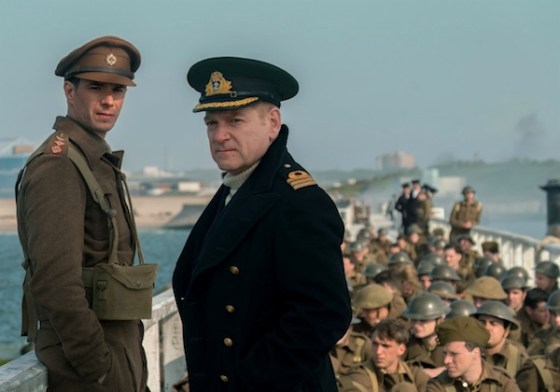
I don’t know how well the Battle of Dunkirk is known outside British shores (a lot better after this film, I’d wager), but I think it has a kind of ‘national myth’ status here; the sort of thing the phrase “our finest hour” was invented for. In 1940, British and allied troops retreated from the Nazi advance across Europe, ending up with their backs to the sea on the beach at Dunkirk, France, waiting for rescue from the British Navy. As their ships were plagued by German bombers and U-boats, eventually civilians were mobilised, with hundreds of fishermen and hobbyists sailing their tiny craft across the Channel to save as many as they could — in the end, over 330,000 troops. That’s ‘The Story’, anyway — I’m sure the truth is more nuanced. It’s also what provoked Churchill’s “We shall fight on the beaches” speech, which is probably even more famous.

So why hasn’t Dunkirk been more widely depicted on screen before now? Well, it didn’t involve the Americans, so I imagine that’s a big part of it. Also, it was technically a defeat — not exactly uplifting fodder. And where do you lay your focus? To take D-Day as a counterpoint: sure, it was a massive operation involving multiple beaches and thousands of troops, but you pick a handful of men to follow and you’re depicting the general experience. With Dunkirk, you’ve got the men who made it on to boats, those left on the beach, the civilians coming to their rescue, the sailors, the airforce… Or maybe I’m trying to make it sound more difficult to film than it actually is, and it all just comes back down to “the yanks weren’t there”.

Wherever did they find sand for all those bags?

But Christopher Nolan is allowed to basically do what he wants nowadays, and so Christopher Nolan is the one who’s finally made a film of Dunkirk. (I say “finally” — there have been others, a long time ago.) Despite it being the shortest film of his Hollywood career, Nolan gets round the perspective problem by making it an epic, driven by spectacular visuals and universal themes rather than a focused tale of just a character or two. In aid of this, it’s a three-pronged affair: in separate storylines we follow the soldiers on the beach and in the boats; a civilian craft on its way to rescue them; and a pilot providing air cover.

To complicate matters, Nolan stages each of these stories at a different time period — respectively, one week, one day, and one hour before the film’s climax — but intercuts them all as if they were happening at once. At times, literally: rather than limit each storyline to whole scenes one by one, events in each (like, say, a boat sinking with the soldiers on it and the pilot in a dogfight) are intercut as if they’re occurring simultaneously. It’s… an unusual choice. I’m not saying it’s bad, but I’m not sure what its goal is, exactly. For the film as a whole, it works effectively, especially spotting background details in each story that then crop up again later when other storylines catch up to them.

Background details

I think the main effect Nolan was aiming for is intensity. Not of war, so much, but of survival. That this is a PG-13 war movie caused some to balk — how can you depict war nowadays without blood and gore? But this isn’t a war movie per se, it’s an escape movie. It’s not about the reality of someone getting their arm or head blown off, it’s about escaping a sinking ship, or running out of fuel, or keeping going when the odds are against you. Couple this with the aforementioned visual spectacle, and a thunderous sound mix, and Dunkirk is definitely an Experience.

Indeed, for those without access to an IMAX — and, let’s face it, that’s the vast majority of viewers — the film’s sound is the main reason to see it in the cinema. It’s loud. I saw other people in my screening actually covering their ears at some points. That’s not just because my cinema had the volume too high (well, I don’t think it is), but I think it’s purposefully part of the effect. Of course, if you’ve got a decent sound system at home and are prepared to crank it up, maybe the Blu-ray will yet offer a similar experience. Certainly, in terms of the visuals, the disc release is likely to use the film’s IMAX Digital version, which features 80 minutes of 1.90:1 footage (vs. the constant 2.20:1 framing that you’ll see in most cinemas); and, if we’re lucky, they’ll include the IMAX footage in its full 1.43:1 ratio too (they did for Nolan’s Batmans, but not for Interstellar). It’s kind of ironic that this is a new-release film from a director hell bent on the sanctity of the theatrical experience (you probably saw his comments about Netflix earlier this week), where most of us will better see his intended visuals on a home video format than we will at the cinema.

We shall wait for them on the beaches

In trying to think how to sum up, I’ve come to the conclusion that early reviews have put too much weight on Dunkirk. I’m sat here pondering “is it Nolan’s best film?” or “is it the greatest war film ever made?”, rather than just “how was it as a film in itself?” On first blush, I wasn’t as enthralled by it as I was by The Dark Knight, or even Inception, but in some respects it’s a more mature, maybe even more cinematic, movie than either of those. As for being the greatest war film, I can’t help but instantly think of Saving Private Ryan, whose opening scene remains the one to beat, but also follows through with the rest of its story; and if we expand our scope to allow cinematic TV series, can anything top Band of Brothers? But, as I said earlier, Dunkirk isn’t trying to out-war those war movies.

So, setting aside questions of its place in film history, Dunkirk aims to be an intense experience about trying to survive events bigger than yourself. In that regard, it’s as successful as the evacuation itself.

5 out of 5

Dunkirk is in cinemas everywhere now. It’s also been released in IMAX, donchaknow.

It placed 9th on my list of The 17 Best Films I Saw For the First Time in 2017, which can be read in full here.

War for the Planet of the Apes (2017)

2017 #98
Matt Reeves | 140 mins | cinema (3D) | 2.35:1 | USA / English & American Sign Language | 12A / PG-13

War for the Planet of the Apes

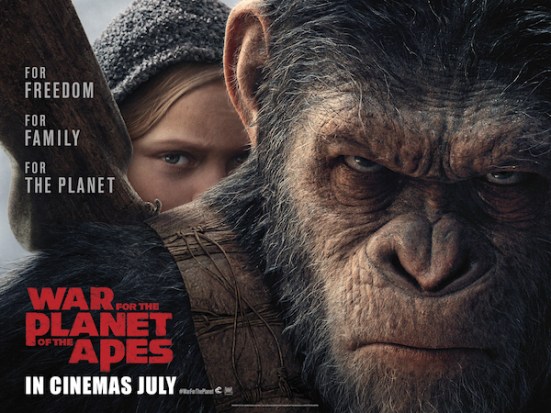
Previously on Planet of the Apes… the rise of intelligence in apes resulted in them establishing a new ape society in the woods. After humanity was mostly wiped out by disease, the actions of a few apes, still angry about their treatment at the hands of humans, led to the dawn of war began between peaceful apes and vengeful humans.

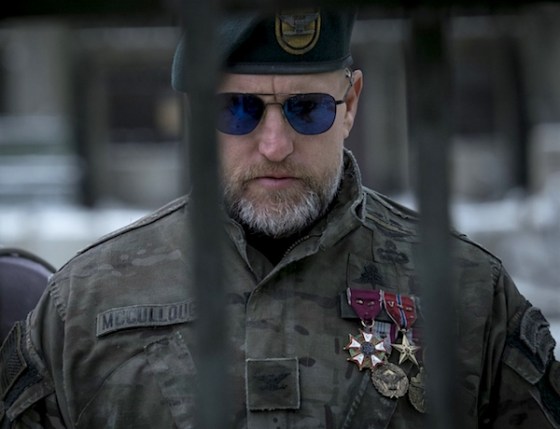
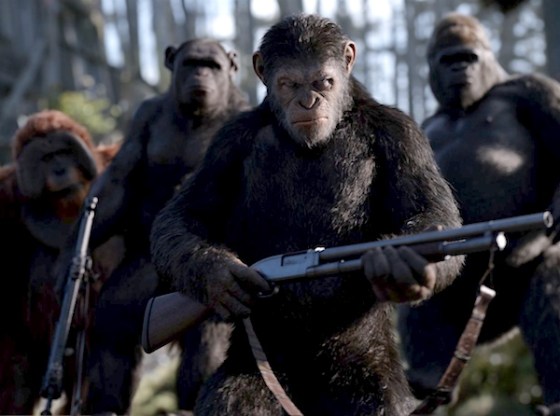
Now, ape leader Caesar (Andy Serkis) has been in hiding for years. After a human sortie into the forest leads to them finally discovering his location, the Colonel (Woody Harrelson) executes a stealth assault on the apes’ home. Incensed, Caesar and a small band of his most dedicated followers set out to find the humans’ stronghold and bring the Colonel to justice, hopefully ending the war in the process.

When it was announced that the follow-up to Dawn of the Planet of the Apes was going to be titled War for the Planet of the Apes, it only made sense. The previous film ended with that war beginning, for one thing. More than that, the clear point of this prequel trilogy has been to show how the world as we know it ended up on the path to becoming the one Charlton Heston encountered in the original Planet of the Apes — and you just knew mankind wasn’t going to give up without a fight, making some kind of war all but inevitable. However, as it turns out, the title is almost a misnomer.

Cheeky monkeys

This is not a war movie in the sense of it being two hours of epic battles. There’s a set-to at the start (one which reminded me of the opening of Saving Private Ryan without in any meaningful way being a rip off of it), and a big battle forms the backdrop to the climax, but in between the film is something else. Or, rather, somethings else: there are multiple genres one could cite as an influence on the film as it transitions betweens phases of its story. There’s a bit of the “men apes on a mission” thing going on, with an edge of the Western in there, before it turns into a POW camp movie of sorts, with a healthy dose of Apocalypse Now for good measure. If that makes it sound restless, it’s not; it’s just not beholden to picking one set of tropes and sticking to them — it goes where its story dictates. That works.

Similarly, the film is a tonal masterclass: as befits the subject matter of its title, there is grim and serious stuff here, but it’s laced with splashes of comedy, heartfelt emotion, moral debate, and social commentary, the vast majority of which is handled with understatement rather than Hollywood grandstanding. And if there’s one throughline to connect all this, it’s the characters. In a summer blockbuster?! I know, right? But that’s been a marker of quality throughout this new Apes trilogy: a willingness to be thoughtful and considered, not just trade on shoot-outs and explosions.

Military might

Andy Serkis is once again phenomenal in the lead role. Caesar’s story this time is almost Shakespearean, the film’s biggest war being his internal battle over the right course to take, and what his desired actions mean for his soul. He was always the sensible, reasonable, merciful ape, but events provoke another side in him — is he just like his old enemy Koba after all? Through him the film considers themes like justice vs revenge, the needs of the few vs the needs of the many, the rights and wrongs of actions in wartime. Caesar may be the hero, but he’s certainly not perfect.

On the flip side, Woody Harrelson is a clear-cut villain — a heartless bastard; a thoroughly nasty piece of work… or so it seems, because, when he eventually gets a chance to state his case, to explain where he’s coming from, the things he’s seen and decisions he’s had to make, you can understand his point of view. That doesn’t mean we necessarily agree (it’s pretty clear that, like Kurtz, he’s gone off the reservation), but it does make him a character rather than a cardboard cutout. As the film manoeuvres its way around these two characters, their differences and similarities, it’s abundantly clear that this is a much more complex film than your usual blockbuster fare of “always-right good guys shoot at thoroughly-evil bad guys”.

Talk with the animals... or not

Serkis and Harrelson are the stand outs, but there are brilliant performances elsewhere. Steve Zahn plays a character called Bad Ape, who’s both funny and touching, while Amiah Miller is a human girl the apes pick up on their travels, and the way she conveys a genuine emotional connection with the apes helps to sell them as real characters. Not that the CGI work of Weta needs much help there — it’s once again phenomenal, so real you don’t even think about it anymore. They had to break new ground for Dawn, for the first time taking performance capture outside of specially-designed studios (aka The Volume) and onto location filming. Perhaps that innovation explains why some of Matt Reeves’ direction last time was a little stilted and TV-ish. More years of development have removed those constraints, however, and his work on War is marvellously cinematic.

It’s also a true trilogy capper. They may choose to continue the story after this point (we’re still a couple of thousand years away from Charlton Heston showing up), but if they don’t then this will happily serve as an ending. I don’t think it’s a spoiler to say that, although each film of this prequel trilogy has been quite distinct (pleasingly so, I’d say), there’s still a sense of this one rounding off things that were set in motion back in the first movie. There are also Easter egg-like nods and hints towards the original film; and to some of its sequels too, apparently (I’ve not seen those yet so I’ll have to take other people’s word for it).

They don't wanna be like you-ooh-ooh

War for the Planet of the Apes is possibly not the movie we were expecting, but that’s no bad thing. I’m not sure how well it’ll go down with the crowd that pushes things like Transformers 5 to over $500m (and counting), but it has to be applauded for sneaking emotionally and thematically considered material into a huge-budget summer blockbuster. It’s not just great science fiction, it’s great drama. It’s also cemented these Apes prequels as arguably the greatest movie trilogy of the decade.

5 out of 5

War for the Planet of the Apes is in cinemas most places now.

It placed 5th on my list of The 17 Best Films I Saw For the First Time in 2017, which can be read in full here.

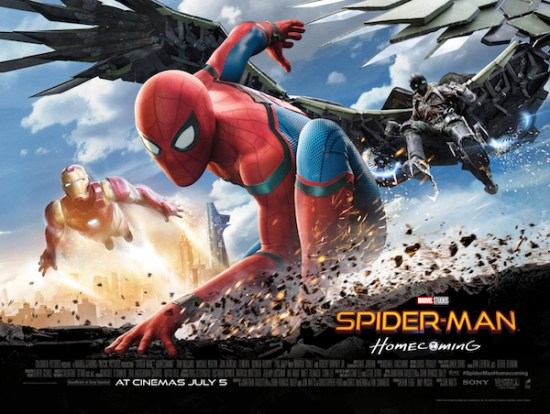
Spider-Man: Homecoming (2017)

2017 #94
Jon Watts | 133 mins | cinema | 2.35:1 | USA / English | 12A / PG-13

Spider-Man: Homecoming

This review contains spoilers for, like, everything.

When Marvel Studios began their grand experiment in revolutionising the Hollywood blockbuster landscape with Iron Man, I began my review with an hysterically funny (and totally under-appreciated) riff on the famous cheesy Spider-Man theme song, which was once buried at the end of the credits of a Spider-Man film as a joke. Nine years later, not only is Spider-Man joining the MCU, he’s doing so with the support of Iron Man — both in the film and in its marketing — and that cheesy song has been rendered in epic orchestral style to open the film. My, how times change.

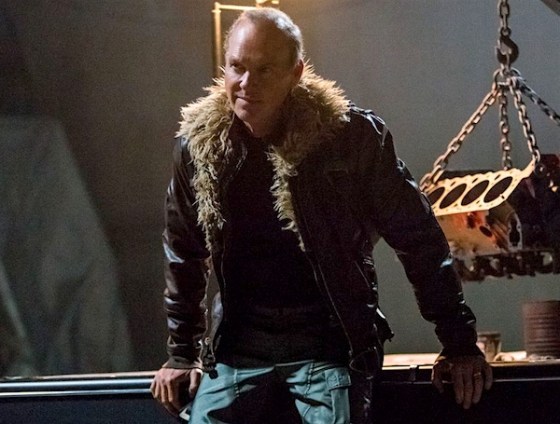
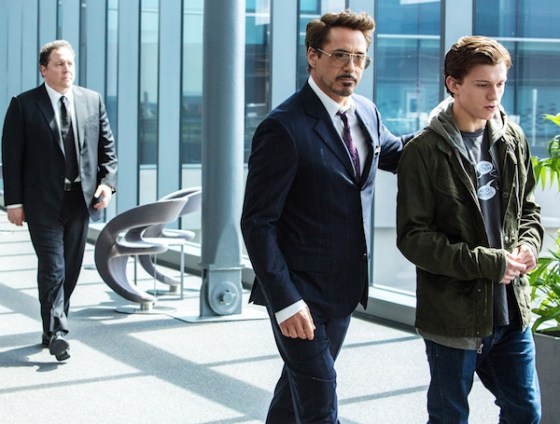
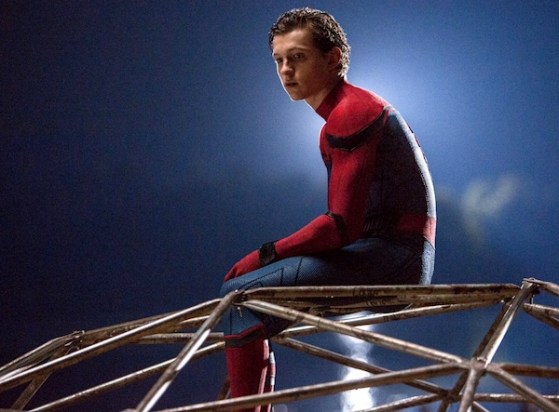
This is the second big-screen reboot for the Spider-Man franchise, but Sony and new production partner Marvel Studios aren’t keen for us to dwell on that (because the last reboot being such an unpopular move is the reason this one’s happened). So, following this latest incarnation’s soft introduction in last year’s Captain America: Civil War, here we pick up where that left off. 15-year-old Peter Parker (Tom Holland) is now hanging out back in New York, dealing with normal high school things like homework, parties, and casual bullying, and being just a friendly neighbourhood Spider-Man by stopping bicycle thieves and giving old ladies directions. He waits for a call from Tony Stark (Robert Downey Jr.) about their next big mission — a call that never comes. But when Spider-Man attempts to stop a bank robbery where the crooks are armed with suspiciously advanced tech, Peter finds himself on the trail of Adrian Toomes (Michael Keaton), a former salvage worker who uses bits and pieces recovered from Avengers battles to build dangerous weapons that he sells to criminals.

He's some kind of... Bird... man...

MCU films are renowned for having a “villain problem” — their films’ antagonists are often little more than human MacGuffins; someone for the hero to punch in the third act after they’ve undergone their own journey. Recent films have sought to rectify that (Zemo in Civil War being perhaps the best example), and Homecoming continues the trend. It hasn’t gone full-on pre-Nolan Batman — this is still very much Spidey’s movie, most concerned with our hero’s psychology and his personal arc — but Toomes (aka the Vulture) is a more well-rounded character than most Marvel movie enemies. Indeed, he’s a pretty relatable figure: he lost his livelihood due to government backroom deals forcing him out, since when he’s just tried to provide for the family he loves. In another version of this story, he’d be the hero.

Although he’s not afforded an abundance of screen time, this is where having an actor of Keaton’s calibre pays off, as he effortlessly sells both Toomes’ everyman humanity and his threatening villainous side. He gets an interesting final beat, too: locked up in prison, he refuses to give up Spider-Man’s identity to a fellow inmate. I’ve read some interpret this as being because he wants to kill Peter himself, but I don’t think that fits with the rest of his arc. I saw it as he’d been reformed by Peter saving his life and was doing him a favour. It wouldn’t be the first time he’d spared his life, after all. It could go either way I guess, but there are so many good Spidey villains who haven’t made it to the screen yet that I hope they don’t intend to waste a chunk of Homecoming 2 on reheating the Vulture.

It's mentor be

As everyone well knows by now (thanks to it being repeated ad infinitum in the previous Spidey movies), the catchphrase of the Spider-Man franchise is “with great power comes great responsibility”. However, it’s not said once in this film. Instead, it’s threaded through the very core of the film’s story and character arcs. It’s the lesson everyone comes to learn. It’s what Stark is trying to teach Peter by giving him a fancy suit with a lot of its special features disabled, and by discouraging him from biting off more than he can chew. When Peter gets himself in too deep, as he does repeatedly, it always comes close to costing innocent lives. It’s a lesson Stark learns too, though: he’s trying to be a mentor, a father figure, and do a better job of it than his own father did, but he still doesn’t set the right example for Peter — until, of course, he does.

That’s very much a subplot, though. Iron Man isn’t in the film as much as the trailers made some fear — this isn’t The Spider-Man and Iron Man Movie; indeed, that shot I’ve used for this post’s banner image isn’t even in the finished film. While Stark’s place as a mentor figure makes him important to our hero, this story is still all about Peter. Tom Holland is excellent, immensely likeable as both the socially awkward Peter Parker and the wisecracking, overambitious Spider-Man. You want to hang out with him more, he’s such a nice guy. It’s also clear he’s got the acting chops to carry off some of the more emotional dilemmas and realisations that hit Peter. As I said, he goes through the arc of realising his powers come with responsibilities — to himself, his family, his friends, and the people he’s trying to protect — and Holland navigates that while making it look effortless.

Every superhero's gotta brood sometimes

It naturally brings Peter to a place that, when he’s finally offered one of the things he’s most wanted — membership of the Avengers — he turns it down because he’s not quite ready. That scene, with the modest hero and the gag about the journalists actually being there, is… kinda obvious, even if it’s a strong character moment. But it’s quite interesting on an extra textual level: as it stands, it’s a good setup for future Spidey solo movies, but we’re not getting another one of those until after the big two-part Avengers extravaganza is over and done. Kevin Feige has talked about this being a five-movie character arc for Spidey, implying he has a major role to play in those two Avengers flicks, even though he’s just turned down joining that team full time. Really, it’s nice they haven’t just used this film’s ending to set up / trail their next one, which has been another common MCU problem. Maybe the honchos at Marvel Studios are learning some lessons about power and responsibility too…

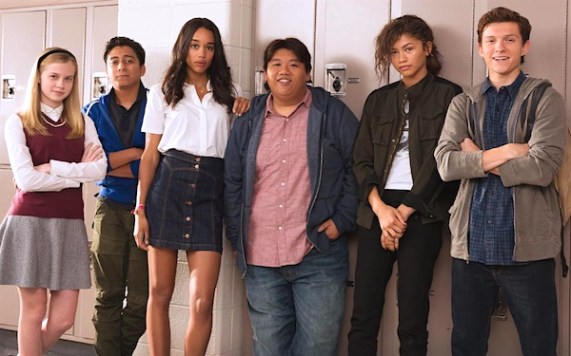
Further feeding into the focus on our hero, the movie spends a lot of time on Peter’s school life. All the “typical high school experience” stuff brings a different flavour to the Marvel universe; and, indeed, to Spider-Man movies, which have only passingly used it in previous incarnations. Although it’s ultimately used a bit repetitiously (Peter tries to attend something high-school-y; has to run off to be Spider-Man instead), what there is of it works nicely. Peter’s best friend, Ned (Jacob Batalon), drops neatly into the comedic sidekick role and is a very likeable presence. There’s a neat reconfiguring of Flash (The Grand Budapest Hotel’s Tony Revolori) from his usual depiction as a stock football jock into a kind of nerd-bully.

Class of 2017

There’s an attempt to add some depth to the object of Peter’s affections, Liz (Laura Harrier), in the third act, but she’s mainly called on to be beautiful, then sweet, then scared, then sweet again, so… Meanwhile, there’s the much-discussed casting of Zendaya (are we meant to know who she is? I don’t) as a character who isn’t Mary Jane Watson, honest, but who does like to be called MJ. She’s mainly there to be sarky, and is presumably in place to be used next time. The same might be said of Angourie Rice, who demonstrated her considerable talent in The Nice Guys but is here wasted as A.N. Other Schoolmate. Her character name is familiar from the comics, so hopefully they have future plans for her too.

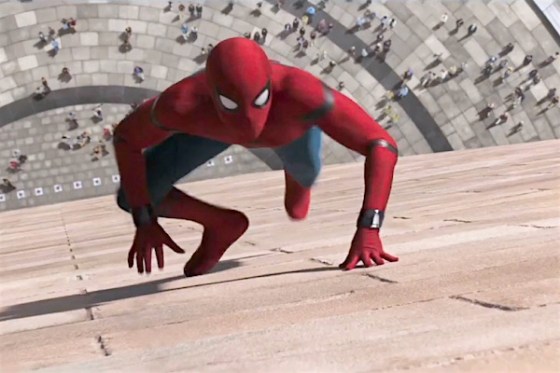
Reading this review so far, you might be forgiven for thinking Homecoming was some kind of character drama. Not so, of course — there are plenty of the requisite blockbuster action scenes. I’ve seen criticism of them for being typically characterless Marvel fare, lacking in either distinctiveness or palpable stakes. While that’s not necessarily untrue of a couple of sequences, I think the Washington Monument sequence at least is mightily effective. I’m certainly looking forward to re-experiencing some of its dizzying heights in 3D when the Blu-ray comes out. The one I did find disappointing was the climax on the outside of the ‘invisible’ plane (“invisible” in the same way Die Another Day’s car was invisible, but executed a bit more realistically, so Homecoming isn’t getting the same degree of flak for it). Taking place in the night sky, aboard a vessel whose lighted surface is constantly flickering and changing, and with the requisite action-scene fast cutting, it was both too dark and too busy, the effect being just a blur of illuminations. I dunno, maybe that works better in 3D too…

Monumental action

And if we’re talking criticisms, I have to have a quick rant about how the trailers gave away the whole movie. Maybe I should be used to that by now — it seems to be happening a lot — but it’s still irritating. So, okay, Homecoming’s didn’t include everything — one pretty big twist was saved for the final film — but most (perhaps all?) of the best gags were included, and so many big scenes were featured that, at times, watching the full movie felt like working through a checklist of bits we’d seen. The most egregious was when it came to Peter failing at the ferry, then Tony taking his suit away, then Peter proving himself by rescuing the plane suit-less as the climax — that whole sequence of events easily deduced from the trailers. Yes, this is a fault of the marketing more than the film itself (or possibly of my brain having deconstructed the trailer and reconstructed it into a film), but it would be nice if the trailer editors could keep some stuff a bit more secret. It’s not as if there was a shortage of visually impressive action moments to hint at them without using significant chunks. And “Spider-Man tries to stop Vulture while Iron Man both mentors and ignores him” would’ve been fine for the plot. (Though, how much do you need to sell the story of a superhero blockbuster? Would “this famous character does cool things with superpowers” actually be adequate?) I’d like to say I’m going to start avoiding trailers in future, but I have no willpower; I just can’t resist.

Finally, a quick word on the post-credits scene. As I left the cinema after it, the usher commented, “isn’t that the worst credits scene ever?” Well, I can see his point — it’s frustrating to have waited around just for that. At the same time, that’s kind of its point. And its point is bang on: it perfectly described how all of these credits scenes feel to the viewer; or, at least, how they feel to me. They’re pretty much never worth it, are they? And if filmmakers think it actually makes people read the credits… well, I dunno about you, but I turn my phone on and update Letterboxd and check Twitter until the scene turns up.

Spider-American

Ultimately, Spider-Man’s first full-blown outing in the MCU is… an MCU movie. Oh, sure, they’ve made inroads to fixing things like their weak villains, but the general tone — the lightness, the humour, the hero-focus, the style of the action — is all MCU stock-in-trade. Fortunately, they’re good at what they do, and that means this is a very good blockbuster movie. Its entertainment value is consistent and high. For me, it lacks the kind of iconicity that mark out Sam Raimi’s first two Spideys as foremost examples of superhero movies — although it’s not as wedded into the ever-developing MCU storyline as some of their other movies, it’s still Marvel Cinematic Universe Episode XVI, to an extent. But, eh, when it gets so much right, what does that matter?

4 out of 5

Inferno (2016)

2017 #93
Ron Howard | 121 mins | Blu-ray | 1.85:1 | USA & Hungary / English, French, Italian & Turkish | 12 / PG-13

Inferno

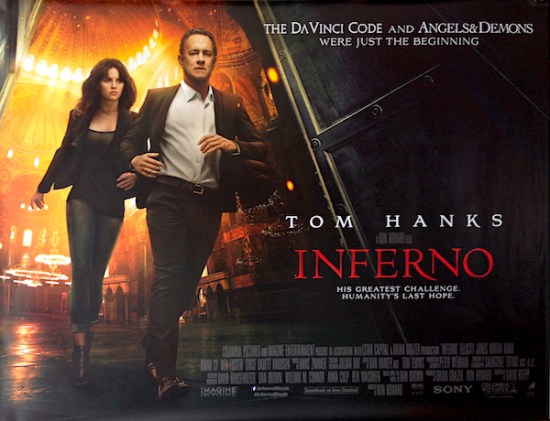
Tom Hanks returns as Robert Langdon, Dan Brown’s symboligist-cum-crime-solver (that’s the main character from The Da Vinci Code, for everyone who’s forgotten in the decade-ish since that book was at the top of the cultural zeitgeist) for his third adventure (they made a second, remember?) based on the fourth novel, after the first film was based on the second novel and the second film was based on the first novel (not that that matters, it’s just kinda funny).

This time, Langdon wakes up in a hospital bed in Florence, with a gunshot wound to his temple that has caused him to both forget the last two days and have terrifying hallucinations of Hell. When an assassin turns up trying to kill him, he escapes with Dr Sienna Brooks (Felicity Jones). Still unable to recall how he ended up in this predicament, Langdon discovers a small projector in his pocket, which contains what will be the first clue to another scavenger hunt of famous old artworks and the like. At the end of the trail: a man-made pathogen that could wipe out 95% of humanity. Pursued by several groups who want the virus for their own nefarious (or not) ends, Langdon and Sienna race against time to save the world.

If you haven’t guessed yet, Inferno is a bit silly. Not utterly silly, but silly in the kind of way the previous Dan Brown movies have been silly — pretending they’re taking place in a plausible real world, when they’re not. The kind of silly where a villain leaves a trail of clues for someone to follow and make sure his scheme is executed, rather than, I dunno, putting a timer on it. (Incidentally, this is a change from the novel, where (based on what I read on Wikipedia) his plan makes marginally more sense.) The kind of silly where apparently the World Health Organisation is some international enforcement agency with gun-toting special ops units and the power to override local police. (I don’t know much about the real WHO, but I find this version very hard to believe.)

Brooks and Langdon

On the bright side, Inferno is not nearly so po-faced as the previous Langdon movies. If you suspend your disbelief, it’s a reasonably compelling mystery (or set of mysteries), where for once the ultimate solution doesn’t feel obvious from the get-go. The same goes for the issue of who to trust. As you’d expect from a race-against-time thriller with an everyman hero, there are multiple different forces in pursuit of Langdon, and you know that one of those groups will turn out to actually be on his side, because that’s how these things always go — but which? Well, I thought it was less blatantly obvious than normal, anyway; though I did guess one other huge twist almost from the start (and I’m sure most viewers who are reasonably versed in this genre of movie will too).

That’s another point that’s been tweaked from the novel, it turns out. In spite of being a film that is considered pretty faithful to its source, they do seem to have shaved off any detail or plot development that was a little outside the norm of a Hollywood blockbuster thriller, which is rather disappointing in a way. It was the ghost of 82’s review that alerted me to these changes, through the fact that the novel even has a different ending. I looked it up and it sounds much better. It’s totally unHollywood, and I bet the studio vetoed it as soon as they heard it, but it’s more interesting and complex than the standard fight-over-the-MacGuffin climax used here.
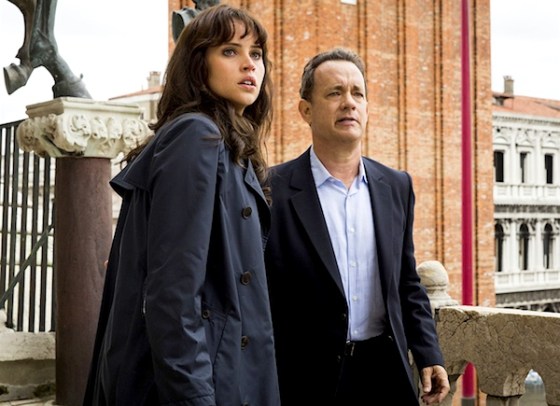
A clue!

The whole style of the film is similarly standardised. The use of a 1.85:1 ratio and Ron Howard’s unremarkable direction make it all feel very televisual, the only giveaways to its big-screen budget being the stunning locations and the presence of Tom Hanks, Felicity Jones, et al. There are also hand-holding flashbacks and intercuts to things we saw five minutes ago, just like you get on TV dramas that feel uncertain about whether you’re paying full attention or have perhaps tuned in halfway through. Langdon’s gory visions lend a bit of visual spice, but that’s also what they feel like — an attempt to liven things up.

For all these faults, I actually enjoyed Inferno a fair bit. It’s a decent, pacy thriller; completely implausible, both in its overwrought story and frequently leaden dialogue, but as a race-against-time mystery in beautiful locations, it’s an entertaining 120 minutes. I’d give it 3½, but I don’t do half-stars, so let’s be generous and round it up.

4 out of 5

Inferno is available on Sky Cinema from today.