The Dark Tower (2017)

2018 #25
Nikolaj Arcel | 95 mins | streaming (HD) | 2.39:1 | USA / English | 12 / PG-13

The Dark Tower

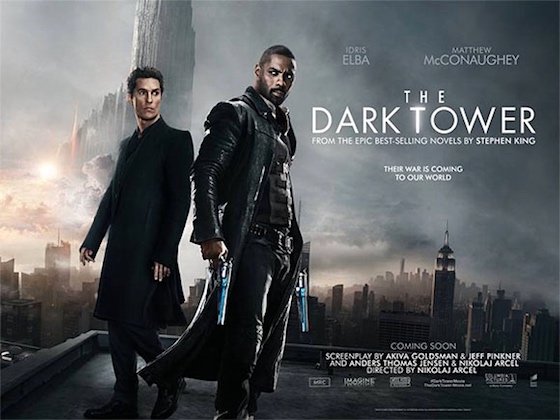
The Dark Tower started life as a literary work that is, according to its author, Stephen King’s magnum opus: a series of eight novels, written over 30 years and spanning some 4,250 pages, that not only tell their own genre-mash-up story, but also reference or connect up many of King’s more widely-known works. Since 2007 there have been various efforts to try to wrangle such an epic work onto the screen, with perhaps the most high-profile being Ron Howard’s ambitious plan to spread it across both film and TV, alternating a trilogy of big-budget movies with seasons of TV on HBO in order to adapt the whole saga. This clearly proved to be too formidable a goal, but eventually paved the way for what was released: a single 90-minute film. From one extreme to the other, eh…

It’s easy to imagine why fans of the books have found this film disappointing, then — I mean, there’s no way they’ve managed to accurately condense seven novels (and some of them very long novels at that) into an hour and a half. But, despite the series-encompassing title, it’s my understanding that it’s primarily an adaptation of the first novel, so surely fans would know they could expect the rest of the narrative if sequels were produced? The perceived problems must go deeper, therefore, and be more general: leaving aside fan reaction, the film has a Rotten Tomatoes score of just 16%.

Strut

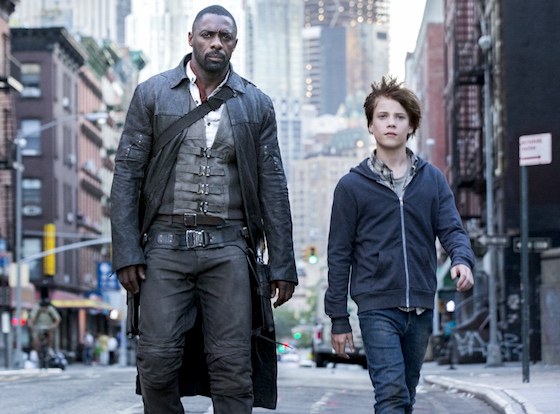
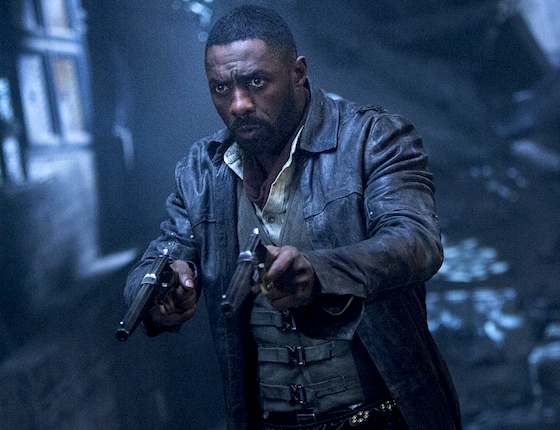
Well, I don’t know what people were hating, because I thought it really wasn’t that bad. I can’t comment on its faithfulness or thoroughness as an adaptation, but as an action-fantasy movie in its own right I thought it held together pretty well. It only cost $60 million (a bargain for a blockbuster nowadays), but they got good value for money: it doesn’t look cheap, and it has a respectable lead cast as well. Idris Elba’s presence may’ve pissed off some people (his character has consistently been depicted as white in illustrations accompanying the books), but he seemed to fit the role. Matthew McConaughey makes for a decently unsetting bad guy. Our identification figure is a kid played by Doctor Foster’s Tom Taylor, who’s fine here but got to show more chops in that series.

The relatively stringent budget probably explains why it’s a little light on things like epic action sequences, with those that are included feeling like the makers were probably doing their best on a limited expenditure — the action isn’t bad, but those scenes aren’t as awesome as the film thinks they are. Less readily excused is the plot, which is a bit slim — the story is very straightforward, despite the intricate fantasy gubbins dressing it up, moving directly from A to B to C with minimal complication. Similarly, familiar character arcs are efficiently executed. But if a film’s biggest crime is unoriginality, it’s no worse than the majority of Hollywood’s output for the past 20 or 30 (or more) years, is it?

Slinging guns

Well, according to script editor (and fan of the books) Andrew Ellard in his discussion of the movie, that’s precisely the problem. He argues the film represents “the exact same competent mediocrity we’ve seen before from — say — I, Robot or I Am Legend. Not a bad film especially. Just kinda nothing. Or like Inkheart or Assassin’s Creed, fantasy you won’t remember tomorrow. But the books are fascinating. Full of ideas & imagery that haunt you. To pick the blandest, most generic stuff? Dumb.” This, I do suppose, is what fans were primarily upset about. If you don’t know the books then the film we’ve been given is fine as just a reasonable time-passer, but if you feel that it could — should — have been something truly special, how frustrating that must be.

The Dark Tower grossed $113 million, which, at less than double its budget, probably isn’t enough to secure the mooted sequel (especially when it’s put in comparison to 2017’s other Stephen King adaptation, It, which surpassed $700 million). I guess someday it’ll get re-adapted, probably as a TV series, maybe by Netflix, or Amazon, especially if they still haven’t found the Game of Thrones-beater they’re currently looking for. Until then, this version stands as a reasonably enjoyable quickie — not as bad as you may’ve heard, but apparently not all it could’ve been either.

3 out of 5

The Dark Tower is available on Sky Cinema from today.

Zatoichi’s Flashing Sword (1964)

aka Zatôichi abare tako

2018 #50
Kazuo Ikehiro | 82 mins | Blu-ray | 2.35:1 | Japan / Japanese

Zatoichi's Flashing Sword

Zatoichi’s built up quite the reputation by the beginning of this seventh adventure: his previous escapades have left many gangs gunning for him — literally, as it turns out, because the story begins with Ichi getting shot by an opportunistic nobody. Fortunately for everyone’s favourite blind masseur-cum-swordsman, the guy’s clearly not a great shot, and a friendly passerby sees to it that Ichi gets the care he needs. Later Ichi sets about tracking down his mysterious benefactor, which puts him in the middle of a conflict between two gangs — what else is new? This time they’re arguing over a free fireworks display and the rights to provide a river crossing service. Sounds a bit less violently dramatic than normal, doesn’t it? But when gangsters don’t get what they want…

Flashing Sword offers a more straightforward story than some other instalments of the Zatoichi series: the opposing sides and their differences are thoroughly established, and one gang are even clearly the good guys! Makes a change from Ichi having to pick between the lesser of two evils and/or trying to wipe out both sides. Some other reviewers seem to find the story simplistic or lightweight. Conversely, I appreciated the clarity of approach, and thought the film found different ways to add complexity beyond pure plot gymnastics.

Did somebody mention gymnastics?

Playing out as more of a drama than some of the other films, the events here have something of an emotional impact on our roving hero. As the two sides argue in low-key fashion, Ichi’s involvement in the conflict is limited, and so he settles into the home he’s been welcomed to as a guest, to the point where he almost seems ready to settle there. Well, we know he never will, but that’s dramatic irony for you. It’s the same with the pretty young lady that Ichi once again finds himself involved with (all the ladies love a blind man, it would seem) — we know they’ll never end up together, but the characters have to find that out for themselves. This time, Ichi is robbed of his possible dreams in particularly cruel fashion, as the bad guys scheme to force the good boss’ hand. Ichi finds out the truth, but by then it’s too late — all that’s left is for him to take revenge.

And that brings us to one thing everyone can agree on: that the film’s climax is spectacular. First Ichi stalks around the enemy HQ, hidden in nighttime shadows, picking off the guards in small clumps. Then he faces the army of gangsters head-on, as the sound of fireworks explode outside; then he extinguishes the candles so that his adversaries must, like him, fight in the dark; and finally the combat moves outside, the fight unfolding in an elegant bird’s-eye tracking shot, lit by the multicoloured fireworks overhead. It’s another example of great direction by Kazuo Ikehiro, who also helmed the previous film. He seems to have been reined in here — the imagery isn’t quite as consistently striking this time — but there’s loads of great stuff nonetheless, and the finale is the best of it. Derek Hill of Images describes it as a “long, messy climax [that] rewards viewers’ patience with one of the most memorably over-the-top finales that the series has produced thus far.” Todd Doogan and Bill Hunt of The Digital Bits call it, simply, “a classic.”

Colourful action

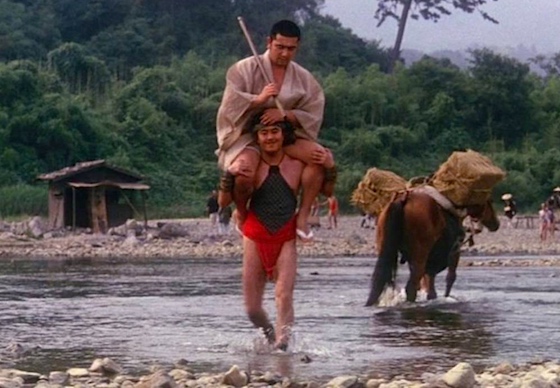
The earlier parts of Flashing Sword put Ichi in a comedic role (extended skits include a bit about him being too heavy to carry comfortably across the river, and another where he’s served spoiled rice that he proceeds to smear all over the room), but during the climax he becomes something else entirely — Walter Biggins of Quiet Bubble describes him as “a demonic avatar”; Paghat the Ratgirl reckons he “captures something of a Dark God in his physical presence and prowess.” Never is this sense clearer than when he finally comes face-to-face with the enemy boss, Yasugoro. Portrayed by Tatsuo Endo, he’s a very good villain: preening with confidence when he’s winning, a cowering coward when losing, always blighted by a stutter. As with all good villains, they bring out the truth of our hero: even as Yasugoro smashes tiles on Ichi’s head, making him bleed (gasp!), the blindswordman stays true to his word and doesn’t draw his sword… until Yasugoro draws first, and Ichi abruptly cuts him down.

As I mentioned earlier, a few of the other reviews I’ve read are a bit down on Zatoichi’s Flashing Sword, though Letterboxd users do rank it in the series’ top ten best instalments (just). I’m more aligned with the latter. Although it may seem more simplistic than some of the series’ other films so far, it puts that apparent plainness to meaningful use, and boasts arguably the series’ greatest action sequence to date as a capstone.

4 out of 5

The Hurricane Heist (2018)

2018 #60
Rob Cohen | 99 mins | streaming (HD) | 2.39:1 | USA / English | 12A / PG-13

The Hurricane Heist

Billed as a “Sky Cinema Original Movie” here in the UK (which, I presume, is like half of Netflix’s “original” movies — i.e. they paid for exclusive rights to something already completed), The Hurricane Heist… does what it says on the tin, really: as a hurricane strikes Alabama, a gang of crooks plan to use it as cover to rob a Treasury facility and its $600 million of waiting-to-be-shredded old notes. What they didn’t count on was crack ATF agent Casey Corbyn (Maggie Grace), who attempts to stop them with the help of meteorologist Will Rutledge (Toby Kebbell) — who drives a tank-like hurricane-proof car — and his ex-military mechanic brother Breeze (Ryan Kwanten).

Yes, a film called The Hurricane Heist has a main character called “Breeze”.

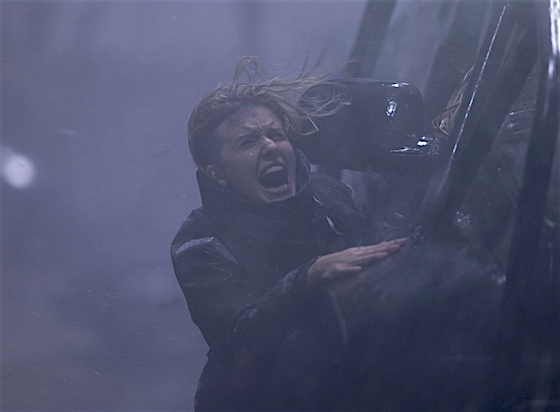
I suppose that’s indicative of the tone the film’s shooting for, really. It’s not Sharknado, but you have to hope the filmmakers knew it was cheap and cheesy as hell and wanted to play up to that. It’s only sporadically successful — much of the dialogue is just bad rather than so-bad-it’s-good, for example — but it has its moments. About halfway through there’s a sequence where Will throws scrap hubcaps into the wind so that they fly at the bad guys like spinning discs of death, at which point the film looks like it might tip from “so mediocre it’s mediocre” into “utter genius”. Sadly, it doesn’t keep that inventiveness up for more than about ten seconds, but at least it means there’s something memorable here. And while it may generally look and feel kinda cheap, there’s a massive amount of practical wind and rain being thrown around to create the storm, which is pretty effective.

The wet and the windiest

Another success comes in a couple of amusing villain deaths during the climax, but to say more would spoil things. The chief villain is played by Ralph Ineson, whose basic skill as a performer at least elevates that role somewhat. Toby Kebbell is probably better than this too, though considering some of his other choices in the past couple of years (Ben-Hur, Warcraft, Fantastic Four) maybe he’s lucky to get this now. Certainly, this is more entertaining than the ones I’ve seen of those.

If The Hurricane Heist had been made 20 years ago it probably would’ve been a major blockbuster. It certainly looks like the CGI was produced back then. Now… well, it’s gone direct to Sky Cinema, hasn’t it? Maybe it’ll find a cult following, but I’m not sure it’s quite barmy enough to achieve that so-bad-it’s-good love. It is pretty stupid and definitely cheesy, but… well, it’s not so much boring as… not exciting. Like, it’s middling. It’s okay. It’s kinda fun. You won’t remember much of it the day after, but for a bit of daft brain-off action on a lazy evening, it’s alright.

3 out of 5

The Hurricane Heist is allegedly in some UK cinemas now. It’s definitely available on Sky Cinema, and will be (presumably exclusively) until at least 5th April 2028.

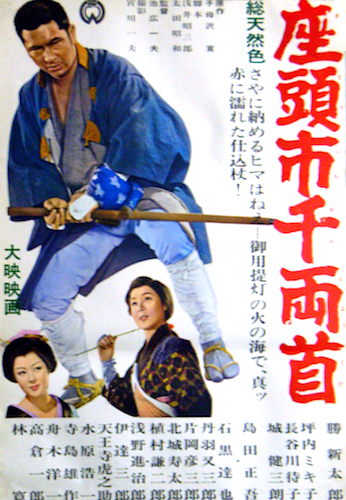
Zatoichi and the Chest of Gold (1964)

aka Zatôichi senryô-kubi

2018 #24
Kazuo Ikehiro | 82 mins | Blu-ray | 2.35:1 | Japan / Japanese

Zatoichi and the Chest of Gold

The sixth film in the Zatoichi series (and the first of four released in 1964) begins with blind masseur Ichi (Shintaro Katsu) paying tribute at the grave of a man he killed (Ichi must spend most of his time pinballing from one such grave to another). Afterwards he stumbles upon a group of celebrating villagers — they’ve finally managed to scrape together enough money to pay the taxman the thousand ryo they owe. But when that money is stolen, Ichi happens to be in the wrong place at the wrong time and is accused of being involved in the theft. He sets out to clear his name — and, despite the abuse they hurl his way, also get the villagers their money back, because he’s that kind of fella.

What unfurls is one of the series’ typically fiddly plots, characterised by a shortage of explanation about who’s who, meaning it requires attention to work out what’s going on sometimes. I’m beginning to wonder if this is a cultural issue; by which I mean, would these stories be easier to follow for Japanese viewers? Or is it just a particular feature of the Zatoichi series’ plots? Mind you, other reviews note how straightforward the story is this time out. Perhaps the problem is just getting to grips with who’s who — these films don’t always lay that out neatly. Once you have a handle on that then, yes, Chest of Gold’s story is pretty linear. It does try to play something of a twist about who’s behind the theft of the money, but that revelation shouldn’t come as a great surprise.

Nighttime meeting

None of this is to say Chest of Gold is a poor film. Far from it. For one thing, it’s probably the most artfully directed Zatoichi film so far. Or if not artfully then certainly energetically — it’s full of more unusual angles and editing tricks than the previous films put together. But director Kazuo Ikehiro isn’t just a show-off, knowing when to not over-complicate matters: if a sequence calls for a simpler series of shots (in a dialogue scene, for example) then that’s what we get. The cinematography looks superb too, with a palpable richness. It was lensed by Kazuo Miyagawa, who also shot Rashomon and Yojimbo for Akira Kurosawa and Ugetsu Monogatari and Sansho Dayu for Kenji Mizoguchi, amongst other noteworthy work. When you hire the best, etc.

Their talents extend to filming the action scenes, which are some of the series’ best. They’re brief but furious, especially one where Ichi takes down a convoy of executioners, including a compliment of musketeers, filmed in a single take with a simple pan. Such understated filming lets Katsu’s combat choreography be front and centre. There’s an unexpected and quite vicious epilogue fight scene too, described by Chris D. in his Criterion notes as “one of the highlights of the series”. That’s against Jushiro, one of the series’ greatest villains, who’s just as menacing when comparing Ichi to a worm as he is when wielding his whip or sword. He’s played by Tomisaburo Wakayama, who previously appeared as the second film’s antagonist, but is a different character here.

Bathtime meeting

It’s quite a brutal and adult film all round, actually: there’s blood spurting all over the place in several of the fight scenes (a first for the series); a sequence where three of the villagers are cruelly tortured; and a somewhat risqué scene where our masseur hero gets a special kind of massage himself, from a very obliging woman who, to Ichi’s surprise, expects payment after… though when he gets a whiff of her hand…

Chest of Gold doesn’t deviate from the Zatoichi formula so much that it feels out of place, but it does have enough unique and memorable elements to mark it out. It’s the series’ best entry since the first, and, based on other reviews and rankings, seems likely to remain near the top of the list.

4 out of 5

The Villainess (2017)

aka Ak-Nyeo

2018 #35
Jung Byung-gil | 124 mins | streaming (HD) | 2.35:1 | South Korea / Korean | 18

The Villainess

After taking bloody revenge on the people who killed her father, skilled combatant Sook-hee (Kim Ok-vin) is arrested and then forcibly recruited into a secret government agency who want her murderous skills. In exchange for ten years of her life and abilities, she’ll get a new identity and her freedom. As Sook-hee adapts to her new situation, flashbacks fill us in on her past — and the role it still has to play in her future.

There are obvious similarities to Luc Besson’s Nikita in that setup, but, frankly, I haven’t seen that movie in a long time, so I’m afraid you’ll have to look elsewhere for a more in-depth comparison than “hey, this is a bit like that!” The Villainess isn’t selling itself on the freshness of its premise, anyway — to most potential viewers, the primary attraction is the freshness of its action sequences. On that, it delivers, and then some.

It starts as it means to go on, opening with an eight-minute tightly-choreographed (fake-)single-take mostly-first-person killing spree. It’s a giddy display of violence that’s sure to entertain those of us who are so inclined. Many more hyper-kinetic, just-as-awesome action sequences follow over the next couple of hours. A motorbike chase that is also a sword fight (!) was a particularly memorable one for me (as I mentioned in last month’s Arbies). That’s also done in a ‘single take’ — if there’s one thing director Jung Byung-gil loves, it’s a fake single-take action sequence. If there’s another, it’s spurting blood — apparently if you strike anyone anywhere you’ll hit an artery and the red stuff will be squirting all over the place.

A sword fight... on bikes!

While the action scenes will be the focus for many viewers, there’s also a surprisingly effective emotional story at the film’s core. It even stops being an action movie for a bit in the middle to become a kind of romantic drama, which sounds ridiculous, but it works. There are plenty of twists and revelations involved in the storyline, so no spoilers here, but I will say it’s ultimately a pretty bleak film — it goes places I don’t think many straight-up action movies would dare. Well, certainly not Hollywood ones, anyway.

And none of that is to say it betrays its action roots — this isn’t one of those films that’s trailed like an action movie but, actually, only has a couple of stunts and is mostly something else. No, this really, really pays off just as a two-hour adrenaline kick; but it’s also, simultaneously, something more complicated. Put both sides together and I think there’s a good chance this will, deservedly, become regarded as a genre classic.

4 out of 5

The Villainess is available on Netflix UK from today.

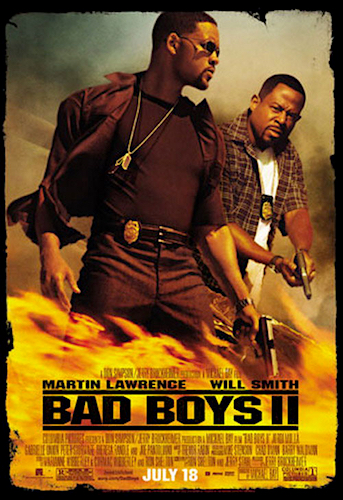
Bad Boys II (2003)

The 100 Films Guide to…

Bad Boys II

Country: USA
Language: English & Spanish
Runtime: 147 minutes
BBFC: 15
MPAA: R

Original Release: 18th July 2003 (USA & Canada)
UK Release: 3rd October 2003
Budget: $130 million
Worldwide Gross: $273.3 million

Stars
Martin Lawrence (National Security, Wild Hogs)
Will Smith (Ali, I Am Legend)
Jordi Mollà (Blow, Riddick)
Gabrielle Union (Bring It On, Think Like a Man)

Director
Michael Bay (The Rock, The Island)

Screenwriters
Ron Shelton (White Men Can’t Jump, Hollywood Homicide)
Jerry Stahl (Twin Peaks Episode 11, Urge)

Story by
Marianne Wibberley (The 6th Day, National Treasure)
Cormac Wibberley (Charlie’s Angels: Full Throttle, National Treasure: Book of Secrets)
Ron Shelton (Bull Durham, Tin Cup)


The Story
Miami’s finest (or, at least, funniest) narcotics cops attempt to stop the flow of ecstasy into the city, before the cartel masterminding it can escape to Cuba.

Our Heroes
Wisecracking Miami narcs Marcus Burnett and Mike Lowery. If you don’t like them, this isn’t the film for you — it spends an awful lot of time just hanging out with them rather than getting on with the plot.

Our Villain
Cuban drug lord Tapia. I guess they realised the first film’s villain didn’t get enough screen time, because there’s a lot more invested in this one. Unfortunately, he’s not very interesting, and Jordi Mollà’s performance is terrible.

Best Supporting Character
Marcus’ little sister, Syd, a DEA agent. She’s dating Mike, which is a secret from Marcus, and is undercover trying to catch Tapia’s gang, which is a secret from them both. (See also: Next Time.)

Memorable Quote
“We ride together, we die together. Bad boys for life.” — Mike Lowery

Memorable Scene
After a car chase, pile-up, and shoot out with our heroes, the gang of criminals hijack a car carrier to continue their pursuit of Syd. Marcus and Mike give chase along the freeway, at which point the criminals decide to start offloading cars…

Previously on…
The first Bad Boys was Michael Bay’s feature debut, and propelled Will Smith’s career towards movie stardom.

Next time…
A third film has been in on-and-off development for years — the last news seems to be that it might start shooting later this year. Definitely in the works this year is a spin-off series based around Marcus’ sister, Syd.

Verdict

Probably the Michael Bay-iest Michael Bay movie that Michael Bay ever Michael Bay-d— er, made. If the first Bad Boys suggested where Bay’s style would go, Bad Boys II is him in full flow. It’s got all the hyper-kinetic editing, vague sense of space, and demonstrates the same lack of restraint over length (as well as, well, everything else) that Bay would show again and again during the Transformers series. It’s just. So. Long. There are loads of skit-like comedy asides that could be cut. Keep some, sure — it’s an action-comedy, that’s the style — but all of them? I guess it’s something of a hang-out movie in that regard, more about spending time with the characters than getting on with the plot.

It’s also packed to bursting with major action sequences, some of which border on classic but, again, are let down by Bay’s direction. For example, the freeway chase is good, but with a better sense of space and interrelation between its various elements (rather than the tumult of semi-connected images we do get) it could’ve been exceptional. Similarly, the climax is massively overblown in a way that only Bay (well, and now the Fast & Furious films) could do, and yet I didn’t recall a second of it from my previous viewing. It goes to show there’s more to making something memorable than just going Big.

This Letterboxd review sums it up well: “It’s impossible to love, but also hard to hate. It’s ambitious, relatively well shot, too long to call a piece of chuck-on fun, and generally just weird.”

For the record, although I’ve given both films a 3, the first is up towards a 3.5 and this is down towards a 2.5.

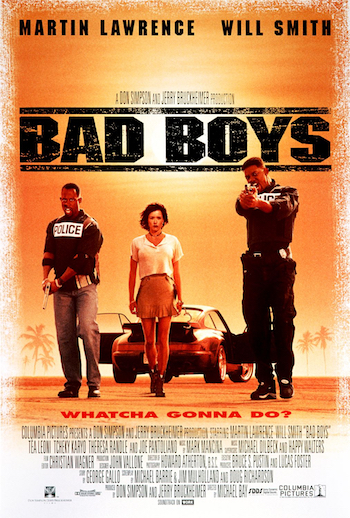
Bad Boys (1995)

The 100 Films Guide to…

Bad Boys

Whatcha gonna do?

Country: USA
Language: English
Runtime: 119 minutes
BBFC: 18
MPAA: R

Original Release: 7th April 1995 (USA)
UK Release: 16th June 1995
Budget: $19 million
Worldwide Gross: $141.1 million

Stars
Martin Lawrence (Blue Streak, Big Momma’s House)
Will Smith (Six Degrees of Separation, Independence Day)
Téa Leoni (Deep Impact, Jurassic Park III)
Tcheky Karyo (Nikita, GoldenEye)
Joe Pantoliano (Empire of the Sun, Memento)

Director
Michael Bay (Armageddon, Transformers)

Screenwriters
Michael Barrie & Jim Mulholland (Amazon Women on the Moon, Oscar)
Doug Richardson (Die Hard 2, Hostage)

Story by
George Gallo (Midnight Run, The Whole Ten Yards)


The Story
When millions of dollars’ worth of heroine is stolen from police evidence, the two cops that brought it in must find the thieves and retrieve the drugs, while also protecting the only surviving witness who’s seen the crooks.

Our Heroes
Marcus Burnett and Mike Lowery, a pair of wisecracking cop buddies, one a family man with a wife and kids, the other a smooth womaniser. Never seen that before.

Our Villain
Drug lord Fouchet. Murder happy and clearly a master at planning heists. Other than that, we barely get to know him.

Best Supporting Character
A witness to some of Fouchet’s crimes, Julie ends up in witness protection with Marcus, who she thinks is Mike, which they have to hide from Marcus’ family. Hilarity ensues!

Memorable Quote
Mike Lowrey: “Now back up, put the gun down, and get me a pack of Tropical Fruit Bubblicious.”
Marcus Burnett: “And some Skittles.”

Memorable Scene
After a shoot-out at the airport, Fouchet escapes in a sports car. Marcus, Mike, and Julie give chase, with the normally slow Marcus driving, as they find themselves in a game of chicken with the concrete crash barriers at the end of the runway…

Making of
Bad Boys was a relatively low-budget production, but, fortunately for director Michael Bay’s ambitions, he was already a wealthy man from directing commercials and music videos — so when the budget ran out before shooting a key part of the climax, he was able to pay for it out of his salary; and when they needed a swish car for the heroes to drive, Bay lent his own Porsche 911 to the production.

Next time…
A sequel came eight years later, with a third in on-and-off development ever since — the last news seems to be that it might start shooting later this year. Definitely in the works this year is a spin-off series based around a character from the second film.

Verdict

The debut feature from director Michael Bay, Bad Boys displays a lot of the things he would become known for: fast-cut action scenes; a sense of style over substance; a little light lasciviousness… Even from his first film, some of his flourishes look over the top. Maybe they’ve just aged badly — it certainly feels of its time, i.e. the mid-’90s (with some ’80s holdovers). Anyway, it’s kept aloft by the buddy act of its two stars, who are pretty funny at times. Bay allows the film to run a mite too long though, and the villain is underdeveloped, both of which hold it back even more than Bay’s sometimes-cheesy direction.

Transformers: The Last Knight (2017)

2018 #47
Michael Bay | 155 mins | Blu-ray (3D) | 1.90:1 + 2.00:1 + 2.35:1* | USA, China & Canada / English | 12 / PG-13

Transformers: The Last Knight

Here we have the fifth Transformers film in 11 years from director Michael Bay. At this point you ought to know what you’re getting — the style hasn’t fundamentally changed since at least the third movie, arguably since the first, so if you dislike those then most probably there’s nothing for you here. I say “probably” because I’ve seen at least one review from someone who despised the fourth film but enjoyed this one, so clearly there’s always room for variability.

We’re dealing with variations on a theme, then, and The Last Knight brings a few fresh-to-the-franchise plot spins to add a different flavour and texture this time out. Firstly, a prologue tells us that Transformers were already in England about 1,600 years ago, when they fought alongside King Arthur and Merlin, the latter of whom didn’t wield magic but actually Autobot technology (and is played by Stanley Tucci, hamming it up something rotten). This relates to the present day because… well, I could explain it to you, but it gets fiddly and, frankly, if you care then you’ll find out when you watch it. But, basically, in present day America Transformers are hunted and Cade (Mark Wahlberg) is an outlaw helping hide some of them and rescue others. When a MacGuffin from Arthurian times attaches itself to him, he winds up on his way to England to meet Sir Anthony Hopkins, the last in a long order of… oh, yeah, I said I wasn’t going to explain it. Anyway, only Marky Mark and Clever English Totty (Laura Haddock, playing the kind of Oxford professor who dresses like a secretary in a porn film) can save the world. Who do they need to save the world from? Optimus Prime! Dun dun duuuun!

Now he's called Nemesis Prime, for no good reason

It’s all nonsense, of course, but then the inherent concept of Transformers never made any sense so what does it matter? Adding in Arthurian legend and making Optimus Prime a baddie doesn’t make it any dafter than it already was. And that’s only the half of it — there are more disparate story threads and subplots than a particularly complicated miniseries. Despite being shorter than the last movie, it’s still indulgently long — and needlessly so, too. There’s a ton of stuff that could be cut to streamline the plot, from individual shots and lines (the Arthurian prologue is probably twice as long as it needs to be) to whole characters (a street girl Cade basically adopts, Izabella, contributes nothing of major significance in the end). After about an hour, the story basically stops and starts again — that’s how long it takes to get to Sir Hopkins. Stuff from the first hour remains relevant, certainly, but I’m sure there were other ways to handle it. By getting through the first hour of the movie in half the time, for one thing. For another, don’t introduce major-seeming characters that you’re then just going to set aside and ignore for the next hour while you introduce whole new ones.

It’s remarkable how the Transformers movies can have way too much plot and not enough plot all at once. If you want to follow it you have to pay attention, not only because there’s a lot of mythology to take in, but also because Michael Bay chops it all up into bite-size chunks amongst frenetic action sequences. The film is cut like one long trailer — but that’s been Bay’s MO for a while, so, as I said at the start, no one should be surprised. It remains, in its own way, impressive. As I previously said in my review of Age of Extinction, it’s almost avant-garde: a tumble of images and sound that give you an impression of what’s occurring rather than straightforward traditional storytelling. And I say it’s impressive because it must be so much work to create — all the camera setups involved; events staged for a single, fleeting, couple-of-seconds shot; and then edited together with non-stop dynamism, rarely pausing for any notable period.

Non-stop Bayhem

And if you think that’s mad, wait until you see how Bay uses aspect ratios. Thanks to Christopher Nolan and The Dark Knight blazing a trail, we’ve now had a fair few movies that use the IMAX format for select sequences, and emulate that on home media by allowing the aspect ratio to change — for laypeople, that’s when the black bars at the top and bottom disappear and the picture fills the screen. As I say, generally this is used for specific sequences, or occasionally for a particularly grand individual shot; and usually there are two ratios, approximately 2.40:1 (with the black bars) and approximately 1.78:1 (without). Bay uses… more than that. And he does so almost indiscriminately. They’re so all over the place that you can’t miss them. Like, there are standard shot-reverse-shot conversations between two characters, but each character has a different aspect ratio… and then, as if that wasn’t bad enough, halfway through the scene one side will switch to another ratio! It just leaves you wondering why and how it ended up this way. What was the intention? What was the point? Well, that’s not a new question with Bay — he still uses five shots when one would do, so why not extend that same thinking to the film’s aspect ratio?

Despite the faffing around, much of it still looks impressive in a purely visceral sense. Like every modern tentpole, it cost a fortune to make ($217 million), but at least it looks like it did: there are so many grand sets and large-scale set pieces, much of it built or performed for real — not the giant robots, obviously, but there are car chases and human stunts and so forth that they did in real-life rather than in a computer. The money is splashed all over the screen, to the nth degree. Is that inherently a good thing? Eh. But it makes you wonder where some other $200m+ movies spend their money — especially when you consider that apparently production difficulties resulted in a lot of material being filmed but never making it into the final cut. How much? Well, supposedly a whole hour of footage was ditched from the original cut to get to the theatrical version. As I’ve already said, the film’s too long as it is, but it’s a shame there are no deleted scenes available because I’d be kind of fascinated to know what more was meant to be there, and to see how much money it looks like they wasted on it.

They really did hang Marky Mark out the side of a speeding vehicle, donchaknow

In what we did get to see, the size of the endeavour and the impressive quality of the imagery is emphasised by how it was filmed. A large proportion of the movie was shot in IMAX 3D (apparently 98%, but I’m certain there was more than three minutes in non-IMAX aspect ratios), and there are innumerable moments that benefit from the depth and scope of the format. Post-conversion has come a long way, but I’m not sure it can always equal doing it for real, especially on a format with the quality of IMAX. That said, the visual splendour didn’t strike me as much as it did in Age of Extinction. Perhaps that’s because, as Richard Brody put it in his New Yorker review, Bay’s “sense of speed works against his sense of scale and of detail. All the best moments in the movie — pure images, devoid of symbol and, for that matter, nearly empty of sense — go by too fast, are held too briefly, are developed too little.” There are some great shots in here, but the rapid editing just races past them. If you wanted to find and appreciate the shots fully, you’d have to damn near go through the whole thing frame by frame. I’m not sure they’re that good.

Although Bay and his directorial style always get a critical slating for these movies (more so than others he’s made in the same period — Pain & Gain and 13 Hours both attracted a reasonable amount of praise), they let him keep making them, and he keeps wanting to. The former makes sense: although you rarely find someone who admits to liking them, they keep making money (The Last Knight is the series’ lowest grosser worldwide, thanks to a particularly poor US showing, but it still took over $600m). As for the latter… no, I don’t know why he keeps coming back. Can you think of another blockbuster-level director who’s made five films in the same series? No one instantly comes to mind for me, and even those who are close (Lucas with Star Wars; Spielberg with Indiana Jones) did so over a long period of time with many films in between. I mean, if Bay wants to do it then why not — it’s his life and career — but I don’t quite understand it.

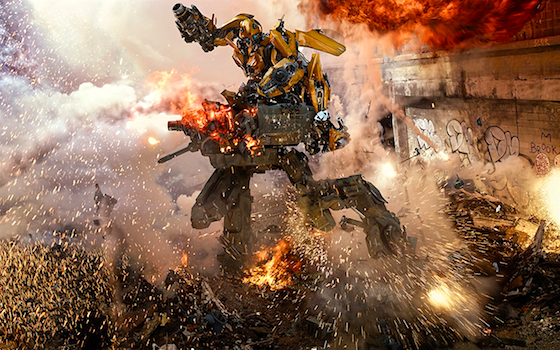
The three-headed robot dragon that I almost forgot

As I said nearly 1,500 words ago (I never imagined I’d have so much to say about this movie — and I haven’t even mentioned the three-headed robot dragon, or the C3PO-alike comic relief butler), everyone should know what they’re getting with the Transformers films by now. The Last Knight shares the same pros and cons as the other entries in the series, to one degree or another — by which I mean that, for instance, I found the plot a little more coherent than last time (though still totally barmy), but I wasn’t quite as bowled over by the visuals (which are at least half the point of these films, I feel). On balance, I’d say it’s one of the franchise’s better instalments.

3 out of 5

Transformers: The Last Knight is available on Sky Cinema from today.

* The listed ratio for The Last Knight is 1.90:1, because that’s the tallest, but its shifts into various other ratios are very obvious, as I discuss in the review. The three I’ve listed are the most obvious, but one of the trailers was shown to use eight slightly different ratios, so who knows how many there really are? ^
Warcraft: The Beginning (2016)

aka Warcraft

2017 #38
Duncan Jones | 118 mins | streaming (HD) | 2.35:1 | USA, China, Canada & Japan / English | 12 / PG-13

Warcraft: The Beginning

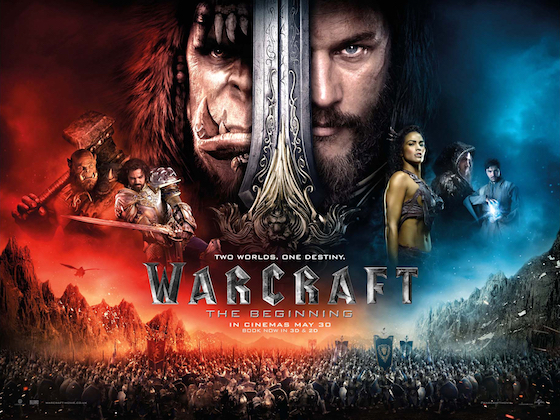
Produced by Legendary — one of the companies behind the Dark Knight trilogy, Jurassic World, Godzilla, and many other massive hits — the only thing that’s “legendary” about the Warcraft movie is how terrible it is.

Based on the long-running video game franchise, Warcraft (optimistically retitled Warcraft: The Beginning in many territories) is, based on what I’ve read, less an adaptation of the game (which has many different incarnations anyhow) and more an expansion of its universe. Rather than take the game itself and try to mush it into the shape of a movie, as most video game adaptations are forced to do, Warcraft depicts some of the game-world’s backstory, taking care to keep events canonical. I’m sure this is brilliant for fans and players, but I wonder if it’s part of why the film feels muddled and tacky to those of us who are uninitiated. Of course, at its best such efforts can make newcomers want to learn more; but at its worst it leaves you feeling confused and shut out. Warcraft is definitely a case of the latter.

It plays like a $160 million fan film. It doesn’t bother with world-building, just throwing the viewer in at the deep end. That can work, but it needs to be carefully managed. Warcraft just ploughs ahead, going deeper and deeper. It’s been made for people who know this world, its places, its people, its concepts, its rules. The film is a prequel to something that doesn’t exist — or, rather, something that doesn’t exist as a movie. And yet, for all co-writer/director Duncan Jones’ efforts to remain faithful, apparently it’s not faithful enough for some of the hardcore. It seems the movie has wound up in a place where it’s not stuck to the backstory enough to please initiated fans, but not opened itself up enough to be accessible to newcomers either.

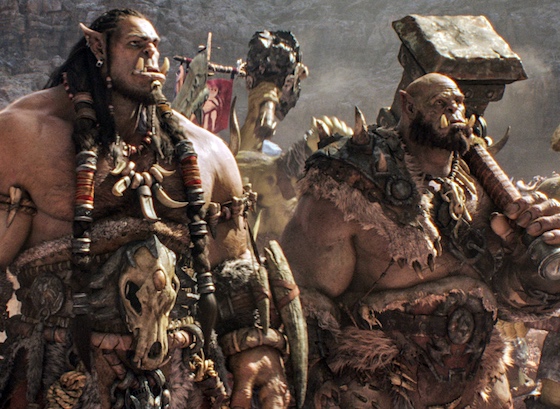
This could get orcward

Unfortunately, the problems don’t stop there. Characters’ personalities change from one scene to the next, with no sense of development or connection. Many of the performances are stilted or clumsy, with a good deal of the actors feeling miscast. Scenes exist in isolation, with little sense they should follow what was before or precede what comes after. It feels like it was heavily messed around in post — not just stuff chopped out (reportedly Jones’ director’s cut was 40 minutes longer), but things moved around within the story — but then something will happen that suggests those scenes were always meant to be where they are. Whatever the cause, it makes it even harder to follow a story that already feels like it’s shutting out newcomers.

The biggest shame is that you can see glimmers of potential — mainly in the world itself, which is clearly quite thoroughly realised (presumably thanks to having been developed over many, many years of the games’ existence). But then, the story that takes place within that world isn’t an especially original or interesting one. Or, rather, I don’t think it is. I mean, it’s hard to tell what precisely is going on half the time.

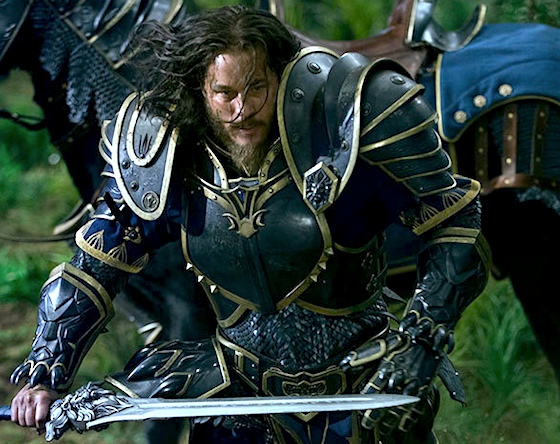
A lot of the technical merits are strong, too. Almost every shot is loaded with CGI, but the vast majority of it looks pretty incredible. It’s no wonder some bits come up short, however, because the sheer volume of different locations, creatures, and spell effects is mind-boggling. Obviously some parts are going to suffer when you bite off more than you can chew. If there’s a problem here it might be that the design work is quite “high fantasy” — it’s all exaggerated and almost cartoony, as opposed to the more realistic take of something like Peter Jackson’s Lord of the Rings. That’s not to everyone’s taste; indeed, it might be part of why such fantasy tales used to be (and, often, still are) such a niche market.

Totally realistic costumes

Talking of the market, reports say Warcraft needed to gross $450m just to break even. In the US, it took $47.4m. No, I didn’t put the decimal in the wrong place. And that’s not opening weekend, that’s in total. It was a big hit in China, but that wasn’t enough: worldwide it managed just shy of $434m (which, fact fans, makes it one of only two American movies to gross over $400m without making $100m in the US (the other was Terminator Genisys)). Jones had plans for sequels (he’s shared them on Twitter, which naturally got turned into news articles, if you’re interested), but, yeah, they’re not happening. Thank goodness the Chinese didn’t give it another few million, because this project already feels like a waste of five years of the director’s promising career. You could see Jones as currently being on a similar path to that previously trodden by the likes of M. Night Shyamalan and Neill Blomkamp: a hugely successful debut followed by increasingly poor, eventually terrible films. Hopefully his next movie, Mute (available exclusively on Netflix from today), will rectify that.

2 out of 5

Warcraft: The Beginning featured on my list of The Five Worst Films I Saw For the First Time in 2017, which can be read in full here.

The Duellists (1977)

2018 #26
Ridley Scott | 96 mins | DVD | 1.78:1 | UK / English | PG / PG

The Duellists

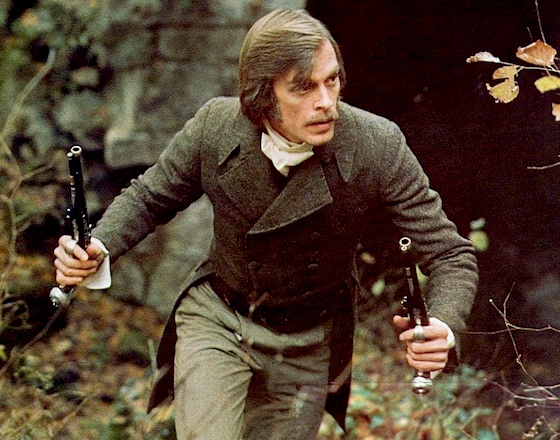
It’s 40 years this month since Ridley Scott’s debut feature appeared in British cinemas, which perhaps makes now the most appropriate time to have awarded him the BAFTA Fellowship (as he was this past weekend, of course).

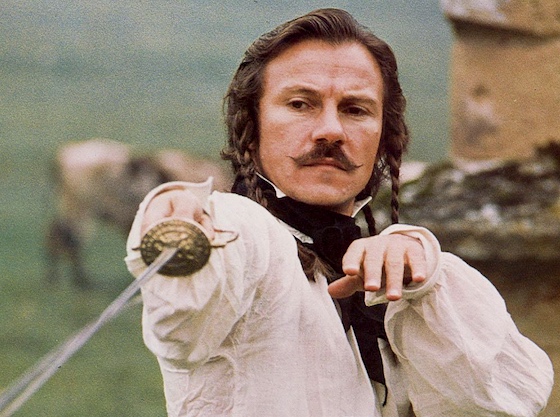
Adapted from a short story by Joseph Conrad, which was itself inspired by a true story, The Duellists stars Keith Carradine and Harvey Keitel as a pair of soldiers in Napoleon’s army who, for reasons only properly known to one of them, end up fighting a series of duels — or, really, one duel constantly reignited — over the better part of two decades. They become renowned for it (Conrad discovered the story through a newspaper article noting the death (by natural causes) of one of the real-life pair), to the chagrin of Carradine’s reluctant duellist. He dreads every potential encounter, aware of the fight’s futility and danger, but honour keeps drawing him back.

Ultimately, honour and the futility of fighting are what The Duellists is most about, if it’s about anything — if you like, you can enjoy it as merely a series of well-staged combats between two men, each stubborn in their own different way. They also each have slightly different ideas of honour, it would seem, but they’re compatible enough that it keeps drawing them back to the fight. “Acting with honour is all well and good,” the film seems to be saying, “but look where it gets them.” It doesn’t completely ruin their lives, but it does take a serious toll. A bit of common sense goes a long way, and acting with so-called honour, which might seem to be the moral course, doesn’t actually involve a great deal of common sense.

The bad duellist

Scott also intended the pointless, never-ending fight to represent a microcosm of war. Speaking to Empire magazine, Scott described Conrad’s story as “a very nice pocket edition of the Napoleonic Wars” because it “somehow encapsulated the craziness of an argument and how at the end of a 20-year period one of them forgot the reason why they were fighting. Isn’t that familiar?” Fighting for fighting’s sake; not wanting to be the one to back down… it seems it’s human nature, just as much in a conflict between two men as in between two nations. A bit of common sense would go a long way…

The other aspect of the film most worthy of comment is its photography. Reportedly Scott set out to imitate Stanley Kubrick’s Barry Lyndon, released just a couple of years earlier. It’s an appropriate inspiration: both tales are set in the same era, and Lyndon looks incredible. Scott undoubtedly succeeds in his goals — both that of copying Kubirck’s visuals and that of such copying being a good idea: much of The Duellists looks gorgeous, particularly wide scenery shots. Although the cinematography is credited to Frank Tidy, Scott says he operated the camera himself for the entire shoot, so who’s to know where exactly the credit for that achievement lies.

The good duellist

Resemblances to Barry Lyndon extend beyond just the visuals, mind. As noted, it’s set in the same era, so various visual trappings are similar, from costumes to some of the locations — if not direct copies, they certainly evoke Kubrick’s film more than once. There’s also the story itself: a tale focused on just one or two characters but spanning decades, and during a particularly tumultuous and eventful period in history. As Tim Pelan puts it (in this piece at Cinephelia & Beyond), “while Barry Lyndon advances with the forward momentum of one of Napoleon’s columns in its telling of a fool’s misfortune and slow glide towards the destruction of all he worked for and holds dear, The Duellists dashes pell-mell between the very different clashes of the antagonists.” Scott’s film feels like it thinks it is, or wants to be, an epic, just like Lyndon, even though it only lasts a little over 90 minutes.

Comparisons to such a lofty cinematic success would damn a lesser film, but The Duellists is a very fine work in its own right. Despite the similarities I’ve highlighted, it’s really a very different film: Barry Lyndon has a kind of leisurely elegance, whereas The Duellists is more economical and straightforward. It’s certainly not Scott’s greatest film (his next two immediately put paid to that), but it’s perhaps his most under-appreciated one.

4 out of 5