
November: the month with Men in its posters!
(I was going to open this post by ‘singing’ Europe’s The Final Countdown. Then I realised I did exactly that in November 2011. I’m nothing if not unoriginal.)
Yes, for the first time in 23 months, 100 Films in a Year has a #100! And for the first time in the history of ever, I’ve made it to #100 in a month that isn’t called “September” or “December”.
There’s a more detailed history of this blog’s #100s further down, but an analysis-like bit first: in the previous six years, I’ve made to 100 films a total of four times. Two of those were reached in September, two on December 31st. November now joins those illustrious ranks, completely ruining any patterns you thought you might’ve been able to see. But that’s good, because it breaks a cycle that only led to expectations, and expectations are always awkward.
More about November’s total and the usual analysis in a bit. First:
What Do You Mean You Haven’t Seen…?
I always intended each year’s #100 to be a film that was significant in some way. That hasn’t always panned out (missing it twice and “squeezing in anything I can” two other times have seen to that), but with a more leisurely arrival this year I was able to plan it out. And what could be more appropriate than one of my WDYMYHS films, supposedly the greatest examples of the cinematic art that I’ve yet to see?
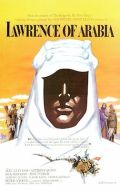
And so, #100 was also my latest WDYMYHS conquest, and it was… David Lean’s acclaimed and beloved epic Lawrence of Arabia. That was one of the films that inspired me to start WDYMYHS in the first place, so it seemed only fitting.
I tried to squeeze one more in before the end of the month, but no doing. That leaves three to get through in December, which wasn’t the plan in the slightest. We’ll see how that goes.
 November’s films in full
#99 The Falcon’s Alibi (1946)
#100 Lawrence of Arabia (1962)
#100a Daleks’ Invasion Earth 2150 A.D. (1965)
#101 The Wolverine: Extended Cut (2013)
#102 Doctor Who: The Day of the Doctor (2013)
#103 Man of Steel (2013)
I meant to post my review of The Day of the Doctor by now, in which I will explain/defend why an episode of TV counts as a film; but as I haven’t got round to that yet, let’s quickly run through it here as well: it was simultaneously released in cinemas; it’s feature-length. That’s good enough for me. Oh, and it did huge business and cracked into the charts both here and in the US — that’s not “oh, and it’s in cinemas too”, is it? No. Good.
Moving on to November itself, then. The past three years (i.e. 2010, 2011 and 2012) I’ve watched exactly four films in November, so it’s good to break another cycle of expectation with this month’s five. That also means it’s not 2013’s worst month (a two-way tie between June and July), but instead equals April’s five.
Having reached #103, November sits in a unique place in the history of Totals Reached By The End Of November. In the two years I’d reached #100 in September, I was in the 110s or 120s by now; in 2008 and 2009 I was at #81 and #80 respectively; and in 2011 and 2012 I was at #92 and #91 respectively. If you really want to dig into it there’s almost some kind of pattern there, but I think it’s best I leave well enough alone.
With just one month to go, I’ve averaged 9.36 films per month in 2013, on which basis I should end the year having watched 112 or 113 films. But considering said average includes months with viewing as low as four and as high as 17, my final tally could theoretically be anywhere from 107 to 120. My money says closer to the former than the latter.
In seven years of 100 Films, I’ve made it to the titular goal five times. Here are those films that received the glorious honour of being #100…
- Citizen Kane
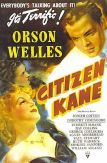 Upon reaching my goal the first time, I decided (quite rightly, I think) that #100 should be An Important Occasion — and what can be more important than The Greatest Film Ever Made™? Many viewers these days seem to struggle with Kane’s reputation, or it just leads them to dismiss the film out of hand, but I thought it was genuinely exceptional and deserving of its acclaim.
 - Swing Time
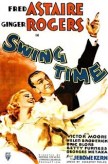 Come the second year, and watching Something Significant went out the window as I scrabbled through 11 films in 6 days to make it to 100, and this Fred Astaire/Ginger Rogers picture happened to be the last of them. That said, Swing Time is hardly a poor movie — while not my favourite Astaire/Rogers movie (not that I’ve seen many, but the honour goes to Top Hat), their dancing is nonetheless sublime.
 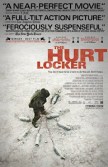 The Hurt Locker
Having failed in 2009, 2010 was a return to form. Whether its #100 is a classic for the ages remains to be seen, but at the time it was the most recent Best Picture winner. How much insight it casts on the broad scope of recent conflicts is debatable, but it’s an interesting — and certainly tense — depiction of modern warriors’ mentality. The A-Team
Though not as much of a rush as 2008, in 2011 I only just made it to 100 again — and, again, it was less a special choice more something fit-in-able. That said, I liked The A-Team: it sets out to be a funny, entertaining action movie and, by and large, it achieves that goal. Not for those who like Serious Movies, or for those who take their movies too seriously.- Lawrence of Arabia
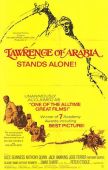 And so, after missing it again in 2012, we come to this year. The alternation continues, with arguably the most acclaimed and beloved film that I’d never seen earning the spot of my fifth #100. As a double bonus, it’s one of my WDYMYHS films too (OK, that’s not an accident). That status, and the film’s sheer size (its length! its scope!), makes it a little tricky to get your head around. But wow, it looks incredible on Blu-ray.
And also…
- Failure.
What of the other two years? Well, in 2009 I fell well short at 94. #94 itself was the 1974 Murder on the Orient Express, directed by Sidney Lumet and starring an Oscar-nominated Albert Finney as Poirot.

And then last year, when I made it even closer with 97, but couldn’t quite reach those final three films. #97 itself was cult favourite comedy The Plank, which I didn’t really connect with and is the lowest-scored of these seven films.
What will the next #100 be, I wonder? Hopefully we won’t have to wait another 23 months to find out…
For December, my 100 Films Advent Calendar is starting up again. The introduction is here; reviews commence in the morning.
Next month on 100 Films in a Year…
Join me on New Year’s Day (you’ve got nothing better to do, right?) for the first of my usual array of retrospectives on the year just passed.
 #84a Dr. Who and the Daleks (1965)
 #92 The Tale of Zatoichi, aka Zatôichi monogatari (1962)
 #72 Star Trek Into Darkness (2013)
 #78 Real Steel (2011)
 Throne of Blood
 Romeo + Juliet (1996)
 Much Ado About Nothing (1993)
 The Lion King
 Looking for Richard
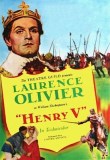 The Chronicle History of King Henry the Fift with His Battell Fought at Agincourt in France
 #63 Bicycle Thieves, aka Ladri di biciclette (1948)
 The flip side is that, for me, the summer movie season is about to begin! That should help with the aforementioned final tally. Thanks to studios’ (wannabe-)piracy-beating speed when it comes to getting films onto disc these days,
  In researching this list I was surprised to discover a few films I didn’t know were adaptations. That might be a good list for another time, though that list, and this one, could be almost entirely filled by a single franchise: Die Hard. While the first film is based on
 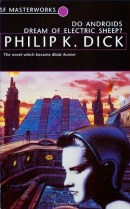 As evocative as the title of
 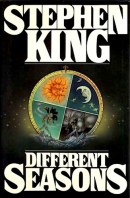 Just as prone to retitling as Dick is Stephen King. Oh sure, there’s Carrie and The Shining and, y’know,
 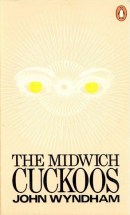 Aww, a nice
 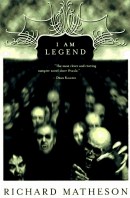 “But there is
 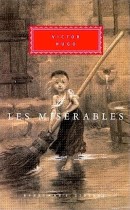 Despite having one of the most glaringly French titles ever committed to paper or celluloid,
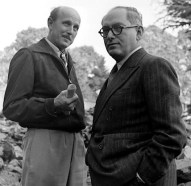
 Winner of the highest number of Oscars for Best Foreign Language Film (five), the Italian writer-director is “one of the most influential filmmakers of the 20th century”. He’s the only member of TSPDT’s Top 250’s top 10 (at #4) that I’ve not seen anything by. Significant gaps in my viewing include
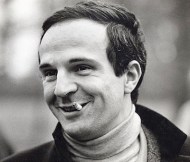 One of the founders of the French Nouvelle Vague (alongside the likes of Jean-Luc Godard, who I have seen films by), Truffaut is still probably best known for his first film,
  Though only at #52 on TSPDT’s Top 250 (there are 11 above him I’ve not mentioned), there’s no denying the notoriety of Herzog, the man who once got shot while being interviewed by Mark Kermode, amongst other bizarre anecdotes. Key works include
  The theatrically-inclined Australian scores just 3 on TSPDT’s ranking, their lowest awarded mark. Only five others suffer this ignominy, and the only one I’ve heard of is Ed Wood. According to TSPDT, none of Luhrmann’s films are Highly Recommended, Recommended, or even Worth a Look. The best he can hope for is
  I have no idea if this is of use to anyone. Probably not. But it’s a slightly interesting, different way of looking at my review archive. For instance, compiling it threw up some odd things, such as James Hill. Who, you may ask? Indeed it’s no surprise I hadn’t noticed I’d watched two films directed by him. More interesting was what they were: lovely family animal movie
  June’s films
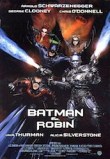 Obvious, I know, but it really is the archetype. Burton delivered two Bat-films that were critical and commercial successes; Schumacher delivered one that didn’t go down so well but turned a healthy profit… and then this. A critical disaster, a box office flop, the series went down with it. It took others to revive the superhero genre, a seven-year gap, and a ground-up reboot to save the series.
 Six years after the TV series ended (was that all?), ’90s favourites Mulder and Scully returned. Hopes for a third film dealing with the series’ cliffhanger-ish ending were dashed by this low-key supernatural fable, released in a glaringly inappropriate summer slot, with none of the aliens casual viewers expected and too many incidental ties to the series. Some still whisper about a third movie, but 2012 was the perfect time and that’s long gone.
 The
The 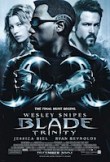 The first
 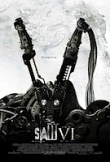 “But there was a
  This fourth entry in the Death-defying horror franchise was due to be the series’ last — hence the definitive article title. In no small part due to being released in 3D in the immediate run-up to
  #44 The Amazing Spider-Man (2012)
 #48a Harry Potter and the Deathly Hallows: Part 1 (2010)
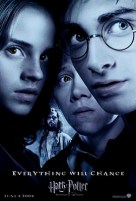 The clear victor is the Alfonso Cuarón-helmed franchise-revitalising third film,
 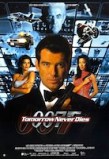 You can’t have a list of great car chases without including at least one Bond. Indeed, I could easily fill this top five with that series alone. TND wins because of two stand-out sequences: Bond driving a BMW saloon around a car park in Germany, which sounds dull as dishwater… except he does it via remote control and the car is stacked with gadgets; and a motorbike vs helicopter chase on the streets — and rooftops — of Saigon.
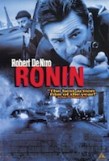 To bring extra swish and excitement, the Fast & Furious films often use CGI in their car chases. Ronin, however, does it all for real — often with the actual actors in the cars. There are several chases in Ronin, but the extended climax through the tunnels of Paris is of course the best. The film used 300 stunt drivers and they wrecked 80 cars, but the exhilaration provided is entirely worth it.
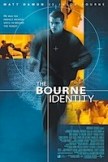 Many times, a great sequence is born out of an idea to innovate or do something different (to go back to Tomorrow Never Dies, the bike chase was a deliberate counterpoint to GoldenEye’s tank chase), and the first Jason Bourne film is no exception: he’s in a Mini! Americans always find small cars striking (see also: Da Vinci Code’s Smart car), but at least it’s put to good use — he drives it down some stairs!
 For sheer throw-everything-at-the-screen bombast, you can’t beat the car sequence in the first Matrix sequel — it was so big, they had to build their own stretch of freeway! Of course, it’s as much about the fighting going on in and around the cars as it is the chase, and there are bikes and lorries and stuff involved too — including a spectacular head-on collision — but it’s all road-based, so it counts.
 I wanted to avoid having two Bond films, and I tried, but I couldn’t think of anything significantly better than the opening minutes of 2008’s widely maligned Bond adventure. Cut like lightning, almost intuitive and impressionistic rather than classically clear, and viscerally destructive throughout, it demands your attention — and indicates the kind of pace the rest of the film will move at. Then the reveal at the end makes it all the sweeter.
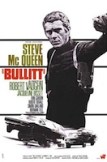 Read most lists of the greatest car chases and one of these will be at the top, usually with the other in second place. They’re iconic for different reasons: there’s The French Connection’s frantic illicitly-filmed chase between Gene Hackman and Brooklyn’s elevated railway; and there’s Bullitt’s eleven-minute pursuit around the streets of San Francisco, with Steve McQueen and co gaining plenty of in-car air-time on those famous stepped hills. So iconic, I know this much without having seen either.
 #38a
#38a 
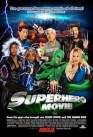 You might have expected Batman & Robin to top this list. It would be a fair choice. But, believe it or not, it actually has some redeeming features. Not many, but some. This woefully unimaginative spoof has none whatsoever. I’m not even sure it had any laughs. OK, it might not be a ‘real’ superhero movie… but then again, look at the title. It counts.
 These days, it’s difficult to imagine Hollywood managing to kill off a franchise they didn’t want to. Even those which are consistently a bit rubbish. I imagine this is where they learnt their lesson, turning a reliable cash cow into a despised monstrosity. How the genre got back on its feet just a few years later (and grew stronger than ever) is a minor miracle.
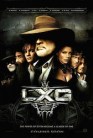 I really wanted to like this — a great concept, based on a great comic, with great people involved in the film — and on its release, I convinced myself I did. But it’s a bit of a mess really, isn’t it; and the needs of being a PG-13 blockbuster wrecked a lot of the comic’s best ideas. Shame. (It has left me always abbreviating the comic’s title as LXG too, though.)
 I don’t actually know that much about the Punisher, but I don’t believe this is a very good rendition of the comic (where’s the skull emblem?!). And even if it is, it isn’t a very good film. I’ve largely wiped it from my memory, but I recall it being the twin sins of boring and amateurishly made. The two ’00s movies starring the character didn’t go down well, but I can’t imagine they’re worse.
 A lot of people didn’t like Daredevil. I did. It has flaws, certainly, but it got a lot right. Nonetheless, I had no particular hopes for this spin-off featuring a fan-favourite character who had been mediocrely rendered on screen first time out (and not recast). Low expectations were good, because it’s a mess that doesn’t deliver in any notable respect.
 There are many great superhero movies, but this is an undervalued one. Coming in the genre’s quiet period, between the death of the Batman franchise and the rebirth afforded by X-Men, I think this all-star comedy would fare better today. That said, I’ve not seen it for years, and sometimes comedy dates badly, so maybe I should’ve re-watched before putting it here… But I definitely did love it.
 Of course. Some would argue it’s cheating to include an entire trilogy as one film, but Jackson made it as one film and it’s really a single tale that has to be divided to make it possible in cinemas, both financially and for the sake of the audience’s posteriors. But I’ve watched it in a single sitting, something I’ve not managed with some much shorter works, so that makes it OK by me. And I’ve spent all my words here saying that because, really, do you need me to tell you why this tops the list? (Not that this is a ranked list. But if it were, this would top it.)
 I did think my main rule for this list would be “set at least partly in an alternate world” (see things like Narnia and Stardust), but that would rule out Harry Potter (which is clearly Fantasy) and this. If we’re talking swords-and-sorcery, this definitely has swords and it probably has sorcery too. How else do you explain immortality? Except with some BS sci-fi claptrap in the sequels that no one, not even their makers, wants to remember. It may be campy and ever so ’80s, with the most hilarious array of mismatched accents ever committed to film, but goodness me do I love it.
 A modern, British-tinged take on the tone of The Princess Bride — two elements that give this the edge, for me. It’s also less of a spoof, more of a straight take on a fantasy adventure with an awareness of the comical and a resolute lack of po-faced-ness. There’s a reason Neil Gaiman’s a beloved author, and there’s a reason Matthew Vaughn is a mainstream filmmaker we should all keep a very close eye on.
 This is a bit of a cheat, because it’s actually a two-part miniseries… but in its entirety it’s shorter than Return of the King, and for some inexplicable reason is
 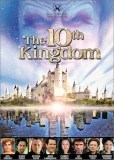 If Merlin was a bit of a cheat, this is a great big one, because The 10th Kingdom is actually a seven-hour miniseries. But tough, because I love it and it’s not well enough known. Here in the UK it aired on Sky back in the days before I had said channel, and so my first encounter was through
 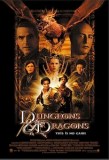 Quite what inspired this turn-of-the-millennium wannabe-blockbuster I don’t know — it came out the year before the double-whammy genre kick-start of Lord of the Rings and Harry Potter… but it feels much more than a single year older. It’s not all bad — some of the scenic effects shots are quite good, and there’s a certain joy in Jeremy Irons’ ludicrously campy performance — but, mostly, it is. The CGI is dreadful, the acting isn’t any better, and the location work makes it look like Power Rangers. If it wasn’t bad enough in itself (which it was), the glossy quality of Rings and Potter just 12 months later revitalised the genre to the point that this was blissfully consigned to ignominious oblivion.

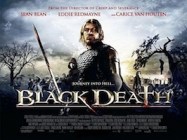 #17 Final Destination 5 (2011)
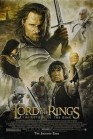 This honour was widely seen as recognising the whole trilogy, and really my inclusion is for the same reason — I love all the Lord of the Rings films, but if I had to pick a favourite it would be Fellowship. That The Hobbit didn’t get anywhere near the Best Picture nods this season gives it a faint ring of The Godfather Part III: belated and misguided. Though even Coppola’s threequel got a nomination.
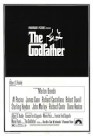 Speak of the devil… I really need to re-watch the Godfather trilogy, so I can’t offer much insightful comment, but I’m one of those people who sides with Part I being better than Part II. I found Michael’s descent into the family more engaging than… what, his consolidation of power? Is that what happened? (I really do need to re-watch them.) Plus, you can’t beat a bit of Brando.
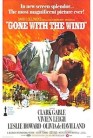 I love an epic — indeed, the average length of my three choices so far is 2 hours 34 minutes — and in many respects Gone with the Wind is the ultimate epic, a tale that sprawls through time and across locations, but with the relationship between two individuals at its heart. And it beat The Wizard of Oz to the prize, which is a bonus.
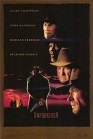 As with The Godfather, I need to re-watch this. It was one of the first Westerns I saw and I think it would benefit from the improved understanding of the genre I now have. Equally, it was instrumental in transforming a type of film I’d previously ignored (not through any conscious effort) in to one I enjoy. (There’s a whole article to write on modern mass perception of Westerns, but that’s for another day.)
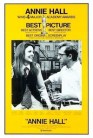 For all the talk of the Academy always getting it wrong, there are numerous times they’ve got it right. Or, at least, near as dammit. Which made choosing just five hard, but I’ve chosen this to try and balance things out — I don’t only like epics that mostly feature some kind of war (this was very nearly Schindler’s List). Woody Allen on form is great fun, and this is that. I liked Manhattan more though.
 There’s a lot of love for this movie in some circles — it’s ranked
