“Did you sept emb ‘er?”
“No, I oct obe ‘er!”
(Don’t worry, it doesn’t make any sense. Let’s move on…)
What Do You Mean You Haven’t Seen…?
This month’s WDYMYHS film was the massively appropriate Braveheart. I also watched a film actually about a public vote on the future of their country, No. About a nation seeking to get rid of a nefarious ruler who had reigned over them with malicious intent for far too long, the Scottish referendum is what connects these two movies. (Ho-ho!)
On the topic of WDYMYHS, I also finally posted a review for one of last year’s movies, Touch of Evil. I’ve still got Seven Samurai and The Night of the Hunter to go, as well as one other review, and then I’ll finally be done with 2013. (I’ve been exceptionally tardy with that, haven’t I?)
September’s films in full
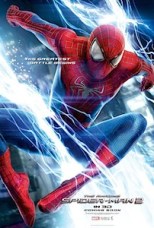
#81 The Amazing Spider-Man 2 (2014)
#82 Crimes of Passion: Death of a Loved One (2013), aka Mördaren ljuger inte ensam
#83 Tucker and Dale vs Evil (2010)
#84 Saving Mr. Banks (2013)
#85 The Grey (2011)
#86 Dark Shadows (2012)
#87 Braveheart (1995)
#88 Good Morning, Vietnam (1987)
 #89 The Spirit (2008)
#90 The Wall (2012), aka Die Wand
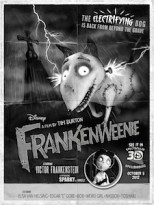
#91 Frankenweenie (2012)
#92 Always (1989)
#93 American Hustle (2013)
#94 Mad City (1997)
#95 Fantastic Mr. Fox (2009)
#96 No (2012)
#97 This is Not a Film (2011), aka In film nist
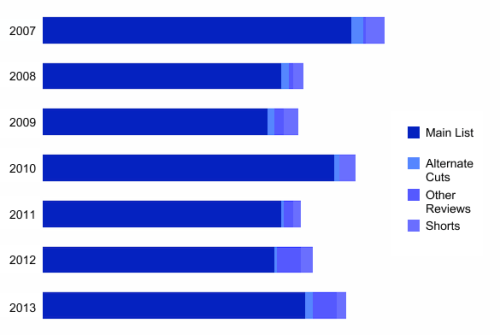
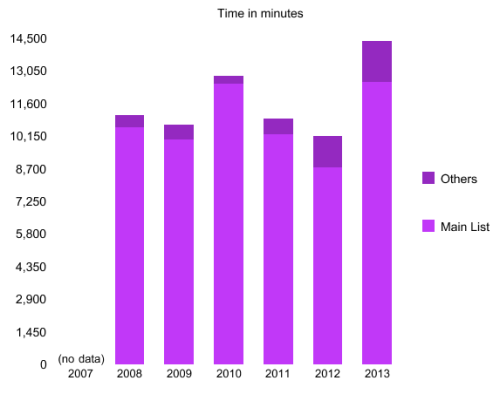
At the start of the year, there’s rarely very much to say in these sections; by this point… oh, there are so many ways to look at the data! September is where that really kicks in, because it’s a month in which I’ve twice reached #100, the earliest I’ve ever managed it. That means “how near is #100?” becomes a very viable proposition; plus, I tend to get very watch-y as the big target nears — when it’s only a few films away, why not squeeze in a couple more than normal and get there sooner?
On that last point, it’s perhaps interesting to start with previous Septembers. Last year was my best-ever tally for the ninth month, by some 23% as well… and yet I didn’t reach #100 until two months later. In part that was just the aforementioned pushing on to get closer to the end — the same thing happened in October, and after I actually reached #100 (in early November) I only watched a couple more films. This September, meanwhile, is 31% higher than last year’s — or, to put it another way, 55% better than the best-before-2013 was. And yet I still haven’t reached #100…
What viewing 17 films this month does mean, however, is that it’s my joint-second highest month ever — hurrah! That’s tied with March 2013; it would’ve needed only one more to be outright-second (oh well), two more to be joint-first (looking right back to December 2008 for that), and (obviously now) three more — i.e. have reached #100 — to set a new record.
What does having reached #97 mean for the rest of the year? Well, it’s the furthest I’ve ever gotten by September without reaching 100. Next nearest was last year, when I was at #84. From there, I went on to #110, which is another 26 films — if I do the same this year, I’d reach #123, which would become my second-highest total ever (behind 2007’s 129 and just ahead of 2010’s 122). Widening the parameters to include all previous years, my average total for the year’s final three months is 27 — making last year the most average of the lot, in fact.
That might be the most accurate predictor of where I’ll end up (though still prone to wild variation: I may’ve watched 26 more last year, but the year before that it was only 16, and in 2009 it was up at 40), but let’s use the rest of the 2014 to make some wild assertions anyway. So, my year-to-date average suggests I’ll reach #129, which (as mentioned) would put 2014 equal-best with 2007; pushing a tiny bit harder would leave me with a record-setting 130 films. The most recent months bode well for that: if I maintain my average viewing from the last three months, I’ll reach #139; if I keep up the average of the last two months, however, I’d make it all the way to #145; and if I kept pace with September, I’d make it all the way to #148!
Will any of that happen? Probably not (never say never!), but it’d be nice to end up in the 120s at least.
A side effect of the higher-than-average viewing is that the extent of my backlog has worsened. You may have noticed the number of new reviews step up a little in the past few weeks to try to stave it off, but in the end I had to relent: having kept the “coming soon” list at no more than 49 films ever since July 2012, it slipped to 50 this month. Ah well. Efforts will continue to stop it growing any longer.
A bit of a lax start to the month means just 17 archive re-posts this time…

















Also this month, the two bookend posts from my 2011 David Fincher Week. Most of the reviews featured therein have already been brought over to this blog, but Fight Club and Panic Room will round them out tomorrow and Friday.


(You may have noticed my Se7en review appeared here before this post, but as that’s technically the archive repost for October 1st it’ll be in next month’s update. I am nothing if not precise about these things that don’t really matter.)
This is the second month in a row without a “list of five”, but they have not necessarily gone the way of the dodo — last month I couldn’t think of anything worth doing; this month I’ve run out of time.
I was considering “5 favourite Tim Burton films”, because I finally caught up on both Dark Shadows and Frankenweenie this month. My list would probably have included Batman Returns, Edward Scissorhands, Corpse Bride and Sleepy Hollow (along with a fifth, obviously), and definitely would have left out Planet of the Apes, Mars Attacks and Beetlejuice. (Lest you judge my selections harshly, bear in mind I still haven’t got round to Ed Wood or Big Fish. Or Pee-wee’s Big Adventure.)
What about you, dear reader?
Next month on 100 Films in a Year…
98…
99…
100!
101?
 #66
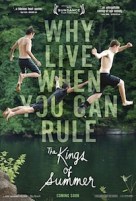 #73 American Movie (1999)
























 July’s films in full
 #60






















 Set in the immediate future using technology that largely exists or is about to exist, some contend that Gravity isn’t a science fiction film at all — it’s a present-day thriller, just one that happens to be set in space. And they’re right, really — there are plenty of “real-world present-day” type thrillers that have more science fictional happenings than Gravity. But it’s on the ballot and it’s an incredible film, so pish, it wins.
 The decision between second and third was a tough one for me — I’d’ve tied them if I could. However, I haven’t posted a review yet for Catching Fire and am still debating my score — does it stretch to a 5? It still could — not only did I really enjoy it, but I think it has a lot more thematic/dramatic heft than your average blockbuster. Anyway, the next film’s locked at 4 stars, so Catching Fire wins the toss.
 Some people seem to really, really dislike
 Disney’s all-conquering version of The Snow Queen is the only fantasy film on this year’s ballot (seems to me the Hugos skew more SF than F. I suppose they are awarded by a Science Fiction society). I didn’t find it as incredible as the audiences who made it the fifth highest grossing film of all time, but it’s a fine film, whose initially-bland songs improve with re-listening (he says, listening to Let It Go as he writes).
 Guillermo del Toro’s Westernised riff on a very Japanese subgenre flopped Stateside — it just crossed $100m, which once would’ve been remarkable, but on a budget of $190m is poor. Internationally, however, it stormed past $300m and so will be sequelised. Del Toro apparently aimed it at 11-year-old boys, and it’s better than most other super-budgeted movies aimed at that demographic.
 Well, of course they do — it’s a TV episode really, isn’t it? But it is feature-length (long enough to qualify for Long Form) and was released in cinemas, so I maintain you could count it as a film. Still, in Short Form it stands a strong chance of winning — I ranked it #1. My #2 and 3 was another tough decision, but I put Peter Davison’s hilarious spoof The Five(ish) Doctors Reboot in second and, in third, Mark Gatiss’ incredible An Adventure in Space and Time (another feature-length production that could hold it’s own against movies). Neither of those are strictly SF/F, but I guess as they’re Dramatic Presentations rather than books it was felt they belonged here rather than in the Related Works category. In fourth was Game of Thrones episode The Rains of Castamere. It is great as an entire episode, but let’s face it, it’s here because of the Red Wedding, which is the last, what, 10 minutes? Any other year it would probably win, but against four Doctor Who nominees (it’s a transferable vote, so more nominees means a better chance of one winning) at a convention held in Britain? We love Thrones here (more than the US, according to some stats I saw), but Hugo voters everywhere love Who. Finally, unranked by me, were Doctor Who finale The Name of the Doctor (it underwhelmed me — I won’t advocate “no award” above it, but I don’t feel it deserves to beat any of the above nominees), and Orphan Black mid-season ep Variations Under Domestication, which I’ve simply not seen.
 #45
 #49
 The General
 The Gold Rush
 The Passion of Joan of Arc
 Intolerance
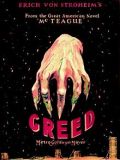 Empire readers considered this the 399th best film ever. TSPDT treated it more kindly, slipping into the top 100 at #94; the Top 300 Silents rank it among their top ten, however, at #10. The original (now lost) cut ran eight hours; the version released was merely two. In 1999 a four-hour version was created using stills from the deleted scenes, which seems to be the only one readily available, though I’ve heard the shorter cut is superior.
 May’s films in full
 #39 A Beautiful Mind (2001)
 The original screen incarnation of the detective, Lassgård starred in a run of TV movies and miniseries made between 1994 and 2007 that directly adapted all of Mankell’s novels up to that point, ending with a version of short story collection The Pyramid. Only some of these have made it to British TV, and not in the right sequence, so I think it’s a little hard for British fans to get an accurate handle on his portrayal. On the evidence available, it seems to be a more hulking, womanising take than other versions.
 The connoisseur’s Kurt, at least as far as British fans are concerned, Henriksson has filled the role from 2005 to 2013 across three series totalling 32 feature-length mostly-original tales. Despite a diversity of release styles (some in cinemas (hence my
 Filmed in Sweden but made specifically for British TV (well, and those American outlets that actually co-produce most British drama), this 2008-initiated BBC series also adapts Mankell’s novels. Branagh’s Wallander is a little hazier than the others, prone to staring into space or having a little cry. The series as a whole seems based in a very British concept of Scandinavia — desaturated close-ups of wheat gently swaying in the breeze, that kind of thing. It has its own charms. A final run adapting the last two novels is due whenever Branagh gets round to it.
 The final Lassgård film, The Pyramid, features flashbacks to a case Kurt was involved with when he was a young uniformed policeman. His 24-year-old self (“Wallander 24” in the credits, as if there’d been a lot more than five of the guys) is played by Mr Skarsgård. Surname seem familiar? He’s the son of actor Stellan, brother to fellow actors Alexander, Bill and Valter. He’s currently starring in History / Amazon Prime Instant Video’s
 Here’s where we get really obscure, then. In 2003 Wallander’s creator, Henning Mankell, co-wrote a crime miniseries called
 OK, he didn’t play Wallander — but he probably has a lot to thank it for. The first two series of the British version feature Hiddleston as a member of Kurt’s team, a stroppy little whatsit called Martinsson. It was after this that Branagh cast him as Loki in Thor, which as we know has brought the guy all kinds of success and adoration. Seems kinda unlikely Branagh didn’t remember him from their Wallander days when he was casting his Marvel movie…
 #25
 #29 The Sweeney (2012)
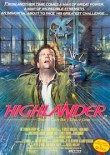 One of my all-time favourite movies. It should be laughably awful, really — not least the accents — and I’m sure to some people it is; but I think it’s immensely fun, and you can tell the setup is a good’un thanks to its legs: four sequels, a six-season TV series, a spin-off series, an animated series, an anime movie, and
 Top Gun
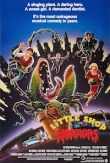 Little Shop of Horrors
 For some people, whether Alien or Aliens is the better film is a huge debate. For others, there’s no question which is superior — and those people can be divided into those who think it’s Alien and those who think it’s Aliens. I lean more towards Ridley Scott’s original, but James Cameron’s sequel has its own merits — not least the fact that, instead of dully repeating the original, it shifts the franchise into a wholly different genre.
 Crocodile Dundee
 There’s a good handful of well-regarded films from 1986 that I’ve never seen (also, Howard the Duck), but this is the highest I’ve not seen on
 #13 Gravity (2013)
 #18 Space Battleship Yamato (2010)
 The recently-released inspiration for this list. An underrated series from the late ’00s, its creator and stars have tried to get a movie made ever since it was ditched. With traditional options failing, they famously turned to Kickstarter — and fans coughed up almost $6 million. Relatively strong limited-release box office and VOD chart positions suggest their wish for a sequel may be granted. Unlike:
 The modern marker of true TV success — DVD sales (they also led to a return for series like Family Guy) — saw Joss Whedon’s short-lived, beloved space Western revived for a lap of honour. Sadly it struggled to find a big enough audience there either, dashing hopes of a sequel. But at least we got one movie. One big damn movie. One day, I’ll tell you all about how I think it’s better than Star Wars…
 Sci-fi fandoms lend themselves to this kind of list. Now that it’s a massive multimedia franchise, spanning half a dozen long-running TV series and twice as many movies, it’s easy to forget the original Star Trek was cancelled after just three years. The post-Star Wars movie world saw it rescued for the big screen. A bit like what J.J. Abrams is doing now, one might argue.
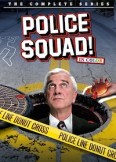 The what now, you might ask? Police Squad lasted just six episodes in the early ’80s, but then they spun it off onto the big screen as The Naked Gun (hence that first film’s ludicrous subtitle) — which was obviously a success, because it spawned two sequels and people still go on about it. Apparently “many gags from the show were recycled for all three films,” which I guess is fair enough if no one watched your show.
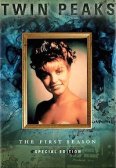 Twin Peaks was a cultural phenomenon, and is widely attributed with revolutionising US network television thanks to its filmic style and long-running storylines. Too long-running, as it turned out, when audiences abandoned it after things got weird (the fact it was masterminded by David Lynch should’ve been a clue) and the driving mystery was kinda-solved. A prequel movie did little to clarify things. (Apparently. I’ve still only seen season one.)
 Sure, the first X Files movie came mid-series, but the second was a considerable time after the show left our screens. And after the TV series ended on a cliffhanger, what better than to return to the big screen so you can tell… a completely standalone and unrelated story with a TV-friendly small scale. Oops. Hopes for a third movie that would deal with the hanging plot threads were basically killed right there.

 Braveheart
 Up
 Amélie
 Rear Window
 12 Angry Men
 Blue Velvet and Requiem for a Dream
 Not only was Kubrick’s acclaimed horror movie not nominated for any Oscars, it found itself in contention for two Razzies. Shelley Duvall was one of the ten Worst Actresses (Brooke Shields in The Blue Lagoon was deemed worst of all), while the sainted Stanley Kubrick was declared one of the year’s Worst Directors (he ‘lost’ to Robert Greenwald for Xanadu). And there you were thinking everyone always loved it.
 January’s films

 “Cruise. Spielberg.” So read the poster and/or trailer for this ’00s-set reimagining of H.G. Wells’ classic novel of alien invasion and domination. Despite the updating, and the sickeningly twee ending, it’s actually a damn good film. Post-9/11, US films were more positive than ever about how all Americans would band together in a crisis. Not so here.