Once upon a time, sequels were very much a lesser thing, and making more of them only made things worse. Nowadays we’re almost at the opposite extreme: first movies are routinely designed as setup for the better sequel, and never-ending franchises are all the rage.
Today’s top ten ranks some of my favourite movie series that have been part of 100 Films. Here that means a series with four or more movies (three would just be a trilogy, wouldn’t it?) where I’ve watched at least a couple of them during 100 Films’ life, as well as having seen a significant proportion overall. For instance, I’ve seen the two most recent Planet of the Apes films but none of the original five, so I can’t really judge that as a series.
A big factor herein is acknowledging consistency — one or two great films and a bunch of duds should mean exclusion. For example, the Star Wars series has two unimpeachable classics, and at least two more pretty great movies… but that’s only 57% of the Saga, or just 44% if you count the two theatrically-released spin-offs. Considering the lowly quality of the prequels, how much do they drag down the series as a whole?
You may disagree. Let’s take a look…

Marvel Cinematic Universe

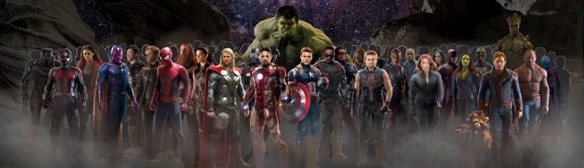
If we’re talking about consistency here then the MCU has it in spades: consistently underwhelming villains, consistently bland cinematography, consistently unmemorable music… Ah, but they also have consistently likeable heroes, a consistently light tone, and a consistent ability to be pretty entertaining. None of them are really bad (except the first Captain America, which has its fans anyway), a couple of them even push towards a certain degree of greatness, and overall they are — to paraphrase the description of The Avengers by its writer-director, Joss Whedon — not great movies, but they are each a great time.
Best film: Captain America: Civil War
Weak link: Captain America: The First Avenger
Other reviews: Iron Man | The Incredible Hulk | Iron Man 2 | Thor | Avengers Assemble | Iron Man 3 | Thor: The Dark World | Captain America: The Winter Soldier | Guardians of the Galaxy | Avengers: Age of Ultron | Ant-Man | Doctor Strange | + 5 Marvel One-Shots (take a look under ‘shorts’ on my reviews page) and various TV series, including Daredevil season two and Luke Cage season one
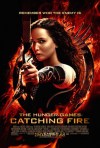
The Hunger Games

The shortest series in my top ten, this is very much a borderline on my rules — if they’d done the third book as one film, it wouldn’t count. That gives The Hunger Games a certain advantage over the other films here, in that it has one long story to tell across just a handful of movies, rather than trying to refresh itself in some way with each new film. About a group of young people fighting against an oppressive autocratic regime in a future version of America, it’s a future-history of, like, next week. For all the fun of its action theatrics, a series aimed at younger viewers with themes about the dangers of dictators and the potential benefits of and need for a resistance — what some might call “terrorism” — has rarely been more pertinent.
Best film: The Hunger Games: Catching Fire
Weak link: The Hunger Games: Mockingjay – Part 1
Other reviews: The Hunger Games | The Hunger Games: Mockingjay – Part 2
The Thin Man

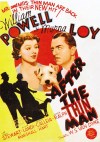
Ostensibly a series of murder mysteries, the reason the Thin Man series is such a joy is that the films are more concerned with the screwball-ish relationship between the leads, married detective duo Nick and Nora Charles, played with a certain rakish aplomb by William Powell and Myrna Loy. The mysteries themselves are Christie-esque parlour games and there’s a major role for the pair’s adorable dog. Mix all that together like one of the Charles’ favoured cocktails and they make for similarly splendid entertainment.
Best film: After the Thin Man
Weak link: The Thin Man Goes Home
Other reviews: The Thin Man | Another Thin Man | Shadow of the Thin Man | Song of the Thin Man
George A. Romero’s ‘Dead’ Films

With his low-budget horror film Night of the Living Dead, co-writer/director George A. Romero single-handedly created a whole sub-genre: the zombie movie. Although the form eventually degenerated into a miasma of excessive gore, what makes Romero’s films timeless is the way they use the zombies to reflect something else, whether it be basic humanity or wider sections of society. The first two movies (Night and Dawn) are genre-transcending classics, but if we’re talking consistency then I even have a fondness for the underrated fourth instalment, Land of the Dead, and the rush-produced but not meritless sixth, Survival of the Dead. Even the weakest, Diary of the Dead, has more of interest to say than many of its genre stablemates.
Best film: Night of the Living Dead
Weak link: Diary of the Dead
Other reviews: Dawn of the Dead | Day of the Dead | Land of the Dead | Survival of the Dead
Sherlock Holmes starring Basil Rathbone

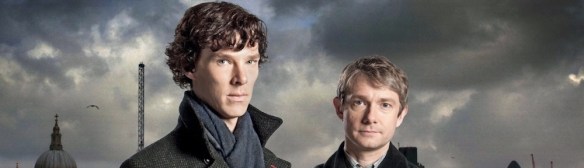
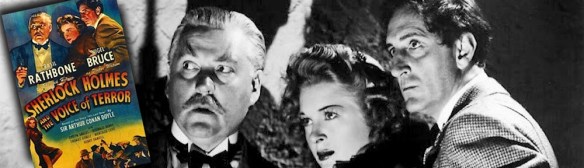
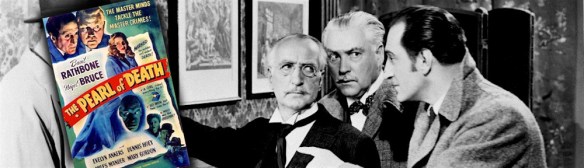
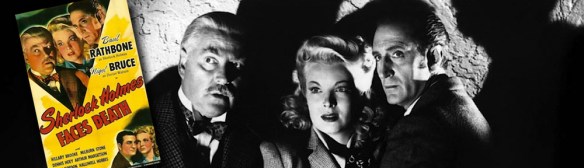
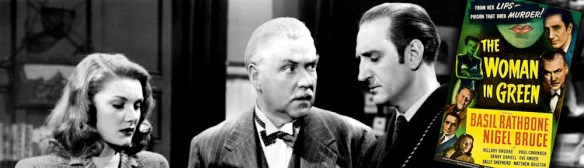
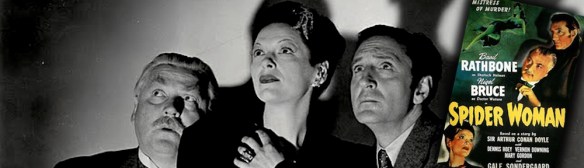
Between 1939 and 1946 Basil Rathbone and Nigel Bruce starred in 14 Sherlock Holmes films, cementing themselves as the definitive screen interpretation of Holmes and Watson for decades to come — some would say forever. Rather than faithful adaptations of Sir Arthur Conan Doyle’s original stories, these liberally remix the best bits into exciting new mysteries and adventures. If that sounds familiar from more modern times, it’s because Sherlock creators Steven Moffat and Mark Gatiss are massive fans of the Rathbone/Bruce films, and have never been shy about admitting their influence on how Sherlock adapts the canon. Maybe not one for literary purists, then, but otherwise there’s barely a dud to be found in this entertaining series.
Best film: The Scarlet Claw
Weak link: Pursuit to Algiers
Other reviews: The Hound of the Baskervilles | The Adventures of Sherlock Holmes | Sherlock Holmes and the Voice of Terror | Sherlock Holmes and the Secret Weapon | Sherlock Holmes in Washington | Sherlock Holmes Faces Death | The Spider Woman | The Pearl of Death | The House of Fear | The Woman in Green | Terror by Night | Dressed to Kill
Batman

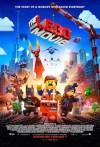
You could, not unreasonably, split the Batman movies into multiple sub-series at this point: the four movies from 1989 to 1997, Christopher Nolan’s Dark Knight trilogy, Batman’s role in the DCEU; plus the ’66 Batman, animated cinema release Mask of the Phantasm, and, now, the LEGO movies. This ranking encompasses them all… more or less. Certainly the live-action ones since ’89, anyway. Yes, that run of movies contains one of the poorest blockbusters of all time (Batman & Robin), but it’s counterbalanced by one of the greatest blockbusters of all time (The Dark Knight), and several others I’d place in the form’s upper echelons (Batman Returns, Batman Begins, maybe one or two more). I’m one of those people who likes Batman v Superman and sees promise in Justice League and The Batman, too, so long may it continue.
Best film: The Dark Knight
Weak link: Batman & Robin
Other reviews: Batman (1966) | Batman (1989) | Batman Returns | Batman Forever | Batman Begins | The Dark Knight Rises | Batman v Superman: Dawn of Justice (and its Ultimate Edition) | + 8 animated movie reviews (take a look under ‘B’ on my reviews page)
Harry Potter

I rarely classify myself as “a Harry Potter fan” because I know the full extent of obsessiveness you get from die-hard Potheads (as I like to call them. I don’t think anyone else does, but I think we should.) It’s no worse than any other dedicated fandom, I’m sure, but I’m not that extreme. Nonetheless, I’m of the right age to have read the books during my childhood (albeit right at the end of my childhood) and do have a fondness for them, as well as for the film adaptations. This is the perfect list for those, because I definitely feel like they’re more than the sum of their parts: each film is at least ‘good’, but few of them stray toward the territory of ‘really great’ — not individually, anyway. As a whole eight-film saga, though, I think they make for an impressive piece of work.
Best film: Harry Potter and the Goblet of Fire
Weak link: Harry Potter and the Chamber of Secrets
Other reviews: Harry Potter and the Philosopher’s Stone | Harry Potter and the Prisoner of Azkaban | Harry Potter and the Order of the Phoenix | Harry Potter and the Half-Blood Prince | Harry Potter and the Deathly Hallows: Part 1 | Harry Potter and the Deathly Hallows: Part 2 | + an overview of the Harry Potter films of David Yates, and also fan edit Wizardhood
Mission: Impossible

It’s the second-shortest series on this list, making my following statement comparatively less of an achievement, but still: in my view, there are no bad Mission: Impossible films. They’ve sometimes been given a rough ride down the years, with the first two especially meeting with more than their fair share of criticism, but I’ve enjoyed every one. The most recent is the best, in my opinion, but I don’t think I’d begrudge anyone naming any of the others as their favourite.
Best film: Mission: Impossible – Rogue Nation
Weak link: Mission: Impossible III
Other reviews: Mission: Impossible II | Mission: Impossible – Ghost Protocol
X-Men

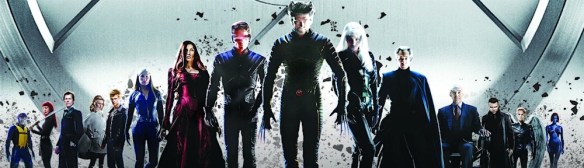
I feel like I’ve written plenty of introductory overviews to the X-Men at this point in my blogging career — about my near-lifelong love for the series; about its relevance to the modern superhero movie landscape; and so on. As with most of these series, not every entry is perfect, but very few of them are outright bad. Even the black sheep of the series, The Last Stand, isn’t all it could’ve been had director Bryan Singer stuck around, but it often gets an unfair rap — it’s not a bad piece of blockbuster entertainment. On the other end of the spectrum, I think the series’ high points are among the very best superhero movies. By the sounds of things the imminent third Wolverine movie, Logan, only continues that tradition.
Best film: X-Men: First Class
Weak link: X-Men Origins: Wolverine
Other reviews: X-Men | X2 | The Wolverine | X-Men: Days of Future Past (and The Rogue Cut) | Deadpool | X-Men: Apocalypse
James Bond

With 24 films to date, produced across 53 years, the James Bond films are a series like no other (though, in terms of number of films, the MCU will likely surpass it within the next five years). If we’re talking consistency of quality, then there are probably more underachievers here than in any other series in this top ten… but then there are more films full-stop, so what do you expect? Conversely, there are probably more high points too, be it the era-defining action of the Connery films, the lightness of the better Moore movies, the grit of Dalton, the polished blockbusterdom of Brosnan, or the series’ reinvention as prestige pictures with Craig. Indeed, there’s pretty much a Bond movie for every taste (unless you fundamentally object to enjoying the adventures of a government-sponsored killer, of course). At this point the series seems to be inoculated against any obstacle — they are critic proof, box office proof, almost audience proof. Whatever else happens in this crazy, crazy world, you can be sure of one thing: James Bond will return.
Best film: Casino Royale
Weak link: A View to a Kill
Other reviews: Dr. No | From Russia with Love | Goldfinger | Thunderball | You Only Live Twice | On Her Majesty’s Secret Service | For Your Eyes Only | Octopussy | GoldenEye | Tomorrow Never Dies | Quantum of Solace | Skyfall | Spectre

Tomorrow: an elementary list.


While everybody’s busy fawning over Happy Valley (never watched it) and Line of Duty (series one was quite good; I need to catch up), I reckon The Missing is one of the best dramas British TV has produced in a good long while. The second series (which aired towards the end of last year over here and, coincidentally, started last Sunday in the US) is every bit the equal of the first, and possibly even better — and considering how good the first was, that really is an achievement.
aka the BAFTAs, obv. I have to say, I thought it was a pretty dull show this year. For starters, Cirque du Soleil — impressive, but what’s it got to do with the last year in film? Why did no one write Stephen Fry some good material for his opening monologue? Then there were the awards themselves. Short on surprises — the big prizes went where expected, the smaller ones erred British. None of the American winners are committed to giving a decent speech here because they’re saving it all for the Oscars. Well, apart from the
It must be a slow time for TV — I don’t even feel like I’ve been missing all that much. Well, X-Men spin-off Legion recently started and I haven’t got round to that yet, and 24 spin-off / sequel / continuation 24: Legacy started in the UK last night, so I’ve barely had a chance to watch it (I’ll have something to say about that next month, then). So I really have no excuse for not watching Westworld yet. Oh, and I need to get on with starting my long-planned re-watch of Twin Peaks, because there are only…


Favourite Film of the Month


I’ve never read A Series of Unfortunate Events, the 13-book cycle of faux-gothic novels by Lemony Snicket that recount the terrible lives of the Baudelaire orphans as they are stalked by the scheming Count Olaf. I am, however, a verified fan / defender of the 2004 movie adaptation (I even
As Olaf, Neil Patrick Harris has the difficult task of being both comically inept and genuinely menacing, as well as appearing in any number of disguises (well, four). Opinion seems divided on whether he manages this better than Jim Carrey in the film, but, well, that’s opinions for you. Personally, I thought he was very good. The extra screen time here (what was done in 108 minutes of film is granted 299 minutes of TV) means he has to work at a different level and pace to Carrey, and I think there are multiple moments where he nails it. Similarly, some may think the child actors are guilty of vigorously flat delivery of their lines, but I think this is just another aspect of the Wes Anderson-esque style — as the viewer (and, possibly, the cast) become more accustomed to the material, so the quality of the performances (and/or the perception thereof) improves.
I think most would’ve thought A Series of Unfortunate Events was dead on screen after the film, but this series (and the reaction to it) suggests Netflix have been vindicated for deciding to revive the property. Let’s hope they have the common sense to do the right thing and commission the two more seasons needed to complete this sorry tale. In the meantime, I’m very favourably disposed to read all the books…
Sherlock comes to an end (for now) with another variable and divisive series. That’s actually the way it’s been received ever since the start (for all the people who think it only lost its way in the third run, there were plenty who slated various parts of it during the first and second series too), so I don’t think we should be so surprised. For my part, I enjoyed it on the whole.
Sherlock’s commitment to being a fast-paced, audience-challenging adventure drama that strives to be constantly engaging and entertaining is definitely commendable, and a welcome contrast to much of the slow, dour TV drama we tend to produce over here — even if the end result is sometimes messy or unpopular. With events in-show leaving our heroes reset to a more familiar Holmesian situation, here’s hoping the big-name cast can be tempted back for a few more adventures in a couple of years.
Nine years on and Gilmore Girls graduates from being considered a twee comedy-drama on disparaged network The WB to a major cultural event, thanks to it being produced for the arbiter of all modern televisual culture, Netflix. Instead of 22 42-minute episodes of network TV we get four feature-length instalments, though it’s still very much a series: the pros and cons are shared across the board.
Bizarrest of all is the problematic ending. Thematically, A Year in the Life begins to look like it might be about moving on, new horizons, that kind of thing — indeed, I kind of expected it to end with Lorelei moving out of Stars Hollow. But the climax — the infamous final four words… well, you could see the development as a signal of a fresh start (very literally, new life), but it doesn’t play that way. Given Rory’s personal story (her career and relationships falling apart) and situation (single, living at home), it’s less a new path forward and more a depressingly regressive loop. If you’re interested in a fuller dissection of these issues, allow me to recommend 

This month, I have mostly been missing Taboo, the BBC’s dark new period drama starring Tom Hardy and written by Steven Knight. I’m sure I’ll get round to it soon, but then I’ve been saying that about Peaky Blinders (you know, the BBC’s dark period drama written by Steven Knight and sometimes starring Tom Hardy) for years and still haven’t even started it. Its scheduling on BBC One on Saturday nights feels thoroughly at odds with how it looks (surely midweek BBC Two?), but putting a proper drama on our highest-profile channel on its highest-profile night seems to have been a popular move, so what do I know?