The strangest thing is the Duffer brothers’ apparent obsession with giving starring roles to only-available-in-North-America sweet things.
FYI, rest of the world: I have discovered a 3 Musketeers is in fact a Milky Way.

Stranger Things 2
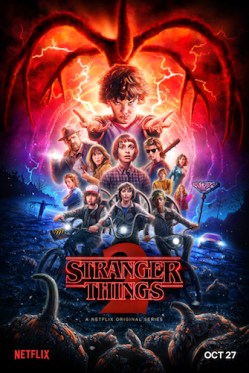 Netflix’s most talked about show (well, unless you count House of Cards for all the wrong reasons) returns wth a second season that isn’t just a continuation, it’s a sequel — note how it’s officially called Stranger Things 2 (which briefly sent IMDb skwiffy), and how the episode titles aren’t Chapters Nine to Seventeen of Stranger Things but Chapters One to Nine of Stranger Things 2. Set almost a whole year after the first season, and telling a self contained story (though one that obviously builds out of the first season) which takes place over just a couple of days (in fact, more or less half the season takes place on a single day and night), it feels more like watching a follow-up movie than the next set of instalments in a series that is reported to run another two years yet.
The idea is emphasised further by the fact its form seems largely inspired by The Empire Strikes Back — well, it’s Stranger Things: of course it borrows heavily from an ’80s movie. (If you want to see a whole array of its visual homages/rip-offs in a succinct two-minute video, check out this.) It doesn’t map one-for-one onto Empire’s structure, but it takes the same broad shape: splitting our heroes up into different smaller groups off having their own adventures; throwing new characters into the mix; expanding the universe and the mythos. If anything, Eleven is Luke — by herself, learning about her past, developing her telekinetic abilities. And Dustin and Lucas are kind of Han and Leia — supporting characters now given their own important arc, including both romance and the introduction of a major new character. And so Mike is… I dunno, Obi-Wan? A former main character who’s now barely present. As for Joyce, and Hopper, and Nancy and Jonathan, and Steve, and Will… yeah, Star Wars doesn’t have this many lead characters. Well, I did say it wasn’t exactly like-for-like.
Perhaps another side effect of the movie-esque style is that it feels… short. Like, just as things seem to be getting going, it’s the finale. It’s a problem many binge-focussed series have these days, but this struck me as a particularly pronounced example. It could just be my own fault for watching it all in double-bills, but then I do that quite routinely with Netflix shows and I’ve not felt it so keenly before. Nonetheless, it has enough moving parts that the two-part finale (it’s not officially billed as that, but it is that) remains highly satisfying. As with season one, it’s when everyone finally comes together to fight the threat that the season is at its most satisfying, those two episodes feeling like an adrenaline-fuelled mini-movie (well, movie-length movie) of their own.
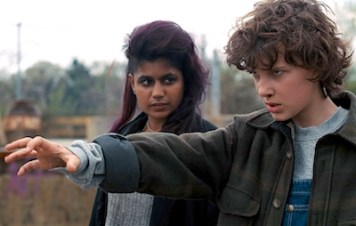 Now, you can’t discuss Stranger Things 2 without mentioning the infamous Chapter Seven. If you’ve missed the internet’s collective exclamation of disappointment and/or annoyance, IMDb has it in a nutshell: on there, the user ratings of all the other episodes (from both seasons) range from 8.5 to 9.5, a spread of 1.0 (obviously), but Chapter Seven has 6.2, a full 2.3 marks below the next lowest score. Ouch. It’s not great, but I didn’t think it was that bad. It’s a total aside from the main action, and placed where it is seems designed just to delay the pay-off to Chapter Six’s cliffhanger for another 45 minutes (in a regular programme it’d be two weeks, but this is Netflix). I don’t really hold with that being an actual problem, though — that’s just taste. No, the real problem is that it rushes through a character arc for Eleven that would’ve been better presented over multiple episodes. Considering before that she’s spent several episodes just sat around watching TV, there were surely better ways to structure her role this season.
That’s no slight on Millie Bobby Brown’s performance, mind — she’s great again, displaying so much character and emotion even through Eleven’s limited understanding of being a normal person. Also worthy of note is Noah Schnapp as Will. Considering he had so little to do in season one, they either lucked out with his casting or knew where they were going enough to cast it well — a lot is asked of him here, and he’s up to it. I could keep going, but if we begin to single people out we’ll be here all day: almost every lead cast member gets either a stand-out scene or a decent arc. They even made Steve likeable. Finn Wolfhard draws the short straw — Mike spends most of the season just being grumpy about Eleven — but as he was the centre of attention last time it’s okay to let the others shine.
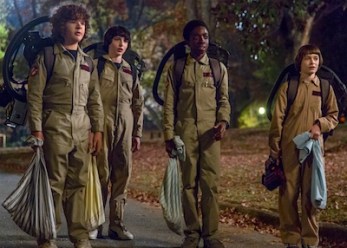 Even though it has all the big action stuff you’d expect, Chapter Nine still devotes a serious chunk of time to a character-focussed epilogue; reminding you that, as with most loved shows, the heart of it is the characters and their relationships. Indeed, although the season as a whole didn’t have the same effectiveness as the first, I thought the finale was a better climax. In fact, it would be a perfectly valid place to leave the entire series… but there are (at least) two more seasons to go. It might be nice if season three opened up the timeline a bit, because so far Hawkins seems to be a place where Crazy Terrible Shit happens over a couple of days and then everything’s fine for a whole year.
Red Dwarf XII Episodes 4-6
 I had nice things to say about the first half of Red Dwarf XII in my last TV column, which kindly glossed over the fact that episode three, Timewave, was a bit of a disaster. I think it’s safe to say the second half of the series is stronger — it represents everything I said last time, but better. The final two episodes, M-Corp and Skipper, even throw in some fan-pleasing callbacks — real deep-dives too, aimed squarely at the long-term fanbase. (No spoilers here — the last episode has been available on demand for a week but doesn’t officially air until tonight.) The episodes don’t need such devotee delights just to curry favour — their concept-driven comedy is satisfying enough to stand on its own — but there’s no denying the added pleasure to be found in the references and cameos. You can certainly hear the glee of the live studio audience as they recognise what’s going on each time (it even messes up the pacing of one bit for us regular viewers, but I guess that’s the trade-off). So, even more than last time, this set of episodes demonstrate there’s definitely life in the old Dwarf yet. Bring on series XIII.
Peaky Blinders Series 3
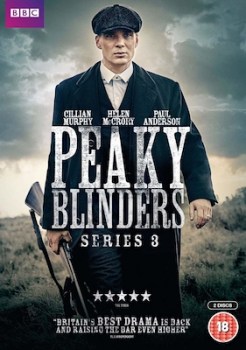 Beginning with a significant time-jump and monumental change in circumstance worthy of a Mad Men season premiere, the third series of Peaky Blinders soon sees everyone’s favourite Brummie gangsters embroiled in espionage and counter-espionage as they’re enlisted to help exiled Russian aristocracy launch a bid to reclaim their country. There’s so much more going on than that, but I won’t get into it here because we’ll be here all day — Peaky Blinders is a complexly plotted series; right up the final episode, which contains revelations that turn the previous six hours on their head. Even with all that narrative to get through, it still finds plenty of time to give most of its large-ish ensemble cast some strong character arcs. There are a few streaming series that could learn a thing or two from that…
Rick and Morty Season 1 Episode 2
 I confess: I started watching Rick and Morty fully expecting to hate it. I’d always thought it looked and sounded annoying, so I paid it no heed… but then it seemed to keep coming up — people referring to it in excited tones, and it ranking 7th on IMDb’s top TV list. So I decided to see what all the fuss was about, still expecting my initial impressions to be proved correct but endeavouring to have an open mind. The pilot (which I covered back in August) did little to sway my mind: it wasn’t terrible, but it had many of the irritations I’d perceived and only a few redeeming qualities. But I read that it was an unrepresentative and below par episode, so I pressed on. Things immediately pick up: the second episode, Lawnmower Dog, mixes together Inception, Nightmare on Elm Street, and super-intelligent canines into an entertaining and clever half-hour. It’s bought my attention for a couple more episodes, at any rate.
Also watched…
Arrow Season 6 Episodes 1-2 / The Flash Season 4 Episodes 1-2 — Here we go again… At least The Flash seems to have perked up again this year, which I used to find a little irritating but is actually quite welcome after the dour last two seasons.
Bounty Hunters Series 1 Episodes 1-2 — Belatedly started this Jack Whitehall comedy-thriller, which tonally is a bit like The Wrong Mans, which I loved. More thoughts when I’ve finished the series.
Castle Season 8 Episodes 4-9 — The arc plot this season is really rather irritating. This is when I’m thankful for binge-watching: it makes that crap go by faster.
Detectorists Series 3 Episode 1 — Promptly started the new series of this Mackenzie Crook comedy, which I previously named one of my ten favourite series of the last decade. More thoughts next month.
The Good Place Season 1 Episodes 1-2 — Belatedly started this Kristen Bell comedy-fantasy (which only arrived in the UK with the start of season two anyway, so not that belatedly). It’s kind of brilliant so far. More thoughts when I’ve finished the season.
Upstart Crow Series 2 Episodes 5-6 — See last month.
Things to Catch Up On
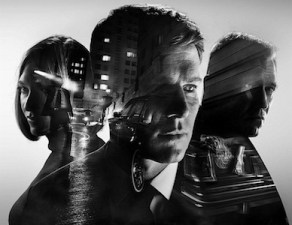 This month, I have mostly been missing Mindhunter, David Fincher’s new Netflix series about the early days of criminal psychology and criminal profiling at the FBI. It was actually released before my last TV post, but I didn’t have Netflix at the time so I didn’t bother to mention it. I would watch it next, but The Punisher is out tomorrow. Maybe after that…
Next month… Netflix gets punishered.


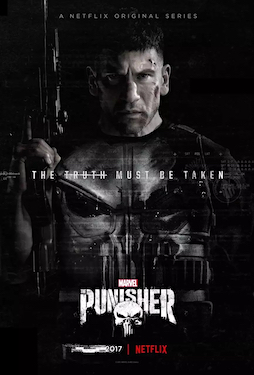 The fourth live-action iteration of Frank Castle, Marvel’s murderous anti-hero (and people moan about Spider-Man reboots), debuted in
 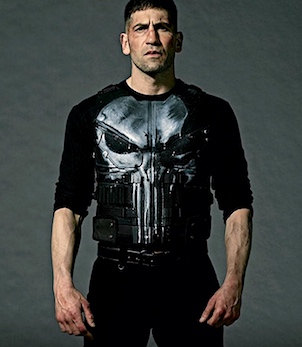 In the title role, Jon Bernthal is fantastic. You can absolutely believe him as a revenge-driven psychopath capable of killing anyone and everyone, but also as a kind-of-charming strong-but-silent type with a heart and moral code who will definitely do the right thing. I’ve seen some critics and viewers opine that now is the wrong time for a series about a hero who just murders indiscriminately. I say those people definitely haven’t watched this Punisher. Although the plot is a conspiracy thriller, the series invests a lot of time in the emotional world of Frank Castle, making him human and moral rather than just a single-minded murder-machine. Bernthal makes what could be a very one-note role into a plausible human being; one who you believe might be able to find redemption and leave someday. And maybe that makes him even more tragic — he could find it; it’s possible… but likely? There’s the rub. As it’s also trying to engage with issues facing combat veterans once they return home, it makes for a clearly different, more serious flavour for an MCU production. How successfully it explores these weighty issues is more debatable.
 The third and final series of BBC Four’s sitcom about a couple of mates whose hobby is metal detecting was every bit the equal of the first two runs, which saw the show place on my list of
 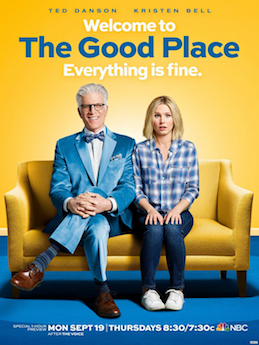 I only heard about this after its Big Twist was much-discussed online, so starting it was an exercise in knowing there was a big reveal awaiting. Fortunately, that knowledge doesn’t overshadow everything that comes before it. For those who still aren’t aware of it (especially as it’s only on Netflix on this side of the pond), it’s about a woman (Kristen Bell) who dies and goes to Heaven only due to an admin error, so she tries to better herself so that she’s deserving of her place. Other complications emerge as the season goes on, but that’s the premise. There’s a lot of plot for a sitcom — although it’s not necessarily immediately obvious, it tells a 13-episode story; this makes Netflix quite a natural home for it, actually, as it’s not your typical “every episode is fundamentally standalone” sitcom. But it’s also very funny in amongst all that, mining not only the characters and their foibles, but also the uncommon situation they’ve found themselves in. The shocker in the finale is just the icing on the cake. I hear season two has gone off the boil somewhat, but I’ll find out for myself once it’s all wrapped up.
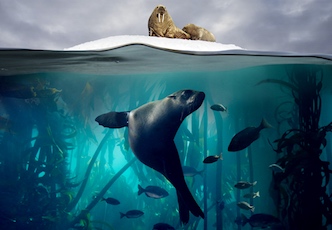 This month, I have been missing so much stuff. There’s been the fourth series of Peaky Blinders on BBC Two (which concludes this week, so we’ll whizz through it sometime in the new year); the second season of The Crown on Netflix (also waiting for the new year now); the same streamer’s first ever miniseries, Godless; the immensely acclaimed Blue Planet II (now available in UHD on iPlayer, too!); and I’m behind on Arrow and The Flash so haven’t reached the four-show Arrowverse crossover. And those are just the ones I can remember right now.


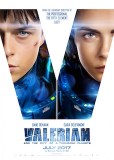


 Favourite Film of the Month





















 Everyone was a bit surprised when they announced a second series of Doctor Foster. The
 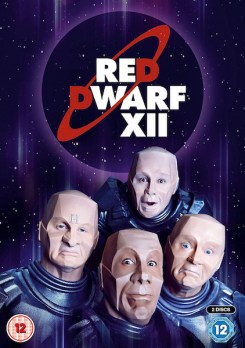 I still think of Red Dwarf as a programme that’s popped back for a bit of a revival, but I guess at this point it counts as just an ongoing show: since Dave brought it back in 2009 they’ve produced four series, half as many as the entire original run on the BBC. Give it another five or six years and they may equal, or perhaps even surpass, that number. It’s been a long time since I actually watched any of those old episodes that made the show’s name, so I can’t offer an opinion on whether the new runs are of the same quality — some say they are, some say they aren’t. Personally, I still think it’s funny overall, and (as I often say) that’s really all you need from a comedy. That said, one thing Dwarf has always done, and continues to do, is draw from actual science and science-fiction concepts to drive its plots and many of its gags. That makes it a proper sci-fi-comedy, rather than just a regular sitcom that happens to be set on a spaceship. Hurrah for that.
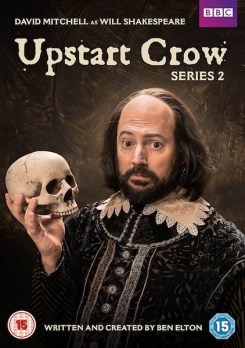 Talking of funny sitcoms, this series of Upstart Crow has been hilarious. Okay, I could do without Harry Enfield turning up as Shakespeare’s dad — almost every scene featuring him sees the humour take a turn towards the puerility of the toilet — but the rest of it is often pretty clever, riffing on Shakespearean plots and trivia. There was even a screenwriting joke in one episode that I guess would pass most people by. It also has a nice line in almost anachronistic humour, where characters comment on a fact of the day that is actually a commentary on modern life. It’s not subtle, and perhaps writer Ben Elton returns to that comedy well too often, but it’s always funny. And as I often say…
 It’s funny coming to The Thick of It for the first time now. It was so cutting-edge when it aired, and yet politics has got so much barmier since — these specials debuted a whole decade ago now, when the idea that Trump might be President was the kind of thing no one but sitcom gag writers thought about. That’s not to say the show’s lost any of its bite, just that it’s not as timely as it once was. These two hour-long specials, The Rise of the Nutters and Spinners and Losers (plus 15-minute bonus episode Opposition Extra, which follows some characters from Rise of the Nutters during the events of Spinners and Losers), set their satirical sights on the transition of power from Tony Blair to Gordon Brown. Don’t worry if you don’t remember that — there’s no reading up required, because The Thick of It is a fiction loosely inspired by real political events, rather than a straight riff on reality. It’s every inch the 21st century’s answer to Yes Minister in that respect. Although there’s an ensemble cast, all of whom are very amusing, the unmistakable star is Peter Capaldi’s Malcolm Tucker. With a regime change in the offing, Tucker risks being thrown out as part of the old guard, and so is on the back foot trying to manipulate things to his advantage. After three seasons of Capaldi as the Doctor, witnessing him here use his brain to run rings around other people to get the result he desires now feels like watching a somewhat evil — and much swearier — version of everyone’s favourite Time Lord.
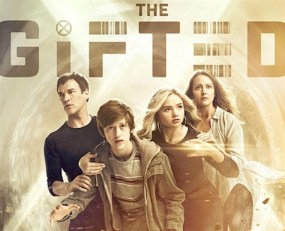 This month, I have mostly been missing The Gifted, the new TV show set definitively in the X-Men universe — unlike the last one, Legion, which apparently wasn’t. As you might infer from that use of “apparently”, I still haven’t got round to Legion either. I also haven’t seen the other new Marvel Comics-related show, Inhumans, which is part of the MCU. After the terrible reviews it’s received, I’m not sure I’ll bother.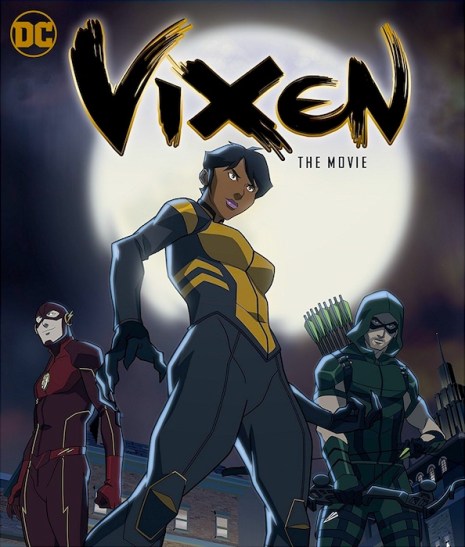












 After its move to Channel 4, which was as controversial as it was high-profile, I wasn’t sure if I was going to continue bothering with GBBO. What would it be without Mel and Sue’s effortless chemistry and terrible puns, or Mary Berry’s kind twinkle? But cake always wins, and after a few weeks I caved and am now gradually catching up (I mean, too much cake in one go is bad for you, right?) Unsurprisingly, it’s still fundamentally the same show. Sandi Toksvig and Noel Fielding seemed like random picks for the new hosts, but they have the right mix of daftness, quick wit, and empathy to fill Mel and Sue’s shoes, and function surprisingly well as a double act too. New judge Prue Leith is no Mary Berry, but she can do the job. The judging’s hardly the most important bit anyway, is it? That’s the bakes, and they’re as incredible as ever. It’s funny that something that was a tough technical challenge back in series two or three is now just an unmentioned part of something much grander and more complicated. GBBO may have been slightly tarnished by the whole kerfuffle of changing networks and losing popular presenters, but the revised show has turned out to be less a soggy bottom and more a batch of ten almost-but-not-quite-identical sweet treats.
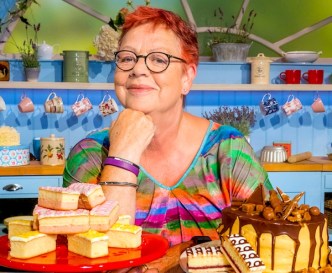 One thing that’s actually been improved by the Bake Off franchise’s move to C4 is this companion show. It always felt a bit cramped before, squeezed into a half-hour when it wanted to be longer, and not allowed to really cut loose with its content because, although it was on the more irreverent BBC Two, it was still on The BBC. In its new home, it’s only been extended by about seven or eight minutes (presumably a result of C4’s commitment not to cut the series’ running time — the old 30 minutes of material plus ads wouldn’t quite fill a 45-minute slot) but that seems to have made the world of difference, allowing it room to breathe and throw in a few more gags. It’s got distinctly cheekier too, which befits host Jo Brand and the kind of guests they have on (mostly comedians). And somehow it never stops being funny how people at home have messed up baking.
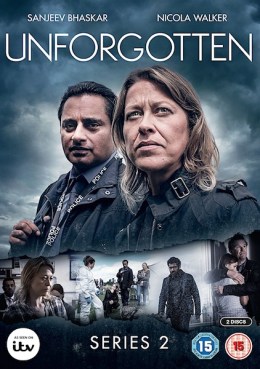 I get the impression ITV’s cold-case thriller was a bit of a surprise success when
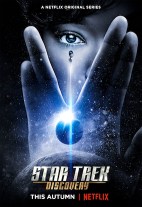 This month, I have mostly been missing the return of Star Trek to TV, in the form of Discovery. It’s “a Netflix original series” everywhere outside the US and Canada, so I imagine I’ll catch up during one of my irregular Netflix subscriptions (after the whole first season is available to binge, of course). Also missed: Rellik, the new thriller with a Memento-esque structure from the writers of
