
There’s a lot to say about this rather special May, so let’s just crack on with it.

#92 Phantasm (1979)
#93 Laura (1944)
#94 ManHunt (2017)
#95 Anon (2018)
#96 Absolutely Fabulous: The Movie (2016)
#97 Trekkies (1997)
#98 Trekkies 2 (2004)
#99 FernGully: The Last Rainforest (1992)
#100 Stalker (1979)
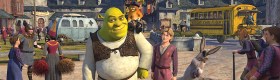
#101 Shrek the Third (2007)
#102 The Hangover Part III (2013)
#103 Terminator 2: Judgment Day 3D (1991/2017)
#104 Jigsaw (2017)
#105 Batman: Gotham by Gaslight (2018)
#106 O Brother, Where Art Thou? (2000)
#107 Inferno 3D (1953)
#108 Adventures of Zatoichi (1964), aka Zatôichi sekisho-yaburi
#109 Coco 3D (2017)
#110 The Pixar Story (2007)
#111 Game Night (2018)
#112 Lupin the Third: The Secret of Mamo (1978), aka Rupan Sansei: Rupan tai Kurōn
#113 Live by Night (2016)
#114 Christine (2016)
#115 The Wild Bunch (1969)
#115a The Wild Bunch: An Album in Montage (1996)
#116 Allied (2016)
#117 Colossal (2016)
#118 It (2017)
#119 Solo: A Star Wars Story (2018)
#120 Deadpool 2 (2018)
#121 All the Money in the World (2017)
#122 Finding Dory 3D (2016)
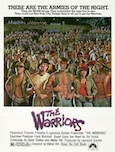
#123 The Warriors (1979)
#124 American Made (2017)





- S’funny: it happened three weeks ago, so this is old news to me now, but this is officially an “I reached #100!” update.
- Speaking of it being “old news”… the previous record for the earliest I’d made it to #100 was 28th May in 2016. At the end of March I very much doubted I’d even be close to that this year. But, come the end of April, I would’ve been disappointed if I didn’t smash that record. And I did, reaching #100 on 10th May.
- This is the 10th year I’ve made it to my eponymous goal, out of 12 attempts. All the viewing I did beyond #100 means 2018 is already my 6th best year.
That’s enough about #100 — how about the usual monthly perspective?
- Well, May 2018’s total was 34 films. That surpasses the record set just last month to become my New. Best. Month. Ever!
- Obviously that means it’s the best May ever, but it’s also the first time May has featured 20+ films (the previous best was 16).
- Never mind 20+ — what about 30+? This is only the third month ever to cross that milestone, and the first time there have been two back to back.
- Oh, and it maintains my ten-per-month minimum for the 48th month — four solid years. My longest run before this was seven months.
- Naturally, this kind of behaviour smashes averages. May’s increases from exactly 12 to exactly 14. The rolling average of the last 12 months also shoots up by nearly two whole films, from 16.8 to 18.6. And the average for 2018 so far goes up even more than that, from an already-high 22.5 to a whopping 24.8. If that average were to continue, it would be remarkable: only four months in the history of 100 Films — i.e. 2.9% of months — would meet or surpass that figure.
- Despite watching more films than there were days in the month, I managed to miss seeing one on May 23rd, which is one of the seven remaining dates on which I’ve ‘never’ watched a film (as first mentioned in July 2017’s update). The ball is now in June’s court to get that figure down to a nice round half-dozen.
Whew, enough numbers! Here’s some stuff about the actual films…
- I rewatched The Terminator back in December because T2 3D was hitting Blu-ray that same month and I hadn’t seen either film for years. Well, five months later, I finally (re)watched said sequel.
- Even worse, I rewatched Finding Nemo back in July 2017 to remind myself what happened in it before I watched Finding Dory. Ten months later, I’ve finally watched that sequel.
- This month’s Blindspot film: Sam Peckinpah’s bloody, quick-cut Western The Wild Bunch. Controversial for both those reasons on its release back in the ’60s, by golly if it isn’t still striking for them today!
- This month’s WDYMYHS film: Andrei Tarkovsky’s acclaimed sci-fi mystery Stalker. It’s slower than his Solaris and I didn’t like it as much, but it did make me want to watch that again. Maybe I’ll pick it up in the current Criterion UK sale…

The 36th Monthly Arbitrary Awards
 Favourite Film of the Month
Well, this is tricky — so many films, so much choice. At the risk of sounding like I’m picking a runner-up, I really, really enjoyed Game Night and will give it a glowing review sometime near the UK home ent release, but I’ll probably give it four stars. Nonetheless, I guess it would’ve been the winner here if I hadn’t watched The Warriors last night, which I loved and will give the full five.
Least Favourite Film of the Month
Fortunately, this was a bit easier. While there were some underwhelming films this month, the only one I outright disliked was Phantasm. On the bright side, I watched it because the series’ Blu-ray box set was on offer and I was considering a purchase (I had the first film recorded off TV), so it saved me something like £36.
Best Animated Film of the Month
I watched seven animated films this month, which seems enough to warrant its own category. Two of them were Pixar films, both of which I enjoyed. Two more were American computer animations, which provoked a more mixed reaction. Another two were traditionally animated movies, both of which I enjoyed more than I expected to. But the victor is the last one: the barmy and kind of brilliant anime Lupin the Third: The Secret of Mamo.
Bonkers Sex Scene of the Month
Much to everyone’s relief, they chose to delete the infamous preteen orgy from It, which for all kinds of reasons is perhaps the all-time champion of this category. Brad Pitt and Marion Cotillard getting it on in the middle of a sandstorm seemed to provoke a lot of comment too, but that doesn’t quite beat the accidental weightlessness of having sex with a pilot midflight in American Made. Supposedly the scene was inspired by director Doug Liman bumping into star Tom Cruise while they were flying together. Well, what happens in the air stays in… the movie, apparently.
The Audience Award for Most-Viewed New Post of the Month
Maybe if I’d seen Deadpool 2 or Solo sooner, and reviewed them similarly fast, this might be a different story, but, for the second time this year, the view count is topped by my monthly TV column. (In second place was underrated Netflix/Sky Cinema original Anon.)



























My Rewatchathon continues at pace:
#17 Superman (Expanded Edition) (1978/2000)
#18 Deadpool (2016)
#19 Mission: Impossible III (2006)
#20 Dick Tracy (1990)
I know this is already a pretty long update, but I have thoughts on almost all of these…
This was the first time I’ve watched Superman for… decades, probably. It’s definitely the first time I’ve seen the “expanded” cut, but as it’s only eight minutes longer and mostly small extensions I didn’t give it a new number. Two of its longer scenes are very good additions, though, so it’s a worthwhile cut of the film. The even-longer TV version (over three hours!), a full print of which was discovered in Warners’ vault and released on US Blu-ray last year, is reportedly too long, slowing the pace to a crawl with unnecessary asides. I’ve sometimes thought about importing it for completism’s sake, but I doubt I’ll bother.
When I reviewed Deadpool two years ago, I gave it a full 5 stars. That was rounded up from a 4.5 because of how much fun I had. Even then, I predicted it might not hold up so well to rewatches. Well, I was right. Not that I now think it’s bad, but without the refreshing novelty you get on a first viewing, I thought it was more of a solid 4.
M:i:III will be the subject of a “Guide To” post nearer the release of Fallout. I considered giving Dick Tracy the same treatment, but I’m not sure I can be bothered. I watched it when I was very young and I think I liked it — I remember having some kind of tie-in book that I enjoyed a lot. The film used to have a bad rep, but apparently has undergone some kind of reevaluation recently. I’m not sure it’s merited. Some things are great — the production design and cinematography are incredible, hyper-stylised in a way that almost looks a couple of decades ahead of its time — but others aren’t, like the disjointed story, or the Danny Elfman score that seems to have been recycled from Batman off-cuts.

Life, uh, finds a way (again) on the big screen… and not much else, as UK release dates start getting bumped for the sodding World Cup.
On the small screen, catching up with last year’s Oscar nominees: The Post and Three Billboards finally came out on UK DVD & Blu-ray last week, and Darkest Hour (not The Darkest Hour) is out on Monday, though we still have to wait until the 25th for The Shape of Water, three-and-a-half months after the US. What is this, the ’90s?

 The first screen adaptation of a novel by acclaimed British sci-fi/fantasy author China Miéville, The City & the City is a police procedural set in the unique location of twin cities Besźel and Ul Qoma, which occupy the same geographical space but inhabitants (and visitors) are forbidden from seeing the city they’re not in. When I first heard the pitch I assumed it was a Doctor Who-y sci-fi thing — that the cities were slightly out of step in time or something, and literally existed in the exact same space. Instead, they’re side by side, sometimes overlapping — there are places where the left-hand side of a road is in Besźel, the right-hand side in Ul Qoma. Residents are trained from birth not to see the other city. Apparently it’s partly an analogy for how we mentally block out unsavoury things in our own cities, but that doesn’t really come across in the screen adaptation, which is more focused on the murder mystery and its implications — it’s connected to a mythical third city, Orciny. In this respect it reminded me of Thomas Pynchon’s The Crying of Lot 49: our hero ends up investigating a very-secret, potentially dangerous organisation that may or may not exist, and whether or not they find it… well…
 The BBC’s latest Agatha Christie adaptation finally reached our screens after a delay for extensive reshoots (to remove a cast member accused of sexual misconduct, not on this production). It’s a grim tale of abuse and, of course, murder, but classy work by director Sandra Goldbacher kept it more in the tone of the Beeb’s excellent
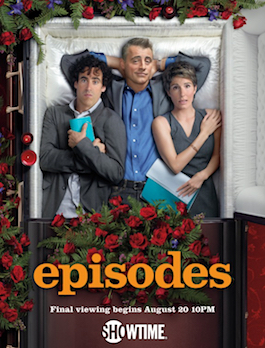 A whole seven months after its US airing (and nearly three years since we saw the last series), the final run of this UK-made UK/US-coproduced sitcom finally reached British screens (a far cry from the days when that took less than 24 hours). Originally about a pair of UK sitcom writers struggling to remake their successful British series for the US market, Episodes is fairly removed from that format at this point — it’s just about the characters now, and mainly their trials and tribulations with each other rather than the whims of the US network TV system.
 There was drama to spare at this year’s Eurovision. Firstly, China were banned from showing it due to messing around with the semi-final broadcast (they censored tattoos, homosexual dancing, and Pride flags); then, on the big night itself, the jury voting was neck-and-neck right to the final country… before being completely upended when the public votes were added.
 Cancellation season has been and, I think, gone in the US, and this year was a particularly bloody one. The big news as far as Twitter was concerned was Brooklyn Nine-Nine, which caused such a ruckus that multiple other networks were interested and it found a new home within 24 hours. Lucifer also caused a bit of a stir, though there’s no sign of hope for that yet. Similarly afflicted were Designated Survivor (which was decently addictive enough that I binged through




















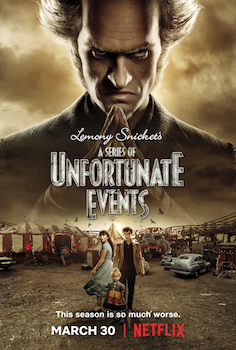 Abandon your vapid, facile distractions and set aside your very fine dramas, because it’s time to indulge in some vicarious fearsome disaster with the return of Netflix’s venerable family delight — a phrase which here means: A Series of Unfortunate Events is back.
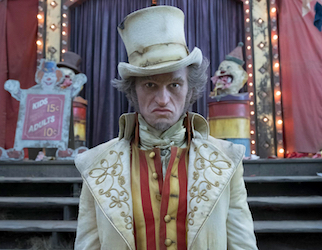 Neil Patrick Harris is having a whale of a time as Olaf and all his varied aliases, while the apparent earnestness of child actors Malina Weissman and Louis Hynes is clearly well measured for effect rather than poor work. There’s an array of memorable guest performances this season as well, from Kitana Turnbull, fantastically horrid as Carmelita, a little-goody-two-shoes teacher’s-pet bully the Baudelaires encounter in the opening two-parter; to Lucy Punch as an obsessive fashionista; to Sara Rue as a new inductee into the secret organisation trying to help the Baudelaires. Best of all is Nathan Fillion, born to play the fast-talking dashing hero who gets a ton of the best lines. If there’s a downside, it’s that we don’t see enough of some people. Unlike most kids’ fare (and, let’s be honest, some stuff made for adults), this isn’t a show where good is always rewarded and bad behaviour always punished, and that means some people may be shuffling out before we’ve had as much as we’d like. I guess the clue was in the title…
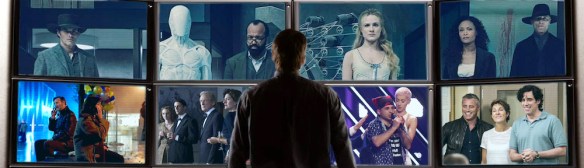
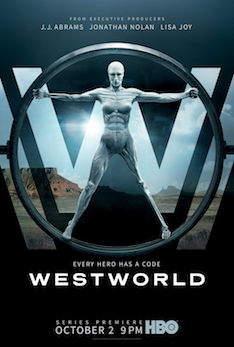 With season two imminent (it begins tomorrow, people!) I finally got my behind in gear (it’s only taken 18 months) and missioned my way through the first season of HBO’s reimagining of
  During its production Westworld hit the headlines because they shut down production for a while to retool the scripts and hone the story. Maybe this was why. If so, it paid off, because from the fifth episode things pick up considerably. Developments and twists really kick the mysteries into gear. Scenes between characters begin to carry more meaningful dialogue and affecting emotion. There’s even some action to give it a nice adrenaline kick at times. Rather than feeling like it’s ambling nowhere in particular, you feel like showrunners Jonathan Nolan and Lisa Joy have some very particular things in mind, but good luck guessing what they are because there are many surprises in store: however close you think you are to uncovering Westworld’s games, someone always has something else up their sleeve. It develops an almost
  The other most striking thing about the show are the performances. It’s like an acting masterclass: there are numerous fine performers here, and they’re all doing their best work. Ed Harris, Anthony Hopkins, Thandie Newton, Evan Rachel Wood, Jeffrey Wright… they’re all so magnificent that I don’t know who to single out without going on forever. And that’s not to undersell the rest of the cast either, many of whom would be said to excel in most other shows, but here there’s just so much raw talent on display.
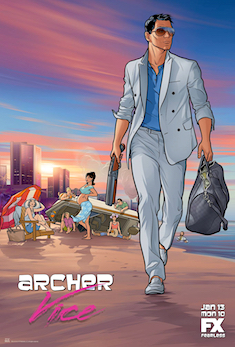 Here in the UK, animated spy-comedy Archer originally aired on Channel 5, until they started really titting about with the scheduling, which is what led me to drop off watching. It’s all on Netflix nowadays though, so I’m finally getting back into it.
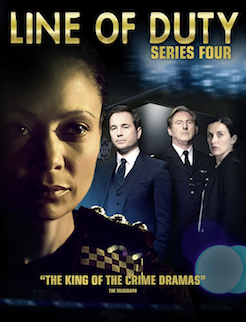 Another superb performance from Thandie Newton here, as the subject of AC-12’s latest internal affairs investigation. She’s convinced she’s arrested a notorious serial killer known as “Balaclava Man”; our faithful heroes reckon she’s cut corners, overlooking serious concerns about the evidence; the higher-ups who were exerting pressure on her to close the case would rather it all just went away. And as is the Line of Duty way, some shocking early developments send things spiralling in different directions. After the programme had become increasingly mired in its multi-season meta-arc
  While I very much enjoyed
 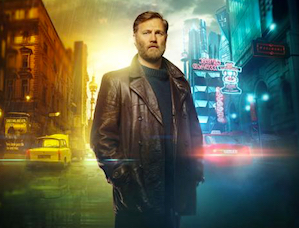 This month, I have mostly been missing the BBC’s miniseries adaptations of China Miéville’s The City and the City and Agatha Christie’s Ordeal by Innocence, both of which I’ve been saving up to watch in a more condensed fashion once they’re finished. The Christie ended on Sunday but the Miéville is only halfway through. Anyway, I imagine I’ll cover both next month. Also released this past month was Netflix’s big-budget reboot of Lost in Space, which I would’ve watched if I hadn’t been missioning my way through Westworld this past week. That might be here next month also. And finally, the last-ever season of The Best Show On TV™, The Americans, is underway in the US. Again, I’m saving it all up ’til it’s done, but I do intend to watch it promptly so as to avoid finale spoilers — my real hope is to time it just right so that I can watch the finale the day after it airs in the US, but we’ll see. Said finale isn’t until May 30th, so whatever happens I won’t be reviewing that until June.
















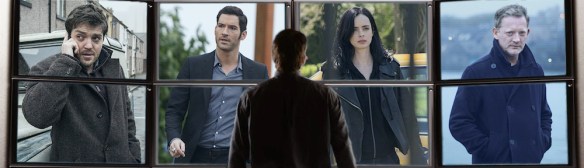
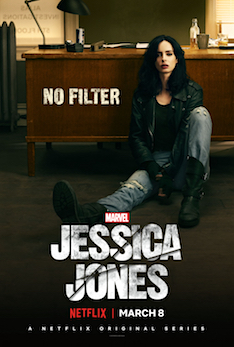 When the first season of Jessica Jones debuted 28 months ago it was practically a cultural phenomenon. Its fresh, unique take on the superhero genre marked it out as noteworthy even at a time when there are innumerable other films and series in that space. A large part of that was the intelligent and grounded way it engaged with some thorny issues, making it a critical darling and attracting audience admiration too. So I’ve been a little surprised that no one really seems to be talking about season two. Perhaps it’s just me and my little internet bubble, but since the flurry of pre-release reviews I’ve heard nary a whisper. I’m sure there must be reviews and recaps out there, which I wasn’t seeking out so as to avoid spoilers, but I didn’t stumble across any either.
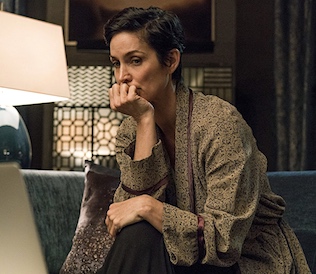 And that’s not to say these series never work in episodic form. For instance, events at the start of episode five, AKA The Octopus, see Jessica begin to force herself to be a better person. It’s one of the season’s strongest episodes, in part because of this burst of character development. Okay, it’s a bit blunt, in that she’s told she needs to improve and we see her consciously trying, but it pays off in a scene where she has to be empathetic to question a mentally-impaired witness. It’s not only Jessica who benefits from development: supporting cast members like Malcolm, Trish, and Jeri get meaty subplots to tuck into. Jeri’s is the best — indeed, her storyline might be the strongest bit of the entire season. There’s a fantastic, nuanced performance from Carrie Anne Moss — it feels like they’ve really worked to make use of her in a storyline that’s far more emotional and nuanced than what she’s had previously in these shows.
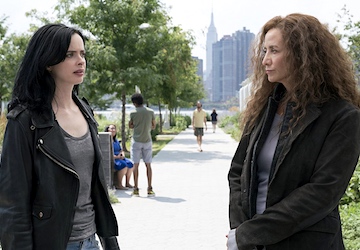 For me, it lost its way a bit again in the final pair of episodes — there are still really good bits, but others feel like a wearisome rehash of plot beats familiar from other superhero/thriller series. Eventually it comes to a good ending — there’s a surprising resolution to the plot, plus an epilogue that lays some intriguing hints for a third season (an inevitability, surely?) — but the faffery of episodes 12 and 13 to get us there… there were more streamlined ways to do this, I think. Or, considering the mandated episode count they have, more interesting ways to have spent the time. So it’s not perfect, but it’s still one of the best of the half-dozen Netflix/Marvel shows.
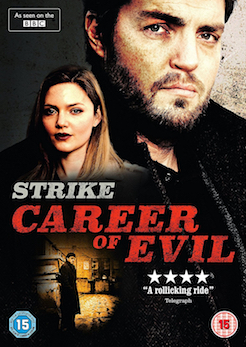 The latest Strike adaptation (and the last for at least a couple of years) was the best so far, I thought — a mysterious, reasonably complicated case, and plenty of character stuff for our likeable pair of heroes, too. The latter is certainly a big part of the series and its appeal, sometimes to the detriment of the actual investigation storyline, I suspect. By which I refer to the fact that some fans of the books have complained that the series isn’t devoting enough time to each adaptation, necessitating big cuts to the plot to fit into just two hours. I’ve not read them myself, and such editing didn’t feel noticeable during
 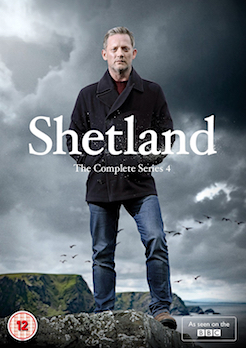 In almost the polar opposite to Strike, Shetland is no longer based on the books that inspired it (even though I believe there are one or two they’ve not adapted), and it takes a whole six episodes to tell its story. Actually, I feel a bit daft calling Strike’s case “complicated” now, because it’s as nothing to this series of Shetland, which sees DI Perez and his team struggling with both a 23-year-old cold case, which has resurfaced because the convicted murderer has just been awarded a mistrial, and a new murder with clear echoes of the first. If that wasn’t enough, the investigation leads them to Norway, where both the suspicious activities of an oil drilling firm and the plotting of a far right nationalist group come into play. Shetland has always had a bit of Scandi Noir about it (must be something to do with the cold northern environs), but it strays even further into that territory by, you know, actually going there.
 Not a reality show about manicurists (that’s what it sounds like, doesn’t it? If I was making a reality show about manicurists I’d be annoyed this took my title), but rather Netflix’s answer to The Great British Bake Off (possibly literally: they were miffed they didn’t get a chance to bid for it when it went to Channel 4). It’s not about super-skilled amateur bakers, though, but rather normal folk who attempt the kind of grand bakes you sometimes see online… and fail miserably. It’s like that bit of An Extra Slice where they look at viewers’ photos, only turned into a whole programme. It’s also very American — brash, loud, fast, unnuanced… It’s also the way it’s shot and edited, very much more like American reality series than British ones, but I shan’t bore you with a Media Studies-esque explanation of that.
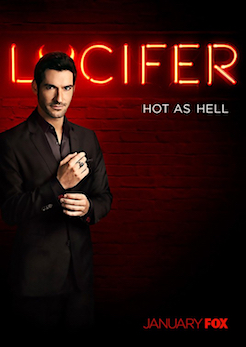 Having finally finished Castle last month, there was a gap in our viewing schedule for a light crime-of-the-week cop show. Lucifer seemed to fit the bill. For one thing, it’s been knocking around for a few years now, meaning there’s a nice backlog of episodes to get through. Loosely inspired by a DC comic, it’s about the actual Devil quitting Hell and setting up a life in Los Angeles, where — for one reason or another — he ends up helping the police investigate murders. Meanwhile, he enters therapy, and there’s an angel knocking around who wants to drag him back to Hell. The series nicely balances the bog-standard US-cop-show case-of-the-week stuff with the ongoing fantastical subplots, powered by a cast of engaging characters with conflicting motives. Best of all is the lead, Tom Ellis, giving a deliciously charming and slightly camp turn as the Prince of Darkness himself as he tries to become a better person. I’m not sure the series has really made any waves (especially on this side of the pond, what with it being an Amazon Prime exclusive here), but it’s really rather good. I mean, it’s not going to be challenging Quality TV for greatest-of-all-time status — it’s still a case-of-the-week buddy show when you boil it down — but it’s done well and a lot of fun.
 This month, I have mostly been missing The X Files season 11, which finished earlier this week in the US (and comes to the same end here in the UK with a double-bill on Monday). I watched (and reviewed, natch) its first episode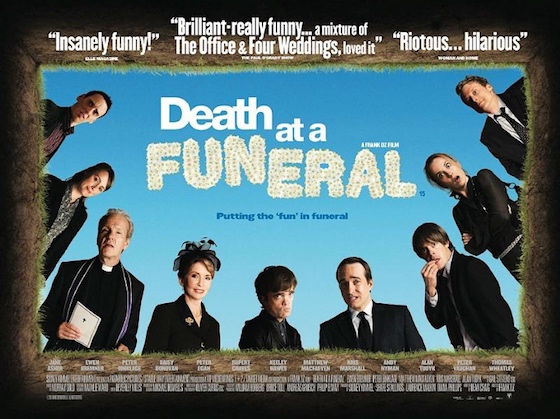

























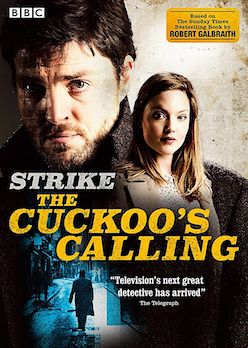 Adapted from the series of novels by Robert Galbraith — the mystery-writing pseudonym of one J.K. Rowling — you might’ve assumed this would’ve followed in the footsteps of the author’s other literary series and have Hollywood come a-knocking. Maybe they did, but TV is a more natural home for the material: it’s a decent low-key murder mystery with appealing lead characters, which is the sort of stuff that can generate TV ratings but doesn’t spell box office nowadays (well, unless it’s Murder on the Orient Express, with its $350 million worldwide gross, but that’s a different kettle of fish). While the general shape of the drama is familiar from, well, every other TV detective show, Rowling’s well-known interest in social issues regularly comes through — not least in its two main characters, one of whom is a war veteran living with the realities of an amputation, the other a talented woman finding equality in the workplace. I suppose that’s all very timely.
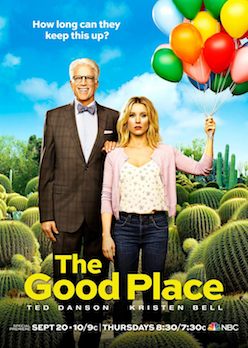 Having blown the doors off its own enjoyable premise with a clever twist at the end of
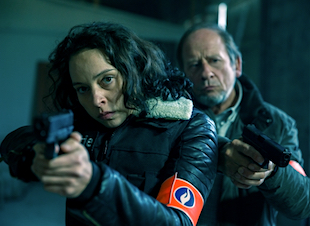
 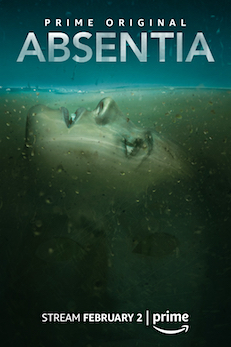 Stana “Beckett from Castle” Katic stars in this mystery-thriller, an Amazon exclusive in the US and UK (and everywhere else there’s Amazon Video, I presume). She plays FBI agent Emily Byrne, who was declared dead in absentia after she disappeared while on the hunt for a serial killer. Six years later, she turns up alive, apparently having been held captive all that time — even though the main suspect was convicted of her murder and has been in prison. Events quickly take a turn where her former colleagues wonder if Emily was in on it too, meaning she has to go on the run to prove her innocence. Of course, none of those people ever stop to wonder what she’s actually been up to for six years (it’s not like the killings continued), or why she’d decide to fake her comeback now, or… all sorts of other things. A subplot with her kid — who was too young to remember her, and now has a new real mom because his dad remarried — has emotional potential, but goes a bit too swimmingly at first and then is soon abandoned in favour of shoot outs, and unearthed skeletons (both figuratively and literally), and all that mystery-thriller stuff. So this isn’t one to think about too much, in any respect, but it’s passably entertaining as a pulp thriller. I’m going to stick with it until the end, at least, but I kinda hope it doesn’t try to end on a cliffhanger — I’m not sure I want a whole other season (or two, or three, or more).
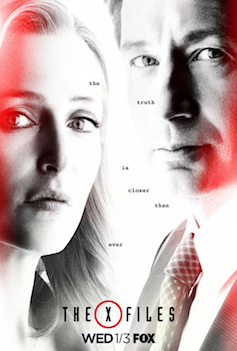 The second season of The X Files since its revival only recently started airing in the UK, but we’ve caught up as far as episode three now. Well, the broadcasts have — I’ve only watched the first episode, and it was so goddamn terrible I’ve not had the heart to continue. (I will, I’ve just not mustered the motivation yet.) Said opener was My Struggle III, continuing the series’ never-ending mythology arc plot, which last season (two years ago now!) was covered in My Struggle I and My Struggle II. Well, at least the mythology episodes are clearly marked these days — there’s a My Struggle IV later in the season, for our sins.
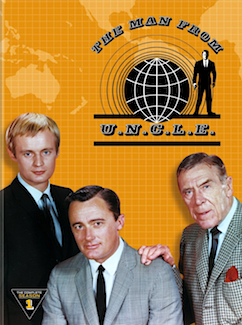 I’ve had this knocking around waiting to be watched for yonks after I picked up the complete series DVD set on offer. (“For yonks” being “since 2015” in this case.) I remember seeing some episodes as a child and enjoying them, though I don’t remember any specifics. I guess they were from the show’s later, crazier, full-colour years, because these early black-and-white adventures don’t quite chime with that vague sense-memory of what the show should be. That said, although they start out almost serious (as ’60s spy-fi goes, anyway), by just a couple of episodes in there’s already a kookier side on display. Anyhow, I expect the best is yet to come.
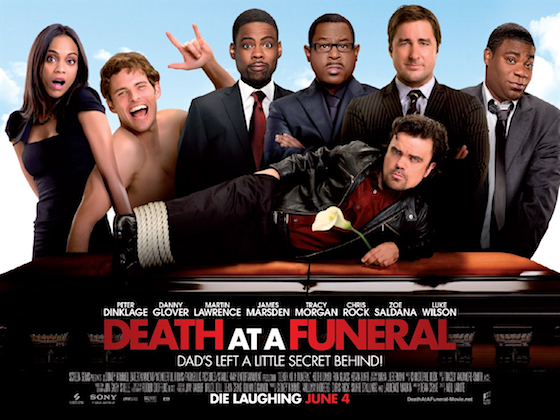
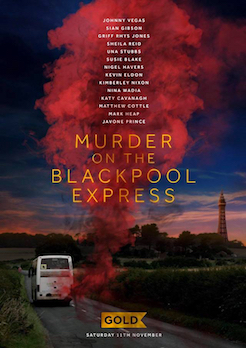 This one-off feature-length comedy aired at the end of last year, presumably timed to tie-in with the theatrical release of Kenneth Branagh’s Murder on the Orient Express — as the spoofing poster highlights, of course. (Who thought I’d wind up referencing that film twice in a TV column nearly four months after it came out? I really ought to get on with reviewing it…) Truthfully, that poster is probably the best thing about this. There’s a large cast, all recognisable from a host of British sitcoms, but half of them go underused. Those that do have a part to play get material that’s fairly amusing, amid a plot that’s somewhere between predictable and too mad to be guessable. It was funny enough on balance, but it didn’t live up to its full potential.
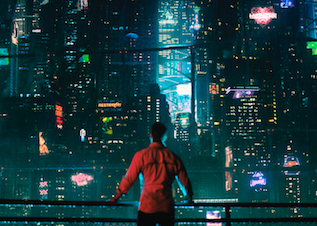 This month, I have mostly been missing Altered Carbon, Netflix’s cyberpunk murder mystery. Reviews looked to be mixed, so I haven’t actually decided whether to bother with it or not. Two series I will definitely (intend to) get round to, but I’m saving up to binge once they’re done, are: BBC Two’s starry political thriller Collateral (led by Carey Mulligan, John Simm, Billie Piper, and no doubt some actors who haven’t had significant roles in Doctor Who. FYI, it’s coming to other counties as a Netflix “Original” next month); and the latest run of Scottish detective drama Shetland (the last series of which was














 100Films.co.uk