Resident Evil (2002)

The 100 Films Guide to…

Resident Evil

Survive the horror

Also Known As: Biohazard (in Japan — the film uses the original title of the game it’s based on in the country it originated from, appropriately enough.)

Country: Germany, UK, France & USA*
Language: English
Runtime: 100 minutes
BBFC: 15
MPAA: R
* The end credits call it “a German/British co-production”. IMDb adds the other two.

Original Release: 15th March 2002 (USA)
UK Release: 12th July 2002
Budget: $33 million
Worldwide Gross: $102.98 million

Stars
Milla Jovovich (The Fifth Element, Hellboy)
Michelle Rodriguez (The Fast and the Furious, Avatar)
Eric Mabius (Cruel Intentions, The Crow: Salvation)
James Purefoy (Mansfield Park, Solomon Kane)

Director
Paul W.S. Anderson (Event Horizon, AVP: Alien vs. Predator)

Screenwriter
Paul W.S. Anderson (Shopping, Death Race)

Based on
Resident Evil, a video game by Capcom, directed by Shinji Mikami.


The Story
After a virus kills all the employees at the underground research facility of Umbrella Corporation, a team of commandos are sent in to contain the outbreak. But to do that they’ll have to fight the facility’s megalomaniacal supercomputer, plus all the employees, who aren’t exactly dead after all…

Our Hero
Alice wakes up in her mansion with total amnesia… but soon a bunch of military operatives are whisking her along into a life-or-death situation, which it turns out she’s equally trained for herself.

Our Villains
The undead! Hordes of ’em, as always. Plus an evil supercomputer who controls the entire facility and speaks with the voice of a little girl, because why not. Oh, and we know someone deliberately released the virus — could they now be part of the team investigating the facility? Hmm, I wonder…

Best Supporting Character
Rain is just one of the commandos, but, as played by co-billed Michelle Rodriguez, she gets the lion’s share of the best lines. (I mean, the dialogue is hardly sparkling, but what good lines there are, she gets. Maybe it’s all in the delivery.)

Memorable Quote
Rain: “All the people that were working here are dead.”
Spence: “Well, that isn’t stopping them from walking around.”

Memorable Scene
With the team separated, Alice is exploring the facility alone and comes across some empty animal cages… and, shortly thereafter, the dogs that used to live in them… who are now zombie-dogs out to eat her, obviously. It’s mainly memorable for this bit:

Memorable Music
The score, co-credited to habitual genre composer Marco Beltrami and Goth rocker Marilyn Manson, was explicitly influenced by John Carpenter’s early electronic work, albeit given a very ’00s techno/rock spin by Manson.

Letting the Side Down
There’s so much stuff some would put in this category, but the main jarring point is some middling ’00s CGI. It’s not outright bad (like, say, the Rock-scorpion-thing in The Mummy Returns), but it definitely shows its age.

Previously on…
The first Resident Evil video game was released in 1996. The film is more “inspired by” than adapted from it. Multiple sequels to it came out before the movie finally hit the big screen, and even more have followed since, not to mention various spin-off novels, comics, animated films, and other stuff, like a themed restaurant in Tokyo.

Next time…
Five sequels followed over the next 14 years. Before the series-concluding final film had even made it to home media, a reboot was announced. That’s gotta be some kinda record, even for Hollywood.

Awards
2 Saturn Award nominations (Horror Film, Actress (Milla Jovovich))
3 Golden Schmoes nominations (Most Underrated Movie of the Year, Horror Movie of the Year, Best T&A of the Year — you might read that last category and think “only in the ’00s!”, but I checked and they still award it today)

Verdict

Writer-director Paul W.S. Anderson has managed to sustain a lasting career out of making movies no one seems to really like. With a CV full of video game movies (Mortal Kombat, multiple Resident Evils, the forthcoming Monster Hunter), and B-movie do-overs (Death Race) and emulations (AVP), he’s a bit like a bigger-budgeted, less-objectionable version of Uwe Boll (remember him?). Anyway, the first Resident Evil is actually one of his better efforts. I’ve never played any of the games so have no idea of its faithfulness (“not very” is my impression), but Anderson took inspiration from early John Carpenter movies to create a lean action/thriller/horror flick (again, leaning into those B-movies), which drives the viewer from set piece to set piece with quickly-sketched characterisation (or, in many cases, none at all) and a mysterious backstory to be uncovered. It’s no masterpiece, but it’s a solid 90-minutes-and-change genre fix.

Cotton Wool (2017)

2019 #50a
Nicholas Connor | 38 mins | download (UHD) | 2.40:1 | UK / English | 12A

Cotton Wool

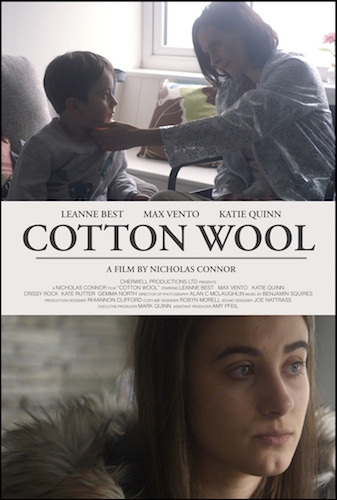
After single mum Rachel (Leanne Best) suffers a debilitating stroke, it marks a massive change for her two kids, stroppy teenager Jennifer (Katie Quinn) and sweet seven-year-old Sam (Max Vento): with no other family and minimal support from the authorities, it’s suddenly up to the kids to care for their mum.

As a closing title card informs us, there are around 243,000 carers under the age of 19 in England and Wales alone, with 22,000 of those under the age of nine. Writer-director Nicholas Connor’s short film seeks to highlight this issue — it’s quite shocking how many young lives are affected by the need to look after other family members because there’s no one else to do it. But the short is also “inspired by their courage”, and so it strikes an optimistic tone about the power of love and the value of family, rather than spending too much time in condemnation of a system that leaves these youngsters largely unsupported.

If you watch things like the BBC’s annual Children in Need telethon, these kind of facts and situations might be familiar — it’s the kind of thing they cover in short documentaries during the evening. Connor’s film differs thanks to the advantages of fictional storytelling: rather than just informing the viewer of facts and statistics, Cotton Wool connects us to the characters and explores the subject from different angles. The new life thrust unasked upon Rachel, Jennifer, and Sam affects them each differently, and Connor uses that to find generality in specificity: rather than tell us about all 243,000 young carers and the people they look after, here are three individuals who each struggle and cope in different ways.

Simply Leanne Best

In particular, the film presents a clear but not heavy-handed difference between the behaviour of the two kids: Jennifer professes that she helps around the house, but is really more concerned with escaping out with her mates, with maintaining her own life; Sam, meanwhile, does all that he can to look after his mum. It’s easy to see that Jennifer is ‘in the wrong’, but, again, the film doesn’t go out of its way to condemn her. She’s not a bad person, just conflicted. Her storyline culminates in a teary scene in bed where she talks about admiring everything her mum did for them, which is the nearest the film got to being too on-the-nose for me. Conversely, Sam’s storyline maintains a degree of understatement. Perhaps the most heartbreaking moment comes when he has a one-to-one chat with a care worker who notices the space paraphernalia around Sam’s room. Asked if he wants to be an astronaut when he grows up, Sam instead says he wants to care for his mum.

However, the best performance of the trio comes from Best (pun not intended!) With Rachel physically debilitated after her stroke, Best is stuck with a limited range of speech and movement, but still conveys a wealth of emotion while not at any point letting the effects of her condition slip. The film has won a variety of awards at film festivals around the world, including several of Best’s performance, and it’s well deserved.

It’s a handsomely mounted production all round. I don’t watch many shorts, really, so can’t make a fair comparison, but it doesn’t look cheap or limited in the way you might expect of a low-budget short. There are some very effectively staged moments, in particular the two strokes — the first a handheld, almost scary event seen from Sam’s eye level; the second a trippy, tense nightmare. Much of the film is shot with a sort of hazy beauty by DP Alan C. McLaughlin, and the wintery Yorkshire countryside locations help emphasise the isolation of the family.

Hazy shade of winter

As a calling card for the young writer-director, it could hardly be better. At the risk of making us all despair at the state of our lives, he made this when he was just 17, but it suggests a maturity of approach beyond that. There’s a certain lightness of touch in the storytelling that doesn’t ram home the hardship of the kids’ situation or the juxtaposition of their behaviour, and he refrains from the polemicising you might expect to find in an issue-driven short by a filmmaker of any age.

I’ve avoided mentioning it thus far, but it’s hard not to make comparisons to another recent British short film about a child coping with disability-related adversity in a chilly Northern setting, The Silent Child. That, of course, won an Oscar, and I’d say Cotton Wool is at least its equal.

4 out of 5

More information about Cotton Wool can be found on the director’s website, here.

The Highwaymen (2019)

2019 #48
John Lee Hancock | 132 mins | streaming (UHD) | 2.35:1 | USA / English | 15 / R

The Highwaymen

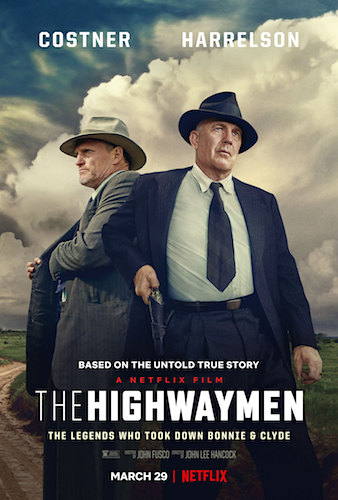
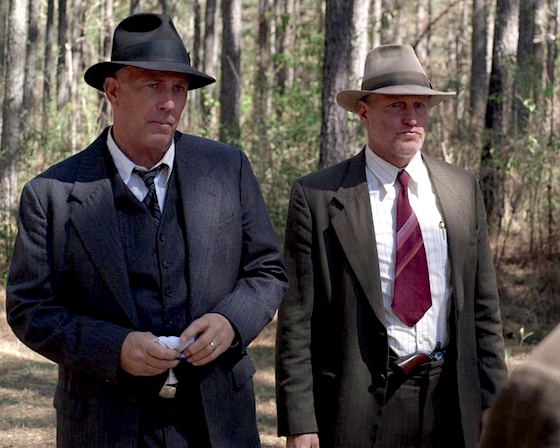
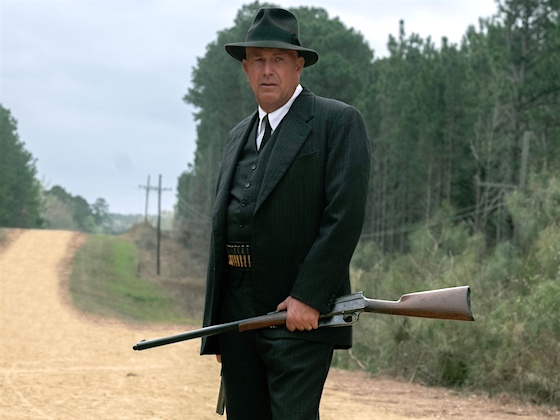
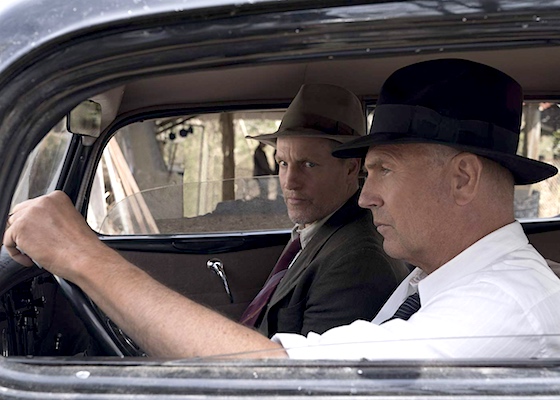
There’s a fair chance you know the story of Bonnie and Clyde thanks to the acclaimed 1967 movie (or the 2013 miniseries, or one of the other fictional depictions, or just their general notoriety), but what about the story of the guys who got ’em? For all the Robin Hood-esque heroism that was conveyed upon them by the media at the time and then cemented in subsequent fictional retellings, they were still murder-happy criminals. The Highwaymen sets out to do its part in rectifying this by introducing us to Frank Hamer (Kevin Costner) and Maney Gault (Woody Harrelson), a pair of retired Texas Rangers who were reinstated in early 1934 to track down Bonnie and Clyde and put an end to their crime spree.

Netflix has self-described the film as “The Untouchables meets Public Enemies” (they’re doing the job of reviewers for us!), and, while I’ve only seen one of those movies, I don’t think they’re far wrong. Netflix are well known for commissioning projects that are similar to other stuff people like (reportedly their first-ever original, House of Cards starring Kevin Spacey and produced/directed by David Fincher, came about because statistics showed viewers liked to watch the original BBC series, movies starring Spacey, and movies directed by Fincher), but this feels like one of the most blatant examples I’ve personally seen. Movies like Live by Night and Road to Perdition also came to my mind whilst watching, but it’s not limited to specific examples — it just feels like other movies set in about the same period about the same kind of thing. Well, we might blame Netflix’s data-centric thinking for that, but it’s actually nothing new in Hollywood.

Men of the highway

As a work in its own right, The Highwaymen is a solid period investigative thriller. It’s distinctly lacking the youthful verve and excitement of the ’67 film, which matched the youthfulness of its killer couple, replacing it instead with a slow-ish, world-weary methodicalness, which again matches its central pairing. That could be deliberate, or it could just be another instance of the recurring problem that Netflix-originated content is slower than it needs to be. When police procedurals are slow because they’re focusing on the exacting, gradual accumulation of evidence and data that leads to the downfall of the bad guys, that can be a good thing, and there’s an element of that here; but at other times it just feels a bit tardy. What it lacks is a sense of urgency, which you’d think the hunt for ceaseless murderers would have. We’re told these villains need to be stopped ASAP, and we see them continue to commit crimes as our heroes are still hunting for them, but we never really feel any sense of desperation to get the job done. Hamer and Gault kinda toddle along, as if they know it’s going to take two hours of movie-time to complete their mission so why rush?

It’s not helped by a seeming indecisiveness about what the movie wants to focus on. It’s torn between being a portrait of aged lawmen who may be past their time and a straight-up recounting of the hunt for Bonnie and Clyde. The former is a theme it only touches on in fits and spurts, often in scenes that feel shoehorned in just to address that subject. I’m not sure it had much to say about it either. It doesn’t come to the conclusion that the old ways are the best, or that they’re not relevant anymore; or that these guys still have their skills, or that they don’t anymore (early on there’s a scene where Costner realises he isn’t as accurate with a pistol as he used to be; that never comes up again) — they’re old, they’re tired, and… that’s it. As for the investigation, I presume it’s been depicted fairly accurately — the film has the feel of a story that’s been structured and paced this way because it’s based on truth. Of course, as we know from many other “true story” films, that’s a foolhardy assumption to make. Still, the final ambush was staged exactly where it really occurred out of a desire for historical accuracy, so it’s not wholly unreasonable to suggest that extends to the rest of the film.

Gunning for Bonnie and Clyde

One fascinating aspect of this particular case is how much the public were on the side of the criminals, and have been since (when The Highwaymen’s trailer debuted, I saw plenty of comments from disgruntled viewers hoping the film would acknowledge how underhanded the cops were in how they finally got Bonnie and Clyde! As if it somehow wasn’t fair to just shoot dead these crooks who had killed multiple other law enforcement officers, and innocent civilians, without similar fair warning). Perhaps unavoidably, the outlaws’ celebrity is another theme the film touches on, but only loosely. The populous should probably have been terrified of this viciously violent gang, but that they instead exalted them had a lot to do with the social situation at the time, i.e. the Great Depression, where the banks were the enemy, and Bonnie and Clyde did rob banks. Unfortunately, it’s again a thread that’s not fully unravelled; another facet the film notes is interesting but doesn’t bother to do a whole lot with.

Visually, there’s nothing to complain about here. It’s handsomely shot by John Schwartzman, with suitably open vistas that in themselves evoke a less urbanised time, where outlaws might still be hiding in the back of beyond. There are also scenes in towns and cities that clearly had enough budget to create a large-scale feel for the period. The film reportedly cost just under $50 million, the kind of budget movie studios don’t assign anymore, but it shows why it can pay off: this doesn’t need to be a $100 million blockbuster, but it does need enough cash to dress streets and extras for the setting. Netflix are one of the few still prepared to put money into such endeavours, and it is welcome.

Elsewhere, the film’s musical score was one of the main things that reminded me of Road to Perdition, so I was amused when I saw it credited to Thomas Newman, who also composed Perdition. I’ve commented before how I sometimes like his music but other times think he sounds a bit to similar to, well, himself (his work on Skyfall distracted me by sounding like what he did for A Series of Unfortunate Events), so maybe this shouldn’t be a surprise.

On the road to somewhere. Probably Perdition.

Despite all those niggles I’ve listed, The Highwaymen is actually a solid viewing experience. It may not do anything original or execute elements as well as it could have, but Costner and Harrelson are engaging performers to follow around, and the story is inherently interesting enough to hold attention — it may’ve been slower than necessary, but I was never bored. The film has been described in some circles as a “dad movie”, a phrase that was also bandied around about another Netflix original earlier this month, Triple Frontier. I guess it’s being used in a reductive and dismissive sense, but, well, so what? I’m not a dad, nor of the age range being intimated by the expression, but I don’t think there’s anything wrong with a decent men-on-a-mission movie either.

3 out of 5

The Highwaymen is available on Netflix now.

Skyscraper (2018)

2019 #35
Rawson Marshall Thurber | 102 mins | download (HD+3D) | 2.40:1 | USA / English, Cantonese & Mandarin | 12 / PG-13

Skyscraper

If you were to describe a movie as “Die Hard in a building, from the director of Dodgeball”, you’d expect some kind of spoof. Not unreasonably: “Die Hard in an X” is (or was) a fairly common movie pitch, but the original is set in a building, so clearly someone’s making a joke (it’s me! And also everyone else who used this line to describe Skyscraper); and Dodgeball is, well, a comedy. Combine the two and you’ve definitely got a parody movie… right? Turns out, no.

That said, Skyscraper certainly owes a debt to its genre predecessors. It stars Dwayne Johnson as a security consultant employed to okay the world’s new tallest building for its imminent opening. When a group of terrorists break in and set the building on fire, endangering not only the rich dude behind the building’s construction but also Johnson’s family, it’s up to our guy — who used to be in the military or SWAT or something, I forget — to save the day. Plenty of running and jumping ensues, as you well know if you’ve seen that poster that went viral as people tried to work out if the angles add up. Unsurprisingly, they didn’t.

Beat THIS, Alex Honnold

That jumping scene does actually occur in the film, though. Does he make it? You guess. Does it make any more sense on screen? Eh, who knows? Frankly, who cares? Skyscraper is not a movie overly concerned with realism. Or originality. It’s not just the obvious stuff nabbed from Die Hard and/or The Towering Inferno (I’ve never seen the latter, but it’s been cited as an influence) — tropes and clichés abound. If you’re in a miserable mood, the endless parade of familiarity will likely frustrate any viewer. Conversely, if you’re in a forgiving frame of mind, it executes them at least as well as any other derivative action-adventure blockbuster.

The film doesn’t acknowledge or spoof these glaring rip-offs — as I said, it’s not actually a parody — but I think everyone involved was aware that it’s all a bit silly. Or maybe I’m being kind. Maybe I think the film is so obviously silly that I can’t believe they meant it to be read seriously. Either way, it’s at least as daft as you’d expect it to be, but that means it’s pretty fun if your expectations are right. It’s an undemanding 90-minutes-or-so of derring-do, where the scenarios are so extreme and OTT they can’t elicit much tension, but occasionally achieve a modicum of suspense nonetheless. And as so much of it is about doing things at great distances above the ground, it’s highly effective in 3D. One near-miss moment even made me gasp, so it was obviously doing something right with its sense of jeopardy.

3 out of 5

Skyscraper is available on Sky Cinema from today.

You Were Never Really Here (2017)

2019 #45
Lynne Ramsay | 90 mins | streaming (HD) | 2.35:1 | UK, France & USA / English | 15 / R

You Were Never Really Here

Writer-director Lynne Ramsay tackled serious dramatic subjects in her previous features (none of which I’ve seen, I’m ashamed to say, so I apologise if my “this is a change of direction” intro is off base), but here shifts into genre mode to adapt Jonathan Ames’ noir-ish crime-thriller novella, albeit while retaining a good deal of the arthouse idiosyncrasy you’d expect.

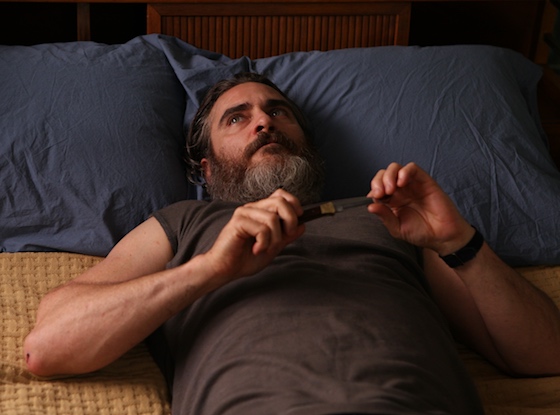
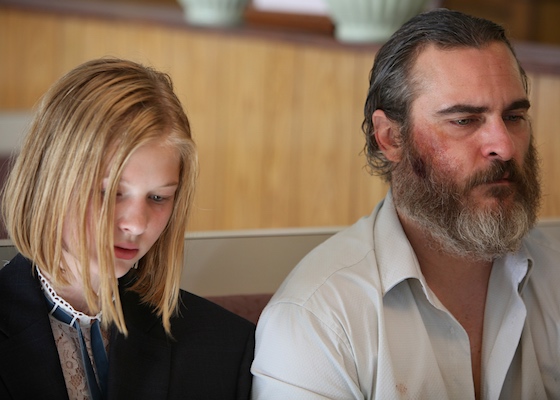
The film follows Joe (Joaquin Phoenix), a middle-aged-or-so guy who lives with is elderly ailing mother (Judith Roberts), and seems even more tired of life than she is, plagued by memories of things he’s witnessed. That history has given Joe a (as Liam Neeson would put it) very particular set of skills, which nowadays he puts to use for private clients, via multiple middle men, primarily (or wholly — the film doesn’t clarify) to rescue abducted children. But when he’s hired to rescue a US senator’s wayward teenage daughter (Ekaterina Samsonov), things end up going sideways in unforeseen ways.

Joe’s weapon of choice is a hammer. He uses it to take out multiple Very Bad Men in this film. But if the combination of “genre: thriller” and “using a hammer to take out bad men” makes you think You Were Never Really Here is about to unleash a low-budget action-fest upon your eyeballs, I refer you back to the writer-director being Lynne Ramsay and my mention of “arthouse idiosyncrasies”. I thought I’d mention this point upfront because I’ve seen others be disappointed by the lack of overt action in the film. Ramsay has instead chosen to keep most of the violence offscreen — we sometimes see the build-up or the aftermath, or both, or maybe neither, but only rarely the act itself. It’s not that kind of movie. And that’s not a problem, so long as you’re not expecting those kind of kicks.

Much to think about alone

Instead, the film becomes more of a character portrait, interrogating who Joe is and why. What kind of man does a job like that? What events in his life brought him here? What toll does it take on him? Or is there no toll because the damage has already been done? Explicitly writing these questions, which the film does seek to consider, causes me to question the worth of a serious-minded exploration of such a character’s psyche. It makes me wonder: are there real-life people like Joe? Does anyone actually do this job in the real world? Is the universe Joe moves in — a netherworld, parallel to our own but hiding from everyday view — a true one, or just the stuff that fills genre fiction? And if the answer to “is this real?” is a “no” — if these characters, situations, and environments are all just genre fodder — is there value in getting psychologically real about it?

Some would say “no”, because we don’t necessarily come to this kind of genre fiction for realism, even when it’s given a dark or gritty spin. I mean, take a slight genre sidestep into something like Paul Greengrass’ Bourne movies, for an example: they’re shot with a documentary-esque style, but no one thinks they’re plausible portraits of real life espionage activities. Stories like You Were Never Really Here have a greater reality claim than that, but I still question their actual adherence to our real world. But surely these extreme spins on reality are invented, at least in part, to justify simultaneously inventing heroes to put into them, who can then sort it all out by wielding some weaponry and special skills that we might not accept in a totally true-to-life story-world.

Much to think about together

Maybe I’m over-theorising this now. But You Were Never Really Here is the kind of movie that leaves gaps to invite you to think about it, to fill in your interpretations and personal notions. It’s a film with a lot of quiet space — literally, in the sense of its often minimal dialogue and, shorn of action scenes, little of the thudding and thumping you’d expect in the sound department; but also figuratively, with long scenes that make room for you to think about what you’re witnessing; scenes that don’t hand-feed you every piece of information, so you put it together yourself. (If you want an example: no one ever tells you where Joe got his skills, but flashbacks give you visual clues to put it together.) Maybe the film isn’t trying to say “guys like this exist outside of genre pieces, and they’re like this” — maybe it’s saying “if guys like this existed outside of genre pieces, what would they really be like?”

In the source novel, the title is explained via Joe’s methods: he uses fake identities, surgical gloves, and hides from cameras, all so that he was “never really there”. In the film he’s more low-tech and somewhat less scrupulous, meaning the same explanation doesn’t quite wash. I thought perhaps Ramsay meant it to have a new, arty meaning. Maybe it doesn’t — maybe it’s just the title of the book, so it stayed. Or maybe everything I’ve written is right, and people like Joe were never really here, in the real world… but if they were, they’d probably be like this.

4 out of 5

The UK network TV premiere of You Were Never Really Here is on Film4 tonight at 9pm.

Black Narcissus (1947)

2018 #49
Michael Powell & Emeric Pressburger | 101 mins | Blu-ray | 1.33:1 | UK / English | U

Black Narcissus

It’s over a year since I watched Black Narcissus, but this review is only materialising now for two reasons: first, my overall tardiness at posting reviews nowadays (my backlog currently numbers north of 140); and second, but actually more relevant, I’ve struggled to make sense of what I thought of it.

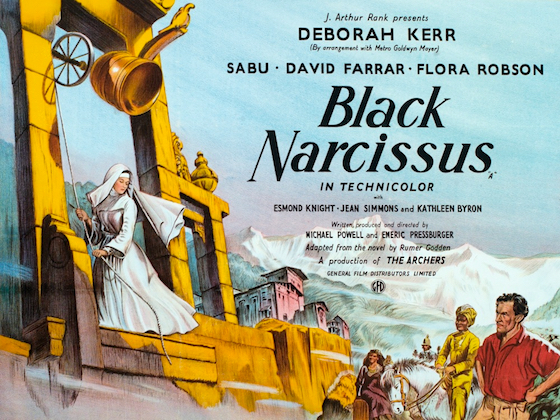
On the surface a story about some nuns opening a convent in the Himalayas, there’s so much more going on beneath the film’s surface than just conflicts with locals and amongst the small group of nuns — that much is clear. But what else is going on? Critics often talk about the film’s eroticism, but (even allowing for the fact it was made in 1947 and so could hardly be overt about such things) I rarely felt that. In his video introduction on the Criterion Blu-ray, Bertrand Tavernier says it’s all about desire, specifically female desire, and the prohibition of said desire. Hm. I mean, I don’t disagree that’s in there somewhere, but it doesn’t feel like that’s what it’s “all about”. Writing in Criterion’s booklet (reproduced online here, critic Kent Jones says that “the reduction of Black Narcissus by admirers and detractors (and cocreators!) alike to the three Es — expressionist, exotic […] and erotic — has often deprived this bracing film of its many nuances and complexities.” So, I’m not alone in thinking there’s other stuff going on here… though I’d wager Mr Jones has a better handle on what that is exactly than I do.

I confess, I find this a bit frustrating — not the film itself, but my inability to ‘get’ it. I was never bored, so something kept me engaged, there’s something to it, but I can’t get at what this is. I felt a bit like there’s a germ of a good thing, but it’s not brought out. Like, the characters all being gradually driven mad or hysterical by the place — it’s an effect that’s almost there, but not quite; and it only affects, like, two-and-a-half of them anyway. But maybe I’m expecting the film to be too overt; maybe it was just too subtle for me. Whatever it is, it clearly disturbed the Christians: when the film was released in the US, Catholic weekly The Tidings reportedly asserted that “it is a long time since the American public has been handed such a perverted specimen of bad taste, vicious inaccuracies and ludicrous improbabilities.” Reason enough to like the film, there.

Nuns gone wild

Oh, but my overall confusion aside, there are many specifics that deserve concrete praise. The last 10 or 20 minutes, when it almost turns into a kind of horror movie, are fantastic. (Even the original trailer is largely composed of footage from the film’s final 25 minutes. It’s definitely the best bit.) It all looks ravishing, magnificently shot and designed. There’s the always-stunning work of DP Jack Cardiff (apparently a Technicolor executive claimed the film was the best example of the process), plus the work of production designer Alfred Junge and costumer Hein Heckroth. The luscious backdrops were blown-up black-and-white photos that the art department coloured with pastel chalks, which partly explains the film’s otherworldly beauty. Indeed, considering it was all shot in the UK, the location is very well evoked. That’s not least thanks to the constantly blowing wind, which ruffles clothing and hangings even during interior scenes — a detail that could’ve been easily overlooked during production, but whose presence certainly adds to the atmosphere.

It’s difficult to sum up and rate my reaction to Black Narcissus, because I feel like I missed something — not literally (I followed the plot ‘n’ that), but like I didn’t understand something about it. And yet I was engaged throughout, it’s gorgeous to look at, and the final 20 minutes are stunning on every level. One to revisit, for sure.

4 out of 5

Black Narcissus was viewed as part of my Blindspot 2018 project.

Coincidentally, it’s currently available on iPlayer, but only until tomorrow afternoon.

Sanjuro (1962)

aka Tsubaki Sanjûrô

2018 #139
Akira Kurosawa | 96 mins | DVD | 2.35:1 | Japan / Japanese | PG

Sanjuro

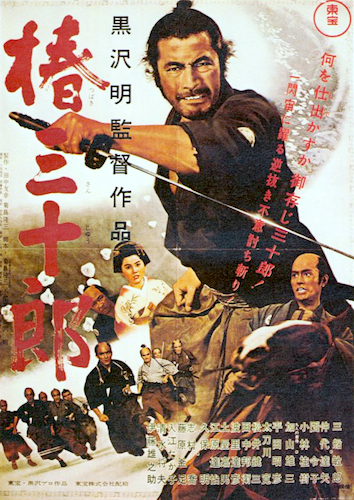
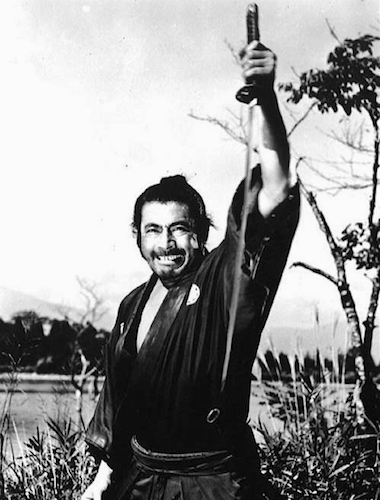
Yojimbo was such a box office success that the studio requested a sequel. Director Akira Kurosawa obliged by reworking his next project, an adaptation of an unrelated story (Peaceful Days by Shūgorō Yamamoto), so that it featured Toshiro Mifune’s eponymous scheming samurai, Sanjuro. This follow-up came out just nine months later — and, by genuine coincidence, I happened to watch it nine months after I watched Yojimbo; and now, in a mix of tardiness and planning, I am also reviewing nine months after I reviewed Yojimbo. All of which signifies absolutely bugger all, but it happened so I’m noting it.

This time, Mifune’s anti-hero becomes involved with nine young samurai who suspect corruption among the local authorities. The youngsters are well-meaning but naive to a fault, and so Sanjuro decides to help them. That’s a real boon for them, as it turns out, because they’d all die several times over if it weren’t for him stopping them and guiding them in a better direction. As well as showing us what a smart operator Sanjuro is, it’s often quite humorous, something this film feels more inclined to than its predecessor. For instance, there are several great bits of funny business with an enemy guard they capture and stash in a closet, but who keeps being let out after he sort of converts to their side.

Sanjuro's sword

In the booklet accompanying Criterion’s DVD of the film, Michael Sragow writes that “in the Akira Kurosawa movie family tree, Sanjuro is the sassy kid brother to Yojimbo, and like many lighthearted younger siblings, it’s underrated.” I’d certainly agree. It doesn’t feel as significant as Yojimbo, probably because of the lighter tone (in my review, I described the previous film as “almost mercilessly nihilistic”) and a less fiddly story. But I found it more readily enjoyable than Yojimbo. It’s got a straightforward but clever plot, plenty of funny bits that don’t undermine the rest, and some decent bursts of action. It’s also just as well-made, particularly the cinematography, which is beautifully composed and framed by DPs Fukuzô Koizumi and Takao Saitô.

The making-of documentary that accompanies Sanjuro begins with Kurosawa stating that “a truly good movie is really enjoyable, too. There’s nothing complicated about it. A truly good movie is interesting and easy to understand.” I can think of few better quotes to describe Sanjuro, which is a truly good movie.

5 out of 5

Zatoichi and the Fugitives (1968)

aka Zatôichi hatashijô

2019 #20
Kimiyoshi Yasuda | 82 mins | Blu-ray | 2.35:1 | Japan / Japanese | 15

Zatoichi and the Fugitives

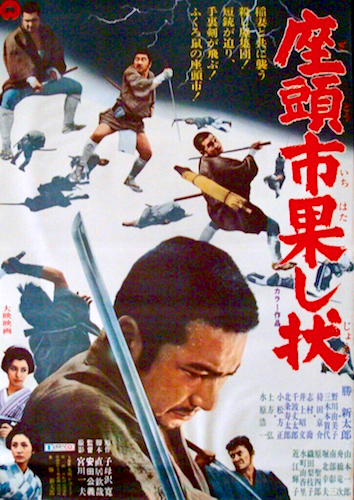
Not to be confused with the earlier Zatoichi the Fugitive (no fear in the original Japanese, where that’s titled something like Zatoichi’s Criminal Journey and this is along the lines of Zatoichi, A Letter of Challenge), the series’ 18th instalment pits our favourite blind masseur-cum-swordsman against a gang of six remorselessly violent fugitives. Along the way he shacks up with the venerable Dr. Junan and his caring daughter/assistant Oshizu (Kayo Mikimoto), and once again Ichi hopes he may’ve found a place to settle down, only for events to snatch the dream away.

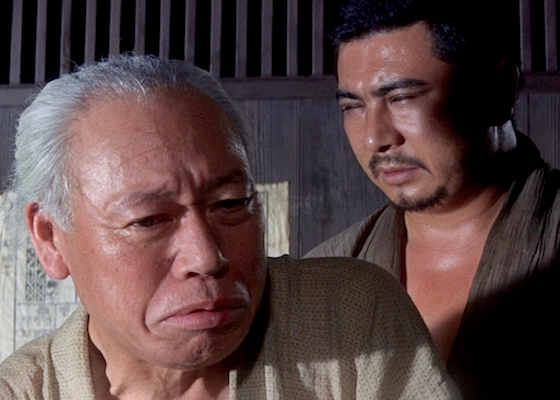
That doctor is played by the great Takashi Shimura, star of Seven Samurai and Ikiru, amongst many, many other classics of Japanese cinema. He brings an effortless class to the role, which initially seems to be just an honourable and wise gentleman, but later has more to it. You see, in a thoroughly unsurprising twist, it turns out one of the fugitives — namely their leader, Genpachiro (Kyôsuke Machida) — is the doctor’s estranged son. When Genpachiro attempts to visit his father and sister, Oshizu is overjoyed to see his return, but the doctor refuses to even acknowledge his son’s presence.

As the gang’s leader and the one with the connection to Ichi’s new friends, naturally it’s Genpachiro who will prove to by Ichi’s nemesis in this film. Writing for The Digital Bits, Bill Hunt and Todd Doogan reckon he’s “one of Zatoichi’s single greatest enemies,” which is certainly a bold claim. They have something of a point, given his intelligence — an early encounter makes him aware of how skilled Ichi is with a sword, so he keeps stopping his hot-headed underlings from tackling Ichi head on — but I didn’t think he was as memorable an individual as several other foes have been.

Zatoichi and the doctor

The fugitives as a group do provide quite the challenge for Ichi, however, almost defeating him at one point. Naturally, our hero comes out on top in the end: spurred by righteous anger, his final-act slaughter is even more brutally efficient than normal. Having been shot and nearly killed in his first attempt at a climactic showdown, Ichi ain’t messing around the second time. Well, they have it coming. They’re a vicious lot, happily slaughtering innocents on practically anyone’s say-so, at one point even coming this close to murdering a baby. Indeed, this is quite a tonally dark instalment of the series. It’s certainly not the only one by this point — it may not even be the darkest, in fact — but it’s still not very cheery, with little of the humour we’re accustomed to from our hero. Even the final defeat of the villains is tinged with sadness. At one point he gets very introspective, as Oshizu asks him about his blindness: “At first I remembered all the colours — green, red, and so forth. I told myself I had to remember them and tried hard not to forget. But they gradually faded away. All that’s left now is darkness.”

Ichi could just as well be talking about his lifestyle, as once again he struggles with being a gangster. When a bunch of yakuza turn up at the doctor’s to pay their respects to Ichi (his reputation having preceded him once again), the truth of his position is exposed to his new potential-family, much to his shame. Again, it’s a point of conflict for the good doctor: he doesn’t like criminals, as we see with his attitude to his own son, but he’s also seen what a kind-hearted fellow Ichi really is. And if Ichi going on an emotional rollercoaster wasn’t bad enough, he’s put through the ringer physically too — I mean, he gets shot, then digs the bullet out by himself with his sword, lest you were in any doubt of his credentials as a badass. And if that doesn’t convinced you, multiple displays of his skill with a blade should.

Bloody Ichi

One of those demonstrations has led to cuts by the BBFC for the UK release. Yes, Criterion have finally bothered to get the films classified — I’ll write a bit more about that when it comes relevant again on a future film, but for now we’re concerned with the four seconds they’ve cut from Fugitives. At one point a snake drops on Ichi and he slices it in half, after which we see the bisected creature writhing on the ground. I guess they did it with a real snake, or real enough to the BBFC’s eyes, because that shot has been cut for animal cruelty. I know some people object on principle to the BBFC censoring anything, but I can’t say cutting that kind of thing bothers me much (though, as I have the US set, I’ve already seen it).

To quote Hunt and Doogan again, they reckon that “if this series were to be compacted into a trilogy, this would be at the tail-end of part two. In other words, this is Ichi’s Empire Strikes Back. No hyperbole”. Eh, I think there might be a bit of hyperbole there. It’s just coincidence that this instalment falls at the two-thirds point of the series (more or less), and I don’t even think it’s the darkest film there’s been — for what it lacks in humour, it has a lot of kindness in Ichi’s relationship with the doctor and his daughter, and some redemption for one of the gang members. Rather than comparing it to the consensus-greatest film of another series, I’m more inclined to Paghat the Ratgirl’s point of view: “After nineteen [sic] feature films, this story is entirely familiar. But great even so.” Zatoichi and the Fugitives is not one of my favourites in the series, but it is a good mid-tier one.

4 out of 5

Fantastic Beasts: The Crimes of Grindelwald (2018)

2019 #30
David Yates | 134 mins | download (HD) | 2.39:1 | UK & USA / English & French | 12 / PG-13

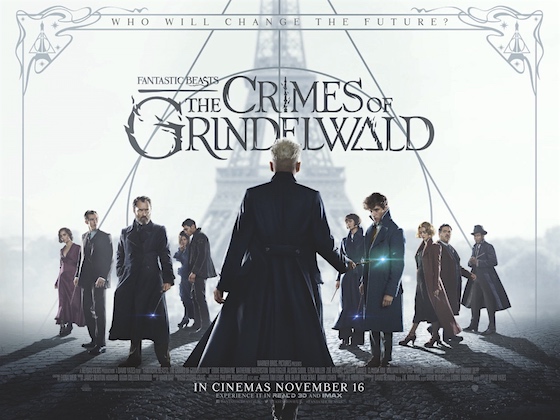
Fantastic Beasts: The Crimes of Grindelwald

The first Fantastic Beasts movie felt like a standalone adventure, even though it was promoted as a five-movie series from the get-go. Not everyone liked it, but I thought it was an enjoyable adventure that also served to expand the world of the Harry Potter universe — or the Wizarding World, as we’re now to call it. Unfortunately, this first sequel can’t keep that up. Here’s where the five-movie arc really kicks in, and the film suffers for it.

Normally I’d explain the plot round about now, but, frankly, I can’t be bothered. It entirely spins out of what transpired in the first movie; having not seen that since it was in cinemas over two years ago, I frequently struggled to keep up, scrounging around in my memory for the ins and outs of a story I didn’t realise I needed to thoroughly revise. That’s to say nothing of all the other stuff it dregs up from the depths of Harry Potter mythology. As a fan of that series, who’s seen the films multiple times and what have you, I have a fair idea what it’s all about, but even I was frequently left feeling confused. I pity casual viewers.

Further plot details and where to find them

Sometimes movies can gloss over this kind of stuff — the mythology and backstory enriches it, but there’s still an adventure to be going on with — but The Crimes of Grindelwald doesn’t seem to work that way. The adventure is tied up in the previous film and the overall backstory, and that generates a lot of tedious exposition to explain how things are connected. But that exposition is sometimes rushed over, apparently to allow time for some empty spectacle — there’s still plenty of CGI-fuelled magic action here, it just doesn’t seem to have any weight in the story, or what weight it should have is unclear.

It doesn’t help that the film feels jumpy, like loads of little bits and pieces have been chopped out. I’m not surprised there’s an extended cut, which hopefully will smooth some of that out. It probably stems from the film having so many characters and stories to juggle. The downside of making the previous film feel standalone is that most of its characters need to be reintroduced and reconnected to each other; at the same time, there are new characters and storylines being introduced and set in motion; all while also trying to deliver an action-adventure movie.

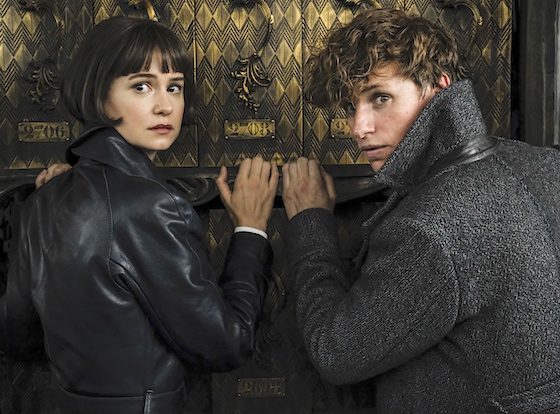
Wizard Hitler

There’s stuff to appreciate here nonetheless, including likeable returning characters, some appreciable additions (Jude Law is good as a young Dumbledore), and some impressive effects (the spectacle may be empty, but sometimes it’s still spectacular). Fans of the world J.K. Rowling has created will appreciate getting to see more of it, too — in this case, it’s wizarding Paris, albeit briefly — although there are also some additions to the mythology that are of questionable value. Well, there are three more films yet to come that may reveal that Rowling has somewhere to go with them.

Indeed, I wonder if Crimes of Grindelwald will ultimately play better once it’s placed in context with the following instalments. Or maybe it really is a bit of a mess, with too much going on and not enough time or space to do it, which sometimes makes it hard to understand the significance or value of what we’re watching. I hope that it’s at least put all the pieces in place now, so the next three films can move forward with fewer problems.

3 out of 5

Fantastic Beasts: The Crimes of Grindelwald is released in the UK today on DVD, Blu-ray, 3D Blu-ray, 4K Ultra HD Blu-ray, and as an extended cut.

Mandy (2018)

2019 #34
Panos Cosmatos | 121 mins | download (HD) | 2.39:1 | USA, UK & Belgium / English | 18

Mandy

Words feel inadequate to describe Mandy, the sophomore feature from writer-director Panos Cosmatos, the son of George P. Cosmatos, who directed the likes of Rambo: First Blood Part II and Tombstone — films which are not helpful comparisons here, I hasten to add. You could call Mandy an action movie, of a sort, but it’s unlike either of those. It’s not like a whole lot else, really.

Let’s start with the plot. I’m not sure Cosmatos did, but we will. Set in the mid ’80s, it centres around Red Miller (Nicolas Cage) and his girlfriend Mandy Bloom (Andrea Riseborough), who live happily in the back of beyond somewhere in the United States. One day a group of Christian cultists happen to drive past Mandy, and their leader, Jeremiah Sand (Linus Roache), takes a shine to her. With the aid of a demonic biker gang, Sand and co accost Red and Mandy for some nefarious cult-ish purpose. Naturally it does not end well, sending Red on a nightmarishly surreal journey of revenge.

I said Mandy could be considered an action movie, which is true: Red’s revenge naturally leads to some violence, which in this case often come at the end of fights. But if you come just for the action you’re liable to leave unsatisfied, because Cosmatos definitely makes you wait for it. Some of it does satisfy on a visceral, B-movie level (there’s a showdown in a quarry I shan’t spoil by detailing), but its purpose is not to revel in combat.

Nic Cage gripping his huge weapon

Rather, it is very much a horror movie. Not in terms of the obvious connotations of the genre — there’s no supernaturally-powered serial killer, no vampires or werewolves, no jump scares — but in the unnerving atmosphere the film sets out to create. This is what I meant when I said I’m not sure Cosmatos started with the plot: there’s a definite story here, and characters and emotional arcs within that too, but the primary goal seems to be the mood that’s generated and the feelings that instills in the viewer. It’s possible Cosmatos may have bigger ideas on his mind beyond that — some reviewers seem obsessed with the notion that the film wants to explore philosophical concepts but doesn’t do it very well. Perhaps they’re right. I didn’t see it that way, however, taking the whole affair as simply an inescapable dive into a fever dream nightmare experience, where the aesthetics and the sensations they create are the point.

Certainly, a good many elements are on board with this twisted perspective. The performances are certainly in the right space, with Nic Cage going full Nic Cage as he travels deeper into the nightmare, the impact of his barminess emphasised by him being fairly normal at the start. As the cult-leading big bad, Roache steps up to the plate of trying to equal Cage’s insanity, and I’d say he gets there — an impressive feat. Around them, Cosmatos lets thing unfurl at a leisurely, dreamlike pace. Some will say it’s too slow and succumb to boredom, but I think it’s very deliberate — though I will certainly allow that it does go too far in this regard at some points.

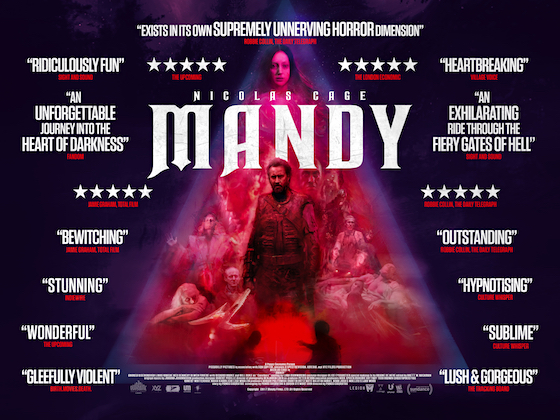
Crazy cultists, crazy colours

Further to that, he blends in a lot of surreal and fantasy-inspired imagery and visual flourishes, with Benjamin Loeb’s photography often pushing into extremes of colour (lots and lots of red), lens flare (so much more effectively than anything J.J. Abrams has ever been responsible for), and a deliberately-created haziness that, once again, the best descriptor for is “dreamlike”. That said, the shot-on-film, pushed-to-extreme aesthetic also helps evoke low-budget ’80s fantasy/horror films, in a kind of race-memory way — I couldn’t give you specific examples of what films I feel it’s emulating, but there’s something about the overall style that gives that vibe. Jóhann Jóhannsson’s eerie score also hits those same beats, in terms of both the era recreated and the film’s own unsettled atmosphere.

Mandy is today’s premiere on Sky Cinema, which feels like an ill fit to me. Maybe I’m being unfair, but I always feel like Sky Cinema (and by extension its viewer base) is much more focused around mainstream blockbuster kind of movies, especially for a Saturday premiere. Instead, it feels like Mandy should be making its TV debut on Film4 at about 11pm in the middle of the week (I won’t be surprised if that’s where it ends up getting its first network TV airing). I can see some tuning in expecting a violent revenge action-thriller and giving up after a few minutes of its particular weirdness. For those on its wavelength, however, it’s an experience (and it’s definitely an experience) that’s thrilling in a very different way.

5 out of 5

Mandy is available on Sky Cinema from today.

It placed 11th on my list of The 15 Best Films I Saw For the First Time in 2019.