
Carol Reed | 111 mins | TV | PG
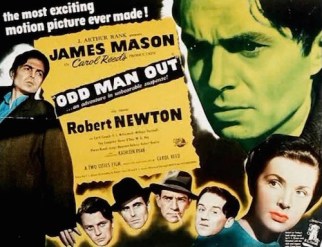 It may be a bit of a cop out to begin a review by pointing you to another, but I must recommend Colin’s heartfelt appreciation at Ride the High Country. It certainly inspired me to watch the film, which had been sat on my V+ box for over a year. As you’re going to read that (assuming you haven’t already), I’ll just offer a couple of observations I jotted down.
The consciously episodic story, screenwritten by R.C. Sherriff, author of the exceptional World War One play Journey’s End, presents us with an array of characters. James Mason is ostensibly the star, but he spends much of the film in a daze, drifting from group to group. And that’s fine — it leaves the way open for other characters to shine. For instance I liked the driver, Pat, played by Cyril Cusack. My notes don’t say why, but I thought his character was rather good — not a good guy, perhaps, but a good character. The real star, if anyone, is Kathleen played by Kathleen Ryan, who comes into her own during the film’s final act and its conclusion. I’d throw an adjective in front of “conclusion”, but perhaps you should discover it for yourself.
This episodic structure does make for some lengthy, perhaps even borderline dull, asides. I could do without F.J. McCormick’s Shell and, especially, 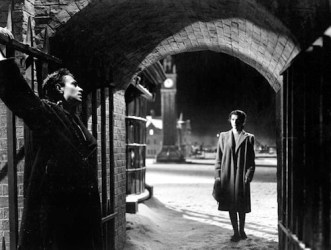 Robert Newton’s Lukey. (You’ll also note Newton’s performance is criticised in Colin’s piece so, in aid of not sounding like I’m too easily influenced, I’d like to point out I didn’t make the connection between his comments and my own notes on Newton until afterwards.) Shell and Lukey have a bit of a point in the end, but I didn’t enjoy getting through them in comparison to the rest of the film.
What the structure really facilitates is the depiction of a cross-section of Northern Irish life, and particularly their reaction to “the organisation” — it doesn’t take a genius to guess what that means. As the opening scroll said, this is indeed concerned “only with the conflict in the hearts of the people when they become unexpectedly involved”, but by leaving out detail of the politically contentious background to the unrest, it perhaps robs the characters’ indecision of any basis. All bar a couple of exceptions fall into the “don’t want to pick a side, don’t want to get involved” camp, foisting Johnny out of anything to do with them ASAP, but at least it suggests such a view was widespread across people of all backgrounds.
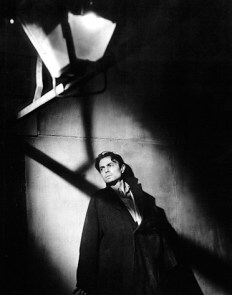 The score, by William Alwyn, is really nice, particularly in certain places — for example when it begins to snow and Johnny wanders the streets, or at its most effective during the haunting climax, as Kathleen hauls a near-dead Johnny through the falling snow towards the safety of the shipyard as the police finally close in.
My notes also say “discuss the use of the kids? And Johnny’s visions?” I’m afraid to say I forget why. Comments on these elements are welcomed.
I hesitate to make a comparison between Odd Man Out and The Third Man, director Carol Reed’s more famous film noir, because I’ve not seen the latter for far too long; but I imagine this holds its own, because it’s certainly an engaging and suitably unusual entry in the genre.

 If you’ve ever seen the miniseries
  Bigelow & co construct each ‘action’ sequence with care and attention. They’re not action sequences in the truest sense — suggestions from some that she’d be a great director for, say, Bond 23 on the strength of this film are unwarranted (not that she wouldn’t be good, but this film’s action does nothing in particular to demonstrate appropriate skills). Instead of the fast-paced bullets-flying adrenaline-pumping sequences you get from An Action Movie, The Hurt Locker offers up more realistic (at least, realistic-feeling) sequences of tension as characters approach bombs, watch increasingly suspicious crowds, try to defuse the situation before the timer runs out… It could be clichéd — we’ve all seen plenty of bomb defusing scenes in movies before now — but, again, there’s a sense of “this is how it is”, rather than “this is how movies portray it for dramatic effect”. Is it how it is? I don’t know. But it certainly still packs dramatic effect.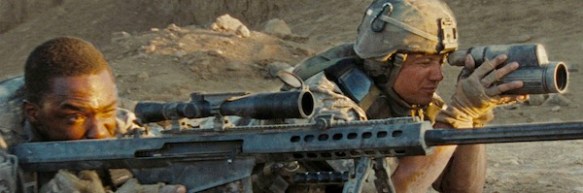
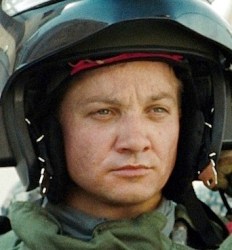 The opening quote and closing scenes make explicit the main theme — war is a drug, one James (Oscar nominee Jeremy Renner) is addicted to — but I’m not sure how present this is in the body of the story. Rather, the majority feels like an attempt to convey the experience of living as an explosives expert in a warzone, with James’ ‘addiction’ just a side effect of that. Perhaps, then, it’s making its point more subtly than by battering you round the head with cinematic cries of, “He’s addicted to war! It’s just a drug!”
 Much was written about Toy Story 3 when it was released this summer, so I’m not sure how much I have to add, but here we go. It’s no surprise either — that’s what happens when a preeminent and popular studio releases a sequel to a beloved and acclaimed film franchise 11 years after the last instalment. High expectations abounded. For once, they weren’t necessarily unrealistic: if anyone could pull off such a feat, it’s Pixar.
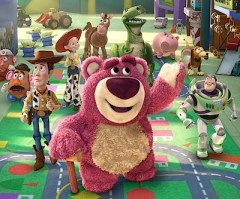 who’ve grown up with these films and these characters and, in a way, are letting them go along with Andy; and for adults, who may have left childish things behind but can hopefully still appreciate the thematic sentiment.
 even more emotional seeing them go through what they do here. Similarly, it pays to be aware of events and jokes in the preceding films. You don’t need to know intricate plot details, but there are plenty of pleasing references to catchphrases and moments.
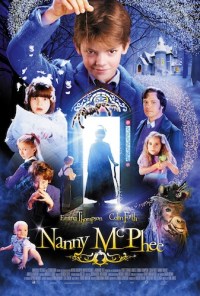 Nanny McPhee is brilliant. But to expand more directly on that sentence would be a conclusion, and so, before that, I present a collection of thoughts on bits I liked. Let’s call it “a review”.
 And even if you can’t engage with the troublesome children, surely Nanny McPhee coming in to sort them out is therefore a blessing? To say the children are a naughty, nasty rabble but McPhee is an oppressive, overbearing force is just trying to have your cake and eat it — pick a side, or pick both, oh awkward viewer. (And by “viewer” here I mean “one IMDb commenter I read”.)
 Not to mention Kelly MacDonald, the film’s sweetness and light — not like Anne Hathaway’s caricatured (deliberately) White Queen in Tim Burton’s
 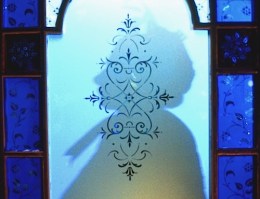 Around the large cast, there’s plenty more to see. The primary-coloured sets and costumes work marvellously, a delightful mash between reality (the actual buildings, sets, costumes, etc, all look real and period-accurate) and fantasy (the bright colours!) It could’ve been garish; instead, it’s vibrant. The effects are properly magical. They don’t overwhelm, always serving the story rather than themselves, which is probably what makes them all the more effective. The climax is another highlight — though what occurs at the wedding (oh, it’s obvious there’ll be one) I shan’t spoil by describing.
 In the world of
  which could well have gone down a more modern-styled route.
 It’ll be interesting to see how it fits into the film when I finally get round to watching The Ultimate Cut — I already have some reservations waiting to be expressed in my review.
 As I mentioned in my review of the
  now occupy almost the same position the Russians did back then, for instance — but I’ll leave the specifics of such things to reviewers more versed in the last 25 years of Western intervention in the Middle East.
 After the widespread disappointment with
  though the knowledge of better things to come means his presence somehow lifts his scenes a notch.
 If you’ve ever seen Akira Kurosawa’s classic
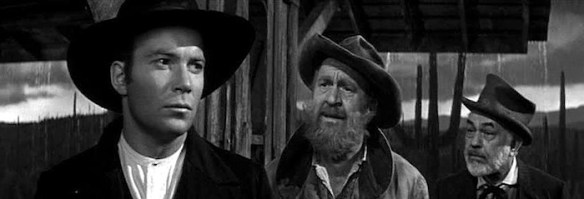
 There’s probably a worthwhile biopic to be made about Verity Lambert. In 1963, she became not only the youngest-ever producer of a BBC television programme, but the first female one too; the programme she was charged with launching was
  Before I set off really critiquing the film, let’s just remember this: it’s a student effort. In that context, I’ve seen far worse — heck, I’ve been involved in the production of worse. Cowell and Guy have set themselves an almost Herculean task by choosing a period tale, which obviously necessitates all sorts of extra effort in terms of costumes, locations, dialogue… And to make it worse, they’ve chosen the ’60s, evoked so faultlessly in almost 40 hours (and counting) of
  which he accepts with merely a muttered “damn” when she leaves. Sorry, what? There’s nothing believable in that scene, never mind accurate.
 Technically, the piece is just as much a mixed bag. Stephen Cheung’s direction picks out some decent angles, avoiding the flat point-and-shoot trap some student filmmakers are apt to fall into, while the sepia-ish wash helps the period tone and adds a small amount of welcome gloss. The editing is a little rough around the edges, particularly at scene changes and toward the end. YouTube claims it’s viewable in 1080p — whether something went wrong in shooting, editing or at YouTube’s end I don’t know, but it isn’t that high quality. (This last point doesn’t impact on my score at all, it’s just an observation.)
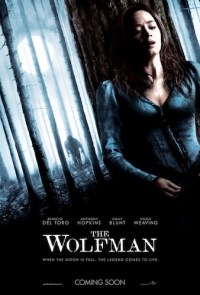 The “extended director’s cut” (as the Blu-ray blurb describes it) of The Wolfman begins with a new CG’d version of Universal’s classic ’30s/’40s logo, the one that I’m sure opened many/most/all of their beloved classic horror movies. As well as being a self consciously cool opening shot, it’s a succinct way for director Joe Johnston to signal his intentions: this is not your modern whizzbang horror movie, but something more classically inspired.
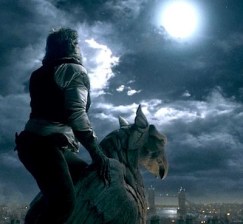 — perhaps even the totality — or plot developments and, particularly, twists are guessable far in advance. Trying to lose 16 minutes for the theatrical cut was probably a good idea, though some of my favourite moments lie amongst what was excised.
 feels like something I saw in some 12A blockbuster in the last half decade.
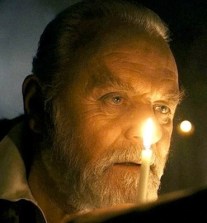 Max Von Sydow’s cameo-sized role (only found in the extended cut) is possibly the film’s best bit. Aside from the fact he’s usually good value, the relevance of the scene itself is unclear. That might sound like a problem, but I choose to see it as making the sequence — and the character — rather intriguing. The rest of the supporting cast are largely British faces recognisable from TV and similarly-sized film roles, playing the parts you’d expect them to and existing primarily as monster ready-meals. Equally, Danny Elfman’s score is disappointingly generic and clichéd, particularly so whenever the film is being the same.
 100Films.co.uk