
Anthony & Joe Russo | 147 mins | cinema | 2.35:1 | USA / English, German, Russian, Xhosa & Romanian | 12A / PG-13
(because, at this point, I’m not sure there’d be much point writing about it otherwise)
 We’re now on to the 13th film in the Marvel Cinematic Universe, and while you don’t need to have seen all 12 preceding movies to follow the events of Civil War, you do need at least four — and, to get everything, a further four or five beyond that. (Don’t worry about the four TV series — it’s increasingly clear that they’re only notionally connected to the movies.) So the Marvel model for a “shared universe” is not discrete stories that take place in the same world, but a series of ever-more-connected narratives. It’s working for them, though, as the continually stellar box office totals prove.
Ostensibly the third Captain America movie, Civil War is as much a sequel to Avengers: Age of Ultron as it is to The Winter Soldier: it throws us straight in to action with the new Avengers line-up established at the end of Ultron, as they battle what turns out to be a villain from Winter Soldier. As I said, ever-more-connected. This particular mission goes disastrously wrong, bringing to a head plans that the governments of the world had been cooking up for a while: the Sokovia Accords, a way to control the Avengers and give them some accountability. Team leader Steve Rogers / Captain America (Chris Evans) isn’t keen — he’s worried political interests will conflict with the Avengers’ ability to do good. Bankroller Tony Stark / Iron Man (Robert Downey Jr.) is on board, however — spooked by having created Ultron, and after being confronted by the mother of an American lad who died in Sokovia (because the Sokovian deaths didn’t matter enough, I guess), he thinks the Avengers need reining in. The burgeoning conflict is clarified when Rogers’ childhood friend Bucky Barnes, aka Soviet agent the Winter Soldier (Sebastian Stan), emerges from hiding to attack the signing of the Accords — Rogers wants to save him; Stark needs to bring him in, dead or alive. As most of the other heroes we’ve met in the preceding 12 movies (not to mention a couple of new ones) pick sides, battle lines are drawn for an almighty clash.
 As complicated as the plot sounds once you start trying to succinctly summarise it, Civil War is easy to follow as it unfurls. In fact, it’s to its credit that it can’t be readily summarised in any more detail than “Cap and Iron Man disagree; fight” without really getting into it. Screenwriters Christopher Markus and Stephen McFeely have followed up the political thriller of Winter Soldier with another global thriller storyline, again bringing different genre textures to the superheroics that are nonetheless present and correct. The film’s style mixes in just the right amount of realism — no one’s pretending this isn’t a comic book movie, with some elements of comic book logic and a casual acceptance of people having world-changing powers; but if such people did exist, this is the kind of way they would be handled by the authorities.
So while Civil War does work as a popcorn-guzzling action spectacular, the themes it raises — primarily of how we oversee and control those who claim to protect us — are relevant to real life, if you want them to be. The film attempts to make it a genuine debate by placing Cap and Stark as the figureheads of each side. Sure, that’s borrowed from the original comic book storyline that inspired the film, but it works perfectly for the movies: Iron Man is the basis around which the whole MCU was originally built, while Captain America is almost its break out star, emerging from the mess of The First Avenger to become one of the shining lights of every film he’s starred in since, at least two of which commonly compete for the crown of the MCU’s best movie. So who better to place at the heart of the conflict? Who better to present viewers with a genuine choice?
 Well, maybe. But the debate is partially stalled by the fact this is a Captain America movie rather than an Avengers one. Yeah, you can side with Tony Stark & co, but you know Cap’s going to come out to the good, one way or another. As it pans out, it’s not a total victory (Team Cap are all now fugitives, presumably until Infinity War), but, morally, Cap wins, and even Tony knows it. Would it have been better to frame the political/thematic issues in an Avengers movie, to make it a genuine contest? Maybe. It’s almost hard to imagine it divorced of this context now, and a lot of that context is Cap-based. The rest of the cast of The Avengers may be hanging around, but the narrative drive comes back to Steve and Bucky, a throughline that belongs to the Captain America trilogy. You can’t doubt that this is a Captain America film — tonally, it fits better with The Winter Soldier than Age of Ultron — even as it is, really, also an Avengers one.
If we’re talking about hero-vs-hero conflicts and movies that give you something to think about, it’s only fair that we drag this year’s other big silver screen superhero battle into the fray. There’s little doubt that Civil War is a more readily entertaining film than Batman v Superman, and clearly a more popular one, but it left me with less to think about. That’s not to say there isn’t thematic weight here — I’ve just spent a couple of paragraphs referring to its attempts to engage with such debates, after all — but I felt like the film kinda covers what there is to say. Maybe Batman v Superman leaves its issues more open; or maybe they’re less well conveyed; or maybe we struggle to read them into it because they’re not actually there. Whatever the truth, I came out of Zack Snyder’s movie with lots going on in my mind and wrote 2,500 words about it that contained half or less of my thoughts. I came out of Civil War thinking, “well that was fun.”
 On that visceral level, there are a couple of stunning action sequences. The car/foot chase between Cap, Bucky and Black Panther is fantastic, casually throwing in cool moments like the way Bucky steals a motorbike. The climactic two-on-one fight is also a sight, throwing in strong choreography and seamless effects work to create a battle that has a real ebb and flow, a back and forth over who has the upper hand. And the centrepiece of it all, of course, is the two teams facing off at the airport. For fans of superheroes, this is pretty much the ultimate expression of the genre yet brought to live-action moviemaking. For my money, the antics of Ant-Man — and Giant-Man — are by and large (pun very much intended) the best bit of it, but maybe I’m just a little biased. Certainly, that everyone’s favourite webslinger is in the mix is the icing on the cake, and Tom Holland seems to have quickly nailed Spidey. Personally, I still find it a bit odd him turning up, especially in such a minor role. There’s still a slight sense that the MCU is made up of second/third-string heroes, who needed that shared universe to kickstart their big-screen life. Spidey most certainly does not need that… or didn’t before Sony effed it up with the last two movies, anyway. Maybe he does now.
And while I’m talking about Spider-Man, let’s talk about those post-credits scenes. Peter Parker is the star of the second one, and it’s Marvel Studio’s usual kind of tease, though perhaps less teasing than normal — “hey, remember that kid who was Spider-Man? He’s Spider-Man!” Thanks, guys. Before that, though, the mid-credits scene is a mid-credits scene for the sake of a mid-credits scene. By establishing where Bucky ends up, it’s surely an essential part of the overall narrative. Okay, it has the requisite teaser properties, hinting at where we might find Team Cap come the start of Avengers 3; and it teases Black Panther too, but only very, very mildly — like the Spidey scene, it’s basically saying, “hey, remember that foreign prince who was Black Panther? He lives in a foreign country… where he’s Black Panther!” Other than that, it’s kinda important to answer the question of “hey, what happened to Bucky?” next time Cap turns up. So why isn’t the scene just in the film? Well, it is in the film — just after a few of the credits — so what does it matter, right?
As I was saying — there’s plenty more action in the movie. Sadly, much of it falls foul of the dreaded ShakyCam. Watching Civil War just days after The Raid 2 made that especially frustrating. With all the time and effort they put into training actors these days, plus all the effects technology they have at their disposal to paint out wires or replace faces (something they’ve been able to do unnoticeably since Jurassic Park, for pity’s sake!), you’d think a $250 million movie could manage better. (If you’re wondering what they did spend $250 million on, it was stuff like, “eh, we may as well just use CGI for the close-ups, too”.)
One thing the film definitely gets right, in my view, is its villain. So central is the Cap/Iron Man conflict that it seemed any villain would be an afterthought, at best; and it doesn’t help that the MCU is renowned for having weak antagonists. Indeed, for most of the movie Zemo seems like the expected nonentity; a villain for the sake of a villain, who’s being seeded earlier in the film just so he doesn’t come completely out of nowhere at the climax. But then, when his whole story and plan is revealed, it turns out that all along he may have been one of the most interesting villains the MCU has yet offered. His motivation is simple but effective; his methodology cunning and almost successful — even after the heroes know what he was trying to get them to do, they do it anyway! His final scene with Black Panther may be the best part of the entire movie. Nice work, Daniel Brühl.
 In the end, Civil War leaves plenty open for future Marvel movies. Well, of course it does — half the time MCU movies are feature-length trailers for the next MCU movie. Where Civil War is really clever, however, is that it does that stage-setting while also feeling conclusory. As the third part in the Captain America trilogy, it actually makes a pretty satisfying end to that narrative. As the third part in the “trilogy in five parts” that is The Avengers trilogy, well, it’s clearly not the end, but it’s a fairly discrete segment.
It may well also be the best MCU movie so far, too. There aren’t many 13th films that can say that.

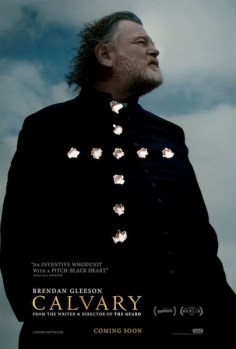 From the director of
  So could it, instead, merely be a snapshot of Irish society, in particular its current relationship with the church? Surely that’s part of what’s in play, with the cynical, dismissive, teasing, sometimes hateful attitudes of the parishioners surely no coincidence. Some viewers have certainly taken this as the film’s primary talking point, and some have been less than impressed that it doesn’t align with their view of modern Ireland. (I’m in no position to comment.) Neither of these feel like they’re getting at the totality of what it’s saying, though.
 and Owen Sharpe (as a Brooklyn-accented promiscuous gay) — though if you watch
  I wasn’t as impressed as some were by
 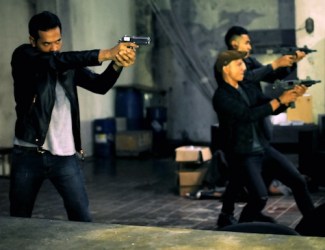 Where the first film was an efficient, simple thriller designed almost solely to link the startling action sequences, here writer-director Gareth Evans has created a sprawling crime epic. Anyone who’s seen the kind of gangster actioners Hong Kong cinema has produced since the ’80s or so will feel in familiar territory. That’s no bad thing, however, just a point of genre comparison. By expanding the world he’s created out in every direction, Evans has created a work that is not only bigger in a literal sense, but also deeper, more complex, and more interesting than the straightforward adrenaline rush of the movie that made his name.
 But as incredible as each of those are — and indeed they are — the highest of highlights is surely the car chase. There’s a chance you’ll have heard about this even if you’re not especially interested in the film: a bit of behind-the-scenes detail about how they achieved one particular shot went viral a couple of years ago. If you haven’t seen that, nor the film, then don’t seek it out — it actually kinda spoils it a little bit, knowing how it was done. (Without spoiling it, it was all done practically, whereas a Hollywood blockbuster would undoubtedly have done it with CGI — and spent as much on that one shot as Evans and co have on this entire movie.) The sequence is more than just one technically-impressive shot, however, but an exciting and innovative action scene all round, that definitely pushed the boundaries of the filmmakers’ capabilities (they had to get in a specialist outfit from overseas to help realise their ambitions).
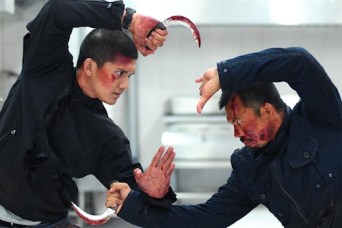 Most Hollywood blockbusters seem to push (or exceed) the two-and-a-half hour mark these days, and even when it fills that time, it feels like it’s partly because no one quite knew when to cut back. The Raid 2, however, feels suitably epic — just as you think a film that’s two-and-a-half hours long ought to feel, really.
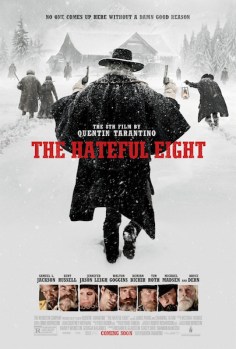 Quentin Tarantino hadn’t made a film in the same genre as his preceding movie for almost 20 years when The Hateful Eight came out — his second go-round with the Western genre, after the Spaghetti-ish thrills of
 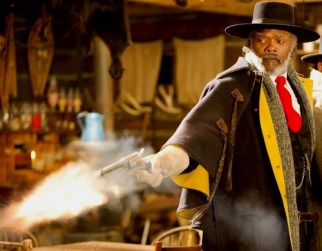 And it’s all in a remote, isolated location which has been cut off by weather, and every character is hiding some nefarious past — so far, so And Then There Were None. All of this comes dressed in QT’s famed dialogue, unfurled at the somewhat languorous pace he’s gradually been cultivating for a few movies now, and topped off with a few doses of the old ultra-violence.
 Ultra Panavision 70 produces an ultra-wide 2.76:1 frame (for those not in the know, your widescreen TV is only 1.78:1), which for such an intimate story has struck people as odd ever since it was announced. In fact, it pays off in (at least) two ways: firstly, all the scene-setting scenery looks magnificent; secondly, for a lot of the film there’s stuff going on in the background or at the edge of frame — it’s not just a series of close-ups or two-shots where the ancillary detail is either non-existent or doesn’t matter, but one where that ‘background’ detail is sometimes very instructive to what is going on. Tarantino also uses the full width a lot of the time, placing two figures at either edge of the image — this really isn’t a film you could crop (thank goodness it doesn’t exist in the pan & scan era!)
 as if to bring the point home (and that’s far from the only thing about The Hateful Eight that’s indebted to The Thing, but I’ll leave that for someone else to dig into another time). Even though this is the first time he’s had a full score composed for one of his films, Tarantino still sources a couple of well-selected songs from elsewhere, including a very apt credits track by Roy Orbison.
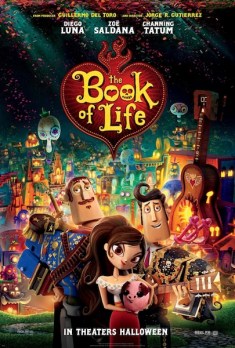 A myth-like animated musical adventure based around Mexico’s Day of the Dead, most notable for its unique art style that presents gorgeous visuals throughout.
 If you hadn’t heard of Veronica Mars before 13th March 2013, you almost certainly did soon after. That’s the date Rob Thomas, creator of the six-years-dead
  There’s no denying that this is primarily a film for fans of the TV series — well, they did fund it, after all. The best way to get the most out of the film is to have watched all 64 episodes of the show first; preferably soon before, in fact, so you can remember who all the minor characters are. However, creator-cowriter-director Rob Thomas is no fool: you don’t produce a successful movie that continues a little-watched TV show by making it a requirement that you’ve watched 64 hours of TV first. (I mean, Joss Whedon knew that with
 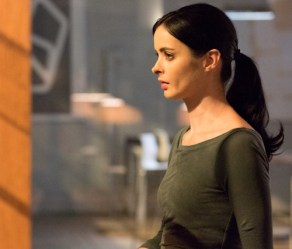 school who weren’t actually in the TV series, which might give you a flavour of how it works both for fans and newcomers. The case itself isn’t a bad mystery, but at the same time it’s a little subservient to the other goings-on. I suppose you could argue this is really a comedy-drama about a woman reconnecting with her past life and past friends, and she just happens to have a murder to investigate at the same time.
 To bring up Firefly/Serenity again, I think there’s a reasonable parallel between how those relate to each other, and how they can work for newbies, and how Veronica Mars the TV series and Veronica Mars the movie relate. To wit: in an ideal world, you’d watch all of the series and then the film; but TV series can be long commitments, and for a spot of ‘dipping your toe in the water’, you can also start with the movie and go back to the series for the full picture. Sure, some things are going to be spoiled doing it that way round — but hey, not everyone who’s in the series but not the film ends up dead, I promise.
 More than just a nostalgia trip for people who were there first time round, the movie is a strong addition to the Veronica Mars canon — as someone who didn’t discover the series until the Kickstarter campaign, I thought the film was a heck of a lot of fun, and a wonderful capstone to a mostly-great series. That said, there’s plenty of room for further cases… someday… hopefully…
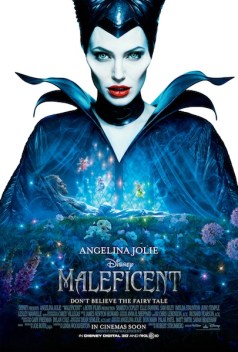 Disney seem to be embarking on a project to remake all of their most beloved animated movies in live action,
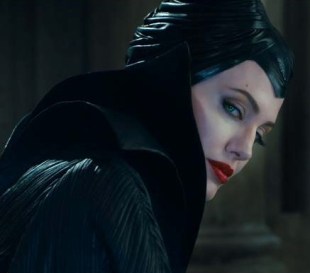 However, this is a Disney movie — you don’t get to turn a villain into the central character and have her be evil throughout. This is where the film gets really revisionist, because Maleficent keeps an eye on cursed Princess Aurora (Elle Fanning) as she grows, doing more to keep her alive than the trio of fairies she’s supposedly in the care of, and her heart is gradually warmed to the girl. Unfortunately, Maleficent was too good at the cursing malarkey: unable to lift her own spell, it plays out regardless, and the film serves us new renditions of the impassable thorns, giant dragon, and true love’s first kiss. It’s in the last where Maleficent is thematically revisionist rather than just a massive rewrite. Your mileage may vary on whether this version is obvious and cheesy, or actually more meaningful and (for the primary audience of little kiddies) more thought-provoking than the original’s — I’d go with the latter.
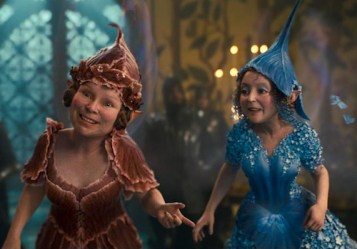 Parts of the film test-screened poorly — mainly the first act, with audiences wondering why it took so long for Jolie to turn up. Consequently, the whole thing was thrown out and reshot; in the process, Peter Capaldi and Miranda Richardson were deleted (and after they’d had to endure hours of transformative prosthetics for their roles, too), and Maleficent was given a new backstory. How far this extended into the rest of the movie, I’m not sure, but at times it feels like stuff has been cut or rearranged. Certainly the story flies past — if it wasn’t trimmed down in the edit, it needed expanding back at the screenplay stage.
 and even
  “Tom Hardy goes for a drive and makes some phone calls” is the plot of this film, which is often mislabelled as a thriller. That’s not to degrade its thrillingness, but rather to say that if you’re expecting a single-location single-character phone-based thrill-ride like
 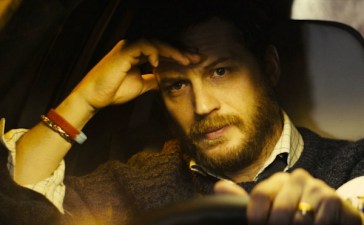 and in the process turning his life upside down. Another part was to tell a story about an ordinary guy dealing with events that aren’t going to change the world, aren’t even going to make the papers, but are a big deal in his life. Something like this could happen to any of us, and how would we deal with it?
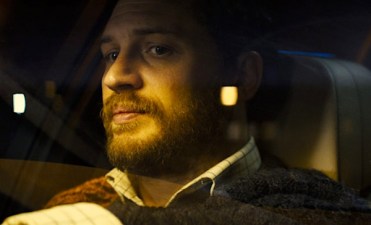 The rest of the cast appear as voices only on the other end of the phone, and in their own way are quite starry — faces that you may recognise, mainly from British TV, in even some of the smaller roles. Not that you see their faces, so, you know, you might have to look them up, or watch the making-of. Some of the performances err a little towards radio acting for me, which is kind of understandable seeing as how that’s basically how they were recorded, but there are particularly good turns from Andrew “Moriarty in
 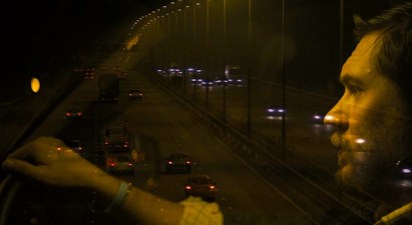 this is about what’s happening on Hardy’s face, not with his whole body. And in either form you’d lose all the photography of nighttime motorways, which have their own kind of hazy beauty. For a movie about someone making phone calls, it is intensely cinematic.
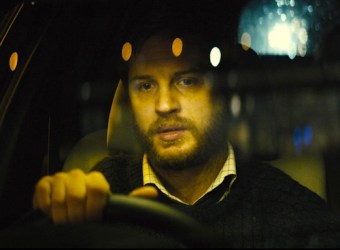 the supporting cast are so much more than “voices on the phone” (listen out, too, for Tom “
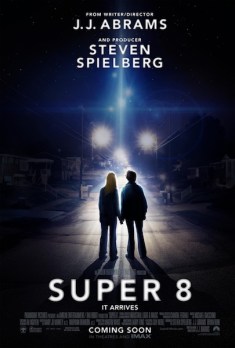 Before he started star warring and between bouts of star trekking, director J.J. Abrams teamed up with producer Steven Spielberg for this homage to the kind of movies Spielberg produced in the ’80s. Those films have endured down the decades; I’m not sure Super 8 endured as far as Abrams’ next
 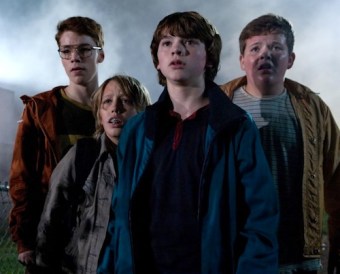 Unfortunately, the longer the film goes on the more it runs away with itself, as characters dash back and forth all over the place, sometimes in credibility-stretching fashion (we never do see how a group of kids manage to escape a heavily-guarded military base and drive back to an evacuated and blockaded town). The adults stumble through the story to little dramatic effect; Joe’s dad even has to be secretly locked up for a good chunk of the film (with no other characters noticing his disappearance) so that his storyline can be paused until he’s wheeled out for his part in the climax. The grown-ups do serve a role — giving us a perspective on events that the kids lack, and being tied to the emotional arcs of the leads — but it wouldn’t have harmed anything to limit them to those functions, rather than trying to half-heartedly give them stories of their own.
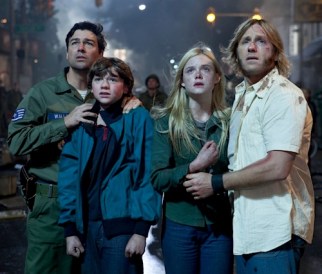 In some respects, the kids’ short film (which plays during the end credits) encapsulates the whole movie: a semi-thought-through SF/F plot, a tacked on emotional arc, the apexes of both tied together in the climax, and a couple of sometimes-shoehorned effects set pieces along the way. Yet for all that, it does enough right that I’d quite like to see Abrams attempt more work along these lines.
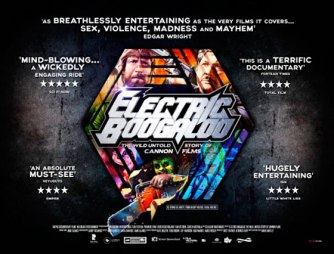 The director of
 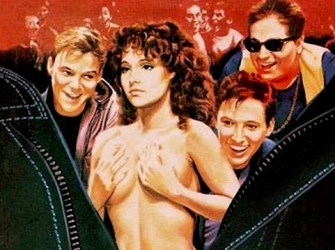 (unless you’re a Cannon aficionado, perhaps), but they were there, they lived it, and they have first-rate insights into the craziness. Craziness like the story of the competing Lambada movies, which ended up being released on the exact same day. I mean, you’d think one Lambada movie would be more than enough, but two, competing… If you wrote it in a fiction, the audience would laugh at the ridiculous contrivance of it, but it happened. Elsewhere, there’s a chunk where they just slag off Michael Winner for a bit (awesome), and director Franco Zeffirelli describes them as the best producers he ever worked with and the only ones he ever liked. Like I say, you couldn’t make it up.
 (and if it’s told effectively, rather than the issue of if its telling is effective) is all that really matters.
 100Films.co.uk