Rurouni Kenshin (2012)

aka Rurōni Kenshin / Rurouni Kenshin Part I: Origins

2017 #143
Keishi Ōtomo | 129 mins | streaming (HD) | 2.35:1 | Japan / Japanese | 15

Rurouni Kenshin

Based on a manga series that was previously adapted into an anime known in the West as Samurai X, this live-action adaptation was first brought to my attention by Total Film’s list of “50 amazing films you’ve probably never seen”, which cited its “stunning action sequences” and “beautifully choreographed sword-scraps”.

Set in the late 19th century, the film is the story of Kenshin Himura (Takeru Satoh), who ten years ago went by the name Battosai and was a renowned fighter in the successful rebellion that brought Japan into a modern new age. Disgusted with his actions, he vowed never to kill again, becoming a wanderer (the rurouni part of the title) helping those in need, fighting with a blunted sword. When he arrives back in Tokyo, Kenshin finds that a murderer has adopted the name Battosai, whose killings are likely connected to powerful businessman Kanryu (Teruyuki Kagawa) to protect his illegal activities. Kenshin falls in with Kaoru (Emi Takei), the young owner of a fencing dojo under threat from Kanryu’s plans, and eventually teams up with acquaintances old and new to stop Kanryu and co.

Kenshin and Kaoru

I’ve never read or seen a version of Rurouni Kenshin before, so I don’t know how faithful this is as an adaption, but they’ve certainly crammed plenty of plot into its two hours. Viewers need to be a bit attentive to keep track of who’s who, and who’s working for who, and what their motivations are — for example, characters who initially appear to be villains, both because of their actions and our expectations of the story, are revealed to be good guys in short order. Having two characters called Battosai, one of whom has since changed his name but is primarily known by his old moniker to some characters, doesn’t help matters.

It’s worth the small effort though, because, a few languorous patches aside, Rurouni Kenshin is a very entertaining movie. The heroes are a likeable bunch, even if Satoh looks too fresh-faced to have been a hardened warrior a decade earlier. I guess everywhere likes their pretty-boy leads. He also carries a little too great a sense of naïveté for that persona, but maybe that’s just faithful to the character as written. At least he seems to know his way around a fight scene. On the other hand, the villainous Kanryu is a delightful addition to the proud line of scenery-munching nemeses, his quirks underlined by a jaunty theme from composer Naoki Satō. He employs a couple of physically intimidating henchman too, which naturally serves to fuel the action sequences. As promised, these are excitingly staged, full of quick choreography and slick stunts. Couple their impressiveness with the large cast and varied period locations, and it gives the whole thing a glossy, big-budget feel.
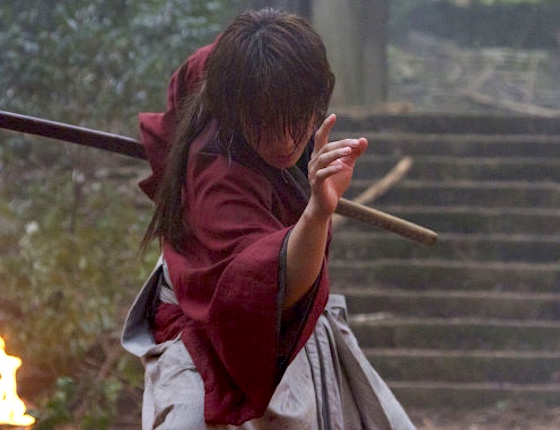
Ready for action

In the years since it appeared on Total Film’s list with the note “worth importing”, Rurouni Kenshin has become much more widely available: in the UK it’s been available to stream and buy on disc for a couple of years now, and it even made it to the US in 2016. It still deserves more attention, I’d say, especially for anyone who likes a good bit of sword-based duelling.

4 out of 5

Tomorrow and Monday: reviews of the two-part sequel.

Valerian and the City of a Thousand Planets (2017)

2017 #160
Luc Besson | 137 mins | Blu-ray (3D) | 2.40:1 | France, China, Belgium, Germany, UAE, USA, UK & Canada / English | 12 / PG-13

Valerian and the City of a Thousand Planets

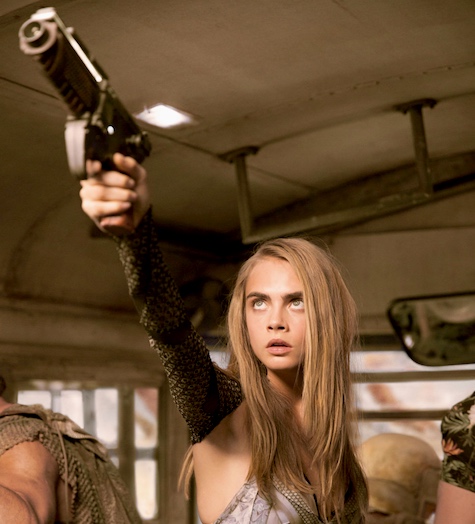
Luc Besson returns to the sci-fi genre that he so memorably visited 20 years ago in The Fifth Element for another colourful, crazy, adventure romp. Based on the French comic book series Valerian et Laureline, it sees special agents Major Valerian (Dane DeHaan) and Sergeant Laureline (Cara Delevingne) on a mission to protect Alpha, the titular city, from forces that threaten to destroy it.

Valerian got a pasting from critics and was a flop at the US box office, a particular problem when it’s apparently the most expensive independent movie ever made. Fortunately for it, it did alright internationally, to the point where home video sales could still secure a sequel (Besson has already written a second and has moved on to developing a third!) While it’s far from a perfect movie, it deserves to find an audience. It’s probably a bit too barmy — a bit too European, even — for mainstream US tastes, but there’s a lot to like here for those who are so inclined.

The main selling point is the imagery. Simply put, it’s incredible. There’s so much going on, all the time. There’s background detail galore. It whizzes through worlds that could be the entire setting for some other story. There are dozens, probably hundreds, of alien species thrown around. It’s so casually inventive, as if it’s got imagination to spare. And it’s mostly vibrantly colourful too, a real comic book of a movie in the traditional sense. All that depth and detail looks particularly amazing in 3D, it must be said, especially during the action sequences that whoosh though intricate, layered environments at breakneck speed.

Valerian, without Laureline

This visual exuberance sometimes comes at the expense of the plot. The main storyline is pretty straightforward — for example, there’s a third-act twist that’s obvious from the moment the character it concerns first appears on screen — but it keeps getting distracted by total asides, as Besson meanders off course to showcase some other species or environment or set piece he and his army of designers have cooked up. If that kind of shaggy storytelling annoys you then Valerian is set to get up your nose, but if you go along for the ride then Besson’s showing off can be delightful.

Some of the other screenwriting details suffer even more, however. It almost engages in some interesting themes about colonialism and that kind of stuff, but instead more nods its head in their direction than actually says anything about them. More overtly, a lot of the dialogue is atrocious. In fact, it’s so bad that you begin to wonder if it’s deliberately ultra-mannered and you’ve just missed some kind of joke. It doesn’t help that DeHaan feels at least somewhat miscast as the cocky heroic lead. Or possibly that’s the point — that Valerian isn’t as irresistibly attractive and amazingly competent as he thinks he is. Model-turned-actress Delevingne, on the other hand, is surprisingly good.

You’ll notice that Valerian and Laureline are (a) co-leads, and (b) both in the name of the original books, and yet the female half of the duo has been ditched from the film’s title. Unfortunately, that does indicate the film’s sometimes-dated attitude towards gender politics. On the bright side, Delevingne manages to imbue Laureline with a feistiness that allows her to mostly hold her own against the men, and — despite the old-fashioned shape of a romantic subplot — Besson’s screenplay lets her be a capable agent in her own right as well. Still, Laureline vs. the Space Patriarchy would not be a wholly unapt alternative title for the film.

Laureline vs the Space Patriarchy

These less-good aspects of Valerian glare out at one rather, and make me want to declare that much of it is kind of rubbish, really… and yet I rather enjoyed the whole shebang. Perhaps it just takes a rewatch or two to settle into the film’s own particular rhythm? Even if that’s not the case, I’d still rather have the messy ambition of a Valerian than another dozen run-of-the-mill Hollywood CGI extravaganzas. Fingers crossed for those sequels.

4 out of 5

Valerian and the City of a Thousand Planets is released on disc in the UK today.

It placed 17th on my list of The 17 Best Films I Saw For the First Time in 2017, which can be read in full here.

Hail, Caesar! (2016)

2017 #23
Joel & Ethan Coen | 102 mins | streaming (HD) | 1.85:1 | UK, USA & Japan / English | 12 / PG-13

Hail, Caesar!

The Coen brothers’ ode to the golden age of Hollywood provoked mixed reactions from their faithful fans (i.e. all film critics and most moviegoers) — some say it’s just a lightweight romp, others that there’s more meat on its bones.

Well, maybe there are indeed hidden depths here, but I think I’d prefer it as just a zany caper centred on Josh Brolin’s character, surrounded by the game all-star supporting cast, rather than having lengthy asides where a room of kinda-recognisable supporting actors discuss economics and communist philosophies and that kind of thing. Is that shallow of me? Maybe. But the movie is so entertaining when it’s riffing off classic Hollywood staples and making light work of many an amusing scenario, it’s tough not to want it to be no more than that.

Fundamentally I enjoyed it (those handful of political longueurs aside), but I’m not entirely sure what to make of it as a whole. I can believe there’s a deeper reading there if one looks to interpret it, but I’m not sure I’m bothered — I’m satisfied with it being merely a comical tribute-to-old-Hollywood caper, thanks.

4 out of 5

Hail, Caesar! was viewed as part of my What Do You Mean You Haven’t Seen…? 2017 project, which you can read more about here.

Another Earth (2011)

2017 #15
Mike Cahill | 92 mins | streaming (HD) | 16:9 | USA / English | 12 / PG-13

Another Earth

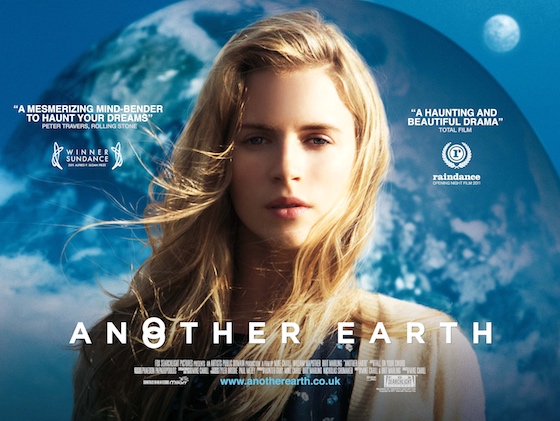
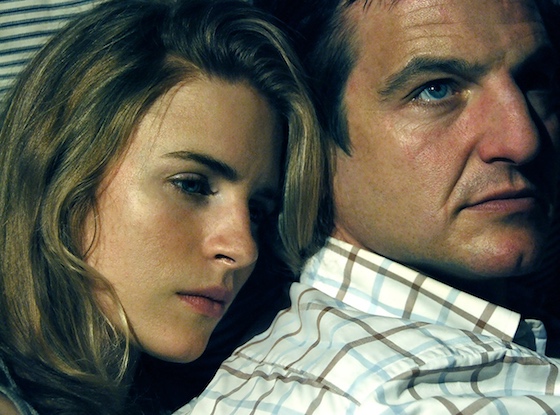
Driving home drunk, 17-year-old Rhoda (Brit Marling) hits another car, leaving its driver, John (William Mapother), in a coma and killing his pregnant wife and their young son. Released from prison four years later, her grand life plans abandoned, Rhoda seeks out John to apologise, but when he doesn’t recognise her she pretends to be from a cleaning service and becomes his maid. Meanwhile, a planet that seems to be a mirror image of Earth has appeared in the sky and one member of the public can win a place on an exploration mission.

Bit of a curveball, that, isn’t it? The main thrust of the film is a very grounded character drama about two emotionally damaged people and how they connect with each other, but there’s this big old sci-fi plot ticking away in the background — one which is referenced in the title of the film and all its marketing too, which immediately elevates its importance in the film: it’s not just a funny little background quirk, it’s central to what’s happening or will happen.

By combining these two disparate genres Another Earth moves outside the accepted norms of either, which seems to discombobulate some viewers. I’ve seen it decried for not ditching the sci-fi stuff to focus on the characters’ emotional situation and relationship, and the same for not ditching the emotional stuff to focus on the sci-fi concepts. Personally, I think the film is doing exactly what it sets out to do: using aspects of each genre to comment on, reflect, and influence the other. That’s not to say it’s in some way a deconstruction of genre — it’s not working with tropes or clichés, at least not deliberately — but I mean it’s using a sci-fi idea to influence what could just be a straight-up dramatic story, and using a realistic human drama to explore a sci-fi concept from a different angle. Truth be told, I think some people can’t quite handle that. Of course, some people just think it doesn’t do it very well, which is fine. I thought it was at least interesting.

Emotionally damaged

Perhaps it doesn’t help that some of it looks like shit, as if it was shot by some inexperienced amateurs using their home movie camera… which it was. After having the idea for the film, co-writer/director Mike Cahill and co-writer/star Marling began shooting it using just an HD camcorder, even before they’d secured any funding. Well, haven’t they done well for themselves? Still, there are worse-looking movies.

Another Earth may not please those looking for a straight science-fiction movie, nor those after a grounded character drama, but for anyone open to a combination of the two — a plausible, human-scale take on a high SF concept — it’s certainly worth a look.

4 out of 5

Wonder Woman (2017)

2017 #81
Patty Jenkins | 141 mins | cinema | 2.35:1 | USA, China & Hong Kong / English | 12A / PG-13

Wonder Woman

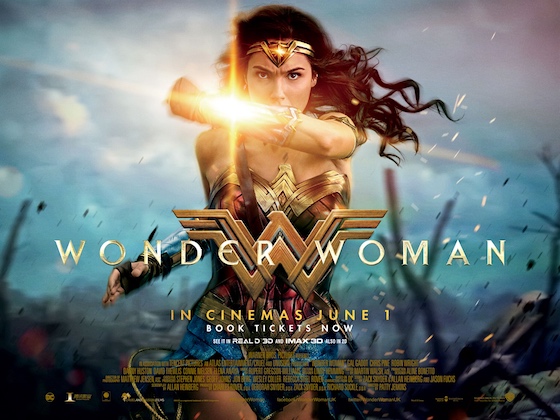
Following Wonder Woman’s introduction in Batman v Superman: Dawn of Justice (her central role in that film’s final act surely being the inspiration for its terrible subtitle), here we flash back in time to learn her origin — of her childhood on a hidden island of warrior women; of the events that brought her into our world; and of what made her keep quietly to the sidelines for almost a century.

The fourth film in DC’s shared cinematic universe, commonly dubbed the DCEU, is by far its best reviewed to date. It’s also the first superhero movie of the modern era (i.e. post Iron Man) to be based around a female character. I can’t help but think one has a lot to do with the other, because, in my estimation, Wonder Woman is not massively better than or different to the action-adventure blockbusters we get several of every year — the only exception being, of course, that it stars a woman. While that is undoubtedly important, and its meaningfulness can apparently not be understated, it doesn’t automatically elevate the quality of the rest of the movie. Or maybe it does for some people — maybe “the same, but with a woman” is enough to make it a genre classic.

The film’s strongest feature (gender politics aside) is its cast. Gal Gadot is fantastic — it’s no wonder this role seems to have made her an instant star. Chris Pine also gives a likeable performance, while Lucy Davis nails the comedic support. Also of note are the strong Amazonian ladies who shape Diana’s childhood, Connie Nielsen and Robin Wright. On the other side of the fence, Danny Huston is pretty much wasted, while David Thewlis ultimately feels a little miscast.

If anyone can take a sword to a gun fight...

The action is very much from the Zack Snyder school — an inexplicable mix of slow-mo and almost-sped-up (or speed-ramped, as it is either known or people have become fond of calling it). Fortunately it doesn’t degenerate into this all the time — while it was a neat effect when it was new, now it feels derivative and overdone. The rest of the action is of mixed quality: some of it is exciting and well-staged, but at other times succumbs to the modern foibles of shooting it too close and cutting it too fast. The climax is a disappointingly bland CGI-athon, which goes on and on as if someone is stalling for time while they try to think how to end it.

The third act as a whole is probably the film’s biggest problem. The opening stuff on Secret Lady Island is all great; the middle stuff in London is often fun; and there’s some dramatic stuff when Diana & co first arrive on the front lines. It does drag a little in places, mainly when we get the umpteenth go-round of Diana and Steve debating their relative morals; but it’s as the film tries to bring itself towards a conclusion that it really begins to flounder, forcibly manoeuvring our heroes into a position to actually face the villains (who we’ve been seeing on-and-off in scenes where the only purpose is to remind us those characters exist). For instance, there’s a party scene which serves very little purpose. It’s not a bad idea for a sequence (even if it is a well-worn one), but it doesn’t contribute much to justify its existence. You could cut it entirely and nothing would be lost.

Undercover woman

Even after the climactic battle, some things just aren’t rounded off. Like, how Secret Lady Island sort of just disappears from the story (does Diana want to get back there? Does she try? What’s happened to it now Ares is dead?) There’s no closure given to the supporting cast either; and, as the inevitable sequel is reportedly to be set in the present day, I doubt there ever will be. They may not be the greatest or deepest characters, but Davis at least feels like she needs a final moment (there’s one included on the Blu-ray, at least, though it feels like it was intended as a post-credits tease that someone thought better of).

I don’t want to try to ‘mansplain’ (*shudder*) away the significance of either Wonder Woman as a character or this Wonder Woman movie to female audiences both young and old. It’s fantastic that there’s a strong, capable, independent, successful role model being presented in the blockbuster arena. It’s brilliant that it was also directed by a woman, something all too rare in movies as a whole, never mind big-budget ones (though note that none of the three credited screenwriters are female). It’s marvellous that it’s been such a big box office success, proving that these issues are important, and that Hollywood’s received wisdom that “female superhero movies don’t sell” is exactly as bullshit as it always has been. And, actually, all of that is good for men and boys too — to be exposed to such high-profile representations of women that are more than just objects of desire or support for their own endeavours. That’s part of how you begin to change thinking and status in the wider world.

Climbing the ladder of progess, or something

But, if you set societal significance aside, I don’t think this particular film is any better, nor any worse, than your averagely good male-led blockbuster. And that’s okay. I like those films. It’s important to have female leads in movies at the same level as their male counterparts. But I think some people have got carried away, hailing a film that’s averagely-good as being incredibly-great just because it has a female protagonist. In some respects, maybe they’re right, just to make the point (I won’t be surprised if the same thing happens next year with Black Panther and heroes of colour). But there’s been talk of Wonder Woman launching a Best Picture campaign, and I feel that’s just a little bit daft.

Still, let’s not end on a down note. I enjoyed Wonder Woman a lot, even as it exhibited many of the flaws — and, equally, many of the successes — found in most blockbusters nowadays. It’s a good blockbuster, and its significance in terms of little girls (and boys) seeing a strong, capable female hero is immense.

4 out of 5

The latest DCEU movie, Justice League, is in cinemas now.

Batman vs. Two-Face (2017)

2017 #153
Rick Morales | 72 mins | Blu-ray | 1.78:1 | USA / English | PG / PG

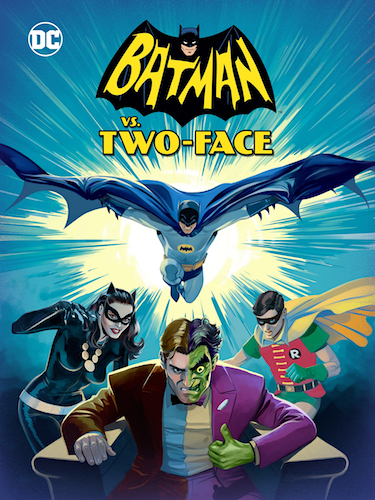
Batman vs. Two-Face

Last year the spirit of 1966 was revived when Adam West and Burt Ward returned to the roles of Batman and Robin (or their voices did, anyway) in Return of the Caped Crusaders, a fun comedy-adventure animation that paid tribute to the enduringly popular ’60s incarnation of the (not-so-)Dark Knight. Given the film’s success, it was no surprise a sequel was instantly in development. West completed work on it before his death earlier this year, meaning it now acts as a tribute. It’s unfortunate, then, that it’s not very good.

As the title makes clear, it sees West’s Batman come up against Two-Face — perhaps the most major member of Batman’s extensive Rogues Gallery to never appear in the TV show. Famed sci-fi author Harlan Ellison did actually write a treatment for a Two-Face episode, but the series was cancelled before it could be produced. It was adapted into a comic in 2015, and there was speculation it would form the basis for this animation too, but that isn’t the case. Maybe it should’ve been.

Things are weird from the off. The film begins by depicting a version of Two-Face’s origin — one that involves Harleen Quinzel, aka Harley Quinn, a character who wasn’t created until 25 years after the series this is based on. Anyway, it still sees DA Harvey Dent getting half his body fried and subsequently turning into a supervillain whose every decision is ruled by the flip of a coin. With this established in the pre-titles, there’s then a title sequence that shows plenty of Batman vs. Two-Face adventures. Is this a preview of what’s to come? No, because post-titles the story resumes with Harvey being cured. What a weird idea for a ‘first’ Two-Face story.

Why you two-faced...

Then Batman has to take on a variety of other foes, and you begin to wonder why the hell this is called Batman vs. Two-Face if he’s fighting everyone but Two-Face. Perhaps unsurprisingly, it does come back around to the eponymous enemy, though Batman refuses to believe his involvement — Harvey has been cured, so is someone impersonating Two-Face? The Boy Wonder isn’t convinced, but Batman is determined to believe his old chum. Oh yes, that’s right — this guy who’s just turned up in the series is apparently Bruce Wayne’s oldest bestest buddy. No wonder Dick’s nose is out of joint.

At the core of this, once what’s going on is eventually unravelled, is a not-half-bad Two-Face story. Unfortunately, that’s not really a strong marriage for this version of Batman — we don’t want a serious Bat-adventure, we want something light, daft, and above all fun. Batman vs. Two-Face isn’t exactly a sombre affair, but it isn’t funny enough either, lacking the gadabout charm of Return of the Caped Crusaders. The tone is just wrong. The makers admit they were trying to mix “camp with noir”, but — as I think any of us could’ve told them — that’s an unnatural combination that just doesn’t work. None of this is helped by the fact the animation looks cheap, even by the standards of DC’s other direct-to-video movies.

Best buds, supposedly

Clint Eastwood was being lined up to take on the role of Two-Face back in the ’60s, but he’s a bit above this kind of fare nowadays. Instead, the villain is voiced by another megastar of ’60s genre TV: William Shatner. Known for his mannered, scenery-chewing acting and ability to send himself up, Shatner seems the perfect foil for West’s Batman. Sadly, the material doesn’t allow Shatner to ham it up like you expect him to. Two-Face’s side of the story is played pretty straight, allowing none of the excess you’d expect from Shatner in comedy mode. Instead, the erstwhile starship captain delivers a genuinely decent acting performance. His voice work creates a clear delineation between the characters of Harvey Dent and Two-Face, and he delivers a fine interpretation of a man held hostage by his own alter ego. But, again, such a straight portrayal is not what’s desired from a Batman ’66 movie.

I was surprised to discover that Batman vs. Two-Face comes from the exact same writers and director as Return of the Caped Crusaders. The previous film nailed what it needed to be so perfectly, yet this seems to miss the mark almost entirely. My score errs on the side of harshness — there is fun to be had here — but it reflects my feeling immediately after the credits rolled that, overall, this was a massive disappointment.

2 out of 5

Assassin’s Creed (2016)

2017 #135
Justin Kurzel | 115 mins | download (HD+3D) | 2.35:1 | USA, France, UK, Hong Kong, Taiwan & Malta / English, Spanish & Arabic | 12 / PG-13

Assassin's Creed

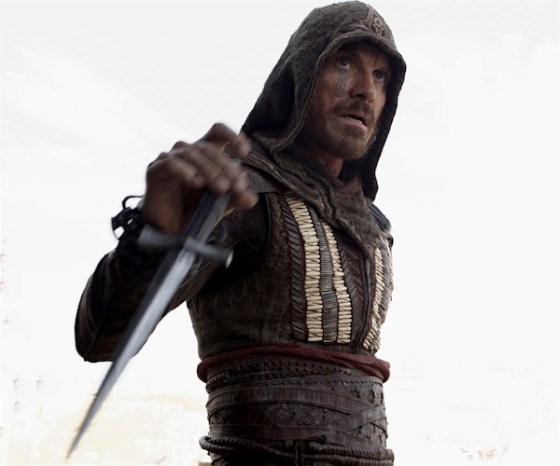
There seemed to be great hope when the Assassin’s Creed movie was announced. Partly because it’s a popular video game series, so of course its fans were excited; but also because it attracted star Michael Fassbender, an actor doing Oscar-calibre work, who then hand-picked director Justin Kurzel, whose previous movies suggested loftier ambitions than just trashy blockbusters. Feelings seemed strong that this could be the first great video game adaptation. But it was not to be.

Fassbender plays Cal, a criminal who is ostensibly executed but then wakes up in a strange facility where a doctor (Marion Cotillard) informs him that they’re going to strap him into a machine called the Animus, which uses Cal’s DNA to kind of send him back in time to relive the memories of his ancestor, who was an Assassin (with a capital A, because they’re like a guild or something). Her organisation, the Templars (who are the bad guys, presumably), want to use this totally plausible science to access the aforementioned memories so that they can locate the world-changing MacGuffin, hidden away by Cal’s ancestor (who was a good guy, I think). Something like that, anyway.

Academy Award Nominee Michael Fassbender

To be honest, a “something like that” feeling pervades the film. It’s a very strange viewing experience, in that you can follow what’s going on while at the same time feeling like it makes no sense whatsoever. Until the last act, anyway, when it goes thoroughly WTF. In part that’s because all the nonsensical bits and bobs that you let slide earlier finally come into play. Like, what’s going on with the other inmates? Are they actual Assassins? Did using the Animus make them Assassins? That seems to be what happens to Cal. So, how does that work exactly? And then the actual ending… what the hell was it all about? I’m not sure I could even summarise my confusion — like I said before: it’s both completely followable and completely nonsensical. Of course, it’s very much trying to leave things open for a sequel. I guess that won’t be happening…

For a video game adaptation marketed as an historical actioner, there’s altogether too much plot (whether it’s followable or not, the story is dull and unengaging) and too little action. What’s there is mostly well realised — apparently a lot of it was done for real, and although there’s obviously a lot of CGI background extension (with a nice painterly look), there’s a definite physicality to the parkour and fisticuffs that you don’t get with CGI body doubles. I mean, there are only three or four action sequences total, and only one and a half of them are really worth it, but at least there’s something to like in them. Unfortunately, the action carries no weight: our hero can’t change the past, just witness it as he helps the bad guys watch to see where the MacGuffin ended up. So we are literally watching someone watch someone else do all the action — like, y’know, watching someone else play a video game. It’s almost a meta commentary on video game movies, except I don’t think that was the intention.

Running and jumping

So what is it trying to comment on? I mean, it’s an action blockbuster, so “nothing” would be a perfectly adequate answer. Nonetheless, some reviews claim it’s trying to consider philosophical, religious, and/or genetics-related concepts. I suppose it does technically mention such things, but it fails to actively engage with them to such a degree that I think it’s doing it a kindness to even claim it’s attempting to be a thoughtful movie. In a similar shot at intelligence, apparently we were meant to feel neither the Templars nor Assassins are good or bad, but both morally grey. However, rather than creating ambiguity in who to root for, it just comes across as a smudge of indifference.

Nothing else impresses either. It’s a very visually gloomy film. I can’t discount the possibility that’s because I watched it in 3D, with the notorious darkening effect of the glasses, but my setup usually compensates for that (I don’t recall noting any undue darkness on other 3D viewing). Actually, the 3D itself was fine — good, even, at times — but it’s battling the largely unappealing visuals.

Come up to the lab and see what's on the slab

I’ve never played an Assassin’s Creed game, but I’d wager they don’t primarily consist of people nattering in a lab interspersed with the occasional period action scene. Maybe a greater adherence to such thrills, and less needlessly convoluted plotting, would’ve made for a more likeable movie. My rating’s possibly a tad harsh, but Assassin’s Creed could and should have been better.

2 out of 5

Assassin’s Creed is available on Sky Cinema from today.

Eye in the Sky (2015)

2017 #8
Gavin Hood | 102 mins | streaming (HD) | 2.35:1 | UK & South Africa / English & Somali | 15 / R

Eye in the Sky

Drone warfare is a fairly hot and contentious issue of our times, though as it seems to have “just kinda happened” I’m not sure how much significant public debate there’s been around it. It’s certainly provided fodder for moviemakers, however, with multiple productions seeking to be “the one about drones”. I’ve heard the best of these is Good Kill (though IMDb ratings disagree), but that’ll have to wait for another day (I’ve been sitting on this review since frickin’ January because I’ve still not got round to Good Kill!) Even if Eye in the Sky is the inferior film, it’s no slouch.

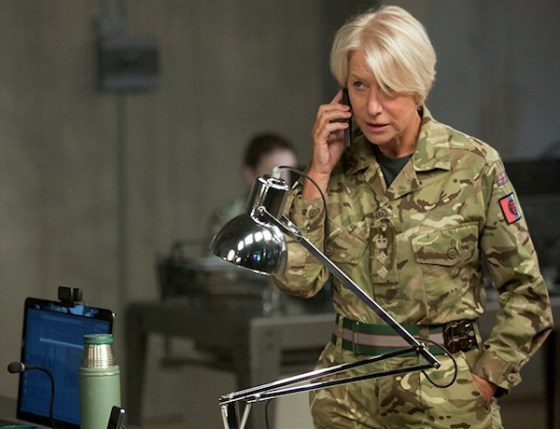
After a multinational mission is launched to capture wanted terrorists in Kenya, surveillance observes them prepping suicide bombers. The mission objective is changed to “kill”, but commanders watching from afar via drone are forced to reconsider their options due to a civilian presence near the target. It’s a tense thriller driven by a compelling moral dilemma — in fact, the dilemma is an old one: would you sacrifice one innocent life to potentially save dozens more? It’s just that it’s now framed in the super-modern context of using drones to dispatch death from the other side of the world.

Someone's got to make the call

Getting ahead of myself a little now, but events build to a very tense climax. That’s how you want your thrillers to end, isn’t it? It also pays off the sometimes slow, borderline stagey “people talking in rooms” film that precedes it. Maybe that’s unfair — yes, it’s people talking in rooms, but there’s dynamism in what they’re debating and, er, the number of different rooms it takes place in… It also has a very plausible line in the passing of the decision-making buck, up the chain through the military, then through politicians. I guess for this to work the operation depicted had to be British-led because, as the film reveals, the American military machine would’ve had no such compunction about possibly killing a little girl.

Much of the film lets you make up your own mind about its ethical conundrums, which is a strong point; but then, after all the actual debating is done and decisions have been made, it uses its final scene to show an outcome it could’ve left open-ended. This makes it seem to come down quite heavily in one direction. There’s not necessarily anything wrong with having a position and advocating it in art, but for a film which seems designed to tackle a contentious issue and put it up for genuine debate, it ends up feeling a tad one-sided. That said, there’s a long and well-liked screed on Letterboxd about how “it’s a film with an agenda that pretends to have none”, that agenda being to “have you rooting for the bombing of a little girl” — which is funny because I felt that, if anything, it came down a little too heavily the other way.

Emote control

One thing that distracted me to an inordinate degree was the agents on the ground using cameras disguised as birds and bugs — not just models with cameras in them, but imitation creatures that have the ability to fly around, reposition, etc. Even if such tech is possible nowadays, would Kenyan forces have access to it? And even if it’d been provided to them by their US/UK allies, would the equipment produce results of such good quality, or be capable of sending the images across such distances? Surely real-life drones are the size and shape they are (i.e. pretty big) for a reason? I guess the applicable point about this is: if you’re trying to make a serious modern-day moral thriller, don’t throw James Bond tech in there.

Nonetheless, Eye in the Sky manages to put a very-present moral issue up for debate, framing it as a kind of case study so that it also serves as a tense thriller. Thought-provoking and nail-biting.

4 out of 5

Anomalisa (2015)

2017 #2
Charlie Kaufman & Duke Johnson | 90 mins | streaming (HD) | 2.35:1 | USA / English | 15 / R

Anomalisa

Written and co-directed by Charlie Kaufman (of Being John Malkovich, Eternal Sunshine of the Spotless Mind, and so on), Anomalisa tells the story of Michael (David Thewlis), a depressed customer service expert who perceives everyone else as looking and sounding the same — until he meets Lisa (Jennifer Jason Leigh), whose uniqueness to him immediately attracts Michael.

If you hadn’t noticed, Anomalisa (a portmanteau of “anomaly” and “Lisa”, not “anonymous” and “Lisa” as I’d assumed) is an animated movie. Although an everyday kind of drama that would be largely achievable in live-action, it uses the form to its advantage when depicting the central conceit, giving every character who isn’t Michael and Lisa the same face and having them all voiced by the same actor (Tom Noonan). For me, this was the most effective part of the movie. It’s a really neat way of executing the concept of not being able to tell people apart. Noonan is the film’s real star, too, voicing “everyone else” in a way that makes them sound plausibly unique but also all the same, a tricky balancing act that he nails.

The one thing that did disappoint me about it was this: the inability to distinguish people is a genuine medical condition, but the film tackles it only as a signifier of Michael’s depression rather than as an issue some people live with. Conversely, I presume that’s a pretty rare condition, whereas depression and isolated feelings are increasingly widespread, so the film perhaps has more to say in that regard. Ultimately, I shouldn’t be criticising a film for not being about something it’s not trying to be about (even when I thought that was what it was going to be about).

Even puppets get the blues

As for the rest of the movie… hm. It takes an age to get going, but once it does there are a few funny scenes (the “toy” shop; the hotel shower; Michael struggling with his room key), and who’d’ve thought a puppet movie would have one of the more realistic sex scenes in the movies? Especially as it pulls that off without becoming laughable thanks to Team America. More pertinently, it gradually unfurls a sometimes touching story about isolation and love. However, by the time it reaches the happy-sad ending (one person’s life seems to have been transformed; the other continues to be miserable), I wasn’t sure what it all signified. Maybe the line that “sometimes the lesson is there is no lesson” is very relevant.

So, some good stuff, but that long slow open takes getting over, and I’m not sure what it all meant.

4 out of 5

What We Do in the Shadows (2014)

2017 #138
Jemaine Clement & Taika Waititi | 86 mins | Blu-ray | 1.78:1 | New Zealand & USA / English & German | 15 / R

What We Do in the Shadows

There’s no two ways about it: I’m late to the party with What We Do in the Shadows. After rave reviews at film festivals and when it was released in some countries (including the UK) in 2014, its acclaim as a cult comedy seemed to reach a focal point in early 2015 when a Kickstarter campaign to give it a wider US release attracted over 7,000 backers and the best part of half-a-million dollars. I recall preordering the Blu-ray in the wake of the slow-burning fuss I kept hearing about it. That came out in April 2015, and swiftly ended up on one of my many unwatched piles… until now!

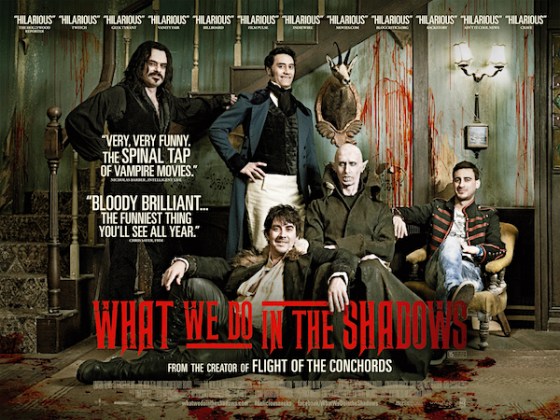
For the sake of those who are even later to it than me, it’s a mockumentary about a group of housemates in Wellington, New Zealand, who are vampires. With each of them being hundreds of years old, they’re thoroughly out of touch with the modern world — until they make some new, younger friends…

This juxtaposition allows the film two rich strands of humour. Firstly, it riffs off vampire movie clichés and references — there are bits about sleeping in coffins, turning into a bat, and so on. In a similar vein, each of the housemates is a version of a classic movie vampire: there’s a silent Nosferatu-ish one; a violent womanising Dracula-ish one; an effeminate dandyish one; and so on. There are also various scenes that play on vampires’ familiar abilities by featuring a neat and often surprising use of special effects — the film’s so low-budget and so naturalistically staged, you’re not expecting any outright fantastical stuff. That element of unexpectedness makes such moments all the more effective.

Night life

In the second strand, it embraces mundanity — putting these supernatural creatures in the same dull suburban lifestyles that we all know, like struggling to get into the good nightclubs, or a supposedly grand ball taking place in a rundown community centre. Perhaps best of all are bits which straddle the two stools — the practicalities of being a vampire; like how do you get dressed up to go out if you can’t see your reflection, or having to clean up the mess after drinking someone’s blood. The film plays these various comic facets with a great deal of wit and cleverness, but it’s also suitably silly, which allows the humour to function at various levels. What’s even more surprising is that, as it goes on and we build up a connection to these characters, it becomes actually quite touching at times.

Apparently writer-directors Jemaine Clement and Taika Waititi wrote more than 150 pages of screenplay for the film, then didn’t actually show it to any of the cast so they would improvise scenes and be surprised by plot developments. That resulted in over 125 hours of footage, which took almost a year to edit down to just an hour and a half. (No wonder the Blu-ray includes piles of deleted, extended, and additional footage.) On the one hand, perhaps that helps explain why the film is so funny — they were able to really cherrypick the best bits. On the other other, it makes the final result all the more impressive — that they were able to hone storylines and character arcs from that immense supply of material. And it still clocks in at just 86 minutes! Hollywood moviemakers who let their part-improvised comedies sprawl to baggy two-hours-plus running times might learn a thing or two here.

Drinking blood

Perhaps the more familiar you are with vampire fiction the more you’ll get out of What We Do in the Shadows’ humour, but I don’t think that’s a prerequisite to enjoying it — I should think knowing the basics of vampire mythology is enough to get laughs from the majority of the movie without feeling like you’re missing anything. And in the end, the most important thing is that it’s incredibly funny. Or, as the poster accurately puts it, “hilarious, hilarious, hilarious, hilarious, hilarious, hilarious, hilarious, hilarious, hilarious, hilarious, hilarious, hilarious.”

5 out of 5

What We Do in the Shadows is available on iPlayer until 28th November.

It placed 12th on my list of The 17 Best Films I Saw For the First Time in 2017, which can be read in full here.

The UK TV premiere of Taika Waititi’s previous film, Boy, is on Film4 tonight at 10:50pm.
His new film,
Thor: Ragnarok, is out everywhere now and is reviewed here.