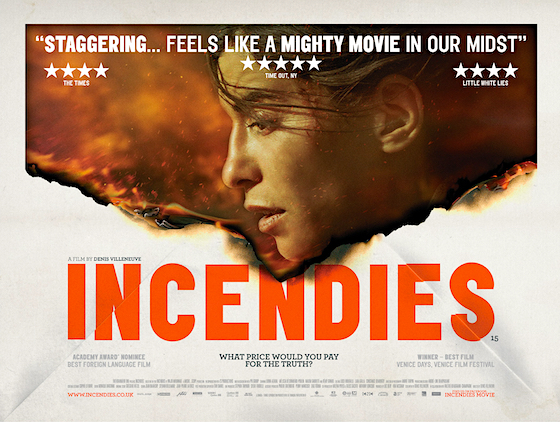
Incendies (2010)

Denis Villeneuve | 131 mins | UHD Blu-ray | 1.85:1 | Canada & France / French & Arabic | 15 / R

Incendies

The Best Foreign Language Film category at the 2011 Oscars is, in retrospect, a pretty impressive year. Alejandro González Iñárritu was already well established before his nominated film, Biutiful, but his fellow nominees included Yorgos Lanthimos for only his third feature, Dogtooth, and Denis Villeneuve for this, his second after his career re-start. And yet the winner was In a Better World. Remember that? Me neither. (I don’t even recall it ever being mentioned in the last near-decade-and-a-half; although its director was Susanne Bier, who’s gone on to the likes of The Night Manager and Bird Box, so that’s something). It seems like an odd choice for victor with the power of hindsight, but that’s hindsight for you. On the other hand, watching Incendies, it’s hard to see how anyone could ever have missed its incredible power. (Or maybe In a Better World is even better. I struggle to believe that possibility, but you never know… and probably never will, because who’s still watching it nowadays? It’s certainly not getting a Collector’s Edition-style 4K UHD release from a boutique label — unlike, say, Incendies.)

Incendies is, on the surface, one of those films that can sound off-puttingly heavy: it’s about generational trauma caused by a long-running war in the Middle East. Sure, that kind of thing can be Worthy and Great filmmaking, but egads, hard going. But while Incendies is all those things, it’s also a compelling mystery, which leads to twists worthy of a great thriller. The first of those comes in the film’s setup: Nawal, the mother of a pair of grownup twins has died, and it’s only from her will they learn, first, that their thought-dead father is still alive and, second, that they have an older brother they didn’t know existed. They are tasked with finding both men, and only then will they receive the final letter she has left for them. To do this, they must travel to their mother’s homeland, an unnamed Middle Eastern country (heavily inspired by Lebanon) where the aforementioned war is over, but the scars still linger. As they investigate their mother’s previous life, we see it play out in flashbacks.

While the film at first seems to be about the twins, it’s really most about Nawal. That’s in part thanks to the incredible performance by Lubna Azabal. She has to portray this woman across decades, from a relative innocent to someone changed and hardened by all she’s been through, and charting every step of that journey, too. Plus, she’s left to convey almost all of that silently. Not that she’s mute, but she’s rarely allowed the shortcut of dialogue that discusses or exposes her emotions and motivations. That we still gain so much understanding of the how and why of Nawal is remarkable, really; a performance that, under different circumstances (let’s be honest: if it were in English) would surely have contended for every major award going.

You and whose army?

The film is not about a specific conflict — that’s part of the reason playwright Wajdi Mouawad didn’t explicitly set his original work in Lebanon, and why Villeneuve ultimately didn’t change that when adapting it. Rather, as Villeneuve says, it’s “about the cycle of anger, the heritage of anger in a family, where in a conscious and subconscious way anger is traveling among family members, and among a society”. The point is not “what happened in Lebanon”, but what happens when families are torn apart, emotionally just as much as physically; what the fallout from that is, and how healing can be found — if, indeed, it can.

Oh dear, it’s all sounding a bit heavy again, isn’t it? And yes, there is an element of Incendies that is like that. It’s the kind of film that uses Radiohead on its soundtrack multiple times. (That said, this is how I feel that band’s dirge-like ambient-noise style of music functions best: as background mood-creating film score, rather than as, y’know, songs.) But, as I said before, this is also a film that plays as an effective mystery. What, exactly, happened to Nawal? Who and where is their father? Who and where is their older brother? Why was this a secret Nawal took to her grave? Why did she feel the need to reveal it posthumously? Any and all of these are questions your stereotypical “art house” movie would leave unanswered, providing vague prompts for you to consider after the film ends — or, inevitably, provoke you to Google “Incendies ending explained”. But Incendies isn’t actually like that — all of those questions are answered, because they’re essential to what the film is about. That they can also be gasp-inducing all-timer reveals is another bonus.

Within that, Villeneuve also shows off the expert filmmaking that has since elevated him to Christopher Nolan-adjacent levels of big-budget auteurist blockbuster-making. There’s a sequence on a bus in the middle of the film that is as tense as any suspense movie, as scary as any horror movie, and as emotionally devastating as any hard-hitting drama. There’s a reason it’s the inspiration for almost every poster and key art piece related to the film. (The exception is the original American theatrical poster, which shows… a woman standing by some sand. Great marketing, folks. Maybe that’s why it didn’t win the Oscar.) It’s an event of such horror that — especially when combined with the shocking revelations later in the film (which, obviously, I’m not going to spoil) — I imagine this is the kind of movie some people swear off ever watching again, like Requiem for a Dream; a big comparison, maybe, but one Incendies is up to.

5 out of 5

Incendies is the 68th film in my 100 Films in a Year Challenge 2024. It was viewed as part of “What Do You Mean You Haven’t Seen All of the IMDb Top 250?”. At time of posting, it was ranked 101st on that list. It was my Favourite Film of the Month in September 2024. It placed 4th on my list of The Best Films I Saw in 2024.

Archive 5, Vol.11

I have a backlog of 515 unreviewed feature films from my 2018 to 2023 viewing. This is where I give those films their day, five at a time, selected by a random number generator.

Today, the main emergent theme is “films that weren’t so great” — although there are a couple of bright spots to be found, still.

This week’s Archive 5 are…

  • Dumb and Dumber (1994)
  • Bill & Ted Face the Music (2020)
  • Mangrove (2020)
  • Out of Africa (1985)
  • Rambo: Last Blood (2019)


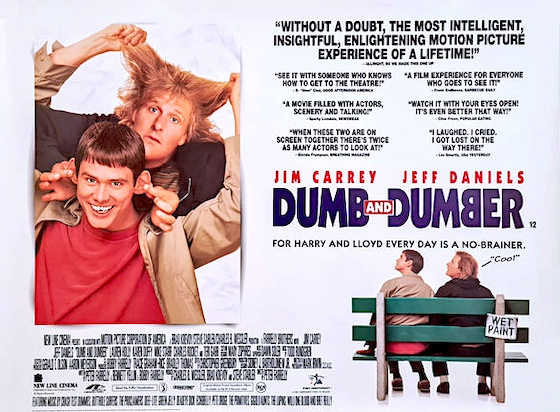
    Dumb and Dumber

    (1994)

    Peter Farrelly | 107 mins | digital HD | 16:9 | USA / English | 12 / PG-13

    Dumb and Dumber

    The nicest thing I can say about Dumb and Dumber is that it does at least live up to its title: it starts dumb and gets dumber.

    Despite the film’s later reputation in some circles as a modern comedy… if not “classic”, then certainly “success” — enough to eventually earn it both a prequel and sequel, at any rate — I’m clearly not alone in this view: apparently the original draft of the screenplay was so poor that it gained an enduringly negative reputation among investors; to the extent that, even once it had been rewritten, it had to be pitched under a fake title in order to get people to even read it. I feel like the final result only goes some way towards fixing that, with an oddly episodic structure and some bizarrely amateurish bits of filmmaking for a studio movie (the audio quality is relatively poor; there’s too much reliance on samey master shots).

    There are a few genuinely funny bits between all the gurning, guffawing, and scatology. It’s a shame they’re not in an overall-better film.

    2 out of 5

    Dumb and Dumber was #119 in my 100 Films in a Year Challenge 2021. It featured on my list of The Worst Films I Saw in 2021.


    Bill & Ted Face the Music

    (2020)

    Dean Parisot | 88 mins | digital HD | 2.39:1 | USA & Bahamas / English | PG / PG-13

    Bill & Ted Face the Music

    I wasn’t that big a fan of the original Bill & Ted films, so I didn’t have high hopes for this — after all, most decades-later revival/reunion movies are primarily about trying to please existing fans, not win round new ones; and it feels like a good number of them fail even in that regard. Face the Music is definitely full of the requisite nods and references, both explicit and subtle, major and minor; but they’re all in the right spirit and it kinda works (albeit a bit scrappily at times), bound together by a deceptively simple, pervasive niceness.

    Alex Winter is particularly great as Bill. Given all the stories we hear about how awesome Keanu Reeves is in real life, it’s no surprise that — despite being the much (much) bigger movie star — he’s generous enough to be a co-lead and let Winter shine. Brigette Lundy-Paine is absolutely bang on as Ted’s daughter, aping Reeves’ performance in all sorts of ways. As the younger Bill, Samara Weaving is clearly game, but doesn’t carry it quite as naturally (apparently she was cast after Reeves discovered she was the niece of Hugo Weaving, who he’d of course worked with on the Matrix trilogy, so that might explain that).

    “Be excellent to each other” is a message the world needs now more than ever, and that’s as true four years on as it was back in 2020. For me, that makes this third outing Bill and Ted’s most excellent adventure.

    4 out of 5

    Bill & Ted Face the Music was #136 in my 100 Films in a Year Challenge 2021.


    Mangrove

    (2020)

    aka Small Axe: Mangrove

    Steve McQueen | 127 mins | TV HD | 2.39:1 | UK / English | 15

    Small Axe: Mangrove

    The line between film and TV continues to blur with Mangrove: a 127-minute episode of an anthology TV series, Small Axe, conceived and directed by Oscar winner Steve McQueen, that premiered as the opening night film of the London Film Festival. It was made for television, but in form and pedigree it’s a movie. Just another example in a “does it really matter?” debate that continues to rage — and is only likely to intensify with the increasing jeopardy faced by theatrical exhibition. (I wrote this intro almost four years ago, and while theatrical is fortunately still hanging in there post-pandemic, I do think the line remains malleable.)

    I only ended up watching two episodes/films from Small Axe in the end. I did intend to go back and finish them, especially as they were heaped with critical praise, but the second (Lovers Rock) bored me to tears, which didn’t help. This first was better, but still not wholly to my taste. It tells an important true story about racially-motivated miscarriages of justice, but I found it overlong and with too much speechifying dialogue. That kind of thing works better in a courtroom setting, I find, so perhaps that’s why I felt the film was at its best once it (finally) got to the courtroom. When it’s good, it really is very good.

    4 out of 5

    Mangrove was #246 in my 100 Films in a Year Challenge 2020.


    Out of Africa

    (1985)

    Sydney Pollack | 161 mins | digital HD | 16:9 | USA & UK / English | PG / PG

    Out of Africa

    This is very much the kind of thing that was once considered a Great Movie, in an “Oscar winner” sense, but nowadays is sort of dated and attracts plenty of less favourable reviews. It’s long, historical, and white — not how we like our movies about Africa nowadays, for understandable reasons.

    Certainly, there are inherent problems with its attitude to colonialism, but to a degree that’s tied to how much tolerance you have for “things were different in the past” as an argument for understanding. In this case, just because these white Europeans shouldn’t have taken African land and divvied it up among themselves and treated the inhabitants as little better than cattle, that doesn’t mean the individuals involved weren’t devoid of feeling or humanity. People like Karen, the film’s heroine, were trying to do what they thought was right within the limited scope of what society at the time allowed them to think. With the benefit of a more enlightened modern perspective, we can see that was still wrong and that they didn’t go far enough, but (whether you like it or not) there is an element of “things were different then”.

    Morals aside, the story is a bit slow going, bordering on dull at times, but it’s mostly effective as a ‘prestige’ historical romance, which I think is what it primarily wants to be. It’s quite handsomely shot, although not as visually incredible as others make out, and John Barry’s score is nice — you can definitely hear it’s him: on several occasions it reminded me of the “love theme”-type pieces for his Bond work.

    3 out of 5

    Out of Africa was #212 in my 100 Films in a Year Challenge 2020.


    Rambo: Last Blood

    (2019)

    Adrian Grünberg | 89 mins | digital HD | 2.39:1 | USA, Hong Kong, France, Bulgaria, Spain & Sweden / English & Spanish | 18 / R

    Rambo: Last Blood

    Sylvester Stallone’s belated returns to the roles that made his name have worked out pretty well so far, I think, with Rocky Balboa and Rambo (i.e. Rambo 4) being among my favourites for both those franchises; not to mention Creed and its sequel. Unfortunately, here is where that streak runs out.

    Running a brisk 89 minutes (in the US/Canada/UK cut — a longer version was released in other territories), the film is almost admirably to-the-point. We all know where it’s going, and more or less what plot beats it will hit along the way, so it doesn’t belabour anything, it just gets on with it. However, you eventually realise why other films ‘indulge’ in the kind of scenes this one has done away with: movies are about more than just plot, they’re about character and emotion and why things happen. Last Blood is so desperate to get to the action that it strips those things back to their bare minimum, thus undermining our investment. And then, weirdly, it hurries through the action scenes too. The climax packs in as many gruesome deaths in as short a time span as possible, meaning none but the most stomach-churning have any impact; and even those disgusting ones are mercifully fleeting. More, it feels rushed and of little consequence. Far from a grand send-off to the Rambo saga (which a slapped-on voiceover-and-montage finale attempts to evoke), it feels like a short-story interlude.

    Did Rambo deserve better? Well, I wouldn’t necessarily go that far. But, on the evidence of this, it might be best if they don’t try again.

    2 out of 5

    Rambo: Last Blood was #74 in my 100 Films in a Year Challenge 2020.


  • Archive 5, Vol.10

    I have a backlog of 520 unreviewed feature films from my 2018 to 2023 viewing. This is where I give those films their day, five at a time, selected by a random number generator.

    Today, we’ve got quite the variety, from Oscar nominees to straightforward action entertainment; from super-timely recent documentaries to pioneering animation from almost a century ago. But they’re all connected by… the fact I wrote some notes after I watched them. Thank goodness, otherwise reviewing some of them years later would be bloomin’ impossible. (That’s not much of a connection, I know, but it was on my mind after In the Mood for Love last time.)

    This week’s Archive 5 are…

  • A Star Is Born (2018)
  • Boss Level (2021)
  • Coded Bias (2020)
  • Shadow of a Doubt (1943)
  • The Adventures of Prince Achmed (1926)


    A Star Is Born

    (2018)

    Bradley Cooper | 130 mins | digital HD | 2.39:1 | USA / English | 15 / R

    A Star Is Born

    This is the fourth version of A Star is Born, for whatever reason, but I’ve not seen any of the others so I won’t be making comparisons. I’m sure the story has been modernised (the last version was made in the ’70s, with the previous two in the ’50s and ’30s) without losing its fundamental essence: successful musician (here, Bradley Cooper) uncovers a new talent (Lady Gaga) who comes to outshine him. I guess it’s a timeless tale in the age of celebrity.

    Singers-turned-actors have a mixed history, though casting one in a story such as this is fitting, given how you need to believe they’re a top-drawer musical artist. Fortunately, Gaga actually can act as well as sing, so she’s an unqualified success here. The headline song, Shallow — a duet between the two leads, which attracted even more attention for how they performed it at the Oscars — is… perfectly fine. People went a little too crazy for it at the time, I feel. But it’s given weight by how well it’s used in the film, so I guess that could sway you.

    Also pulling double duty (well, triple if you count the singing) is Cooper, directing for the first time. (With all the talk this past awards season about how desperate Cooper is for an Oscar, it’s easy to forget that Maestro was only his second time behind the camera.) I seem to remember there being some complaints when he wasn’t nominated for direction for this one, but I think that was a fair omission. It’s not bad, but his directorial choices are a little too wavering. Like, in the early scenes, when the camerawork is all a bit documentary-ish, is effective — it undercuts the “glamorous story”, the almost-inherent fakeness of Musical as a genre, by making it feel Real. But later he gives in to glossy stylings too often; and too many of the song performances are captured with a lazily floating camera, lacking focus or decisiveness. It’s how they often shoot musical performances on TV: just kind of nothingy, moving the camera back and forth and side to side for the sake of making it ‘dynamic’. But, when you remember this is his first film, that’s fine — there’s a lot more good than bad about his work behind the camera.

    4 out of 5

    A Star Is Born was #18 in my 100 Films in a Year Challenge 2020.


    Boss Level

    (2021)

    Joe Carnahan | 101 mins | digital HD | 2.39:1 | USA / English | 15

    Boss Level

    For a long time, there was Groundhog Day. And then someone had the bright idea, “what if Groundhog Day but mixed with another genre?” So now we’ve had the sci-fi version (Edge of Tomorrow), and the horror version (Happy Death Day), and the YA version (The Map of Tiny Perfect Things), and the “what if there were two people” version (Palm Springs), and the TV series version (Russian Doll)… Here, we get the action movie version. And it’s pretty much exactly what you’d expect and hope “Groundhog Day as an action movie” would be. That’s praise, not criticism.

    Interestingly, considering the context I’ve chosen to place this in, the film itself acknowledges — you might even say relies on — the fact we’ve all seen time loop movies before. Rather than begin at the obvious beginning (i.e. the hero’s first loop), the story starts dozens of loops in, then fills in the backstory with flashbacks later on. It’s somewhere between a sensible choice (who hasn’t seen Groundhog Day?) and a bold move (what about people who haven’t seen Groundhog Day?) That said, I imagine people in the latter group can still follow it, it just might be what’s going on is mysterious for longer (most of us will instantly get “he’s in a day-long time loop”, they’ll just have to wait for that information to become clear).

    In fact, it’s a pretty economical movie across the board, hitting the ground running and rarely letting up. There’s very little repetition of “the same stuff every day”, instead taking our hero off in different directions. It does lean on voiceover quite a lot to get through some of the exposition, which won’t be to everyone’s taste, but it means it can hurry through the technicalities and get to what we came for — action and gags — so I can let it slide. On the basis of the kind of entertainment it’s designed to deliver, Boss Level succeeds admirably.

    4 out of 5

    Boss Level was #160 in my 100 Films in a Year Challenge 2021.


    Coded Bias

    (2020)

    Shalini Kantayya | 86 mins | digital HD | 16:9 | USA, China & UK / English & Chinese | 12

    Coded Bias

    Given the precipitous rise of AI in the past couple of years, I don’t know how relevant this documentary from 2020 still is. Back then, it was ultra-timely, but tech evolves so fast, I have to wonder if it’s already dated. Well, if you want to find out for yourself, it’s on Netflix.

    Not that it’s just about AI. It touches on a lot of interesting tech-related topics, like how facial recognition struggles with non-white people, or how algorithms were increasingly being allowed to control… pretty much everything. It makes a lot of broadly scary declarations about these things, but often lacks the detail to back them up. Not that it’s necessarily wrong, but it doesn’t prove its point; doesn’t clarify what’s scary beyond the gut reaction that this all sounds scary. This is partly because there’s so much to cover — it keeps jumping around between topics in short vignettes — which at least makes clear what a big field this is. There are also signs of hope, with the film offering some solutions (primarily: regulation in law) and highlighting fantastic people (almost all women, incidentally) doing great work to combat these things.

    Ultimately, the areas the film explores are interesting and it’s sometimes informative about them, but it’s also unfocused and disorganised in its structure, which is a shame.

    3 out of 5

    Coded Bias was #243 in my 100 Films in a Year Challenge 2020.


    Shadow of a Doubt

    (1943)

    Alfred Hitchcock | 108 mins | UHD Blu-ray | 1.33:1 | USA / English | PG

    Shadow of a Doubt

    I feel like Shadow of a Doubt sits in a certain tier of Hitchcock film; one where it’s not one of his very best known (Psycho, Vertigo, The Birds, etc), but regarded well enough that it definitely has its fans, for some of whom it probably is Hitchcock’s best film. Hitch himself repeatedly said it was his favourite of his own work, chiefly because he enjoyed how it brought menace into the surface-level perfection of small-town America. One critic has even described it as Hitchcock’s “first indisputable masterpiece”, which I would certainly dispute considering its predated by the likes of The 39 Steps, The Lady Vanishes, and Rebecca. Well, taste is relative.

    Personally, while Shadow of a Doubt definitely has a neat premise and strong moments, overall I felt it lacked any of the truly exceptional elements that mark out Hitch’s real classics. Sure, if most other filmmakers had made it, it’d probably be one of their best; but you’re competing with an incredibly strong body of work if you’re a Hitchcock film and, for me, this one is definitely second-tier. Of course, as I just intimated, being a second-tier Hitchcock film is still some achievement. It’s a shame the relative hype for this one is leading me to focus on the negative. Heck, maybe I’ll like it even more when I rewatch it someday. Until then, I feel it missed the mark of my expectations in places. I even thought it was the kind of movie someone could remake and possibly get something really great out of. (Blasphemy!)

    4 out of 5

    Shadow of a Doubt was #90 in my 100 Films in a Year Challenge 2023. It was viewed as part of “What Do You Mean You Haven’t Seen…?” 2023.


    The Adventures of Prince Achmed

    (1926)

    aka Die Abenteuer des Prinzen Achmed

    Lotte Reiniger | 66 mins | Blu-ray | 1.33:1 | Germany / silent | PG

    The Adventures of Prince Achmed

    The earliest (surviving) animated feature film is an ‘Arabian Nights’ fairytale about… well, the short version is in the title.

    But story schmory, because the real star here is the medium itself: Lotte Reiniger’s animation. There are so many wonderful little bits of work, it’s impossible to list. Consistent throughout, it’s remarkable how much character and personality Reiniger manages to convey through her ‘simple’ cutout silhouette puppets. Then there’s little naturalistic details, like boats bobbing on the water. Some of it even feels surprisingly modern. Not massively so, perhaps, but it doesn’t have that staid, stilted formality you might expect from a hundred-year-old rendition of a fairytale. And that’s not to mention the homosexual subplot. Plus, there’s so much more to the style than just silhouettes on plain backgrounds. There are shades and effects, to add depth or style: the wavy lines of a river; a mountain range fading into the distance; and subtler and clever things, too. It’s a visual feast.

    The restoration could be better, mind. There are a lot of dirt and scratches, which I can live with (there are so many of these, it would have to be manually patched up frame by frame, which would cost a fortune), but more egregious are stability and alignment issues. For example, during one scene, the top part of the next frame keeps appearing at the bottom. Surely that could’ve been fixed?

    Better is the soundtrack. The BFI Blu-ray offers a choice: the original 1926 score by Wolfgang Zeller (recorded in 1999) or an English narration (with effects), based on Reiniger’s own translation of her German text (recorded in 2013). Having watched the film with both, I’d say the narration adds nothing of value to the experience, especially as it sounds like narration from a preschool storybook. Just stick to the original music.

    But however you watch it, minor technical issues can’t distract from the artistry on display. This is truly the work of a master of her craft. Magnificent.

    5 out of 5

    The Adventures of Prince Achmed was #35 in my 100 Films in a Year Challenge 2021.


  • Archive 5, Vol.9

    I have a backlog of 525 unreviewed feature films from my 2018 to 2023 viewing. This is where I give those films their day, five at a time, selected by a random number generator.

    Today, a couple of Agatha Christie adaptations from very different eras; plus a heist, a horror, and a Hong Kong love story for the ages.

    This week’s Archive 5 are…

  • Evil Under the Sun (1982)
  • Sneakers (1992)
  • Us (2019)
  • Crooked House (2017)
  • In the Mood for Love (2000)


    Evil Under the Sun

    (1982)

    Guy Hamilton | 112 mins | digital HD | 16:9 | UK / English | PG / PG

    Evil Under the Sun

    The third in the run of Poirot adaptations that began with Murder on the Orient Express and continued with Death on the Nile — no, not the recent Branagh ones: this is the first time they did exactly that. But, funnily enough, both third films in their respective series (i.e. this and Branagh’s A Haunting in Venice) take a UK-set Christie and relocate it somewhere more exotic, to fit with the style of the rest of the series. So, rather than a small island off the north Devon coast (which likely stretches the definition of “under the sun”, based on my experience of Devon), here the action is located to the Adriatic Sea, although actually filmed on Mallorca.

    All of which is incidental when the rest of the movie is, at best, fine. It doesn’t help that the storyline is ultimately very similar to Death on the Nile, making the whole affair feel like more of a rehash than it needs to. Guy Hamilton’s direction underwhelms, giving a TV movie-ish feel, which is only exacerbated by the less-starry cast — there are recognisable names and faces here (James Mason, Diana Rigg, Maggie Smith), but, in totality, it’s not in the same league as the previous two films. It rather prefigures where Ustinov’s Poirot would appear next: literally, TV movies.

    3 out of 5

    Evil Under the Sun was #2 in my 100 Films in a Year Challenge 2020.


    Sneakers

    (1992)

    Phil Alden Robinson | 126 mins | Blu-ray | 1.85:1 | USA / English | 15 / PG-13

    Sneakers

    I never paid Sneakers any attention (not that it came up often) — I think, because it’s an American movie called Sneakers, I assumed it was about shoes — until indie magazine Film Stories announced a Blu-ray release (long since sold out, I’m afraid). I’m always keen to support small/new labels doing interesting things. And thank goodness for that, because, turns out, it’s actually very much my kind of film and good fun.

    So, turns out, in this context, “sneakers” are not an Americanism for trainers, but good-guy hackers who test security systems. When the team are hired to steal a code breaking device, they get suspicious about the setup and, of course, it turns out they’re right to be. Thus unfurls a tech-based heist thriller with a strong vein of humour, but without tipping over into being an outright comedy. Stylistically and tonally, that’s right up my street — I love a heist movie, and that kind of tone (funny without being silly; what I think of as a ‘real world’ awareness of humour) often works for me. It’s the kind of film that’s just a lot of fun to watch. I can imagine it being highly rewatchable; a go-to favourite for people who do that kind of thing.

    4 out of 5

    Sneakers was #132 in my 100 Films in a Year Challenge 2021.


    Us

    (2019)

    Jordan Peele | 112 mins | digital HD | 2.39:1 | USA, China & Japan / English | 15 / R

    Us

    Part of what made Jordan Peele’s debut feature, Get Out, such a success was the way it chimed perfectly with the cultural zeitgeist of 2017; indeed, of the whole decade (time may yet add “of the whole century”). This immediate followup doesn’t benefit from a similar boost, but it’s a strong work of horror cinema in its own right.

    Us follows a family who are attacked by a group of doppelgängers. That’s the most basic version, anyway — Peele seems to have a lot of ideas he wants to mix in here; almost too many. It seems to operate on the level of a home invasion/slasher kind of movie much of the time, but having more on its mind means it’s a bit too slow to satisfy as something so viscerally straightforward. Thus, all the Meaningful stuff ends up crammed into the third act, which perhaps leaves it feeling back-heavy. There’s also a big twist, naturally. On one hand, it seems really obvious, pretty much from the beginning; but on the other, it does cast the rest of the movie in a different light, which is quite interesting.

    If all that sounds rather negative… I blame my notes (I’m writing this review over four years later based solely on what little I wrote down at the time). Us is imperfect, but it’s also great in places, and is at least passably interesting to reflect on in light of the final reveal.

    4 out of 5

    Us was #23 in my 100 Films in a Year Challenge 2020.


    Crooked House

    (2017)

    Gilles Paquet-Brenner | 115 mins | digital HD | 2.35:1 | UK & USA / English | 12 / PG-13

    Crooked House

    Despite a moderately starry cast (Glenn Close, Terence Stamp, Gillian Anderson, Christina Hendricks fresh from Mad Men; plus Brits of varying degrees of recognisableness) and a screenplay by Julian “Downton Abbey” Fellowes, this Agatha Christie adaptation was virtually dumped straight to TV here in the UK (apparently it did have a theatrical release, but the TV premiere was less than a month later — and on lowly Channel 5 at that). Of course, some of the best Christie adaptations have been made for TV; but when something’s designed for theatrical and ends up skipping it, it’s never a good sign.

    Fortunately, Crooked House isn’t a disaster, though it’s far from a resounding success. Quite what attracted the big names I don’t know — it’s a reasonable setup (big dysfunctional family), but the screenplay isn’t exactly sparkling, aside from one or two moments or scenes. There is, at least, one helluva resolution. It also feels disjointed thanks to poor editing and/or direction. If the aim was to keep the pace up, it failed, because it begins to drag after a while. All of this is only partially masked by decent cinematography from Sebastian Winterø, which is the only thing that saves it from looking very TV-ish. Maybe it found its rightful home after all.

    3 out of 5

    Crooked House was #1 in my 100 Films in a Year Challenge 2020.


    In the Mood for Love

    (2000)

    aka Fa yeung nin wah

    Wong Kar-wai | 99 mins | digital HD | 1.66:1 | Hong Kong & China / Cantonese & Shanghainese | PG / PG

    In the Mood for Love

    If my four-years-late review of Us was hampered by largely-negative notes, my four-years-late review of In the Mood for Love is in even worse shape: no notes at all. Some trivia? I can do that! An interesting quote from the director? Got it saved! But anything on my own thoughts beyond settling on a five-star rating? Nope. I would try to repurpose my Letterboxd review, but all I wrote was: “I mean nothing but respect when I pithily describe this as Brief Encounter in Hong Kong.” Accurate but, indeed, pithy.

    On the bright side, this is a widely-acclaimed film, so if you’re after in-depth writing I’m certain you’ll find some somewhere else. Indeed, even if I did have more fulsome notes, I doubt I’d contribute anything more insightful. This is a subtle, almost delicate work, and that’s the kind of thing I feel I often struggle to properly get to grips with in my short, usually spoiler-averse reviews. Suffice to say, I concur that this is a very good film indeed; although, as with any understated work, some might prefer if the feelings and emotions were more overt. Each to their own.

    5 out of 5

    In the Mood for Love was #200 in my 100 Films in a Year Challenge 2020. It was viewed as part of Blindspot 2020.


  • Archive 5, Vol.8

    I have a(n insanely huge) backlog of 533 unreviewed feature films from my 2018 to 2023 viewing (not to mention the 77 shorts, but they’re a problem for another day). This is where I give those films their day, five at a time, selected by a random number generator.

    Today, it’s killers galore with Korean zombies, comical hitmen, rampaging security robots, and plain ol’ murderers. Plus, dying of boredom in Saturday detention.

    This week’s Archive 5 are…

  • One Cut of the Dead (2017)
  • The Breakfast Club (1985)
  • Chopping Mall (1986)
  • Dead Man’s Folly (1986)
  • Wild Target (2010)


    One Cut of the Dead

    (2017)

    aka Kamera o tomeru na!

    Shinichiro Ueda | 96 mins | Blu-ray | 16:9 | Japan / Japanese | 15

    One Cut of the Dead

    You know, it’s not just my reviews that are tardy: I bought this because it was hyped up, both as “good” and as “see it knowing as little as possible”, and it went on my “must watch soon” pile… where it sat for 14 months. And that’s far from the most egregious example of “ooh, I must get round to that” equally a long, long delay.

    Now, it’s taken me another 46 months to write this review. Eesh. On the bright side, perhaps I shouldn’t be so worried about spoilers anymore. I mean, if you’ve not seen it by now, whose fault is that? And it definitely is the kind of film where the less you know the better, because it’s going to pull the rug out from under you. Of course, even knowing that means you’re on the lookout for what’s going to happen; and the film gives you a helping hand, because right from the off there are nods to the conceit. Still, I’ll try to be fairly vague.

    It’s a film of three parts. The first is, with hindsight, an establisher; setup and groundwork for what comes next. Alternatively, some genre fans will take that as the purpose of the movie, and what follows as extraneous. Then there’s a long, slow middle section. Again, no direct spoilers, but we know where this part of the narrative ends up, so it feels like it’s over-expounding stuff (we don’t need as much backstory as we get) and consequently goes on a bit. Halfway through, I began to wonder what all the fuss was about. I worried that I’d left it too long to see it and let the hype get the better of me.

    But, ultimately, it’s all setup for the final half-hour, and it pays off in hilarity. The middle could still do with a trim, but it’s worth sticking with for the payoff.

    4 out of 5

    One Cut of the Dead was #54 in my 100 Films in a Year Challenge 2020.


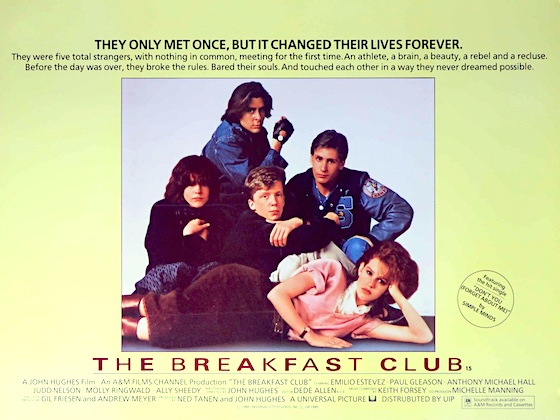
    The Breakfast Club

    (1985)

    John Hughes | 97 mins | Blu-ray | 1.85:1 | USA / English | 15 / R

    The Breakfast Club

    Is The Breakfast Club the definitive ’80s high school movie? It’s got to be on the shortlist, right? Personally, I preferred Heathers, or, if you want to stay within the John Hughes universe, Ferris Bueller, but that doesn’t mean this is without its qualities.

    If you’re unfamiliar, it’s about a gaggle of misfits in Saturday detention. Over the course of the day, the unlikely group form a bond — well, there’s a surprise. One thing I did like about that: even after they’ve become ‘friends’, the slightest thing can still set off their animosity to one another. They’ve not really changed and it’s a fragile allegiance. The stuff about how they’d never talk to each other in real life after this rings true. So, I don’t want to come down too heavily in the region of the idea that the film might be clichéd. I’ve read other modern reviews criticise it for that, and you have to wonder: when you’re writing about a popular movie 35 years after it came out, was the film clichéd or did it create the clichés? That said, my favourite observation in this sphere was: “if this is cliché, then life is too.” Oh boy is that a sentiment I agree with about so many fictions that are deemed “cliché”.

    That said, I guess we’re beyond the film’s era of influence now. I mean, if you made something like this today, it would probably be an arthouse-aimed indie production (in fairness, the original is also an indie), probably produced for a similar (or lower) budget than it was almost 40 years ago; and it would be adored and analysed by 30- and 40-something-year-old cineastes while actual teenagers were at the multiplex watching MCU XXIV. (You can tell I wrote these notes four years ago, because I would not now suggest the latest MCU release as a default popular success.)

    On the other hand, I know we all look down on remakes, but if you’re going to remake any popular film, this is the kind of thing that would withstand it. It’s so much about its era that if you took the basic concept and remixed it for the 2020s, there are a several interesting avenues to be explored. I’m sure cliques still exist in American high schools (based on media depictions, they never seem to go away), so you’d still get the contrasting personalities; and you could shift the sexual dynamics, the way different groups view each other, and sort out the ending (the way certain characters are ‘fixed’ is very of its time, and not in a good way); and put a modern spin on it all, of course, with some race and LGBT points. You know, make it “woke”, as dickheads say. That would be a pretty different film, but that’s entirely the point: if you’re going to remake something, make it different, make it new. (To be clear, I’m not criticising the original film for not including those elements — it’s a product of its time and it’s not choosing to be about those things, which is entirely valid.)

    I appreciate I’ve talked more about what the film could be today than what it is. Oops. But, look, this is the kind of film where I can’t remember any of the characters’ names — if I wanted to talk in specifics, I’d have to refer to them by their actors (or do a bit of googling, of course). That’s another way of saying I did like it, but it’s not a film that’s stuck with me in the way it has for its many fans.

    4 out of 5

    The Breakfast Club was #56 in my 100 Films in a Year Challenge 2020. It was viewed as an additional film in my Blindspot 2020 project, after I failed to watch it for Blindspot 2019.


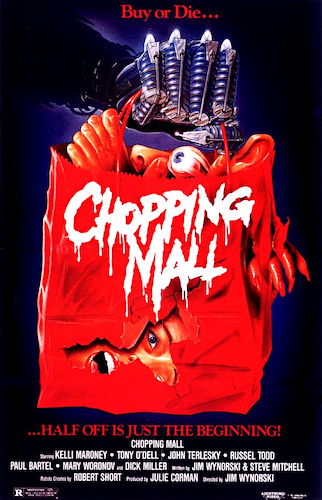
    Chopping Mall

    (1986)

    Jim Wynorski | 76 mins | digital (HD) | 16:9 | USA / English | 18 / R

    Chopping Mall

    Blood, boobs, and berserk ’bots are the order of the day in this campy sci-fi actioner.

    That’s right: “sci-fi actioner”. I don’t know where I’d heard about this, or if I’d just made inferences from the title and poster, but I’d assumed it was a regular slasher whose USP was simply “it’s set in a shopping mall”. But nope, it’s actually about security robots who go barmy and start killing a bunch of young people who’d locked themselves in a mall overnight. According to IMDb, it was originally released as Killbots — a more to-the-point title — but it performed poorly, and the producers’ reasoning was the title had made audiences think it was a Transformers-like kids movie (if anyone did take their kids to see it, boy, were they in for a surprise!) So, after cutting over quarter-of-an-hour, they re-released it with the more-clearly-exploitation-y title and… well, I don’t know if it as a major success or anything, but I guess it performed better and that’s the version that has endured.

    I don’t know what was in those deleted 15 minutes, but presumably nothing of great import. Indeed, the short running time is a blessing: it gets on with things at the start, and doesn’t try to drag them out later. It knows what we’ve come to a movie like this for, and it delivers that with admirable efficiency. What’s left is so barmy and schlocky that it’s kinda fun, even if most of it doesn’t make a lick of sense. Even allowing for the implausible setup (lightning sends robot security guards berserk), there’s little to no logic in what follows (the robots have turned murderous? Fine, but why are they such shit shots? And why, when they have an easy shot, do they suddenly stop shooting? And so on).

    Chopping Mall is no lost gem, although it may make you nostalgic for an era when they actually made stuff like this. Would the world be a better place if people were still churning out low-budget schedule-fillers full of gratuitous-but-clearly-fake violence and unnecessary-but-welcome nudity? I don’t know, but I doubt it could be any worse. At least it might’ve desensitised younger generations enough that we wouldn’t have to suffer endless rounds of “sex scenes are bad, actually” discourse on Twitter…

    3 out of 5

    Chopping Mall was the 13th new film I watched in 2023.


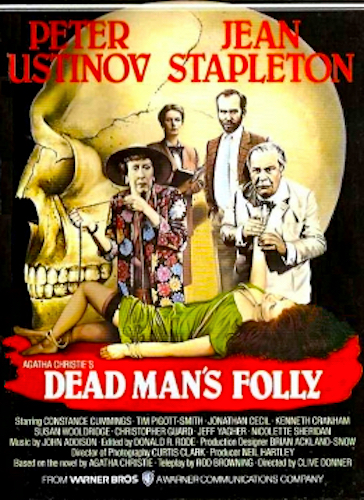
    Dead Man’s Folly

    (1986)

    Clive Donner | 94 mins | digital (SD) | 4:3 | USA / English | PG

    Dead Man's Folly

    This second of three TV movies starring Peter Ustinov as Poirot marks the fourth of his six appearance as the character overall, and it might be the low point of the generally-underwhelming bunch. Ustinov was no doubt a quality performer, and I know his version of Poirot has its fans, but, for me, he remains a lesser interpreter of the Belgian sleuth.

    This particular film does nothing to outweigh his shortcomings. I don’t know if it’s the fault of the original story, this adaptation, or just me, but I didn’t feel there was enough provided for the the viewer to join in with the whodunnit guessing game, which I think is half the fun of a murder mystery. Events just unfurled until, eventually, Poirot explained it all. Add to that a portrayal of Poirot’s sometime-sidekick Hastings by Jonathan Cecil that verges on the lascivious, and production elements (costuming, hairdos, music) that are painfully ’80s, and the recipe is all-round distasteful.

    2 out of 5

    Dead Man’s Folly was #154 in my 100 Films in a Year Challenge 2021.


    Wild Target

    (2010)

    Jonathan Lynn | 98 mins | digital (HD) | 2.35:1 | UK & France / English & French | 12 / PG-13

    Wild Target

    In this remake of French comedy-thriller Cible émouvante, Bill Nighy plays an ageing hitman who falls for his latest target, pretty young thief Emily Blunt. Romance blossoms, in what must be one of the most implausible storylines ever committed to film. That’s partly because of the 33-year age gap between 26-year-old Blunt and 59-year-old Nighy (who, frankly, seems even older — the age gap may be roughly father/daughter, but she feels more like his granddaughter), but also because the movie does little to overcome this blatant shortcoming. If it wants us to buy it, it needs to sell it, but instead it half-arses it. When you learn that Helena Bonham-Carter was originally cast in Blunt’s role (but had to pull out due to commitments to Alice in Wonderland), it all begins to make sense: you can imagine a relationship between her and Nighy working on screen, and presumably they didn’t bother to retool the screenplay in between actor changes.

    All of which says, the film just about survives because there’s enough else going on. The hitman and thief wind up on the run from the people who want her dead, with a young apprentice (Rupert Grint) in tow, and the ensuing farcical hijinks are all daft fun, with the great cast (which also includes Martin Freeman, Eileen Atkins, and Rupert Everett, among others) clearly having a good time. Sometimes that’s off-putting, but here it’s infectious.

    4 out of 5

    Wild Target was #59 in my 100 Films in a Year Challenge 2021.


  • The Return of Archive 5

    Hey, look what else is back! Almost a whole year on from the last instalment in the series, I’ve finally managed to rustle up a new Archive 5. Although, that previous post was also a comeback after a long time off, so I probably shouldn’t celebrate until I mange two in a row.

    Being another year on, the pool of possible reviews has increased — quite significantly, as I’ve so far covered hardly anything from my 2023 viewing. But today’s five were chosen (but not written up, otherwise I’d’ve posted it) back when Vol.6 was published, so they were selected (at random) from the backlog of then-443 unreviewed feature films from my 2018 to 2022 viewing.

    This week’s hideously delayed Archive 5 are…

  • The Mummy (1932)
  • So Dark the Night (1946)
  • The Adventures of Ichabod and Mr. Toad (1949)
  • A Brief History of Time Travel (2018)
  • Misery (1990)


    The Mummy

    (1932)

    Karl Freund | 73 mins | Blu-ray | 1.33:1 | United States / English | PG

    The Mummy

    The third classic Universal Monster film, following Dracula and Frankenstein, The Mummy ditches literary adaptation for a horror based in then-contemporary fears. Nowadays, the notion of digging up of mummies is an Old Thing, but in 1932 they were just a decade on from the discovery of Tutankhamen’s tomb, and it was only in that year that it was finally fully excavated, so that kind of thing — and, of course, the attached curses — were still fresh in the public imagination.

    In the wake of Frankenstein, The Old Dark House, and The Mask of Fu Manchu, Boris Karloff was now the horror star in Hollywood, and so The Mummy was conceived as a starring role for him. Perhaps that explains why, plot wise, it’s a remix of Universal’s take on Dracula: the villain is after the girl, using supernatural tricks to lure her; the dashing young man is in love with her; there’s even a Van Helsing-esque figure with the knowledge to stop the monster. But originality is not the be-all-and-end-all — overall, I much preferred this to Dracula. Karloff is superb as the antagonist; Zita Johann (and her array of skimpy outfits) makes for an appealing (and, perhaps in spite of said clothing, competent) female lead; and there’s some intensely atmospheric direction from Karl Freund. His name may not seem as familiar as Dracula’s Tod Browning or Frankenstein’s James Whale, but he was already an acclaimed cinematographer, who’d shot the likes of Metropolis and, er, Dracula.

    The Mummy presented considerably less bandaged-wrapped foot-dragging living-corpse action than I expected. I guess those clichés come from the sequels (reportedly, their stories are entirely unconnected to this one) or another studio’s efforts (Hammer, perhaps). Instead, it’s quite simply one of my absolute favourites from the initial wave of Universal’s classic monster movies.

    4 out of 5

    The Mummy was #122 in my 100 Films in a Year Challenge 2021.


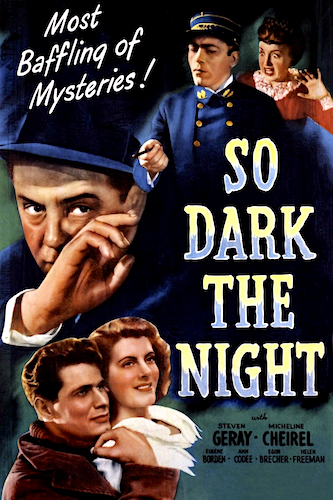
    So Dark the Night

    (1946)

    Joseph H. Lewis | 70 mins | Blu-ray | 1.37:1 | USA / English | PG

    So Dark the Night

    How many serial killer mysteries have you seen that spend their first half being bucolic romances? I can’t think of any others than So Dark the Night. The title and setup don’t prepare you for it, but the first half-hour is more of a genteel country romcom, with only the slightest hint there might be darker turns to come. Half-an-hour isn’t long generally, but it’s almost halfway through a film this short — and that’s when things take an abrupt turn for the murderous.

    The short running time probably works against the film, on the whole. For example, it makes it easy to miss that there are several interesting supporting characters or facets to main characters. Love interest Nanette is sort of depicted as an innocent ingénue, but we first meet her ogling the expensiveness of Henri’s car, and then she and her mother conspire for her to meet Henri and try to elicit a romantic connection, even though she’s already got a long-standing engagement. That’s not exactly upstanding and sweet behaviour, is it? Then there’s the widowed maid, who’s so lonely and desperate to escape that even after she suspects the killer, she pleads to be taken with him.

    Along with a few other factors that are rather spoilersome, this is a film that takes the usual shape of the whodunnit and subverts it to disquieting effect. It’s a film that, on the surface, looks nothing like a noir — it’s set in a pretty French village (created with surprising authenticity on Columbia’s backlot) — but exposes that the darkness and violence of the human condition can exist anywhere. I say “on the surface” because the film’s photography is great, with many interesting shot and lightning choices peppered about, without overwhelming proceedings with unnecessary flourishes.

    4 out of 5

    So Dark the Night was #57 in my 100 Films in a Year Challenge 2020.


    The Adventures of
    Ichabod and Mr. Toad

    (1949)

    James Algar, Clyde Geronimi & Jack Kinney | 69 mins | digital (HD) | 4:3 | USA / English | U / G

    The Adventures of Ichabod and Mr. Toad

    Disney’s canon of animated films goes through a weird blip between Bambi in 1942 and Cinderella in 1950. That’s when the six so-called “package films” were released, bundling together short films into themed features. They’re almost a footnote in the Disney animated canon — I mean, before them you’ve got Snow White, Pinocchio, Fantasia, Dumbo, and Bambi, and after you’ve got Cinderella, Alice in Wonderland, Peter Pan, Lady and the Tramp, Sleeping Beauty, and so on… and on… But it’s not a period of hidden gems: these are films mostly only worth bothering with if you’re a completist. This final one is, perhaps, the exception. At any rate, it’s easily the best of the package films.

    Whereas the others contained multiple short features, here there are just two: adaptations of The Wind in the Willows and The Legend of Sleepy Hollow. There’s barely any faffing about with linking segments, either: a quick intro from Basil Rathbone (who narrates Willows), and an equally speedy transition from Bing Crosby (who narrates Sleepy Hollow), and that’s it. And that’s all it needs, instead spending time and resources on the stories themselves.

    I’ve never been a huge fan of The Wind in the Willows, but this is a fast-paced and fun version, with a particularly entertaining ‘action sequence’ in Toad Hall as the good guys and weasels run around trying to keep hold of the property deed. Then, The Legend of Sleepy Hollow recasts the famous horror story as… a small-town romantic farce. No, seriously. It’s fine if a little dull, but picks up considerably when it reaches Halloween and we get a song about the headless horseman, a highly atmospheric sequence in spooky woods, and an exciting/comical chase between Ichabod and the horseman. It takes a while to get there, but it’s worth it.

    3 out of 5

    The Adventures of Ichabod and Mr. Toad was #176 in my 100 Films in a Year Challenge 2020.


    A Brief History of Time Travel

    (2018)

    Gisella Bustillos | 69 mins | digital (HD) | 16:9 | USA / English

    A Brief History of Time Travel

    It’s a decade this year since I backed this documentary on Kickstarter — how’s that for time travel for you? I mean, technically, “normal and linear”, but also: time flies. It doesn’t feel like Kickstarter’s even been around that long. What the hell is going on with our perception of time (for example, the increasingly widespread observation on social media that everyone’s perception of how long ago things were is stuck somewhere in the early- to mid-2000s) would be an interesting topic for a documentary.

    But anyway, that’s not what this is. This is a wide-ranging overview of the concept of time travel, taking in fiction, science (both real and theoretical), and religion, as well as how those things interrelate and influence each other. It’s probably most interested in the science side, using other angles to illustrate rather than be examined in their own right. For example, it details the significance of H.G. Wells’s The Time Machine (the first story to involve time travel into the future, and one of the first where the travel was achieved via a man-made machine rather than some form of magic), but that’s about the last fictional story it describes. There are clips from Doctor Who and Back to the Future, but no discussion of their influence, nor of the kinds of time travel they present.

    At its best, the film draws interesting links and parallels between the different spheres it’s encompassing. This is at its most poignant when we meet a physicist who got into the field because his father died when he was young and time travel stories offered the idea that he might be able to revisit his dad, which developed into him learning the real science and becoming a physicist. Now, he believes he has a workable theory for how information could be sent into the past. I have no idea if that stands up to scrutiny, mind — the film doesn’t vet it with other interviewees’ opinions.

    Considering it only runs a little over an hour, it’s unsurprising that there’s not room to cover everything in depth. Nonetheless, it’s so blatantly leaving significant amounts of material untouched that you can’t help but feel disappointed. To be kind, it’s a reasonable primer for the uninitiated, with interesting bits of info dropped here and there, but almost every topic covered would merit a deeper, dedicated examination.

    3 out of 5

    A Brief History of Time Travel was #123 in my 100 Films in a Year Challenge 2021.


    Misery

    (1990)

    Rob Reiner | 107 mins | digital (HD) | 1.85:1 | USA / English | 15 / R

    Misery

    I feel like Misery is one of those movies that was once very well known in general pop culture, but has since slipped back, if not into obscurity then certainly into a lesser-known status, remembered only when mentioned by people who were there or as one in a list of Stephen King adaptations, that sort of thing. And that also feels fair enough, because it’s very much a movie that’s pretty good but not exceptional. The author whose work it’s taken from, the filmmaker who’s adapted it, and the main players on screen have all been responsible for or involved in even better and more enduring works of cinema, so of course this has become an “and also” note in their careers.

    Perhaps transcending that — and, certainly, by far the most famous thing about Misery — is the ankle-bashing scene, which unfortunately means you spend most of the film waiting for it to turn up, and when it does it’s rather unaffecting. That’s time and infamy for you. The former: it’s not as gruesome as it would be if shot today. The latter: I’d already seen the clip a dozen times. I can see how it was striking on the film’s original release, but familiarity has really blunted it.

    Fortunately, there’s more to the film than one shocking act of violence. Kathy Bates is excellent as Annie Wilkes, making her wild mood swings terrifyingly plausible. Her Oscar was well earned. Then there’s the subplot with the local sheriff and his unceasing investigation, which also introduces a welcome note of comedy via his interactions with his deputy (who’s his wife) and some of the other townsfolk. He’s brought to life with immense likability by Richard Farnsworth, and I’d’ve happily watched a whole movie based around him. On the whole, the film has a somewhat underwhelming “TV movie” feel to its visual (lack of) style, but there are some nicely done bits: the scene where Annie’s coming home while Paul tries to cover up that he’s been out and about; the final fight, which is just the right mix of tense, scrappy, and believably comical.

    4 out of 5

    Misery was #230 in my 100 Films in a Year Challenge 2020.


  • Archive 5, Vol.6

    Hey, wouldja look what it is! After getting off to a fairly strong start back at the beginning of 2022, I allowed my Archive 5 strand to fall by the wayside while I made a concerted attempt to stay up-to-date reviewing my new viewing (with mixed success). But now it’s back, hopefully on a more permanent basis. And I guess going forward it should include what’s left of 2022, because otherwise I’m stuck trying to catch up on those reviews before I can even begin 2023. But not just yet, because I selected today’s five films back when Vol.6 should originally have been posted (last February, gasp!)

    For those who’ve forgotten, I have a backlog of 421 unreviewed feature films from my 2018 to 2021 viewing (448 if we add in 2022 too). This column is where I give those films their day, five at a time, selected by a random number generator.

    Today, some films sizzle with heat or tension, while others fizzle into disappointment. This week’s Archive 5 are…

  • Paris When It Sizzles (1964)
  • 7500 (2019)
  • The Rhythm Section (2020)
  • Carefree (1938)
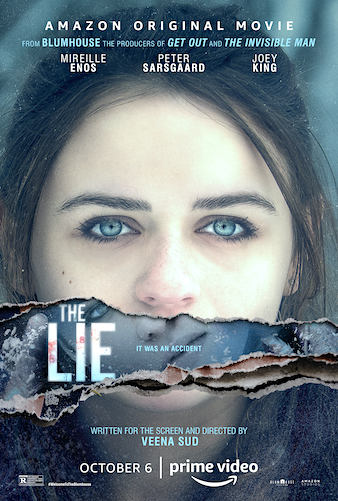
  • The Lie (2018)


    Paris When It Sizzles

    (1964)

    Richard Quine | 110 mins | digital (HD) | 16:9 | USA / English | U

    Paris When It Sizzles

    William Holden and Audrey Hepburn are clearly having a whale of a time in this marvellously cine-literate romp about a struggling screenwriter (Holden) and the secretary (Hepburn) hired to type up the script he hasn’t actually started. With the deadline just two days away, the pair rush to put a script together, which plays out as a film-within-a-film, also starring Holden and Hepburn, and allowing them even more fun as they get to overact extraordinarily. The “inside baseball” feel of the thing is furthered by a handful of surprise cameos.

    Perhaps it’s me just misjudging the era, but the whole thing feels somewhat ahead of its time. In the way its such an insider’s riff on the movie industry, it feels like something you wouldn’t expect to have emerged until maybe the ’90s (The Player being an obvious point of reference). How well that worked for audiences at the time, I don’t know — maybe it did come across as too esoteric — but, viewed today by anyone with an idea of the history and inner workings of the Hollywood machine — it’s a lot of madcap fun.

    5 out of 5

    Paris When It Sizzles was #129 in my 100 Films in a Year Challenge 2020. It placed 20th on my list of The Best Films I Saw in 2020.


    7500

    (2019)

    Patrick Vollrath | 93 mins | digital (UHD) | 2.39:1 | Germany, Austria & USA / English, German & Turkish | 15 / R

    7500

    After a title sequence that uses security camera footage to follow some shifty-looking blokes around Berlin airport, the film fades up in a passenger airplane cockpit as the crew arrive and begin their regular pre-flight routines. It’s a location we won’t leave for the next 80 minutes, as the unremarkable flight to Paris takes a turn when the aforementioned shifty-looking blokes attempt to invade the cockpit mid-flight, leaving it up to copilot Joseph Gordon-Levitt to try to rescue the situation.

    A tense thriller set entirely in one confined location and told in (near-as-dammit-)real-time? This film could have been made just for me. Suffice to say, I was suitably pleased. This kind of style and pace clearly won’t be to everyone’s taste (I mean, the first 15 or so minutes are almost entirely about watching the pilots just doing their everyday job), but there’s something about the format that does it for me. I think it’s something to do with the inescapability of real-time — that what’s happening and what will happen is going to last as long as it lasts, no shortcuts — that serves to underscore the tension of a thriller storyline. That said, in this case the final act does lose some of the momentum and tension, as much as it tries to maintain it, meaning it feels like it limps to the end, with the really suspenseful stuff having expired a little after the hour mark. It’s not that this final act is bad, just that it feels like a comedown from what’s gone before.

    Still, Gordon-Levitt is great throughout, carrying a large chunk of the film singlehanded, and there’s ultimately a more nuanced treatment of the terrorists than you might expect. I saw someone criticise it for trying to humanise one of them, as if that was problematic. Sure, terrorists are bad guys, but they’re still human beings underneath, and they’ve been plenty demonised enough in plenty of less thoughtful media — I’m not sure it should be considered controversial or a step too far to suggest that one of them (out of four) might be a misguided teenager rather than Evil Personified. On the flip side, I read another review that trashed the film for “featuring brown terrorists again”. I imagine those two reviewers would have a lot to disagree about…

    4 out of 5

    7500 was #144 in my 100 Films in a Year Challenge 2020.


    The Rhythm Section

    (2020)

    Reed Morano | 110 mins | digital (HD) | 2.39:1 | UK & USA / English & French | 15 / R

    The Rhythm Section

    I don’t know about you, but sometimes I watch movies with a bad rep in case I see something in them that everyone else* missed — because that does happen. In that vein, The Rhythm Section isn’t some overlooked masterpiece, but I don’t really get why everyone hated it so much.

    Blake Lively uglies up and forces an English accent to star as Stephanie Patrick, a drug-addicted prozzie who used to be a pretty Oxford student until her family died in a plane crash three years earlier, which a journalist now tells her was a terrorist attack that MI6 have covered up. Events lead her to a disgraced agent (Jude Law) who agrees to train her to hunt down the people responsible.

    Hardly the most plausible storyline ever, but it’s no more ludicrous than many a thriller. So, as a genre piece, well, it’s certainly not the greatest action-thriller ever made, but it’s decent overall with a couple of neat twists on the usual formula. The primary one is that our heroine isn’t actually very good at being an action hero and keeps fucking up. Normally these films are about highly competent super agents (Jason Bourne, John Wick, etc), or newbies who take to it like a duck to water. Stephanie’s borderline incompetence is not only a mite more realistic, it makes a refreshing change, and at times is even successfully used to heighten the tension.

    Unfortunately, other aspects were stale on arrival. For no reason, it begins halfway through and then does the “8 Months Earlier” thing. This is a personal bugbear of mine, because it’s a trick that’s been used to death at this point, routinely trotted out to no real purpose. Usually it’s used as a cheap way to deliver some action upfront because otherwise there won’t be any until somewhere in Act Two, which is just an insult to the audience’s attention span. In other cases, the film just got unlucky. I imagine when they conceived of a single-shot car chase it seemed like an original idea — as it probably did to all the other filmmakers who attempted the same thing around the same time; not least Netflix’s Extraction, which did it bigger and therefore better. Oh well.

    Ultimately, I suppose The Rhythm Section is fundamentally derivative, with only fleeting moments of originality. But I still thing everyone else was overly negative — it’s not bad, just not strikingly fresh. I think if you enjoy Bourne-esque action-thrillers, you should enjoy this.

    3 out of 5

    * It’s never everyone else, but you know what I mean. ^

    The Rhythm Section was #138 in my 100 Films in a Year Challenge 2020.


    Carefree

    (1938)

    Mark Sandrich | 83 mins | digital (SD) | 4:3 | USA / English | U

    Carefree

    Fred Astaire is a psychiatrist prone to misogynistic views and unethical practices who mimes playing the harmonica and performs dance routines with golf balls, and Ginger Rogers does a song & dance about yams (because Astaire thought it was so silly, he refused to sing it. He was right). Yeah, I think it’s fair to say this isn’t the couple’s finest hour. The public agreed: this was the first Astaire-Rogers film to lose money on its initial release.

    That said, it’s not without the occasional charm. Rogers still shines — the sequence where she goes around playing naughty pranks with a cheeky grin while under the influence of anaesthetic is a delight — and there’s a slow-motion dream-sequence dance that is rather lovely. But these are fleeting pleasures amongst the distasteful storyline (see: my description of Astaire’s character) and less refined moments (there’s a song about yams).

    2 out of 5

    Carefree was #97 in my 100 Films in a Year Challenge 2021.


    The Lie

    (2018)

    Veena Sud | 95 mins | digital (UHD) | 2.39:1 | USA / English | 15 / R

    The Lie

    Although it debuted to most of the world as one in a series of eight Blumhouse original movies that premiered together on Amazon Prime in 2020, The Lie is listed as a 2018 film because that’s when it premiered at TIFF under a different title (Between Earth and Sky). The fact it went from being a standalone production to one of a series released en masse provides a clue as to how well it went down.

    The film has a solid premise that starts out well enough: a father (Peter Sarsgaard) and daughter (Joey King) are driving to a ballet retreat when they spot her best friend waiting by the side of the road, so they offer her a lift. Later, they stop in the middle of nowhere so the friend can go to the bathroom, but she falls off a bridge into an icy river. Or possibly the daughter pushed her. Either way, presumably she couldn’t survive the fall, and her body has washed away. Fearing how all that would look, they set about covering it up… which is where things go awry, both for the characters and us viewers. The longer the story goes on, the further it departs from actions and consequences that feel plausible. It’s not ludicrously far-fetched, it just doesn’t feel right; like people wouldn’t make those decisions, or those decisions wouldn’t have those consequences. The lead cast give it their best shot, but they’re battling against material that’s below their skills.

    Then there’s an inevitable last-minute twist that just hurls the whole thing off a bridge. Kate Erbland for IndieWire wrote that it “should rank among the all-time great fake-outs,” and she’s sort of right: it could have been a reveal for the ages, but rather than eliciting a pleasant “OMG I don’t believe it!”, it plays as “ugh, I don’t believe it.”

    2 out of 5

    The Lie was #245 in my 100 Films in a Year Challenge 2020.


  • 2022 | Weeks 29–32

    2022 may be rushing headlong towards its final stretch (only one month ’til Christmas, people!), but my reviews are lagging behind somewhat: this update takes us all the way back to July and August.

    That said, there’s quite a long spread covered here, because I only watched one film in each of these weeks: 45 Years in week 29, The Bucket List in week 30, previously-reviewed Prey in week 31, and Tintin and the Lake of Sharks in week 32. That’s definitely not the right way to go about watching 100 films in a year, but there we go.

  • 45 Years (2015)
  • The Bucket List (2007)
  • Tintin and the Lake of Sharks (1972), aka Tintin et le lac aux requins


    45 Years

    (2015)

    Andrew Haigh | 95 mins | digital (HD) | 1.85:1 | UK / English | 15 / R

    45 Years

    Charlotte Rampling and Tom Courtenay star as a couple preparing for their 45th wedding anniversary party, when their comfy relationship is rocked by news that brings to the surface events from his past.

    What could have been a histrionic drama about the nature of trust in a relationship instead takes its cue from the characters’ advanced age, and so is a more understated consideration of the same. The length and passage of time is relevant, too: if something happened a long time ago but you only just learnt about it, does that change how you react to the news? Should it? And is the real revelation not the news itself, but the realisation that, even if you’ve lived closely with another person for decades, you can never be truly sure you know them. Another person’s true self is fundamentally unknowable, for any one of us.

    All of which might sound a bit highfalutin, but 45 Years is the kind of film that revels in ambiguity, with characters who never let on their true feelings — in that sense, it feels like a deliberate Acting Showcase for Rampling — and a vague ending, all of which invites you to draw your own conclusions. The final moment feels pointed, but the openness of what went before means it’s up to you what it means. There’s something truthful about that, but also something frustrating.

    4 out of 5


    The Bucket List

    (2007)

    Rob Reiner | 97 mins | digital (HD) | 16:9 | USA / English | 12 / PG-13

    The Bucket List

    I may have written before (but not recently, so let’s do it again) about how Rob Reiner’s directorial career baffles me. He had an incredible run in the ’80s and ’90s — almost back to back he helmed This Is Spinal Tap, Stand By Me, The Princess Bride, When Harry Met Sally, Misery, and A Few Good Men — but then his career suddenly nosedives into a bunch of stuff you’ve mostly never even heard of. What happened? Is there some “John Landis on Twilight Zone“-style ‘secret’ I’m unaware of?

    One of the very few exceptions in his later career (which certainly didn’t lead to that being revived) was this, a breakout hit 15 years ago (yes, it’s 15 years old) of the kind they don’t make so much anymore: a mainstream comedy-drama aimed at adults. It’s about two old men (pure star power in Jack Nicholson and Morgan Freeman) with only months left to live, who decide to spend their final days going on a tour of… green screen studios and kinda-low-res stock footage, apparently. I guess you didn’t get location filming on the kind of budget a film like this was made for even back in 2007.

    Cheap production values aside, it has an insistent sentimentality — undercut with just a big enough dose of snark to stop it becoming too saccharine — that, unsurprisingly, played well with general audiences but, equally unsurprisingly, doesn’t seem to be to the taste of many cinephiles (just look at the middling-to-low scores on Letterboxd, especially of the most-liked reviews, and contrast with its sturdy 7.4 score on IMDb). While I wouldn’t go quite as harsh as many of my fellow Letterboxd users, I do think it’s not that good — it’s broadly likeable, a generally pleasant way to pass 90 minutes, rather than in any way exceptional.

    3 out of 5


    Tintin and the Lake of Sharks

    (1972)

    aka Tintin et le lac aux requins / The Adventures of Tintin: The Mystery of Shark Lake

    Raymond Leblanc | 74 mins | DVD | 4:3 | Belgium & France / English | U

    Tintin and the Lake of Sharks

    Having adapted several of Hergé’s Tintin books for TV and film, Belgian animation outfit Belvision for some reason opted to create an original story for their second big-screen outing with the character (it was later retrofitted into book form, using frames from the film as the illustrations). Written not by Hergé but his friend, fellow Belgian comics creator Greg (aka Michel Regnier), Lake of Sharks feels like exactly what it is: an imitation of a Tintin adventure rather than the real deal.

    Events start out in a typically Tintin fashion, with some crooks after an invention of Professor Calculus’s; but later things take a turn for the Bondian, including an elaborate underwater lair that owes a debt to the imagination of Ken Adam. Eventually it all gets a bit silly, with stuff like an ever-expanding bouncy 3D photocopier, or the villain’s elaborate “you will die in one hour” execution method for Tintin. That kind of adventure serial writing has been so widely mocked at this point (the Austin Powers movies took aim at it 25 years ago; others may have done so before then) that it’s hard to remember there was ever a time when it was still played with a straight face.

    The animation is mostly of a slightly higher quality than Belvision’s previous efforts, but the quality of the designs is variable. The regular cast feel faithfully copied from Hergé, and most other characters are in the right style; but there are a couple of major child characters who look out of place, along with their pet dog. It’s a bit like when you were a kid and mixed action figures from different ranges into the same game: yeah, they’re all still plastic figurines (or, in the case of the film, hand-drawn 2D characters), but stylistically they don’t line up.

    The English dub is an American effort, and far from ideal. None of the voices are great, but most suffice once you get used to them. The exception is Captain Haddock, who is egregiously bad throughout. That said, we’re also subjected to the kids singing a song about a donkey that is unspeakably awful. Couldn’t they have cast actors who could sing? At least that would’ve taken the edge off it.

    3 out of 5

    Tintin and the Lake of Sharks is the 50th film in my 100 Films in a Year Challenge 2022.


  • The 100 Films Guide to Scream

    I don’t always do anything to mark Halloween on this blog… but when I do, this is the kind of thing I do: complete coverage of the Scream movies (so far).

    That means all-new “100 Films Guide To”s for the original film, its two sequels, and the 2011 legacy sequel, plus my brand-new review of this year’s, er, new legacy sequel. You know, the film that should’ve been called 5cream, but wasn’t.


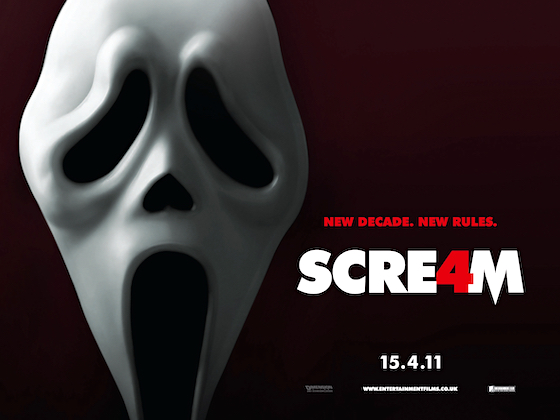
    Scre4m (2011)

    The 100 Films Guide to…

    Scre4m

    New Decade. New Rules.

    Also Known As: Scream 4. Not in the film itself, though. Nor on any of its marketing. But most places on the internet? Apparently. Quite why certain online movie databases are so resistant to listing the film by its proper title, I don’t know.

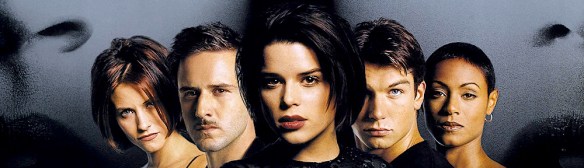
    Country: USA
    Language: English
    Runtime: 111 minutes
    BBFC: 15
    MPAA: R

    Original Release: 13th April 2011 (Belgium, Egypt & France)
    US & UK Release: 15th April 2011
    Budget: $40 million
    Worldwide Gross: $95.99 million

    Stars
    Neve Campbell (Scream (1996), Scream (2022))
    Courtney Cox (Scream 2, Scream (2022))
    David Arquette (Scream 3, Scream (2022))
    Emma Roberts (Wild Child, We’re the Millers)
    Hayden Panettiere (I Love You, Beth Cooper, Scream 6)

    Director
    Wes Craven (Wes Craven’s New Nightmare, Scream)

    Screenwriter
    Kevin Williamson (Scream, I Know What You Did Last Summer)

    The Story
    Ten years since the last Ghostface killings, and the tragic events have faded into festivity for the teens of Woodsboro, who now celebrate the anniversary of the first killings. But this year is a special one, because Sidney Prescott is back in town, and someone has donned the mask to go on a new killing spree…

    Our Heroes
    Sidney Prescott, perennial survivor of multiple Ghostface killers, must face one again as she returns to her hometown for the first time in years to promote her new book. Dewey — now Sheriff — and Gale — now his wife — are back, too, along with an array of fresh faces ready for the slaughter.

    Our Villain
    After a decade away, Ghostface is back! Except, as always, it’s a new killer (or killers) behind the famous mask. They’re still stalking Sidney, her friends and her family, but who is it and what’s their motive this time?

    Best Supporting Character
    Each new Scream film has introduced fresh faces (the films have a habit of killing off most of the supporting cast each time round, funnily enough, so you kinda have to), but the “whole new generation” angle of Scre4m makes it feel like there are even more this time round. While many are clear mirrors of characters from the first film (deliberately so), perhaps the one that manages to stand out the most in her own right is Hayden Panettiere’s Kirby, sassy best friend to Sidney’s cousin Jill. Yeah, she’s he new version of Rose McGowan’s Tatum, but, unlike some of the other characters, she doesn’t just feel like a 2011-painted carbon copy of the original. Plus, (major spoiler alert!) there’s a reason that, despite this film leaving her for dead, she’s set to reappear in Scream 6.

    Memorable Quote
    The Voice: “It’s time for your last-chance question. Name the remake of the groundbreaking horror movie in which the vill—”
    Kirby: “Halloween, Texas Chainsaw, Dawn of the Dead, The Hills Have Eyes, Amityville Horror, Last House on the Left, Friday the 13th, A Nightmare on Elm Street, My Bloody Valentine, When a Stranger Calls, Prom Night, Black Christmas, House of Wax, The Fog, Piranha. It’s one of those, right?”

    Memorable Scene
    The film begins with two teen girls at home choosing a movie to watch, when a mysterious caller with a gravelly voice threatens their lives. What happens next would be a spoiler… but, from the very start, Scre4m sets out its stall as a movie that, in true franchise tradition, is going to play with the rules and expectations of movies.

    Previously on…
    After a hugely successful and acclaimed first film, Scream did what so many popular movies have done in the past few decades: got turned into a trilogy. Really, it’s only fitting that it got in early on the 2010s trend of “reviving a once-popular but thought-finished film series”.

    Next time…
    And now it’s getting in on the “just keep making more films forever” trend that once used to be more-or-less limited to James Bond and shitty horror sequels but nowadays is the defining feature of the entirety of Hollywood. First there was a new film simply titled Scream (the fact it’s not called 5cream or Scream5 is a sin), and next is… a second/sixth film that no one seems quite sure what the final title will be. I guess we’ll find out when it’s released next March.

    Awards
    2 Scream Awards nominations (Horror Actress (Neve Campbell), Best Cameo (Anna Paquin & Kristen Bell))

    Elsewhere on 100 Films…
    I originally reviewed Scre4m after I first watched it back in 2012, when I felt the film was “kind of old school. It fits better in the era of the original trilogy and/or earlier horror films than with the development of the genre in the intervening decade.” I went on to suggest it “plays best to those who saw the first three at the right age, i.e. mid-to-late teens or so. I shouldn’t think it would engage a new audience all that much, especially ones versed in the gorier Saw and Final Destination franchises. But for those of us with fond memories (to one degree or another) of the first three films, it’s kind of a nice little revisit.”

    Verdict

    The original Scream trilogy was the defining horror franchise of the ’90s, so reviving it over a decade after its last instalment seemed like the usual Hollywood BS of revisiting any recognisable IP. But with the original last, screenwriter, and director all returning, the film actually did what Scream has always done: be part scary movie, and part commentary on the horror genre landscape. And this time it throws in some social commentary for good measure, with some slightly-ahead-of-its-time satire of social media celebrities. It’s only become more pertinent with the stratospheric rise of YouTubers in the additional decade since the film came out.

    One criticism I’ve seen levelled at Scre4m a few times is that it takes on remakes when it isn’t a remake itself. Well, that wouldn’t work, would it? For the characters to know they’re in a ‘remake’, they’d have to know there was an original — which by default would mean it’s not a remake but a continuation. In fact, the film does address this: it points out that we’re back in the original town, with killers who are following the pattern of the original movie (in-universe, that’s Stab, which seems to be a pretty faithful telling of the ‘real-life’ events shown in Scream). Most of the new characters are analogous to ones from the first film, too. So, Scre4m is, in fact, a remake… while also not being one, obviously.

    All in all, the eleven years between Scream 3 and Scre4m gave the filmmakers enough fresh material to chew on to make the film a more-than-worthwhile addition to the franchise. For my money, the fresh perspectives make it easily the series’ best film since the first.