
Kevin Greutert | 92 mins | Blu-ray | 18 / R
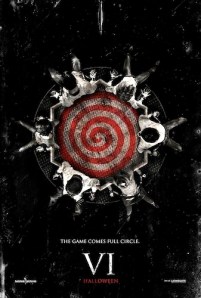 The Saw franchise dragged itself to a seventh (and final? The advertising said so; no one cares enough to spoil it any more so I’ve no idea if it genuinely was) instalment this past Halloween, but here I am playing catch-up with the sixth — you know, the one that got soundly trounced by Paranormal Activity in cinemas.
It doesn’t start well. The opening sequence is awful, sinking to torture porn levels again (something I feel the Saw series mostly manages to rise above, if only slightly) in one of the worst examples I’ve personally seen. It’s unquestionably gratuitous, the only people who could possibly take an interest in it being those who want to see characters quite literally tortured — in this case, by hacking off bits of their own bodies. Some of the traps in Saw are clever or intriguing, even when they’re gruesome, but this is just the second murder from Se7en reenacted in an overlong fashion with prosthetics and too many gory close-ups. It’s uncomfortable to watch — not because it’s scary, but because it’s scary that anyone might find this kind of sequence enjoyable.
And then, almost suddenly, it gets good. It’s probably the best Saw movie since the first.
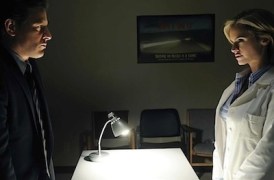 OK, it’s far from flawless. It’s still tangled up in the over-complex ongoing story, and peppered with flashbacks, varying from flash frames to large chunks, to try to help you follow it. On the one hand that’s lazy storytelling; on the other, much welcomed — the plot would surely be impossible to navigate without it.
But, as with all later Saw films, this is all a sideshow to the main attraction: the standalone ‘Game of the Film’, the Saw equivalent of ‘Monster of the Week’. Saw VI takes on a political dimension by tackling the thorny issue of American health insurance. It hardly presents a well-considered and in-depth debate, true, but the “evils of the insurance business” angle is a welcome motivation and adds something to both the plot and the denouement. The latter has the best twist a Saw movie has had for a while (following the non-twist of the fifth’s ending, a muddled one in the fourth, and a distinctly mixed effort in the third). It actually caught me unawares, so that’s some successful misdirection they pulled off right there.
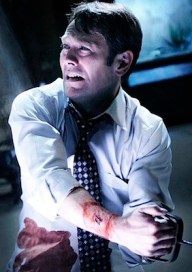 Following it, there’s a nicely edited closing montage. Not particularly relevant — in other entries it’s used to expose the twist, here the twist is pretty self explanatory — but it’s oddly, briefly, rewarding for those of us who’ve sat through all the films so far (and, to be frank, if you haven’t sat through the others, you’d be mad to jump on at this point). Plus there’s an intriguing post-credits scene. No idea what it means or signifies, but it’s clearly laying the groundwork for something in the future.
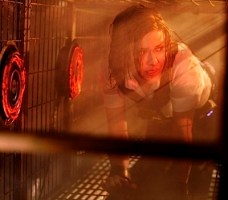
Aside from that foul opener, the traps and games show a level of innovation and forethought the other films have sometimes lacked. In fairness, the game-of-the-film and its traps are often the best bit of any Saw film, and though some of these could be better sold — the moderately infamous shotgun carousel would be improved if we had a vested interest in the six competitors (though that would mean boosting the running time by having to introduce them all, so maybe it is better this way) — they are all amongst the series’ most engaging.
It wouldn’t do to not mention some of the other flaws — it’s far from perfect, of course. The plot is riddled with holes and improbabilities (even aside obvious ones about the construction of the traps and kidnapping of victims), while the acting is hardly top-drawer — there aren’t even guest stars big enough to rival Saw V’s “Luke from Gilmore Girls”, “Darla from Buffy / Dexter’s girlfriend” or “Chloe’s boyfriend from 24” — but then you don’t expect watertight plotting or RSC acting from a Saw film.
 Note: this is an Extended or Extreme or Whatever Edition again. Minor differences only, I believe, which you can find listed here.
Fortunately this franchise entry doesn’t live or die by its relation to the ongoing plot arc or its final twist. But combine that solid surprise with the plot’s ripped-from-the-headlines basis and it earns a third star. At the risk of damning with faint praise, this is largely the best Saw since the first.

 The near future: most of mankind now lives through ‘surrogates’ — robots that look like perfect versions of ourselves (generally), which we control from elaborate machines sat around in our homes. The anonymity of the online world brought into the real one, essentially.
 while almost every plot ‘twist’ is startlingly unsurprising (though it does manage one half decent one).
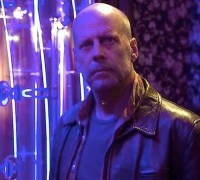 If you want to muse on what makes us human in a world of near-identical robotic replicas, watch

 A Good Woman adapts Oscar Wilde’s 1892 play Lady Windermere’s Fan, switching the setting to the Amalfi Coast in 1930. If one didn’t know better, one would believe that’s when and where it was always set.
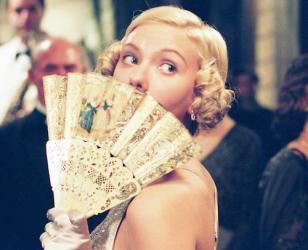 So it seems one’s perception of the film lies in what it is compared to. Compared to Wilde’s original, it may indeed be a pale imitation, relocated to an inappropriate country and period, with lacklustre performances and incongruous Wilde-penned lines crowbarred in. Taken without the context of the work it’s adapted from, however, I thought it was a flawed but, more importantly, highly amusing film.
 If you’ve ever seen the miniseries
 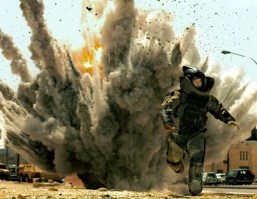 Bigelow & co construct each ‘action’ sequence with care and attention. They’re not action sequences in the truest sense — suggestions from some that she’d be a great director for, say, Bond 23 on the strength of this film are unwarranted (not that she wouldn’t be good, but this film’s action does nothing in particular to demonstrate appropriate skills). Instead of the fast-paced bullets-flying adrenaline-pumping sequences you get from An Action Movie, The Hurt Locker offers up more realistic (at least, realistic-feeling) sequences of tension as characters approach bombs, watch increasingly suspicious crowds, try to defuse the situation before the timer runs out… It could be clichéd — we’ve all seen plenty of bomb defusing scenes in movies before now — but, again, there’s a sense of “this is how it is”, rather than “this is how movies portray it for dramatic effect”. Is it how it is? I don’t know. But it certainly still packs dramatic effect.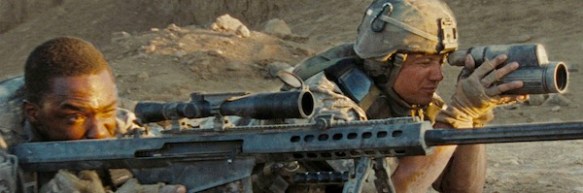
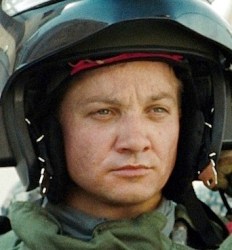 The opening quote and closing scenes make explicit the main theme — war is a drug, one James (Oscar nominee Jeremy Renner) is addicted to — but I’m not sure how present this is in the body of the story. Rather, the majority feels like an attempt to convey the experience of living as an explosives expert in a warzone, with James’ ‘addiction’ just a side effect of that. Perhaps, then, it’s making its point more subtly than by battering you round the head with cinematic cries of, “He’s addicted to war! It’s just a drug!”
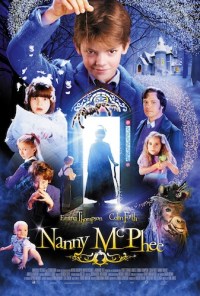 Nanny McPhee is brilliant. But to expand more directly on that sentence would be a conclusion, and so, before that, I present a collection of thoughts on bits I liked. Let’s call it “a review”.
 And even if you can’t engage with the troublesome children, surely Nanny McPhee coming in to sort them out is therefore a blessing? To say the children are a naughty, nasty rabble but McPhee is an oppressive, overbearing force is just trying to have your cake and eat it — pick a side, or pick both, oh awkward viewer. (And by “viewer” here I mean “one IMDb commenter I read”.)
 Not to mention Kelly MacDonald, the film’s sweetness and light — not like Anne Hathaway’s caricatured (deliberately) White Queen in Tim Burton’s
  Around the large cast, there’s plenty more to see. The primary-coloured sets and costumes work marvellously, a delightful mash between reality (the actual buildings, sets, costumes, etc, all look real and period-accurate) and fantasy (the bright colours!) It could’ve been garish; instead, it’s vibrant. The effects are properly magical. They don’t overwhelm, always serving the story rather than themselves, which is probably what makes them all the more effective. The climax is another highlight — though what occurs at the wedding (oh, it’s obvious there’ll be one) I shan’t spoil by describing.
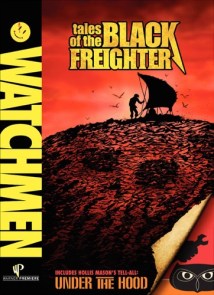 In the world of
  which could well have gone down a more modern-styled route.
 It’ll be interesting to see how it fits into the film when I finally get round to watching The Ultimate Cut — I already have some reservations waiting to be expressed in my review.
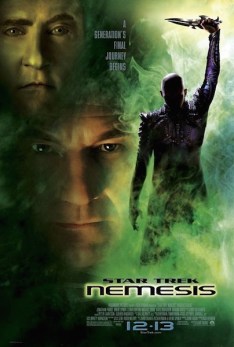 After the widespread disappointment with
  though the knowledge of better things to come means his presence somehow lifts his scenes a notch.
 Robin Williams surprised everyone when he started appearing in films as a serious actor in the early ’00s. Previously — and, if you’ve seen him on chat show in recent years, still — an outrageous funnyman, Williams turned in excellent straight performances in the likes of
  Still, Robin Williams is excellent, once again displaying his recently-found gift for serious acting. His character’s homosexuality is nicely handled too. It seems to have overshadowed the rest of the film for some viewers, but I’m confused as to why. Perhaps precisely because it doesn’t come out screaming “look, look, he’s gay! Isn’t that edgy!”, leaving it as just a fact of his character — and one that’s only important because his personal life is part of the story — means some viewers are so shocked by their own realisation of his sexual orientation that it gets in the way for them.
 this “but it happened!” logic seems to allow the filmmakers to get away with not offering adequate explanation. Then again (not sure how many “other hand”s I’m on now), it’s just like real-life: sometimes things can’t be explained in a rational way. Some people will have a problem with that from their films; sometimes I’m among them, but in this instance I think there are enough explanations and ambiguities. My problem was more that getting to them seemed to provide nothing, particularly as, being twist-free, they only confirmed one of the options that had been supposed an hour earlier.
 Do you need me to tell you how great Beauty and the Beast is? I imagine not. If you’ve seen it, you’ll know. If you haven’t, you really should, and then you’ll know.
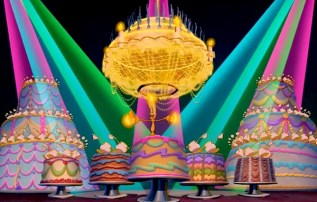 It’s not a bad song — not at all — but it’s a notch below the others. (There are a few more changes to the film than just adding the song, listed
  100Films.co.uk