
Catherine Hardwicke | 122 mins | download (HD) | 2.35:1 | USA / English | 12 / PG-13
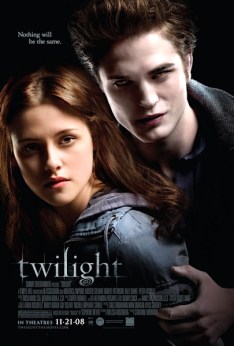 I’m not a big one for Halloween, but I’ve acknowledged the horrific holiday on a couple of occasions now. For 2015, I decided to review one of the most notorious supernatural films of recent times. A movie so horrific, it sent critics cowering behind their sofas. A film so evil, it’s perverted the minds of children — and some adults — the world over. A movie so renowned, it strikes fear into the hearts of even hardened movie lovers.
I speak, of course, of Twilight.
(That was more surprising when it was in a generically-titled post as an introduction to a whole week of reviews for the entire saga, but then it turned out I had better things to watch in October than four more Twilight films, so you’re only getting this one for now.)
For thems that don’t know, Twilight is the story of Bella Swan (Kristen Stewart), a teenager who moves to live with her father in the small town of Forks, Washington (apparently it’s actually a city, but the film would have you think it’s almost a village). Attending the local high school, she’s intrigued by the introverted Cullen siblings, in particular Edward (Robert Pattinson). To cut a long ramble short, it turns out they’re vampires, but friendly vegetarian vampires. Bella instantly falls in love with Edward in all of three seconds, because he’s kinda dangerous but pretty and sparkles in sunlight (we shall come back to this), though his lust for her brings out his blood-drinking side. Just to make things complicated, there are some other vampires visiting the area who have fewer qualms about drinking human blood…
Twilight is adapted from a young adult novel by Stephenie “one too many Es in her name” Meyer that no one had heard of (bar its legion of bloodthirsty fans) before someone thought it would make a good movie. It would probably have been better if things had stayed that way. There are many reasons for that, but let’s take them in the order they must’ve occurred. First: the story, which is also the worst part.  Edward is an odd, creepy stalker — turning up in Bella’s bedroom and staring at her while she sleeps, that kind of thing — who she then finds out is a century-old man (bit of an age gap) and, literally, a predator… but she instantly unconditionally loves him. What the merry fuck? She’s given no reason to even like the guy, and plenty of reasons to run away scared of him, but no, she falls in love. What message is this sending to young girls? That the guy who follows you around everywhere just staring at you and then confesses he’s having trouble controlling his impulse to murder you (yes, he says that) is the perfect soulmate? Not to mention that he’s 100-and-something years old and dating a 17-year-old. He shouldn’t be pre-teen girls’ idol, he should be Hugh Hefner’s!
All of the characters are this poorly drawn. Their motivations, actions, and reactions often make little sense. The number of times one of them does something because Plot are incalculable. That’s without even mentioning Bella’s almost total inability to do anything for herself, except use Google to find some tiny second-hand bookshop in a rarely-visited town to buy a book about something she wants to research, rather than, say, use Google to read up a bit first. Then she gets the book, looks at one illustration and its caption, and it’s back on Google to find out more. Nice work, Bella.
All of this is Meyer’s fault, faithfully translated to the screen by adapter Melissa Rosenberg. This is a woman with quality TV form: she was a lead writer on Dexter back in its first four seasons, when it was really, really good; now she’s showrunner on the forthcoming Marvel/Netflix series Jessica Jones, which has promising trailers and a well-reviewed first episode,  in particular its treatment of female characters. Yet she also wrote this. Even if you allow for her being hamstrung by the novel in story terms, the dialogue is appalling, in every respect. Characters bluntly state their own and each other’s emotions at each other. We’re always being told stuff instead of shown it. Scenes heavy with exposition are shot with frenetic camerawork and underscored with driving music as if that somehow makes it filmic and exciting.
Ah, the acting and direction! Nearly every performance is poor. Pattinson and Stewart spend the entire film appearing uncomfortable and puzzled — by themselves, with each other, with everyone else. Her only other emotion is “moody loner”; he at least manages a smile, maybe twice. Some of it is unbelievably cheesy, like an ’80s genre B-movie by a music video director. That kind of thing can work, a) when it’s from the period, or b) when it’s done knowingly. Twilight is neither. The Pacific Northwest location is inherently atmospheric, which is handy because Catherine Hardwicke’s direction does nothing to conjure up any such feeling itself.
And then we have vampires who sparkle. Sparkly vampires. Sparkly. Vampires. Just… why?! The whole traditional mythology of vampires is played fast and loose with, which is fine, that’s what many vampire flicks do; and there are even some borderline-neat subversions… but golly, that sparkliness is silly.
Some of these points are definitely just niggles, but the film is so laden with them that it all becomes ripe to cause either laughter or frustration. Better the former than the latter, which is why the Honest Trailer is so entertaining. See for yourself:
Believe it or not, I didn’t actually hate Twilight as much as I thought I might. Occasionally there are shots or moments that work, maybe even the odd whole scene. Bella’s dad is pretty good, both their relationship and Billy Burke’s performance. I quite liked some of the aggressively-blue cinematography, but then I do like the colour blue. There’s almost a nice element of melancholic “leaving a fun ordinary life behind for this fantastic but dangerous new one”, but I think that might be limited to literally one shot-reverse-shot of Bella seeing her friends leaving a café.
So it’s not a good film, but it’s not a “worst film ever made”-level disaster either. I mean, it’s not so bad that I can’t even bear the thought of watching the sequels. Actually, they kind of intrigue me, because (spoiler warning!) it hasn’t even got to the Jacob/werewolves stuff yet, and that whole Team Edward / Team Jacob aspect seemed to be such a big thing. And I want to see what Michael Sheen has to do with anything. And I kinda wanna see if Breaking Dawn is as batshit crazy as the plot description I once read made it sound. And maybe there’ll be more of Anna Kendrick’s cleavage, because wow, who knew that was there? (Look, it’s a movie about a creepy stalker romance between a 100-year-old man and a 17-year-old girl — 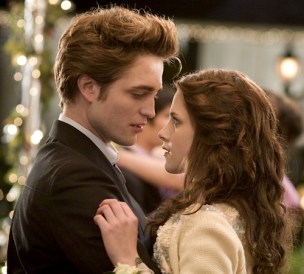 a little light ogling of someone around my own age pales in comparison.)
So that’s Twilight for you: poorly plotted, poorly written, poorly acted, poorly directed, teaching poor life lessons to its target age group, and yet still somehow so compelling that I’m prepared to sit through another eight-ish hours of the stuff. Never has the phrase “your mileage may vary” been so apt.*

* Unless someone used it in reference to the Fast & Furious films.
 2015 Academy Awards
 I started the week by reviewing
 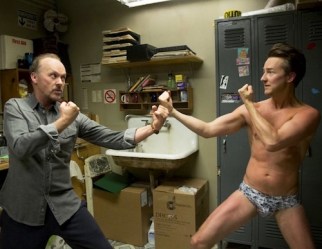 In part this is thanks to Keaton, who gives quite an immersive performance as the numbed, self-deluded star. Some people were very much behind him for the Best Actor gong, but I think it found its rightful home: Eddie Redmayne’s performance
  Famously, almost the entire film takes place in a single take. A fake one, of course. Well, I say of course —
 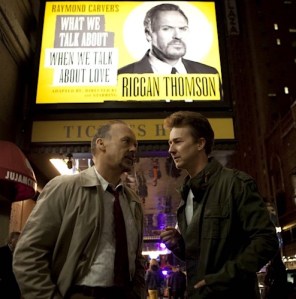 Birdman is an entertaining film, both funny enough to keep the spirits up and dramatic enough to feel there’s some depth there. It’s also a mightily impressive feat of technical moviemaking, but then I do love a long single take (even a fake one). Is it the Best Picture of 2014? Well, from the nominees, it’s not the funniest (
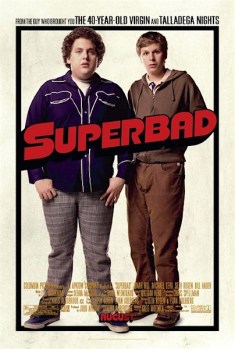 Seth Rogen and Evan Goldberg’s semi-autobiographical comedy sets Seth (Jonah Hill) and Evan (Michael Cera) (see what they did there?) on a quest to obtain booze for a party where they hope to copulate. Or, “every American teen comedy.”
 After watching
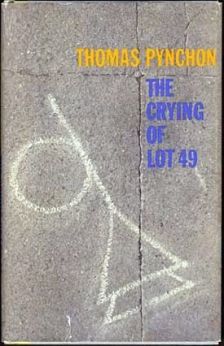
  It’s probably not fair to judge The Crying of Lot 49 by normal moviemaking standards. As a high school project to summarise a novel in a few minutes of video (which it may or may not be), it’s probably alright. Otherwise, though, it’s not worth the seven minutes; not even for die-hard fans of the author and/or novel. It is, you might say, a W.A.S.T.E. of time. #injoke
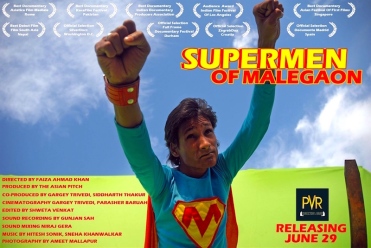 In the impoverished Indian town of Malegaon, everyone either works on the power looms and is paid a pittance, or is unemployed and so has even less; apart from the women, who are squirrelled away out of sight at home. The population is 75% Muslim, the remainder Hindu, and that leads to tension. Outside of work, there is nothing to do for entertainment… except go to the movies. And Malegaon loves the movies.
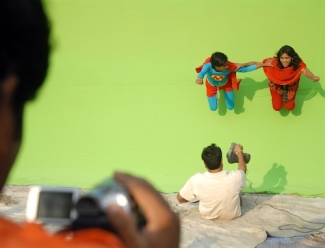 Supermen of Malegaon is the making-of story of Nasir’s most ambitious production to date. Having seen the use of greenscreen in one of those behind-the-scenes outtakes, he realised he could use the process to make a special effects movie — specifically, to make Superman fly to Malegaon. This documentary follows the trials and tribulations of Nasir and his band of hobby filmmakers through their film’s writing, planning, and its sometimes troubled shoot, until it’s completed. In the process, we meet some genuine characters, learn something of the unique lifestyle of Malegaon itself, and maybe even learn something about ourselves too.
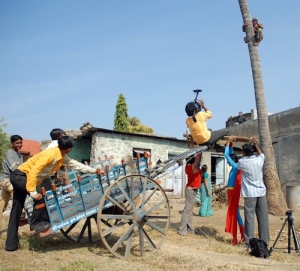 Even if it doesn’t, the situation in ‘Mollywood’ is an interesting one. This is a cottage industry: everyone involved has day jobs, funding the movies out of their own pocket, or by borrowing cash, or with favours, or by selling in-film adverts to local businesses — yes, that’s right, product placement, not that anyone involved would know that term. Women from Malegaon cannot appear in or work on the films due to local attitudes, so actresses are hired from nearby villages; the screenplay is written and shooting schedule arranged so that the actress only needs to be involved for the minimum number of days, to save money. Bicycles and motorbikes are used to create tracking shots; the director gets a piggyback for a high angle, or is raised and lowered on the arm of a cart to create a crane shot. The ingenuity and inventiveness of these literally-self-taught moviemakers is astonishing.
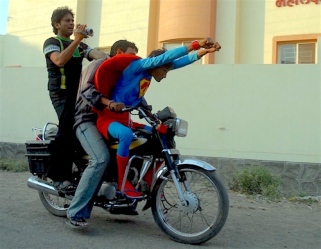 which he turns down because he could make four whole films for that much money. Even that little is scraped together. Mollywood moviemaking isn’t a money spinner, it’s a hobby. Still, one of the writers wants to make it as a proper writer; wants to go to Bombay and do it as his career. This has been his aim for 15 years, he says, and Bombay is no closer.
 It’s an incredible, one-of-a-kind film; more powerful and life-affirming than it perhaps has any right to be. But then the filmmakers of Malegaon don’t really care about such things. They make movies because they want to, whether they ‘should’ or not; they make them better than you might expect; and it enriches their lives. Their story may do the same for you. In my opinion, it’s an essential film; a true must-see.
 The kids’ phenomenon of the ’80s/’90s has never quite gone away, and this film is one thing that kept it ticking over in the ’00s. I watched out of nostalgia, which may’ve been a mistake.
 From the heart of Disney’s most recent poor period, Lilo & Stitch is possibly the only film that comes out of that era with any affection. Certainly, it spawned several sequels and a relatively-long-running TV series. By the standards of the films that surround it, it’s a good’un; in the grand scope of all Disney films, however, I didn’t care for it that much.
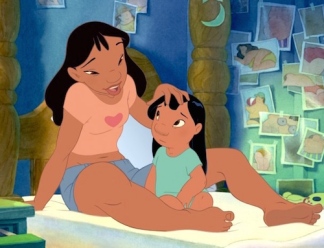 The story is something and nothing. Despite strong and relatively mature thematic notes, it doesn’t quite break free of the family-movie trappings to achieve the kind of insight or age-group transcendence that, say, Pixar movies routinely manage. For kids, though, especially ones who are feeling like misunderstood outsiders, there might be a lot to take from it. The zany antics of the heroes might also work for them in a way they didn’t for me — the ‘craziness’ comes across as a series of vignettes to bide time until the climax, and I didn’t find it massively engaging either. This is also the stage at which Disney had decided musicals were a Bad Idea, so there’s only a couple of non-diegetic songs to keep things ticking over, and… well, your mileage may vary.
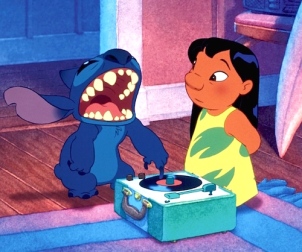 that might be missed by many a viewer, but it gives a subtly different feel. It’s a little more classical, which sits nicely against the very modern zany-aliens storyline.
 Hot-shot lawyer Ben Affleck and down-on-his-luck Samuel L. Jackson are involved in what Americans like to assonantly call a fender bender, making the latter miss a custody hearing and the former lose an important document worth millions… which Jackson happens to pick up. Cue a game of tit-for-tat retaliation, as Affleck tries to recover the file by ruining Jackson’s life further, and an increasingly-desperate Jackson enacts increasingly-violent revenge.
 I don’t know why they bothered). The worst offender is David Arnold’s score — all turn-of-the-millennium club-y electronic-drum-kit-y beats, for a character-driven drama/thriller? Ugh.
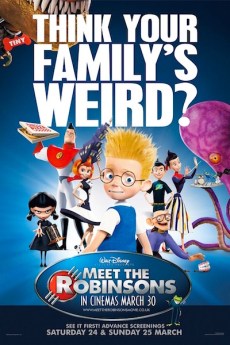 Disney’s 47th Animated Classic comes from their weak ’00s period, after the end of the so-called Renaissance and before what’s apparently been dubbed the neo-Renaissance (presumably no one could think of a synonym). This hails from the tail end of that lamentable era, though, so there are signs of recovery: Meet the Robinsons isn’t bad, just mediocre.
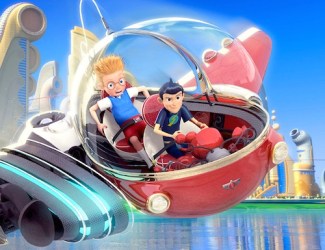 The time travel element of the plot is weakly thought-through. It’s not the point of the film, which is more about family ‘n’ stuff, but it’s central enough that it robs the already-underpowered climax of much weight — you’re too busy thinking “wait, does that make sense?” to be invested in events. Finally, the animation style has aged badly, now looking plain and under-detailed.
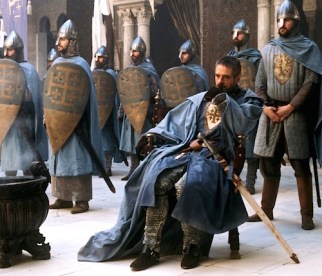
 Ridley Scott’s Crusades epic is probably best known as one of the foremost examples of the power of director’s cuts: after Scott was forced to make massive edits by a studio wanting a shorter runtime, the film’s summer theatrical release was so critically panned that an extended Director’s Cut appeared in LA cinemas before the end of the year, reaching the wider world with its DVD release the following May. The extended version adds 45 minutes to the film (and a further 4½ in music in the Roadshow Version), enough to completely rehabilitate its critical standing.
 A strong cast bolsters the human drama that sometimes gets lost in such grand stories. Bloom is a perfectly adequate if unexceptional lead, but around him we have the likes of Michael Sheen, David Thewlis, Alexander Siddig, Brendan Gleeson, and Edward Norton (well done if you can spot him…) There are even more names if you look to supporting roles. Most notable, however, are the co-leads: both Liam Neeson, as the knight who recruits Balian, and Jeremy Irons, as the wise advisor when he gets to Jerusalem, bring class to proceedings, while Eva Green provides mystery and heart as the love interest. Of everyone, she’s best served by the Director’s Cut, gaining a whole, vital subplot about her child that was entirely excised theatrically. It’s the kind of thing you can’t imagine not being there, and Scott agreed: it seems the chance to restore it was one of his main motivators for putting together a release of the longer version.
 (I’d wager
  100Films.co.uk