

One to take her…
one to love her…
and one to kill her.
Original Title: C’era una volta il West

Country: Italy, USA, Spain & Mexico
Language: English and/or Italian
Runtime: 166 minutes (international) | 145 minutes (US theatrical) | 175 minutes (Italy)
BBFC: A (cut, 1969) | 15 (1989) | 12 (2011)
MPAA: PG (1969) | PG-13 (2003)
Original Release: 21st December 1968 (Italy)
UK Release: 14th August 1969
First Seen: DVD, c.2003
Stars
Claudia Cardinale (8½, Fitzcarraldo)
Henry Fonda (My Darling Clementine, 12 Angry Men)
Jason Robards (Hour of the Gun, Tora! Tora! Tora!)
Charles Bronson (The Magnificent Seven, Death Wish)
Director
Sergio Leone (A Fistful of Dollars, Once Upon a Time in America)
Screenwriters
Sergio Donati (Face to Face, A Fistful of Dynamite)
Sergio Leone (The Good, the Bad and the Ugly, A Fistful of Dynamite)
Story by
Dario Argento (Deep Red, Suspiria)
Bernardo Bertolucci (The Conformist, The Last Emperor)
Sergio Leone (The Last Days of Pompeii, For a Few Dollars More)
The Story
The mysterious Harmonica arrives in the town of Flagstone, out for revenge against Frank. Frank, working for a railroad baron, is busy murdering Brett McBain for his land and blaming the crime on the bandit Cheyenne. Cheyenne teams up with Harmonica to help McBain’s newly-arrived widow, and therefore owner of his land, Jill. Jill finds herself caught in the crossfire between the three men pursuing their own interests…
Our Heroes
Jill McBain, a former prostitute who’s still subject to the will and whims of men. Harmonica, a formidable gunslinger known only by the instrument he plays. Even Cheyenne, a bandit leader, is a good buy when they’re all arranged against…
Our Villain
Frank, the meanest sonuvabitch in the West. What did he do to Harmonica in the past? What will he do to Jill to get his way? Nothing good…
Best Supporting Character
Crippled railroad tycoon Morton only wants to intimidate the McBains to relinquish their land, which I guess makes him a nice guy when compared to his murderous handyman, Frank, who he clearly can’t control.
Memorable Quote
Harmonica: “Did you bring a horse for me?”
Snaky: “Well, looks like we’re… looks like we’re shy one horse.”
Harmonica: “You brought two too many.”
Memorable Scene
In one of the most iconic opening sequences in cinema history, three gunmen arrive at a train station and… wait for a train. For ten minutes. Ten real-time minutes, accompanied only by sounds like a squeaky windmill, a dripping water tower, and distant bird cries. Then the train arrives… and then the train leaves… and then a harmonica plays. And the action… threatens to start. Ah, Leone.
Memorable Music
It’s a Sergio Leone film, of course there’s an Ennio Morricone score — and it’s one of his best. It was composed before shooting began so Leone could play it on set, so it fits like a glove. The best bits include the striking leitmotifs: a haunting one for Jill, with wordless vocals by Edda Dell’Orso, and a dramatic one for Harmonica, threatening guitar combined with a melody played on a… well, you know.
Technical Wizardry
The entire picture looks fantastic thanks to the work of cinematographer Tonino Delli Colli. It displays all the framing and composition Leone is famous for, but also evokes an oppressive hot, sweaty feeling, and the light and texture of the image have pure cinematic quality. They don’t make ’em like this anymore.
Letting the Side Down
Leone’s original plan was for the three gunmen in the opening scene to be cameos for the stars of The Good, the Bad and the Ugly — Clint Eastwood, Lee Van Cleef and Eli Wallach — but Eastwood (who’d already turned down the role of Harmonica) was unavailable. Shame.
Next time…
Considered by some to be the first part of a thematic “Once Upon a Time” trilogy, which continues with A Fistful of Dynamite (released in some regions as Once Upon a Time… the Revolution) and Once Upon a Time in America.
What the Critics Said
“The world of a Leone Western is just as enchanted as it was in the films the director saw as a child, but the values have become confused. Heroes as well as villains are apt to be motivated by greed and revenge, and the environments in which they operate are desolate and godless, though very beautiful. The Leone Westerns are twice removed from reality, being based on myths that were originally conceived in Hollywood studios in the nineteen-thirties. […] Once Upon the Time in the West thus is a movie either for the undiscriminating patron or for the buff. If you fall somewhere in between those categories, you had better stay home” — Vincent Canby, The New York Times (Just so we’re clear, I think this is a terrible review.)
 Score:
 98%
98%What the Public Say
“The clue’s in the title: Once Upon a Time in the West is a fairy story, a mythologised version of the American West, peopled with immediately recognisable archetypes. It’s also a commentary on the Western genre itself, and a celebration in the form of a kind of “greatest hits”, full of references to other films and filmmakers: John Ford, George Stevens, Anthony Mann, Shane, The Searchers, High Noon, and so on. […] So the game isn’t originality, but Everything More Iconic Than Everyone Else. Westerns – even great Westerns – would follow, directed by the likes of Sam Peckinpah, Walter Hill, and Eastwood himself, but [this] still feels like the genre’s final word.” — Owen Williams

America didn’t ‘get’ Once Upon a Time in the West when it first came out (hence the retrospectively laughable reviews, like the one above). The French did, though: it played for literally years in Paris cinemas, even inspiring fashion trends (the long duster coats). I confess, my initial reaction was a little more akin to the Americans’ — OUaTitW can be quite a slow film, and the plot is deceptively obscured until quite late on. But it certainly rewards repeat viewings, because it’s a film of rich content and, perhaps even more importantly, supreme style and technical achievement. The French were right (but don’t tell them that).

#68 will be… completed while you shop.
 Letting the Side Down


 Regular readers will surely remember
 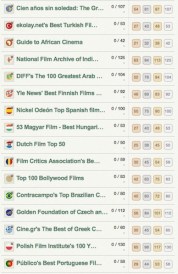 There are pretty obvious reasons why I’ve never seen any films on many of those lists — quite a lot are country or continent specific, and as Western film viewers we’re notoriously poor at having seen movies from, say, Africa. The lack of acclaimed films I’ve seen from the likes of Belgium, Finland, Holland, Hungary, Norway, Poland, Portugal, and Spain is my own fault though, I guess. Anyway, this is something I intend to rectify in the coming days / weeks / months / years / decades — however obscure some of my missing lists may seem, there’s at least one film I’ve heard of on all but one or two of them, so there’s that.
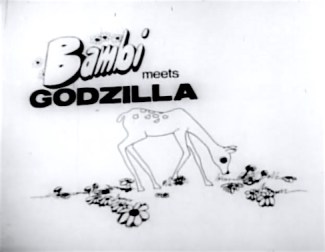 Why is this film notable? In fact, is it notable? Well, it was voted in to The 50 Greatest Cartoons by some of 1,000 animation professionals, so there’s clearly something there. It was created by animator Marv Newland while he was a film student in L.A., after a live-action project he’d been planning to submit was scuppered (according to
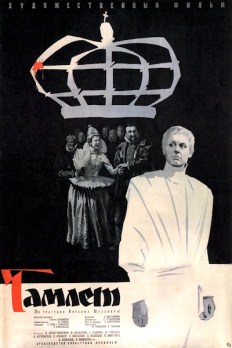 A black-and-white, two-and-a-half hour Shakespeare adaptation in subtitled Russian? No, wait, come back! Actually, don’t bother, because if you’re turned off by any or all of that description then, yeah, this isn’t for you. If you don’t object, however, then you’ll find a film that the likes of Sir Laurence Olivier, Sir John Gielgud, and Sir Kenneth Branagh have hailed as the greatest film adaptation of arguably the Bard’s most revered play.
 In the famously complex lead role, Innokenty Smoktunovsky gives a Hamlet who you really feel is more intelligent than everyone else around him — like a student fresh home from his studies, who has surpassed his parents and old acquaintances in sheer learning and attentiveness to philosophical topics, but doesn’t yet have a firm handle on his swirling thoughts. It’s possible he’s going genuinely mad with it, too, rather than the playfulness some choose to interpret in the part. Anastasiya Vertinskaya embodies sweet innocence as Ophelia, who Hamlet seems to genuinely care for, but has a poor way of showing it. Conversely, Mikhail Nazvanov makes for a somewhat neutered Claudius — he’s almost bumbling, outwitted by Hamlet but with enough innate power (he’s King, after all) to mask it. I suppose that emphasises the “student who’s outstripped his parents” point, but it doesn’t exactly make for a powerful villain. Still, different interpretations are always interesting.
 The visitation of Hamlet’s father’s ghost is another tour de force moment, the kind of visual impact that benefits not a jot from being described in text.
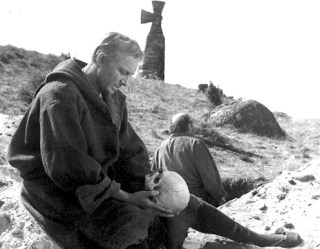 Even with the subtitle issue feeling like an obstacle to engagement, this was perhaps the most enjoyable Hamlet film I’ve seen. Maybe that’s because it has an advantage in that I’m now more familiar with the play (something which hindered Branagh’s version, as that was the first time I’d seen it), but it speaks to the film’s overall quality that it has more to offer than just Shakespeare’s words.


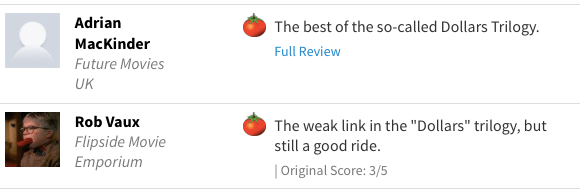

 After martial arts student Fang Cheng is killed protecting his master, the latter takes in Cheng’s infant son, Fang Kang, as his student. Years later, Fang Kang is bullied by his aristocratic classmates and treated as a servant by the master’s daughter, Pei, though he’s a better student than any of them. Eventually goaded into leaving, his fellows corner him, challenge him, accidentally lop off his sword arm, and leave him for dead. Kids, eh? Fortunately, Kang is found by orphan Xiao Man, who nurses him back to health. With the help of an old textbook, he learns to fight left-handed, which is handy because there’s a conspiracy underway to kill all of his master’s former pupils…
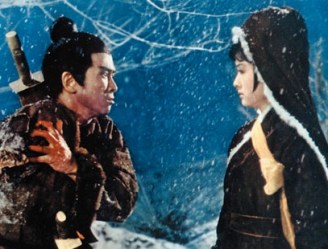 However, for me the film also worked very well as a drama, and even sometimes as a romantic drama. Fang Kang is an interesting protagonist. His lifestyle is torn from him, and rather than simplistically train to regain it or give up entirely, he battles with that decision. He returns to that way of life only to defend himself and his rescuer, and then out of a sense of loyalty to the master who raised him, but he’s also prepared to abandon the martial life to be a farmer… when the job is done, naturally. Jimmy Wang Yu, in a star-making turn, sells this character arc as well as anyone in a kung fu picture ever has. He’s also (somewhat) torn between two women, the kindly and supportive Xiao Man, and brat-with-a-heart Pei. While no one could truthfully call this a romantic picture, the love-triangle aspect also functions surprisingly well.
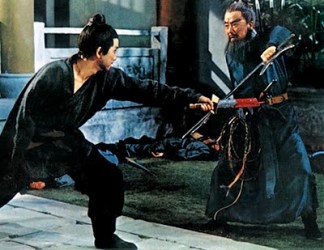 I disagree with that. Perhaps those lists are based on the abundance of action in these films, by which metric this probably has too much drama — though, as I said, it’s not devoid of fisticuffs and swordplay. Combine that with a solid story, engaging characters, and a brisk pace (even with its near-two-hour running time), and you have one of my favourite Shaw Brothers movies I’ve yet seen.
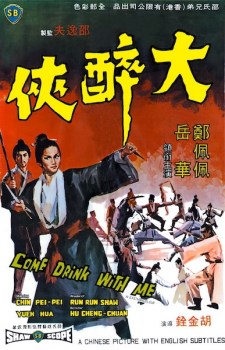 The first wuxia film directed by King Hu (King Chuan, that’s Hu! #MildlyRacistHomophoneJoke), the success of which allowed him to make his next even-more-significant movies in the genre, Come Drink with Me sees a gang kidnap the governor’s son to use him as leverage to release their leader. Instead, the governor sends his daughter, Golden Swallow (Cheng Pei-pei), to rescue her brother. She receives some help from local drunkard Fan Da-Pei (Yueh Hua), who may be more than he’s letting on…
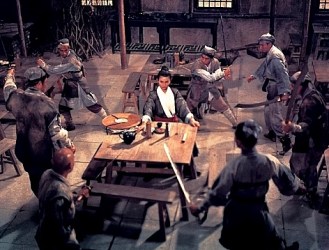 But this is a structural niggle, really. There’s so much else to enjoy — not just the action, but some amusing scenes, engaging characters, strikingly brutal villains (they not only kill a child (you wouldn’t get that in most movies) but they do it for no particular reason), and beautiful widescreen Technicolor cinematography — that it doesn’t grate too much.
 Le Mépris establishes its two main themes with its two opening shots. First, a static shot of the film’s cinematographer, Raoul Coutard, filming a scene from the film, over which writer-director Jean-Luc Godard reads out the credits, which never appear on screen. This is a movie about moviemaking, and its inherent artifice. Second, a shot of Brigitte Bardot’s naked bottom. This is a movie about a man being in love with Bardot (well, the character she plays), and another man lusting after her, and what happens when the first man pats a different bottom. Maybe.
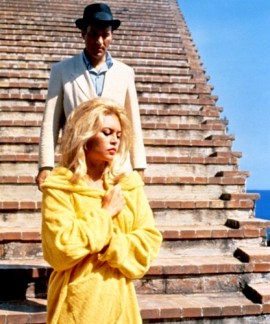 They go round in circles about staying together or being apart. The point? Your guess is as good as mine. Perhaps it’s the unknowableness of the other gender (whichever gender you are). Perhaps it’s just the unknowableness of other people fullstop. Perhaps it’s the unknowableness of our own emotions — eventually Bardot decides she does want to leave the playwright to run off with the producer, but no one seems to know why.
 100Films.co.uk