2009 #47
Leslie H. Martinson | 100 mins | TV (HD) | U / PG
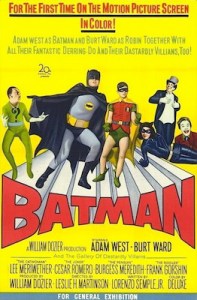 Having only recently subjected myself to the full horror of Batman & Robin (though, based on the lack of review, it was before this blog began — that “recently” to me means “within the past four years” probably indicates why seeing ‘just’ 100 films in a year is a challenge), this spin-off from the ’60s Batman TV series remains the only significant cinematic outing for the Dark Knight to have escaped my scrutiny (well, unless you count Mask of the Phantasm, which we probably should). Except that’s (still) not entirely true: I once tried to watch it and gave up because it was dreadful. But the desire to be a completist — and an HD showing from Channel 4 — have led me to try again. Thank God I did, because it’s actually brilliant.
Some Bat-fans are immediately wondering what I’m on now, but I can assure you I watched it entirely sober. Batman has more than his fair share of over-serious fans and this film is anathema to them — it’s mad, camp, illogical, hilarious, vibrant, comic, comical… but all deliberately so. It perhaps goes on too long, perhaps pushes it too far at times… but then, if you’re on board with the concept and style, it’s pretty hard to criticise — it’s so ridiculous, and so aware that it’s ridiculous, that it goes beyond criticism.
In every respect, it has a real feel for what comics were like at the time — the vibrant colours, silliness, larger-than-life characters, nonsensical plots, plus there’s a nice line in risque humour, keeping the adults happy in what’s really a kid-focused film. The effect is akin to what Joel Schumacher wanted to do, only done with more rule-breaking conviction and, therefore, more success. It saves the series’ most famous element — the visual sound effects — for the climax, a submarine-set free-for-all to rival any other climactic mess/fight as Batman, Robin, the major villains and a bunch of sailors all end up floundering in the sea.
Talking of the series, was it this barmy? I don’t remember it being so ridiculous, but then I was young when I last watched it. There’s every chance kids young enough would take this completely seriously, and unquestionably enjoy it in that frame of mind, whereas those of us old enough to realise what’s going on — and, more importantly, old enough to get past the fact that it’s taken the moodiest, broodiest, angsty-teenager-friendly of superheroes and turned him into perhaps the campest ever — can enjoy it on all the levels the makers had in mind.
Batman is so many different things. These days it’s generally accepted that he’s The Dark Knight, a moody crimefighter lurking in the night to battle gangsters and unhinged supercriminals. But in the past he’s been so many other things, and this is just one facet. Those who dismiss it as missing the point of Batman, or any other such criticism of it not being Dark and Serious, are too caught up in our present perception of the character to see that it’s just another of his many sides. Is it a better film than The Dark Knight? No, of course it isn’t; and nor is it better than either of Burton’s Batman outings, nor Batman Begins… but then again, that’s personal preference.
Perhaps this demonstrates better than anything why Batman is one of the most enduringly popular superheroes, has one of the widest fanbases, has more graphic novels available than any other character ever: because, across all his forms, he has been treated in so many different ways by so many different people and for so many different people. You can’t really reconcile this as the same Batman and Joker who fought their way to the top end of the all-time box office pile 18 months ago, but nor were those the same characters who battled it out in 1989, or in thousands of pages of comics. In an age where we’re more obsessed with ‘canon’ and ‘continuity’ than ever (indeed, such concepts probably didn’t exist back when this Batman was being conceived), it’s oddly beautiful and so very freeing to imagine a character so unrestrained. It’s a glorious thing.
If you disagree — if you think Batman must always be dark, moody and deadly serious — well, fine; and you’ll be well catered for, because I doubt the film franchise is giving up that way any time soon (if ever). But as far as I’m concerned, to ignore the mad, frivolous and zany sides of the character — not to mention all the various other ones that could be described with equally unusual adjectives — is your loss.
(Originally posted on 26th February 2010.)

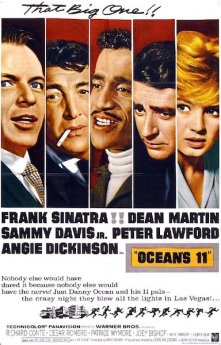 “Remakes are not as good as the original” is one of the rules of filmmaking. Of course there are plenty of exceptions, and everyone has their own opinion, and most modern remakes are expressly about making a quick buck from a US audience who can’t watch a film and read at the same time rather than making a better quality film — but, more or less, the rule persists. It may have won him an Oscar, but the consensus seems to be that not even Martin Scorsese can overcome this rule.
 It does have its moments: a couple of songs are shoehorned in (even if there’s only two or three and each gets two or three airings) and the cast do succeed in making some of their indulgences entertaining. Nonetheless, this would definitely be for Rat Pack fans only had it not been for the remake… and, really, there’s no reason the remake should change that.
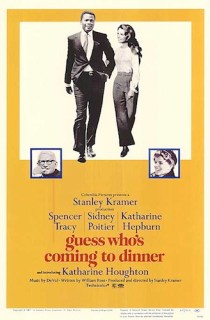 In Guess Who’s Coming to Dinner, a white girl falls in love with a black man and brings him home to meet the parents. You can almost imagine this premise still being launched today, as one of those dreadful ‘comedies’ Hollywood pumps out every year, in which the parents are outrageous racists — played by some ageing stars who should really know better — and one of the young couple is a bit accident-prone and played by someone like Ben Stiller or Adam Sandler.
 It could easily have been a simplistic message movie — these people are liberal, these people are racist, etc — but instead there’s complexity at every turn. There’s the liberal white parents who never expected to find themselves in this situation, and suddenly are struggling with their own ideologies; or the black characters, who you might think would be eager to move ‘up in the world’ but actually react even worse to the idea; or the Catholic priest being one of the few characters unwaveringly in favour of the union. And even then, these characters could just become ciphers for the arguments and debates; but they’re not, they’re characters, having believable reactions, and from this comes the debate.
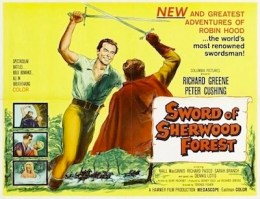 Hammer didn’t just make horror movies, y’know. I’m sure many film fans know this, but the phrase “Hammer Horror” is so ubiquitous that I expect most people think that was the company’s name and all they produced.
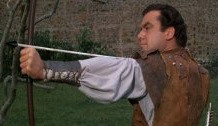 It doesn’t all tie together fully. For example, one assumes the town of Bortrey was going to be the site of Newark’s castle, as that’s the only apparent reason why he’d be annoyed at the Archbishop for stopping the Sheriff acquiring it. But then Bortrey is burnt down, and with little reaction or comment from any character. And the opening plot point — a man escaping the Sheriff with a mysterious symbol — is never fully explained. Was he a co-conspirator? Was he aiming to warn the Archbishop? If the latter, where did he get the symbol? Maybe I missed a scene that explained all this.
 The cast are adequate, even if Richard Greene’s no Errol Flynn and Peter Cushing’s no Alan Rickman (here at least). Terence Fisher’s direction is rather flat a lot of the time, though a few scenery shots, riding sequences and fights bring out a bit more dynamism.
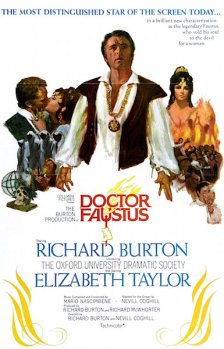 Despite the numerous film versions of the Faust story, this is the only one that adapts Christopher Marlowe’s A-level-favourite 1588 play. It’s a shame, then, that it’s heavily edited from the original text and, despite also being a filmed version of the Oxford University Dramatic Society’s 1966 stage production, has clearly been inappropriately chosen as a vehicle for then-couple Richard Burton and Elizabeth Taylor.
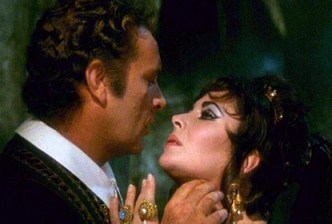 Elsewhere, Burton and Coghill’s vision of Faustus is stylistically reminiscent of a Gothic Hammer Horror, which is either wholly inappropriate or an ingenious genre mash-up — after all, such a genre-mashing trick has been pulled many a time with Shakespeare over the years. There are repulsively horrific corpses, a harem of naked ladies, an array of special effects, plus a medieval-styled gothic atmosphere to all the sets and costumes, though the scene where Faustus mucks about with the Pope feels more Carry On. Using inanimate objects in the roles of the Good and Evil Angels — respectively, a statue of Christ and a skull — is a small but inspired touch.
 perhaps just to heighten the presence of Helen by losing scenes she couldn’t have been shoehorned into; but in the process it both loses some of the best material and destroys any hope the film had of being a definitive filmed version of the play. Ultimately, such oversights proved to be the final straw for the film’s already-tenuous grip on a three-star rating.

 Culloden tells the story of the 1746 battle — famously, the last fought on British soil — and the events that followed it, as if it were covered by a modern TV news report (albeit a feature-length one).
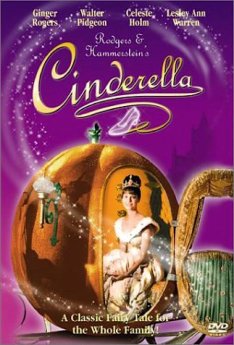 This clearly made-for-TV adaptation of Rodgers and Hammerstein’s Cinderella (the second of three, to date) is a rather weak affair, easily demonstrating why no one seems to remember it.
 Despite being an early-60s British domestic drama, Seance on a Wet Afternoon has a plot that one might describe as high-concept: a medium kidnaps a little girl so she can prove her abilities by revealing where the girl is. But, unsurprisingly, the execution is more in line with its roots: more drama than overblown thriller, not so much about the kidnap plot as the psychological state of Kim Stanley’s medium, Myra Savage, and her downtrodden husband, played by Richard Attenborough.
 An article I once read (but have long since misplaced, unfortunately) asserted that Billy Wilder once said (and I paraphrase heavily here, I’m sure) that, contrary to expectations, when he was feeling happy he’d make a serious picture, and when feeling down he’d make a comedy. Goodness only knows what kind of mood he was in when he chose to make The Apartment, then, because it flits between the two with gay abandon.
 100Films.co.uk