
Carol Reed | 111 mins | TV | PG
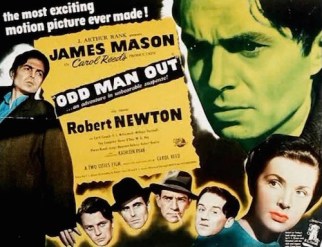 It may be a bit of a cop out to begin a review by pointing you to another, but I must recommend Colin’s heartfelt appreciation at Ride the High Country. It certainly inspired me to watch the film, which had been sat on my V+ box for over a year. As you’re going to read that (assuming you haven’t already), I’ll just offer a couple of observations I jotted down.
The consciously episodic story, screenwritten by R.C. Sherriff, author of the exceptional World War One play Journey’s End, presents us with an array of characters. James Mason is ostensibly the star, but he spends much of the film in a daze, drifting from group to group. And that’s fine — it leaves the way open for other characters to shine. For instance I liked the driver, Pat, played by Cyril Cusack. My notes don’t say why, but I thought his character was rather good — not a good guy, perhaps, but a good character. The real star, if anyone, is Kathleen played by Kathleen Ryan, who comes into her own during the film’s final act and its conclusion. I’d throw an adjective in front of “conclusion”, but perhaps you should discover it for yourself.
This episodic structure does make for some lengthy, perhaps even borderline dull, asides. I could do without F.J. McCormick’s Shell and, especially, 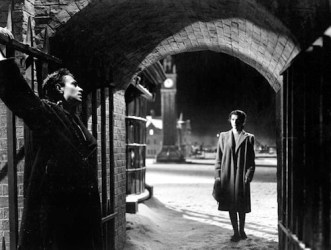 Robert Newton’s Lukey. (You’ll also note Newton’s performance is criticised in Colin’s piece so, in aid of not sounding like I’m too easily influenced, I’d like to point out I didn’t make the connection between his comments and my own notes on Newton until afterwards.) Shell and Lukey have a bit of a point in the end, but I didn’t enjoy getting through them in comparison to the rest of the film.
What the structure really facilitates is the depiction of a cross-section of Northern Irish life, and particularly their reaction to “the organisation” — it doesn’t take a genius to guess what that means. As the opening scroll said, this is indeed concerned “only with the conflict in the hearts of the people when they become unexpectedly involved”, but by leaving out detail of the politically contentious background to the unrest, it perhaps robs the characters’ indecision of any basis. All bar a couple of exceptions fall into the “don’t want to pick a side, don’t want to get involved” camp, foisting Johnny out of anything to do with them ASAP, but at least it suggests such a view was widespread across people of all backgrounds.
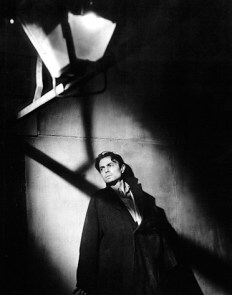 The score, by William Alwyn, is really nice, particularly in certain places — for example when it begins to snow and Johnny wanders the streets, or at its most effective during the haunting climax, as Kathleen hauls a near-dead Johnny through the falling snow towards the safety of the shipyard as the police finally close in.
My notes also say “discuss the use of the kids? And Johnny’s visions?” I’m afraid to say I forget why. Comments on these elements are welcomed.
I hesitate to make a comparison between Odd Man Out and The Third Man, director Carol Reed’s more famous film noir, because I’ve not seen the latter for far too long; but I imagine this holds its own, because it’s certainly an engaging and suitably unusual entry in the genre.

 A serial murderer is on the loose in 1900s New England, or 1910s Massachusetts (pick which website you want to believe). His victims are all disabled women, so at the wealthy Warren residence, both family and staff worry for mute maid Helen — particularly as it seems the murderer may be among them…
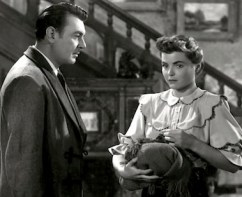 Some viewers allege that it’s at this point the story falls apart; that there’s only one possible suspect. I disagree. Though I can’t say the film entirely had me fooled, there are several suspicious characters, particularly if you’re prepared to consider extraordinary leaps of probability — and in genres like gothic horror, film noir and whodunnit, you should be. Indeed, while some see the killer as obvious others may consider them unlikely; but, for the attentive, the groundwork for the motivation is laid throughout.
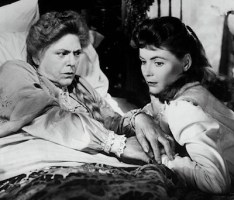 A mention for the sound design, too. Even during simple dialogue scenes, where one might expect silence but for the words in a film of this era, rain lashes against the window in the background, the heavy weather a ceaseless reminder of the threat lurking close at hand. It is, to use a cliché, a character in itself. Thanks to the enclosed setting, we spend a fair amount of time with these characters, and there are good performances too, but that’s for another reviewer to discuss — try
 Force of Evil comes well recommended, with places on several 1,000 Best Movies lists and inclusion both on
  Duncan’s analysis (Force of Evil is one of seven noirs treated to an extended segment in his book) suggests a more complex reading of the film than I took from it, explaining much as symbolic or metaphorical. Considering I didn’t engage with the film, I’m tempted to see Duncan’s reading as a way of rationalising things that either aren’t there or were flawed, but the film’s wider critical acceptance suggests he may well be right.
 This is one of those films I always feel horrendously under-qualified to bother offering any kind of thought on. It’s the kind of film you suspect benefits most not just from repeated viewings and a desire to dig deep into its themes, but also a wider understanding of the director’s work and thematic concerns. This is only compounded in the case of Ozu by the fact I watched
 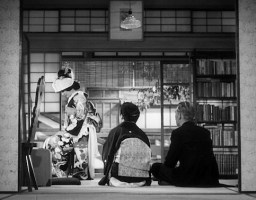 (which bolsters my belief that his most renowned work is indeed worth a second shot). One issue, I suspect, is that I knew nothing of Ozu before my first experience; having read up on him (if only a little), his idiosyncratic squared-off shots and straight-on close-ups feel less blatant and frequent here, and being aware of their deliberateness perhaps makes them less intrusive. That said, I remain unconvinced by it as a guiding notion — I’m sure there’s a reason beyond the proliferation of American cinema that the visual style we’re used to seeing in most film and TV is, well, the visual style we’re used to seeing.
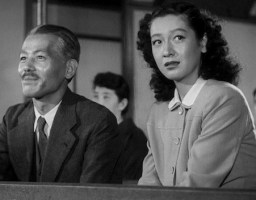 when the prospect of marriage and leaving her father seriously raises its head. (And I’m afraid that’s the closest to analysis you’ll find here.)
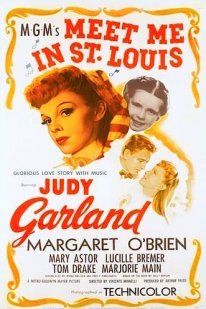 Someone (who exactly is long lost to the depths of my memory) once observed that, though a lot of people claim to not like musicals, they’re quite happy to acknowledge their love for
 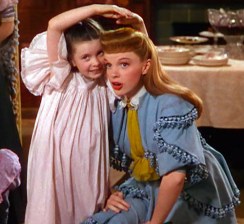 Judy Garland is fine in the lead role — still playing a teen, despite being 21, but suitably distant from Dorothy. Margaret O’Brien receives prominent second billing in the role of ‘Tootie’, despite being just seven years old. She was, I learn, something of a star at the time, in spite of her young age, which perhaps explains the (arguably) undue prominence in both the credits and the film itself. That said, she’s a rather good actress, and picked up an Oscar for her performance here (and other roles she played in 1944).
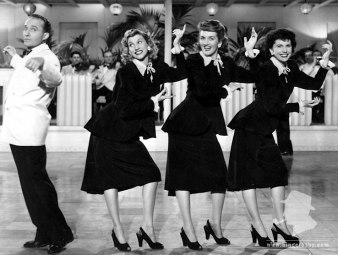
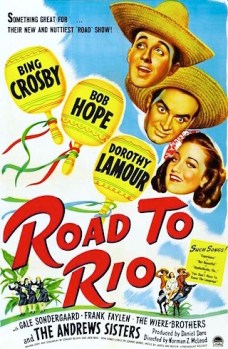 Bing Crosby, Bob Hope and Dorothy Lamour return for the fifth film in the Road to… series.
 I’ve awarded to each belies how much I enjoyed them, with Morocco in particular worth a fourth. But I think it’s also fair to say these films are a rather dated style of entertainment. That’s not necessarily a bad thing — as noted, I still think they’re fun, and I’m sure many others do and would too — but plenty of modern viewers would find them (to be polite) too quaint.
 He’s put down the
 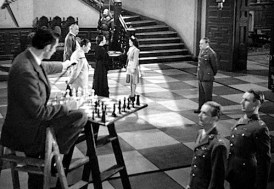 Relocated in the war years, the Musgrave manor is currently a home for convalescent soldiers, providing no end of potential suspects. Some may guess the culprit from the off, others will land upon them at other places throughout proceedings, but it seems to me there’s still enough going on to keep us guessing.
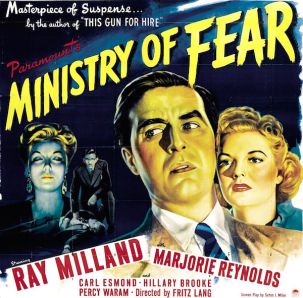 I like cake. It’s all soft and sweet and tasty. But I don’t like cake as much as Stephen Neale, the protagonist of Ministry of Fear.
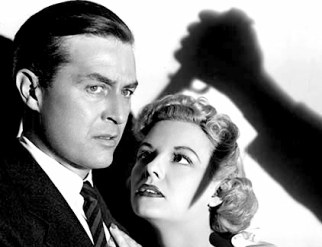 Ministry of Fear isn’t really about cake, but the opening 20 minutes or so plays out more or less as above and it is rather amusing. Less amusing — and, in fact, part of the film’s biggest problem — is a ‘humorous’ epilogue that returns to the cake theme. I found it hilariously funny, but unfortunately for all the wrong reasons. The other part of the problem is the abrupt ending that immediately precedes this brief coda. On the bright side, everything is resolved and you can imagine the post-climax resolution scene for yourself, but it still leaves the tale’s telling cut short.
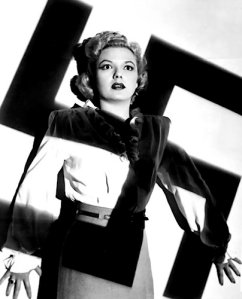 The train cake theft and chase, for instance, could be thoroughly laughable thanks to the cake element and what’s clearly a studio-built wood/wasteland, but it’s atmospherically shot and, in its main burst of genius, scored only by the drone of a Nazi air raid taking place overhead. It makes for a more tense and effective soundtrack than most musical scores manage.
 His Girl Friday is an acknowledged classic — 19th on the
 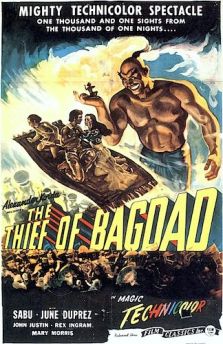 The Thief of Bagdad is, in many respects, one of the forefathers of the modern spectacle-driven blockbuster, packed with innovative effects designed to dazzle the viewer. One can only imagine how incredible the special effects looked to a 1940 audience. Today the flaws are obvious, but, surprisingly, not by much.
 100Films.co.uk