
Peter Sohn | 90 mins | streaming (HD) | 2.35:1 | USA / English | PG / PG
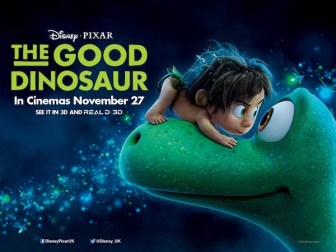 Once upon a time, Pixar could do no wrong. Then Cars happened; and worse, its sequel. Now, their movies remain an event, and some people still swear by everything they do, but I think there’s a greater awareness that they’re fallible. When it came out at the tail end of 2015, The Good Dinosaur was received as further evidence of that. Especially coming in the same year that gave us the universally praised (*coughoverratedcough*) Inside Out, it was instantaneously dubbed a “lesser Pixar”. But here is where completism has its merits, because I really enjoyed it.
Set in an alternate world where the dinosaurs were never wiped out and so have evolved to the point where they talk, farm, etc, the film tells the story of little Arlo, an Apatosaurus who’s regularly overshadowed by his siblings. When an accident leaves him stranded many miles from his family he must make the long trek home, finding his inner courage on the way ‘n’ that kind of thing.
There’s no denying that The Good Dinosaur contains an abundance of re-heated elements: there are multiple plot beats shared with The Land Before Time, not to mention the general “talking child dinosaurs” thing; a major inciting incident is taken from The Lion King; the episodic structure is reminiscent of The Jungle Book; animated dinosaurs on photo-real backgrounds recalls Dinosaur; and the moral message and main character arc are lifted from any number of children’s animations. While I did find this bothersome at first — especially as the worst offenders are concentrated in the saccharine first act — by the time the film had settled into its meandering middle I came to quite like it.
 Pixar have on several occasions produced films with an innovative opening act that descends into derivative kids’ animation runaround territory. WALL-E and Up are the worst offenders for this; Inside Out does it too, though there’s more of a mix of the two throughout the film. For many critics and viewers, the quality of those openings seem to be enough to earn the films heaps of praise. The Good Dinosaur inverts the formula: the easy, overfamiliar material is at the start, while the more meditative, mature content comes later. Clearly this didn’t work for many viewers, so I guess the lesson for Pixar is to put the clever stuff up front if they want universal praise.
Instead, The Good Dinosaur was often dismissed as only being for very young children. Some bits do come over that way, but it has quite a harsh edge at times, and the scene where the heroes get high on rotten fermented fruit is freaky even for adults (or this adult, at any rate). It’s a bit of a tonal oddity in this respect, especially when you also factor in some of the leisurely, silent moments spent admiring nature that evoke a filmmaker like Terrence Malick. No, seriously. That’s helped by the animation being mind-blowingly good. Not so much the character animation (which is still strong — the character models are more detailed than you first suspect), but the scenery those characters are placed in… wow. If you didn’t know better I’m sure much of it could pass for photography. And the way they’ve achieved water, a notoriously hard thing to capture in CGI, is absolutely incredible.
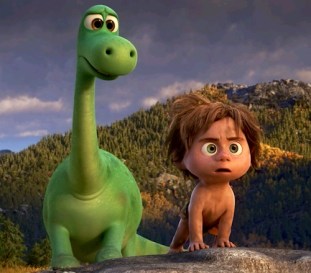 Perhaps most powerful of all is the relationship it creates between Arlo and a young human child he befriends, Spot. With humanity in a much earlier state of evolution, Spot is basically characterised as a dog — the way he moves, comes to his name, follows scents, shakes, scratches and enjoys being scratched, and so on — so of course I warmed to him. Nonetheless, though the building blocks used to create their friendship are very familiar, the way the film sells its emotional arc is ultimately immensely effective. Its resolution may even bring a tear to the eye.
While it may take a while to warm up, The Good Dinosaur is ultimately a very affecting entry in Pixar’s canon. It’s by no means a perfect movie, but I do think it’s an underrated one. And, in all honesty, I enjoyed it more than Inside Out.


 Score:



 Set in Chicago during the Great Depression, The Sting follows a young street-level con artist (Robert Redford) as he seeks revenge for his murdered partner by teaming up with a seasoned big-con pro (Paul Newman) to scam the mob boss responsible (Robert Shaw).



 Between his popular English-language debut
 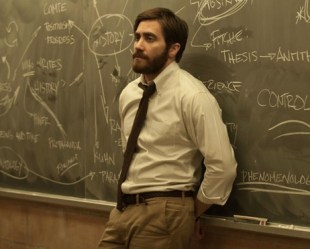 While looking up those various explanations, I read at least one review that asserted it’s a good thing that the film doesn’t provide a clear answer at the end. Well, I think that’s a debatable point. I mean, there is an answer — Villeneuve & co clearly know what they’re doing, to the point where they made the actors sign contracts that forbade them from revealing too much to the press. So why is it “a good thing” that they choose to not explain that answer in the film? This isn’t just a point about Enemy, it’s one we can apply more widely. There’s a certain kind of film critic/fan who seems to look down on any movie that ends with an explanation for all the mysteries you’ve seen, but if you give them a movie where those mysteries do have a definite answer but it’s not actually provided as part of the film, they’re in seventh heaven. (And no one likes a movie where there are mysteries but no one has an answer for them, do they? That’d just be being mysterious for precisely no purpose.) But why is this a good thing? Why is it good for there to be answers but not to give them, and bad for there to be answers and to provide them too? If the answers the filmmakers intended are too simplistic or too pat or too well-worn or too familiar, then they’re poor for that reason, and surely they’re still just as poor if you don’t readily provide them? I rather like films that have mysteries and also give me the answers to those mysteries. Is that laziness on my part? Could be. But I come back to this: if, as a filmmaker (or novelist or whatever) you have an answer for your mystery and you don’t give it in the text itself, what is your reason for not giving it in the text? Because I think perhaps you need one.
 Fortunately, Enemy has much to commend aside from its confounding plot. Gyllenhaal’s dual performance is great, making Adam and Anthony distinct in more ways than just their clothing (which is a help for the viewer, but not for the whole film), and conveying the pair’s mental unease really well. It would seem he errs towards this kind of role, from his name-making turn in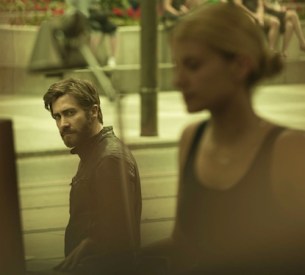

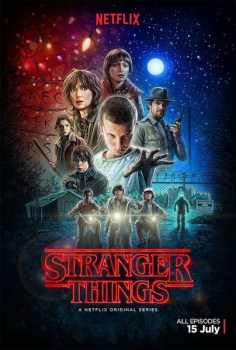 Hype — it’s a funny old business. It’s hard to have avoided hearing something about Stranger Things, Netflix’s summer hit that went down like gangbusters, its ’80s nostalgia perfectly calibrated to target the kind of people who run entertainment news websites these days — just to be cynical about it. Or truthful. Then there came the backlash, which attested there was nothing more to the show than those callbacks and tributes; a hollow experience of copying and “hey, remember this? That was good, wasn’t it?”
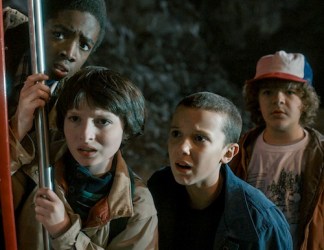 Without wanting to get into spoiler territory (despite what the media would have you believe, not everyone has Netflix all the time and not everyone watches every new zeitgeisty series immediately. Apologies if you write for an entertainment site and I’ve just given you palpitations), everything comes together nicely for a barnstorming pair of climactic episodes. For my money, the penultimate chapter is the best one: with a bunch of revelations out of the way (some of them easily guessed but finally confirmed), the series kicks off a run of long-awaited fan-pleasing events (as in many a drama, it takes this long for everyone to finally start talking to each other; also, the bit with the van!) The finale is less accomplished, with some characters wandering around for a bit in a way that feels designed to pad the running time. Still, it’s a satisfying conclusion… to season one, anyway.
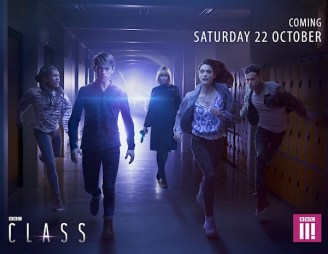 Ten years to the very day since the launch of the original dark, sexy BBC Three Doctor Who spin-off,
  The CW’s raft of superhero shows restarted on UK TV this month. I’ve given up on Legends of Tomorrow and am still not joining Supergirl (though I got hold of the opening episodes, co-starring Superman, to maybe make time for at some point); but, five seasons in, Arrow has me suckered for the long-haul, and The Flash tempted me back with the intrigue of adapting Flashpoint. I’ve never got on the bandwagon with Flash, which attracted a lot of praise during its first season that I simply didn’t agree with, leading it to outshine Arrow in ratings and people’s affections. Arrow has long been off the boil, and season five certainly hasn’t got it back up to temperature so far, but The Flash had plenty of issues of its own. It’s not problem free now, but I actually really liked the first couple of episodes of the new season. It’s still a long way from the top tier of TV superheroes (Netflix have that sewn up), but it’s likeable.
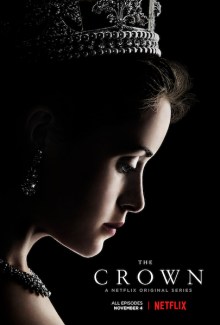 This month, I have mostly been missing the most expensive TV show ever made*, Netflix’s much-discussed The Crown. I don’t know if they’ve been pushing it as much in the rest of the world as they did in the UK, but it certainly felt like it was everywhere… for about a week, as is usually the way with Netflix series. Also missed: the equally-discussed Netflix-exclusive new run of Black Mirror. Both of these are because I don’t keep up a permanent Netflix subscription, but between them, the forthcoming Gilmore Girls revival, and the Series of Unfortunate Events remake in January, I will be signing up again late in December (using the free month voucher they had in the Radio Times, hurrah!)

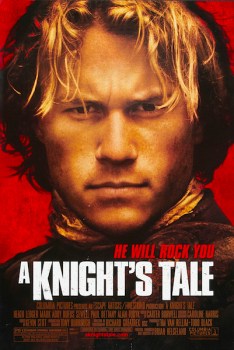 A squire fakes being a knight to win a jousting contest, and a lady’s affection, in this medieval comedy-adventure.

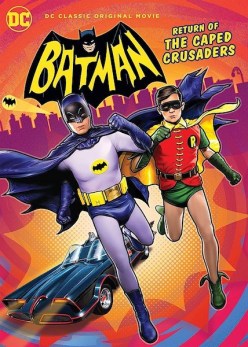 Holy nostalgia hit, Batman! This animated movie reunites the surviving stars of the enduringly popular
 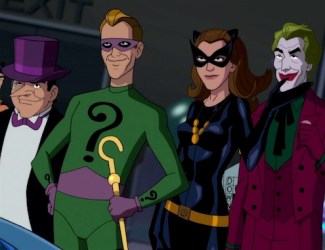 fundamentally, a comedy. Conversely, Ward still sounds pretty spry, and is gifted plenty of those “Holy [insert something here], Batman!” catchphrases that never cease to be fun. Unfortunately, Newmar also sounds her age, but doesn’t seem to quite have the liveliness that West retains. In the behind-the-scenes featurettes she seems a delightfully kooky old bird (at the recording she’s wearing cat ears, for one thing), so it’s hard to resent her, but the portrayal of Catwoman as slinky and sexy feels a little… odd. On the bright side, it means you don’t get the uncomfortableness of West flirting with a much younger actress, even in animated form.
 On the whole, Return of the Caped Crusaders is a resounding success. It’s a fun return to a beloved incarnation of arguably the most popular superhero; a version who’d been somewhat left out in the cold for a couple of decades by a world that grew up a bit too much, but is now being re-embraced and held in deserved esteem. And, even better, there’s already a follow-up in the works. Holy must-see sequel, Batman!
 100Films.co.uk