100 Films @ 10: Great Scenes

Howard Hawks famously said that a good movie was simply “three good scenes and no bad ones”. For today’s list, I’m focusing on examples of the former.

There’s no set average for the number of scenes in a feature film, but a good rule of thumb is that a typical movie scene lasts two or three minutes — which means I’ve probably seen in excess of 48,000 scenes as part of this blog. That’s rather a lot to recall, so I’m not presuming to say these ten are the very greatest from that lot. What they are is ten that stuck in my memory particularly, for one reason or another. Even if they’re not the greatest, they are great.

10
The Swimming Pool

from Let the Right One In

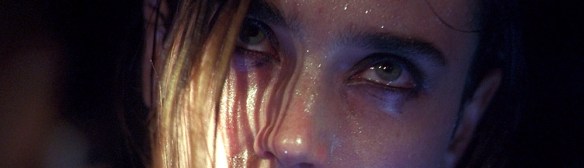
The bullies that have plagued young Oskar throughout the film corner him in a public swimming pool and, brandishing a knife, inform him that if he can’t hold his breath for three minutes he’ll lose an eye. They push Oskar under the water. The seconds tick by. Then, we reach the real reason this scene is here: as the shot holds on Oskar underwater, we hear the muffled sounds of breaking glass, then screams. Feet run backwards across the water. Heads and limbs drop into the pool. The water begins to turn red. This could’ve been a brutal action climax like any other, but by staging it in a brightly-lit swimming pool, by not showing us the meat of the action, and by achieving it all in one shot, director Tomas Alfredson creates a sequence of supernatural force that is eerily grounded.

9
The Opening Shot

from Touch of Evil

Long takes are all the rage nowadays, made even easier by advances in digital cinematography and editing, but this hails from a time when they were a bit more special. It remains one of the most famous because of its content: we see a bomb planted on a car, then follow it as its unsuspecting owners drive through the streets. When will it go off? And, beyond that, Welles’ preferred soundtrack — overlapping snippets from multiple sources as the camera moves through the town — helps establish the melting-pot world of the film about to follow.

8
The Train Robbery

from The Assassination of Jesse James by the Coward Robert Ford
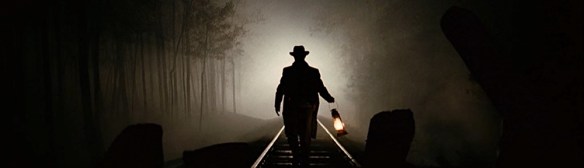
Another opening scene where the photography is the star. This time, it’s the work of the great Roger Deakins, as a gang of crooks await a train in a forest at night, lit only by the orange glow of lanterns. Then the train itself arrives, its stark headlight throwing sharp relief on the shadowy trees. Deakins himself has said it’s his best work, and who are we to disagree? The effectiveness is only heightened by the slow, deliberate, tension-mounting pace maintained by director Andrew Dominik.

7
The Superfreak Dance

from Little Miss Sunshine

After all the trials and tribulations of the movie, the Hoover family finally make it to the Little Miss Sunshine pageant and little seven-year-old Olive gets up on stage… where she dances a striptease-style routine to Superfreak. It neatly satirises and pillories the ludicrous sexualisation of these beauty pageants. Then the sequence only gains in stature when the officials try to pull Olive off stage early, which ends up with the whole family throwing dignity to the wind and dancing with her — the previously disjointed family finally united.

6
The Tanker Chase

from Mad Max 2

I already discussed this at length in my review, so to quote myself, it’s “an almighty action sequence […] a speeding battle through the outback. It feels wrong to just call it ‘an action sequence’, like that’s selling it short. You get the sense that this is why the movie exists; that co-writer/director George Miller’s goal with the entire rest of the film has been to get us to this point. It’s not just ‘the climax’, it’s ‘the third act’, and it’s stunning — the choreography of it, the editing, the stunts, as dozens of vehicles chase each other, people run around on top of them, jump between them… I don’t think it’s hyperbolic to say it must be one of the greatest action sequences ever committed to film.” It’s so good, they later remade it as an entire movie. And if you want to see something equally awesome, here’s the Mad Max 2 scene re-scored with music from Fury Road.

5
The Henley Royal Regatta Boat Race

from The Social Network
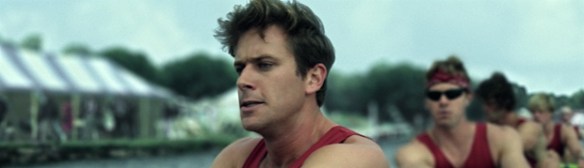
You could cut this 100-second sequence out of The Social Network and it would have no impact on the film’s plot, but it would also rob us of one of the most striking sequences in the CV of director David Fincher — and considering his continued visual mastery, that’s saying something. The tilt-shift-style photography came out of necessity, as the sequence was shot just months before the film’s release and they had to shoot the close-ups somewhere else entirely, but it gives the whole thing a unique visual style that, particularly when combined with a version of In the Hall of the Mountain King from composers Trent Reznor and Atticus Ross, is something very special.

4
The Poem

from Skyfall

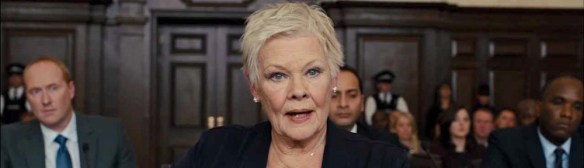
Whoever thought we’d one day find moviemaking artistry in the James Bond series? Skyfall isn’t even the first time that happened (see: the opera escape from Quantum of Solace), but the reason this sequence is even better is the way it sums up the film’s themes. As I described it in my review: “Bond races to an inquiry where M is giving evidence, in pursuit of Silva who is intending to finalise his revenge, with the soundtrack sharing only Judi Dench’s voice delivering a reading from Tennyson: ‘though we are not now that strength which in old days moved earth and heaven,’ she says, cementing [the] themes of what the role of the secret service (and, indeed, Britain) is in the modern world; and continues, ‘heroic hearts, made weak by time and fate, but strong in will to strive, to seek, to find, and not to yield,’ as a weakened, past-it Bond races to her rescue. It’s so perfect it could have been written for the film especially.”

3
The Truck Flip

from The Dark Knight

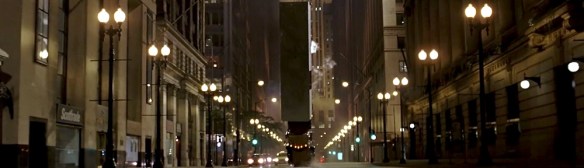
Pure spectacle seems hard to come across in movies post-CGI, where anything that can be imagined can be created on screen by even relatively small-scale movies. But when you combine the first time a narrative feature film had been shot in IMAX with an incredible stunt performed for real, you’re reminded of the magic of cinema. It’s the most memorable part of a car chase sequence that is exceptionally well executed on the whole, too.

2
The Montage

from Requiem for a Dream

To quote my review: “I’m not sure you can quite be prepared for what comes [at the end]. Even if you were told what happens, or see some of the imagery, or feel like you can see worse stuff on the internet without even looking too hard (which, of course, you can)… that’s not the point. It’s the editing, the sound design, the sheer filmmaking, which renders the film’s final few minutes — a frenzied montage that crosscuts the climaxes of all four characters’ stories — as some of the most powerful in cinema. It’s horrendous. It’s brilliant.”

1
The Basement

from Zodiac

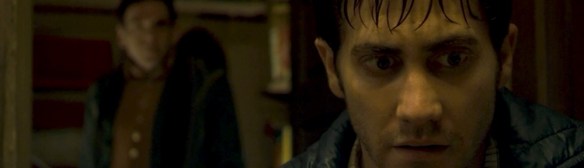
When I first thought of this idea for a top ten, this was the first thing that came to mind. In it, Jake Gyllenhaal’s obsessive investigator Robert Graysmith visits the home of a suspect’s friend. The pair are alone in the house, and they both go down into the basement to see something… when Robert hears someone upstairs. Describing this scene does it no justice — it’s one of the most hair-raisingly chilling in screen history.

Tomorrow: New York, London, Paris, Munich, everybody talk about… film music.
100 Films @ 10: Most Effective Director’s Cuts

Whether they be director’s, extended, ultimate, or any number of strung-together adjectives someone in marketing thought sounded exciting, direct-to-home-media alternate cuts of movies are all the rage nowadays. They have been for quite a while, actually — thanks no doubt to the booming sales of the DVD era — so for today’s top ten I thought I’d run down some of the most effective. I don’t necessarily mean the best (these aren’t “the ten best films that happen to have extended editions”), but rather the ones that have the biggest positive impact on the end result — which is sometimes the same thing, of course.

I know the initially stated point of these top tens was to look back over the last ten years, but this time I’ve widened the remit to include all extended cuts, mainly because that only added one title. Losing out because of that is X-Men: Days of Future Past – The Rogue Cut, which does contain significant changes, especially to the climax, but didn’t really belong because I actually think the theatrical cut is smoother.

10
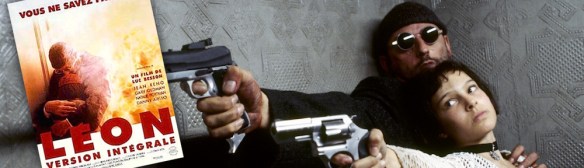
Léon
Version Intégrale

To undermine my introduction right away, the extended version of Léon doesn’t actually make massive changes to the movie. Some of the additions bolster character development, but the film wasn’t shortchanged on that in the first place. It is great though, but it’s also just more greatness. Does that mean it shouldn’t be here? Well, if you’re watching the US Blu-ray, it’s the longer version that has the proper title card, which is reason enough to prefer it in itself.

9
Watchmen
Director’s Cut

There are three cuts of Watchmen, but it’s the middle one that is director Zack Snyder’s preferred version of the film (aptly, given its subtitle). I’ve still not got round to the semi-experimental Ultimate Cut so can’t truthfully comment on whether Snyder’s right, but when I reviewed the Director’s Cut I asserted that, thanks to “a little extra room to breathe and a few worthwhile extensions, and in spite of the odd tweak that doesn’t work, this is the superior cut of the film.”

8
I Am Legend
Alternate Theatrical Version

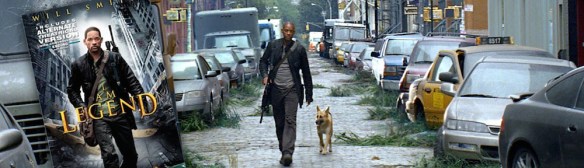
The extended cut of I Am Legend has one of the most meaningless subtitles of all — it wasn’t released theatrically, so how is it an “alternate theatrical version”? That said, “alternate” is definitely a more apt descriptor than “extended”: although this version is longer, the biggest change is a completely different ending. That makes a difference to the film’s tone, as well as paying off some subplots. But it only changes the movie so much — those misguided CGI creatures are still there, after all.

7
Salt
Director’s Cut

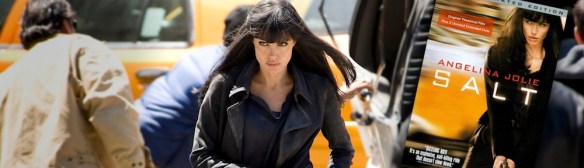
This middling action-thriller starring Angelina Jolie is not the first film that’s going to come to mind to most people (for any reason, ever), but it exists in three different cuts that make some striking differences. I discussed them in depth in my review, but on balance the one they labelled the Director’s Cut is best.

6
Alien³
Assembly Cut

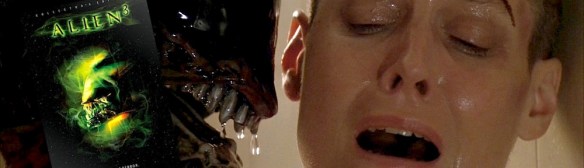
The second Alien sequel was a fraught production for a number of reasons, which wound up in an obviously-compromised theatrical version. A little over a decade later (doesn’t sound so long with hindsight, does it?) the original “assembly cut” was released — not a director’s cut because, understandably, David Fincher wants nothing to do with the movie. The different version doesn’t save the film entirely, but it does clarify some of it, thereby improving it.

5
The Lord of the Rings
Extended Edition

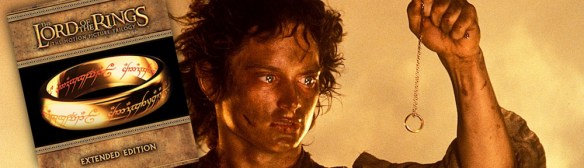
From Fellowship onwards, the extended versions of Peter Jackson’s adaptation of J.R.R. Tolkien’s epic are the preferred versions, deepening characters and expanding the rich world of the story. But by the time of the third and final movie, they’re essential: in a rare misstep, Jackson chose to completely excise one of the trilogy’s primary villains, Christopher Lee’s Saruman, from the theatrical version of Return of the King, so only in the extended version is the storyline of a major character actually resolved. That film won Best Picture nonetheless, which is why these aren’t ranked higher: the extended cuts are better, yes, but the theatrical versions are an incredible cinematic achievement regardless.

4
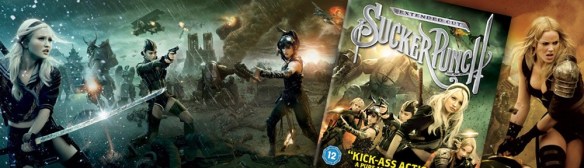
Sucker Punch
Extended Cut

Zack Snyder again, with another director’s preferred cut only debuting on the home release. This time he had to cut the film for censorship, revising it multiple times until the MPAA gave it the necessary PG-13. In the process, he removed several lines and scenes that helped to clarify what the hell was going on, which is rather helpful in such a crazy-ass movie. I’ve never bothered with the theatrical cut, but — in its extended form if no other — I think it’s something of an underrated movie.

3
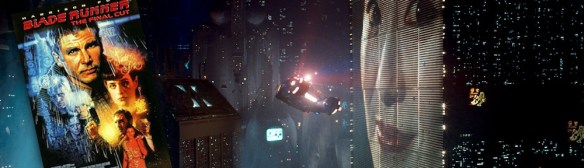
Blade Runner
The Final Cut

Arguably the daddy of all alternate cuts, Blade Runner’s so-called Director’s Cut wasn’t really anything of the sort — Ridley Scott was busy and couldn’t be properly involved, merely providing notes for a studio after a fast buck. Years later, he was able to do it properly, resulting in the aptly named Final Cut… which is kinda just a polished version of the earlier Director’s Cut, but there you go. (Incidentally, there are some people who prefer the theatrical version. I’ve still not got round to it myself, but… well, there are also some people who prefer the theatrical cuts of Lord of the Rings. What I’m saying is, there’s no accounting for taste.)

2
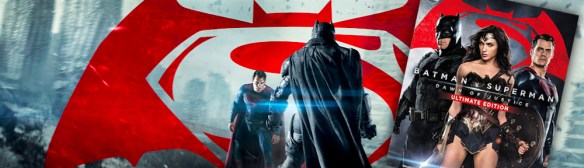
Batman v Superman: Dawn of Justice
Ultimate Edition

Guess who’s back? Zack Snyder’s third entry on this list is his most effective revised cut he’s yet done. There are aspects of Batman v Superman that mean some people will never like it, but it’s hard to argue that the Ultimate Edition isn’t an improvement, clarifying plot details and character motivations left, right, and centre. Seriously, though, what is it with Zack Snyder and cutting scenes that explain the plot?! At least when he does a director’s cut (which is most of the time) he really makes use of it.

1
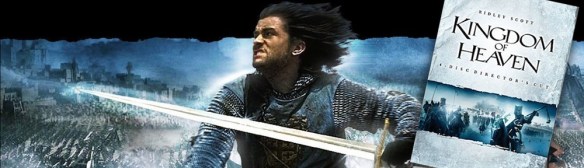
Kingdom of Heaven
Director’s Cut

Guess who’s also back? The other great proponent of the director’s cut, Ridley Scott — though he’s more prone to using and abusing the term than Mr Snyder (the director’s cut of Alien is, famously, nothing of the sort). I’ve never seen the theatrical version of Kingdom of Heaven so can’t actually vouch for this myself, but, by adding a massive 45 minutes of material, Scott’s lengthier cut turned a theatrical dog into a film some regard as a masterpiece. I can’t think of another director’s cut that has ever instigated such a thorough reappraisal of a film’s critical standing.

Tomorrow: ten good scenes and no bad ones.

100 Films @ 10: Most Represented Directors

It’s 100 Films’ 10th birthday at the end of the month. To mark the occasion, I thought in the run-up to it I’d publish some lists based on the last ten years of my blog, because who doesn’t love a list?

How many lists have I got? Why, 100 of course!

…haha, no — that would be ridiculous. There are ten — one for each year of 100 Films. And each one has ten items on it. Ten times ten is… why, it’s 100! What a coincidence.

For the first list, I’ve put opinion aside for pure facts: these are the ten directors who’ve been most-reviewed on this blog. That excludes films only featured in my 100 Favourites series — this is just their work that has been covered as part of my ‘main’ blog.

It may be worth noting that, because it’s purely based on statistics, this isn’t a list of my ten favourite directors… though as they’re ones I keep watching movies by, I guess it’d be a fair starting point.

10
Christopher Nolan

Christopher Nolan has made nine feature films, and seven of them are reviewed here. Throw in an extra one for the IMAX version of The Dark Knight and his short documentary, Quay, and he edges ahead of runners-up John Carpenter, Ernst Lubitsch, George Miller, and Billy Wilder.

9
Tim Burton

The next four directors are technically tied, but I’ve found a way to differentiate them. First: the Burtonesque Tim Burton, whose eight entries can be split into six main-list films and two reviews of things I’d already seen (Batman and Batman Returns).

8
Ridley Scott

Next, the man we can probably thank for all the Director’s Cuts we get these days, the more classical of the two Scott brothers, Sir Ridley Scott. He also has eight, of course, which factors in six main-list films, one alternate cut that I nonetheless counted on my main list (Blade Runner: The Final Cut), and one non-main-list film (Alien: The Director’s Cut).

7
Zack Snyder

Our third eight-film filmmaker is everyone’s favourite “visionary” director of superhero movies (right?), Zack Snyder. All eight of his films were on the main list, though two of them were alternate versions (the extended cuts of Batman v Superman and Watchmen).

6
Clint Eastwood

Simple and straight-up, much like the man himself, Clint Eastwood has a pure eight films.

5
Steven Soderbergh

The top five heads into double figures, with ten films for one-time enfant terrible and now retiree Steven Soderbergh.

4
Martin Scorsese

Perpetual awards season snubee, Martin Scorsese also has ten feature films, but edges ahead thanks to his part in anthology film New York Stories.

=2
Roy William Neill / Steven Spielberg

Unlike other directors on this list, there’s no reasonable way to differentiate this pair. You may not know the name Roy William Neill, but he helmed eleven of the fourteen Sherlock Holmes films starring Basil Rathbone, and those four years of work have landed him near the top of this list. Conversely, Steven Spielberg is probably the most famous film director working today, if not ever, and his eleven films span 44 years, stretching from his first (1971’s Duel) to his most recent Oscar nominee (2015’s Bridge of Spies).

1
David Fincher

Topping the list is my go-to pick for favourite director, David Fincher. He’s helmed ten movies, but I’ve reviewed twelve — that’s eleven main-list features (including the Assembly Cut of Alien³) and one extra for the marginally-extended director’s cut of Zodiac.

Tomorrow: when directors re-cut.

In a Valley of Violence (2016)

2017 #20
Ti West | 104 mins | download (HD) | 2.35:1 | USA / English | 15 / R

In a Valley of Violence

The spirit of the Spaghetti Western is alive and well in writer-director Ti West’s shoot ’em up; though where they once took inspiration from samurai movies, now Mr West has his sights set on modern-day gun-fu movies — specifically, here he retrofits John Wick into a familiar Old West narrative.

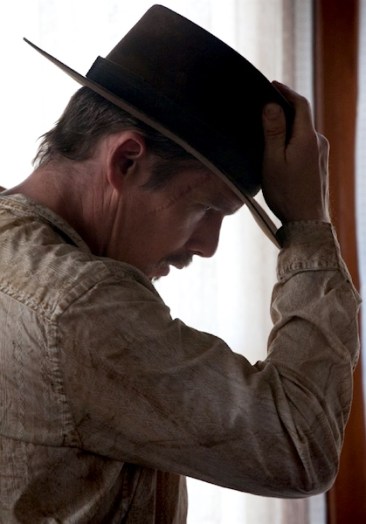
On his way to Mexico with just his horse and dog Abby for company, drifter Paul (Ethan Hawke) passes through an almost-deserted town, where he ends up in a fight with wannabe-tough-guy Gilly (James Ransone). It turns out Gilly is the son of the local Marshal (John Travolta), but he considers the matter settled and lets Paul move on, ordering his son to leave it be. A shamed Gilly has a different opinion, however, leading his gang of friends to assault Paul in the dead of night. But as is the way with halfwit villains, they leave our hero alive, ready for him to ride back into town and exact his vengeance.

If you come to movies looking for an original storyline, you’ll be disappointed here — as I say, it’s basically John Wick in the West (if you’ve seen that Keanu Reeves actioner, you’ll already know the outcome of Gilly’s revenge on Paul). The devil is in the details, however, and in that respect In a Valley of Violence is rather enjoyable. Perhaps the biggest mark in its favour is its sense of humour. It’s not a comedy by any means, but Gilly’s gang are borderline incompetent in a way that’s increasingly laughable.

Do you know what they call a Quarter Pounder with cheese in the West?

Travolta gets in on the act as a man who seems very much in control of his own little kingdom, but when things truly kick off he’s somewhat caught in the middle. Thankfully he’s not just the bullying villainous type, instead getting a nicely balanced reaction to events: he knows Gilly’s done wrong, but stands by him because he’s his son; but when Paul’s pushing comes to shoving… well, familial loyalty only gets you so far.

As Paul, Hawke finds some degree of complexity in the (anti-)hero, but this isn’t exactly a movie built for psychological complexity. Taissa Farmiga is positioned as the love interest, but thankfully isn’t entirely reduced to such a thankless role. As her sister, Karen Gillan reminds us that, while she may be best known for brightly-coloured sci-fi on screens both big and small, her roots are in comedy. But the biggest star is, of course, the dog. You can’t help getting attached, even when you know you’re watching John Wick of the West.

The dog's the star

The film offers many stylistic nods to remind us of its Spaghetti inspiration, like the starkly animated title sequence, or Jeff Grace’s Morricone-riffing score, which some criticise for its obviousness but I thought was fun. It even comes through in the film’s structure, with a slow-burn first half that reminded me of Leone’s attitude to action. Some complain of the pace there, or lack of it, but I rather liked that. It partly functions as a deliberate delaying of gratification: the main reason we’re here is for the bloody vengeance we know will eventually be coming, but West carefully sets the scene and gradually puts characters in place early on so that the second half can more fully concentrate on the violence. The wit is kept alive even then, with more than one of the deaths provoking at least some laughter.

The more I write about it, the more I wonder if this film is something of an acquired taste. It’s not out-and-out comical enough to be classed as a comedy, but action die-hards may feel the lighter elements undermine the violent thrills they seek. I thought it worked, but experience has taught me that I’m more accepting than most of such tonal mash-ups.

Cool cowboy

Despite the plot similarities, In a Valley of Violence isn’t going to challenge John Wick for ultra-choreographed action satisfaction, but it has many aspects to recommend it for those who like a chuckle alongside their bloodshed.

4 out of 5

In a Valley of Violence is released direct to DVD & Blu-ray in the UK on 6th March.
John Wick: Chapter 2 is in UK cinemas from today.

The Past Month on TV #14

After last month’s bumper-bonus TV review (with three major series to review, plus a couple of big specials), the past four weeks have been pretty quiet. I’ve certainly watched stuff, just very little of it feels worthy of comment.

Nonetheless, there was this:

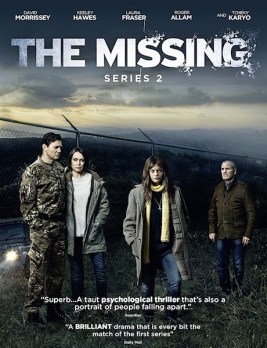
The Missing (Series 2)
The Missing series 2While everybody’s busy fawning over Happy Valley (never watched it) and Line of Duty (series one was quite good; I need to catch up), I reckon The Missing is one of the best dramas British TV has produced in a good long while. The second series (which aired towards the end of last year over here and, coincidentally, started last Sunday in the US) is every bit the equal of the first, and possibly even better — and considering how good the first was, that really is an achievement.
Featuring a brand-new case (what with the first one having been resolved), sibling screenwriters Harry and Jack Williams have this time made their story and scripts even tighter, partly in awareness of the scrutiny fans exacted upon the first run. What that means in practice is every mystery has an answer; nothing is thrown away, nothing is a mistake. That’s even more impressive given some of the audacious twists they pull off, which I shan’t spoil here.

As well as the enjoyable plot theatrics, the emotional lives of the characters are as on point as ever. Maybe none are quite as effective as the toll exerted on James Nesbitt’s character in series one, but the cast is arguably more well-rounded beyond a sole lead. Talking of which, the only major returning character, Tchéky Karyo’s detective Julien Baptiste, is even more central this time, which can only be a good thing because he’s a top character expertly brought to life. The writers agree: while a third series of The Missing is contingent on them having a good idea for a story, they’ve talked about potentially conjuring up a Baptiste spin-off instead.

I’ve recently been thinking about my favourite TV series of the last ten years. There are rather a lot of contenders, considering the golden age of “peak TV” we’re currently living through. Frankly, I’m not sure if The Missing will quite crack the top ten, but it’s definitely in the conversation.

The British Academy Film Awards 2017
The BAFTAs 2017aka the BAFTAs, obv. I have to say, I thought it was a pretty dull show this year. For starters, Cirque du Soleil — impressive, but what’s it got to do with the last year in film? Why did no one write Stephen Fry some good material for his opening monologue? Then there were the awards themselves. Short on surprises — the big prizes went where expected, the smaller ones erred British. None of the American winners are committed to giving a decent speech here because they’re saving it all for the Oscars. Well, apart from the Kubo guy — he knows his award is going to Zootropolistopia next fortnight and so he gave us his best stuff. Good on him.

Also watched…
  • Death in Paradise Series 6 Episodes 2-6 — Caribbean murder.
  • Elementary Season 5 Episodes 4-9 — Sherlockian murder.
  • The Flash Season 3 Episodes 10-11 / Arrow Season 5 Episodes 9-11 — not much need to investigate the murders here, as the heroes are doing them half the time.
  • Who Dares Wins Series 9 Episodes 5-6 — they’ve had to cut out the National Lottery bits now they’ve dropped that from TV, and they’re shunting it around the schedule like an unloved heirloom they’ve committed to display but really rather wouldn’t… and it is a kind of terrible show, really… but the lists, man, they keep me coming back. #addict

    Things to Catch Up On
    LegionIt must be a slow time for TV — I don’t even feel like I’ve been missing all that much. Well, X-Men spin-off Legion recently started and I haven’t got round to that yet, and 24 spin-off / sequel / continuation 24: Legacy started in the UK last night, so I’ve barely had a chance to watch it (I’ll have something to say about that next month, then). So I really have no excuse for not watching Westworld yet. Oh, and I need to get on with starting my long-planned re-watch of Twin Peaks, because there are only…
    94 days until new Twin Peaks.

    Next month… the final series of Broadchurch begins.

  • Love & Friendship (2016)

    2016 #173
    Whit Stillman | 94 mins | streaming (HD) | 1.78:1 | Ireland, France & Netherlands / English | U / PG

    Love & Friendship

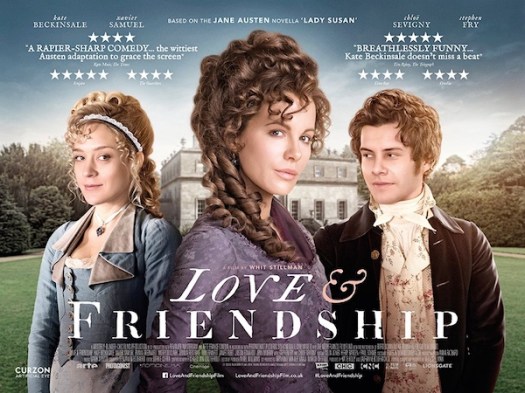
    Adapted from Jane Austen’s early novella Lady Susan, writer-director Whit Stillman’s arch comedy concerns one Lady Susan Vernon (Kate Beckinsale), a widow with a certain reputation in polite society, which she endeavours to hide from while engaging in matchmaking machinations for both herself and her daughter.

    That’s the vague version, anyway. The details of the plot are occasionally a mite too intricate to follow, especially as explanations tend to come after the fact, if they do at all. However, for those prepared to go along with it, the reward is a film that is at times hilariously funny.

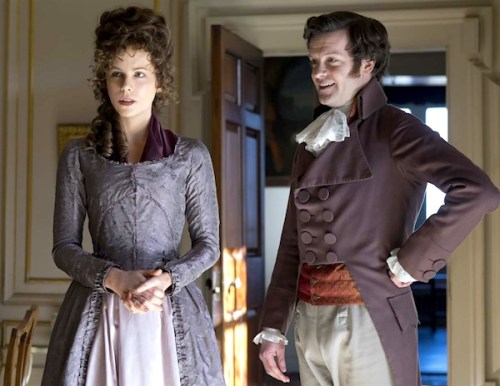
    Stillman’s writing and direction are both a little mannered, which will surely turn off some viewers, but the real stars are, indeed, the stars. Kate Beckinsale is phenomenal — funny, dry, biting, witty, but also conveying that Susan is making it all up as she goes, despite pretending to be in control. The other standout is Tom Bennett as the dimwitted Sir James Martin. His knowledge of the commandments and opinion of peas are particularly delightful.

    Kate Beckinsale & Tom Bennett

    Love & Friendship may be something of an acquired taste thanks to its stylistic affectations, but couple that with its wry sense of humour and it makes a likeable change from the heritage ambitions of most Austen adaptations. Perhaps, too, that makes it the Jane Austen film for people who don’t normally like Jane Austen films.

    4 out of 5

    Mad Max: Fury Road – Black & Chrome Edition (2015/2016)

    2017 #19a
    George Miller | 120 mins | Blu-ray | 2.40:1 | Australia & USA / English | 15 / R

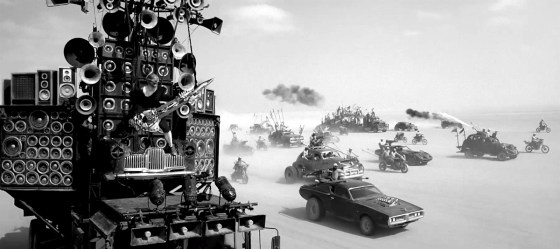
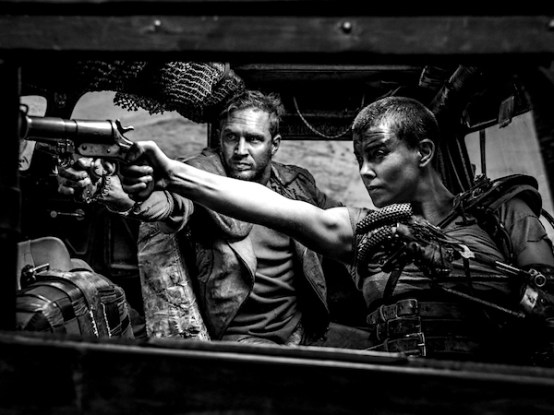
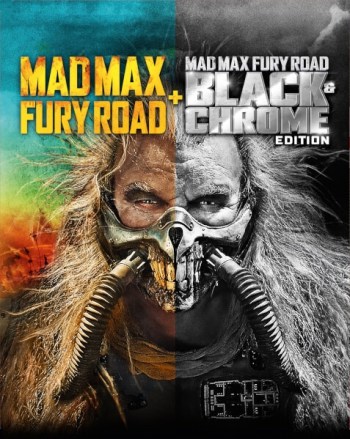
    Mad Max: Fury Road - Black & Chrome Edition

    During post-production on Mad Max 2, aka The Road Warrior, director George Miller had a chance to watch composer Brian May (not that one) at work. As was standard practice, May was working with a ‘slash dupe’ copy of the film — a cheaply-produced duplicate print, which has the defining characteristic of being in black and white. Miller was instantly smitten, believing this was the best-looking version of his film. 30-something years later, during post-production on the fourth Max movie, Fury Road, Miller had the film’s colourist convert some scenes into black and white, and he once again discovered his preferred version. Only this time he mentioned it publicly and promised it would be released, which is more or less how, about 18 months after the film’s theatrical release, we ended up getting the so-called Black & Chrome Edition on Blu-ray. It finally makes its way to UK shores today… though only in a Zavvi-exclusive Steelbook edition, which has both already sold out and was dispatched to purchasers (like me!) last week. So, uh, so much for that.

    Let’s start by getting some people’s obvious complaint out of the way: “Why do you need to buy it again? Why not just turn down the colour on your TV?” Well, you could, and you’d get an approximation of the effect; but if you have an appreciation for the fine details of film photography and colouring, that doesn’t cut it. The Black & Chrome version isn’t just the existing colour turned off — other things have been tweaked to heighten the experience, most obviously the contrast. Here’s a video that handily compares a selection of shots from the colour version, the Black & Chrome version, and the colour version simply desaturated:

    If you’re thinking “but the two black & white ones look the same!” then maybe this isn’t for you. And that’s OK — it’s an alternate version, after all.

    In his introduction (the only new special feature on the Blu-ray), Miller admits that at times you lose some information by not having the colour; however, at other times it looks even better, and he reiterates that he thinks this is the best version of the movie overall. Somewhat famously, the theatrical version of Fury Road has hyper-saturated colours as a reaction against the usual post-apocalypse movie look of heavy desaturation. It’s somewhat ironic, then, that Miller’s preferred version is the opposite extreme — but can you imagine any studio exec agreeing to release a $150 million black & white movie?

    Also in that introduction, Miller expands on the appeal of the desaturated version: “Something about black and white, the way it distills it, makes it a little bit more abstract, something about losing some of the information of colour, makes it somehow more iconic.” He’s got a point. The starkness of the imagery really heightens the effectiveness of some shots and sequences. Indeed, taking a look at some parts of the colour version afterwards, it all felt so ‘busy’ thanks to the additional visual information. You may remember that, a few years ago, Steven Soderbergh shared a black and white version of Raiders of the Lost Ark, the point being to highlight the shot composition and editing, easier to focus on with the distraction of colour removed. And he’s right. Not in the sense that this feels like watching an assignment for film school, but in the sense that the point of the framing and focus is emphasised further without colour.

    Black and Doof

    And it does look beautiful. Cinematographer John Seale is clearly a master of lighting, something that’s only more apparent without colour. Indeed, Soderbergh said the same thing of Douglas Slocombe’s work on Raiders: “his stark, high-contrast lighting style was eye-popping regardless of medium.” Most of the movie looks like it’s been etched from silver — or, of course, chrome. The greys and whites are metallic, the blacks deep points of contrast. It looks gorgeous. It’s let down slightly by the nighttime scenes, however. They weren’t so hot in the colour version either, having been clearly shot in daytime and aggressively graded blue. Presumably that finished version was used for this, because rather than the stark imagery of the rest of the film, the nighttime stuff is kind of murky, the blacks kind of blue-ish, and it’s far less pleasing. (If you want to see for yourself, compare this screenshot to the others here.) Fortunately, that doesn’t make up much of the film.

    Separate to the colour issue, Miller has expressed the influence of silent movies over Fury Road, including cutting the film without its soundtrack to make sure that it worked on a purely visual level. When he first promised the black and white edition would be released, he also said there’d be an isolated score option, to give the viewer the option of seeing the most stripped-back version possible. Sadly, that hasn’t happened. (He also promised a commentary and additional special features, which aren’t there either.) At times I tried to imagine how it would work in relative silence, and aside from a couple of places where you might want an intertitle or two, and the pre-climax scene where Max explains the new plan to Furiosa, it’d get by fine. So thoroughly committed is Fury Road to visual storytelling that even many of the dialogue scenes don’t actually need their dialogue — think about the early bit where Hux and Slit argue about who’s going to drive, for example. Sure, the dialogue makes explicit that Hux is normally the driver and Slit is taking his steering wheel because Hux is semi-incapacitated, but their body language conveys the gist of their disagreement clearly. It’s a shame Warners didn’t go the whole hog and let us have the option to experience the film with just the score, or score and effects, because I think it would’ve been equally interesting.

    Furiouser and Furiosa

    Obviously Fury Road: Black & Chrome is always going to be a curiosity for the dedicated fan rather than the primary way of viewing the film. Next time I watch it I imagine I’ll go back to the full colour version… but that’s mainly because I’ve only seen that version once anyway, so I want to re-experience the full impact of its wild colourfulness. However, for appreciating the quality of the photography, and for emphasising the legendary iconicity of Max and Furiosa’s story, I think Black & Chrome may well be the way to go.

    5 out of 5

    Mad Max: Fury Road – Black & Chrome Edition is theoretically released on UK Blu-ray today. It’s also available to own digitally from Amazon, iTunes (as an extra on the regular edition), and presumably other retailers (if they still exist) too.

    Steven Soderbergh’s variation of Raiders of the Lost Ark will probably be reviewed at a later date, because I really want to watch that now.

    The Maltese Falcon (1941)

    2016 #142
    John Huston | 96 mins | DVD | 1.33:1 | USA / English | PG

    The Maltese Falcon

    Humphrey Bogart is private dick and consummate bullshitter Sam Spade in this (re-)adaptation of Dashiell Hammett’s novel, considered the first major film noir.

    The twisty plot of murder and thievery is enlivened by duplicitous performances from femme fatale Mary Astor, an effeminate Peter Lorre, the always welcome Elisha Cook Jr., and the humungous presence of Sydney Greenstreet, making his film debut at 60 and stealing every scene.

    It’s also the directorial debut of John Huston, whose work alongside cinematographer Arthur Edeson is the greatest star: the low-key lighting and dramatic angles are (like the rest of the film) archetypal noir.

    4 out of 5

    The Maltese Falcon was viewed as part of my What Do You Mean You Haven’t Seen…? 2016 project, which you can read more about here.

    Tale of Tales (2015)

    aka Il racconto dei racconti

    2016 #148
    Matteo Garrone | 134 mins | streaming (HD) | 2.35:1 | Italy, France & UK / English | 15 / R

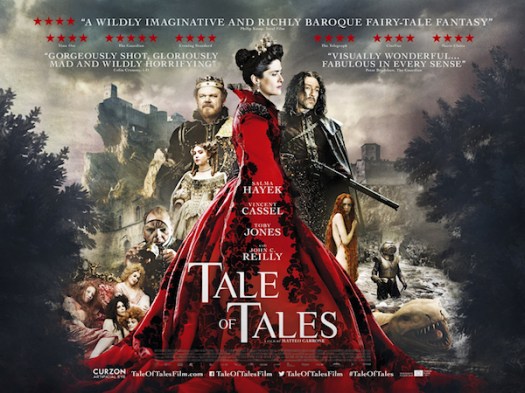
    Tale of Tales

    Based on 17th Century Italian fairytales by Giambattista Basile, Tale of Tales relates three interlocking stories of dark fantasy. If there’s one thing that really connects them, it’s thematic: essentially, “be careful what you wish for”; or maybe “be grateful for what you’ve got”. There are primary characters in each tale who go to disgustingly extraordinary lengths to achieve what they desire — eating a sea-monster’s heart raw, breeding a giant flea, self-flaying — and it rarely turns out for the best.

    If you can stomach the contents, there’s a quality cast, and the locations, production design, and cinematography are simply gorgeous.

    4 out of 5