And so I reach the pinnacle of my list — my most favourite films I’ve seen for the first time in the past ten years. (Well, if we’re being precise, in the past ten years and three months, but not counting anything from the last three months. But that’s less snappy.)
Over three previous posts I’ve counted down #100 to #11, but here’s the perfectly rounded number everyone loves for a list: the top ten.

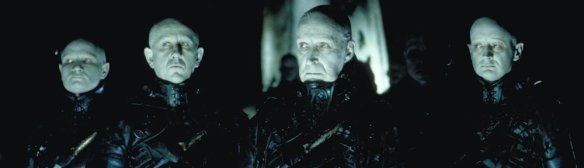
Before The Matrix there was Dark City, which tackles some of the same philosophical issues as the Wachowskis’ trilogy, only in a less opaque and verbose fashion — and, as I said, did so first. Of course, it lacks the groundbreaking action sequences that made The Matrix such a hit, but as a thoughtful piece of stylish sci-fi noir it probably bests its better-known thematic cousins. I also reckon it’s still a bit underrated… including by me, really, because it’s nine years since I first watched it and I still haven’t got round to seeing the Director’s Cut. (Note to self: fix that.)
The Adventures of Tintin: The Secret of the Unicorn

1st from 2014
(previously 2nd | original review)
Calling on the same skill set that produced the Indiana Jones movies, Steven Spielberg created an adventure movie that perfectly balances plot, action, and humour. Despite the freedom afforded by crafting the entire thing in CGI (rendered with stunning realism by Weta), Spielberg knows when to hold back and maintain a level of realism, only to cut loose when warranted. The top end of this list definitely skews blockbustery-y — well, it is “favourite” rather than some kind of “objective best” (not that that’d be strictly possible anyway) — but, nonetheless, I think Tintin is a very fine and underrated example of the form.
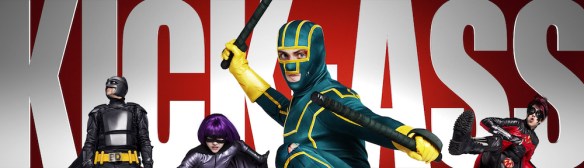
As Watchmen was to superhero comics, so Kick-Ass is to superhero films: taking familiar building blocks from other films and TV series, it deconstructs the genre through a “what if someone tried to be a superhero for real” storyline, asking questions about the glorification of violence and the sexualisation of its characters — all while being a funny and exciting action-comedy. Perhaps it’s having its cake and eating it, and that leads some people to miss the point (some by enjoying it a bit too much, some by thinking it has nothing to say), but I don’t think that stops it being one of the best and most thoughtful superhero movies yet made.
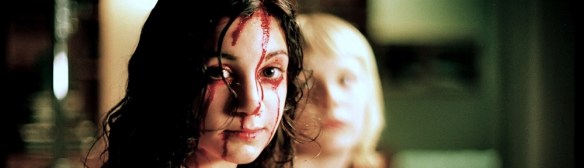
It’s felt like you can’t escape vampires in film and TV for the last couple of decades, but trust a European movie to give them a unique spin, right? So it’s both a coming-of-age-y arthouse-y movie about two 12-year-olds and first love, and a scary horror movie about violent supernatural creatures. It works by not shortchanging either aspect, instead combining them to transcend genre boundaries. So it’s a genuinely touching, emotional and relatable drama, as well as a creepy and horrific fantasy thriller.
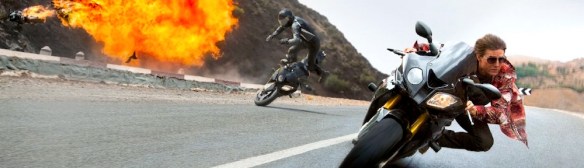
There’s always been a bit of a ‘wannabe’ air to the Mission: Impossible films, like maybe someone thought it could fill the void left by Bond disappearing post-Dalton, only it took so long to make it to the screen that Bond himself got there first in the shape of Pierce Brosnan. Nonetheless, the series has trundled along… though I don’t want to sound like I’m doing it down too much because I’ve always enjoyed it — the second one made my first 100 Favourites list, even. But Rogue Nation is where M:I finally out-Bonds Bond. Mixing action thrills and a genuine sense of jeopardy with just-ahead-of-reality gadgets, a knowing sense of humour, and a cast full of likeable characters, it’s superb blockbuster entertainment.
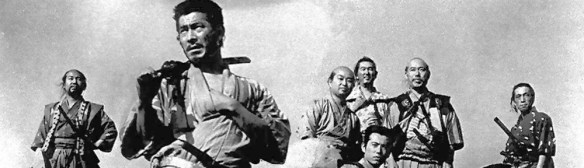
A phrase like “three-and-a-half-hour subtitled black-and-white movie” is going to conjure up a certain experience in the minds of most viewers. That experience is most probably nothing like Seven Samurai — although it is, of course, a three-and-a-half-hour subtitled black-and-white movie. On the surface it’s about a bunch of warriors protecting a small impoverished village that can’t defend itself, and it has a lengthy action-packed climax to deliver on such promise, but it rises above that thanks to its reflective attitude towards its characters and their very existence. No, wait, I said it’s not your typical three-and-a-half-hour subtitled black-and-white movie!

I’d wager most would rank Seven Samurai higher in the Akira Kurosawa canon, but I give Rashomon the edge because the form of its storytelling appeals to me. It retells the events surrounding a murder from the subjective viewpoint of each of the characters who were there, and of course their accounts differ. Its title has become a byword for such narratives, but there’s more here than just trendsetting plot construction — it’s a fantastically made film, exquisitely shot and magnificently performed.

David Fincher’s meticulous true crime thriller may be his best movie — and when we’re talking about the man who made Se7en and Fight Club, that’s certainly saying a lot. It may look like it’s a murder thriller — it is about the hunt for a serial killer, after all — but in many respects it’s more about obsession and addiction, and how such things can come to take over your life. But if you don’t want to ponder that kind of thing, there’s always chills like the basement scene to keep you viscerally engaged. (The slightly-different Director’s Cut is the better version of the film and, if we’re being specific, would be my pick here; but I watched that a couple of years later, so it was the theatrical cut that figured in 2008’s top ten.)

The James Bond films have always been action blockbusters, and more often than not immensely popular and successful ones. Skyfall changed the game though: by hiring Oscar-winning director Sam Mendes it was instantly booted into Prestige Picture territory — and still managed to deliver the most financially successful film in the series’ long history, the first billion-dollar Bond. But box office success is not why Skyfall is #2 on my list. It’s the beautiful cinematography; the way it adds thematic weight to the character without breaking the formula; the sense of Bond’s history without over-explicit reverence — and the way those aspects makes it both familiar and fresh at the same time. Plus it delivers on the action, larger-than-life villain, and one-liners just like a Bond film should. Its artistic success may be a case of the stars aligning and lightning striking (the lacking-by-comparison follow-up Spectre proved that), but Bond has rarely been better.
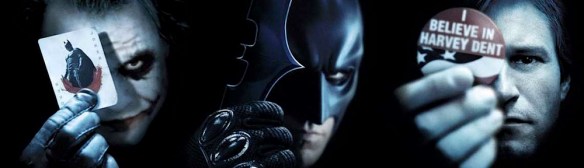
Eight years and three months ago, when I named The Dark Knight my #1 film of 2008, I wrote that “I’m unashamedly one of those who believe The Dark Knight isn’t just one of the best films of 2008, it’s one of the best films ever.” It’s nice to be able to stand by such a brazen assertion. And, having thought long and hard about what I would declare as my most favouritest movie from the 1,283 new ones that I’ve seen in the last decade, I clearly do stand by it. I love superhero movies, I love crime thrillers, and I love epics, so it’s no surprise that a movie which combines all three — and does them all well — would top a list of my favourite movies.
Now: what’s a good list without some statistics?









 Previously on Twenny-Four… There may be no Jack Bauer, the new font for the clock may be bizarrely wrong, and the on-screen text may have abandoned the familiar golden yellow for a soft blue, but everything else about Legacy is same old, same old. If you remember it from
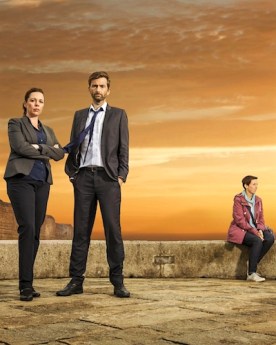 DI David Tennant and DS Olivia Colman (or whatever their characters are called) return after the much-criticised second series for a third run that represents a blazing return to form. Nearly every police drama on TV is always about murder, but here our committed coppers are faced with something that seems harder to prove, and all the more distressing and divisive for those involved: a sexual assault. The series was apparently put together with extensive advice from expert organisations, which means on occasion it almost tips a little too far into factual territory, like a “this is how it’s done in real life” dramatisation. Fortunately screenwriter Chris Chibnall is better than that, quickly focusing on how it affects the characters, and on building the mysteries that will fuel eight whole episodes. Suspicion abounds, but if Broadchurch’s first series proved anything it was that everyone can guess the culprit before the end without it undermining the effectiveness of the drama. I think we’re a ways from that point yet, though…
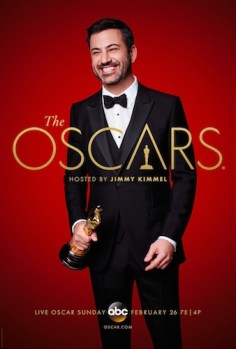 Best. Oscars. Ever! Oh, I bet it was horrendous actually being there having to deal with that ending, but my goodness, as a viewer it was fantastic. It couldn’t’ve been more dramatic if you’d scripted it. Imagine how terrible it could have been, though — if Moonlight had been forced to cede the win to La La Land, for instance (that would’ve sent #OscarSoWhite into overdrive), or if it had been in a category with a sole winner, who in the middle of their no-doubt-tearful acceptance speech was informed they hadn’t won after all and had to embarrassedly hand the statuette over to someone else… But no, it turned out OK. Well, not so for the La La Land guys, but for everyone else, yeah. And the rest of the ceremony wasn’t half bad either. Jimmy Kimmel was the most confident and capable host for bloody ages (and I say that as someone who enjoyed the likes of Neil Patrick Harris and Hugh Jackman) — if the show’s producers know what’s good for them, he’ll be the new regular host.
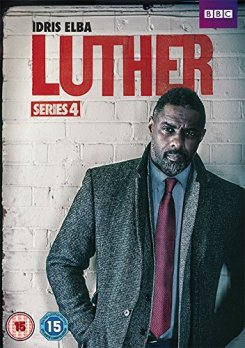 The recent news that Fox have scrapped plans for a US remake of Luther (because they couldn’t find a lead actor good enough to replace Idris Elba) reminded me that I never got round to watching the original version’s last series, this two-parter that aired back in December 2015. I can see why feeling unable to cast anyone as engaging as Elba would lead them to abandon their remake, because there’s not all that much special about Luther outside of its lead. Some people talk about it as if it’s among the forefront of the Quality TV era that we’re currently blessed with, but that’s just a bit daft — much like the programme itself. It doesn’t know it’s daft — it’s all very serious — but it is daft, really. Sure it’s dark, and sometimes kinda scary, and certainly grim, but its realism quotient is way low. It has much more in common with the overblown heightened world of, say,
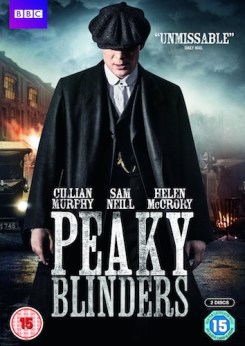 I’ve been meaning to get round to this since it first aired back in 2013, and for whatever reason now was the time (partly it was brought to mind by writer Steven Knight’s new dark period drama,
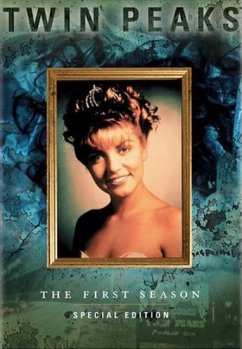 “She’s dead… wrapped in plastic!” With those immortal words (not the first lines, but never mind) a TV phenomenon was born, and a whole new era of television slowly began.
 This month, I have mostly been missing the penultimate season of The Americans, which is two episodes in Stateside (no idea if there’s still a UK broadcaster; at this point I’m not sure it matters). Long-time readers may recall I like to save up The Americans and watch it binge-ish-ly once the season ends, which is a very rewarding way to watch such an intricately-constructed programme. The downside is that means I’m still a couple of months away from getting to find out what happens this year in “