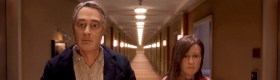
Twin Peaks: The Return (2017)

Twin Peaks : The Return

ICYMI, Film Twitter has been getting itself in a bit of a tizzy over the past couple of days about David Lynch’s return to TV… film… TVfilm!TV!!FIL— you get the idea.

So, respected British film magazine Sight & Sound went and named Twin Peaks: The Return as the second best film of 2017. Except it’s a little more complicated than that, in the sense that their list is voted for (i.e. no one person or team specifically decided to place Peaks at #2) and that voters were expressly told they could include TV series, or indeed any other form of visual art (although Peaks was the only non-film to make the top ten, Sight & Sound have since tweeted a list of music videos, computer games, and other such things, that also received votes).

Some people seemed to find the very notion of counting Twin Peaks’ third season as a film to be personally offensive. It must’ve been like rubbing salt in the wound when respected French film magazine Cahiers du Cinéma went and ranked it 1st on their list.
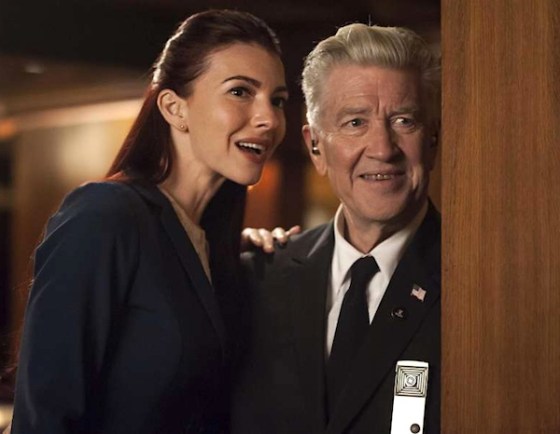
Happy times in Twin Peaks

Many digital column inches have been spun out of this, naturally. Two of the more interesting / accurate ones I’ve read are Matt Zoller Seitz’s 25-tweet thread/rant and Vadim Rizov’s kinda rebuttal at Filmmaker Magazine. For my part, it’s nine years almost to the day (just one day short!) since I wrote this piece on the TV vs. film shebang, albeit from a slightly different tack (TV movies vs. ‘real’ movies). My main point was that it’s a kinda arbitrary distinction nowadays. That’s only become more the case in the almost-decade since.

Similarly, I think most of the handwringing over Peaks’ inclusion in these lists has been stupid. As I said, Sight & Sound specifically okayed the inclusion of TV — The Return wasn’t singled out as “yeah, it’s TV, but it’s so good we’ll count it as a film”, a notion that’s been projected on this news by some commentators (mainly TV critics) so they can then take great offence at it. But if Sight & Sound’s voters had considered any other season of 2017 TV to be worthy of inclusion, it had just as much chance of making it in. I don’t know what Cahiers’ rules were, but I’m going to assume they were similar — and they’ve included TV before (of all things, the first season of 24 made their top ten back in 2002).

Personally, I’m not really sure where I come down on the issue of Twin Peaks: The Return in particular. I mean, it’s definitely a TV series, isn’t it? But it’s also virtually an 18-hour movie, isn’t it? Can it be both? Why can’t it be both? As I said, I kind of err towards the broad position of “why differentiate?” As someone put it in a comment I saw somewhere else, it’s all linear non-interactive visual media. Still, I probably won’t be including it in my own year-end best-of list, but is that because I don’t think it should be on a movie best-of list or because I wasn’t wholly convinced/entertained by it as a work?
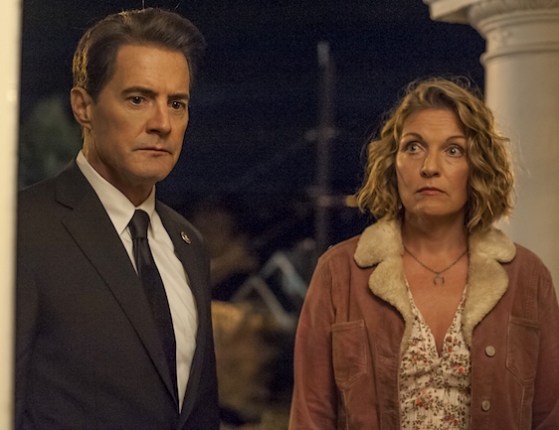
Uncertainty

And if you were wondering what I did think of it in more detail, here are all the posts I reviewed it in while it was airing:
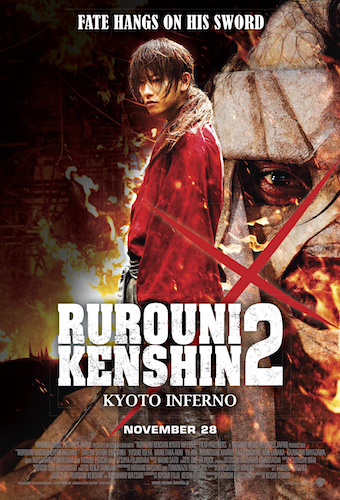
Rurouni Kenshin: The Legend Ends (2014)

aka Rurōni Kenshin: Densetsu no Saigo-hen / Rurouni Kenshin Part III: The Legend Ends

2017 #155
Keishi Ōtomo | 134 mins | streaming (HD) | 2.35:1 | Japan / Japanese | 15

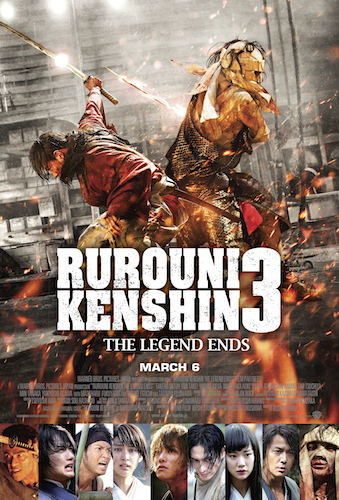
Rurouni Kenshin: The Legend Ends

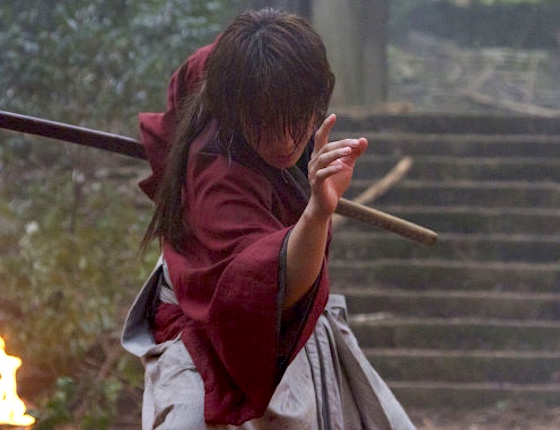
Picking up where Kyoto Inferno left off, The Legend Ends is the second half of the two-part conclusion to the Rurouni Kenshin trilogy. With the villainous Shishio (Tatsuya Fujiwara) on his way to conquer Japan, Kenshin (Takeru Satoh) returns to his old master, Hiko (Masaharu Fukuyama), to learn the final tricks of his unique fighting style. All the previous film’s various characters (including ones I thought had died) have their role to play in getting Kenshin into position to battle Shishio again and, hopefully, defeat him once and for all…

The Legend Ends is, unfortunately, not all it could be. The first hour or so essentially goes nowhere. The idea of Kenshin returning to the man who trained him to learn a final technique to defeat the big bad (aka the plot as outlined in the blurb) is a good one, but the way it plays out in practice kinda sucks: Kenshin washes up on a beach and it’s his teacher who happens to find him — what a stroke of luck! And the lesson Kenshin learns has bugger all relevance, as does that entire character in the end — even when nearly everyone who can fight shows up as part of the big finale, Hiko’s not among them.

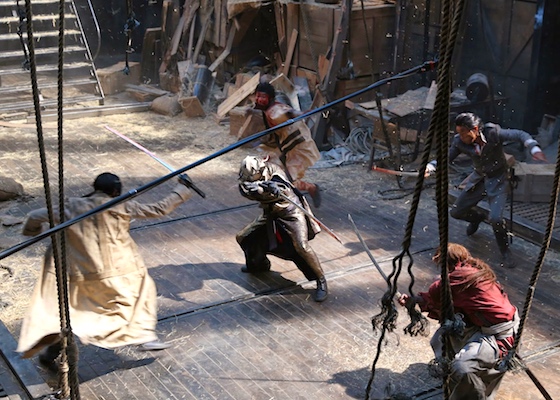
Spot the period-accurate boom mic

The second half is better, in particular the climax — it’s one big sword fight, of course, which is exactly how it should be in a film like this. Throughout the film the action is all excellently choreographed and staged, but the finale is the pinnacle of that. But aside from the thrilling combat scenes, the movie just doesn’t hang together as a satisfying conclusion to the trilogy. On a literal level the conflicts are resolved and characters are reunited, etc etc, but the way it goes about that business is, from a character or emotional perspective, lacking in impact. It’s a shame.

As is a common fate among so many trilogy-closers, I thought Rurouni Kenshin 3 was sadly the series’ weak link. That said, it’s not a bad action movie — if you’re only in it for the swordplay then it satisfies with bells on; it’s the storyline around that is disappointing. Even while a significant chunk of its running time is somewhat underwhelming, at least the killer climax provides a suitable finale to the trilogy. Or it did until earlier this year, when they announced a fourth movie. Although my score errs on the harsh side, I’m still looking forward to Kenshin’s adventures continuing.

3 out of 5

Rurouni Kenshin: Kyoto Inferno (2014)

aka Rurōni Kenshin: Kyôto taika-hen / Rurouni Kenshin Part II: Kyoto Inferno

2017 #149
Keishi Ōtomo | 139 mins | streaming (HD) | 2.35:1 | Japan / Japanese | 15

Rurouni Kenshin: Kyoto Inferno

The first live-action Rurouni Kenshin film was such a success that they followed it with a two-part sequel, filmed back-to-back and originally released six weeks apart over the same summer. This is the first half.

After the events of the first film, former assassin Kenshin (Takeru Satoh) is living a peaceful life with his newfound friends, until he’s summoned by the government to take on a mission. Turns out one of Kenshin’s former assassin colleagues, the vicious Shishio (Battle Royale and Death Note’s Tatsuya Fujiwara), is amassing an army to take down the government that left him for dead. Well, less left him for dead, more killed him after they won the war because he was too nasty to let stick around. Previous efforts to stop Shishio have failed, so now they want Kenshin to sort him out. Our peace-loving hero initially turns the job down, but events conspire to convince him he must act, and so he sets off alone to once again face the demons of his past.

Kyoto Inferno is one of those sequels that benefits from the its predecessor establishing the world of the story and the characters that inhabit it, meaning it can launch off on its own grander scale. Partly we see this in a material sense: it looks even more expensive than the first one, right from a fabulous fire-strewn opening location, and keeps up the visual impressiveness throughout. But it’s also in the scope of the story and the way it stretches the characters, both old and new. It really puts Kenshin through the ringer, testing and questioning his beliefs and principles, and his fighting skills too. As a film it finds power in that — whereas the first movie established his persona and gave it a bit of a work out, here he’s stretched to breaking point.

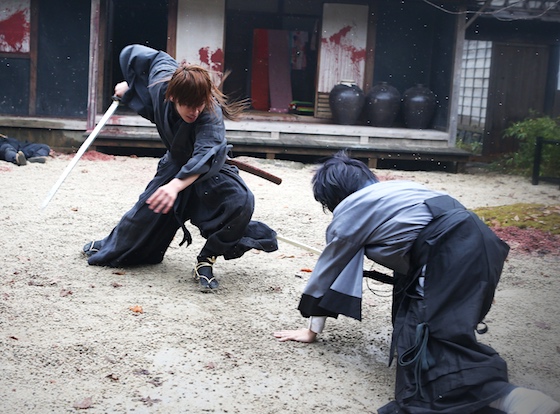
Sword fights a-go-go

Despite being only the first half of a four-and-a-half-hour epic, when compared to the original film the story here feels more streamlined, focussed, and pointed. It’s not perfect in this respect — at one point Kenshin’s mate Sanosuke sets off to help him, only to disappear from the movie until he suddenly appears during the final battle — but such lapses are few and do little to impact the overall flow. As a villain, Shishio is more of a force and a challenge for our hero, not least because he has an army of henchmen, as well as a literal army, on his side. The fights are even more accomplished, spectacular, and epically staged than in the first movie, not least the huge climax that sees a pair of armies duke it out in the streets of the titular city.

Kyoto Inferno is unquestionably a first half — it ends on a handful of cliffhangers. That kind of thing sometimes irritates me, but it can work when done well, and I think this will turn out to be one of those good two-parters. It feels like a well-shaped movie in its own right, starting and paying off some of its own subplots rather than just leaving everything hanging. Some of these conclude in a way that is both an ending and indicates where the story will go next, which is a most deft bit of structure. The whole affair builds to a significant climax (the aforementioned battle) and a major turning point in the narrative, rather than just pausing events at the halfway point as lesser two-part movies do.

Shishio and his hench-friends

I enjoyed the first Rurouni Kenshin a lot, but this follow-up is even better. It expands the world of the story and deepens the characters, making for a more rounded and exciting movie. As mid-parts of trilogies (and/or first halves of two-parters) go, it’s more of a Dark Knight than a Matrix Reloaded; more of an Empire Strikes Back than a Dead Man’s Chest; more of a Two Towers than a Desolation of Smaug. Hopefully the next film can stick the landing…

5 out of 5

Tomorrow: the legend ends in The Legend Ends.

Rurouni Kenshin (2012)

aka Rurōni Kenshin / Rurouni Kenshin Part I: Origins

2017 #143
Keishi Ōtomo | 129 mins | streaming (HD) | 2.35:1 | Japan / Japanese | 15

Rurouni Kenshin

Based on a manga series that was previously adapted into an anime known in the West as Samurai X, this live-action adaptation was first brought to my attention by Total Film’s list of “50 amazing films you’ve probably never seen”, which cited its “stunning action sequences” and “beautifully choreographed sword-scraps”.

Set in the late 19th century, the film is the story of Kenshin Himura (Takeru Satoh), who ten years ago went by the name Battosai and was a renowned fighter in the successful rebellion that brought Japan into a modern new age. Disgusted with his actions, he vowed never to kill again, becoming a wanderer (the rurouni part of the title) helping those in need, fighting with a blunted sword. When he arrives back in Tokyo, Kenshin finds that a murderer has adopted the name Battosai, whose killings are likely connected to powerful businessman Kanryu (Teruyuki Kagawa) to protect his illegal activities. Kenshin falls in with Kaoru (Emi Takei), the young owner of a fencing dojo under threat from Kanryu’s plans, and eventually teams up with acquaintances old and new to stop Kanryu and co.

Kenshin and Kaoru

I’ve never read or seen a version of Rurouni Kenshin before, so I don’t know how faithful this is as an adaption, but they’ve certainly crammed plenty of plot into its two hours. Viewers need to be a bit attentive to keep track of who’s who, and who’s working for who, and what their motivations are — for example, characters who initially appear to be villains, both because of their actions and our expectations of the story, are revealed to be good guys in short order. Having two characters called Battosai, one of whom has since changed his name but is primarily known by his old moniker to some characters, doesn’t help matters.

It’s worth the small effort though, because, a few languorous patches aside, Rurouni Kenshin is a very entertaining movie. The heroes are a likeable bunch, even if Satoh looks too fresh-faced to have been a hardened warrior a decade earlier. I guess everywhere likes their pretty-boy leads. He also carries a little too great a sense of naïveté for that persona, but maybe that’s just faithful to the character as written. At least he seems to know his way around a fight scene. On the other hand, the villainous Kanryu is a delightful addition to the proud line of scenery-munching nemeses, his quirks underlined by a jaunty theme from composer Naoki Satō. He employs a couple of physically intimidating henchman too, which naturally serves to fuel the action sequences. As promised, these are excitingly staged, full of quick choreography and slick stunts. Couple their impressiveness with the large cast and varied period locations, and it gives the whole thing a glossy, big-budget feel.

Ready for action

In the years since it appeared on Total Film’s list with the note “worth importing”, Rurouni Kenshin has become much more widely available: in the UK it’s been available to stream and buy on disc for a couple of years now, and it even made it to the US in 2016. It still deserves more attention, I’d say, especially for anyone who likes a good bit of sword-based duelling.

4 out of 5

Tomorrow and Monday: reviews of the two-part sequel.

The Global Monthly Update for November 2017

Multiple helpings of Eastern action, French sci-fi, German horror, South American-themed Disney, a double-dose of Batman and, appropriately, a 3D trio all feature in my viewing for the penultimate month of 2017.


#152 Candyman (1992)
#153 Batman vs. Two-Face (2017)
#154 Awakenings (1990)
#155 Rurouni Kenshin 3: The Legend Ends (2014), aka Rurōni Kenshin: Densetsu no Saigo-hen
#156 Passengers 3D (2016)
#157 Justice League (2017)
#158 The Great Wall 3D (2016)
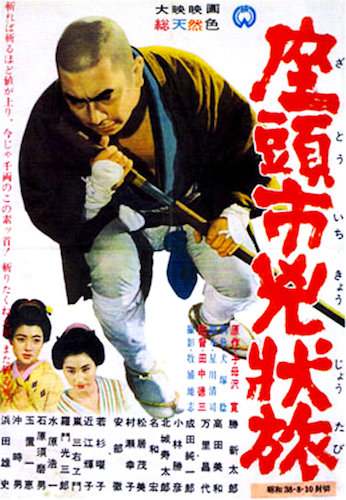
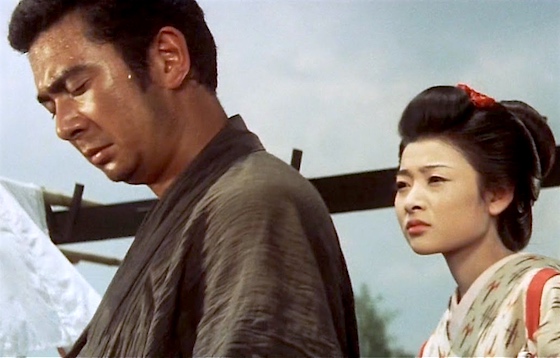
#159 Zatoichi the Fugitive (1963), aka Zatôichi kyôjô-tabi
#160 Valerian and the City of a Thousand Planets 3D (2017)
#161 Saludos Amigos (1942)
#162 Tea for Two (1950)
#163 The Cabinet of Dr. Caligari (1920), aka Das Cabinet des Dr. Caligari
The Great Wall

Valerian and the City of a Thousand Planets

.


  • 12 new films this month mean that November isn’t 2017’s worst (a dishonour retained by September’s 10), but it’s far from its best (it’s 9th out of 11).
  • That’s below the 2017 average (previously 15.1, now 14.8) and the rolling average for the last 12 months (previously 14.58, now 14.42). Oh well.
  • On the bright side, it beats my November average, in the process raising it from 8.44 to 8.8. That means it’s still one of three months with an all-time average below 10, but if I watch 11 films in November 2018 then that’ll change.
  • Also, further to what I was saying in July about dates on which I’ve never watched a film, November 4th is now also struck off the list. Hurrah!
  • Zatoichi the Fugitive is my second Zatoichi film this year. That means that since I started watching the 25-film series in 2013 I’ve averaged… 0.8 films a year. Oh dear. If I maintain that rate I won’t finish until 2044.
  • This month’s Blindspot film: supposedly the first true horror film and the most famous example of German expressionism, The Cabinet of Dr. Caligari. While it’s very atmospheric, I don’t think it entirely holds up.
  • No WDYMYHS film this month. There’s only one left though, so next month it is.


The 30th Monthly Arbitrary Awards

Favourite Film of the Month
This month wasn’t an all-timer for quality — while I did enjoy most of the films I watched, very little jumps forward as a solid gold favourite. It comes down to a toss-up between two 2017 releases that each met with critical indifference but which I was pleasantly surprised to enjoy very much, especially with 3D really showing off their spectacle. On balance, I think the more interesting was Valerian and the City of a Thousand Planets.

Least Favourite Film of the Month

In a mirror image to the above, there was nothing truly terrible. This category is considerably easier to decide on, though, because I was so thoroughly disappointed by Batman vs. Two-Face.

Most Underrated ’90s Film of the Month
Sure, not enough people talk about Awakenings (as I wrote in my review), but I was even more surprised to find that Candyman is a highly atmospheric horror movie that deserves to be better remembered.

Biggest Missed Obvious Solution of the Month
Considering they reshot almost all of his scenes anyway, they should’ve just had Superman be reborn with Henry Cavill’s silly moustache in Justice League. I mean, maybe it wouldn’t’ve been a good idea, but it’d’ve been a laugh.

The Audience Award for Most-Viewed New Post of the Month
For the fifth time this year, this award goes to the TV roundup. The headliner, and undoubtedly what attracted the most views, was Stranger Things 2. Also in the post was Peaky Blinders series three — another series that I know draws a lot of hits. It was further bolstered by covering Red Dwarf XII and an episode of Rick and Morty, plus Arrow, Bounty Hunters, Castle, Detectorists, The Flash, The Good Place, and Upstart Crow. (The highest new film review was Justice League at 9th.)


#41 Batman: Mask of the Phantasm (1993)
#42 Baby Driver (2017)
#43 Spider-Man: Homecoming 3D (2017)
#44 Men in Black (1997)
#45 Men in Black II (2002)

I hadn’t intended to embark on the Men in Black trilogy, particularly, but at a loss one night I settled on rewatching the first because why not? That led to the sequel, but not the third as yet. I’ve never seen it, so maybe next month.


I’ve written a list, I’m checking it twice — not of who’s been naughty or nice, but of films I intended to watch in 2017 and haven’t got round to yet. La La Land, Your Name, the new Beauty and the Beast… it goes on much longer than that. How many will I get through?

Plus: thirteen days to go ’til a galaxy far, far away…

Zatoichi the Fugitive (1963)

aka Zatôichi kyôjô-tabi

2017 #159
Tokuzô Tanaka | 86 mins | Blu-ray | 2.35:1 | Japan / Japanese

Zatoichi the Fugitive

His sword is shiny and ice-cold. The only thing it won’t cut in this whole wide world is oil and the bond of lovers.

The fourth film in the Zatoichi series finds the blind masseur (Shintaro Katsu) with a bounty on his head, which only increases when he kills the first person who tries to claim it. Travelling to a nearby village to apologise to the guy’s mother, Ichi finds himself in the middle of a yakuza scheme to grab territory from a young boss. There’s also the small matter of a ronin (Jutarô Hôjô) and his companion, Ichi’s old love Otane (Masayo Banri).

That’s the straightforward version — much of the plot is an overly complex account of yakuza plotting that, frankly, I sometimes struggled to follow. Especially at the start, there are so many bosses to keep track of, with broadly similar names, all of whom are more often referred to in dialogue than established on screen. I got my head round it eventually, but it took some work. It makes stretches of the film a bit dry and awkward, however.

Fortunately, that’s not all that’s going on. Otane is back from films one and two, but she’s different to how Ichi remembers her. Rather than just bringing back a familiar face for the sake of it, the film uses her to make a point about how people aren’t always who we think they are — a bit like Ichi himself, in fact. I imagine this would be even more effective if I’d watched The Fugitive closer to when I watched her previous two appearances, but there’s enough information recapped within the film to get the gist. It also continues what seems to be a definite theme of the Zatoichi films (at least so far) about past people and actions coming back to haunt our hero.

The bond of lovers

However, the best part of the film is the final 20 minutes, a tour de force of emotion and action that sees Ichi surrounded and, enraged into action, taking down an army that stands between him and vengeance. Said vengeance comes in the form of a one-on-one sword duel, of course. Obviously we know our hero will triumph, but it’s still a tense scene, especially as it seems to be a rare occasion when Ichi’s been out-fought. This third act elevates the whole movie, its very existence justifying everything that came before.

Reading other reviews, I’ve seen The Fugitive described as both “one of the weaker installments in the series” and “thus far the best [of the series,] a spectacular action-packed entry that deftly showcases why this series matters so much.” I think this stems to which you weigh heavier between the first-rate climax (plus a few choice sequences before that) and the occasionally dry plotting earlier in the movie. For me, the way it eventually comes together and concludes makes it all worth it.

4 out of 5

Valerian and the City of a Thousand Planets (2017)

2017 #160
Luc Besson | 137 mins | Blu-ray (3D) | 2.40:1 | France, China, Belgium, Germany, UAE, USA, UK & Canada / English | 12 / PG-13

Valerian and the City of a Thousand Planets

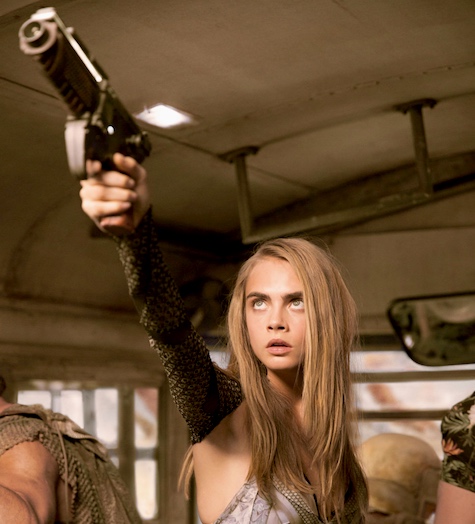
Luc Besson returns to the sci-fi genre that he so memorably visited 20 years ago in The Fifth Element for another colourful, crazy, adventure romp. Based on the French comic book series Valerian et Laureline, it sees special agents Major Valerian (Dane DeHaan) and Sergeant Laureline (Cara Delevingne) on a mission to protect Alpha, the titular city, from forces that threaten to destroy it.

Valerian got a pasting from critics and was a flop at the US box office, a particular problem when it’s apparently the most expensive independent movie ever made. Fortunately for it, it did alright internationally, to the point where home video sales could still secure a sequel (Besson has already written a second and has moved on to developing a third!) While it’s far from a perfect movie, it deserves to find an audience. It’s probably a bit too barmy — a bit too European, even — for mainstream US tastes, but there’s a lot to like here for those who are so inclined.

The main selling point is the imagery. Simply put, it’s incredible. There’s so much going on, all the time. There’s background detail galore. It whizzes through worlds that could be the entire setting for some other story. There are dozens, probably hundreds, of alien species thrown around. It’s so casually inventive, as if it’s got imagination to spare. And it’s mostly vibrantly colourful too, a real comic book of a movie in the traditional sense. All that depth and detail looks particularly amazing in 3D, it must be said, especially during the action sequences that whoosh though intricate, layered environments at breakneck speed.

Valerian, without Laureline

This visual exuberance sometimes comes at the expense of the plot. The main storyline is pretty straightforward — for example, there’s a third-act twist that’s obvious from the moment the character it concerns first appears on screen — but it keeps getting distracted by total asides, as Besson meanders off course to showcase some other species or environment or set piece he and his army of designers have cooked up. If that kind of shaggy storytelling annoys you then Valerian is set to get up your nose, but if you go along for the ride then Besson’s showing off can be delightful.

Some of the other screenwriting details suffer even more, however. It almost engages in some interesting themes about colonialism and that kind of stuff, but instead more nods its head in their direction than actually says anything about them. More overtly, a lot of the dialogue is atrocious. In fact, it’s so bad that you begin to wonder if it’s deliberately ultra-mannered and you’ve just missed some kind of joke. It doesn’t help that DeHaan feels at least somewhat miscast as the cocky heroic lead. Or possibly that’s the point — that Valerian isn’t as irresistibly attractive and amazingly competent as he thinks he is. Model-turned-actress Delevingne, on the other hand, is surprisingly good.

You’ll notice that Valerian and Laureline are (a) co-leads, and (b) both in the name of the original books, and yet the female half of the duo has been ditched from the film’s title. Unfortunately, that does indicate the film’s sometimes-dated attitude towards gender politics. On the bright side, Delevingne manages to imbue Laureline with a feistiness that allows her to mostly hold her own against the men, and — despite the old-fashioned shape of a romantic subplot — Besson’s screenplay lets her be a capable agent in her own right as well. Still, Laureline vs. the Space Patriarchy would not be a wholly unapt alternative title for the film.

Laureline vs the Space Patriarchy

These less-good aspects of Valerian glare out at one rather, and make me want to declare that much of it is kind of rubbish, really… and yet I rather enjoyed the whole shebang. Perhaps it just takes a rewatch or two to settle into the film’s own particular rhythm? Even if that’s not the case, I’d still rather have the messy ambition of a Valerian than another dozen run-of-the-mill Hollywood CGI extravaganzas. Fingers crossed for those sequels.

4 out of 5

Valerian and the City of a Thousand Planets is released on disc in the UK today.

It placed 17th on my list of The 17 Best Films I Saw For the First Time in 2017, which can be read in full here.

Hail, Caesar! (2016)

2017 #23
Joel & Ethan Coen | 102 mins | streaming (HD) | 1.85:1 | UK, USA & Japan / English | 12 / PG-13

Hail, Caesar!

The Coen brothers’ ode to the golden age of Hollywood provoked mixed reactions from their faithful fans (i.e. all film critics and most moviegoers) — some say it’s just a lightweight romp, others that there’s more meat on its bones.

Well, maybe there are indeed hidden depths here, but I think I’d prefer it as just a zany caper centred on Josh Brolin’s character, surrounded by the game all-star supporting cast, rather than having lengthy asides where a room of kinda-recognisable supporting actors discuss economics and communist philosophies and that kind of thing. Is that shallow of me? Maybe. But the movie is so entertaining when it’s riffing off classic Hollywood staples and making light work of many an amusing scenario, it’s tough not to want it to be no more than that.

Fundamentally I enjoyed it (those handful of political longueurs aside), but I’m not entirely sure what to make of it as a whole. I can believe there’s a deeper reading there if one looks to interpret it, but I’m not sure I’m bothered — I’m satisfied with it being merely a comical tribute-to-old-Hollywood caper, thanks.

4 out of 5

Hail, Caesar! was viewed as part of my What Do You Mean You Haven’t Seen…? 2017 project, which you can read more about here.

Napoleon (1927)

aka Napoléon vu par Abel Gance

2016 #184
Abel Gance | 333 mins | Blu-ray | 1.33:1 + 4:1 | France / silent (English) | PG / G

Napoleon

At one point in time, arguments over rights made it seem unlikely you’d ever be able to see Abel Gance’s epic biopic of French leader Napoléon Bonaparte if you were a regular person not prone to attending all-day cinema screenings with a live orchestra and multiple intermissions. But a year ago this week things panned out so that the BFI were finally able to release it on Blu-ray. While a theatrical marathon is probably still the best way to see the film (if only for the full effect of the famed triptych finale), this release is certainly more convenient and accessible. Apparently it sold better than expected, too — I guess that’s what happens when you combine years of anticipation with being a worldwide-exclusive release of a film of this stature. It’s also a daunting film to review — for the aforementioned reasons, plus its length and its artistic importance. Nonetheless, here are what thoughts I had.

At 5½ hours, Napoleon is rather like a miniseries from the silent era — a comparison that feels more apt than ever in this age of binge-watching. It’s divided into four acts, each running anywhere from 49 to 114 minutes, but it could even be subdivided into further episodes: Napoleon’s schooldays; his observation of the French Revolution; his opposition to Corsica being sold to England; the siege of Toulon (which takes up all of Act 2 and is the best bit, in my opinion); the reign of terror (a half-hour section that barely features Napoleon); a chunk where he falls for and woos Josephine that plays like a rom-com; the invasion of Italy… Yet despite that length, the film doesn’t even reach the Napoleonic Wars. No wonder Gance wanted to do six movies — or six seasons, as we might interpret it today. (In the end, he went over-schedule and over-budget on this first film, covering just two-thirds of the story he’d intended and spending the budget for the entire series. I imagine I’d outrage some silent film fans/scholars if I called him the Peter Jackson of his day…)

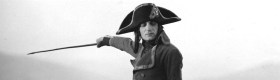
Albert Dieudonne as Napoleon

Part of the fourth act is that triptych climax, a 21-minute sequence shot with three cameras side-by-side, and therefore designed to projected on three 1.33:1 screens side-by-side, to create a 4:1 widescreen image. It’s undeniably less powerful when rendered as a thin strip across a 16:9 television, suddenly shrinking the height of the image rather than suddenly tripling its width, but what other choice is there? (Well, if you’ve got three sets of equipment, the three-disc Blu-ray contains each screen full size, one per disc, so you could set it up yourself.) Even shrunk like that, the imagery in the sequence remains stunning. I bet the effect is marvellous when seen as intended. (There’s an alternate single-screen ending, which is quite different. It contains fundamentally the same ‘plot’, but there’s one whole new sequence, and the others are truncated or slightly rearranged. Worst of all, it loses the tricolour-inspired finale.)

Widescreen properly arrived when CinemaScope was invented in 1953, so Gance was about 25 years ahead of his time with that technique. It’s Napoleon’s most striking innovation, but the whole film shows off a surfeit of cinematic techniques: a wide variety of shot lengths (close-ups, medium, long, wide, etc, etc); tracks and pans, many of them fast; handheld photography, including what we’d now call ShakyCam; swaying back and forth, in and out of focus, or swinging over a large crowd; mounted on fast-moving vehicles, including dipping under the waves on a boat; in the thick of the action rather than observing it from a distance; multiple exposures and superimposition; animated maps to indicate Napoleon’s strategising; split screen; split-second impressionistically-fast cutting… and most of that’s found in just the first hour! Some of this is stuff that would still feel revolutionary when filmmakers were doing it 20, 30, even 40 years later. The fast-cut pulse-racing action scenes, like a horseback chase on Corsica, are not what you commonly expect from a silent movie, especially an ‘artistic’ one rather than a swashbuckler, say.

Epic

Lest you think a film of this vintage must be in black and white, Napoleon features a lot of tinting and toning, which works very well at times to create striking and meaningful imagery: golden sunlight illuminating the debut of La Marseillaise; the burning red of revolution forged in a furnace; a tumultuous purple ocean… Similarly, Carl Davis’ original score is great, helping to emphasise the emotion and lend the images a storytelling shape. Again, the sequence with La Marseillaise is a good example; a particularly effective tour de force. Davis makes good use of other familiar tunes for shorthand — there are variations on Rule, Britannia whenever the British are involved, for instance.

Making Abel Gance’s Napoleon was an epic undertaking, as was its decades-long reconstruction, as is the viewing experience (it is 5½ hours, after all). It may not be perfect for all of that immense running time (which does not merit adjectives like “indulgent” or “excessive” but is, nonetheless, long), but it is a monumental achievement in cinema that undoubtedly deserves full marks.

5 out of 5

That completes my reviews from 2016, finally.

Another Earth (2011)

2017 #15
Mike Cahill | 92 mins | streaming (HD) | 16:9 | USA / English | 12 / PG-13

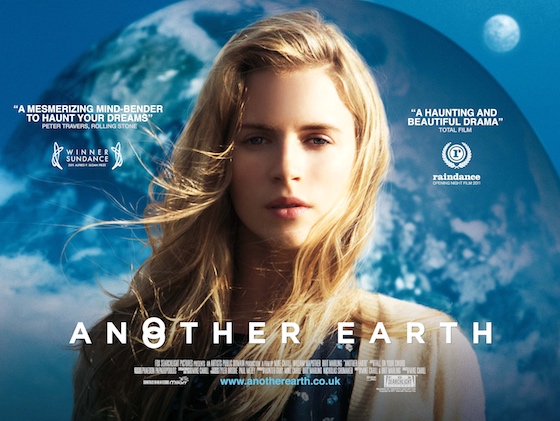
Another Earth

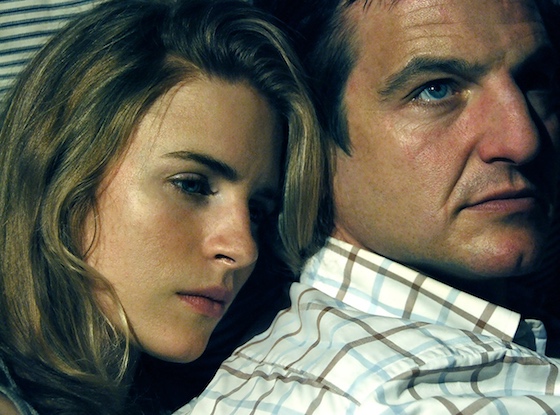
Driving home drunk, 17-year-old Rhoda (Brit Marling) hits another car, leaving its driver, John (William Mapother), in a coma and killing his pregnant wife and their young son. Released from prison four years later, her grand life plans abandoned, Rhoda seeks out John to apologise, but when he doesn’t recognise her she pretends to be from a cleaning service and becomes his maid. Meanwhile, a planet that seems to be a mirror image of Earth has appeared in the sky and one member of the public can win a place on an exploration mission.

Bit of a curveball, that, isn’t it? The main thrust of the film is a very grounded character drama about two emotionally damaged people and how they connect with each other, but there’s this big old sci-fi plot ticking away in the background — one which is referenced in the title of the film and all its marketing too, which immediately elevates its importance in the film: it’s not just a funny little background quirk, it’s central to what’s happening or will happen.

By combining these two disparate genres Another Earth moves outside the accepted norms of either, which seems to discombobulate some viewers. I’ve seen it decried for not ditching the sci-fi stuff to focus on the characters’ emotional situation and relationship, and the same for not ditching the emotional stuff to focus on the sci-fi concepts. Personally, I think the film is doing exactly what it sets out to do: using aspects of each genre to comment on, reflect, and influence the other. That’s not to say it’s in some way a deconstruction of genre — it’s not working with tropes or clichés, at least not deliberately — but I mean it’s using a sci-fi idea to influence what could just be a straight-up dramatic story, and using a realistic human drama to explore a sci-fi concept from a different angle. Truth be told, I think some people can’t quite handle that. Of course, some people just think it doesn’t do it very well, which is fine. I thought it was at least interesting.

Emotionally damaged

Perhaps it doesn’t help that some of it looks like shit, as if it was shot by some inexperienced amateurs using their home movie camera… which it was. After having the idea for the film, co-writer/director Mike Cahill and co-writer/star Marling began shooting it using just an HD camcorder, even before they’d secured any funding. Well, haven’t they done well for themselves? Still, there are worse-looking movies.

Another Earth may not please those looking for a straight science-fiction movie, nor those after a grounded character drama, but for anyone open to a combination of the two — a plausible, human-scale take on a high SF concept — it’s certainly worth a look.

4 out of 5