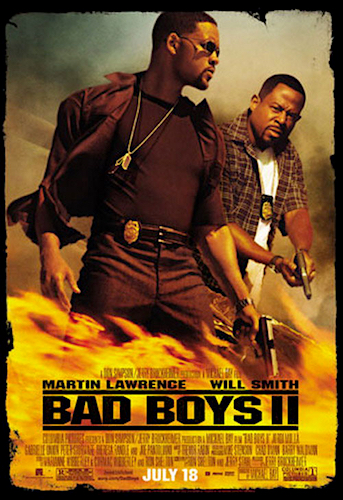
Bad Boys II (2003)

The 100 Films Guide to…

Bad Boys II

Country: USA
Language: English & Spanish
Runtime: 147 minutes
BBFC: 15
MPAA: R

Original Release: 18th July 2003 (USA & Canada)
UK Release: 3rd October 2003
Budget: $130 million
Worldwide Gross: $273.3 million

Stars
Martin Lawrence (National Security, Wild Hogs)
Will Smith (Ali, I Am Legend)
Jordi Mollà (Blow, Riddick)
Gabrielle Union (Bring It On, Think Like a Man)

Director
Michael Bay (The Rock, The Island)

Screenwriters
Ron Shelton (White Men Can’t Jump, Hollywood Homicide)
Jerry Stahl (Twin Peaks Episode 11, Urge)

Story by
Marianne Wibberley (The 6th Day, National Treasure)
Cormac Wibberley (Charlie’s Angels: Full Throttle, National Treasure: Book of Secrets)
Ron Shelton (Bull Durham, Tin Cup)


The Story
Miami’s finest (or, at least, funniest) narcotics cops attempt to stop the flow of ecstasy into the city, before the cartel masterminding it can escape to Cuba.

Our Heroes
Wisecracking Miami narcs Marcus Burnett and Mike Lowery. If you don’t like them, this isn’t the film for you — it spends an awful lot of time just hanging out with them rather than getting on with the plot.

Our Villain
Cuban drug lord Tapia. I guess they realised the first film’s villain didn’t get enough screen time, because there’s a lot more invested in this one. Unfortunately, he’s not very interesting, and Jordi Mollà’s performance is terrible.

Best Supporting Character
Marcus’ little sister, Syd, a DEA agent. She’s dating Mike, which is a secret from Marcus, and is undercover trying to catch Tapia’s gang, which is a secret from them both. (See also: Next Time.)

Memorable Quote
“We ride together, we die together. Bad boys for life.” — Mike Lowery

Memorable Scene
After a car chase, pile-up, and shoot out with our heroes, the gang of criminals hijack a car carrier to continue their pursuit of Syd. Marcus and Mike give chase along the freeway, at which point the criminals decide to start offloading cars…

Previously on…
The first Bad Boys was Michael Bay’s feature debut, and propelled Will Smith’s career towards movie stardom.

Next time…
A third film has been in on-and-off development for years — the last news seems to be that it might start shooting later this year. Definitely in the works this year is a spin-off series based around Marcus’ sister, Syd.

Verdict

Probably the Michael Bay-iest Michael Bay movie that Michael Bay ever Michael Bay-d— er, made. If the first Bad Boys suggested where Bay’s style would go, Bad Boys II is him in full flow. It’s got all the hyper-kinetic editing, vague sense of space, and demonstrates the same lack of restraint over length (as well as, well, everything else) that Bay would show again and again during the Transformers series. It’s just. So. Long. There are loads of skit-like comedy asides that could be cut. Keep some, sure — it’s an action-comedy, that’s the style — but all of them? I guess it’s something of a hang-out movie in that regard, more about spending time with the characters than getting on with the plot.

It’s also packed to bursting with major action sequences, some of which border on classic but, again, are let down by Bay’s direction. For example, the freeway chase is good, but with a better sense of space and interrelation between its various elements (rather than the tumult of semi-connected images we do get) it could’ve been exceptional. Similarly, the climax is massively overblown in a way that only Bay (well, and now the Fast & Furious films) could do, and yet I didn’t recall a second of it from my previous viewing. It goes to show there’s more to making something memorable than just going Big.

This Letterboxd review sums it up well: “It’s impossible to love, but also hard to hate. It’s ambitious, relatively well shot, too long to call a piece of chuck-on fun, and generally just weird.”

For the record, although I’ve given both films a 3, the first is up towards a 3.5 and this is down towards a 2.5.

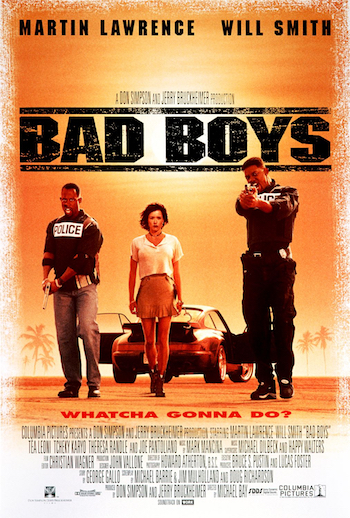
Bad Boys (1995)

The 100 Films Guide to…

Bad Boys

Whatcha gonna do?

Country: USA
Language: English
Runtime: 119 minutes
BBFC: 18
MPAA: R

Original Release: 7th April 1995 (USA)
UK Release: 16th June 1995
Budget: $19 million
Worldwide Gross: $141.1 million

Stars
Martin Lawrence (Blue Streak, Big Momma’s House)
Will Smith (Six Degrees of Separation, Independence Day)
Téa Leoni (Deep Impact, Jurassic Park III)
Tcheky Karyo (Nikita, GoldenEye)
Joe Pantoliano (Empire of the Sun, Memento)

Director
Michael Bay (Armageddon, Transformers)

Screenwriters
Michael Barrie & Jim Mulholland (Amazon Women on the Moon, Oscar)
Doug Richardson (Die Hard 2, Hostage)

Story by
George Gallo (Midnight Run, The Whole Ten Yards)


The Story
When millions of dollars’ worth of heroine is stolen from police evidence, the two cops that brought it in must find the thieves and retrieve the drugs, while also protecting the only surviving witness who’s seen the crooks.

Our Heroes
Marcus Burnett and Mike Lowery, a pair of wisecracking cop buddies, one a family man with a wife and kids, the other a smooth womaniser. Never seen that before.

Our Villain
Drug lord Fouchet. Murder happy and clearly a master at planning heists. Other than that, we barely get to know him.

Best Supporting Character
A witness to some of Fouchet’s crimes, Julie ends up in witness protection with Marcus, who she thinks is Mike, which they have to hide from Marcus’ family. Hilarity ensues!

Memorable Quote
Mike Lowrey: “Now back up, put the gun down, and get me a pack of Tropical Fruit Bubblicious.”
Marcus Burnett: “And some Skittles.”

Memorable Scene
After a shoot-out at the airport, Fouchet escapes in a sports car. Marcus, Mike, and Julie give chase, with the normally slow Marcus driving, as they find themselves in a game of chicken with the concrete crash barriers at the end of the runway…

Making of
Bad Boys was a relatively low-budget production, but, fortunately for director Michael Bay’s ambitions, he was already a wealthy man from directing commercials and music videos — so when the budget ran out before shooting a key part of the climax, he was able to pay for it out of his salary; and when they needed a swish car for the heroes to drive, Bay lent his own Porsche 911 to the production.

Next time…
A sequel came eight years later, with a third in on-and-off development ever since — the last news seems to be that it might start shooting later this year. Definitely in the works this year is a spin-off series based around a character from the second film.

Verdict

The debut feature from director Michael Bay, Bad Boys displays a lot of the things he would become known for: fast-cut action scenes; a sense of style over substance; a little light lasciviousness… Even from his first film, some of his flourishes look over the top. Maybe they’ve just aged badly — it certainly feels of its time, i.e. the mid-’90s (with some ’80s holdovers). Anyway, it’s kept aloft by the buddy act of its two stars, who are pretty funny at times. Bay allows the film to run a mite too long though, and the villain is underdeveloped, both of which hold it back even more than Bay’s sometimes-cheesy direction.

Long Way North (2015)

aka Tout en haut du monde

2017 #33
Rémi Chayé | 78 mins | streaming (HD) | 2.35:1 | France & Denmark / French | PG / PG

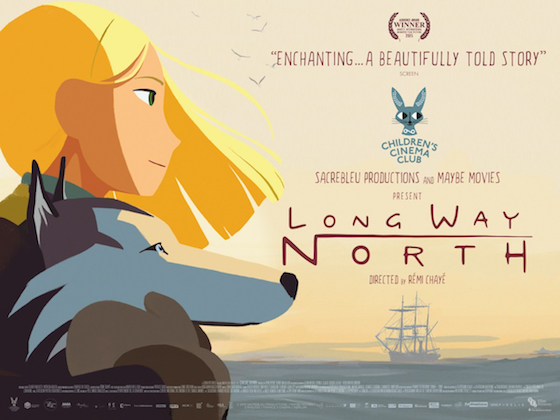
Long Way North

I can’t remember what brought this French-Danish animation to my attention, but I’m glad something did because it’s a beautiful little film that deserves to be better known. Set in the late 19th century, it’s about a young Russian girl, Sasha, who embarks on an adventure to the North Pole, following in the footsteps of her missing grandfather.

Regular readers may recall I ranked it among the top movies I saw last year, when I cited the “understated beauty in its deceptively simple visual style”. Indeed, the animation initially seems so plain that it feels like watching a draft animatic, but that conceals its ability to reveal subtleties when needed. In the end, the distinctive look is part of the film’s considerable charm.

I also mentioned its “equally subtle but strong feminist streak”, another positive aspect. Sasha is strong-willed and capable, but not without her faults, which makes her an engaging heroine. The film doesn’t overplay its “girls can too” side, which only makes it more successful, I think.

There’s none of the epic action sequences or broad humour that most English-language animation assumes kids need to keep them engaged, but instead Long Way North offers good characters on a proper old-fashioned exploration adventure. Highly recommended.

5 out of 5

Long Way North placed 13th on my list of The 17 Best Films I Saw For the First Time in 2017, which can be read in full here.

Make/Remake: Deaths at a Funeral

In 2007, Frank Oz directed a gaggle of British thesps (plus Peter Dinklage) in a darkly comic farce set during an English funeral.

Just three short years later, director Neil LaBute and a gaggle of American comedians (plus Peter Dinklage) remade it in the US.

Why did they so speedily re-do an English-language film in English? Goodness only knows. But I watched both versions almost back to back, so here are my thoughts…

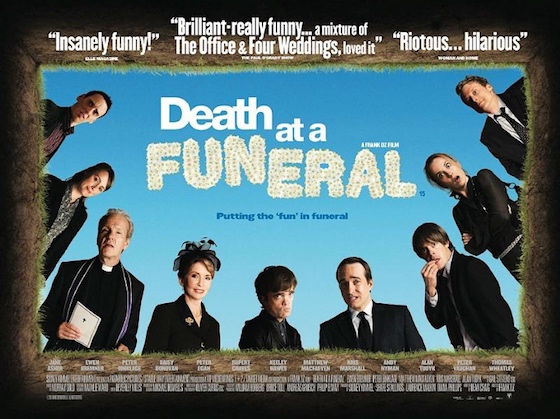
Death at a Funeral
(2007)

2018 #44
Frank Oz | 91 mins | streaming (HD) | 1.85:1 | UK, USA, Germany & Netherlands / English | 15 / R

Death at a Funeral (2007)

The plot of both versions is identical: a group of family and friends gather at the home of the family’s patriarch for his funeral. A variety of subplots unfold from there, but the main one revolves around the appearance of a guest that no one knows, and what he wants.

The thing that surprised me most about Death at a Funeral is how well-liked it is online. I vaguely remember it coming out but thought it had been mostly ignored, but it has a fair amount of ratings on IMDb (a similar number to films like All About Eve or Dumbo), and relatively high user scores on sites like Letterboxd too. I thought maybe people (well, Americans) had come to it via the remake and it seemed a lot better by comparison, but that has less than half as many ratings on IMDb, so…

I was mulling on this a lot because often I like films a bit more than the online consensus, but I wasn’t feeling it with this one. I certainly enjoyed it, but it takes a while to warm up, the laugh rate isn’t quite high enough, and some of the storylines feel overly familiar (how many times have we seen someone accidentally take drugs and try to hide it? I don’t know, but it feels like I’ve seen it a lot). Nonetheless, it develops into a decent little farce. I suppose it’s a black comedy too, what with it being set at a funeral and some of the events that unfurl, but other people have pushed the boundaries of “black comedy” so far in the past couple of decades that it didn’t feel that dark to me.

Peter Dinklage with one of the few British actors who hasn't been in Game of Thrones

The cast is a quality array of recognisable British faces, many of them not known for comedy (Matthew Macfadyen, Keeley Hawes, Rupert Graves), which lends some surprising strength to a couple of scenes. Others that are more familiar from the genre (Andy Nyman, Ewen Bremner, Kris Marshall) keep the guffawing in check. And there are some Americans too, including an exposed performance from Alan Tudyk (who’s doing a British accent) and a pre-Thrones Peter Dinklage (who isn’t), but they both fit in well.

The film’s best gag, in my estimation, comes courtesy of the entire cast, in a way; an in-joke that I wasn’t 100% sure was deliberate: the end credits begin with each cast member’s name accompanied by a brief shot of them corpsing. Corpsing, during a film called Death at a Funeral. Well, I do like an in-joke.

Anyway. Although this original British version of Death at a Funeral wasn’t quite as hilarious as I’d hoped for, it’s worth a watch as a well-performed and amusing farce. And it does improve somewhat when compared to to its remake…

3 out of 5

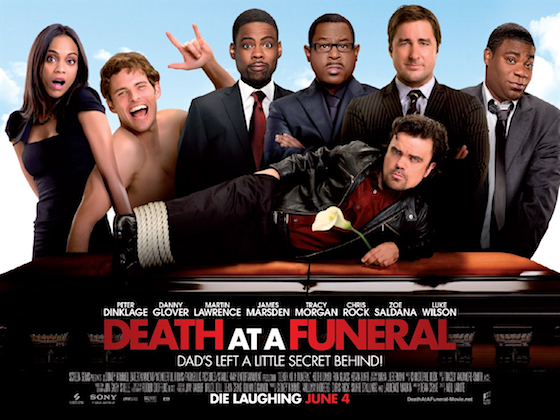
Death at a Funeral
(2010)

2018 #46
Neil LaBute | 89 mins | streaming (HD) | 2.35:1 | USA / English | 15 / R

Death at a Funeral (2010)

Where the original was a little underwhelming, this is just kinda shit. It’s the most pointless remake since Gus Van Sant’s Psycho.

That comparison isn’t a bad one, because this is a scene-for-scene remake — sometimes shot-for-shot, line-for-line. Even the title sequence is an inferior riff on the original. Not only that, but some bits aren’t even done as well. If it worked the first time, why are you changing it? Maybe the original cast and crew made it look more effortless than it was. Some of it doesn’t even translate very well. For example, there’s a joke in the original about how “tea may solve many things”. Here, that’s translated to be about coffee. Yes, it’s been adapted to suit the different culture, but in the process has lost the cultural significance (to Brits, tea is more than just a popular beverage).

I guess he's showing him the screenplay

There are some new gags, most likely the result of the cast improvising (this version is more populated by comedians than the British one). Some of them are even funny. Unfortunately, more often the cast don’t hold up. Most of the performances are like an under-rehearsed am-dram version of the same screenplay. They certainly don’t have the acting chops to sell the more emotional moments. James Marsden is quite good in the Alan Tudyk role, though. Peter Dinklage plays the same part, but not as well — it’s less nuanced, less believable.

Director Neil LaBute previously found notoriety as writer-director of the Nic Cage Wicker Man remake. This does nothing to rehabilitate his reputation (what is this guy’s obsession with re-doing and ruining British films?) Again like Van Sant’s Psycho, it’s more interesting as a cinematic exercise than as a film in its own right.

2 out of 5

Transformers: The Last Knight (2017)

2018 #47
Michael Bay | 155 mins | Blu-ray (3D) | 1.90:1 + 2.00:1 + 2.35:1* | USA, China & Canada / English | 12 / PG-13

Transformers: The Last Knight

Here we have the fifth Transformers film in 11 years from director Michael Bay. At this point you ought to know what you’re getting — the style hasn’t fundamentally changed since at least the third movie, arguably since the first, so if you dislike those then most probably there’s nothing for you here. I say “probably” because I’ve seen at least one review from someone who despised the fourth film but enjoyed this one, so clearly there’s always room for variability.

We’re dealing with variations on a theme, then, and The Last Knight brings a few fresh-to-the-franchise plot spins to add a different flavour and texture this time out. Firstly, a prologue tells us that Transformers were already in England about 1,600 years ago, when they fought alongside King Arthur and Merlin, the latter of whom didn’t wield magic but actually Autobot technology (and is played by Stanley Tucci, hamming it up something rotten). This relates to the present day because… well, I could explain it to you, but it gets fiddly and, frankly, if you care then you’ll find out when you watch it. But, basically, in present day America Transformers are hunted and Cade (Mark Wahlberg) is an outlaw helping hide some of them and rescue others. When a MacGuffin from Arthurian times attaches itself to him, he winds up on his way to England to meet Sir Anthony Hopkins, the last in a long order of… oh, yeah, I said I wasn’t going to explain it. Anyway, only Marky Mark and Clever English Totty (Laura Haddock, playing the kind of Oxford professor who dresses like a secretary in a porn film) can save the world. Who do they need to save the world from? Optimus Prime! Dun dun duuuun!

Now he's called Nemesis Prime, for no good reason

It’s all nonsense, of course, but then the inherent concept of Transformers never made any sense so what does it matter? Adding in Arthurian legend and making Optimus Prime a baddie doesn’t make it any dafter than it already was. And that’s only the half of it — there are more disparate story threads and subplots than a particularly complicated miniseries. Despite being shorter than the last movie, it’s still indulgently long — and needlessly so, too. There’s a ton of stuff that could be cut to streamline the plot, from individual shots and lines (the Arthurian prologue is probably twice as long as it needs to be) to whole characters (a street girl Cade basically adopts, Izabella, contributes nothing of major significance in the end). After about an hour, the story basically stops and starts again — that’s how long it takes to get to Sir Hopkins. Stuff from the first hour remains relevant, certainly, but I’m sure there were other ways to handle it. By getting through the first hour of the movie in half the time, for one thing. For another, don’t introduce major-seeming characters that you’re then just going to set aside and ignore for the next hour while you introduce whole new ones.

It’s remarkable how the Transformers movies can have way too much plot and not enough plot all at once. If you want to follow it you have to pay attention, not only because there’s a lot of mythology to take in, but also because Michael Bay chops it all up into bite-size chunks amongst frenetic action sequences. The film is cut like one long trailer — but that’s been Bay’s MO for a while, so, as I said at the start, no one should be surprised. It remains, in its own way, impressive. As I previously said in my review of Age of Extinction, it’s almost avant-garde: a tumble of images and sound that give you an impression of what’s occurring rather than straightforward traditional storytelling. And I say it’s impressive because it must be so much work to create — all the camera setups involved; events staged for a single, fleeting, couple-of-seconds shot; and then edited together with non-stop dynamism, rarely pausing for any notable period.

Non-stop Bayhem

And if you think that’s mad, wait until you see how Bay uses aspect ratios. Thanks to Christopher Nolan and The Dark Knight blazing a trail, we’ve now had a fair few movies that use the IMAX format for select sequences, and emulate that on home media by allowing the aspect ratio to change — for laypeople, that’s when the black bars at the top and bottom disappear and the picture fills the screen. As I say, generally this is used for specific sequences, or occasionally for a particularly grand individual shot; and usually there are two ratios, approximately 2.40:1 (with the black bars) and approximately 1.78:1 (without). Bay uses… more than that. And he does so almost indiscriminately. They’re so all over the place that you can’t miss them. Like, there are standard shot-reverse-shot conversations between two characters, but each character has a different aspect ratio… and then, as if that wasn’t bad enough, halfway through the scene one side will switch to another ratio! It just leaves you wondering why and how it ended up this way. What was the intention? What was the point? Well, that’s not a new question with Bay — he still uses five shots when one would do, so why not extend that same thinking to the film’s aspect ratio?

Despite the faffing around, much of it still looks impressive in a purely visceral sense. Like every modern tentpole, it cost a fortune to make ($217 million), but at least it looks like it did: there are so many grand sets and large-scale set pieces, much of it built or performed for real — not the giant robots, obviously, but there are car chases and human stunts and so forth that they did in real-life rather than in a computer. The money is splashed all over the screen, to the nth degree. Is that inherently a good thing? Eh. But it makes you wonder where some other $200m+ movies spend their money — especially when you consider that apparently production difficulties resulted in a lot of material being filmed but never making it into the final cut. How much? Well, supposedly a whole hour of footage was ditched from the original cut to get to the theatrical version. As I’ve already said, the film’s too long as it is, but it’s a shame there are no deleted scenes available because I’d be kind of fascinated to know what more was meant to be there, and to see how much money it looks like they wasted on it.

They really did hang Marky Mark out the side of a speeding vehicle, donchaknow

In what we did get to see, the size of the endeavour and the impressive quality of the imagery is emphasised by how it was filmed. A large proportion of the movie was shot in IMAX 3D (apparently 98%, but I’m certain there was more than three minutes in non-IMAX aspect ratios), and there are innumerable moments that benefit from the depth and scope of the format. Post-conversion has come a long way, but I’m not sure it can always equal doing it for real, especially on a format with the quality of IMAX. That said, the visual splendour didn’t strike me as much as it did in Age of Extinction. Perhaps that’s because, as Richard Brody put it in his New Yorker review, Bay’s “sense of speed works against his sense of scale and of detail. All the best moments in the movie — pure images, devoid of symbol and, for that matter, nearly empty of sense — go by too fast, are held too briefly, are developed too little.” There are some great shots in here, but the rapid editing just races past them. If you wanted to find and appreciate the shots fully, you’d have to damn near go through the whole thing frame by frame. I’m not sure they’re that good.

Although Bay and his directorial style always get a critical slating for these movies (more so than others he’s made in the same period — Pain & Gain and 13 Hours both attracted a reasonable amount of praise), they let him keep making them, and he keeps wanting to. The former makes sense: although you rarely find someone who admits to liking them, they keep making money (The Last Knight is the series’ lowest grosser worldwide, thanks to a particularly poor US showing, but it still took over $600m). As for the latter… no, I don’t know why he keeps coming back. Can you think of another blockbuster-level director who’s made five films in the same series? No one instantly comes to mind for me, and even those who are close (Lucas with Star Wars; Spielberg with Indiana Jones) did so over a long period of time with many films in between. I mean, if Bay wants to do it then why not — it’s his life and career — but I don’t quite understand it.

The three-headed robot dragon that I almost forgot

As I said nearly 1,500 words ago (I never imagined I’d have so much to say about this movie — and I haven’t even mentioned the three-headed robot dragon, or the C3PO-alike comic relief butler), everyone should know what they’re getting with the Transformers films by now. The Last Knight shares the same pros and cons as the other entries in the series, to one degree or another — by which I mean that, for instance, I found the plot a little more coherent than last time (though still totally barmy), but I wasn’t quite as bowled over by the visuals (which are at least half the point of these films, I feel). On balance, I’d say it’s one of the franchise’s better instalments.

3 out of 5

Transformers: The Last Knight is available on Sky Cinema from today.

* The listed ratio for The Last Knight is 1.90:1, because that’s the tallest, but its shifts into various other ratios are very obvious, as I discuss in the review. The three I’ve listed are the most obvious, but one of the trailers was shown to use eight slightly different ratios, so who knows how many there really are? ^

Annihilation (2018)

2018 #45
Alex Garland | 115 mins | streaming (UHD) | 2.39:1 | UK & USA / English | 15 / R

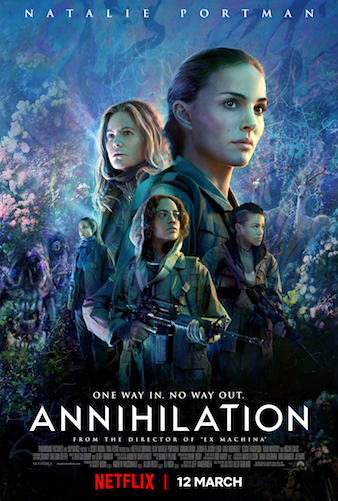
Annihilation

Many column inches (and even more tweets) have been penned about Paramount’s decision to relegate director Alex Garland’s second third film straight to Netflix outside the US, Canada, and China, so I presume the pros and cons of that move have been thoroughly discussed elsewhere. Personally, I’m on the fence: it’s disappointing not to see intelligent sci-fi being given a shot at the box office, but I’m one of those people who’s 50/50 on whether I go to see it or just wait for disc/streaming/etc. (I’ve not even seen The Shape of Water, for example, although that’s partly due to a dearth of convenient screenings during its brief theatrical appearance. Conversely, I did go to Arrival.) Anyway, it is what it is at this point, so let’s move on to the film itself.

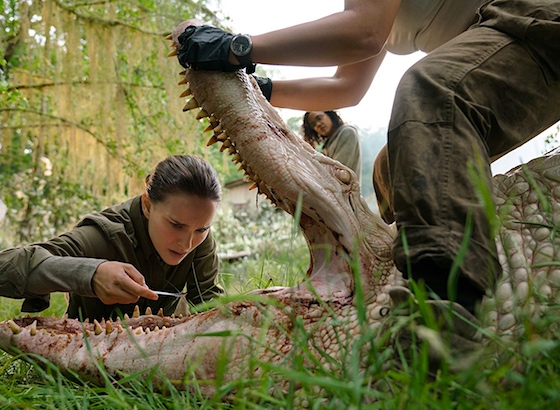
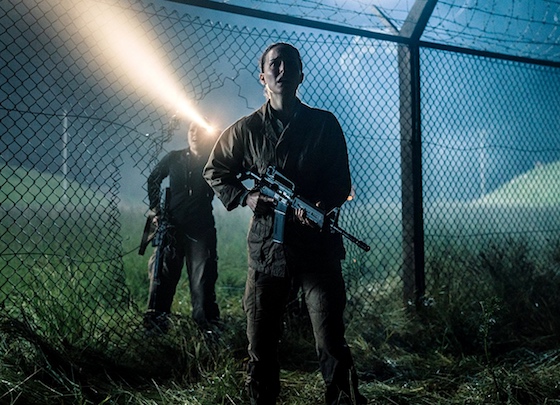
Loosely based on the acclaimed novel by Jeff VanderMeer (reportedly Garland read the book once then wrote the screenplay from memory), it follows biologist, academic, and former member of the Army, Lena (Natalie Portman), whose soldier husband Kane (Oscar Isaac) went missing a year ago during a secretive mission. After he suddenly reappears, apparently with no memory of his time away but with some severe medical problems, the couple are scooped up by a military organisation investigating Area X, a top-secret quarantined zone affected by an unexplained phenomenon known as the Shimmer. Various teams have been sent inside the Shimmer, but Kane is the only person to ever return. As his health deteriorates, Lena, desperate for answers, joins the latest squad to venture inside. That’s where stuff gets crazy…

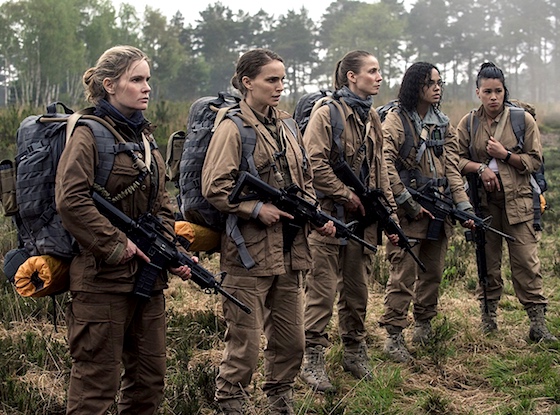
Squad goals

The first thing Annihilation made me think of was Denis Villeneuve’s Arrival. The connection was initially triggered by the score: the ambient soundtrack by Geoff Barrow and Ben Salisbury reminded me so much of Arrival’s that I had to check this wasn’t a last work by Jóhann Jóhannsson. Once I spotted that, the other similarities in the story leapt out: they’re both thoughtful sci-fi parables about a female university lecturer being co-opted into a military operation to investigate a strange extraterrestrial presence on Earth, while also remembering her family life in flashbacks.

Despite Paramount’s insistence that the film was too intelligent for non-US audiences (you can take a moment to laugh at that notion if you like), Annihilation is perhaps more accessible than Arrival, at least initially. Whereas Villeneuve’s film played like a character drama, Garland’s has a strong adventure-movie vein, also laced with elements of the horror genre. It’s still not a mile-a-minute thrill-ride, but, if you wanted, you could engage with it on the level of a quest through an alien event, encountering strange phenomena and creatures, with events of life-threatening jeopardy. However, for all the original sci-fi ideas, it does also touch on weightier, more human psychological issues — as the Empire review summarised it, “depression, grief and the human propensity for self-destruction.”

All the better to eat you with

Naturally this material is carried by the cast. Portman makes for an interesting lead. Clearly damaged by grief, she’s quite a cold figure, which may distance her from some viewers in the way it does from some of her team mates. But there’s more to it than that, and Portman delivers subtle nuances that hint at more beneath the surface. The rest of her all-female squad — played by Jennifer Jason Leigh, Tessa Thompson, Tuva Novotny, and Gina Rodriguez — all have distinct personalities, all get brief subplots and moments, and they’re mostly managed with an equal level of understatement. Perhaps the best is Thompson, whose calm, gently heartfelt performance is quietly superb, and even more striking as it marks a huge contrast to her star-making turn in Thor: Ragnarok just a few months ago. As a pair of films to be a calling-card for her skills, one could barely ask for more.

A lot of disappointment about the lack of a theatrical release stems to not being able to see these visuals on a cinema screen; not being able to experience the audio with a cinema sound system. Well, that partly depends on your own setup at home, of course. Setting that aside, though, while there are certainly some very striking visuals, it wasn’t as consistently stunning as some reviews made it sound. I’m not saying it wouldn’t benefit from the big screen, especially if you’re particularly fond of that experience, but I didn’t feel I was missing much scale by watching at home. I felt similarly about the sound design, though I do say that as someone with a 7.1 system. For spectacle, the intricate and colourful end credits are the most striking bit — I’m certain they benefitted from my viewing the film in 4K HDR.

Scared of the dark?

However you get to see it, writer-director Alex Garland has crafted another sci-fi mystery/thriller that engages on multiple levels. For me it was somewhat damaged by the hype, perhaps a result of US reviewers frantically urging people to get out and see it to prove that Paramount’s lack of faith was a mistake. While I didn’t instantly love it in the same way as, say, Arrival, or Garland’s debut, Ex Machina, it’s undoubtedly a fascinating, thought-provoking slice of science-fiction — and a much-needed critical success for the “Netflix Original” brand after a couple of recent duds. I’d also say it places Garland ahead of genre contemporaries like Neill Blomkamp and Duncan Jones as a filmmaker to keep an eye on. Okay, he’s not quite Denis Villeneuve, but he’s a lot closer than the others.

4 out of 5

Annihilation is available on Netflix in most of the world now.

The Jungle Book (2016)

2018 #40
Jon Favreau | 106 mins | Blu-ray (3D) | 1.78:1 | USA & UK / English | PG / PG

The Jungle Book

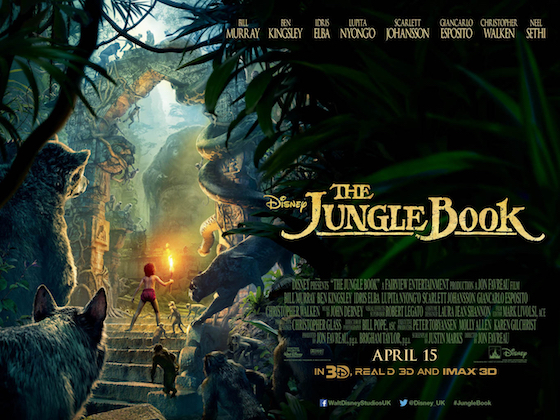
One of the successes that has convinced Disney to remake basically their entire animated back catalogue in live-action, Jon Favreau’s take on Disney’s adaptation of Rudyard Kipling’s stories barely counts as “live-action” really: the vast majority of it is animated — often the only real bits are Mowgli and some (but by no means all) of the props and scenery he interacts with — but it’s done to be photo-real and so we pretend that’s live-action.

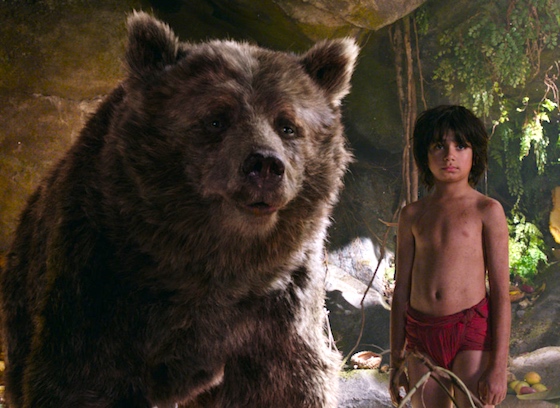
Whatever you want to call it, the visuals are stunning. It’s incredible stuff by the animators, though also by Favreau and DP Bill Pope to make all that hard work look great as a film too — they put special effort into making sure the CGI was properly lit, etc. And I reckon it’s even better in 3D. Presented in a screen-filling 1.78:1 ratio, unconstrained by the black bars of your nowadays-standard 2.35:1, it honestly feels like a window into another world. You sometimes see reviews of good 3D that say “you feel like you could reach out and touch it”, which I’ve always taken as A Thing People Say rather than an actual inclination, but at one point I did feel like I wanted to reach out and stroke Baloo’s fur, he looked so soft. The end credit sequence (a kind of pop-up book routine) looks particularly great in 3D, which helps to sell the miniaturised dimensions.

Bear necessities

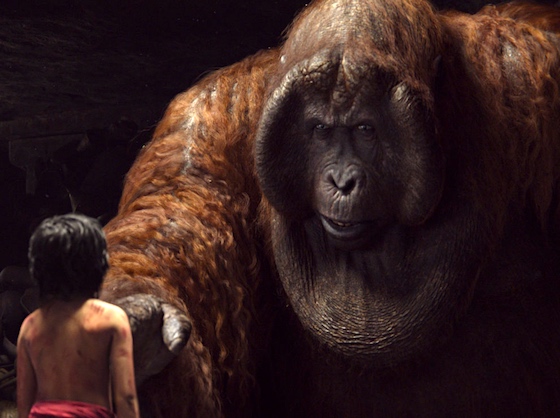
Anyway, the film itself. Disney’s Jungle Book is such a well-known childhood classic that I don’t imagine you need me to recap its plot, though this version doesn’t ape it one-for-one. When Favreau was first brought on board the story treatment Disney had in development was much closer to Kipling’s work, including none of the changes Disney made when they adapted it before (i.e. adding songs and the character of King Louie), as well as being more violent, aimed at a PG-13 rating. So it was Favreau who decided it should be closer to the Disney classic, aiming to find the sweet spot between the two styles. I think he’s nailed that, mixing in enough that’s familiar from the animation with a bit more seriousness derived from Kipling.

That said, I wasn’t wholly convinced by the use of the songs. The rendition of Bare Necessities is disappointingly truncated, though at least fits in context. Conversely, King Louie’s song, I Wan’na Be Like You, is so out of place that I found the sequence kind of uncomfortable. Weirdly, its reprise at the start of the end credits is great. There it’s followed by Trust In Me, which isn’t included in the film proper but might actually have worked there.

I wanna be like you-oo-oo

Still, the film as a whole functions well; surprisingly well, one might even say. You may remember the Rotten Tomatoes score for it went crazy when it came out, hiding the high 90s — it ended up at 95%. And it’s the perfect example of why Rotten Tomatoes doesn’t score a film’s quality, but does score the chance that you’ll enjoy a film. I’m not sure many people would think this is a “9.5 out of 10” kind of film, but one there’s a 95% chance you’ll think is good? Yeah.

4 out of 5

The Jungle Book is available on Netflix UK from today.

Murder on the Orient Express (2017)

2017 #164
Kenneth Branagh | 114 mins | cinema | 2.39:1 | USA, UK, Malta, France, Canada & New Zealand / English, French & German | 12A / PG-13

Murder on the Orient Express

Did we need another version of Murder on the Orient Express? That seems to be the question that preoccupies many a review of the film, primarily with reference to the Oscar-winning 1974 version directed by Sidney Lumet and starring Albert Finney as Agatha Christie’s Belgian detective, Hercule Poirot, alongside an all-star supporting cast. That’s not the only other adaptation of arguably detective fiction’s most famous novel, though there were fewer than I thought: a modernised TV movie starring Alfred Molina was made in 2001, and it was of course filmed as part of the David Suchet Poirot TV series in 2010, but that’s your lot (in English — the Germans and Japanese have both done it on TV). So, on the one hand, maybe we should be all set for screen versions; on the other, it’s not like it’s the only remake.

So, if you’ve not seen a version before, you’re spoilt for choice. If you want to know which I think you should pick… Well, I’ve not seen it, but I imagine we can discount that 2001 TV movie. Suchet is still the definitive screen interpretation of Poirot, but that particular episode is not the series’ finest hour, as I recall. And while I enjoyed the ’74 version a good deal, I wasn’t bowled over by it. Which brings us to this new one.

The star of the film: Branagh's moustache

Personally, I thought it was very good indeed. It’s a film of its genre and heritage — by which I mean it functions the way Christie-style murder mysteries always do, and it’s staged and shot mostly with a classical dignity — so if you have a dislike for that then this isn’t revisionist in a way that will win you over. But within those ‘constraints’ it’s very well done. The photography, in particular, is magnificent. Shot on 65mm, but without showing off about it in the way some other directors have recently, it has a richness, a grandeur, and an elegance that is most befitting.

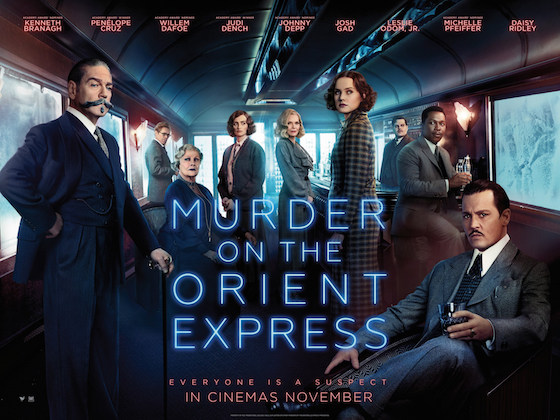
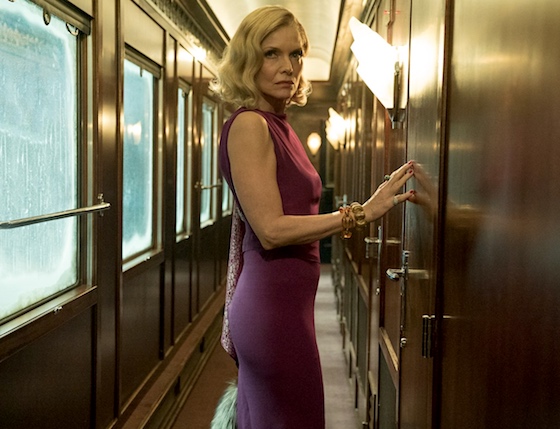
Having mentioned the all-star cast of the previous film, it must be said that this version doesn’t skimp in that department either. The key roles are filled with a veritable who’s-who of acting talent, including big names (Johnny Depp, Michelle Pfeiffer, Penélope Cruz), quality thesps (Olivia Colman, Willem Dafoe), people who’ve worked with Branagh before (many of the small roles), people who tick multiple of those boxes (Dame Judi Dench, Sir Derek Jacobi), and freshly-minted stars too (Star Wars‘ Daisy Ridley, Sing Street‘s Lucy Boynton; depending on your point of view, Beauty and the Beast‘s Josh Gad and Hamilton‘s Leslie Odom Jr as well). The size of the cast and style of the story means that even the most-featured only get a couple of scenes of their own (plus scattered lines in ensemble moments), but the talent involved imbues the roles with inherent character.

A dangerous liaison?

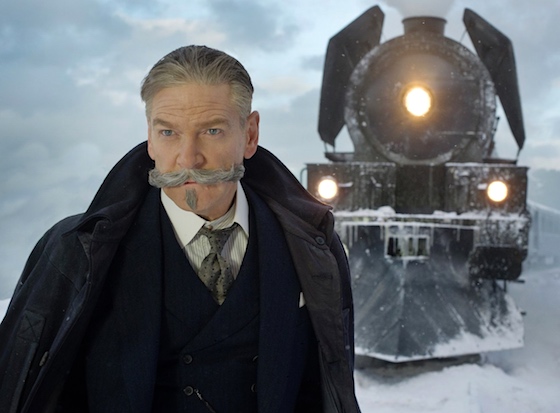
And then there’s Branagh himself as Monsieur Poirot. Most discussion of his performance has focused on the moustache, understandably. It’s certainly a magnificent feat. But Branagh is a very fine actor, of course, and he manages to make Poirot his own — an impressive job when there’s the spectre of David Suchet’s definitive performance looming. I wouldn’t say he’s surpassed Suchet in any way, but his take on the character is different enough to dodge too many direct comparisons, while not being so different that it no longer feels like Poirot, at least to me.

Frankly, I feel like an important element to enjoying the film is to approach it with an openness to it being its own thing — a courtesy I don’t believe it was afforded by some critics and viewers. Many reviews I’ve read had a tendency to compare it to the 1974 film, either in a specific “what I thought of each” sense or a broad “your opinions of that film may colour your view of this one”. I guess that’s a useful metric to some people, but it’s better to judge the film on its own merits, I feel. That said, I’ve also seen some call it too slow, others call it too fast; some say it’s too dull, others say it’s too full of action… No wonder it ended up with middling average scores: never mind not being able to please everyone, it seems like you can’t please anyone. Personally, I thought it largely hit the mark in all those respects.

Classical elegance

And it seems like the wider audience agreed: it ended up grossing $350 million worldwide, which places it in the top 30 releases of 2017. For a film of this type in the current box office climate, that’s an excellent achievement. For comparison, it’s just below the likes of Fifty Shades 2, Cars 3, and The Mummy Mk.III, and it also out-grossed films such as The LEGO Batman Movie, Blade Runner 2049, Split, Baby Driver, and even Get Out. I guess it appealed to a different audience than the one that routinely discusses movies online. It also means we’re getting a sequel, with Death on the Nile set for a 2019 release. Do we need another version of that too? Well, why not?

4 out of 5

Murder on the Orient Express was released on DVD, Blu-ray, and all the rest, in the UK this week.

La La Land (2016)

2018 #10
Damien Chazelle | 128 mins | streaming (HD) | 2.55:1 | USA & Hong Kong / English | 12 / PG-13

La La Land

Oscar statue2017 Academy Awards
14 nominations — 6 wins

Won: Best Picture, Best Actress, Best Director, Best Cinematography, Best Score, Best Song (City of Stars), Best Production Design.
Nominated: Best Picture, Best Actor, Best Original Screenplay, Best Editing, Best Costume Design, Best Sound Mixing, Best Sound Editing, Best Song (Audition (The Fools Who Dream)).

Yes, I am very, very, exceptionally late to the party here. For example: whenever I watch a film I log it on Letterboxd, then have a scan through the ratings my ‘friends’ have given it, whether that’s just one other person or a few dozen. This had by far the highest number of ‘friends’ who’d already seen it that I’ve ever encountered. And it was on Letterboxd that I first encountered La La Land, in fact, when it started screening at festivals in the latter half of 2016 and everyone was raving about it. It was a must-see long before the Oscar buzz started to build, and obviously that only intensified the film’s reputation. It’s a lot of anticipation to heap upon one movie. Fortunately, La La Land can bear it.

For anyone who’s even later to it than me, it’s the story of aspiring actress Mia (Emma Stone) and aspiring jazz musician Sebastian (Ryan Gosling), who encounter each other randomly, initially hate each other, but fall in love. Don’t worry, I haven’t spoilt the ending — there’s more story beyond that typical romance plotline. And much of it is told through the mediums of song and dance.

Watching the best picture...

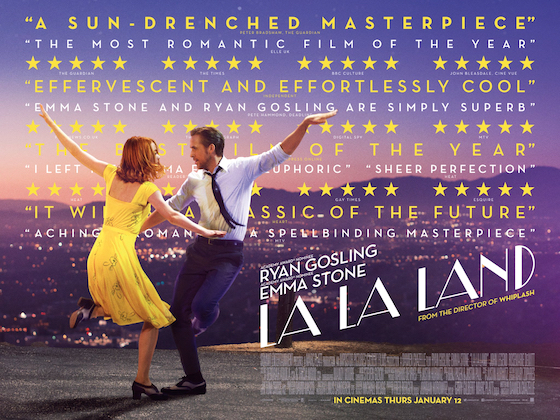
La La Land isn’t “kind of a musical”, or “I suppose you could call it a musical”, or “a film with songs, a bit like a musical” — it is a Musical. And while the leads can’t really sing, that doesn’t stop there being some beltingly good numbers in it — though, for my money, the best either (a) don’t involve the leads at all, or (b) don’t involve singing. Coincidentally, two of those are the set pieces that bookend the film. The opener is a colourful stunner, a bright and breezy singalongathon on a gridlocked freeway, made even more enjoyable by being realised in a (faked) single-take. Related thought: I feel like we need to bring back done-for-real oners — people are faking them too easily and too often nowadays. Though, saying that, another particularly joyful sequence is the dance routine that adorns the poster. Its success lies in part with Gosling and Stone’s well-performed moves, but also, like the opening number, with how well shot it is. I assumed it was done on a set with some CGI’d backgrounds and probably some invisible cuts, but no, it was achieved on location, the shoot squeezed into the real ‘magic hour’ — actually a half-hour window — and is, I believe, a genuine single take.

Now, the other bookend is (obviously) the ending. Well, I think they actually label it an epilogue, because its events occur after the main story; but an epilogue is an addendum, isn’t it?, and I reckon this final sequence is as vital as any other part of the film. It’s how the story really ends, and it’s an all-timer of a finale. That comes both from the tone it takes (no spoilers here, but see my Letterboxd comment) but also the sequence itself, a stunning marriage of visuals, soundtrack, and meaning — and I say this as someone who (for a pertinent example) disliked An American in Paris specifically because of its extended ballet bit at the end. Damien Chazelle well earned his Best Director Oscar.

Finale

Speaking of which, I must mention what went down at the Oscars. Well, not so much the snafu itself (though that made for great telly), but the ultimate result. I think there can be little doubt that Moonlight is a more significant film for our times, for all kinds of reasons, and it’s certainly a quality work of filmmaking in its own right, but La La Land is a more purely enjoyable cinematic experience, with just enough grit in the mix to stop it being too sappy. I don’t resent Moonlight its victory, but I’d’ve voted for this.

5 out of 5

The 2018 Academy Awards are handed out tonight from 1am GMT.

La La Land placed 4th on my list of The 26 Best Films I Saw For the First Time in 2018.

The Love Punch (2013)

2018 #7
Joel Hopkins | 94 mins | streaming (HD) | 2.35:1 | France & UK / English | 12 / PG-13

The Love Punch

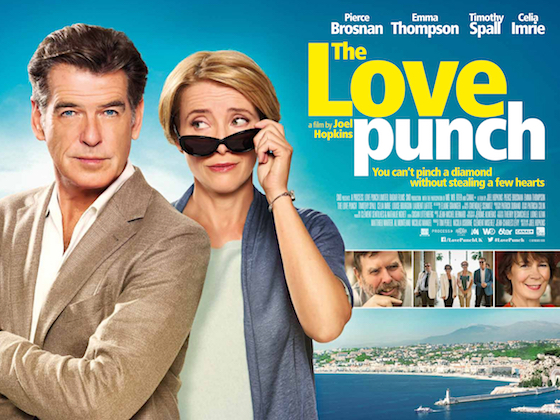
In this very daft comedy heist thriller (calling it a thriller is a bit of a stretch, but anyway), Pierce Brosnan plays Richard, a businessman whose company is bought out by mysterious others, only for them to strip its asset and sink the employees’ pensions — as well as that of Richard’s ex-wife, Kate (Emma Thompson). When the man behind the buy-out, Kruger (Laurent Lafitte), refuses to play fair, Richard and Kate team up with their neighbours, Pen (Celia Imrie) and Jerry (Timothy Spall), to pilfer the extraordinarily expensive diamond Kruger has bought his fiancée (Adèle Blanc-Sec’s Louise Bourgoin).

The Love Punch flirts with seriousness in its setup — what could be more current than unscrupulous moneymen buying a company and screwing over people’s pensions? — but quickly reveals its true nature as an implausible farce. Despite the lead cast, it seems to have been a French-driven production (even the UK-set scenes were filmed over there), so I suppose that style is only appropriate. While never scaling the heights of genuine hilarity, I don’t imagine anyone thought they were making anything other than a light romp.

So if you like any (or all) of Brosnan, Thompson, Imrie, and Spall, as well as the idea of a bit of gently-farcical gadding about in the south of France, then The Love Punch is amiable fluff to while away 90 minutes on a Sunday.

3 out of 5