It (2017)

aka It: Chapter One

2018 #118
Andy Muschietti | 135 mins | streaming (HD) | 2.39:1 | USA & Canada / English | 15 / R

It

The highest-grossing horror movie of all time, It is the story of a bunch of teenagers in small-town America coming face to face with an ancient evil… who looks like a clown. Well, it can look like other things too, but mostly it’s a clown. Why did it stick with that form? I dunno. Maybe coulrophobia is even more common than we think.

Adapted from a novel by Stephen King (which was previously filmed as a miniseries), It actually only tackles half the book, meaning they get to crank out a sequel too (currently due next September). This actually works in the film’s favour, however: the novel takes place across two timelines, and, rather than just adapt the first half of the book, the film only adapts the earlier timeline. That means it makes for a complete experience in itself, rather than feeling like you’ve only got half the story.

It also focuses our view of the characters. Rather than seeing them at two very different times in their lives, it becomes a coming-of-age tale… albeit one where they come of age thanks to having to battle a supernatural horror. “It”, aka Pennywise the clown, is effectively and unpredictably scary, because he’s able to turn up at any time in any form. It seems almost like a cheat — a free-for-all excuse for the film to be scary whenever and however it fancies, without the need to follow any monster rules. At the same time, that makes the film less predictable, and therefore more effective, at the headline goal of a horror movie, i.e. scaring you. Also, if we’re parsing this as a coming-of-age tale more than a monster movie, it allows It’s various forms to further develop the characters: each identity it assumes is custom-made to terrify the individual being targeted, and the only rule is you defeat It by overcoming your fear, an act which is (in this movie at least) explicitly tied to growing up.

I've got 99 red balloons and this is one

Plenty of people will line up to tell you It isn’t actually all that scary, a level of assessment that is to watching horror movies what boasting who can eat the hottest curry is to dining. Obviously, everyone’s mileage will vary. I found some of it to be suitably unsettling and disturbing, and the “any time, any place” aspect keeps you alert and on edge. The downside is that, for the first chunk of the movie, the film just seems to be a series of unsettling scenes without much of a plot. It gets over that when the gang really comes together, but I can see why the movie ended up being so long: there are too many characters, and because It assaults each with their own personalised horror, we have to wait while the film gives them all individual sequences. Not that any of it is bad, but it threw the pacing off for me. Maybe it would’ve been better if they reduced the size of the gang by deleting a character or two.

One thing that did get ditched between page and screen is one of the most infamous scenes in King’s novel: a ten-page pre-teen orgy. Though, as it occurs during a section of the plot that we don’t actually see depicted on screen, I guess you could imagine it still happened, if you want. Ironically, while the film may have removed that overt sexuality, it still very much male-gazes the gang’s only female member, Beverly: there’s a scene where all the boys ogle her as she sunbathes in her underwear, and she begins the film’s climax as a “damsel in distress” who has to be rescued by a “true love’s first kiss” kinda deal. She’s not completely useless or without agency, but there’s room for improvement.

The Losers Club

What’s perhaps most baffling is that, by the sound of things, the early drafts for this movie (which were rejected and rewritten after original writer-director Cary Fukunaga left the project) did a lot to modernise that stuff. For example, there’s a scene where Beverly flirts with an (adult) pharmacist as a distraction, but, in the original draft, one of the other kids just faked a medical emergency for the same result. No, that’s not the most egregiously sexual thing they could’ve put in (child orgy!), but it’s still putting her in the position of being an object of lust. I guess, much like the scariness of the horror, your mileage will vary on how distasteful this stuff is. Ultimately, it’s a fairly small part of the movie.

Even if the film runs a little long, I mostly enjoyed It. Its scary scenes are unnerving enough that it works as a horror-show ride, while its coming-of-age aspect is bolstered by really good performances from the young cast, and clear thematic stuff about overcoming fear and the value of friendship. Which almost makes it sound like a kids’ film, but, yeah, don’t go putting this on for younguns — coulrophobia would be the least of their problems.

4 out of 5

It is available on Sky Cinema from today.

The Conversation (1974)

2017 #10
Francis Ford Coppola | 114 mins | Blu-ray | 1.85:1 | USA / English | 12 / PG

The Conversation

In the mind of writer-director Francis Ford Coppola, the concept for The Conversation started out as a puzzle, a story that used repetition to make the audience reconsider what they thought they knew — “not like Rashomon where you present it in different ways each time,” Coppola told Brian De Palma (in this interview, which is a must-read for anyone interested in the genesis and making of The Conversation). “Let them be the exact lines but have new meanings in context. In other words, as the film goes along, the audience goes with it because you are constantly giving them the same lines they’ve already heard, yet as they learn a little bit more about the situation they will interpret things differently.” That element is unquestionably still in the film — it propels its plot and generates its twist — but Coppola was a very character-driven filmmaker, and so he couldn’t help but flesh out the man who was listening to those lines over and over again.

That man is Harry Caul (Gene Hackman), a professional eavesdropper — people pay him to record what other people are saying in private. When Coppola conceived the film, this was just an interesting world to play around in. By the time it was produced and released, Watergate had recently happened and the film could not have been more timely. Nonetheless, the end result is not merely an espionage mystery, but also a character study about what kind of man would perform this work. So we do see how Harry goes about his job, but these scenes are almost as much about telling us who this man is (methodical, thorough, clever, inventive) as they are about furthering the plot (which, naturally, they’re central to).

Here he just looks like a toilet repair man...

It’s also about how the job affects him. One part of that is paranoia — an obvious reaction when you think about it. Harry has multiple locks on his apartment door, and one major early sequence is based around him trying to establish how a kindly neighbour had got in to leave him a gift — a seemingly innocuous thing, but the potential it holds has him terrified. Come the end of the film, such behaviour takes on a maddening new dimension. But perhaps an even bigger problem is conscience. Harry lies to himself about the nature of his work, because once upon a time a trio of deaths resulted from it. He says they weren’t his fault because he was just doing his job, but he still clearly carries the guilt of it, and that is what ultimately leads him into a new predicament. Not that that ends well either. Yes, it all comes to a very ’70s conclusion: bleak.

Coppola’s original vision for the film, as a puzzle for the viewer to be solved, survives into the final cut, though anyone watching it just to solve the riddle may find it slow going at times. That’s because Coppola’s other filmmaking instinct, to explore character, has naturally taken hold, and so the movie is as much about the bugger as the bugging. And so it’s very much two things hand in hand: the mystery of what’s going on in the recording, and a study of the psychology of a man who does this for a living. It’s all the richer for being both.

5 out of 5

The Conversation was viewed as part of my Blindspot 2017 project, which you can read more about here.

The Past Trisennight on TV #34

With the series finale of The Americans on UK TV tonight (at 12:05am on ITV4), I thought I’d bring my monthly TV review forward a bit and share my thoughts on the final season of a series that, for those of us who found it, will be sorely missed.

Plus! The latest episodes of Westworld — much more widely discussed than The Americans, but does it deserve the attention? And quick thoughts on the end of Archer Vice and another series finale, that of Peter Kay’s Car Share.

The Americans  Season 6
“It’s the end of the world as we know it, and I feel fine.”

The Americans season 6That song was released in 1987, the same year as the final season of The Americans is set. The show has typically avoided featuring well-known music in favour of cult favourites and obscurities, but R.E.M.’s classic would’ve been an appropriate number to hear during one of the series’ trademark music montages in the finale. (That said, it did contain both Dire Straits and U2, so they weren’t above using big hits.) Maybe it would’ve been a bit on the nose, but it certainly was applicable: it was the end of the world as the characters knew it, and so too for fans, as six incredible seasons came to a final end. But do we feel fine? That depends how you define “fine”. The show will be missed terribly, but goddamn if it didn’t stick the landing to cement itself as one of the greatest TV series ever made.

It all began with a good setup for a concluding season: finally, after years of disagreements about their jobs and their personal lives and how both should be handled, the world conspired to pit the Jennings directly — and secretly — against each other. The Americans isn’t usually so overt in its plotting, so it’s no surprise that the scenario doesn’t play out as a straightforward spy-vs-spy battle. But it certainly tests the lead characters both professionally and personally, and to an extent they haven’t been before, forcing them to question every one of their loyalties: to their employers, to their country, to their friends, to their family, and to each other. To say too much about how it unfolds would be a spoiler, obviously, but it has some clever ways of challenging even the characters’ most deeply-held beliefs.

Most spy-based TV shows ratchet up the scale or stakes season after season — I’m thinking of Spooks, where in season two they spent a whole episode debating the ethics of performing an assassination, but a couple of years later that was just routine first-act stuff; or 24, where season one was just about someone trying to assassinate a presidential candidate, but by season four it was about multiple coordinated attacks including bombing trains, kidnappings, melting nuclear power stations, shooting down Air Force One, a nuclear missile strike… The Americans has, if anything, gone in the opposite direction: there’s still spy stuff there, of course, and it’s as grounded as ever, but it’s increasingly taken a backseat to the characters’ relationships. Maybe this is just a matter of perspective, but I felt that in earlier seasons the spy stuff was the focus, No ordinary marriageegiven texture or sometimes affected by the relationships, whereas by this point the relative importance and impact seems reversed. I guess you could still enjoy it as “just a spy show”, but I don’t think you’d want to — the stuff you’re invested in has shifted. That was always the programme’s genius, of course: it’s not about spies who happen to be married, it’s about marriage through the prism of people who are spies.

For a while it almost doesn’t feel like the end (the season opener even begins with a montage set to Don’t Dream It’s Over), but then comes episode five, The Great Patriotic War, and suddenly years of stuff is brought to a head: the status quo and people’s values are flipped, then re-flipped; there are massive changes and developments — but all managed with The Americans’ usual understated believability. As the fallout begins in episode six, Rififi, you can’t tell where it’s going to go. It keeps the focus squarely on Elizabeth and Philip’s relationship, as if we could ever forget the show is, at heart, all about that, not the big spy stuff. The season isn’t just engrossing on a thriller-ish “will they get caught?” level, but also on an emotional “will they stay together?” one. A big part of this is the performances by Keri Russell and Matthew Rhys, both of whom are so, so good — the subtleties and nuances of their performances, and the way the series trusts them to convey what’s needed with just silence at times, is phenomenal. That they haven’t received more recognition for their work here is a crime against television.

The penultimate episode, Jennings, Elizabeth, is where things really begin to come to a head, and Jesus, the tension! It’s hair-raising. It’s intense. It leaves your nerves shattered, not just during the programme but after it too. I’m glad I saved the season up to watch on consecutive days, because I don’t know how I’d’ve spent a week with that hanging over me. And as for the finale, somewhat ironically titled START… I’ve been worried about how they’d end the show basically since it started. I spent that last hour covered in goosebumps and with my heart in my throat, and it was kinda perfect. It didn’t give me everything I wanted, but perhaps it gave me all that I needed. The garage sceneAs a commenter on the A.V. Club’s review put it, “I have to say it is of greatest compliment that the show both wrapped up the story and left me wanting more. It felt equal measure satisfying and gut wrenching.” That’s exactly how I felt. Also, it contained what I have no qualms about calling one of the greatest scenes in TV history: just a handful of characters talking in a garage, and it was absolutely stunning, the true culmination of the entirety of the show.

If you haven’t been watching The Americans (and viewing figures suggest you probably weren’t) then do yourself a favour and rectify that at some point — a 75-episode masterpiece awaits. Without doubt, one of the greatest TV series ever made.

Westworld  Season 2 Episodes 5-7
Shogun WorldI wrote last time about how Westworld season one took a few episodes to warm up but eventually got me completely hooked. Season two is so far failing to pull the same trick — over half the season has felt like it’s still just getting underway to me. And then, in the blink of an eye, episode seven, Les Écorchés, catapults us from “just getting started” to “endgame” over the course of an hour. I’m not sure how I feel about all that. There’s some exciting and interesting ideas in the mix here, but what also feels like a bit of flailing around. Maybe it’s all in aid of a Big Surprise? Season one certainly had a few of those in its final episodes — they were the most talked-about part of the show in the end, I’d wager — so I assume they’re going to end up shooting for the same.

One thing they’ve definitely copied from that freshman run is the multiple timelines. Back then it was a secret, and it ultimately paid off, but now it’s out in the open, and I’m not sure what it’s for. I mean, there are some very basic uses in play — “how does Character X get from that situation in the past to this situation in the present?”, “where have half the cast gone between the past and now?” — but that seems a bit… facile. As I say, I hope they’ve got some surprise to pull out of their sleeve — something to do with how the hosts struggle to differentiate between memories and current events, perhaps — but it’s a long time coming…

Also watched…
  • Archer Season 5 Episodes 6-13 — While the change-of-setup idea seemed interesting at first, I’m not sure how much I actually liked Archer Vice overall. There were some good episodes, plus sundry character bits and lines, etc, but the cumulative level of enjoyment was less than I remember from previous seasons. Equally, it’s been four years since I last watched the show — maybe I’d just moved on? Well, I’ll continue on to season six anyway, especially as I believe that returns to the original spy-agency setting.
  • Car Share The Finale — A much-needed conclusion after series two’s cliffhanger (did they really think that was ever going to wash as a final ending?) It gave us the happy ending most people wanted (I saw a handful of dissenting voices on Twitter), and, even more impressively, managed to do so without sacrificing the series’ two-people-chatting-in-a-car format. It was pretty darn hilarious, too. If they ever want to do more I won’t complain, but it’s fine to leave it there this time, thanks.

    Things to Catch Up On
    A Very English ScandalThis month, I have mostly been missing A Very English Scandal, the Russell T Davies-penned drama about the real-life case of a ’60s politician and his secret homosexual lover. It seems to have gone down exceptionally well, and anything by RTD is always worth watching. Other than that, it feels like there’s a bunch of stuff on streaming I’ve been meaning to get round to and still haven’t. That list would keep us here all day, though.

    Next month… the MCU’s other black superhero returns to Netflix.

  • Adventures of Zatoichi (1964)

    aka Zatôichi sekisho-yaburi

    2018 #108
    Kimiyoshi Yasuda | 86 mins | Blu-ray | 2.35:1 | Japan / Japanese

    Adventures of Zatoichi

    Another Zatoichi film (the ninth now), another super-generic title. Only in English, mind: best I can work out, the Japanese title translates as something like Zatoichi Breaks Through the Barrier or (considering what happens in the final act) possibly Zatoichi Guard Station Break-In. Even if you can’t translate it in a way that sounds reasonable in English, why not go for something like Zatoichi’s New Year? (That’s when the film’s set, and is referenced many times.) Okay, maybe it doesn’t sound super exciting, but at least it’s more distinctive than Adventures of Zatoichi, which could be literally any of the films.

    Anyway, titling issues aside, the fourth and final Zatoichi film put out in 1964 (which I guess made the New Year thing even more appropriate on its original release) sees Ichi arrive in a village near Mount Myogi, where he intends to be for the first light of the new year. Lots of merchants have also gathered there for the festival, but the local yakuza are demanding an unreasonably high percentage of the takings as tax. Although this subplot facilitates some comic relief in the complaining of a pair of travelling performers, Ichi has other concerns on his mind: there are a couple of good-hearted young women who each need Ichi’s help defending them from the murderous stupidity of men. One, her brother has escaped prison and returned to town; the other, her father, a village elder, has gone missing and she’s looking for him. Both have something to do with the yakuza. In a slight twist on the usual formula, Ichi’s prodigious reputation means the gangsters are afraid of him (rather than assuming they can beat him), but he’s still got his work cut out getting to the bottom of a conspiracy between the gang’s boss and the local magistrate. That’s not to mention the intriguing connection Ichi finds with the village’s old drunkard…

    Z boys

    Everyone else seems to rate Adventures of Zatoichi somewhat poorly. It’s ranked 20th out of 25 by Letterboxd users, the lowest of the series so far, and below some of the post-series Zatoichi films. The Digital Bits go even further, placing it in their bottom three (they haven’t ranked the films, but I checked all their ratings and they only gave three Cs). Other reviews include comments like “a workmanlike but satisfying episode” (Paghat the Ratgirl), “the quality level dips a notch after the outstanding original eight” (D. Trull), and “one of the more ordinary run-of-the-mill Zatoichi films” (Jacob Olsen). Not outright condemnation then, but definite damning with faint praise.

    Conversely, I thought it was rather brilliant. It has a nice, clear, well-connected narrative (something I haven’t always found in previous instalments). There’s a great cast of supporting characters, lots of small roles who all make their mark. It creates almost an ensemble around Ichi, which is a nice change of pace — it really feels like it’s set in a bustling village, rather than a half-empty town where Ichi only encounters three or four people. Tonally the film displays an effective mix of humour, action, drama, and emotion, making for an all-round entertainment. It may not have a unique setup to mark it out like Fight, Zatoichi, Fight, or the flashy direction of Chest of Gold and Flashing Sword, but it’s an above-average example of “standard” Zatoichi. It even boasts another top-drawer climax, with a well-shot and precisely-performed one-on-one duel in gently falling first snow, followed by Ichi taking out a small army to get at the men responsible. Again, it’s not as exceptionally striking visually as some of the recent big finales, but it’s superbly done nonetheless.

    Live by the sword, pretend to die by the sword

    Also, the film contains one of my favourite moments of the series so far, which is both amusing and encapsulates the character of our hero. In it, Ichi slashes his way through four assailants, then pauses… a moment later, three of them drop dead. Seeing this, the fourth just… lies down beside them. Despite being blind, Ichi can tell the chap’s still alive; but rather than finish him off, Ichi simply motions for him to leave. It’s both funny and shows Ichi’s compassion: he kills because he has to, when people attack, not for the sake of it, or even for a grudge. Similar to this is his badass summation of what just happened near the end: “I only came here to worship the first light of the new year. I expected a quiet journey, with no need to draw the blade in this cane. You brought this all on yourselves.”

    In fairness, the film is not without its problems. The early story about the merchants and the tax rate doesn’t really go anywhere. It establishes the magistrate and boss are bad folk, but then it disappears underneath the other storylines. Also, I didn’t get wholly invested in the conflict between Ichi and the gang’s yojimbo. These kinds of subplots always feel like a do-over of the first film to me, so maybe that’s why more time isn’t spent on it. It makes for a couple of impressive bursts of swordplay and one heart-to-heart chat, but no more than that.

    Adventures of Zatoichi may not be the very best movie this series has to offer, but in revelling in its formula, and doing so much of it so well, it’s one of the films I’ve enjoyed the most. In fact, this would probably be a really good one to introduce people to the series: it’s got most of the key elements, all done really well. It doesn’t deserve to be as overlooked as it seems to be.

    4 out of 5

    Vehicular Review Roundup

    Get in Vehicle 19 to go for a Drive with The Driver in today’s roundup, featuring:

  • The Driver (1978)
  • Drive (2011)
  • Vehicle 19 (2013)


    The Driver
    (1978)

    2017 #101
    Walter Hill | 92 mins | Blu-ray | 1.85:1 | USA & UK / English | 15 / PG

    The Driver

    Walter Hill’s stripped-back neo-noir car chase thriller stars Ryan O’Neal as The Driver, a getaway man for hire and the best at what he does. Out to get him is Bruce Dern as The Detective, who’ll go to any lengths to catch him — including illegal ones. Almost cornered, the Driver enlists the help of The Player (Isabelle Adjani) to thwart the Detective.

    The film’s influence on the likes of Baby Driver and Drive is clear (Nicolas Winding Refn claims not to have seen it before making his film, but it must’ve been seen by someone somewhere down the line, whether that’s original novelist James Sallis or screenwriter Hossein Amini, because the DNA is right there). Both those later efforts burnished and perfected the formula in different ways, but the original has a gritty, low-rent charm of its own. The archetypal characters and straightforward noir plot are delightful almost because of their simplicity, while the few action scenes are handled with the panache, not of a slick blockbuster, but of a filmmaker who knows how to create something effective even within his limitations.

    The Driver maybe doesn’t transcend those to the level of being a classic, but, for fans of the genres it crosses, it’s deservingly a cult favourite.

    4 out of 5

    Drive
    (2011)

    2017 #106
    Nicolas Winding Refn | 101 mins | Blu-ray | 2.35:1 | USA / English | 18 / R

    Drive

    Iconoclastic Danish director Nicolas Winding Refn had made noteworthy films before Drive, but it felt like this was where he really hit home. It stars Ryan Gosling as a mechanic and part-time movie stunt driver who also moonlights as a getaway man, but when he tries to help out his attractive neighbour (Carey Mulligan) and her husband (Oscar Isaac) he gets embroiled in a crime with deadly consequences.

    It’s a noir storyline with a familiar shape, but as with many of the best examples of that not-quite-a-genre it’s the stylish filmmaking that elevates the material. Refn was influenced by the likes of Jean-Pierre Melville and Sergio Leone to take a very American genre and give it a European influence, and the result is a movie that’s as much about its mood and feel as it is the intricacies of plot or character. Despite the title and theme it’s not even a car chase movie, really, though the handful of well-created driving sequences do pack a greater punch thanks to their scarcity.

    5 out of 5

    Drive was viewed as part of my What Do You Mean You Haven’t Seen…? 2017 project.

    Vehicle 19
    (2013)

    2017 #151
    Mukunda Michael Dewil | 82 mins | TV | 2.35:1 | USA / English | 12 / R

    Vehicle 19

    One of the last films Paul Walker completed before his untimely death, Vehicle 19 sees the Fast & Furious star doing what he will always be remembered for: driving a car, sometimes fast. Here he’s Michael Woods, a recent parolee who arrives in Johannesburg intending to reunite with his partner. Unfortunately he picks up the wrong rental car and finds himself the subject of a manhunt, because in the car is evidence relating to a political conspiracy. Unfortunately for the bad guys who want said evidence, Michael is, like, an honourable chap — and also a criminal, so he totally knows how to drive a car like he’s escaping a crime. The main conceit is: the whole film’s shot from within the car.

    Yep, that’s why I watched it. I wish I hadn’t. Vehicle 19 is a deeply stupid movie. Like, Michael’s phone is all-important — it’s the only way he can contact other people; later, it contains vital evidence — but when he notices the battery is low he does nothing about it, despite having a charger in his bag, until the battery literally runs out mid-call. And that’s just one of innumerable nonsensical contrivances throughout the film.

    It lacks pace, and therefore lacks tension. Michael just pootles around the city from the very start. Apparently everywhere is reachable within 20 minutes, or Michael — who’s never been to this city before — thinks it is. Whenever he asks for directions, everywhere he’s going is either just a block away or down the road, third right. At one point the police say they just received a call to 911. From what I can tell, the emergency number in South Africa is not 911. And I could probably go on — the film is absolutely littered with things that just don’t quite hang together.

    Fast and/or furious

    It can’t satisfy as a dumb action flick either. I presume it was a low-budget production with ambitions beyond its scale in the chase scenes. Understandably, the trailer foregrounds these to help sell the movie. Unfortunately for the film, it’s a bit of a bait-and-switch: the clips in the trailer are near-as-dammit the entirety of the film’s action. These sequences are few, far between, short, and, even then, poorly staged. The problem isn’t that they’re all limited to only being seen from within the car (the opening sequence of The Driver does exactly that to marvellous effect, for example), it’s that they lack both adrenaline and plausibility. For example, at one point Michael manages to make the chasing car flip over, but I watched that bit three times to try to decipher it and I still have absolutely no idea how he’s supposed to have done it. Oh, and then the car explodes. And Michael and his passenger seem to react like “oh, that’s that then” and just drive on.

    They’ve got the right idea, though: if you’re thinking of watching Vehicle 19, no, just drive on. Or just put Drive on — it’s a totally different movie, but at least it’s a good one.

    1 out of 5

    Vehicle 19 featured on my list of The Five Worst Films I Saw For the First Time in 2017, which can be read in full here.

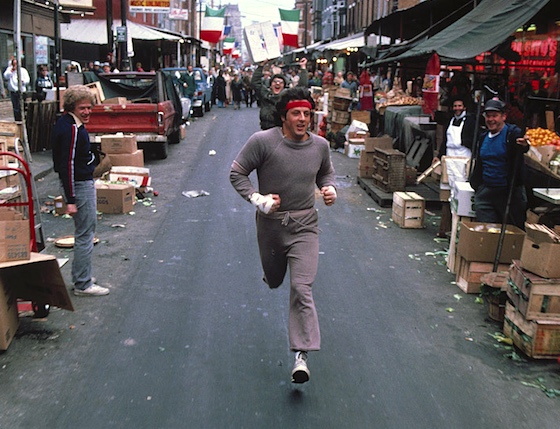
  • Rocky (1976)

    2018 #57
    John G. Avildsen | 120 mins | Blu-ray | 1.85:1 | USA / English | PG / PG

    Rocky

    His name is Sylvester Stallone. He’s the star of a new film called Rocky. He has been described as handsome, tough, talented, sexy, sensitive, dynamic, and brilliant. He’s been compared to Brando, Newman, Pacino, and De Niro. He’s been called “a top contender for an Academy Award”.

    His name is Sylvester Stallone, but you will always remember him as… Rocky.

    So goes the narration to Rocky’s original trailers and TV spots. We don’t get trailers like that anymore, do we? Now we just get Bryce Dallas Howard pretending to roar like a T-Rex while encouraging us to join Odeon Première Club. (I’ve been forced to sit through that far too often, and I’ve only been to the cinema four times this year.) But I digress. The narration also indicates the road Stallone could’ve gone down — imagine if he’d made a career writing and starring in movies like this, following through on all those comparisons the trailer made, rather than going down the action meathead route. A weird thought now, isn’t it?

    If you’ve never seen Rocky, you might assume it’s broadly similar to the films Stallone would mostly go on to star in, but it isn’t, really. It’s the story of a smalltime coulda-been boxer left slumming it, when, through sheer luck, he gets a shot at the big leagues. Yes, it’s an underdog sports film — the movie that “inspired a nation” (as a friend once said to me, “inspired them to do what, I don’t know. Get up and turn it off, probably”) — but it’s staged with a level of realism that such fantasies don’t normally reach for. And it’s certainly nothing like the indestructible super-action-hero of sundry later Stallone vehicles.

    Meat, standing in for a head

    Indeed, Rocky manages to both embody what we now think of as ’70s-style filmmaking — gritty and cynical and kinda miserable — with the other side of ’70s filmmaking — the decade that, between the likes of Jaws and Star Wars, gave us the populist blockbuster as we know it. So, on the one hand, Rocky lives in a dingy little bedsit, spending his days enforcing for a loan shark and plodding the derelict streets of a decrepit city; on the other, he still has hopes and ambitions, and these come to pass when he’s selected to fight world champion Apollo Creed — a real underdog sports story. This duality carries through right to the end (spoilers!): our hero loses the fight, your typical “’70s” downbeat finale; but he also goes the distance, an achievement no one else has managed, and he gets the girl. Considering the movie we’ve just watched, it’s a perfect climax: it maintains the film’s two apparently-irreconcilable (but demonstrably reconcilable) tonal halves right to the very end.

    Another major part of the film is Rocky’s faltering attempts to woo a shy pet shop worker, Adrian (Talia Shire). Most of their relationship is beautifully portrayed — tentative, cautious, sweet, and quite touching — a complete 180 from how you’d expect a character defined as “a boxer” to behave. Unfortunately, one key moment hasn’t aged so well. There’s a scene at the end of Rocky and Adrian’s first date where he badgers her into going into his apartment, which she clearly doesn’t want to do; then, despite her obvious discomfort, he tries to get her to sit with him; when she won’t, he walks towards her and, hanging off an overhead pipe, looms over her, demanding to know what’s wrong; then, as she heads for the door, he stops her, one hand over the locks and the other against the wall, trapping her in the corner; and then he informs her he’s going to kiss her, but she doesn’t have to kiss him back, and then he does. And she kisses him back, of course.

    Adriaaan!

    This scene plays very, very differently in a post-#MeToo world than I imagine it has at any other point in the past 42 years. I mean, I’m sure some people realised its awkwardness quite some time ago — women before men, no doubt — but there’s no avoiding it now. And it’s an odd scene, because clearly the filmmakers know Adrian would be uncomfortable — as I say, her whole attitude portrays that; and I presume they know why she’d be uncomfortable too; and yet it still ends with her giving in to Rocky’s persistent advances. Well, I guess the best we can say is it’s of its era, but its content, and how it makes us feel about Rocky as a character, risks becoming a barrier nowadays. His behaviour doesn’t continue in that vein, thankfully… or is that actually worse, making such behaviour normal rather than a warning sign? Are such conversations relevant about a 42-year-old movie?

    Conversely, the film’s depiction of race feels kind of progressive. Most of the white guys we meet are bums eking out an existence, legally or otherwise, while the black guy (surrounded by a mostly black entourage, too) is successful, respected, dressed in finery, and in a position to offer the white guy a one-in-a-million shot at success. Maybe this contrast was just a coincidence, but it feels like it’s making some kind of point. Of course, once they get in the ring for the climax, the black guy is the “bad guy” and our hero is a white guy, so…

    Black vs white

    I don’t think Rocky was consciously built to sustain such readings, mind — these are just things that struck me while watching it in 2018. At heart it’s a straightforward, inspirational tale — “a charming, grimy and beautiful fairytale”, as John Simon described it in New York Magazine — about someone with unrealised potential getting a final shot. Arguably it gains more power from being semi-autobiographical: Stallone penned the screenplay (and later insisted on starring) as a similar last-shot attempt at his chosen career. It ultimately netted him two Oscar nominations, one for writing and one for acting, though he won neither — but then, what could be a more fitting mirror of the film itself?

    4 out of 5

    Rocky is on ITV tonight at 11:15pm.

    It was viewed as part of my What Do You Mean You Haven’t Seen…? 2018 project, which you can read more about here.

    The Doozy of a Monthly Update for May 2018

    There’s a lot to say about this rather special May, so let’s just crack on with it.


    #91 Captain Underpants: The First Epic Movie (2017)
    #92 Phantasm (1979)
    #93 Laura (1944)
    #94 ManHunt (2017)
    #95 Anon (2018)
    #96 Absolutely Fabulous: The Movie (2016)
    #97 Trekkies (1997)
    #98 Trekkies 2 (2004)
    #99 FernGully: The Last Rainforest (1992)
    #100 Stalker (1979)
    #101 Shrek the Third (2007)
    #102 The Hangover Part III (2013)
    #103 Terminator 2: Judgment Day 3D (1991/2017)
    #104 Jigsaw (2017)
    #105 Batman: Gotham by Gaslight (2018)
    #106 O Brother, Where Art Thou? (2000)
    #107 Inferno 3D (1953)
    #108 Adventures of Zatoichi (1964), aka Zatôichi sekisho-yaburi
    #109 Coco 3D (2017)
    #110 The Pixar Story (2007)
    #111 Game Night (2018)
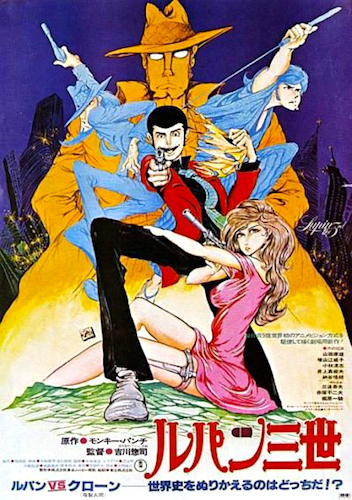
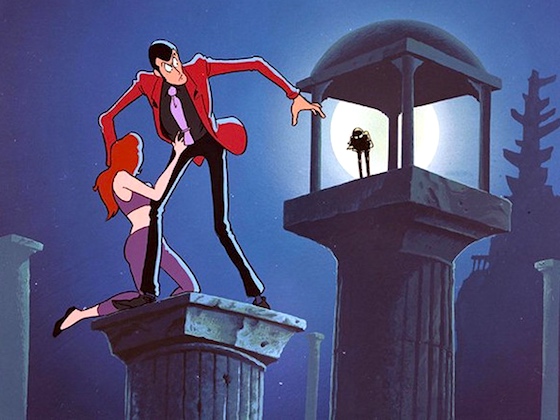
    #112 Lupin the Third: The Secret of Mamo (1978), aka Rupan Sansei: Rupan tai Kurōn
    #113 Live by Night (2016)
    #114 Christine (2016)
    #115 The Wild Bunch (1969)
    #115a The Wild Bunch: An Album in Montage (1996)
    #116 Allied (2016)
    #117 Colossal (2016)
    #118 It (2017)
    #119 Solo: A Star Wars Story (2018)
    #120 Deadpool 2 (2018)
    #121 All the Money in the World (2017)
    #122 Finding Dory 3D (2016)
    #123 The Warriors (1979)
    #124 American Made (2017)
    Laura

    Game Night

    Lupin the Third: The Secret of Mamo

    Deadpool 2

    The Warriors

    .


    • S’funny: it happened three weeks ago, so this is old news to me now, but this is officially an “I reached #100!” update.
    • Speaking of it being “old news”… the previous record for the earliest I’d made it to #100 was 28th May in 2016. At the end of March I very much doubted I’d even be close to that this year. But, come the end of April, I would’ve been disappointed if I didn’t smash that record. And I did, reaching #100 on 10th May.
    • This is the 10th year I’ve made it to my eponymous goal, out of 12 attempts. All the viewing I did beyond #100 means 2018 is already my 6th best year.

    That’s enough about #100 — how about the usual monthly perspective?

    • Well, May 2018’s total was 34 films. That surpasses the record set just last month to become my New. Best. Month. Ever!
    • Obviously that means it’s the best May ever, but it’s also the first time May has featured 20+ films (the previous best was 16).
    • Never mind 20+ — what about 30+? This is only the third month ever to cross that milestone, and the first time there have been two back to back.
    • Oh, and it maintains my ten-per-month minimum for the 48th month — four solid years. My longest run before this was seven months.
    • Naturally, this kind of behaviour smashes averages. May’s increases from exactly 12 to exactly 14. The rolling average of the last 12 months also shoots up by nearly two whole films, from 16.8 to 18.6. And the average for 2018 so far goes up even more than that, from an already-high 22.5 to a whopping 24.8. If that average were to continue, it would be remarkable: only four months in the history of 100 Films — i.e. 2.9% of months — would meet or surpass that figure.
    • Despite watching more films than there were days in the month, I managed to miss seeing one on May 23rd, which is one of the seven remaining dates on which I’ve ‘never’ watched a film (as first mentioned in July 2017’s update). The ball is now in June’s court to get that figure down to a nice round half-dozen.

    Whew, enough numbers! Here’s some stuff about the actual films…

    • I rewatched The Terminator back in December because T2 3D was hitting Blu-ray that same month and I hadn’t seen either film for years. Well, five months later, I finally (re)watched said sequel.
    • Even worse, I rewatched Finding Nemo back in July 2017 to remind myself what happened in it before I watched Finding Dory. Ten months later, I’ve finally watched that sequel.
    • This month’s Blindspot film: Sam Peckinpah’s bloody, quick-cut Western The Wild Bunch. Controversial for both those reasons on its release back in the ’60s, by golly if it isn’t still striking for them today!
    • This month’s WDYMYHS film: Andrei Tarkovsky’s acclaimed sci-fi mystery Stalker. It’s slower than his Solaris and I didn’t like it as much, but it did make me want to watch that again. Maybe I’ll pick it up in the current Criterion UK sale…


    The 36th Monthly Arbitrary Awards

    Favourite Film of the Month
    Well, this is tricky — so many films, so much choice. At the risk of sounding like I’m picking a runner-up, I really, really enjoyed Game Night and will give it a glowing review sometime near the UK home ent release, but I’ll probably give it four stars. Nonetheless, I guess it would’ve been the winner here if I hadn’t watched The Warriors last night, which I loved and will give the full five.

    Least Favourite Film of the Month
    Fortunately, this was a bit easier. While there were some underwhelming films this month, the only one I outright disliked was Phantasm. On the bright side, I watched it because the series’ Blu-ray box set was on offer and I was considering a purchase (I had the first film recorded off TV), so it saved me something like £36.

    Best Animated Film of the Month
    I watched seven animated films this month, which seems enough to warrant its own category. Two of them were Pixar films, both of which I enjoyed. Two more were American computer animations, which provoked a more mixed reaction. Another two were traditionally animated movies, both of which I enjoyed more than I expected to. But the victor is the last one: the barmy and kind of brilliant anime Lupin the Third: The Secret of Mamo.

    Bonkers Sex Scene of the Month
    Much to everyone’s relief, they chose to delete the infamous preteen orgy from It, which for all kinds of reasons is perhaps the all-time champion of this category. Brad Pitt and Marion Cotillard getting it on in the middle of a sandstorm seemed to provoke a lot of comment too, but that doesn’t quite beat the accidental weightlessness of having sex with a pilot midflight in American Made. Supposedly the scene was inspired by director Doug Liman bumping into star Tom Cruise while they were flying together. Well, what happens in the air stays in… the movie, apparently.

    The Audience Award for Most-Viewed New Post of the Month
    Maybe if I’d seen Deadpool 2 or Solo sooner, and reviewed them similarly fast, this might be a different story, but, for the second time this year, the view count is topped by my monthly TV column. (In second place was underrated Netflix/Sky Cinema original Anon.)


    My Rewatchathon continues at pace:

    #17 Superman (Expanded Edition) (1978/2000)
    #18 Deadpool (2016)
    #19 Mission: Impossible III (2006)
    #20 Dick Tracy (1990)

    I know this is already a pretty long update, but I have thoughts on almost all of these…

    This was the first time I’ve watched Superman for… decades, probably. It’s definitely the first time I’ve seen the “expanded” cut, but as it’s only eight minutes longer and mostly small extensions I didn’t give it a new number. Two of its longer scenes are very good additions, though, so it’s a worthwhile cut of the film. The even-longer TV version (over three hours!), a full print of which was discovered in Warners’ vault and released on US Blu-ray last year, is reportedly too long, slowing the pace to a crawl with unnecessary asides. I’ve sometimes thought about importing it for completism’s sake, but I doubt I’ll bother.

    When I reviewed Deadpool two years ago, I gave it a full 5 stars. That was rounded up from a 4.5 because of how much fun I had. Even then, I predicted it might not hold up so well to rewatches. Well, I was right. Not that I now think it’s bad, but without the refreshing novelty you get on a first viewing, I thought it was more of a solid 4.

    M:i:III will be the subject of a “Guide To” post nearer the release of Fallout. I considered giving Dick Tracy the same treatment, but I’m not sure I can be bothered. I watched it when I was very young and I think I liked it — I remember having some kind of tie-in book that I enjoyed a lot. The film used to have a bad rep, but apparently has undergone some kind of reevaluation recently. I’m not sure it’s merited. Some things are great — the production design and cinematography are incredible, hyper-stylised in a way that almost looks a couple of decades ahead of its time — but others aren’t, like the disjointed story, or the Danny Elfman score that seems to have been recycled from Batman off-cuts.


    Life, uh, finds a way (again) on the big screen… and not much else, as UK release dates start getting bumped for the sodding World Cup.

    On the small screen, catching up with last year’s Oscar nominees: The Post and Three Billboards finally came out on UK DVD & Blu-ray last week, and Darkest Hour (not The Darkest Hour) is out on Monday, though we still have to wait until the 25th for The Shape of Water, three-and-a-half months after the US. What is this, the ’90s?

    Solo: A Star Wars Story (2018)

    2018 #119
    Ron Howard | 135 mins | cinema | 2.39:1 | USA / English | 12A / PG-13

    Solo: A Star Wars Story

    The fourth movie in the modern age of the Star Wars franchise hit headlines for all the wrong reasons last weekend, as its opening box office frame failed to live up to expectations by quite some margin. As I pointed out on Twitter, by most standards Solo had an excellent debut; but by Star Wars standards, yeah, it was well short. Why did this happen? Theories abound. Did the manbabies’ “Boycott Solo” campaign succeed? Doubtful. Do audiences have “franchise fatigue”, with Solo debuting just five months after The Last Jedi? Possibly, though it doesn’t hurt Marvel films. Were audiences worn out from big blockbusters, after Avengers: Infinity War and Deadpool 2 preceded this in quite a short space of time? Could be. Did the stories of behind-the-scenes strife reach mainstream awareness and put people off? Perhaps. Is it just that people simply aren’t interested in a standalone “Young Han Solo” movie?

    None of those sound like a definitive explanation. I guess it was a combination. And I’d like to say it’s a shame because Solo deserves to find a wide audience, but… well, maybe it’s already found the audience it deserves. It’s a decent space adventure flick, but I was sadly a bit underwhelmed by it. Frankly, I wish I liked it more than I did. Not just because I want to like every movie, but because I feel like this should’ve been a movie I really enjoyed — a fun sci-fi/heist/Western adventure kinda deal — but I didn’t love it. I thought it was mostly kinda fine.

    Space Western

    There’s not a thing in it I’d single out as poor: the actors are fine (in the trickiest role, Alden Ehrenreich makes for a decent Han Solo), the script is fine (I’d’ve liked more humour — what’s the betting that was toned done after Lord and Miller were fired?), the action scenes are fine (the train heist from the trailer is the best one, though even that lacks a certain je ne sais quoi), the design work is fine (as well as familiar Star Wars stuff, there’s some striking new characters and vehicles)… If there’s one thing I’d criticise it’s possibly the cinematography, because half the film seemed too damned dark, but that might’ve just been the projection (it wouldn’t be the first time I’ve had that complaint about this cinema). Other than that, it looked… fine.

    Thing is, “fine” only gets you so far. Solo never really makes you laugh, never really makes you excited, never really makes you feel anything — it just sort of toddles along fairly pleasantly. In fact, I’d also say it’s less than the sum of its parts, because some of those bits that are “just fine” are almost more than that. And maybe, if the whole film was working, those bits would play well. But… it’s just not quite there. The neatest thing about the entire film is how it solves the problem with the famous line from A New Hope about how the Millennium Falcon “made the Kessel Run in less than 12 parsecs” — parsec being a unit of distance, not (as the quote makes it sound) time. I mean, I’m not sure that justifies an entire movie…

    Lando, baby

    The thing that most annoys me about Solo’s mediumness, and its relatively poor box office, is that it’s left very, very open for a sequel. Without spoiling anything, we can more-or-less extrapolate how Han and Chewie get from here to a cantina in Mos Eisley, but there are other plot bits left dangling. It’s been fairly well reported that the cast are signed up for three films, and I guess Lucasfilm really meant that, rather than locking them in just in case. And the reason it annoys me is because I want to know what happens next, but with the stink of failure that now surrounds Solo (a drum the media have been only too keen to beat, for no reason other than clickbait) I’m not sure Disney will be too keen on taking that punt.

    On the bright side, the Star Wars franchise currently has an admirable predilection for tying its whole canon together. It happened in Rogue One, with Forest Whitaker’s character having originally appeared in The Clone Wars, and it happens here too, with a cameo that is gonna confuse anyone who’s only watched the films and not paid any heed to other media — I shall say no more, but I imagine casual fans were left scratching their heads. So, if we don’t get Solo 2, I guess certain people will pop up in some animated series or comic book or something. Which I probably won’t get round to watching or reading. Hey-ho.

    Falcon-flying fun

    Maybe the “it’s fun!” tweets and reviews I read before seeing Solo undermined it for me, because I was expecting it to be fun, fun, fun, but instead thought it was just fine, fine, fine. Maybe I’ll enjoy it more when I watch it again on Blu-ray. At least it’ll have the extra pizzazz of 3D for me then. Anyway, this rating feels harsh, but, considering my reservations, the next one up seems generous. It’s another three-and-a-half-star film, but, as ever, I only deal in absolutes here.

    3 out of 5

    Solo: A Star Wars Story is in cinemas everywhere, for the time being.

    Review Roundup

    This may look like a pretty random selection for a review roundup… and it is. But they do have two things in common: I watched them all in 2017, and I gave them all 3 stars.

    Yeah, not much, is it?

    Anyway, in today’s roundup:

  • The Girl on the Train (2016)
  • Lions for Lambs (2007)
  • Tea for Two (1950)


    The Girl on the Train
    (2016)

    2017 #113
    Tate Taylor | 112 mins | streaming (HD) | 1.85:1 | USA / English | 15 / R

    The Girl on the Train

    Based on a bestselling novel, The Girl on the Train stars Emily Blunt as Rachel, an alcoholic divorcee whose commuter train passes her old home every day. She tortures herself by observing her ex (Justin Theroux), his new wife (Rebecca Ferguson) and their child, as well as her former neighbours Scott (Luke Evans) and Megan (Haley Bennett), who she imagines living a perfect life. But after Rachel sees something that shatters the image she’s created, she wakes up from a black out, with mysterious injuries, and to the news that Megan has gone missing…

    The whole story unfurls with a good deal of histrionics and a questionable level of psychological realism, but as a straightforward potboiler it has some degree of entertainment value. In fact, if it had been made with a little more panache then it may even have been seen as a throwback to the kind of melodramas they produced in the ’40s and ’50s. Because it doesn’t seem to have that level of self-awareness, I guess it’s just the modern-day equivalent.

    3 out of 5

    Lions for Lambs
    (2007)

    2017 #121
    Robert Redford | 92 mins | streaming (HD) | 2.35:1 | USA / English | 15 / R

    Lions for Lambs

    The US intervention in the Middle East is obviously one of the most significant geopolitical events of our age, but how many films have really got to grips with it? Some, like The Hurt Locker, have given a sense of its impact to those on the ground. Lions for Lambs tried to take a more intellectual standpoint, with three interconnected storylines: a young and ambitious US senator (Tom Cruise) details a new military strategy to an experienced and sceptical journalist (Meryl Streep); a college professor (Robert Redford) tries to engage a talented but apathetic student (Andrew Garfield); and two soldiers become stranded in Afghanistan (Michael Peña and Derek Luke), providing a link between the other two stories.

    Screenwriter Matthew Michael Carnahan originally conceived the work as a play, before realising the Afghanistan section needed the scale of a movie. Nonetheless, his original conception shows through: the film is very talky and stagey, and the other two storylines could certainly be performed on stage with no changes necessary. You can also tell it’s driven by disillusionment in the US’s actions, and it has everyone in its critical sights: the government, the media, the education system… It feels more like a polemic than a movie, lecturing the viewer; although, like everyone else, it doesn’t seem to offer any firm answers.

    Streep and Cruise both give excellent performances. I suppose being a smarmy senator isn’t much of a stretch for the latter, but Streep’s turn as an insecure journalist is the highlight of the film. You need acting of that calibre to keep you invested in a movie like this, and it almost works, but ultimately the film has too little to say.

    3 out of 5

    Tea for Two
    (1950)

    2017 #162
    David Butler | 94 mins | DVD | 4:3 | USA / English | U

    Tea for Two

    Musical comedy starring Doris Day (radiant as ever) and Gordon MacRae (given little to do as her love interest).

    The songs are largely forgettable, with a couple of sweet exceptions, but at least there are other things to recommend it, like some impressive dancing from Gene Nelson, particularly during a routine on a flight of stairs. There’s a solid helping of amusing one-liners too, most of them claimed by Eve Arden as Day’s wry assistant Pauline, the rest by S.Z. Sakall as her embattled uncle. Said uncle is, by turns, a bumbling old codger and an underhanded schemer who uses tricks to try to ruin his niece’s happiness just so he can win a bet. Best not to dwell on that too much…

    The same goes for the rushed ending, in which our heroine is in financial ruin, so her assistant basically whores herself out to a rich lawyer so they can still put on the show. Hurrah! And talking of things not to dwell on, there’s also the title, which has absolutely nothing to do with the story (other than it being probably the best song). Conversely, the name of the play it’s based on — No, No, Nanette — is bang on. Ah well.

    Nonetheless, Tea for Two is all-round likeable entertainment; the kind of movie you put on for a pleasantly gentle Sunday afternoon.

    3 out of 5

  • Deadpool 2 (2018)

    2018 #120
    David Leitch | 119 mins | cinema | 2.39:1 | USA / English | 15 / R

    Deadpool 2

    The quickest way to review Deadpool 2 is simply to say it’s like the first one, but more — in a good way.

    A slightly longer (and possibly confusing unless you read it slowly) way to review it would be to say that I enjoyed it less than I enjoyed the first one the first time I saw it, but I enjoyed it more than I enjoyed the first one the second time I saw it. To clarify: when I first watched Deadpool, I loved it, and gave it five stars (just about). When I rewatched it two years later in preparation for the sequel, I was less bowled over. I think a lot of its initial effectiveness was due to the freshness of its whole schtick, which has naturally gone away on a rewatch (not helped by the saturation of it in DP2’s marketing campaign). In particular, I was surprised how sparse I found the humour to be on that rewatch. Maybe that prepared me for this one: the gags aren’t literally non-stop — it sometimes pauses to attempt emotion or to convey plot — but when they do come they’re thick and fast, so much that I’m sure some will get missed (there are too many to remember specific examples, but there was stuff I thought was very funny that didn’t get much of a reaction in my screening. Or it could just be only me that liked those gags, of course.)

    So, although DP2 couldn’t equal the sheer newness of watching DP1 for the first time, it’s refined the formula in such a way that I do think it’s a more enjoyable film. Maybe “refined” isn’t always the right word — in some cases it’s just chucked in even more stuff — but I think other elements have been honed. For example, the first film’s plot was a no-great-shakes origin story on which to hang gags and action. The sequel’s plot is still only scrappily adhered to, with the point once again being to deliver humour, but it does have a stronger throughline overall. Partly that comes from the villain, Josh Brolin’s Cable, who has a clear goal that conflicts with what Deadpool’s up to. Partly it comes from some thematic stuff about fatherhood and family. I’m not saying DP2’s overburdened in this department — it’s still an action-comedy — but I couldn’t tell you what the first film was about, thematically, and this one it’s made very evident.

    That Deadpool, he'll say anything

    That said, sometimes it’s bit heavy-handed. I can see what they were going for by giving the film a heart and some emotion — it builds off the first film, for one thing, where Vanessa was such a motivator for Wade; and they’re trying to add depth and texture to the film — but… it doesn’t work when it’s given too much focus. Everything else in the film is a pisstake turned up to eleven, and the fourth-wall breaking means Deadpool can make a gag about clichés or crappy writing even as the film ploughs ahead and does it anyway. So why isn’t he making gags whenever the film pauses for an emotional heart-to-heart type scene? Why does that sappiness flow on (and on) untouched? Okay, maybe the character cares too much to be wisecracking at those moments… but do we? Does the soppiness fit with the foul-mouthed, gore-splattered irreverence that characterises the rest of the movie? I’m not sure it does.

    Other things they’ve oomphed up, but to appropriate effect, included references to the X-Men and the action scenes. In the case of the former, I was surprised how many X-references there were in the first film, but DP2 has even more, including a superb one-shot cameo and a surprise appearance by a character who’s been in a ‘real’ X-Men film but here is done more faithfully. As to the latter, the first film had some fun action beats, but here you can feel the benefit of hiring John Wick/Atomic Blonde director (and former stunt coordinator) David Leitch — everything is slicker, quicker, and bigger. Again, it’s more, but in a good way. Humour aside, if you just wanted a straightforward action flick, I think it would satisfy on that level too.

    Cable, ready for action

    As for its level as a satire of superhero movies, some people have criticised the way it calls out genre tropes but then does them anyway, like Deadpool exclaiming “CGI fight!” right before there’s a CGI fight. But I think that’s almost the point. It’s not trying to deconstruct the genre, just poke fun at it with self-awareness while still being very much a part of it. Would it be cleverer if it went a step further and actually subverted stuff more often? Maybe. Probably. But there is humour in the self-awareness, even if it’s an easier kind for the filmmakers to fall back on — they don’t have to avoid clichés, so long as they humorously point out they’re indulging in them.

    Ironically, there are two or three occasions where Deadpool specifically makes a joke along the lines of “well that’s just lazy writing”, which were particularly amusing to me because (as I recall) they were at moments where the writing didn’t need to do more than it did. By which I mean, the writers could’ve been “not lazy” and dressed those moments up, but, functionally, they didn’t need to; so it’s not really lazy writing, just not needlessly tarted up writing… if that makes sense. It’s like movies with MacGuffins: usually they invest time explaining what the MacGuffin is and why it matters, but functionally it could be anything, all that matters is everyone wants it. Deadpool 2 doesn’t have a MacGuffin, but if it did it would be called “MacGuffin” and it would be explained simply as “a thing everyone wants” and Deadpool would say “well that’s just lazy writing”. (Flip side to all this: I can’t recall the exact circumstances of all the “lazy writing” jokes, so I’m prepared to accept they might not actually fit this theory.)

    X gon' give it to ya

    All of that said, Deadpool 2’s primary goal is plain, clear, and simple: it wants to entertain you by almost any means necessary, be that elaborate action sequences, almost non-stop gags, cultural references, deep-cut comic book Easter eggs, or even changing history (er, kinda). Mostly, it works — it wants to be fun and, if you’re on its wavelength, it is. Sometimes, more is more.

    4 out of 5

    Deadpool 2 is in cinemas everywhere, still. My review of the extended Super Duper $@%!#& Cut is here.