2010 has been kinder to 100 Films after the last two years, where I first barely scraped to 100 and then failed to reach it (not that I’ve gone on about it). This year, I made it to 100 in September before going on to a grand total of 122 — which, if you’re interested, makes it my second best year, behind the first by seven films.
But now 2010 is over — well, obviously, it finished a week ago — but I mean that 100 Films’ 2010 is over, this being the final post related to those 122 films… other than the half-dozen reviews I’ve yet to post, that is (and that too is an improvement on last year, when I had 20 left over). This final look back has my usual mix of features: a ‘Bottom Five’, a ‘Top Ten’, some ‘Also Ran’s, and ‘Didn’t Run’s too.
I’m sure you don’t need reminding at this point (but just in case) that this is all a review of my 2010 — the films I saw for the first time, not those that hit cinemas for the first time. If you’d like a list of the 122 titles that had a chance of reaching either of these lists, please look here.
Sitting comfortably? Good. Then how about:
The Five Worst Films I Saw in 2010
 Max Payne
This year’s only single-star film nearly didn’t sink to such depths, but it was ultimately deserved. It’s an action movie without much action; a thriller without any thrills; a fantasy movie that isn’t meant to be one. It’s also a load of rubbish and you should avoid it. Play the game instead.
 Righteous Kill
De Niro and Pacino, together, for a whole film! Cor! Except it’s more bore (see what I did there?) in Jon Avnet’s needlessly complex thriller, with filmdom’s most guessable twist — there’s a good chance you’ll’ve got it from the trailer. Watch their one shared scene in Heat on loop instead.
 The Seeker: The Dark is Rising
Another British children’s fantasy book series reaches the big screen, but unlike uber-success Harry Potter or the Narnia series, this is ruined the traditional way: Americanisation. Though set in Britain with a largely British cast, ruinous changes abound. A few good moments can’t redeem it.
 Elektra
If you thought Daredevil was bad, don’t even consider going anywhere near its spin-off. I liked Daredevil, but I could find little to enjoy in this sloppy, ill-considered fantasy/action flick. It’s this kind of incohesive tosh that kills whole genres. How do such risible screenplays even get made?
 The Emperor’s New Groove
I could’ve put something like Iron Eagle as my last choice, but I just don’t care enough about it to hate it. Emperor’s New Groove, on the other hand, is a Disney animated film — I always want to like Disney’s animated films (I guess it’s a childhood thing) and this one is rubbish. Boo.
The Ten Best Films I Saw For the First Time in 2010
This year’s top ten seems inordinately coloured by comedy — perhaps, more than ever, it’s not so much the “best films I’ve seen” as “my favourite films I’ve seen”. Look out for a few more serious honourable mentions at the end.
 10) Clue
I think it’s safe to say Clue isn’t the greatest film ever — indeed, I’ve ranked nine above it (ho ho), and there are certainly Better films I’ve left off this list — but I enjoyed it immensely, now that I’ve finally seen it. I can’t help but think its lowly-to-non-existent reputation means a lot of others who’d enjoy it haven’t seen it either.
 9) Is Anybody There?
Comedy-drama — or “dramedy”, if you’re American — often comes in for stick for being neither funny enough to be a comedy nor dramatic enough to be drama. And, sometimes, this is rightly so. When pitched right, however, it’s like real life, and that’s the tone Is Anybody There? hits. An affecting exploration of loneliness, regret, hope, and more.
 8) Sherlock Holmes
The Guy Ritchie-directed reinvention of Sherlock Holmes could — perhaps should — have been a blockbusterised disaster. Instead, he’s still the genius detective we know and love, only now with added ass-kicking abilities. No, it’s not the definitive Holmes, but it is a jolly good and surprisingly inventive take on the character.
 7) His Girl Friday
Sharp, fast, intelligent, hilariously funny — they don’t make films like this any more. Quite literally. Instead, we have the risible …Movie series pumped out at us every year. Something to do with the lowest common denominator Hollywood world we live in, I’m sure, though that’s an explanation rather than an excuse.
 6) Coraline
Last year two documentaries formed the centre point of my top ten, this year it’s two children’s films — but both are ready to be enjoyed by adults too. In fact, Coraline’s so dark and scary in places one might argue it’s more aimed at a slightly older audience. Plus Eamonn Holmes hates it. What more recommendation do you need?
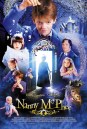 5) Nanny McPhee
More childish than Coraline, perhaps, but there’s an awful lot to enjoy nonetheless. Far more than the Mary Poppins rip-off it looks like from the outside, Nanny McPhee rattles along through a colourful but grounded tale that imparts moral messages without battering you round the head. It’s properly magical.
 4) Anatomy of a Murder
Procedural crime dramas relentlessly fill our TV schedules these days, but few can hold a candle to Otto Preminger’s masterpiece. The precision-engineered storytelling masterfully refuses to deviate from the case at hand, and who but James Stewart could be a lawyer defending a murderer and still have us cheering for him to win?
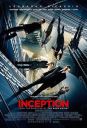 3) Inception
Christopher Nolan’s latest managed the rare feat these days of being a genuine blockbuster with an original story, and converting that into high praise and box office too (and without the ticket-selling boost of 3D). More impressively, it did this while baffling much of its audience. Remains to be seen if it benefits or suffers from repeat viewings.
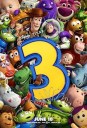 2) Toy Story 3
Returning to a beloved franchise over a decade later would be a mistake in the hands of most filmmakers, but this is Pixar. Toy Story 3 is a worthy successor to its ’90s predecessors; a funny and moving tale that tackles big, emotional themes while still providing a kid-friendly adventure-comedy. It may well be the best film of 2010.
 1) Kick-Ass
I’ve not had so much debate over my #1 film before (though 2008’s 2 & 3 kept me busy for a while). Despite provoking outrage in some quarters, Kick-Ass is an arresting deconstruction of the superhero myth, both as “what if someone really did it?” and how the genre has been presented on our screens. Funny, exciting, it really does… yeah, you can add the pun.
As usual, I just want to highlight a few other films, for various reasons.
I normally mention the 5-star films first, but this year I found it tougher than usual (or, at least, tougher than last year) to settle on the final few slots in my top ten. The films that consequently just missed out by a sliver of fate — and the way my opinions wavered on that particular day — were The Hurt Locker, M and Speed Racer. A few others survived almost as long, but those are the ones I really struggled with.
Secondly, then, I must mention the 16 films that earned themselves 5-star ratings this year. A very respectable seven of them made it into the top ten, namely Anatomy of a Murder, Coraline, His Girl Friday, Inception, Kick-Ass, Nanny McPhee and Toy Story 3. It always seems silly to include 4-star films over some of those that achieved full marks, but that’s life. Two more are among those ‘almost’s — The Hurt Locker and M — while the other seven main listers I left out were The Damned United, Guess Who’s Coming to Dinner, Miracle on 34th Street, Die Puppe, Slumdog Millionaire and The Spiral Staircase. Finally, from outside the main list, was The Special Edition of Beauty and the Beast — or Beauty and the Beast SE to you and I.
Penultimately, a quick mention for a few noir-ish oldies. None of them quite managed to squeeze into my top ten, but this year I’ve really enjoyed the likes of Ministry of Fear, The Outrage, Odd Man Out and, of course, The Spiral Staircase. Plus, the cake-centric intro to my Ministry of Fear review is still one of my favourite things I’ve written for this blog.
And finally, while I’m on older pictures, a quick nod to the rest of the Ernst Lubitsch silents I watched in a rather intensive week back in January. Die Puppe was my favourite, but it was great all round to indulge in a chronological run of one filmmaker’s early work. I find silent movies to be a rather rich flavour of film — there’s much to appreciate, but too many too close together and it gets a bit sickly. I rather gorged on them that week, hence why there’s been no repeat (as yet) of my Silent Week concept. Hey-ho.
As ever, allow me to remind you that this hasn’t been a Top 10 of 2010 (only my 2010), but as new films do feature it’s worth considering that there were, as always, a number of notable releases this year that I’ve yet to see. Unsurprisingly — I mean, I only made three trips to the cinema and only saw seven 2010 films in total.
In my annual tradition, then, here’s an alphabetical list of 50 films — chosen for a variety of reasons, from box office success to critical acclaim via simple notoriety — that are listed as 2010 on IMDb and that I’ve not seen.
This year, I considered changing my remit to cover films released in the UK in 2010, for a more accurate account of what I might actually have seen. Using IMDb’s dates means various films fall through the cracks — foreign films that take time to get here usually, but also productions like Season of the Witch, which was made in 2009 but not released ’til early 2011. But I hate it when you see all of [X Year]’s Best Picture nominees turn up in an [X+1 Year]’s list of best films simply because over here they were released a couple of days into January instead a couple of days before it. IMDb’s year of production is, one might argue, as arbitrary a way of dividing them up as UK release date, but it does last longer in the consciousness — and it stops The Best Picture Of [X Year] turning up in a My Favourite Films Of [X+1 Year] list. I suppose I’m at a slight advantage though: by definition I don’t have to have seen these films, whereas a magazine / website / film review programme / blogger has to have had the chance to see something (and, obviously, to have used that chance) to put it in their year-end Top 10.
But hark at me, I’ve waffled on for an age about something fundamentally unimportant. Here’s the damn list.
127 Hours
4.3.2.1
The A-Team
Black Swan
Buried
The Chronicles of Narnia: The Voyage of the Dawn Treader
Clash of the Titans
Despicable Me
Easy A
Eat Pray Love
Exit Through the Gift Shop
The Expendables
The Fighter
Four Lions
The Ghost (aka The Ghost Writer)
Green Zone
Harry Potter and the Deathly Hallows: Part 1
Hot Tub Time Machine
How to Train Your Dragon
Iron Man 2
Jonah Hex
The Karate Kid
The King’s Speech
Knight and Day
The Last Airbender
Legend of the Guardians: The Owls of Ga’Hoole
Let Me In
Machete
Monsters
Nanny McPhee and the Big Bang
Piranha 3D
Predators
Prince of Persia: The Sands of Time
Red
Resident Evil: Afterlife
Salt
Saw 3D
Scott Pilgrim vs. the World
Shrek Forever After
Shutter Island
The Social Network
Tangled
The Town
Tron: Legacy
True Grit
The Twilight Saga: Eclipse
Unstoppable
Vampires Suck
Wall Street: Money Never Sleeps
Winter’s Bone
That’s the end, then. And if you read it all, you encountered somewhere in the region of 78 films (slightly more if you followed the Lubitsch link). That was worth coming all the way down here for, wasn’t it?
Right, I’m off to watch some more films. I’ve got another 100 to get through you know.
And that’s the end of my repostathon, too!
The blog’s archive is now as up-to-date as it’s ever likely to be.

 The near future: most of mankind now lives through ‘surrogates’ — robots that look like perfect versions of ourselves (generally), which we control from elaborate machines sat around in our homes. The anonymity of the online world brought into the real one, essentially.
 while almost every plot ‘twist’ is startlingly unsurprising (though it does manage one half decent one).
 If you want to muse on what makes us human in a world of near-identical robotic replicas, watch Blade Runner. If you want a plot about a future world where we coexist with robots peacefully until Something That Can’t Happen Does Happen, watch (the slightly underrated) I, Robot. If you want to get a little frustrated and lament missed opportunities, with a few flashes of inspiration, then rent Surrogates.

 A Good Woman adapts Oscar Wilde’s 1892 play Lady Windermere’s Fan, switching the setting to the Amalfi Coast in 1930. If one didn’t know better, one would believe that’s when and where it was always set.
 So it seems one’s perception of the film lies in what it is compared to. Compared to Wilde’s original, it may indeed be a pale imitation, relocated to an inappropriate country and period, with lacklustre performances and incongruous Wilde-penned lines crowbarred in. Taken without the context of the work it’s adapted from, however, I thought it was a flawed but, more importantly, highly amusing film.
 I saw the Richard Attenborough-starring
  Which, considering the whole story is about a man who thinks he’s Santa Claus, and whether or not he really is, is an impressively underhand piece of marketing.
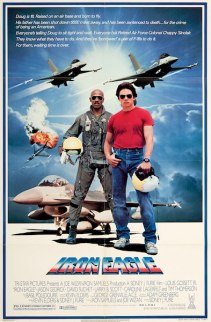 You know how sometimes you see a bit of a movie on TV and you end up watching just long enough to get caught up so much you’re in for the long haul, no matter what the quality? No? Maybe it’s just me (usually around
  Like I said, daft and implausible. And that isn’t necessarily a problem, but as you watch Iron Eagle you can’t help but wonder if the filmmakers are trying to convince viewers it could be plausible. And it isn’t. Not in the slightest.
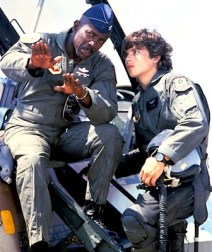 I’ve not seen that either, but I think we all know this is a serious step down. Poor man. His career went on to include
 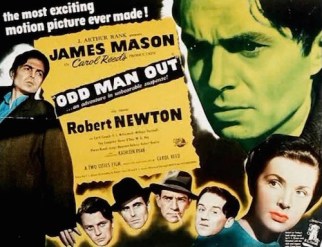 It may be a bit of a cop out to begin a review by pointing you to another, but I must recommend
  Robert Newton’s Lukey. (You’ll also note Newton’s performance is criticised in Colin’s piece so, in aid of not sounding like I’m too easily influenced, I’d like to point out I didn’t make the connection between his comments and my own notes on Newton until afterwards.) Shell and Lukey have a bit of a point in the end, but I didn’t enjoy getting through them in comparison to the rest of the film.
 The score, by William Alwyn, is really nice, particularly in certain places — for example when it begins to snow and Johnny wanders the streets, or at its most effective during the haunting climax, as Kathleen hauls a near-dead Johnny through the falling snow towards the safety of the shipyard as the police finally close in.
 #1
#1  #8
#8  #14
#14  #22
#22  #30
#30  #38
#38  #43
#43  #51
#51  #59
#59  #67
#67  #75
#75  #83
#83  #91
#91  #99
#99  #107
#107  #115
#115 
 #20a
#20a  If you’ve ever seen the miniseries
  Bigelow & co construct each ‘action’ sequence with care and attention. They’re not action sequences in the truest sense — suggestions from some that she’d be a great director for, say, Bond 23 on the strength of this film are unwarranted (not that she wouldn’t be good, but this film’s action does nothing in particular to demonstrate appropriate skills). Instead of the fast-paced bullets-flying adrenaline-pumping sequences you get from An Action Movie, The Hurt Locker offers up more realistic (at least, realistic-feeling) sequences of tension as characters approach bombs, watch increasingly suspicious crowds, try to defuse the situation before the timer runs out… It could be clichéd — we’ve all seen plenty of bomb defusing scenes in movies before now — but, again, there’s a sense of “this is how it is”, rather than “this is how movies portray it for dramatic effect”. Is it how it is? I don’t know. But it certainly still packs dramatic effect.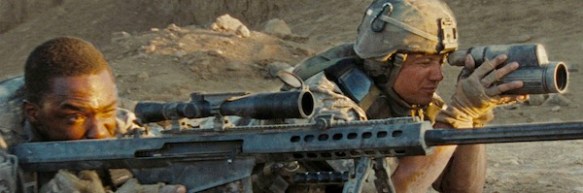
 The opening quote and closing scenes make explicit the main theme — war is a drug, one James (Oscar nominee Jeremy Renner) is addicted to — but I’m not sure how present this is in the body of the story. Rather, the majority feels like an attempt to convey the experience of living as an explosives expert in a warzone, with James’ ‘addiction’ just a side effect of that. Perhaps, then, it’s making its point more subtly than by battering you round the head with cinematic cries of, “He’s addicted to war! It’s just a drug!”
 #116
#116  100Films.co.uk