
Kenji Misumi | 96 mins | DVD | 2.35:1 | Japan / Japanese
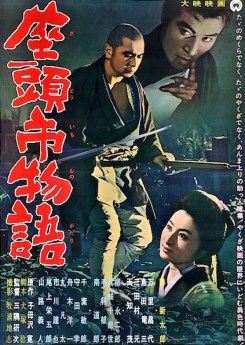 Adapted from a short story by Kan Shimozawa, The Tale of Zatoichi was a low-key release for its studio, Daiei: despite being helmed by “a topflight director”*, it was shot in black and white, its leading man, Shintarô Katsu, “was not really a huge star”, and his co-star, Shigeru Amachi, “had been one of the main stars at Shintoto studios before it went bankrupt and ceased production” — surely a mixed blessing. And yet it was “a surprise hit… touch[ing] a nerve with Japanese audiences, who loved to root for the underdog.” Despite the fact our hero gives up his sword at the end of the film, Daiei produced a sequel, and… well…
Some things are created as film series (all those ’30s and ’40s Hollywood mysteries; Cubby Broccoli and co always intended to do multiple James Bond movies), others just turn into them. The Tale of Zatoichi was the latter. Far from a low-key one-off, it would go on to be a huge touchstone for Japanese culture, spawning 24 sequels over the next 11 years, followed by a 100-episode TV series in the ’70s, and a revival film in 1989 — all starring Katsu. Although he passed away in 1997, Zatoichi has lived on through several remakes and spin-offs in the past decade. Although the character and series has a cult following in the West (brought into sharper focus by the well-received 2003 remake), added significance has been imbued by the incredible, beautiful, 25-film, 27-disc, dual format Criterion Collection box set released last year.
 But enough hyperbole — what about The Tale itself? The story sees blind masseuse Zatoichi accepting an old invitation to visit an acquaintance, Sukegorô (Eijirô Yanagi). But Sukegorô is a yakuza boss, and he presses Zatoichi to join his side in a brewing war with rival Shigezô (Ryûzô Shimada) — because although he’s blind, the masseuse has legendary sword skills. On Shigezô’s side is a hired samurai, Hirate (Amachi), who Zatoichi encounters by chance. Despite the mutual respect between these two coerced warriors, the eventual gang battle comes down to a duel between them…
Though Zatoichi is best (or quickest) defined as a series of samurai films, those taking that to mean copious swordplay will leave with their expectations unmet after this first movie (I can’t speak for the others yet). Tale is more of a dramatic piece, exploring the dilemmas faced by Zatoichi and Hirate — honour and what is right vs. money and misplaced promises — as well as the fatal romantic entanglements of a couple of other characters in Sukegorô’s camp. Even at the climax, the final (well, only) confrontation between the two warriors is an ‘action sequence’ more in the vein of Sergio Leone than Michael Bay: the characters face each other, they wait, the tension grows, and then there’s a couple of short bursts of to-the-point violence.
 Those prepared for a calmer, more considered film may find much to like, however. Katsu’s understated style holds your attention and makes you want to learn more about the character; not his past, necessarily, but his qualities as a man. The same is true of Amachi, in some ways even more appealing as the doomed ronin. You get a genuine sense that Zatoichi and Hirate would have had a great, long-lasting friendship if they’d met under better circumstances, which makes the manner of their encounter all the more tragic. For all the bluster about a big gang war on the horizon, it’s the relationship between these two men that forms the heart of the film.
Also worthy of note is Misumi’s direction, including some choice angles and compositions. There’s the restraint to not always be showy: at times, the bulk of a scene plays out in one static but immaculately framed take. At others, however, the camera is shifted around into positions that are never distracting but always beneficial to the storytelling or beautiful to the eye. Credit to cinematographer Chishi Makiura too, of course, especially for some magnificent lighting. Many a shot here would challenge the best of film noir for shadow-drenched beauty. (I should say, I picked up on none of this from the crummy old DVD I first saw the film on, but a re-watch from Criterion’s Blu-ray was glorious.)
 Reportedly this opener is “not the best of [the] series”, but remains “a grand introduction to the character and a touchstone for many of the themes and gags presented in the later films”.** To me, that suggests much promise for the 24 further instalments: what The Tale of Zatoichi lacks in action, it more than makes up for in character and, perhaps surprisingly, emotion. I thought it was excellent.

Reviews of further Zatoichi films will follow next year.
* All quotes in the opening paragraph from Chris D.’s notes in the Criterion booklet. ^
** According to The Digital Bits. ^
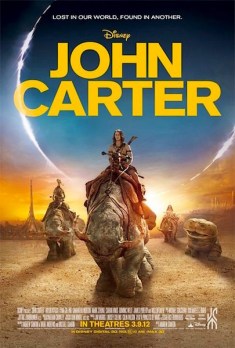 A box office flop (it made a once-astonishing $284 million worldwide, but that was off a $250 million production budget and a ginormous bungled marketing campaign), John Carter has gained something of a following among those who did enjoy it or caught it later — see
  not because it’s so famous (among Normal People, I don’t think it is), but because its influence means its imagery and concepts have already been plundered (
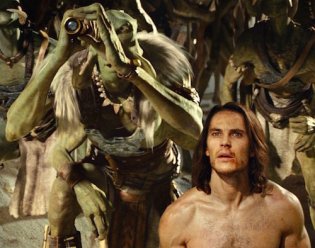 It doesn’t help that the film is structurally muddled at the offset. It begins on Mars, a voiceover detailing the conflict — an instant bombardment of names and concepts. I don’t mind things that challenge you to keep up, but it still feels a bit much. Then we jump to New York in the 1880s, where Carter is running away from someone in the streets. Then to his house, where his nephew has just turned up to be told he’s dead. You what? We just saw him in the telegraph office! And then we jump back to the 1860s, where he’s searching for gold and getting arrested (or something) by Bryan Cranston in a wig as some form of army officer. Then it gets a bit more straightforward. If being transported to Mars and meeting four-armed CG aliens who speak in subtitles is what you call “straightforward”, anyway.
 It feels a bit facile to criticise the quality of CGI these days, but that doesn’t stop John Carter from being over-ambitious in this regard. In fact, it’s not really the sometimes-half-assed green screen or occasional plastic-ness that’s the problem, but the design: those four-armed aliens are just a little too cartoony. Perhaps it’s a hangover from Stanton’s Pixar days, perhaps something just went a little awry during the process, but their design doesn’t look quite ‘real’ enough; a little like someone’s taken a real-life creature and then lightly caricatured it. I think it’s the eyes, which are perhaps a little too big and round and ‘cute’, but there’s something else indefinable there, or not there. These aliens aren’t just set dressing but proper motion-captured characters, played by the likes of Samantha Morton, Willem Dafoe, Thomas Haden Church and Polly Walker, so the lack of connection is regrettable.
 I was expecting, or perhaps hoping, to like it; to find a misunderstood old-style adventure full of entertainment value. It may be an old-style adventure, but that’s beside the point, because whatever it is, I just felt it wasn’t particularly well made: poorly constructed, weakly performed, lazily (and wrongly) assumptive of the audience’s familiarity with the material. Disappointing.
 Seven Samurai used to be a striking anomaly amongst the top ten of
  It’s also unhurried. As Kenneth Turan explains in his essay “The Hours and Times: Kurosawa and the Art of Epic Storytelling” (in the booklet for Criterion’s DVD and Blu-ray releases of the film, and available online
 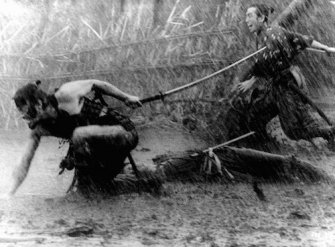 The length ensures our investment in the village, too, just as it does for the samurai. They’re not being paid a fortune — in fact, they’re just being paid food and lodging — so why do they care? Well, food and lodging are better than no food and lodging, for starters; and then, having been in the village so long in preparation, they care for it too. It is, at least for the time being, their home. You can tell an audience this, of course, but one of the few ways to make them feel it is to put them there too — and that’s what the length does. To quote from Turan again,
 the final scene, the way it’s edited and framed, ties the remaining samurai to their deceased comrades, the living and thriving farmers a distant and separate group. Fighting is the way of the past, perhaps, and peaceful farming the future. Or is the samurai’s only purpose to be found in death, because other than that they are redundant?
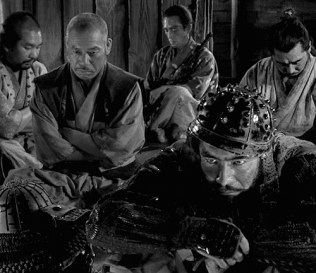 And it wasn’t as if it was overseas viewers who hit on the magic: as Turan reveals, “Toho Studios cut fifty minutes before so much as showing the film to American distributors, fearful that no Westerner would have the stamina for its original length.” The more things change the more they stay the same, I suppose — how many Great Films from Hollywood are ignored by awards bodies and audiences, only to endure in other ways?
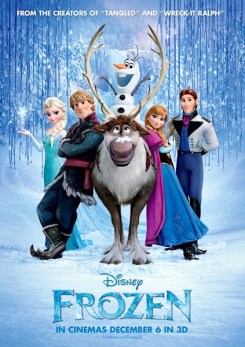 Frozen is a grim single-location thriller about three college kids trapped on a ski-lift overnight, battling hypothermia and worse over a hundred-foot drop. Or at least it was until last year, when Disney went and released its all-consuming mega-musical.
  Unlike the best Disneys, however, I think its appeal resides firmly with little girls — you don’t actually have to go very far on the internet to find people baffled by its success. Plenty of people think the music is bland, the characters underdeveloped, the moral and emotional arcs not fully thought-through, the visual style a rip-off from
 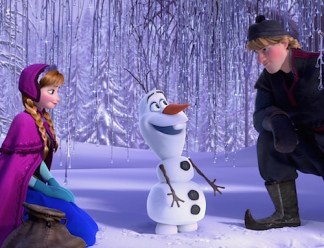 The lack of villain’s song is attributable to the fact that, for nearly the entire film, there are no nasty characters. A villain emerges right at the end to give us a climax, but for once that works — a genuine twist! It’s almost a shame it has to resort to that, but how else do you end a Hollywood movie other than a big dramatic confrontation? Plus, aforementioned snowman Olaf confounded my expectations, pulling off the quite remarkable feat of not being the most irritating CGI character since Jar Jar Binks. (I don’t know who is the most irritating CGI character since Jar Jar Binks, but Olaf is alright.)
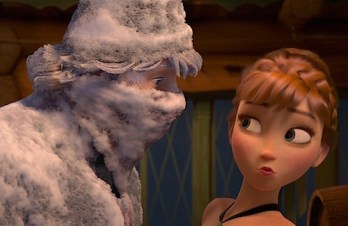 It’s not bad — it’s adequately cartoony — and actually the ice and snow effects are very, very good. It’s the character animation that I felt let it down, especially some of the more minor roles — there were points where their style and movement looked little better than you’d find in a video game cut scene.
 Frozen is by no means a bad Disney movie, and it does have a lot of favourable aspects. Whether the internet’s right and it’s not as good as Tangled, I wouldn’t care to say (I enjoyed Tangled, but at this point have largely forgotten it); conversely, the sometimes-rabid fan base are perhaps being a little over-enthusiastic. There’s nothing wrong with a kids’ movie being beloved by kids, though; and with all the dreadful things the media churns out for little girls to obsess over and centre their life values around, this is undoubtedly one of the most positive.
 Marvel Studios takes its boldest step yet, moving away from the present-day superhero milieu of its previous movies to a galaxy far, far away for a space opera epic. Its success, both critically and commercially, has cemented the Marvel Cinematic Universe as an infallible force in the current movie world. But, really, how good is it?
 The worst offender is the pod chase through Knowhere, a several-minutes-long sequence that registers as little more than a blur. There’s a shocking lack of clarity to its images, even by today’s standards. Maybe it’s better in 3D, when I guess the backgrounds would sink into the distance and important elements would be foregrounded; but in 2D, you can’t see what’s meant to be going on for all the fast-moving colour and split-second cuts. Almost as bad, though for different reasons, is the climax. It takes up an overlong chunk of the movie and at times feels repetitive of too many other Marvel climaxes — oh look, a giant spaceship crashing into a city! If anything, the film gets ‘worse’ as it goes on. Perhaps not in a very literal sense, but as the blustering action climax takes over, it moves further away from the stuff that makes it unique and interesting.
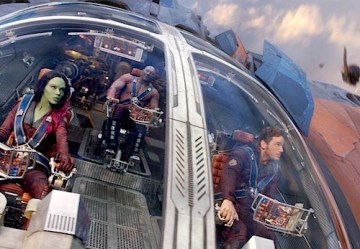 It isn’t even called Nova City, but I don’t have the foggiest what it is called because the film didn’t make me feel I should be learning it. Some more effort making sure we knew why that place mattered, even if it was just a clearer depiction of all the planning for its defence, might have sold the entire climax better.
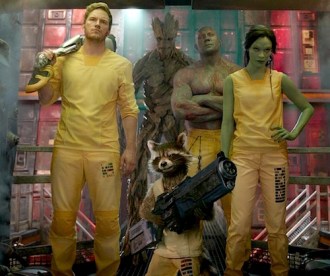 especially the overlong climax. Joss Whedon commented of his own Avengers film (as I quoted in
  After the
 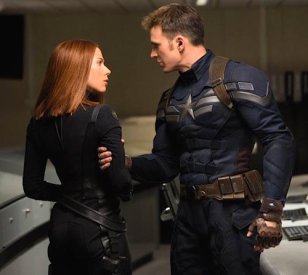 everybody moved on to being more excited about Marvel’s end-of-summer new-franchise-launcher,
 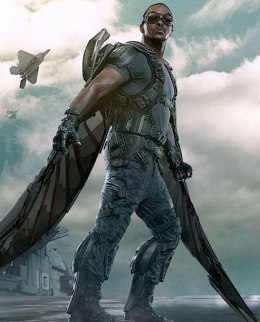 Also introduced is sidekick hero the Falcon (Anthony Mackie), who I have little to say about directly. He’s a sidekick who’s introduced fully-formed — he’s been using his ‘superpower’ for years as just part of the military; it’s not new or exciting to him, which lessens some of its power for the viewer too. “Origin story” may be the most over-used of all the superhero stock stories, but there’s a reason for that. If you skip it then you cut to the chase, that’s true, but does it also lessen the impact of characters to not see how they started? Maybe storytellers just need to come up with fresh ways of giving origins, rather than skipping them altogether.
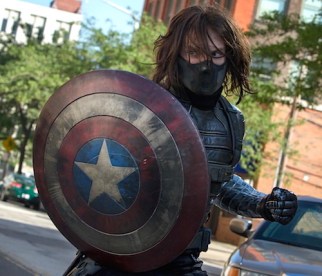 and then it refuses to wrap everything up, putting certain things in place ready for
 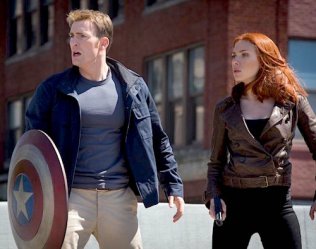 what’s left? There is strong action, albeit undermined by muddled character investment; and there is an interesting thriller/conspiracy story, albeit undermined by a feeling of “once you know it, you know it” — it’s not all that complicated or all that surprising, including the revelation that the one character significant enough to be behind it all is behind it all (gasp!)
 Belated sequels can be a
 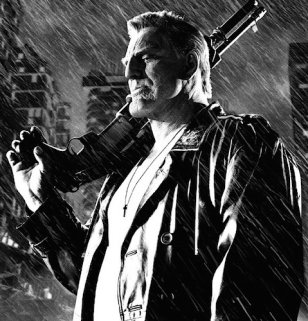 But the comic-book-ness of the first film — moments of almost metaphorical visual representation rather than literal reality, including physically-impossible action beats — has been ramped up. The value of the first film was never in its action, so the sequel’s lengthy punch-ups, crossbow-based guard-slaying, and all the rest, get boring fast. When it slips into this needless excess, A Dame to Kill For loses its way. When it sticks to what it does best — hard-boiled fatalistic crime tales with striking comic book-inspired cinematography — it does as well as the concept ever did.
 The intervening decade has lessened the impact of the first film’s sick ultra-violence, but there’s nothing even that extreme here, aside perhaps from one eyeball-related moment. On the other hand, nearly a decade of tech development means it looks better than the last one, both in terms of the CGI’s quality and the camerawork more generally — it’s less flatly shot; more filmic than the first one’s sometimes-webseries-y composition.
 its predecessor, and that’s exactly what it delivers. I suspect the first benefits from nostalgia because, watching them virtually back to back, I found I liked Sin City less than I remembered, but enjoyed A Dame to Kill For just as much. It’s flawed in several aspects, but for honest-to-themselves fans of the first movie, I think it’s a “more of what you liked”-style success.
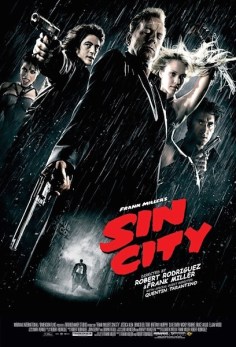 Adapted from a series of graphic novels by Frank Miller, Sin City is a noir homage, replete with high-contrast black-and-white cinematography, dialogue so hard boiled you couldn’t crack it with a sledgehammer, and all the requisite downtrodden heroes, corrupt authority figures, dangerous dames, etc. There’s also the very modern inclusion of shocking ultra-violence and nudity, but I guess a fair degree of that would’ve crept into classic noir if the mores of the time allowed — pretty much the point of the genre is the dark grubbiness of the world, after all.
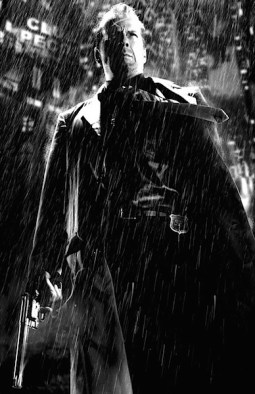 The DVD-premiering extended version, dubbed Recut & Extended (or, in the US, “Recut, Extended, Unrated”) is even more faithful to the comics than the theatrical version. Some of the books’ scenes that were excised are now included, and the structure has been rejigged to present each of the four stories one by one in their entirety (whereas the original version had a small amount of intercutting). The total running time is 17 minutes and 40 seconds longer, an increase of some 14.2%… which is a thoroughly misleading figure. As a presentational choice, each of the four stories is offered for individual viewing, plus option to “play all”. However, rather than that showing them as a single film, they play as four shorts back to back, with a full set of section-specific end credits rolling each time. The actual amount of new material in the film itself is
  For one, the second scene belongs more truly to The Big Fat Kill (the final story, starring Clive Owen’s Dwight and the whores of Old Town led by Rosaria Dawson). For another, because this recut purports to be in chronological order, The Customer is Always Right plays second. So we get 47 minutes of Bruce Willis protecting Jessica Alba from a paedophile in That Yellow Bastard, then we get a one-scene story that rightly belongs at the beginning (complete with title card, now 50 minutes into the ‘film’), then we get a scene that, actually, belongs in a completely different place. The next full story is The Hard Goodbye (the one with Mickey Rourke under a slab of prosthetics as Marv), followed by The Big Fat Kill — and it’s after this that the second scene with The Man belongs. Divorced of that context, the scene is robbed of almost all its meaning.
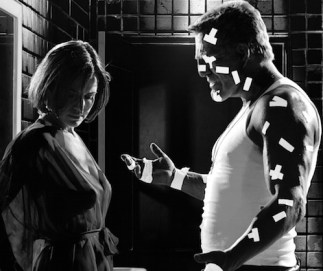 In the end, I enjoyed Sin City considerably less than I did nine years ago in the cinema. This is partly down to the restructure, but I’m not sure wholly so. I don’t think it’s aged particularly well, as things produced at the forefront of emerging technology are wont to do: some of the CGI looks dirt cheap, the shot compositions are often unimaginatively flat, and there’s an occasional internet-video style to the picture quality. It’s not just the visuals, sadly, with amateurish performances from reliable actors, possibly a result of the hurried filming schedule. Just because you can capture an entire part in a single day doesn’t mean you should. Then there’s Jessica Alba, who’s just awful here.
 None of the present additions are game-changing, and though some are good in their own way, there’s nothing noteworthy enough to compensate for the destruction of the original cut’s well-balanced structure. For the average punter — and certainly for the first-time viewer — the theatrical cut is unquestionably the way to go.
 I think I’ve previously discussed my life-long love of the X-Men franchise, so I shan’t go into detail again, but suffice to say Days of Future Past has been one of my most-anticipated movies ever since the title (which is that of a classic and influential story from the comics) was announced. Thank goodness, then, that the final result doesn’t disappoint.
 Beyond that, there’s the characters: the younger versions are having to deal with the fall-out from
  Not everyone gets to shine in a cast this big, although pretty much everyone gets a moment. The future-set cast have the least to do, people like Halle Berry turning up to do little more than show their face, though Stewart and McKellen get a moment or two worthy of their talents. After he was the focus of the last film, Fassbender is slightly shortchanged here; but after McAvoy gave him essential support in First Class, Fassbender plays the same service here, informing Charles’ journey. Of the new additions, Evan Peters as Quicksilver (that’s the one who’ll also be played by Aaron Taylor-Johnson in
  Later, there’s the aforementioned ‘slow-mo’ sequence, and the grand climax, which offers more “fly something big around” antics a la First Class’ submarine, only considerably grander. Yet for all the spectacle, the final moments once again come down to character: what is Magneto prepared to do? What is Mystique prepared to do? Will anyone listen to Charles? And so on. Even the much-vaunted Marvel Studios movies tend to base their climaxes in slabs of ‘epic’ CGI crashing into each other; Days of Future Past does that for a bit, then brings the characters back into focus for the real final beats.
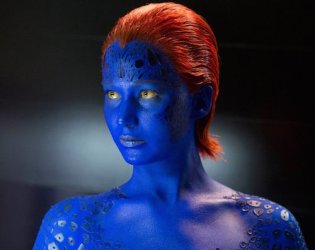 (Jennifer Lawrence being the third pillar of the past triumvirate, as they’ve already focused on Xavier and Magneto). While Days of Future Past does wrap up the majority of its threads (the open-ended ones are answered by previous films, if you want them to be), there’s plenty there to play with in the next film (and, perhaps, ones beyond that) if they want to… which they do.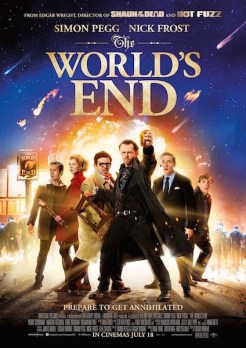
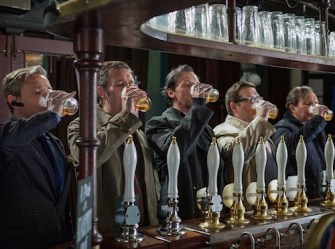 “zombie movie” or “Hollywood action movie”, and occasionally co-writers Pegg and Wright have substituted character development and thematic points for send-up. It may not play to the genre-loving fan-audience that the trio’s previous work has accumulated (demonstrably so, based on many a viewer review), but it does make for a more grown-up film.
 It will definitely reward multiple viewings: it’s littered with signs, omens and portents (in fairness, a good few can be grasped on an attentive first go). There’s a featurette on the BD (but not the DVD) which helps point out any major ones you may’ve missed; though I have to say, even at seven minutes long, and even with it pointing out some that felt too obvious to be worth mentioning, I swear it left some stuff out. That could be a deliberate decision of course, to leave some things for people to just spot.
 100Films.co.uk